
Suppose you lend $1,000 at an interest rate of 10 percent over the next year. If the
expected real interest rate at the beginning of the loan contract is 4 percent, then what
rate of inflation over the upcoming year would be most beneficial to you as the lender?
An inflation rate
A) equal to 0 percent.
B) greater than 6 percent.
C) equal to 6 percent.
D) equal to 4 percent.
Suppose an economy’s exchange rate system is the gold standard and vast tracks of gold
are discovered, as is what happened in the United States in 1849. If the economy is at
full employment, what should this discovery do?
A) It should raise the money supply but have no impact on the price level.
B) It should raise the money supply and cause inflation.
C) It should raise the money supply and cause disinflation.
D) It should lower the money supply and cause deflation.
E) it should not change the money supply.
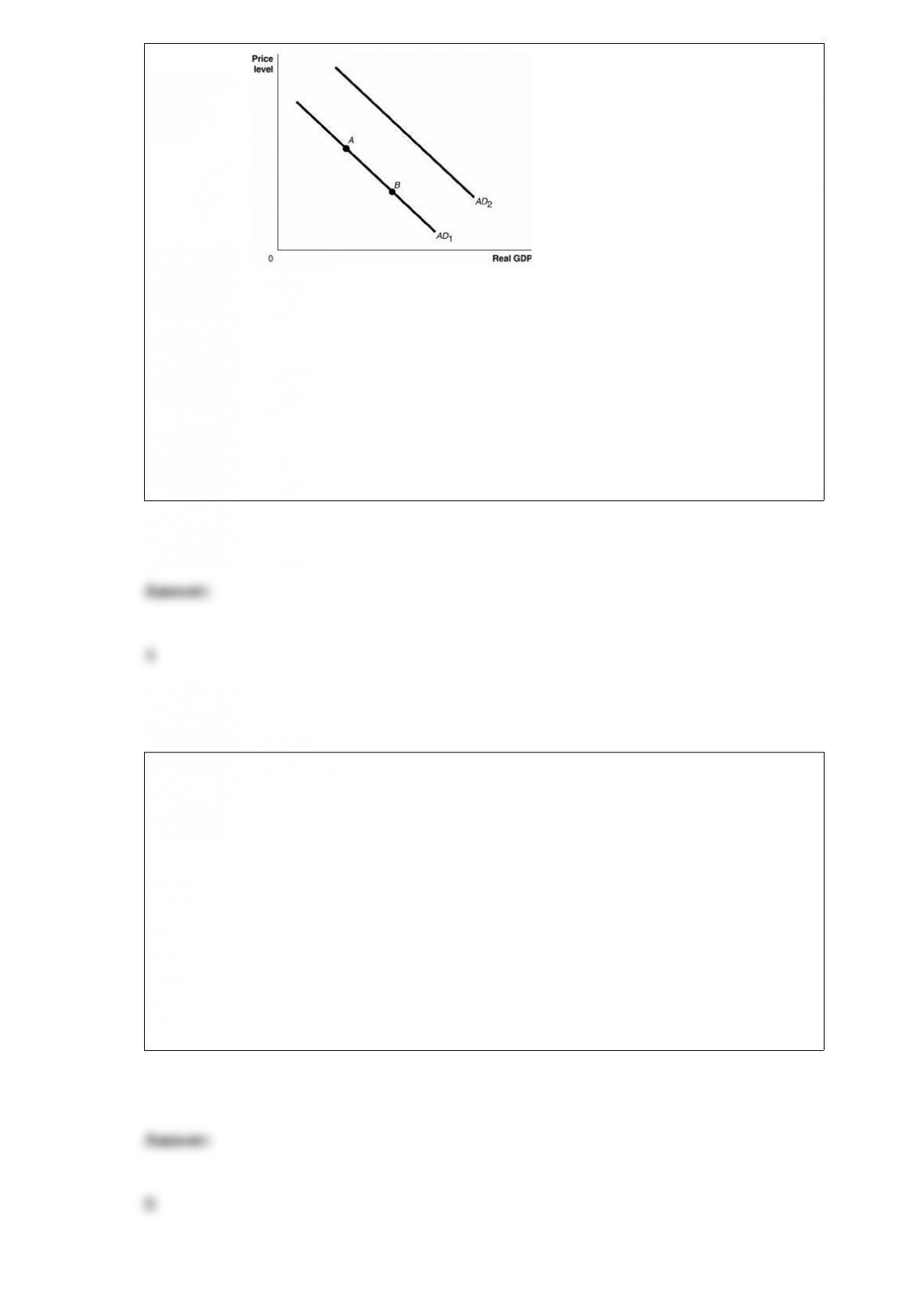
Figure 24-1
Ceteris paribus, a decrease in interest rates would be represented by a movement from
A) AD1 to AD2.
B) AD2 to AD1.
C) point A to point B.
D) point B to point A.
In a monopolistically competitive market, a successful new restaurant
A) can earn economic profits in the long run if it uses barriers to restrict entry by new
restaurants.
B) will earn zero economic profit in the long run because of free entry, but competition
will lead restaurants to offer different versions of the same product.
C) will face high entry barriers because of health and safety regulations to which all
restaurants are subject.
D) must obtain a trademark to ensure that it will break even in the long run.
If the CPI is currently 202, what does this tell you about inflation between last year and
this year?
A) There was deflation in the economy between this year and last year.
B) Inflation in the economy between this year and last year was 2%.
C) Inflation in the economy between this year and last year was 102%.
D) The CPI measures only the level of prices in a given year, not the percentage change
in prices from one year to the next.
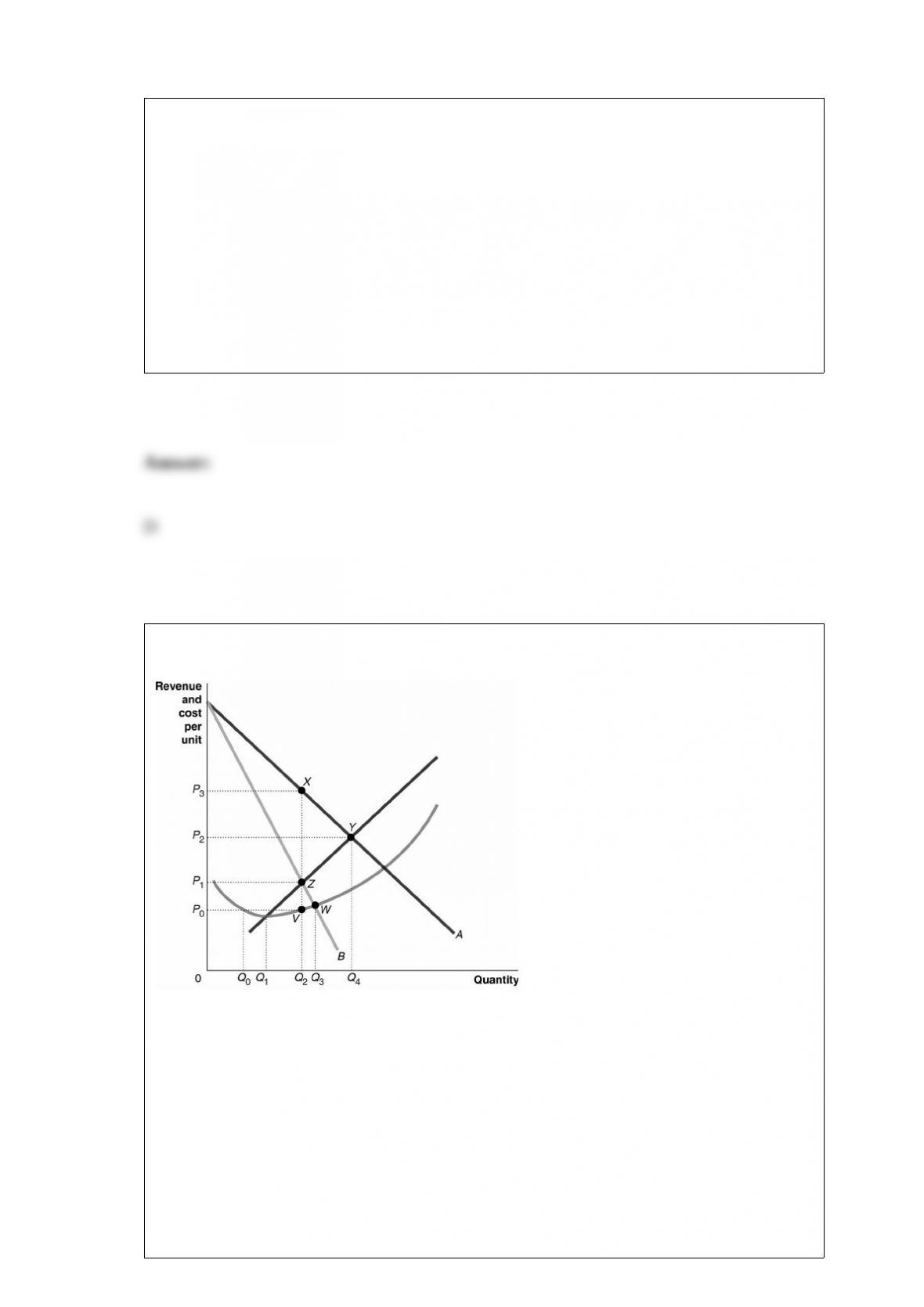
Figure 15-8
Figure 15-8 reflects the cost and
revenue structure for a monopoly that has been in business for a very long time.
Use the figure above to answer the following questions.
a. Identify the curves labeled A and B. Identify the curve which contains both point Y
and point Z. Identify the curve which contains both point V and point W.
b. What is the profit-maximizing quantity and what price will the monopolist charge?
c. What area represents total revenue at the profit-maximizing output level?
d. What area represents total cost at the profit-maximizing output level?
e. What area represents profit?
f. What is the profit per unit (average profit) at the profit-maximizing output level?
g. If this industry was organized as a perfectly competitive industry, what would be the
profit-maximizing price and quantity?
h. What area represents the deadweight loss as a result of a monopoly?
The principle of opportunity cost is that
A) in a market economy, taking advantage of profitable opportunities involves some
money cost.

B) the economic cost of using a factor of production is the alternative use of that factor
that is given up.
C) taking advantage of investment opportunities involves costs.
D) the cost of production varies depending on the opportunity for technological
application.
Perfect price discrimination is also known as
A) monopoly.
B) first-degree price discrimination.
C) third-degree price discrimination.
D) yield management.
Figure 3-8
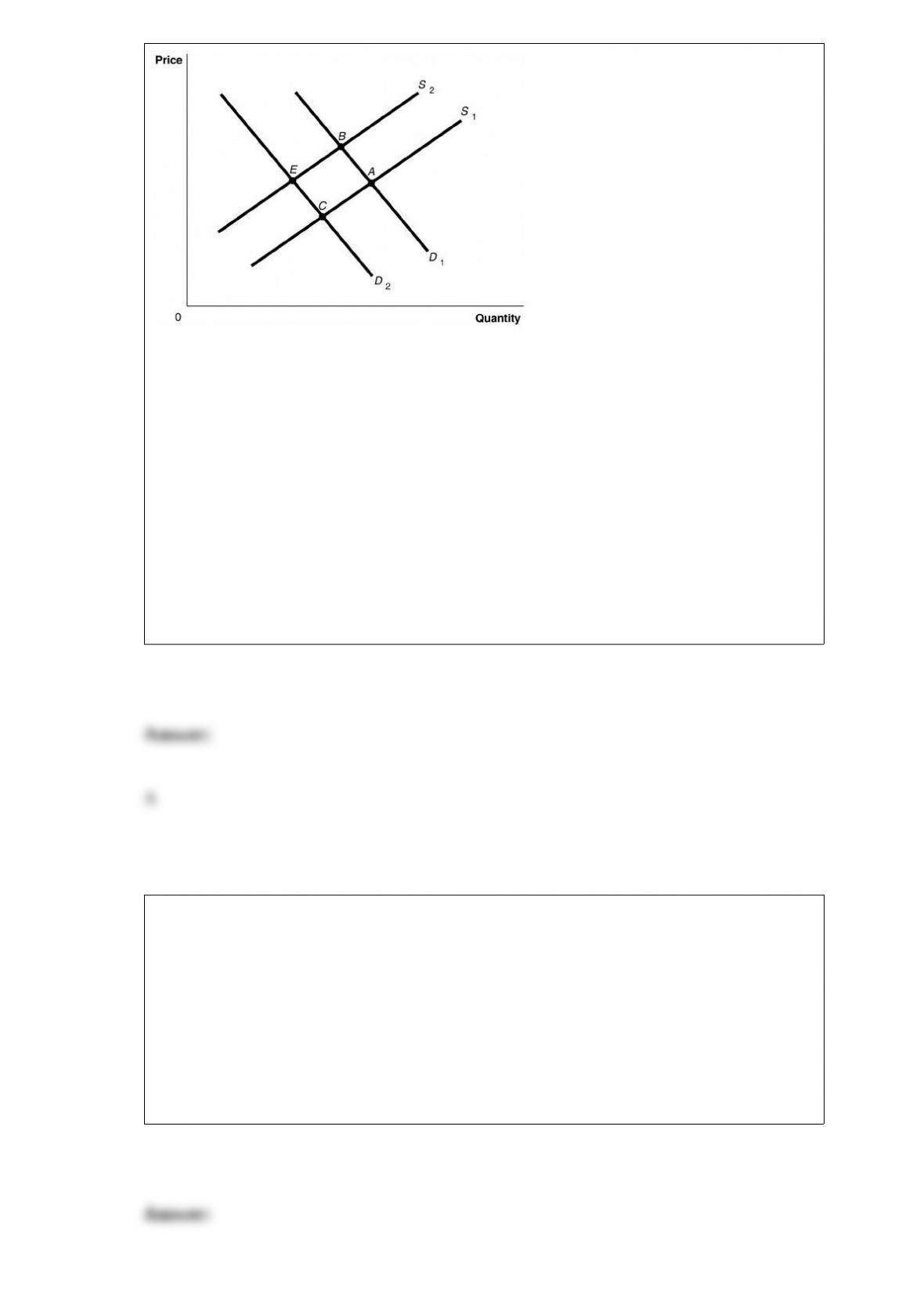
The graph in this figure illustrates an initial competitive equilibrium in the market for
apples at the intersection of D1 and S1 (point A). If the price of oranges, a substitute for
apples, decreases and the wages of apple workers increase, how will the equilibrium
point change?
A) The equilibrium point will move from A to E.
B) The equilibrium point will move from A to B.
C) The equilibrium point will move from A to C.
D) The equilibrium will first move from A to B, then return to A.
Inventories refer to
A) goods which have been presold before they are produced.
B) goods that have been produced but not yet sold.
C) goods that have been planned but not yet produced.
D) goods that have been produced and sold in the same year.
Steve Ballmer is the Chief Executive Officer of Microsoft as well as a member of
Microsoft’s board of directors. Ballmer is therefore classified as an
A) inside director.
B) outside director.
C) independent director.
D) unbiased director.