
Of the following countries, which had the highest level of GDP per capita in 2012?
A) Japan
B) France
C) Italy
D) the United States
According to the short-run Phillips curve, which of the following would result in high
rates of unemployment?
A) strong increases in aggregate supply
B) a lower inflation rate
C) strong increases in aggregate demand
D) a higher inflation rate
The problem causing most recessions is too little
A) money (currency plus checking accounts).
B) spending.
C) unemployment.
D) taxes.
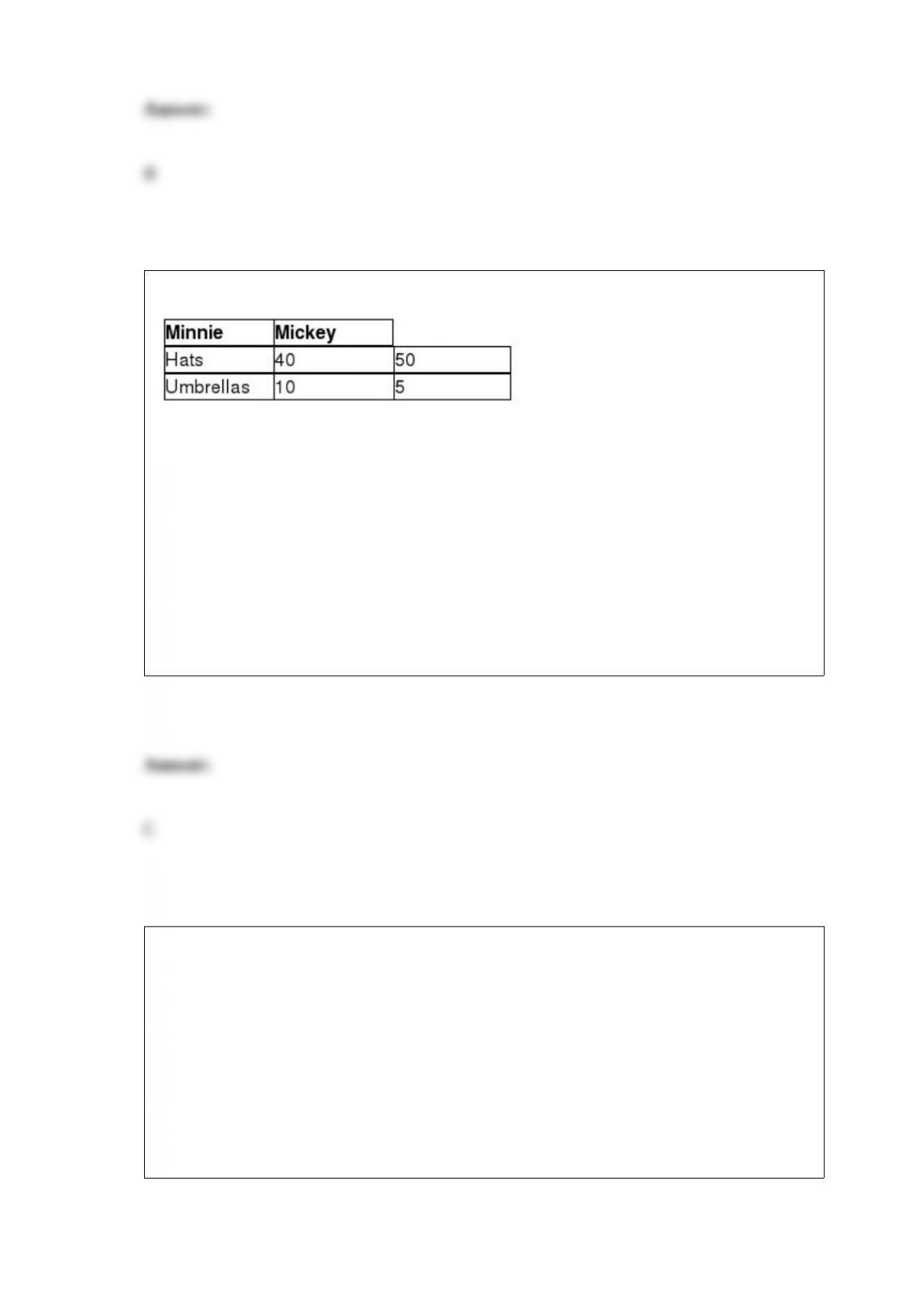
Table 2-18
Table 2-18 shows the output per week of two people, Minnie and Mickey. They can
either devote their time to making hats or making umbrellas. What is Minnie’s
opportunity cost of making an umbrella?
A) 1/10 of a hat
B) 1/4 of a hat
C) 4 hats
D) 40 hats
If the current unemployment rate is 5%, under which of the following circumstances
would you expect the Fed to use expansionary monetary policy?
A) if the natural rate of unemployment is below 5%
B) if the natural rate of unemployment is above 5%
C) if the inflation rate is above 5%
D) if the inflation rate is below 5%
Why might a producer practice price discrimination?
A) to make its products more affordable to those with low incomes
B) to maximize economic efficiency
C) to maximize profits
D) to maximize quantity demanded
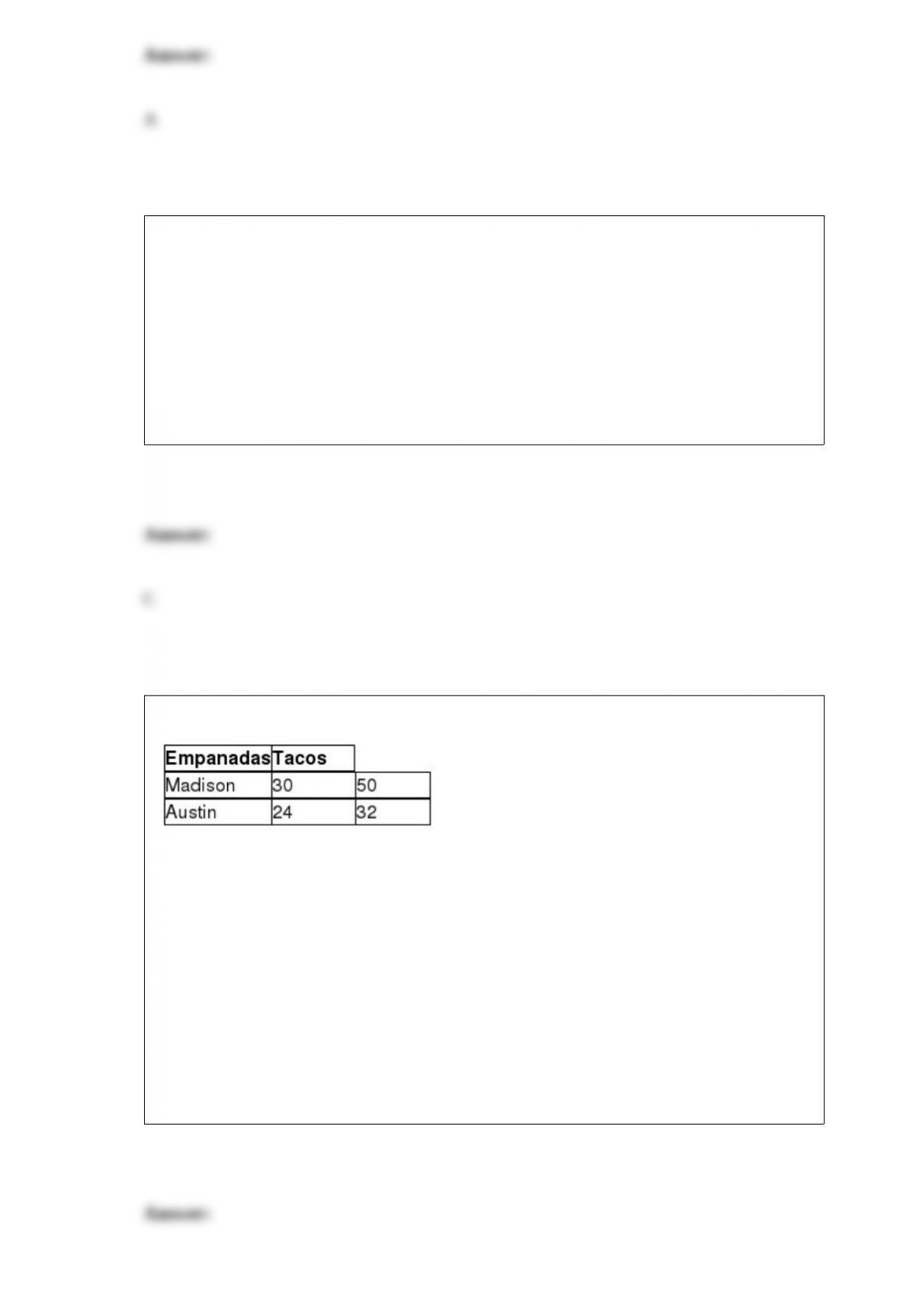
Table 7-2
Madison and Austin own Cafe Ole’. Table 7-2 lists the number of empanadas and tacos
Madison and Austin can each make in one hour. Select the statement that accurately
interprets the data in the table.
A) Madison has a greater opportunity cost than Austin for making tacos.
B) Madison’s opportunity cost for making tacos is less than Austin’s.
C) Austin has a greater opportunity cost than Madison for making empanadas.
D) Austin’s opportunity cost for making tacos and making empanadas are both greater
than Madison’s.

The market demand curve for labor
A) is determined by adding up the quantity of labor demanded by each firm at each
wage, holding constant the other variables that affect the willingness of firms to hire
workers.
B) is the same as the market demand curve for the product labor produces because it is
a derived demand.
C) is determined by adding up the demand for labor by each firm at each wage, holding
constant the other variables that affect the willingness of firms to hire workers.
D) is perfectly inelastic because there is a finite number of workers in the market for
labor.
According to Joseph Schumpeter, the theory of creative destruction describes a process
by which
A) some new products unleash a gale of destruction that drive other new products out of
the market.
B) new products unleash a gale of destruction that drives old products out of the
market.
C) new products are created by the destruction of capital.
D) the creation of new products never involves the destruction of old products.
If marginal utility of apples is diminishing and is a positive amount, consuming one
more apple will cause
A) total utility to decrease.
B) a consumer to get no satisfaction from consuming apples.
C) a consumer’s total utility to increase.
D) a consumer to go beyond her optimal consumption of apples.
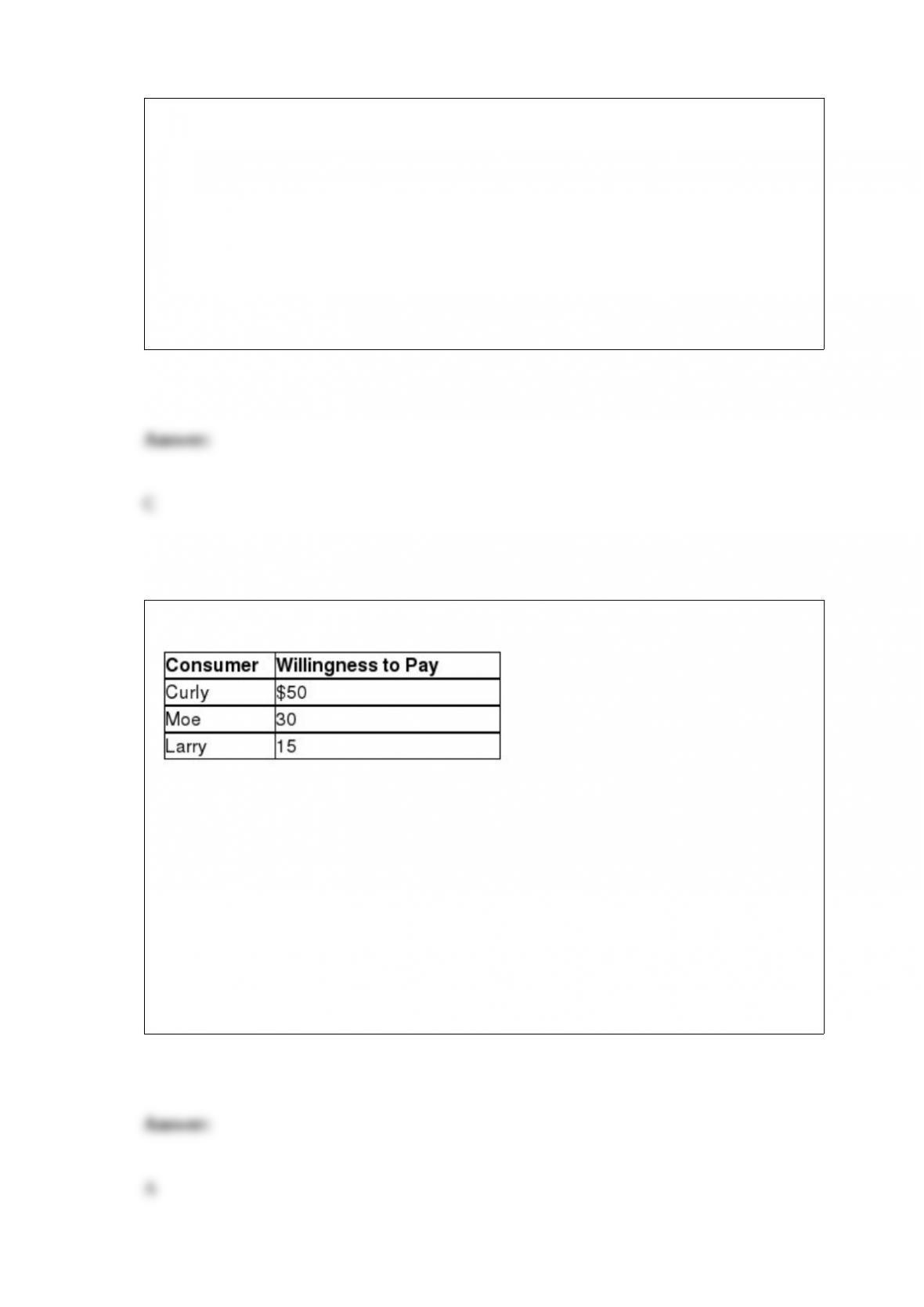
Table 4-4
The table above lists the highest prices three consumers, Curly, Moe, and Larry, are
willing to pay for a bottle of champagne. If the price of one of the bottles is $95 dollars,
total consumer surplus will be
A) $0.
B) $35.
C) $80.
D) $95.