A low rate of inflation, whereby prices increase so slowly from week to week that we
hardly notice the change, is referred to as
a. zero inflation
b. creeping inflation
c. nominal inflation
d. real inflation
e. episodic inflation
If the Fed decreases the money supply, we should expect the interest rate
a. to fall, spending on automobiles and business investment spending to rise, and the
price of bonds to increase
b. to rise, spending on automobiles and business investment spending to fall, and the
price of bonds to decrease
c. to rise, spending on automobiles and business investment spending to fall, and the
price of bonds to increase
d. to fall, spending on automobiles and business investment spending to fall, and the
price of bonds to decrease
e. to rise, spending on automobiles to fall, business investment to rise, and the price of
bonds to decrease
If the Fed increased the discount rate,
a. banks would make more loans
b. the money supply would increase
c. firms would be more likely to seek out loans
d. the required reserve ratio would increase
e. banks would make fewer loans

The vertical long-run Phillips curve
a. shows the Fed’s employment options
b. is vertical because the Fed refuses to change the unemployment rate in the long run
c. indicates that the Fed cannot affect the unemployment rate in the long run
d. is fixed permanently
e. measures recessionary pressures
Which of the following four elements contribute to GDP in the expenditure approach?
a. Consumption spending, private investment, government purchases, net exports
b. Consumption spending, business investment, government purchases, imports
c. Consumption of services, private investment, government consumption, exports
d. Consumption of goods, private investment, government investment, government
consumption
e. Consumption of durable goods, private investment, government purchases, net
exports
A weakness in the classical economic claim that a recession is caused by a decrease in
labor demand curve is
a. that labor demand never changes
b. that labor demand increases during a recession
c. that labor supply decreases during a recession
d. the confusion between a shift of the labor demand curve and a movement along that
curve
e. the impossibility in the classical model of total spending ever being deficient

Real GDP is calculated because
a. it is a much better measure of economic behavior than nominal GDP
b. the value of the dollar is increasing
c. it allows us to make comparisons between countries
d. nominal GDP has no theoretical foundation
e. nominal GDP is corrected for inflation
If autonomous consumption is $5,000, the MPC is 0.7, net taxes are $2,000, investment
spending is $4,000, and government purchases equal $2,500, and NX = $0, what is
equilibrium GDP?
a. $14,428.6
b. $33,666.7
c. $40,800
d. $43,000
e. $45,000
GDP as predicted by the classical model is
a. lower than the actual level of GDP
b. higher than the actual level of GDP
c. smoother and steadier than actual GDP
d. more unstable over time than actual GDP
e. an accurate predictor of actual GDP
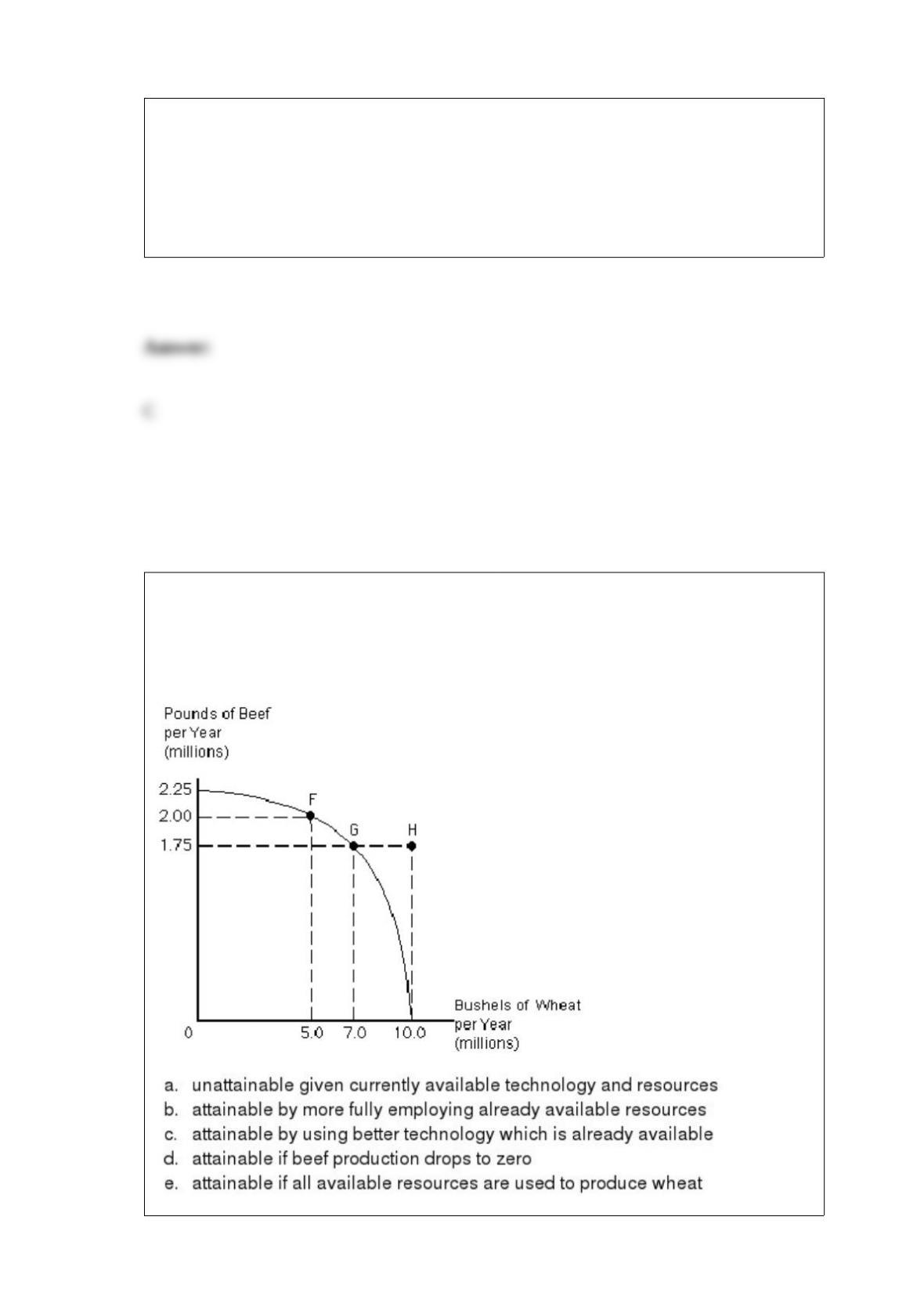
Assume that U.S. agricultural land is used either to raise cattle for beef or to grow
wheat. Figure 2-2 represents the production possibility frontier for beef and wheat.
Production at point H is
Figure 2-2
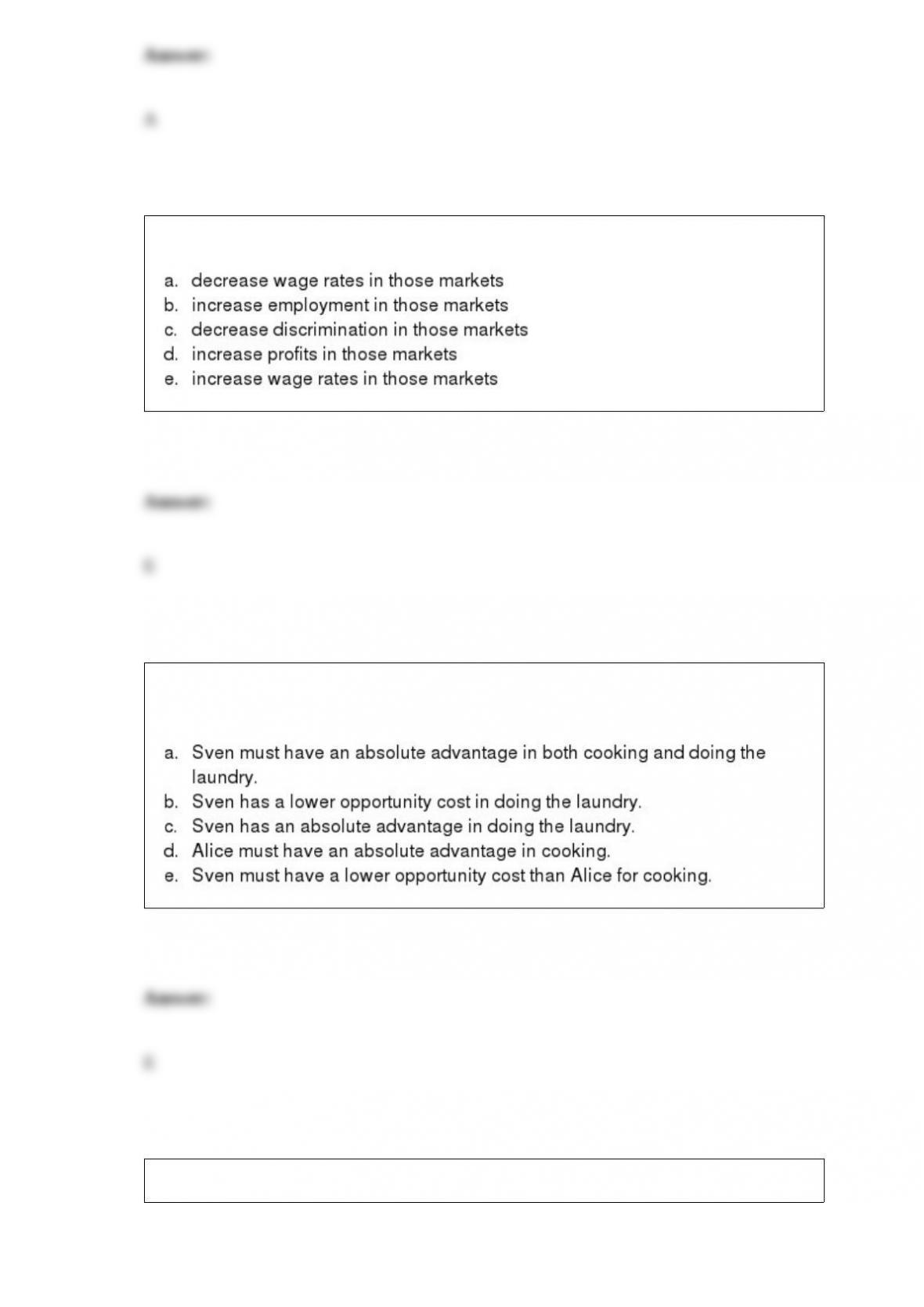
Barriers that prevent workers from entering particular labor markets
Sven has a comparative advantage over Alice in cooking but not in doing the laundry.
Which of the following must be true?
When individuals come together to buy and sell goods and services, they form a(n)

Which of the following statements about interest rate determination is most accurate?
a. In both the long run and the short run, the interest rate is determined in the market for
loanable funds.
b. In both the long run and the short run, the interest rate is determined in the money
market.
c. In the short run the interest rate is determined in the market for loanable funds, and in
the long run it is are determined in the money market.
d. In the short run the interest rate is determined in the money market, and in the long
run it is determined in the market for loanable funds.
e. The interest rate is determined through an interaction between the money market and
the loanable funds market.
In some developing countries, labor productivity has remained stagnant or fallen
because
a. the capital stock has grown at about the same rate or more slowly than the population
b. the capital stock has grown faster than the population
c. the population has decreased
d. foreign labor has been utilized
e. wages have dropped

Joe spends all of his money on concert tickets and compact disks. Figure 6-3 shows his
budget constraint when his income is $200. The price of a ticket is $40, while the price
of a compact disk is $20. What would happen to Joe’s budget line if his income
increased to $300 and the prices of concert tickets and compact disks each increased by
50 percent?
Figure 6-3
Income = $ 200
Price per Ticket = $40
Price per Compact Disk $ 20
It is easy for one financial institution to reduce its leverage by acting alone, but when
many financial institutions try to do the same thing at once, asset prices fall rapidly and
bank capital declines for all such institutions.
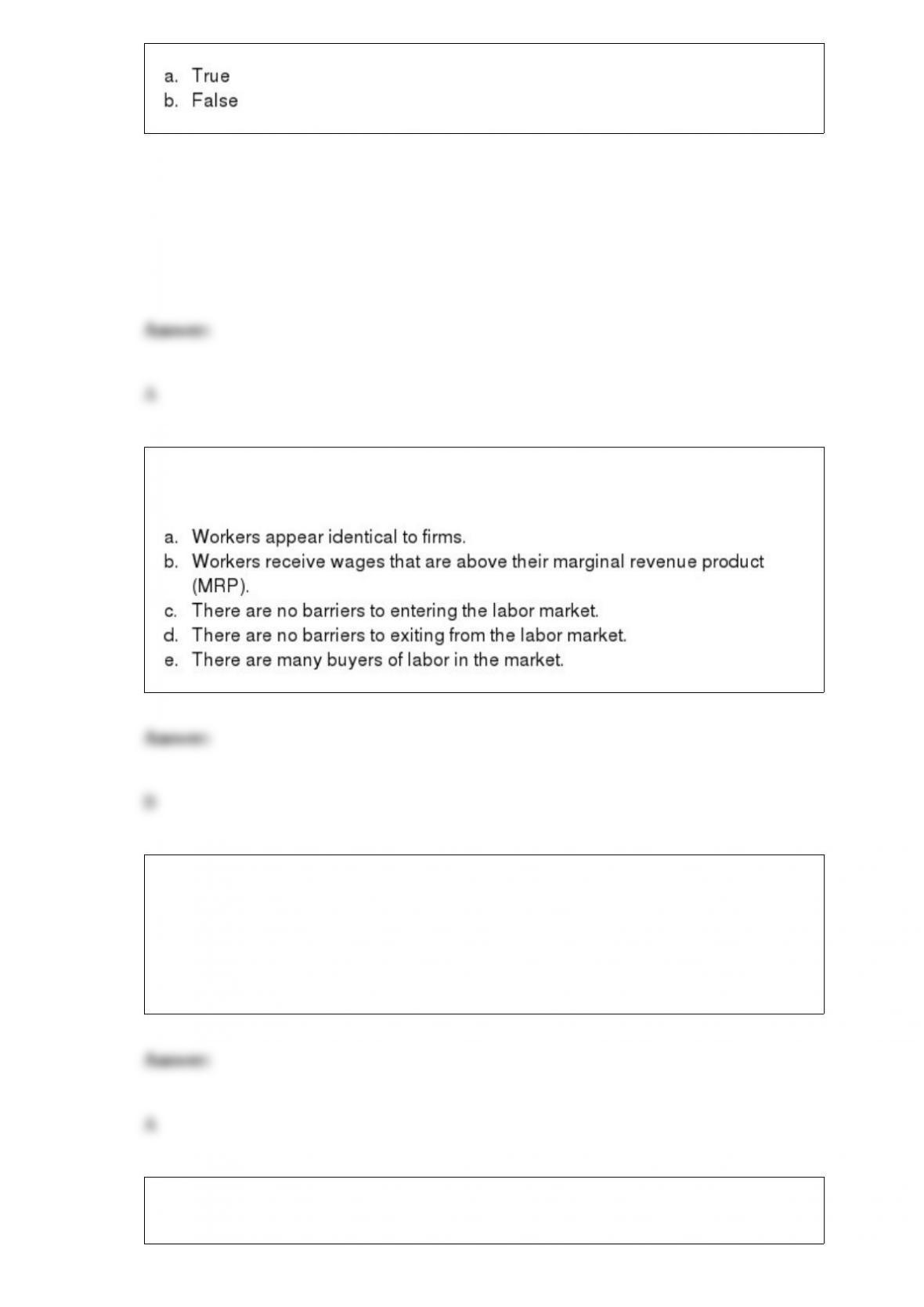
Each of the following, except one, is a condition that characterizes a perfectly
competitive labor market. Which is the exception?
Government purchases
a. are only weakly related to aggregate income
b. include spending on goods and services plus transfer payments
c. are inversely related to aggregate income
d. are inversely related to the price level
e. are inversely related to the interest rate
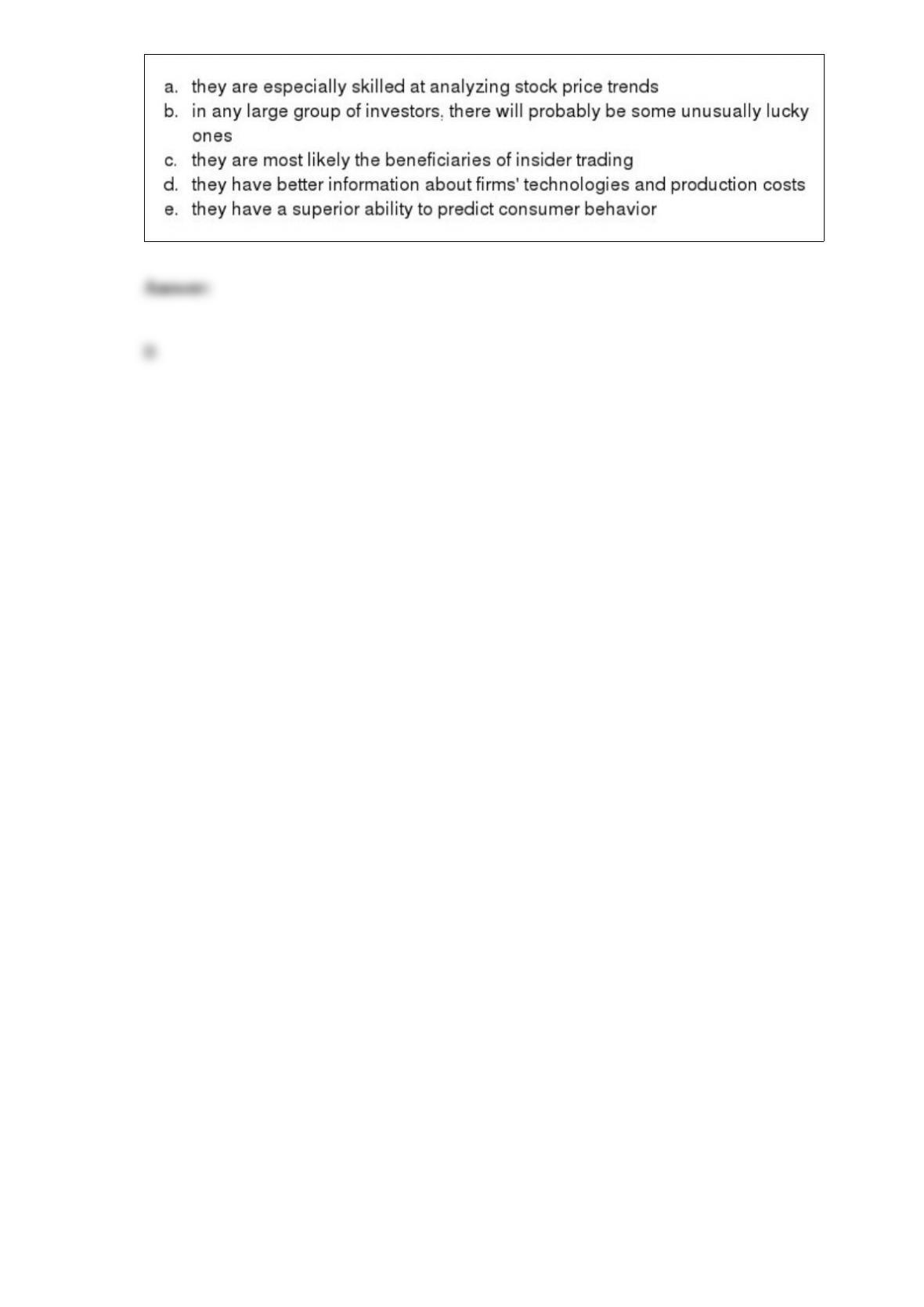
According to the efficient markets theory of stock prices, some investors outperform the
market because