
In response to the 2007-2009 recession, the Economic Stimulus Act of 2008, under
President Bush, was composed of approximately _____; the American Recovery and
Reinvestment Act, under President Obama, was composed of approximately ______.
A. one-fourth tax cuts and three-fourths spending increases; two-thirds tax cuts and
one-third spending increases
B. half tax cuts and half spending increases; only spending increases
C. two-thirds tax cuts and one-third spending increases; one-fourth tax cuts and
three-fourths spending increases
D. only tax cuts; half tax cuts and half spending increases
Consider the labor market below.
If a minimum wage of $12 per hour is imposed in this labor market then worker surplus
will______ and employer surplus will ______.
A. rise; fall
B. fall; fall
C. stay the same; fall
D. rise; stay the same

From the perspective of an externality, most communities have zoning laws to:
A. control external benefits.
B. control external costs.
C. encourage positive externalities.
D. raise government revenues.
Chris pays $10,000 for a newly issued two-year government bond with a $10,000 face
value and a 6 percent coupon rate. One year later, after receiving the first coupon
payment, Chris sells the bond. If the current one-year interest rate on government bonds
is 7 percent, then the price Chris receives is:
A. $10,000.
B. $700.
C. greater than $10,000.
D. less than $10,000.
Depression and lost self-esteem are examples of the ______ costs of unemployment,
while the lost income and tax revenue are examples of the ______ costs of
unemployment.
A. social; psychological
B. economic; social
C. economic; psychological
D. psychological; economic
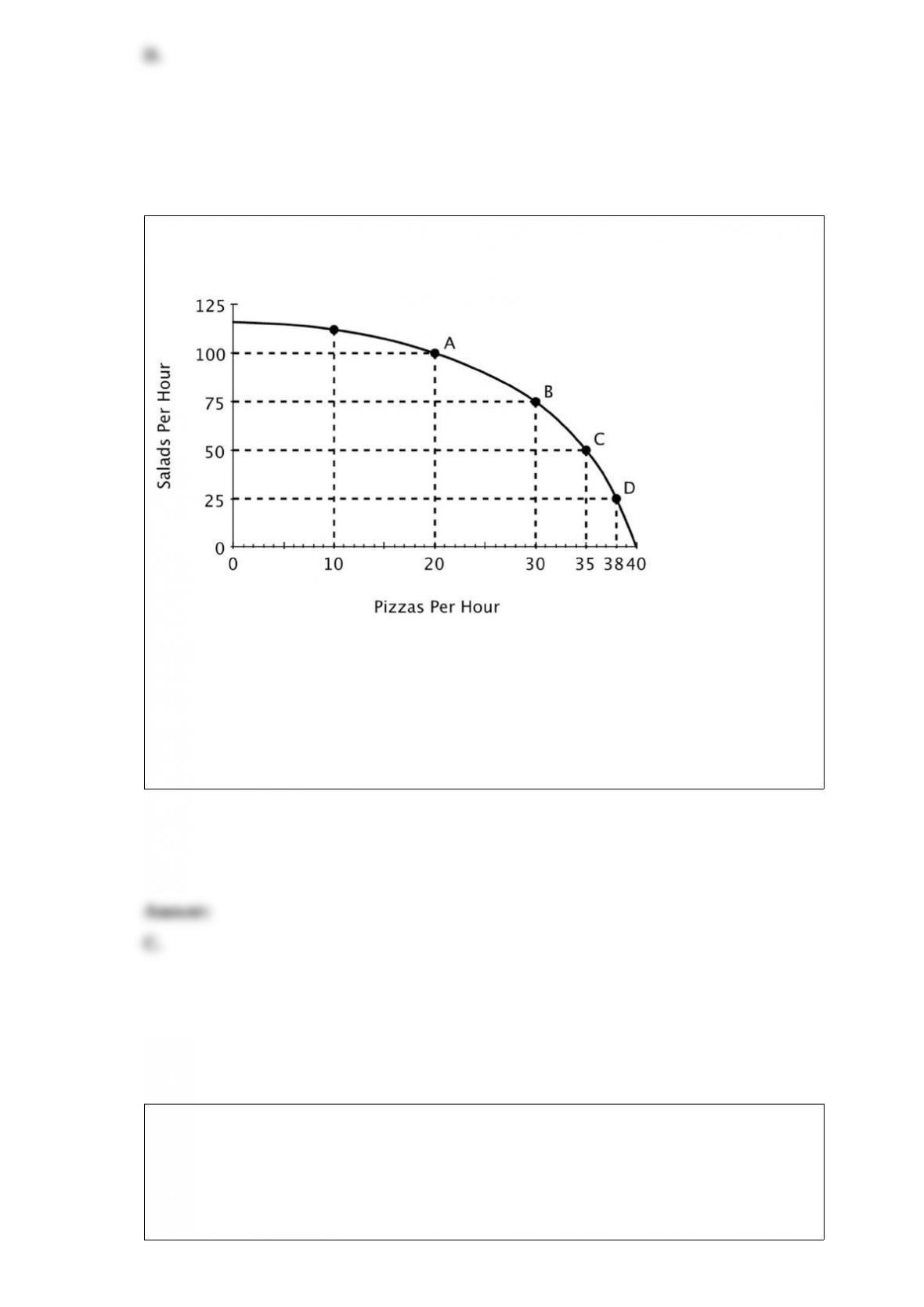
Refer to the figure below. When P = 4, the price elasticity of demand for the demand
curve D1 is ______ and D2 is ______.
A. 3; 3
B. 2/3; 1/3
C. 1/3; 3
D. 1/3; 2/3
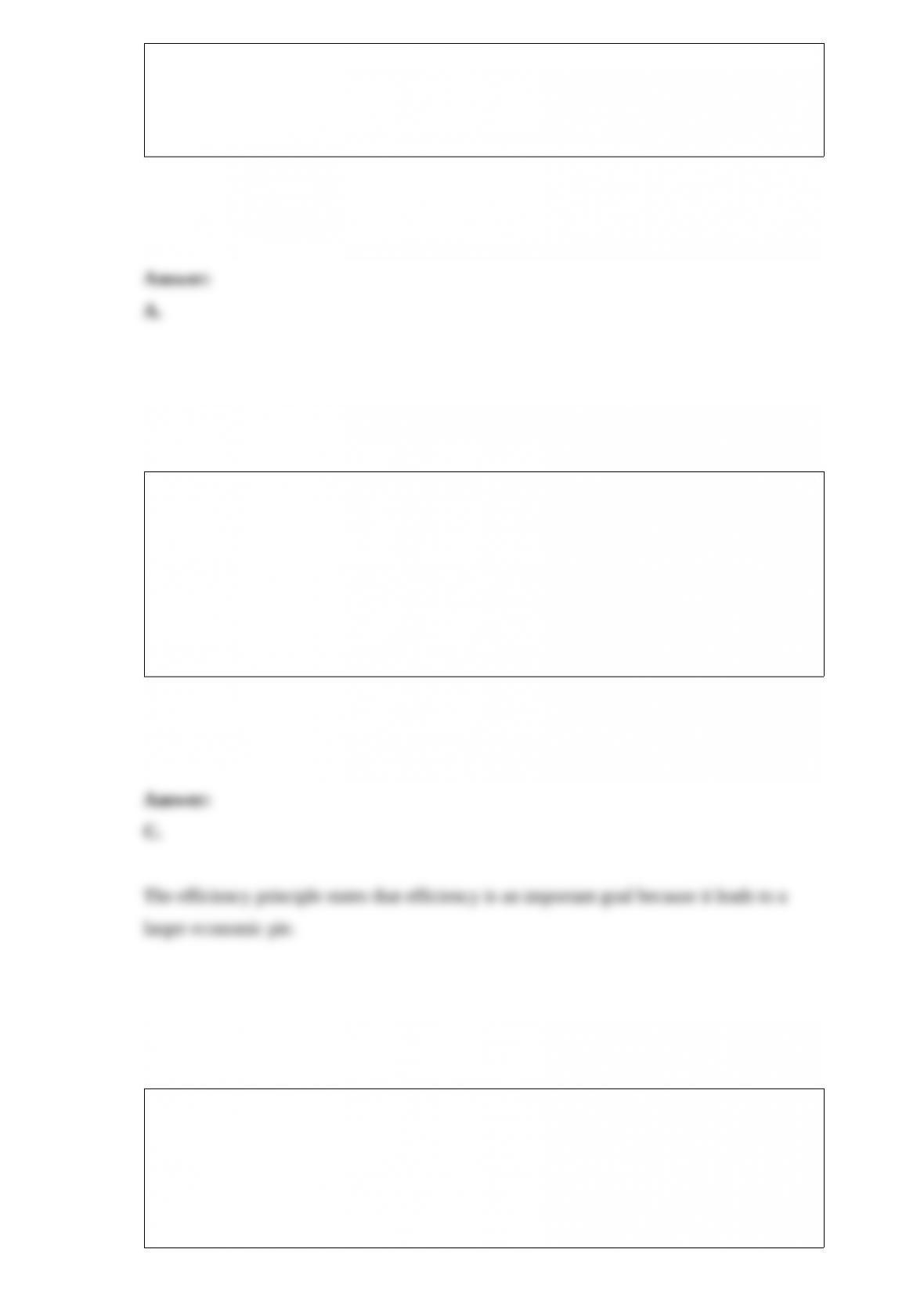
Refer to the figure below. As the production of pizza increases, the opportunity cost of
producing pizza:
A. doesn’t change.
B. decreases.
C. increases.
D. become negative.
The two parts of the Keynesian consumption function are consumption that depends on
______ and consumption that depends on _____.
A. disposable income; factors other than disposable income
B. planned spending; unplanned spending
C. real income; nominal income
D. money; wealth
Efficiency is an important goal in economics because it:
A. assures a fair outcome.
B. assures a normative outcome.
C. assures a higher level of output.
D. takes into consideration the distribution of income.
In Macroland, a country whose economy operates according to Okun’s law, potential
GDP equals $10 trillion, the actual rate of unemployment is 8 percent, and the natural
unemployment rate is 6 percent. What is real actual GDP in Macroland?
A. $9.6 trillion
B. $9.8 trillion
C. $10 trillion
D. $10.2 trillion
In some countries, medical care is provided free-of-charge to citizens and is paid for by
the government. In those countries, medical care:
A. is not a scarce resource.
B. is available at zero opportunity cost.
C. is rationed by some non-monetary method.
D. does not exhibit diminishing marginal returns.
An economic argument in favor of providing medical care through HMOs is that they:
A. increase provision of care to the sickest patients.
B. reduce incentives for providing unnecessary or excessive care.
C. reduce the cost of seeing a specialist.
D. reduce the probability of patients filing a malpractice claim.

MegaCable and Acme are competing for an exclusive contract to provide the city of
Dustin with cable television for the next year. The firm that wins the contract will earn
an economic profit of $5 million. The contact will be awarded to the firm that spends
the most on lobbying. If both firms spend the same amount on lobbying, then the
winner will be determined by a coin flip, so each will have a 50 percent chance of
winning. If both firms refrain from spending anything on lobbying, the expected profit
from the contract is:
A. $5 million.
B. $2.5 million.
C. $2 million.
D. $1 million.
Generally, ______ motivates firms to enter an industry, while ______ motivates firms
to exit an industry.
A. economic profit; economic loss
B. accounting profit; accounting loss
C. accounting profit; economic loss
D. economic profit; accounting loss
If the borrower and lender agree to a loan at 8% when the inflation rate is 3%, then 8%
is the ______ interest rate and 5% is the ______ interest rate.
A. real; nominal
B. nominal; real
C. relative; nominal
D. real; relative
A measure of GDP in which quantities produced are valued at the prices of a fixed base
year is called:
A. real GDP.
B. nominal GDP.
C. base GDP.
D. current GDP.
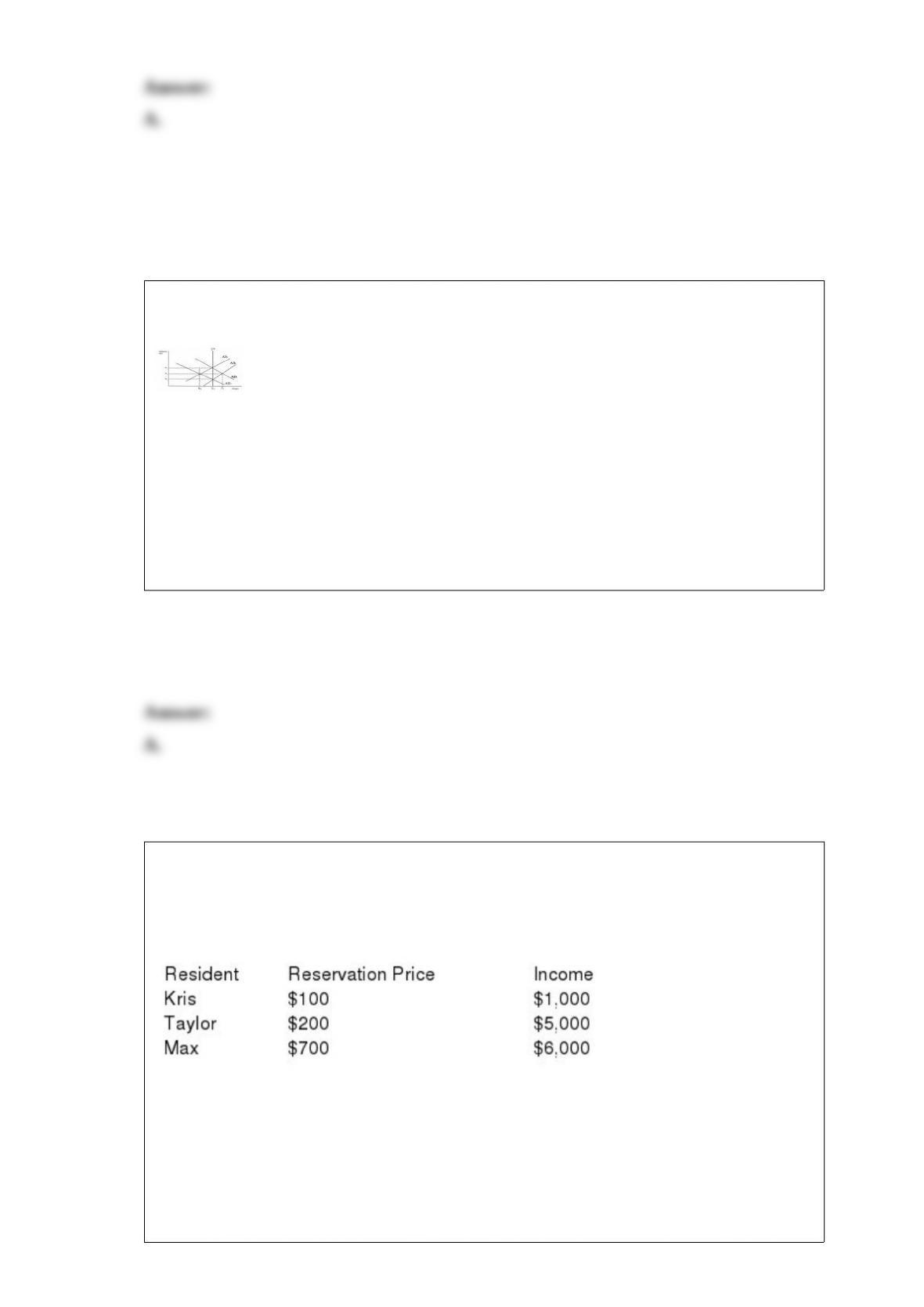
Refer to the figure below. Suppose the economy is initially in equilibrium with output
Y2 and inflation rate of π3. An increase in military spending will:
A. shift AD from AD2 to AD1.
B. shift AD from AD1 to AD2.
C. shift AS from AS2 to AS1.
D. shift AS from AS1 to AS2.
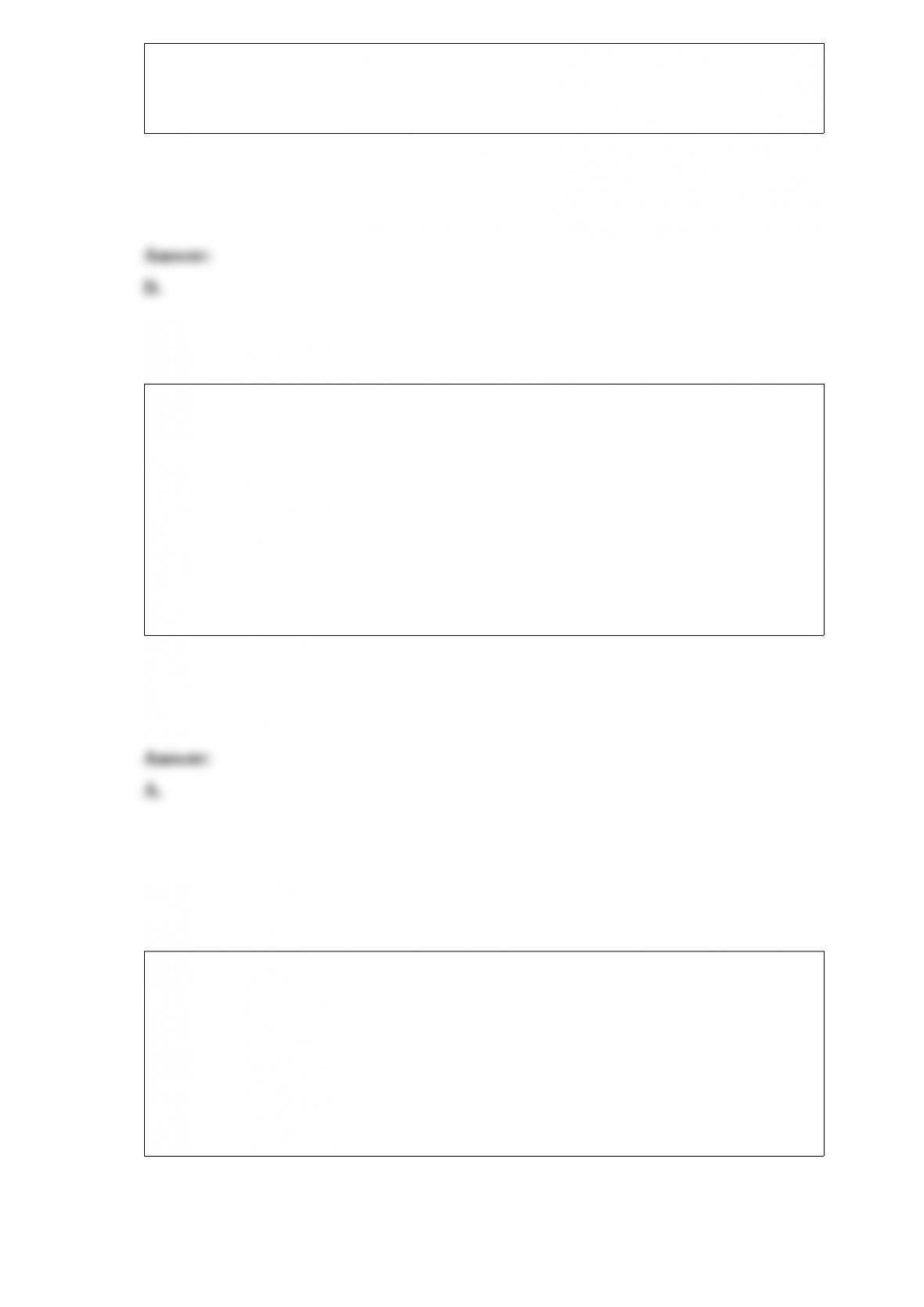
Kris, Taylor and Max are the only three residents in a neighborhood. A public good that
would benefit all of them has a one-time installation cost of $900. The value of the
public good to each resident is shown in the table below. Any tax plan must be
approved by simple majority.
Suppose that the government knows each resident’s reservation price. To collect no
more than $900 in tax revenue, each resident should be charged ______ percent of their
______.
A. 100; reservation price
B. 70; reservation price
C. 20; income
D. 90; reservation price
When the Fed tightens U.S. monetary policy, domestic interest rates ______, making
U.S. assets relatively more attractive to foreign investors, and ______ the equilibrium
exchange rate.
A. rise; increasing
B. fall; increasing
C. fall; decreasing
D. rise; decreasing
In a repeated prisoner’s dilemma, players:
A. never learn to play their dominant strategies.
B. can sustain cooperation by employing a tit-for-tat strategy.
C. can sustain cooperation by playing their dominant strategy.
D. always play their dominant strategy.
Consumers know that some fraction, p, of all new cars produced and sold in the market
are defective. The defective ones cannot be identified except by those who own them.
Cars do not depreciate with use. Consumers are risk-neutral and value nondefective cars
at $8,000. If new cars sell for $6,000 and used cars sell for $2,000, then what is the
fraction p?
A. 0.25
B. 0.33
C. 0.5
D. 0.67
In an open economy, an increase in the government’s budget deficit will ______ the
domestic real interest rate and ______ the level of capital investment in the country,
holding other factors constant.
A. increase; increase
B. increase; decrease
C. decrease; decrease
D. decrease; increase
Suppose an increase in the price of hamburger from $3 to $4 leads to an increase in
quantity supplied from 100 units to 150 units. At the original price, the price elasticity
of supply for hamburgers is ______ so supply is ______.
A. 2/3; elastic
B. 2/3; inelastic
C. 3/2; elastic
D. 3/2; inelastic
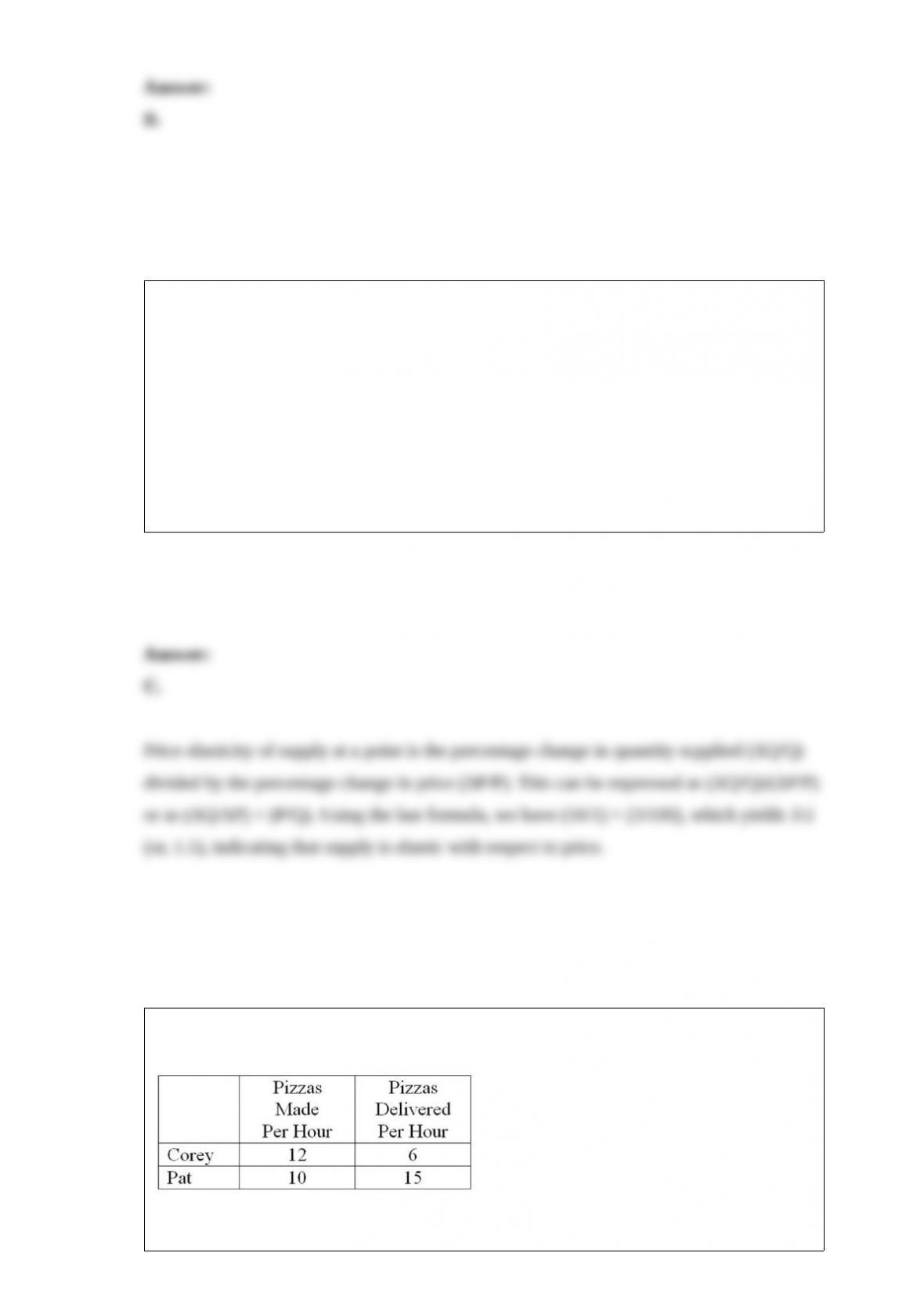
Refer to the table below. ______ has the comparative advantage in making pizza, and
______ has the comparative advantage in delivering pizza.
A. Corey; Corey

B. Pat; Pat
C. Pat; Corey
D. Corey; Pat
In order to promote growth, the poorest countries-in contrast to the middle-level and
rich countries-need most to:
A. invest in human capital.
B. improve their infrastructure.
C. improve their legal and political environments.
D. increase their capital stock.
In which of the following situations would GDP not change?
A. As domestic consumers buy fewer tobacco products, tobacco manufacturers instead
sell their products, at the same price, to foreign buyers.
B. Domestic consumers begin to buy less imported wine, and instead spend just as
much money on domestically produced wine.
C. Without reducing the number of automobiles sold, domestic automobile producers

decide to reduce the number of automobiles they produce, rather than producing cars
that would end up as unsold inventory.
D. More and more domestic consumers opt to build a new home, rather than spending
the same money on an already existing home.
Mexico and the members of OPEC produce crude oil. Realizing that it would be in their
best interests to form an agreement on production goals, a meeting is arranged and an
informal, verbal agreement is reached. If both Mexico and OPEC abide by the
agreement, then OPEC’s profit will be $200 million and Mexico’s profit will be $100
million. If both Mexico and OPEC cheat on the agreement, then OPEC’s profit will be
$175 million and Mexico’s profit will be $80 million. If only OPEC cheats, then
OPEC’s profit will be $185 million, and Mexico’s profit will be $60 million. If only
Mexico cheats, then Mexico’s profit will be $110 million, and OPEC’s profit will be
$150 million. You may find it helpful to fill in the payoff matrix below.
In the Nash equilibrium of this game:
A. both Mexico and OPEC abide by the agreement.
B. both Mexico and OPEC cheat on the agreement.
C. Mexico cheats on the agreement and OPEC abides by the agreement.
D. OPEC cheats on the agreement and Mexico abides by the agreement.
Suppose all firms in a perfectly competitive industry are earning an economic profit.
One would expect that, over time, the number of firms in the industry will ______ and
the market price will ______.
A. rise; fall
B. fall; rise
C. rise; rise
D. rise; stay the same
For perfectly competitive firms, marginal revenue ______ price; for monopolists
marginal revenue ______ price.
A. equals; equals
B. equals; is greater than
C. is less than; equals
D. equals; is less than
The proposition each extra percentage point of cyclical unemployment is associated
with about a 2 percent widening of a negative output gap, measured in relation to
potential output, is known as:
A. the recessionary gap.
B. the expansionary gap.
C. the Fisher effect.
D. Okun’s law.
Suppose the marginal cost of the 1st hour of talking on the phone is $50, the marginal
cost of the 2nd hour is $75, and the marginal cost of the 3rd hour is $105. In this case,
the total cost of talking on the phone for 3 hours is:
A. $315
B. $105
C. $230
D. $150
An inflation rate of over 500 percent per year would be classified as:
A. relative inflation.
B. deflation.
C. inflation.
D. hyperinflation.
Two firms, Industrio and Capitalista, have access to five production processes, each of
which has a different cost and gives off a different amount of pollution. The daily costs
of the processes and the corresponding number of tons of smoke emitted are shown in
the table below. Both firms currently use process A, and each emits 4 tons of smoke per
day. The government is considering two plans to reduce pollution: requiring both firms
to reduce pollution by 25 percent or auctioning pollution permits. Each permit would
entitle the owner to emit one ton of smoke per day. Without a permit, no smoke can be
emitted.
process
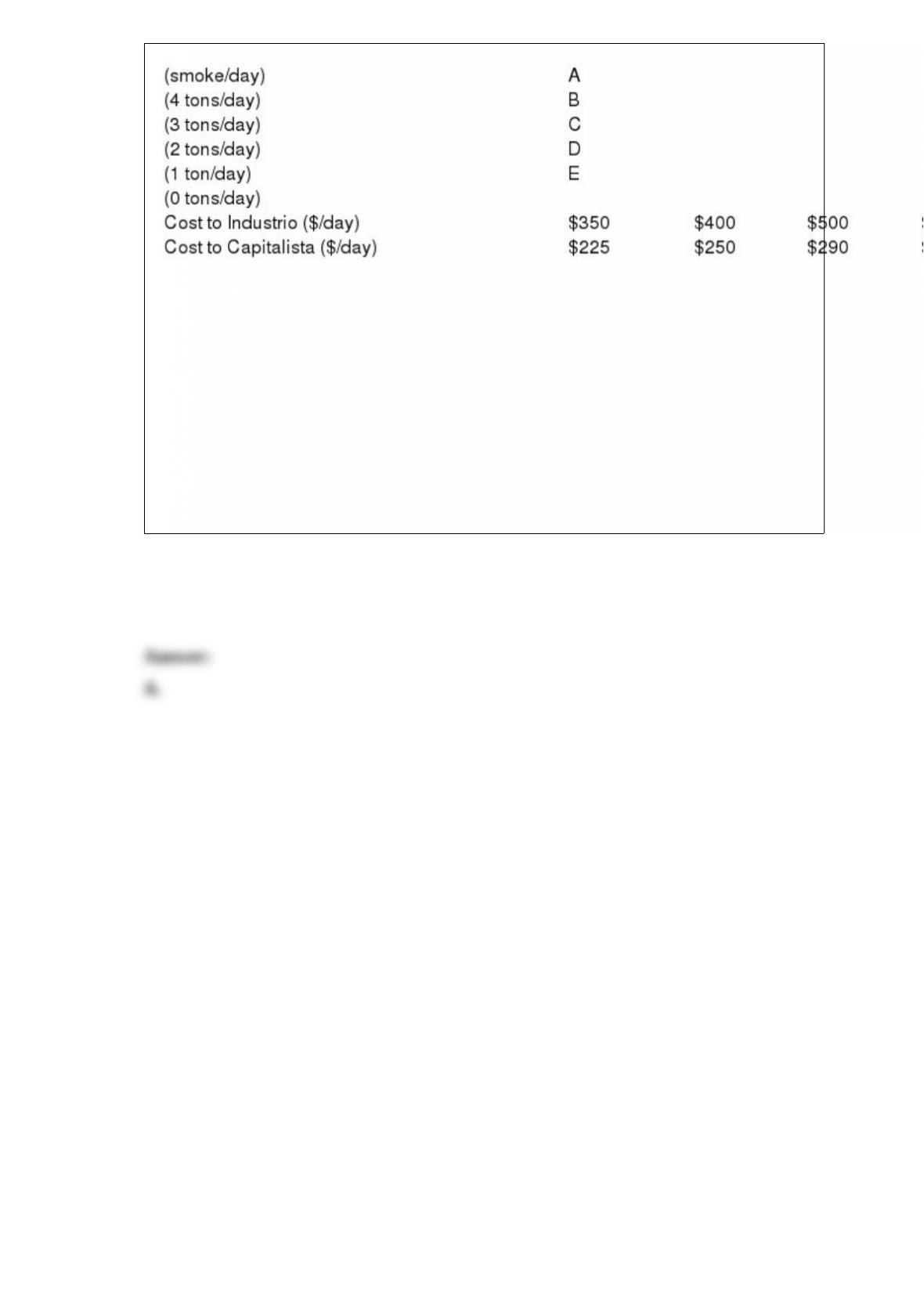
Given that both firms are currently using process A, if the government decided to
auction pollution permits, it would need to sell _____ permits in order to reduce
pollution by 25 percent.
A. 6
B. 4
C. 2
D. 1