1) Relative to 1800, today in the world there are:
A.more people but lower per-capita consumption.
B.more people but the same per-capita consumption.
C.more people and higher per-capita consumption.
D.the same number of people but higher per-capita consumption.
2)
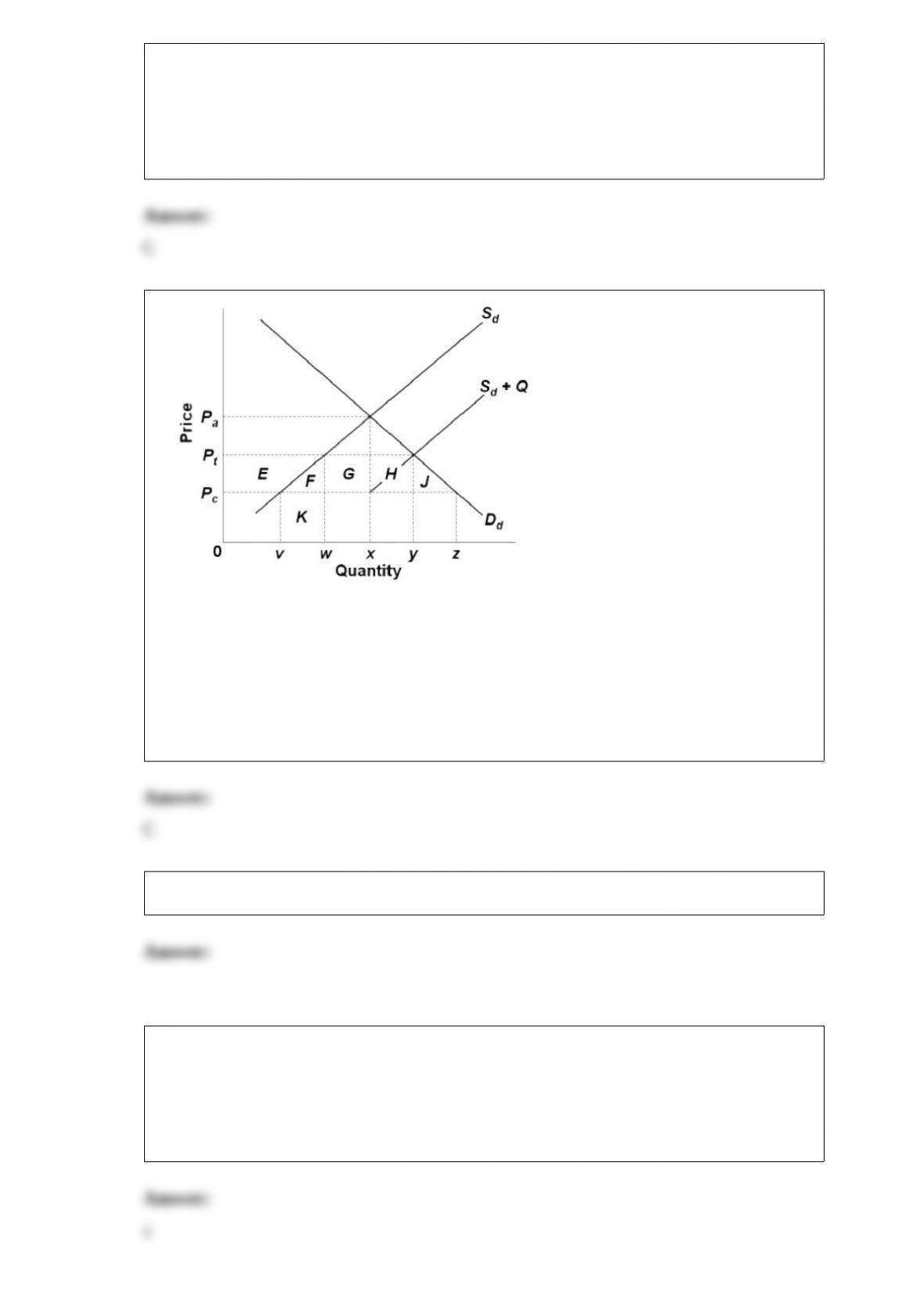
Refer to the above diagram, where Sd and Dd are the domestic supply and demand for a
product and Pc is the world price of that product. Sd + Q is the product supply curve
after an import quota is imposed. The size of the import quota:
A.is vz
B.is vy
C.is wy
D.cannot be determined.
3)
4) which of the following is not an economic cost?
a.wages.
b.rents.
c.economic profits.
d.payments made to the entrepreneur for organizing production.
5) A commercial bank can add to its actual reserves by:
A.lending money to bank customers.
B.buying government securities from the public.
C.buying government securities from a Federal Reserve Bank.
D.borrowing from a Federal Reserve Bank.
6)
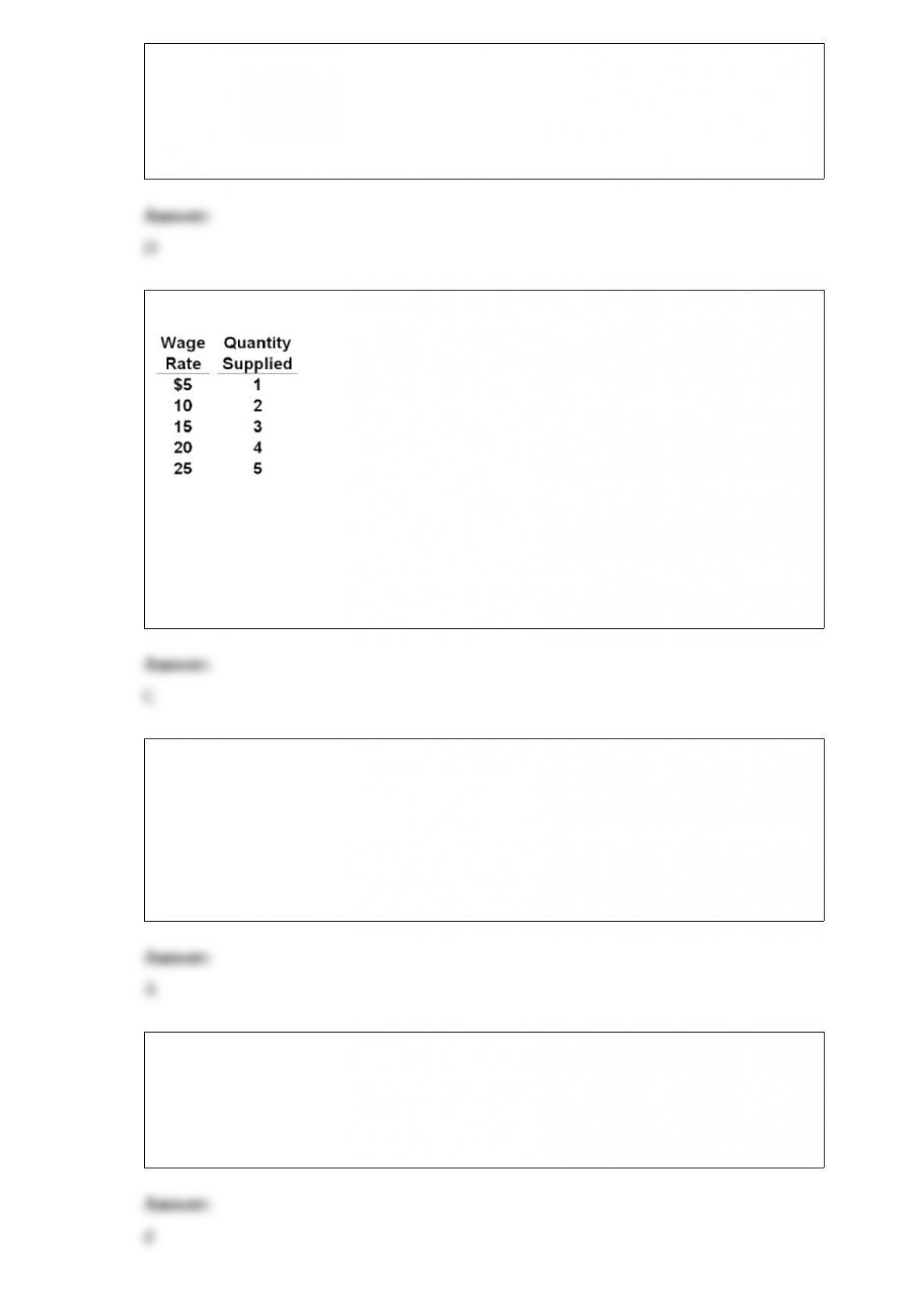
Refer to the above information. This labor supply curve demonstrates that:
A.the firm is selling its output under imperfectly competitive conditions.
B.the firm is selling its output under purely competitive conditions.
C.higher wage rates must be paid to successive workers to overcome their higher
opportunity costs.
D.the firm is hiring labor under purely competitive conditions.
7) As it relates to R&D, a firm’s expected-rate-of-return-curve, r:
A.slopes downward because the firm arrays, highest to lowest, the rates of returns on
R&D activities.
B.slopes upward because of the law of diminishing returns.
C.is a horizontal line.
D.depends on whether it borrows from the bank or used retained earnings in financing
R&D.
8) when the pure monopolist’s demand curve is elastic, marginal revenue:
a.may be either positive or negative.
b.is zero.
c.is negative.
d.is positive.
9) Which of the following statements best describes the twelve Federal Reserve Banks?
A.They are privately owned and privately controlled central banks whose basic goal is
to provide an ample and orderly market for U.S. Treasury securities.
B.They are privately owned and publicly controlled central banks whose basic function
is to minimize the risks in commercial banking in order to make it a reasonably
profitable industry.
C.They are privately owned and publicly controlled central banks whose basic goal is to
control the money supply and interest rates in promoting the general economic welfare.
D.They are privately owned and publicly controlled central banks whose basic goal is
to earn profits for their owners.
10)
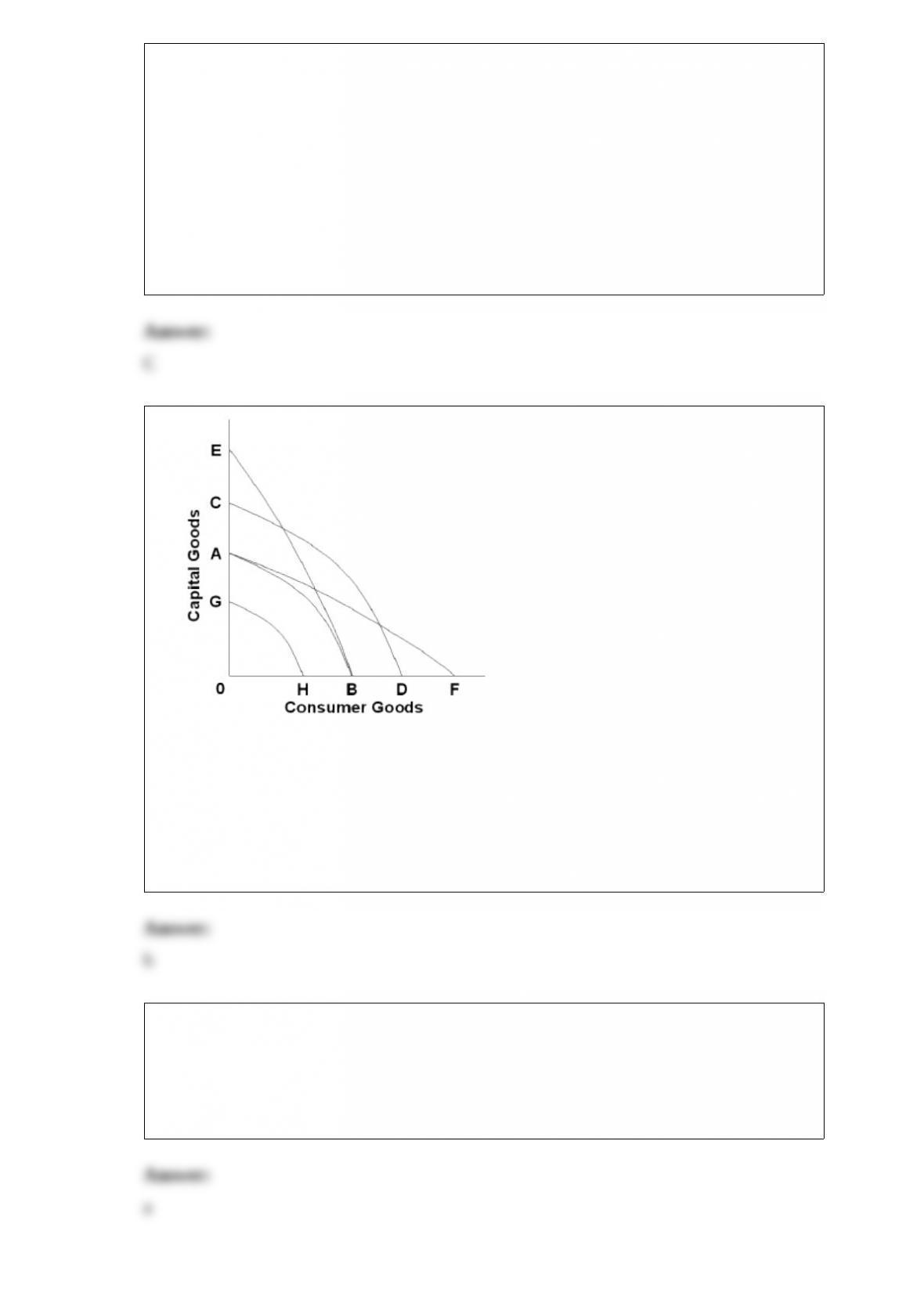
refer to the above diagram. technological advance that improves the ability to produce
capital goods but not consumer goods is shown by the shift of the production
possibilities curve from ab to:
a.cd.
b.be.
c.af.
d.gh.
11) in determining one’s personal income tax, taxable income is:
a.total income less deductions and exemptions.
b.earned income less property income.
c.all income other than wages and salaries.
d.wage and salary income only.

12) according to the concept of comparative advantage, a good should be produced in
that nation where:
a.its domestic opportunity cost is greatest.
b.money is used as a medium of exchange.
c.its domestic opportunity cost is least.
d.the terms of trade are maximized.
13) Other things equal, the stock of capital inherited by future generations is likely to be
smaller when government spending:
A.increases during a period of recession, rather than prosperity.
B.is primarily for capital-type goods.
C.is financed by borrowing.
D.is financed by taxation.
14) (last word) legislation proposed in 2007, if passed, would have:
a.increased funding to fence, monitor, and police the u.s.-mexico border.
b.increased fines for hiring illegal immigrants.
c.increased the emphasis on allowing immigrants based on education, skills, and
language proficiency.
d.done all of these.
15) which of the following statements is correct?
a.economic profits induce firms to enter an industry; losses encourage firms to leave.
b.economic profits induce firms to leave an industry; profits encourage firms to leave.
c.economic profits and losses have no significant impact on the growth or decline of an
industry.
d.normal profits will cause an industry to expand.
16) a purely competitive firm:
a.must earn a normal profit in the short run.
b.cannot earn economic profit in the long run.
c.may realize either economic profit or losses in the long run.
d.cannot earn economic profit in the short run.
17) Compare and contrast the characteristics of economic growth in ancient or
pre-industrial times with modern economic growth today.
18) What is the relationship between the Federal funds rate and the prime interest rate?
Why doesnt the Federal Reserve target the prime interest rate?
19) What domestic macroeconomic adjustments would be necessary to maintain fixed
exchange rates when there are persistent balance-of-payments deficits? What are the
problems with these adjustments?
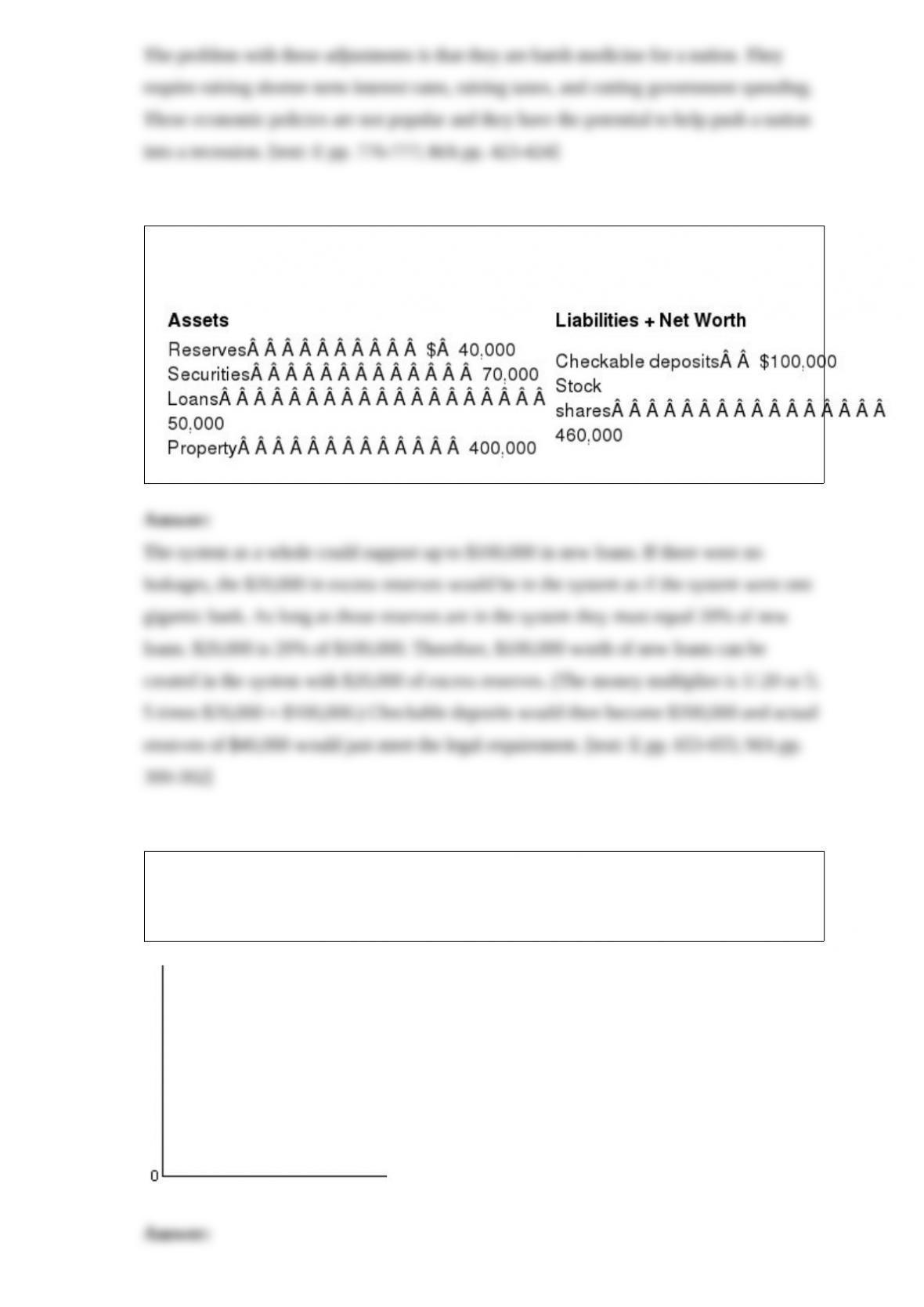
20) If the balance sheet below were for the entire banking system instead of just a
single bank, by how much could loans be expanded? Assume a reserve ratio of 20%.
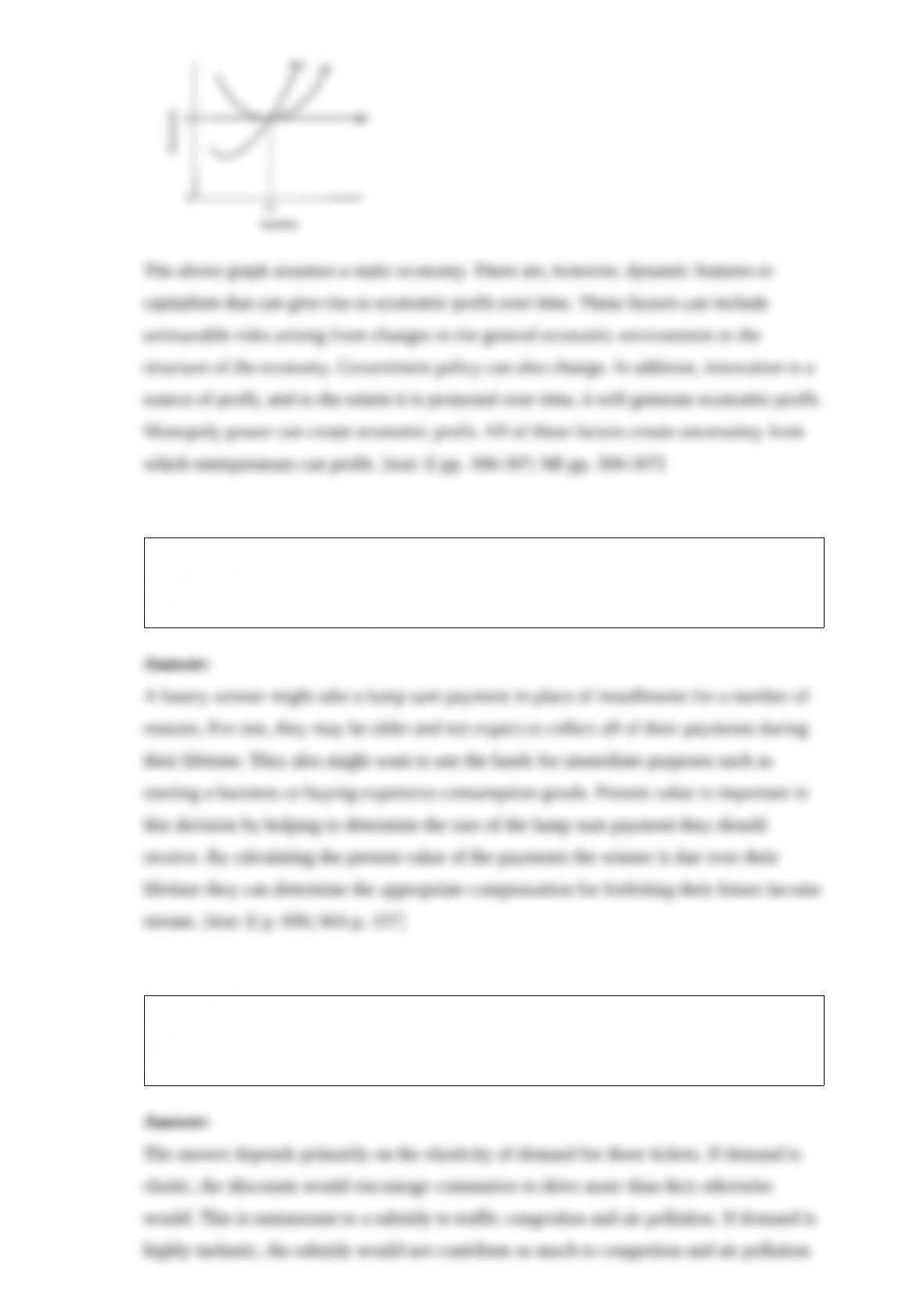
21) Using the below axes draw a graph for a purely competitive firm that is earning
normal profit in the long run. Explain why an entrepreneur may earn an economic profit
and not just a normal profit, even in the long run.
22) Why might a lottery winner decide to take a large lump sum payment rather than
receive installments of their winnings over time? How does the concept of present value
influence this decision?
23) In many large cities auto commuters are given quantity discounts on tickets to use
bridges, tunnels, and toll roads. Some argue that these discounts are a subsidy to traffic
congestion and air pollution. Do you agree? Explain.