Which of the following is not considered part of M2?
a. Small time deposits of less than $100,000.
b. Money market mutual fund shares.
c. Savings deposits.
d. Large time deposits of more than $100,000.
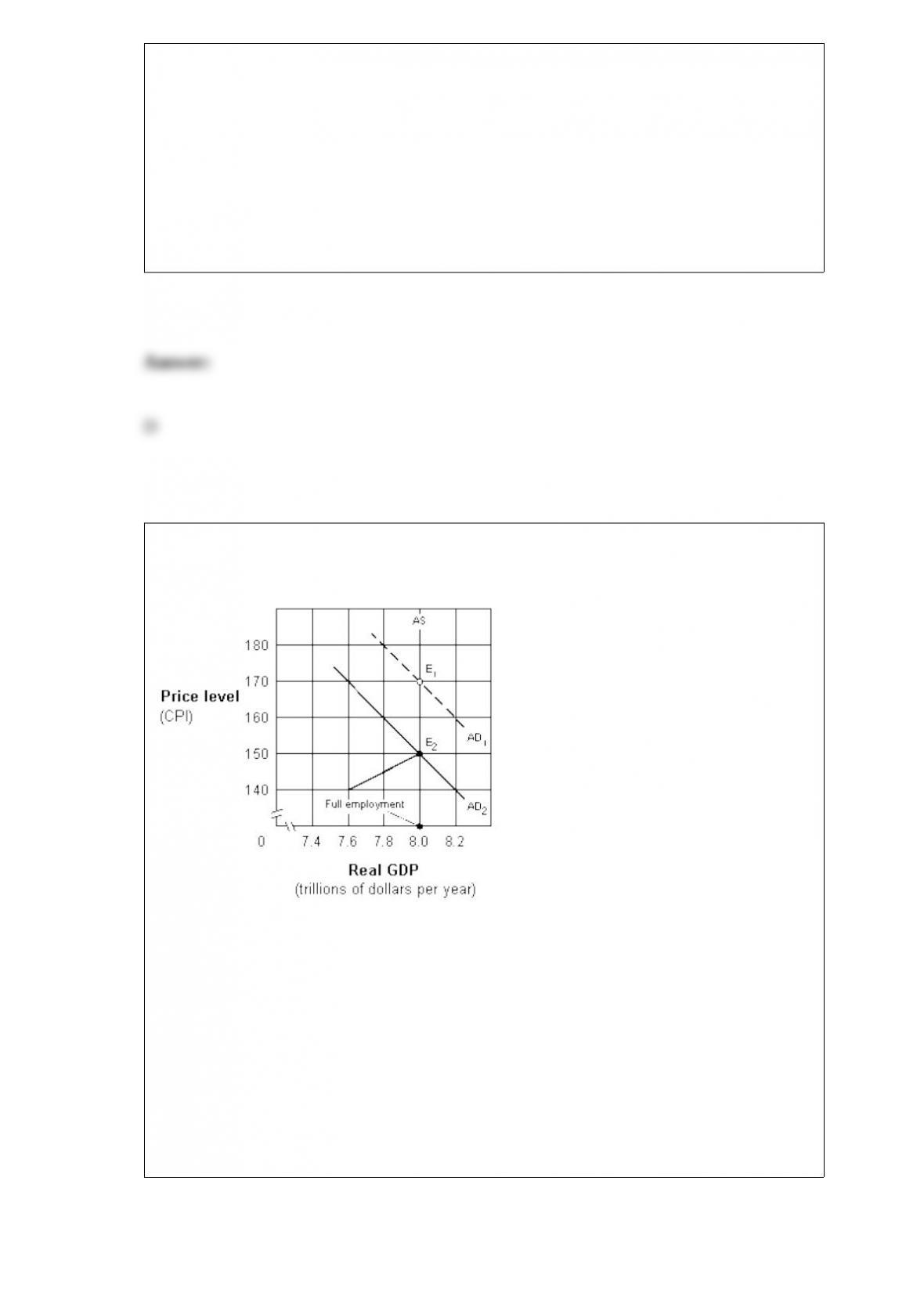
Exhibit 11-7 Aggregate demand and supply model
Beginning at equilibrium E1 in Exhibit
11-7, suppose the marginal propensity to consume (MPC) is 0.75, and the government
wishes to lower the price level form 170 to 150 while maintaining a balanced budget.
The government should reduce both spending and taxes by:
a. $20 billion.
b. $100 billion.
c. $133 billion.
d. $400 billion.

The Keynesian model of macro equilibrium provided an explanation for the:
a. high rates of both unemployment and inflation experienced during the 2110s.
b. prolonged high rates of unemployment experienced during the 1930s.
c. low interest rates of the 1950s and 1960s.
d. budget surpluses and rapid growth of the U.S. economy during the 1990s.
It is inflationary for government to increase spending if:
a. it also cuts taxes.
b. the aggregate supply curve is flat.
c. the economy is at full employment.
d. equilibrium real GDP is well below full employment.
An increase in the demand for a product means that the:

a. demand curve shifts to the left.
b. demand curve shifts to the right.
c. supply curve shifts to the right.
d. supply curve shifts to the left.
e. quantity supplied has increased.
The demand curve for Japanese yen is downward sloping because when the exchange
rate (measured in dollars per yen) falls,
a. Japanese goods become relatively cheaper so foreigners buy more of them and need
more yen to do so.
b. foreigners need more dollars to buy one yen so they can now afford more Japanese
goods.
c. the yen demand curve shifts to the right as foreigners try to buy more Japanese
goods.
d. the dollar becomes weaker and this reduces the strength of both economies.
e. everyone wants fewer yen because they have lost some of their underlying value.
The economic system that has the benefit of cooperation among individuals but suffers
from a lack of individual initiative that leads to greater production describes the:
a. market economy.

b. command economy
c. soviet economy.
d. traditional economy.
Deadweight loss is the result of:
a. disequilibrium.
b. underproduction.
c. overproduction.
d. all of these are correct.
An increase in demand for a nation’s currency in the foreign exchange market will:
a. cause the nation’s currency to appreciate.
b. make it more expensive for the nation to import goods.
c. cause the nation’s balance on current account to shift toward a surplus.
d. make it less expensive for foreigners to buy the nation’s goods.

An expansionary fiscal policy may include:
a. increases in government spending.
b. discretionary increases in transfer payments.
c. reductions in taxes.
d. All of these.
If Sam Jackson voluntarily quits one job, possesses marketable skills, and expects to
find a new job in a few weeks, then Mr. Jackson is considered:
a. frictionally unemployed.
b. cyclically unemployed.
c. seasonally unemployed.
d. structurally unemployed.
e. unwise to quit his job without already having another one.