
In the market for chewing gum, the current price is 50 cents per pack and 100,000
packs are sold. Which of the following events would lead to a new equilibrium price of
60cents and quantity of 90,000 packs?
a. an increase in the price of other kinds of candy
b. an increase in the price of the ingredients used to make chewing gum
c. a decrease in the number of young people in the population
d. an agreement by workers in the chewing gum industry to work for lower wages
e. an increase in income
The merchandise trade balance
a. reflects trade in intangibles like insurance and tourism
b. includes personal gifts to friends abroad
c. records the flow of financial assets like stocks and bonds
d. equals the value of imports minus the value of exports
e. equals the value of tangible products exported minus the value of tangible products
imported
In which of the following situations is the principal-agent problem least likely to occur?
a. a hospital stay
b. a doctor’s visit
c. a bartender serves you at the bar
d. your TV is repaired
e. a stockbroker calls with financial advice
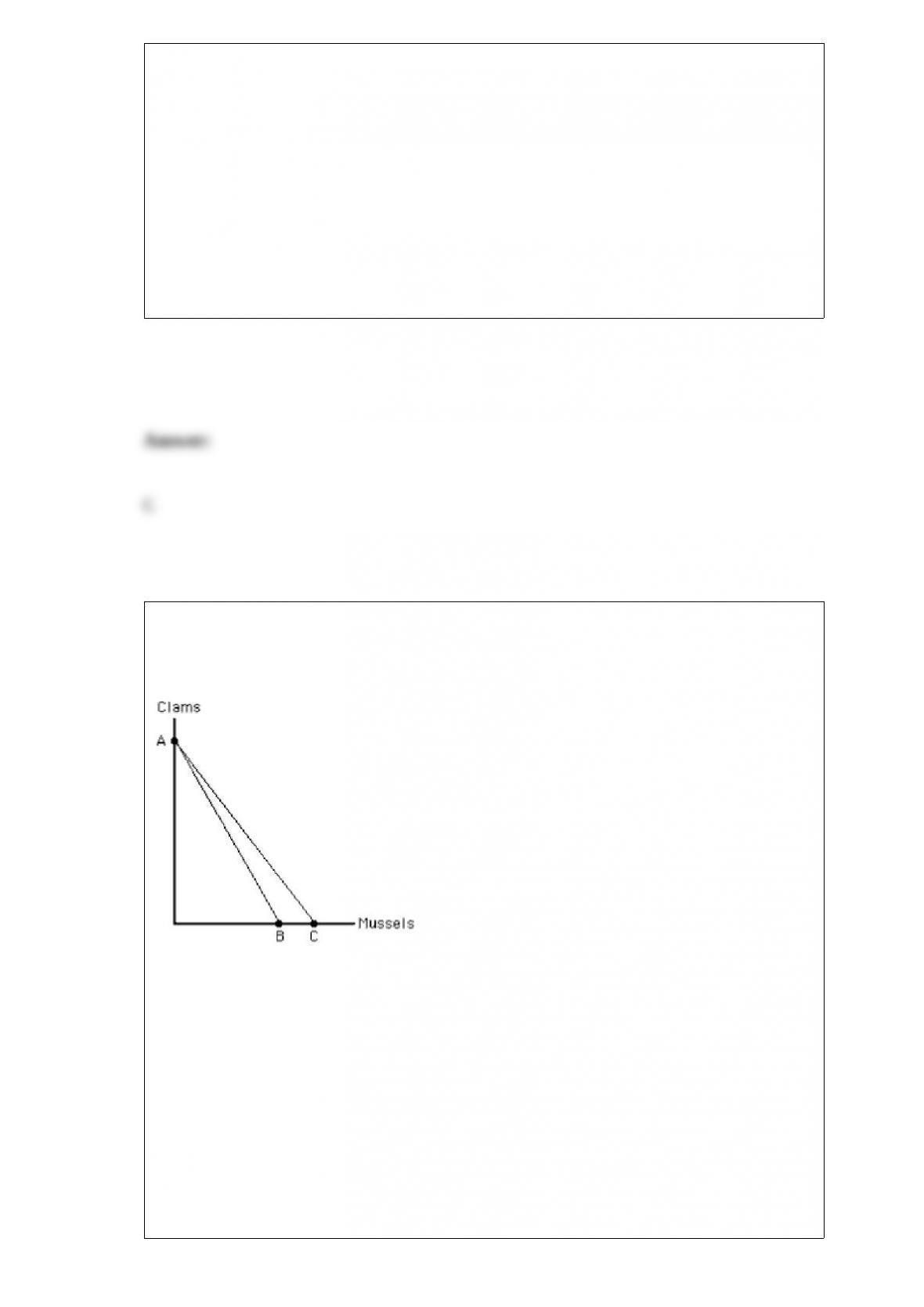
Exhibit 6-28
The rotation of the budget line in Exhibit 6-28 from AB to AC represents
a. an increase in the price of clams
b. an increase in the price of mussels
c. a decrease in the price of clams
d. a decrease in the price of mussels
e. an increase in the amount the consumer can spend

The substitution effect of a change in the price of bananas refers to the way in which a
change in the
a. price of a substitute affects the demand for bananas
b. price of bananas affects the ability to buy them
c. relative price of bananas changes demand for them
d. relative price of bananas changes the quantity demanded of bananas
e. price of a substitute affects the quantity demanded of bananas
Control of water pollution from pesticide runoff in the United States is the
responsibility of
a. the U.S. Department of Agriculture
b. the Environmental Protection Agency
c. state attorneys general
d. state departments of agriculture
e. state environmental protection agencies
Markets fail when externalities are present
a. because all of the costs and benefits of producing a good are reflected in the market
price
b. because some of the costs and benefits of producing a good are not reflected in the
market price
c. only if they are negative; positive externalities are not market failures
d. because profits are not maximized
e. if the positive externalities are less than the negative externalities
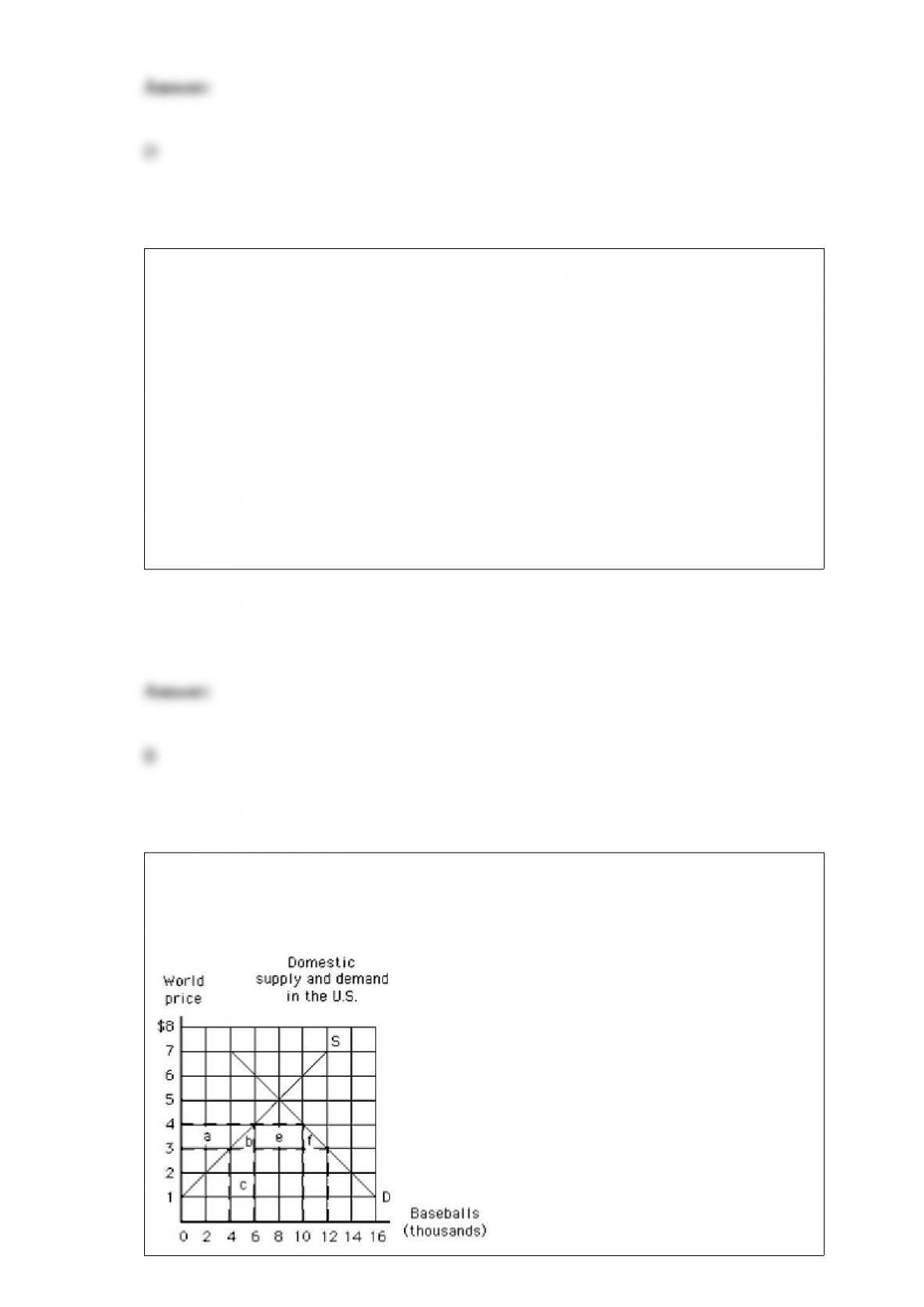
Exhibit 19-6

In Exhibit 19-6, if the world price of a baseball is $3 and a tariff of $1 per baseball is
imposed in the United States, how many baseballs will be purchased in the United
States?
a. 4,000
b. 6,000
c. 8,000
d. 10,000
e. 12,000
If a business produces and sells only one unit of a good, its profit would be the
a. price received for the good
b. price of the product minus the cost of the resources used to produce the product
c. return paid to the firm’s bank on its outstanding loans
d. price of the product minus the wages paid for the labor used to produce it
e. wages paid for the labor used to produce the product minus the price

You currently subscribe to two magazines and are trying to decide whether you should
subscribe to a third. What should determine your decision, if you are rational?
a. the total cost of the magazines compared to the total satisfaction you would receive
b. the total amount of satisfaction you would get from the magazines
c. the enjoyment you would get from the third magazine
d. the cost of the third magazine, including the time it takes to read it
e. the cost of the third magazine compared to the additional enjoyment you would get
from it
Economists tell stories — like the vending machine story —
a. in order to breathe life into economic theory and personalize abstract ideas
b. because economics is an art, not a science
c. as a way of rigorously testing economic theory
d. because doing so is a required part of the scientific method
e. to show how their theory can predict at least one real-world situation
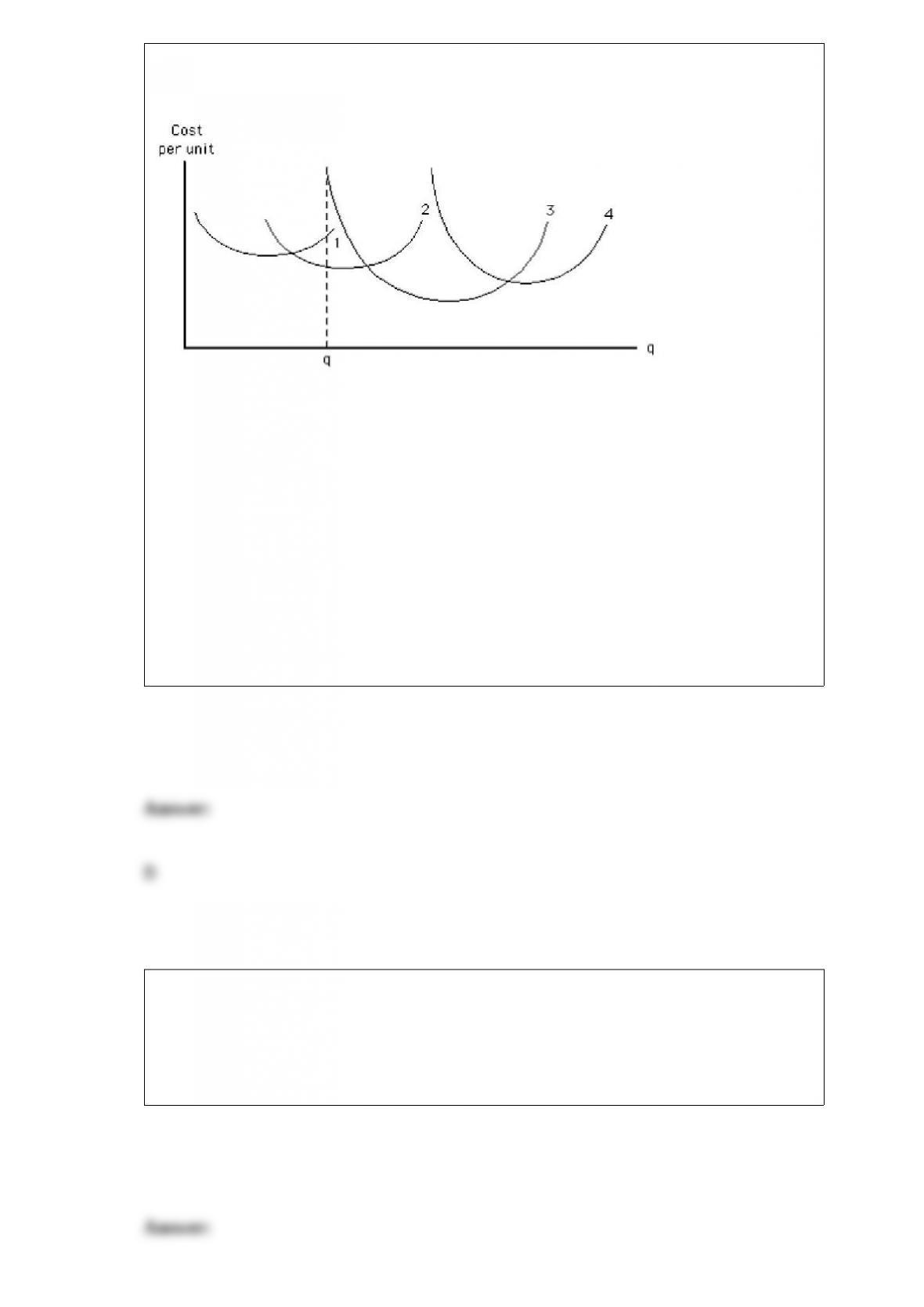
Exhibit 7-9
If the firm represented in Exhibit 7-9 wants to produce output level q, then in the long
run it should build a plant size with average total cost curve of
a. 1
b. 2
c. 3
d. 4
e. the question cannot be answered with the information given
Disequilibrium occurs when quantity demanded equals quantity supplied.
a. True
b. False

If a firm is experiencing diminishing marginal returns, its marginal product is negative.
a. True
b. False
If a union raises initiation fees significantly and if employers in the industry hire only
union workers, the supply of union labor curve will shift to the left.
a. True
b. False
Exhibit 13-5
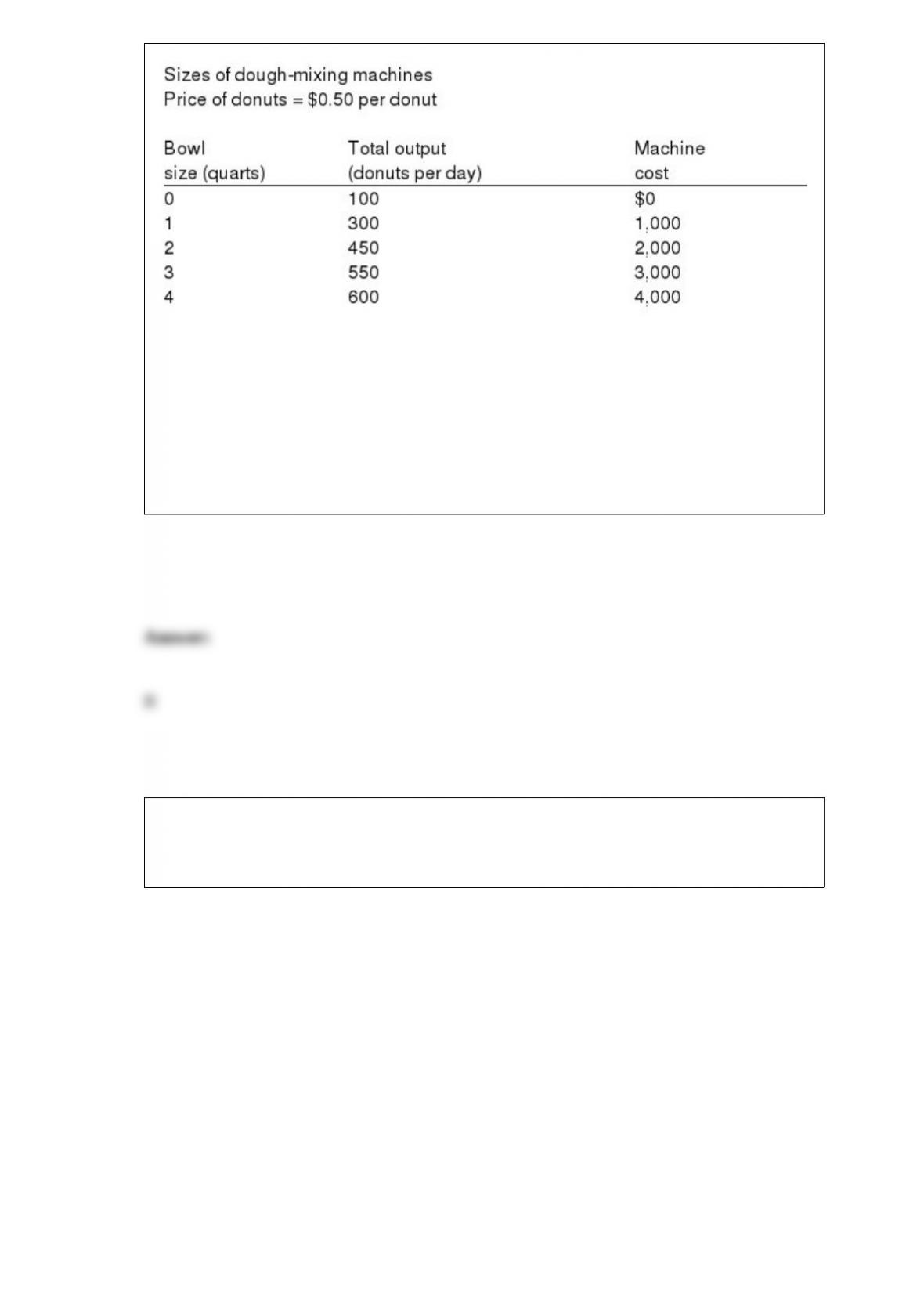
Exhibit 13-5 shows data on the various dough-mixing machines that a donut shop is
considering buying. The marginal product of the machine with the three-quart mixing
bowl is
a. 50 donuts per day
b. 100 donuts per day
c. 1,000 donuts per day
d. 550 donuts per day
e. 5 percent
Exhibit 17-8

Exhibit 17-8 represents the consumer market for higher education. If people base their
education decisions only on the marginal private benefit of education, how many years
of education will they get?
a. 3 years
b. 4 years
c. 5 years
d. 6 years
e. 7 years
If a good is inferior, an increase in income will shift the budget line to the left.
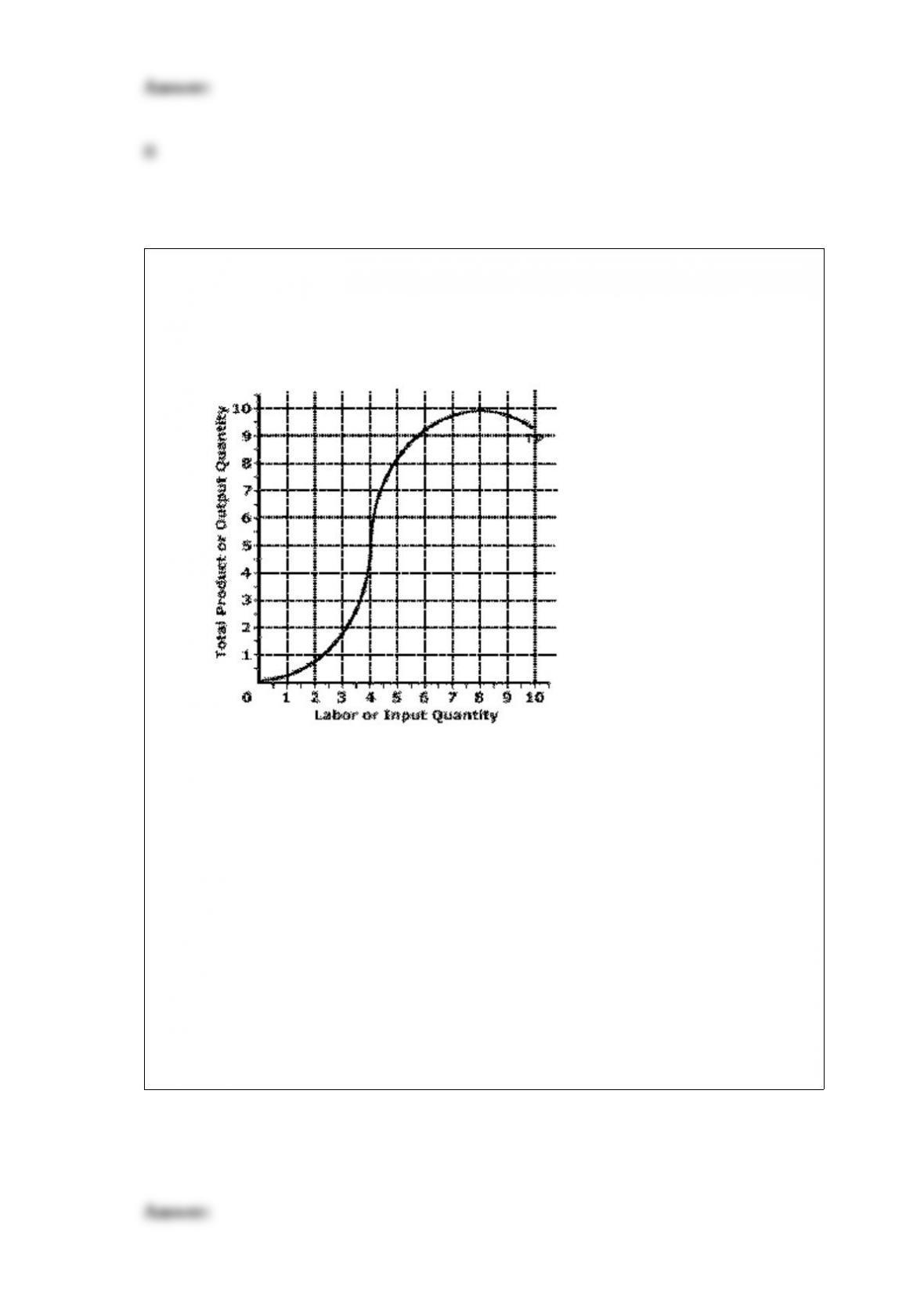
Exhibit 7-13 The Total Product of Labor
Given the information in Exhibit 7-13, what is the marginal product of the fourth unit of
labor?
a. 0 units of output
b. less than the marginal product of the third unit of labor
c. more than 3 units of output
d. 5 units of output
e. cannot be determined from the graph of total product

Which of the following is the category to which the largest portion of households’
personal income is allocated?
a. taxes collected by government
b. savings
c. purchases of services
d. purchases of durable goods
e. purchases of nondurable goods
The cross-price elasticity of demand between pancakes and waffles is positive. This
indicates all of the following except one. Which is the exception?
a. Pancakes and waffles are substitutes.
b. An increase in the price of pancakes will shift the demand curve for waffles to the
right.
c. An increase in the price of waffles will shift the demand curve for pancakes to the
right.
d. A decrease in the supply of waffles will shift the demand curve for pancakes to the
right.
e. Pancake demand and waffle demand are price elastic.
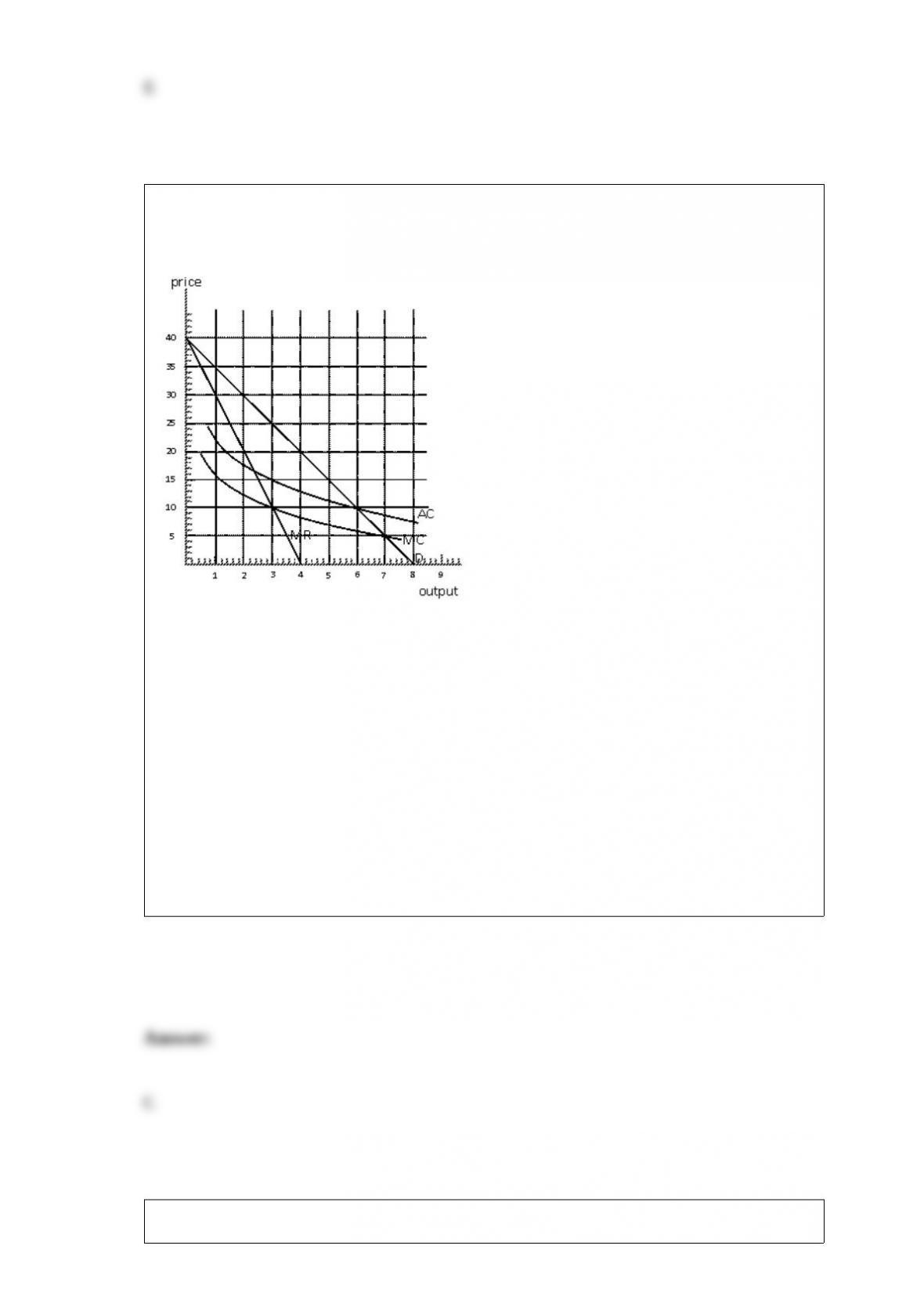
Exhibit 15-5
The natural monopoly depicted in exhibit 15-5, if unregulated would set their price at
what level?
a. $15
b. $20
c. $25
d. $30
e. $35
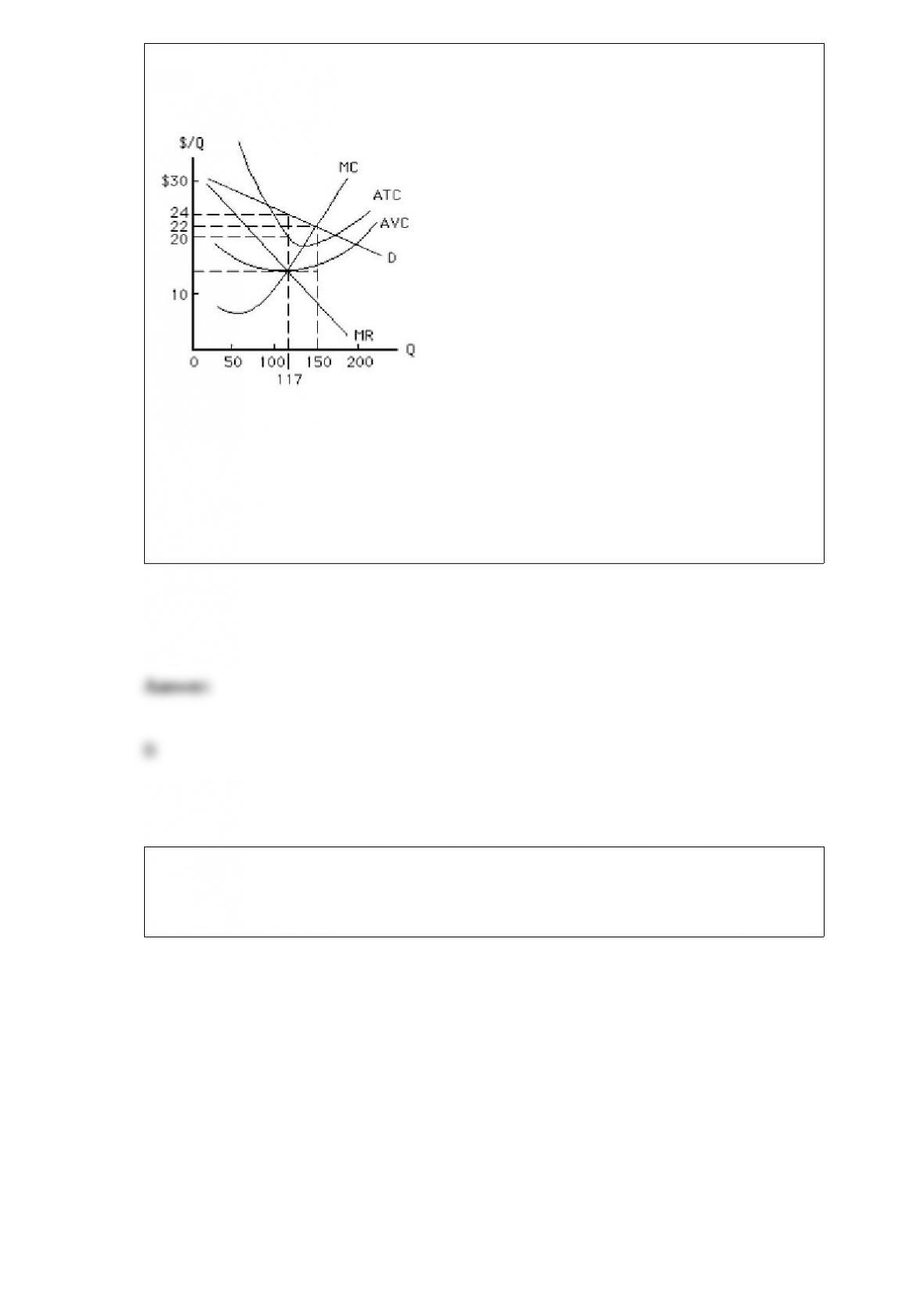
Exhibit 9-3
The firm in Exhibit 9-3, which charges the same price to all customers, will produce
where
a. MR = 0
b. MR = MC
c. MC < MR
d. MC = ATC
e. P = MC
Exhibit 20-8
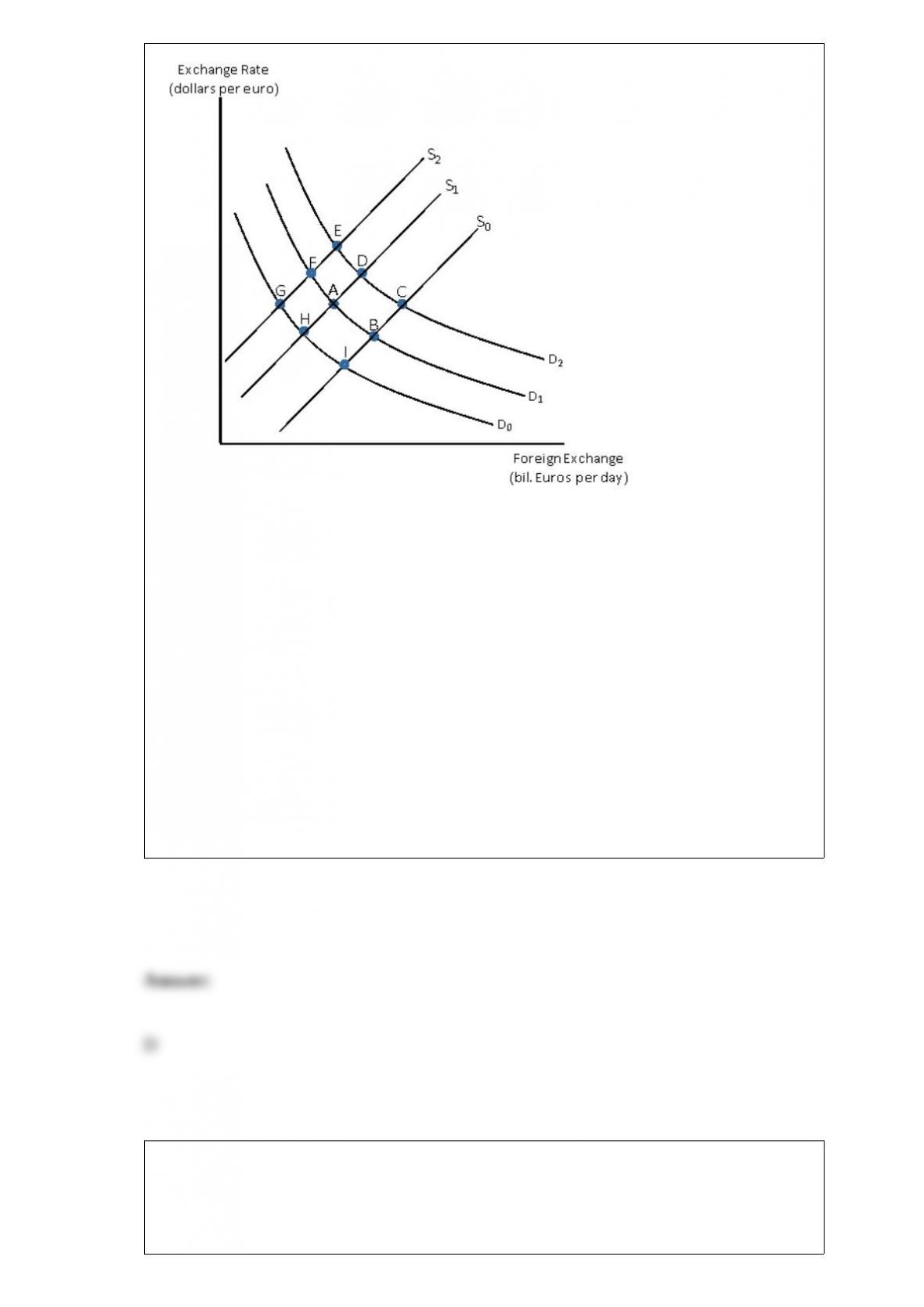
Exhibit 20-8 shows the market for euros in the US. Initially the demand for euros is
represented by D1 and the supply of euros is represented by S1. Equilibrium in the
market for euros is at point A. In response to an increase in the income of US
consumers the equilibrium will be at point _____.
a. A
b. B
c. C
d. D
e. E
If my wage rate increases, utility maximization requires that my quantity of labor
supplied
a. increase

b. decrease
c. increase if the income effect dominates the substitution effect
d. increase if the substitution effect dominates the income effect
e. increase if the substitution effect equals the income effect
Which of the following will cause demand to be relatively elastic?
a. There are few substitutes
b. The time interval is relatively long
c. The good is considered a necessity
d. The good involves a relatively small portion of the consumers’ budget
e. The time interval is relatively short
The reason that the production possibilities frontier is usually a bow-shaped curve
instead of a straight line is that
a. it makes it easier to illustrate the concepts of scarcity and prices with a bow-shaped
curve than it is with a straight line

b. early economists began drawing them in this way and the convention has continued
throughout the years
c. output eventually reaches a maximum and then declines
d. resources are not perfectly adaptable to the production of all goods
e. the frontier will shift outward over time
All combinations of inputs along an isoquant line represent the same profit.
The purchasing power parity theory is a good predictor of
a. all of the following
b. the long-run tendencies between changes in the price level and the exchange rate of
two countries
c. interest rate differentials between two countries when there are strong barriers
preventing trade between the two countries
d. how intervention in exchange markets by central banks influences prices in various
countries

e. the day-to-day relationship between changes in the price level and the exchange rate
of two countries
Since 1983, the US has typically run a financial account surplus.
a. True
b. False