
A decrease in the cost of production will shift the supply curve down and to the right.
If the marginal cost is increasing over a given output range, the average total cost must
increase.
The principles of comparative advantage and specialization only apply to trade between
different nations.
If total revenue is less than total cost, firms should shut down in the short run.

Limit pricing is the strategy of raising the price to deter entry.
A price floor above the equilibrium price increases the total surplus of the market.
In the price fixing game, when both firms choose their dominant strategy, each firm will
generally earn more profits than when both firms choose the alternative strategy.
If eight lemons (low quality) and two plums (high quality) are supplied and buyers
assume that there is a 40% chance of getting a lemon, there is an equilibrium.

An import quota is the same as an import ban.
If you can consume a good without having to pay for it, the good must be a public
good.
The purpose of antitrust policy is to encourage competition in an industry.

Consumer surplus is price less willingness to sell.
The consumer’s objective is to minimize the utility generated by a fixed budget.
A constant cost industry has an infinitely elastic long-run supply curve.
Deadweight loss is what the consumers lose when paying more for a good than what the
equilibrium price for that good is.

The Consumer Protection Agency is responsible for initiating actions against
individuals or firms suspected of anti-competitive behavior.
At a price of $15, a firm sells 80 CDs per day. If the slope of the demand curve is 0.10,
marginal revenue is $5.
Absolute advantage occurs when one producer has greater productivity compared to
another producing the same product.

It is possible that a firm in a perfectly competitive market earns a negative profit in the
long run.
Firms who engage in price discrimination usually make the same amount of money as
they would if they charged one price.
Economists argue that individuals should continue to consume until total benefit equals
total cost.
The wage for a particular occupation will be relatively low if supply is small relative to
demand.

Dumping is sometimes legal under international trade agreements.
The demand for labor is more inelastic in the short run. This makes the short-run
demand curve steeper compared to the long-run curve.
Economists assume that individuals make informed decisions and act in their own
self-interest.

If the market wage rate is below equilibrium, there will be a surplus of workers.
Given that a firm can divide its customers into two groups with different price
elasticities of demand, a firm will charge a lower price to the group with the inelastic
demand.
Under a market system, the people with information about buyers’ desires, production
technology and resources make the decisions.
The price elasticity of supply measures the responsiveness of the quantity supplied to
changes in demand.

The amount of searching for low prices depends in part on the range of prices, from
lowest to highest, of the product.
If we eliminated our textile tariffs, the dislocated workers could easily switch to other
jobs.
Regional agreements help GATT reach agreements faster.
A restriction on imports is likely to reduce further restrictions on trade.
Voluntary export restraints are illegal under WTO rules.
The principles of comparative advantage and specialization apply to trade between
countries.
Recall the Application about federal quality standards in the market for kiwifruit
to answer the following question(s).Recall the Application. The U.S. kiwifruit
information asymmetry was reduced by advertising.

In 1987, the price elasticity of demand for vanity plates in Ohio was 2.60. If the state’s
objective was to maximize its revenue from vanity plates, it should increase its price.
For a perfectly competitive firm, price always equals marginal cost.
Bananas and apples are substitutes. When the price of bananas rises and a technological
advance in apple production occurs at the same time:
A) the equilibrium price of apples rises and the equilibrium quantity of apples falls.
B) the equilibrium price of apples rises and the equilibrium quantity of apples rises.
C) the equilibrium price of apples rises and the equilibrium quantity of apples might
rise or fall.
D) the equilibrium quantity of apples rises and the equilibrium price of apples might
rise or fall.
the key regions for cost valuation are the insular cortex (insula for short) and the
amygdala.
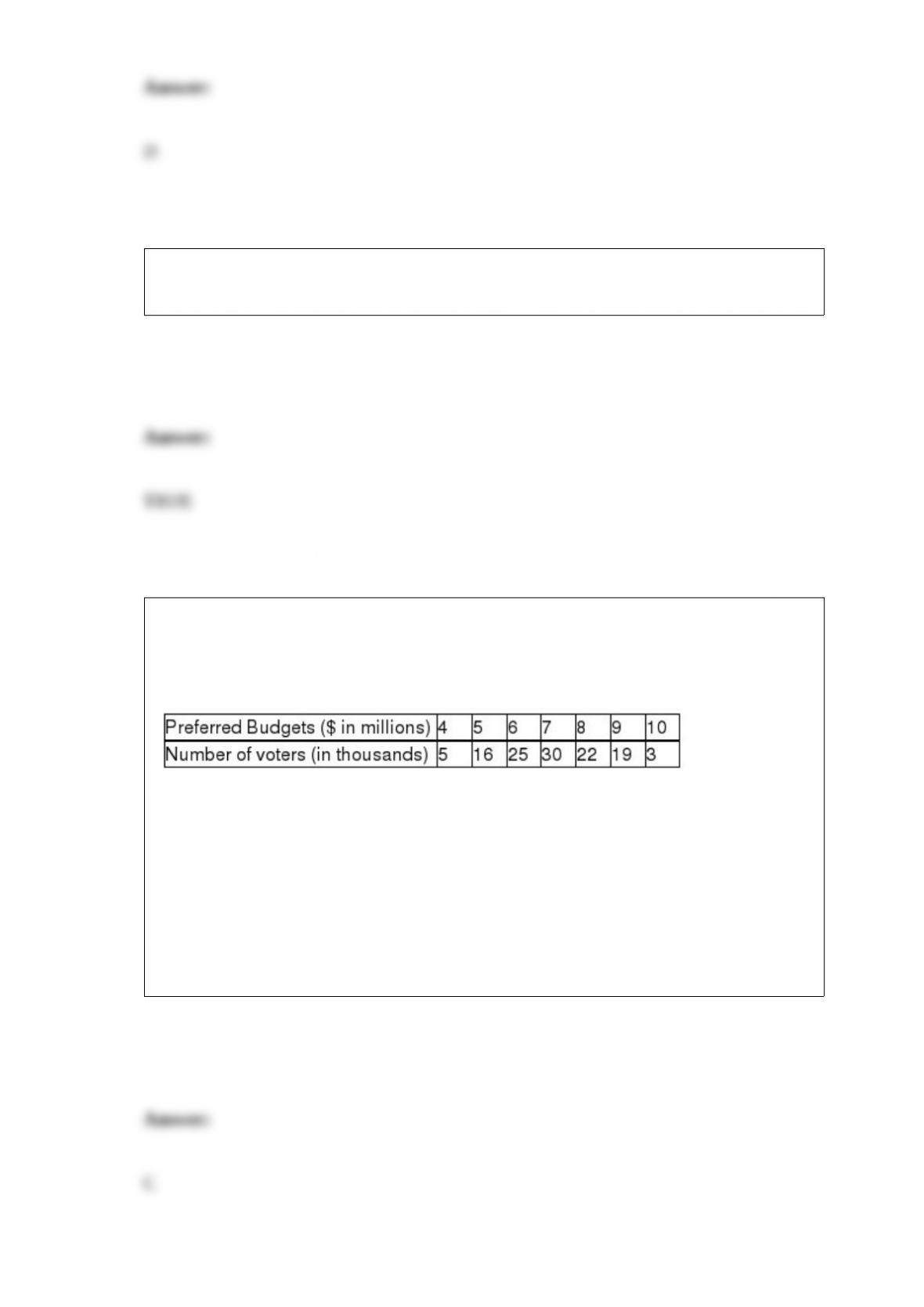
Table 15.3 shows the preferred budget for a new performance center and the number of
voters in a community who prefer that budget. Suppose that Dawn initially proposed $5
million while Terry proposed $9 million. Given the distribution of voters’ preferences,
Terry can increase her chance of being elected by proposing:
Table 15.3
A) a greater budget than $9 million.
B) a smaller budget than $5 million.
C) a smaller budget toward the median budget.
D) none of the above.
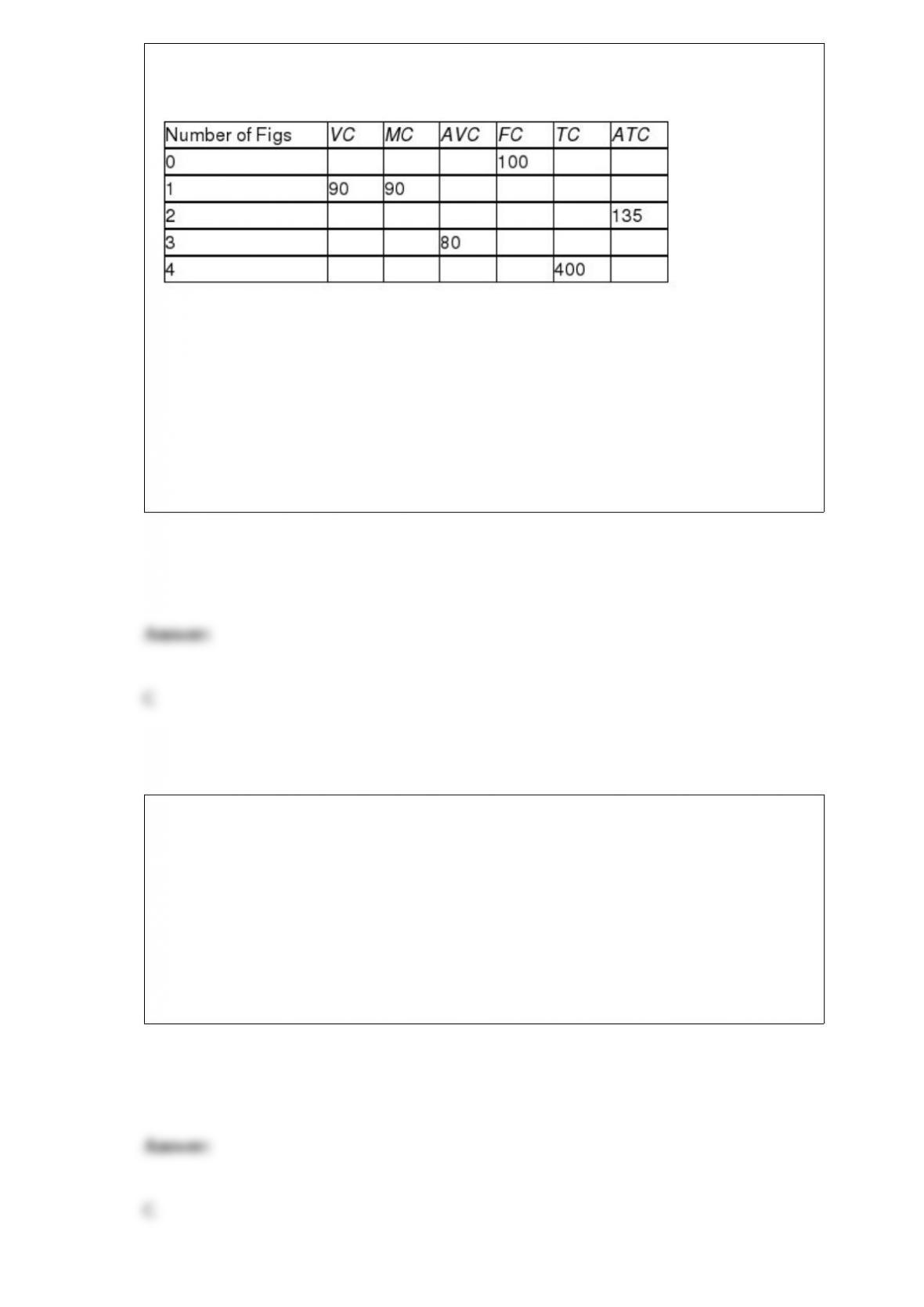
Table 8.4 presents the cost schedule for David’s Figs. If David produces four figs,
David’s average total costs are:
Table 8.4
A) $60.
B) $75.
C) $100.
D) $400.
If real salaries decrease but nominal salaries do not, this means that:
A) the purchasing power of money has increased.
B) prices have not changed.
C) prices have risen.
D) prices have fallen.

The law of diminishing returns applies in the:
A) short run and the long run.
B) long run but not the short run.
C) short run only.
D) long run only.
Moral hazard is the situation in which:
A) a consumer buys a lemon.
B) one consumer pays a higher price than another consumer for the same product.
C) a consumer changes his behavior after purchasing insurance.
D) a consumer steals merchandise from a store.
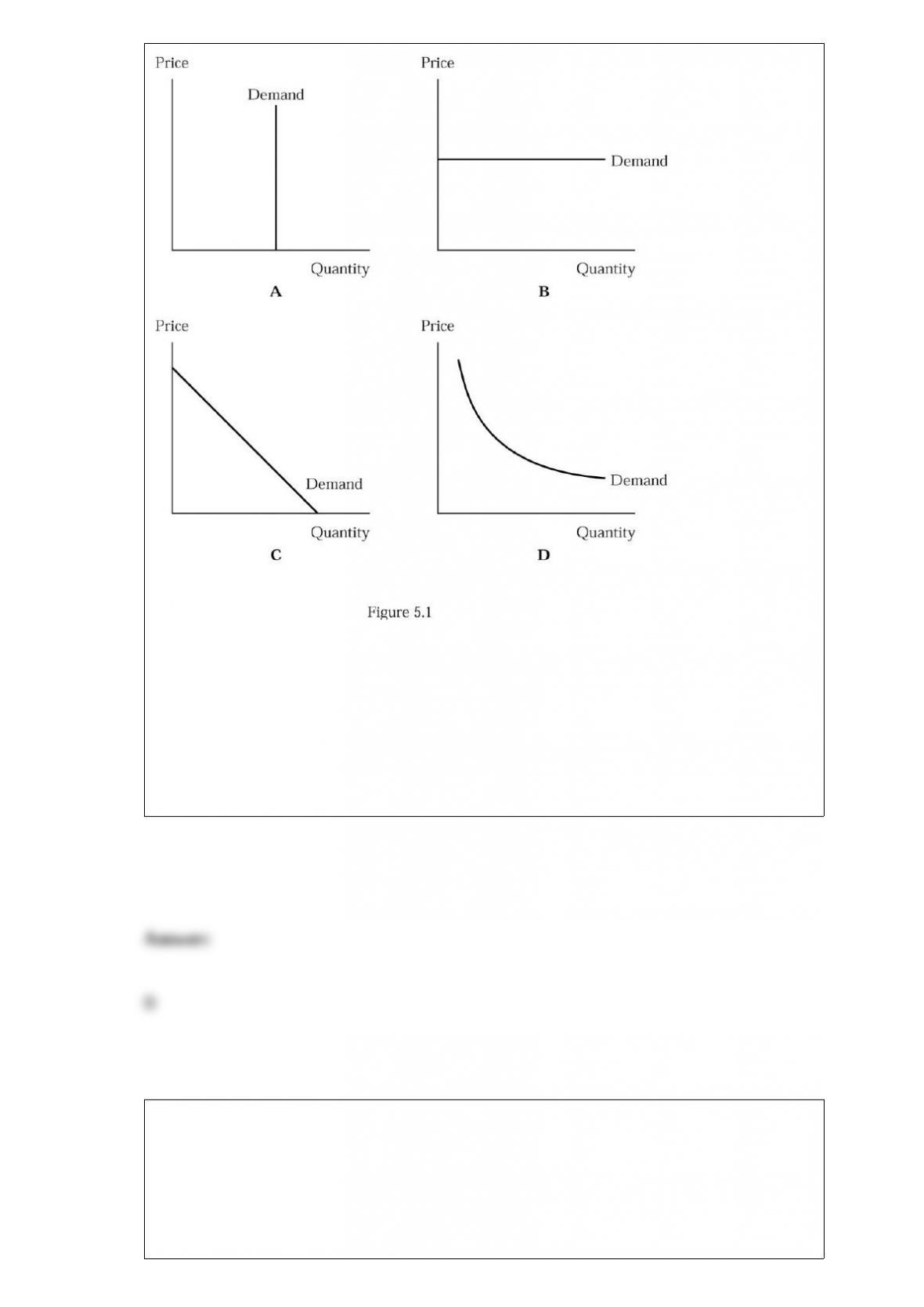
In Figure 5.1 the demand curve that has an infinite elasticity is shown on graph:
A) A.
B) B.
C) C.
D) D.
The slope of a straight line is calculated as:
A) the variable on the vertical axis divided by the variable on the horizontal axis.
B) the variable on the horizontal axis divided by the variable on the vertical axis.

C) the run over the rise.
D) the rise over the run.
You are the owner and only employee of a company that repairs computers. Last year,
you earned total revenues of $75,000. Your costs for equipment, rent, and supplies were
$10,000. To start this business you quit a job at another computer software firm that
paid $40,000 a year. During the year, your economic costs were:
A) $10,000.
B) $40,000.
C) $50,000.
D) $75,000.
Which of the following is a long-run adjustment?
A) A firm hires two new workers.
B) The number of professional baseball teams increases by two.
C) GM buys more steel for its auto plants in Michigan.
D) A farmer buys twice her usual amount of fertilizer.

According to the Application, what was the moral of the story concerning free trade?
A) Trade affects both employment and prices.
B) Everyone gets hurt from free trade.
C) Everyone benefits from free trade.
D) Trade amplifies a country’s income inequality.
Command-and-control policies usually:
A) result in higher costs for firms when compared to pollution taxes.
B) don’t raise prices as much to consumers as do pollution taxes.
C) result in less pollution being produced than when pollution taxes are used.
D) result in lower costs for firms when compared to pollution taxes.

The long-run supply curve for a constant cost industry is:
A) upward sloping.
B) downward sloping.
C) horizontal.
D) U-shaped.
An efficient solution to the external cost of highway congestion would be to:
A) charge tolls for highway use differentially depending on the time of day.
B) impose higher fines for speeding.
C) charge uniform tolls for all highway use allowing drivers to distribute themselves
more uniformly.
D) institute a uniform permit policy, granting each driver a permit to drive a prescribed
number of miles per week.
The ratio of the percentage change in quantity demanded to the percentage change in
price is known as the:

A) demand-side shift factor.
B) income elasticity of demand.
C) price elasticity of demand.
D) cross elasticity of demand.
Suppose Patty has a house in a good neighborhood in Philadelphia, PA. She decides to
have the exterior of her house painted and the windows replaced. After the work is
completed her house has appreciated in value and has also helped the neighbors’ houses
to go up in value. This is an example of a:
A) public good with external benefits.
B) private good with external benefits.
C) public good without external benefits.
D) private good without external benefits.
If the demand for a product decreases, we would expect that price will initially
________, and eventually ________.
A) rise; fall
B) rise; continue to rise

C) fall; rise
D) fall; continue to fall
If the equilibrium wage is above the actual wage:
A) the demand for labor will increase.
B) the demand for labor will decrease.
C) the wage rate will fall.
D) the wage rate will rise.
A Colombian emerald mine has a monopoly over the production of emeralds in
Colombia. The mine will find it profitable to increase the mining production of
emeralds as long as marginal cost:
A) is less than marginal revenue.
B) equals marginal revenue.
C) is greater than marginal revenue.
D) is positive.

Refer to Scenario 9.1. 21st Century Pen Inc.’s average total cost at an output of 2000
pens per day is approximately:
Scenario 9.1: 21st Century Pen Inc. produces 2000 pens per day, and hires 20 workers
at a cost of $200 per day per worker. The price of each pen is $5 each. 21st Century Pen
Inc. pays a daily rental rate of $60 on its factory and a daily insurance rate of $20. 21st
Century Pen Inc. has a ten year lease on the factory and insurance contract for a year,
the company has no other expenses.
A) $2.03 per unit.
B) $2 per unit.
C) $2.04 per unit.
D) $2.01 per unit.
A central issue in the government’s lawsuit against A company that sells an X product
and is looking to be involved in the integration of another of its products, thus requiring
consumers to purchase both of them together rather than separately. This practice is
known as:
A) predatory pricing.
B) price fixing.
C) collusion.
D) tie-in sales.
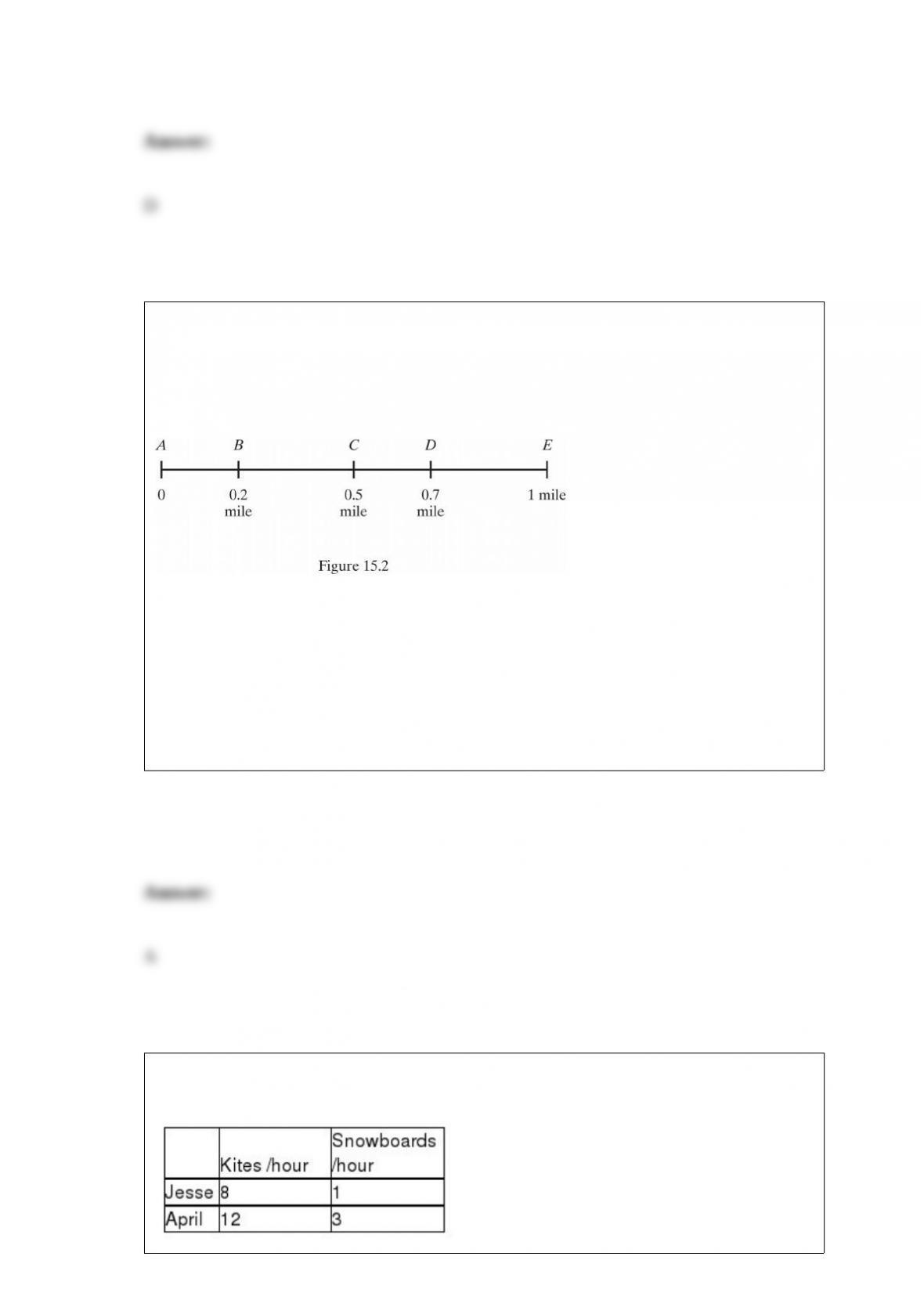
Figure 15.2 depicts a one-mile stretch of beach with 100 swimmers distributed evenly
along the beach. There are two ice cream vendors – 1 and 2 – on the beach selling an
identical product. Assume that each swimmer buys only one ice cream cone and that
they prefer to buy ice cream from the nearer vendor. If vendor 1 is at B while vendor 2
is at D, vendor 1 has an incentive to move:
A) toward the median location.
B) to the left of its current location.
C) to to the right of vendor 2’s current location.
D) none of the above
Consider two individuals, Jesse and April, who hand paint kites and snowboards. Table
3.1 shows how much of each good Jesse and April can paint in one hour.

Table 3.1
April’s opportunity cost of painting one snowboard is painting:
A) 1.5 kites.
B) 3 kites.
C) 4 kites.
D) 12 kites.
Goods that have external benefits include:
A) all public goods and all private goods.
B) all private goods but no public goods.
C) all public goods but no private goods.
D) all public goods and some private goods.
The market in Figure 15.1 the government in theory can get the socially optimum
output by:
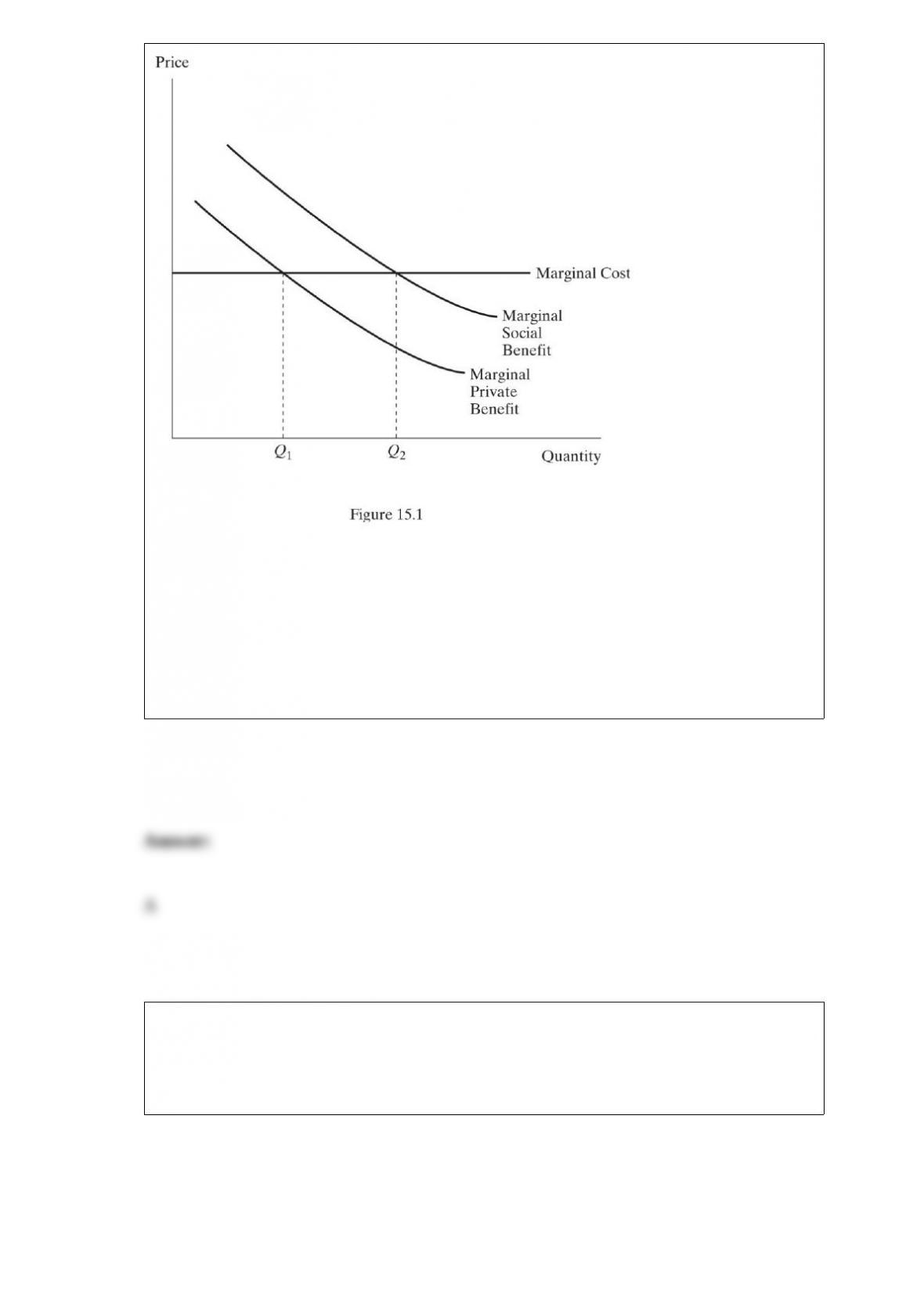
A) subsidizing the consumption of the good the right amount.
B) taxing the production of the good the right amount.
C) restricting the production of the good to less than what the market produces.
D) all of the above.
Figure 9.5 shows the short-run and long-run effects of an increase in demand of an
industry with increasing cost. The market is in equilibrium at point A, where 100
identical firms produce 6 units of a product per hour. If the market demand curve shifts
to the right, what will happen to an individual firm’s profit?
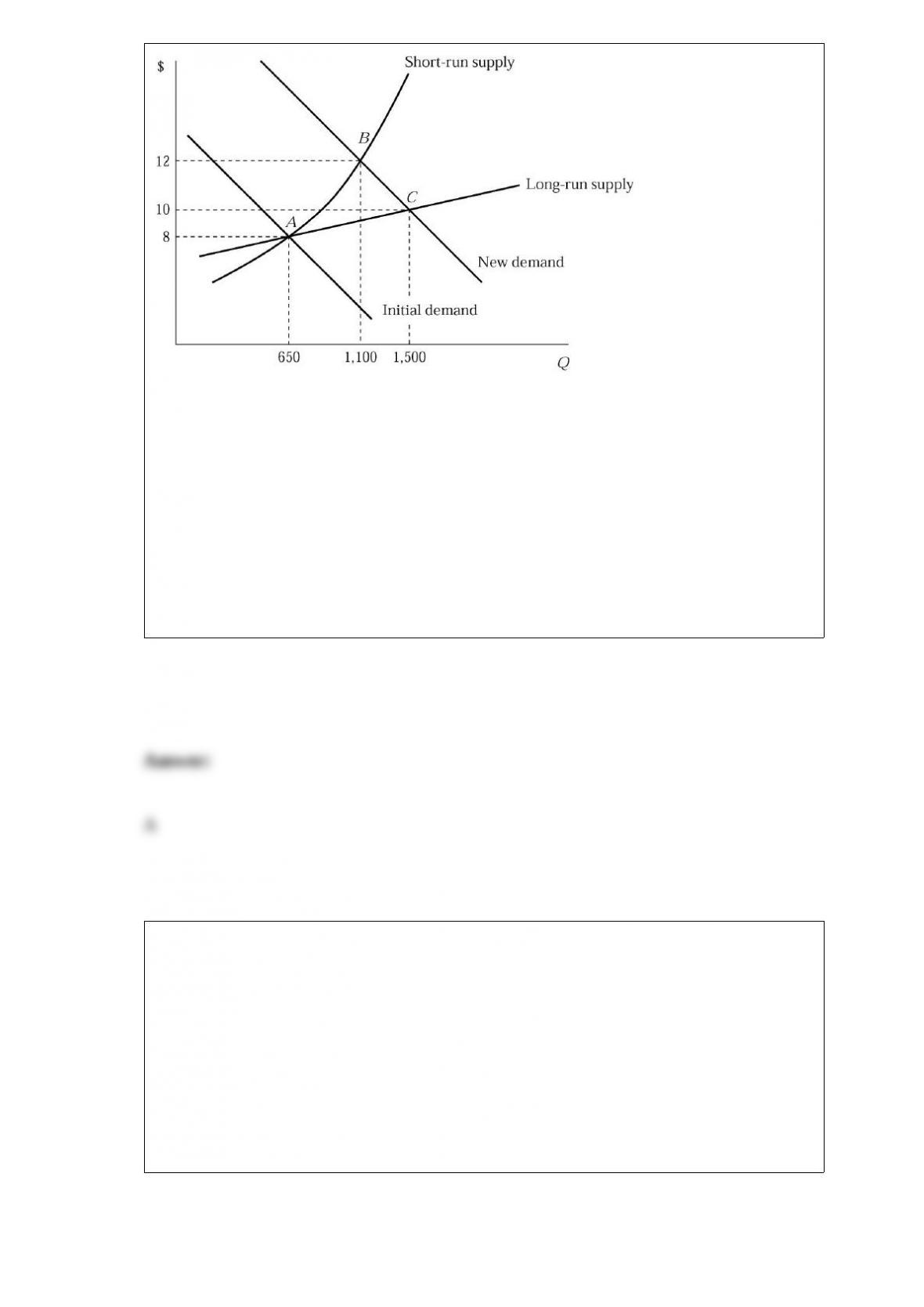
Figure 9.5
A) Each firm earns a positive profit at point B.
B) Each firm earns a zero profit at point B because the market is perfectly competitive.
C) The profit of each firm decreases as more firms enter the market and share the
benefits of an increase in demand pushing the market from point A to point B.
D) none of the above
When deciding whether to engage in an activity or how much to do, people should
follow:
A) the principle of microeconomics.
B) the principle of macroeconomics.
C) the marginal principle.
D) the law of supply and demand.
Buyers and sellers acting in their own best interest generate outcomes that are in
society’s best interest when all of the following are true EXCEPT:
A) buyers and sellers are informed.
B) markets are efficient.
C) there are no external benefits.
D) there are no external costs.
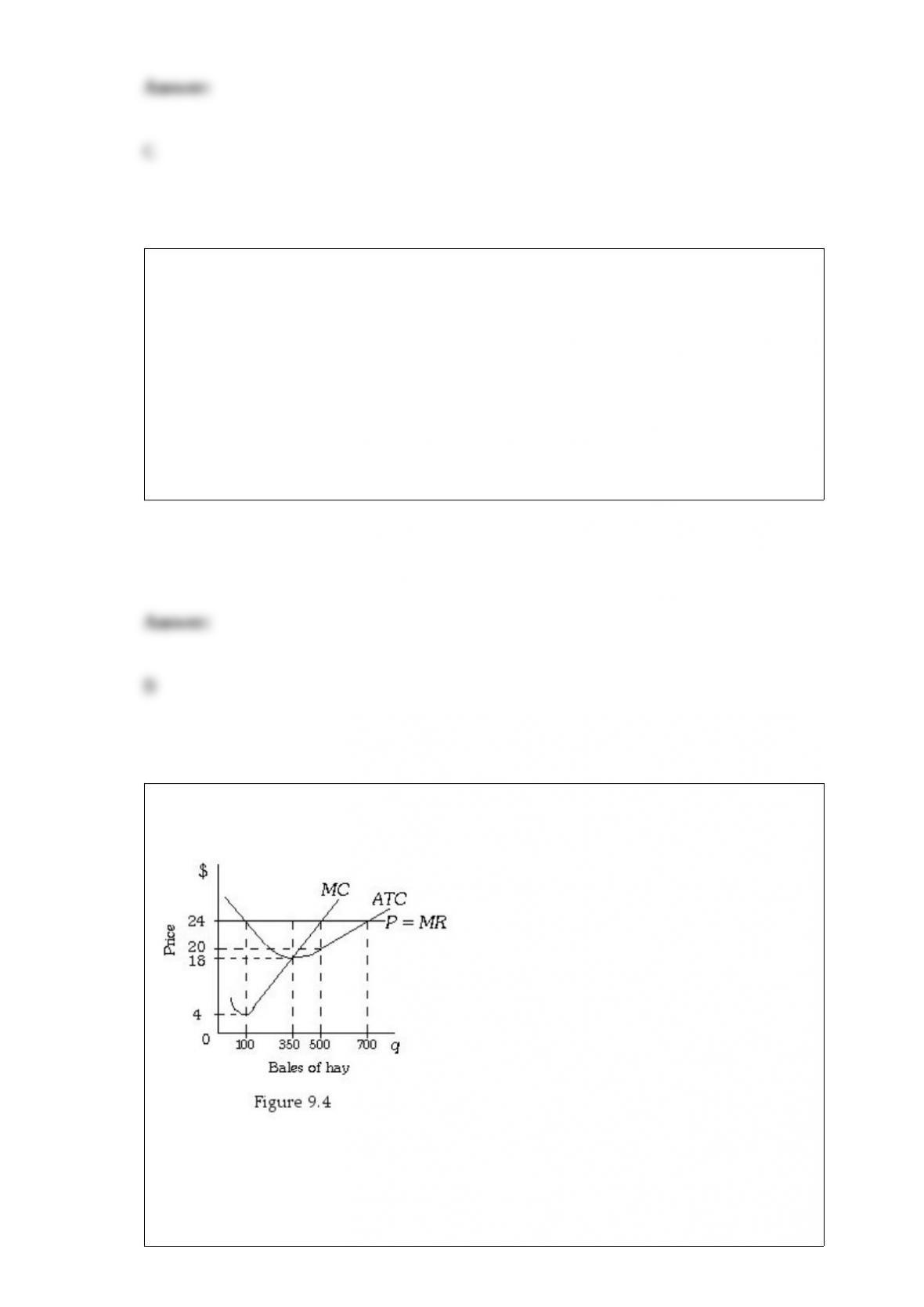
Refer to Figure 9.4. If this farmer is producing the profit maximizing level of output,
her profit is:
A) $0.
B) $1,000.

C) $3,000.
D) $2,000.
The strength of brain activity involving benefit valuation associated with a particular
product is determined by:
A) past experience.
B) monetary cost.
C) gut reaction.
D) opportunity cost.
After Johan purchased a full coverage insurance policy for his car, he is not careful and
leaves his car unlocked at all times. This is an example of:
A) adverse selection.
B) a thin market.
C) moral hazard.
D) asymmetric information.
Comment on the following statement: “The more inelastic the demand, the greater is the
deadweight loss caused by any given tax rate.”
Describe and explain a perfectly competitive firm’s short-run supply curve.
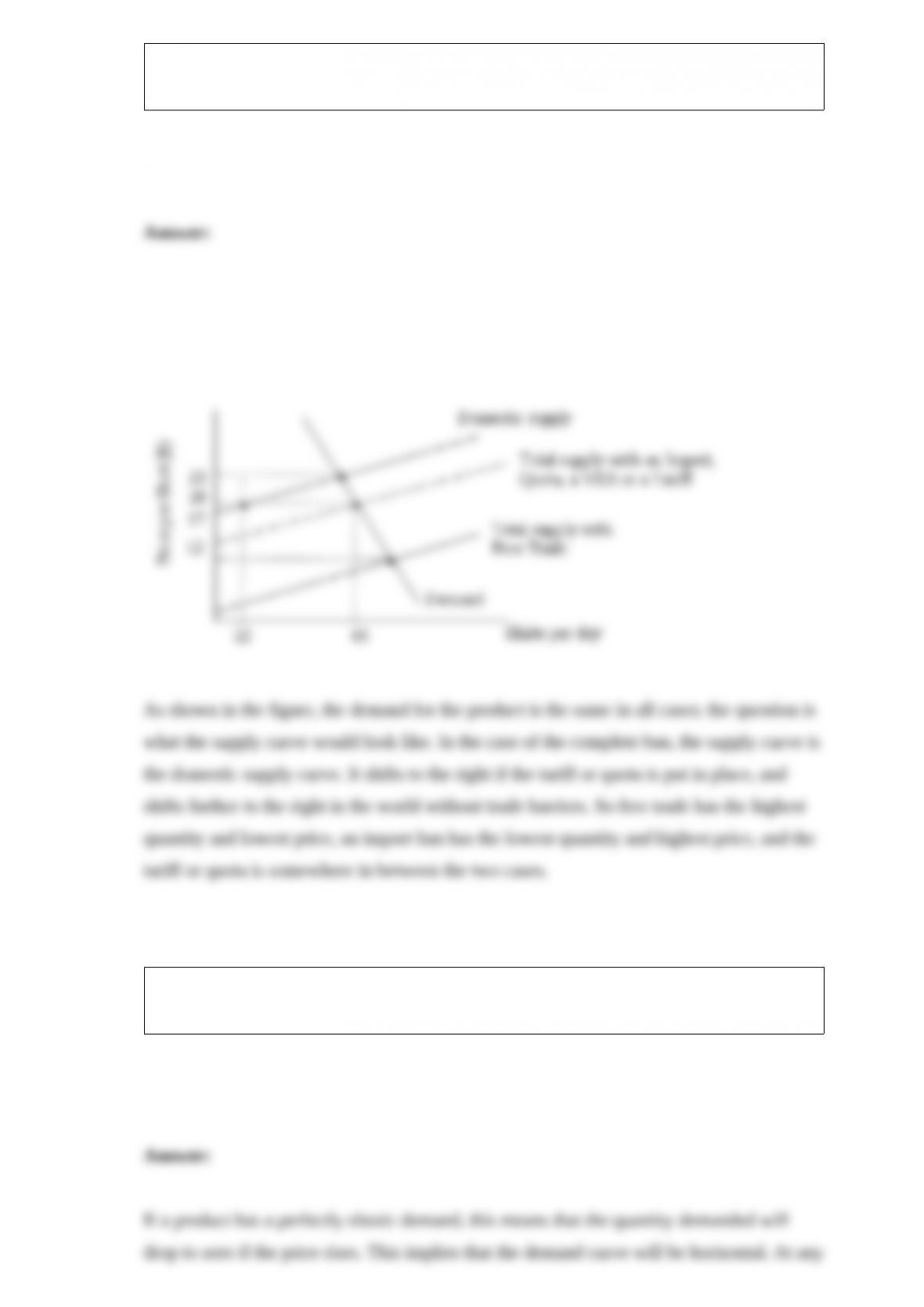
Using a graph, illustrate what the market effects of a quota, a tariff, or a complete ban
on imports would be.
What does it mean for a good to have a perfectly elastic demand? Draw a demand curve
of this type. Explain why it has the shape that it does.

Describe the field of economics known as microeconomics.
List and briefly describe the three key reasons for income inequality in a market-based
economy.
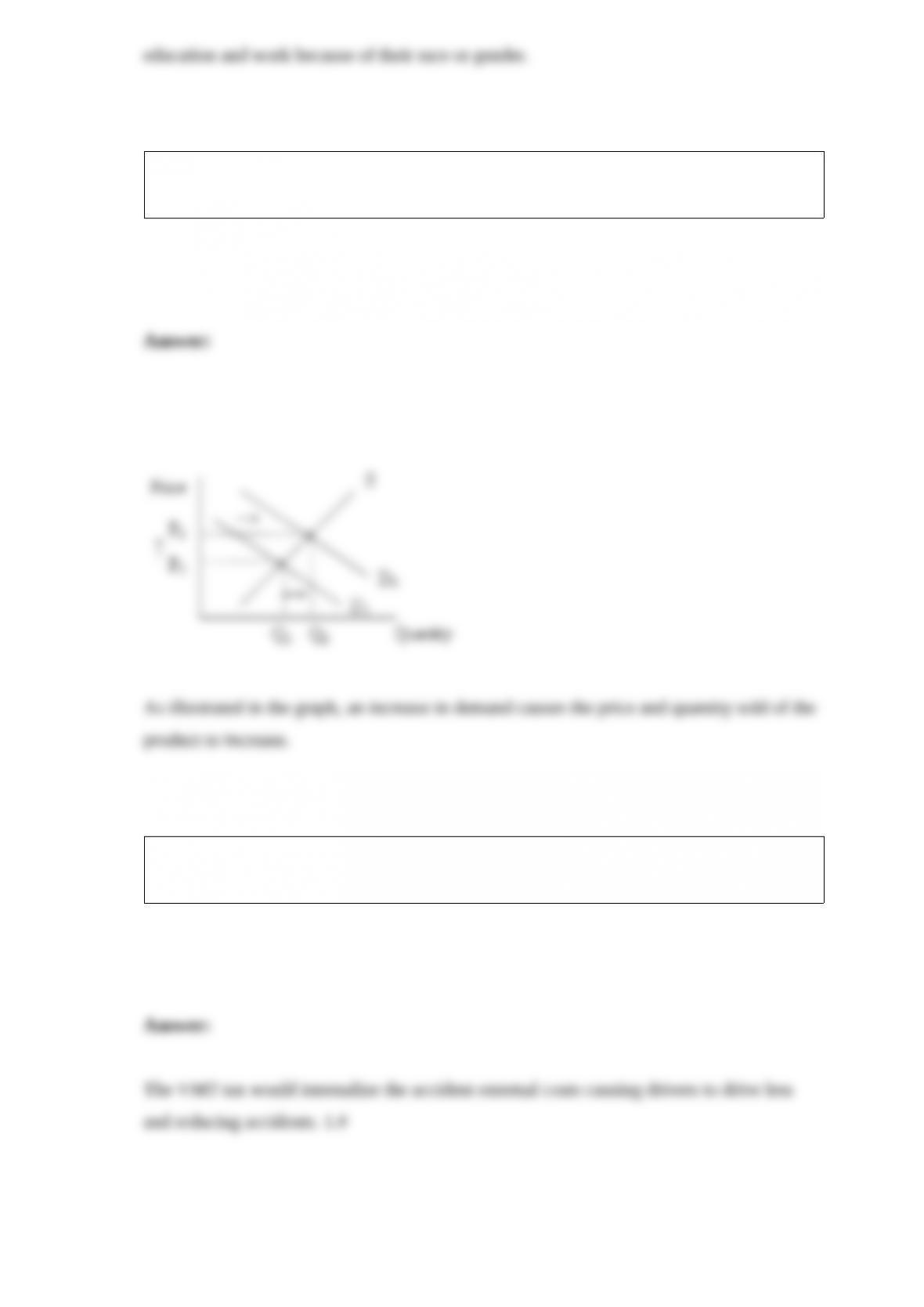
Draw a graph to illustrate the effect of an increase in demand on the price and quantity
in a market.
How does a vehicle mileage traveled tax reduce the externalities caused by
automobiles?
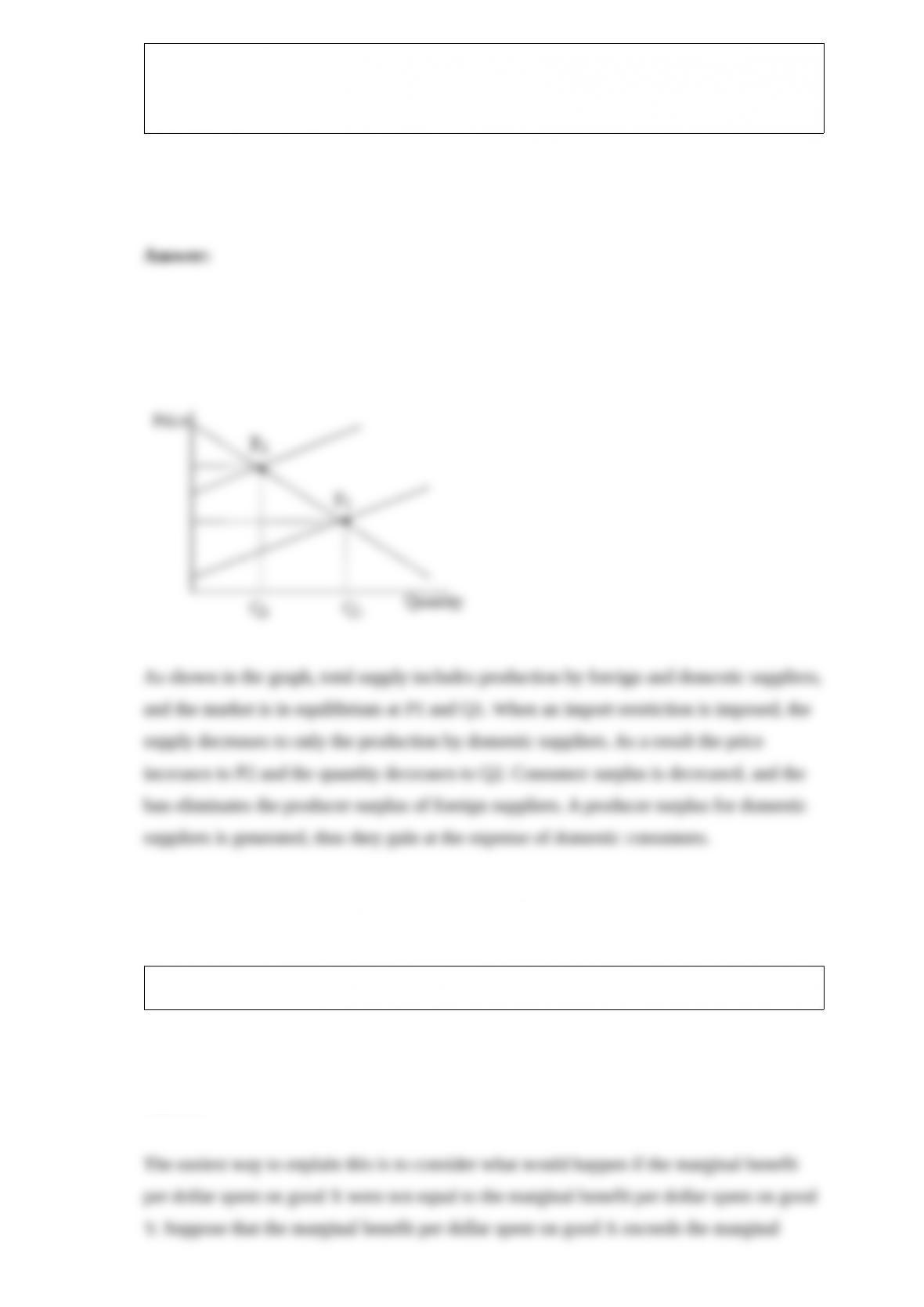
Draw a graph to illustrate the effect on the market of an import restriction. Show how
price and quantity in the market are affected. What happens to consumer and producer
surplus?
Explain why the equimarginal rule is a necessary condition for utility maximization.
What is the rationale for protecting infant industries?
The prisoners’ dilemma shows that the players’ dominant strategies often lead them to
less than optimal outcomes. Explain the Nash equilibrium and why both prisoners
confessing is the Nash equilibrium.

What countries are in NAFTA?
In An Inquiry into the Nature and Causes of the Wealth of Nations, Adam Smith listed
three reasons for productivity to increase with specialization. What are these three
reasons?
List and explain some of the external benefits generated by education.
From an economic standpoint, patents reduce efficiency because they serve as a barrier
to entry and thus limit market competition. Are there any positive economic benefits of
patents? Explain.
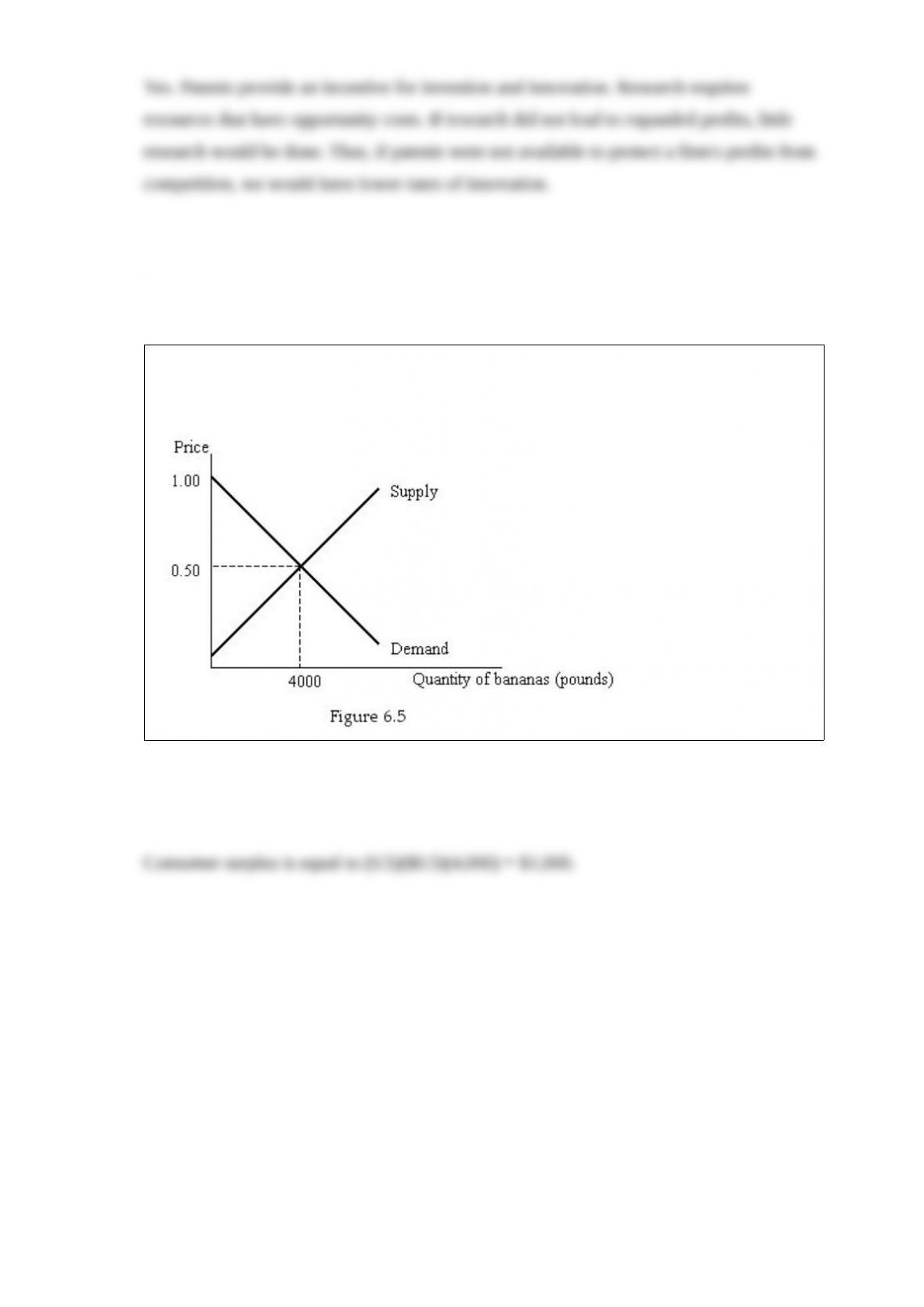
Figure 6.5 shows the market for bananas. Shade in the area of consumer surplus. Use
the information provided to calculate consumer surplus.
Describe the Wonder Bread case.
Suppose that the price of a pound of potatoes increases from $0.75 to $0.90 and
quantity demanded falls from 10,000 pounds to 8,000 pounds. Use the initial value
method to calculate the price elasticity of demand.