1) according to the mercantilists, a nation’s welfare would improve if it maintained a
surplus of exports over imports.
a.true
b.false
2) the theory of multinational enterprise is totally inconsistent with the principle of
comparative advantage.
a.true
b.false
3) a problem encountered when implementing an “infant industry” tariff is that:
a.domestic consumers will purchase the foreign good regardless of the tariff
b.political pressure may prevent the tariff’s removal when the industry matures
c.most industries require tariff protection when they are mature
d.labor unions will capture the protective effect in higher wages
4) during the post world war ii era, the united states has adopted explicit industrial
policies similar to those of france and japan.
a.true
b.false
5) economists have generally found that economic growth rates have a close relation to:
a.openness to trade
b.education
c.communications infrastructure
d.all of these
6) a sudden shift from import tariffs to free trade may induce short-term unemployment
in:
a.import-competing industries
b.industries that are only exporters
c.industries that sell domestically as well as export
d.industries that neither import nor export
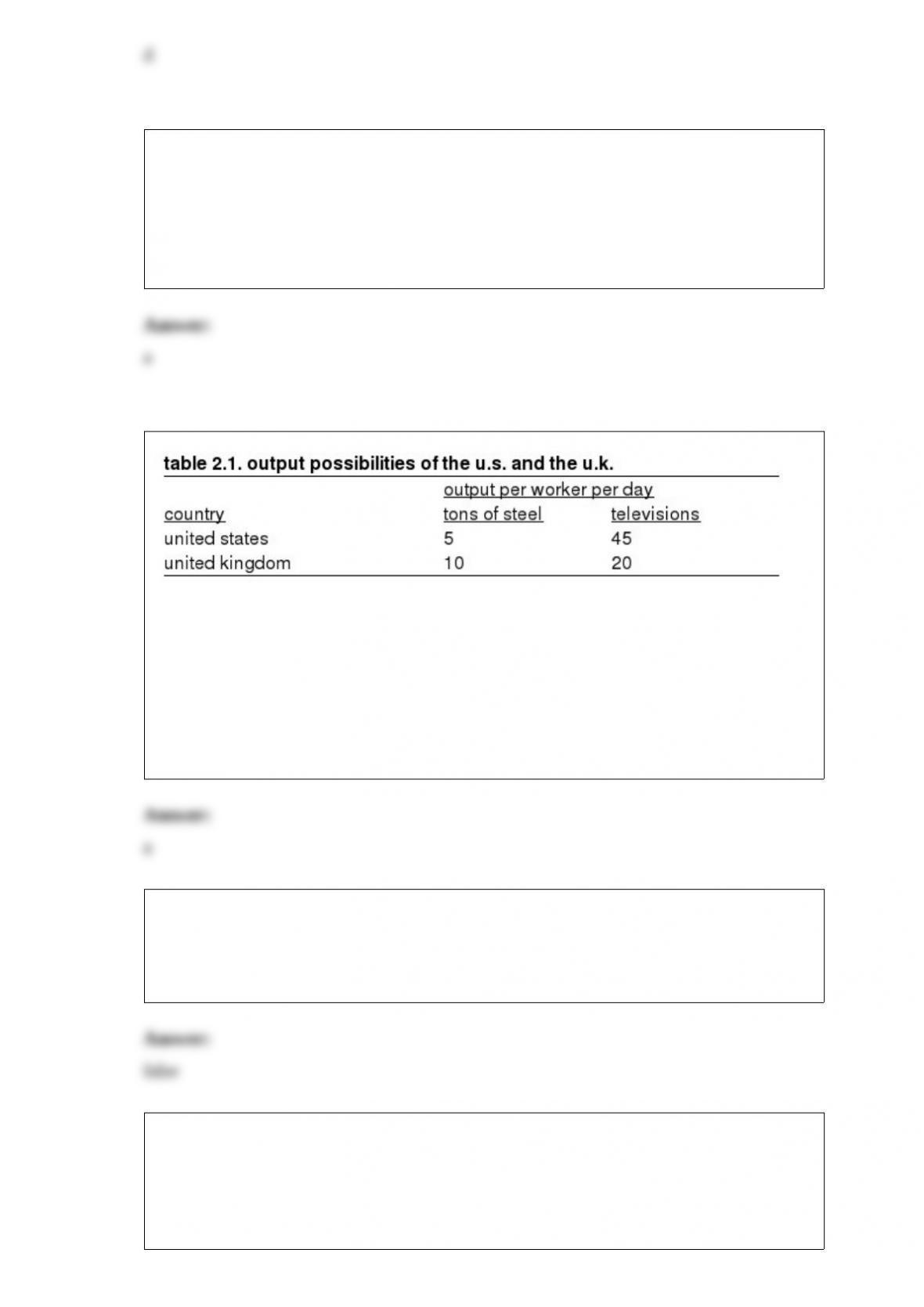
7) referring to table 2.1, the opportunity cost of producing one ton of steel in the united
states is:
a.3 televisions
b.10 televisions
c.20 televisions
d.45 televisions
8) the par values of most developing-country currencies are currently defined in terms
of gold.
a.true
b.false
9) figure 6.3 represents the iraqi computer market. assume iraq purchases all of its
computers from the united states.
figure 6.3 iraqi computer market and economic sanctions
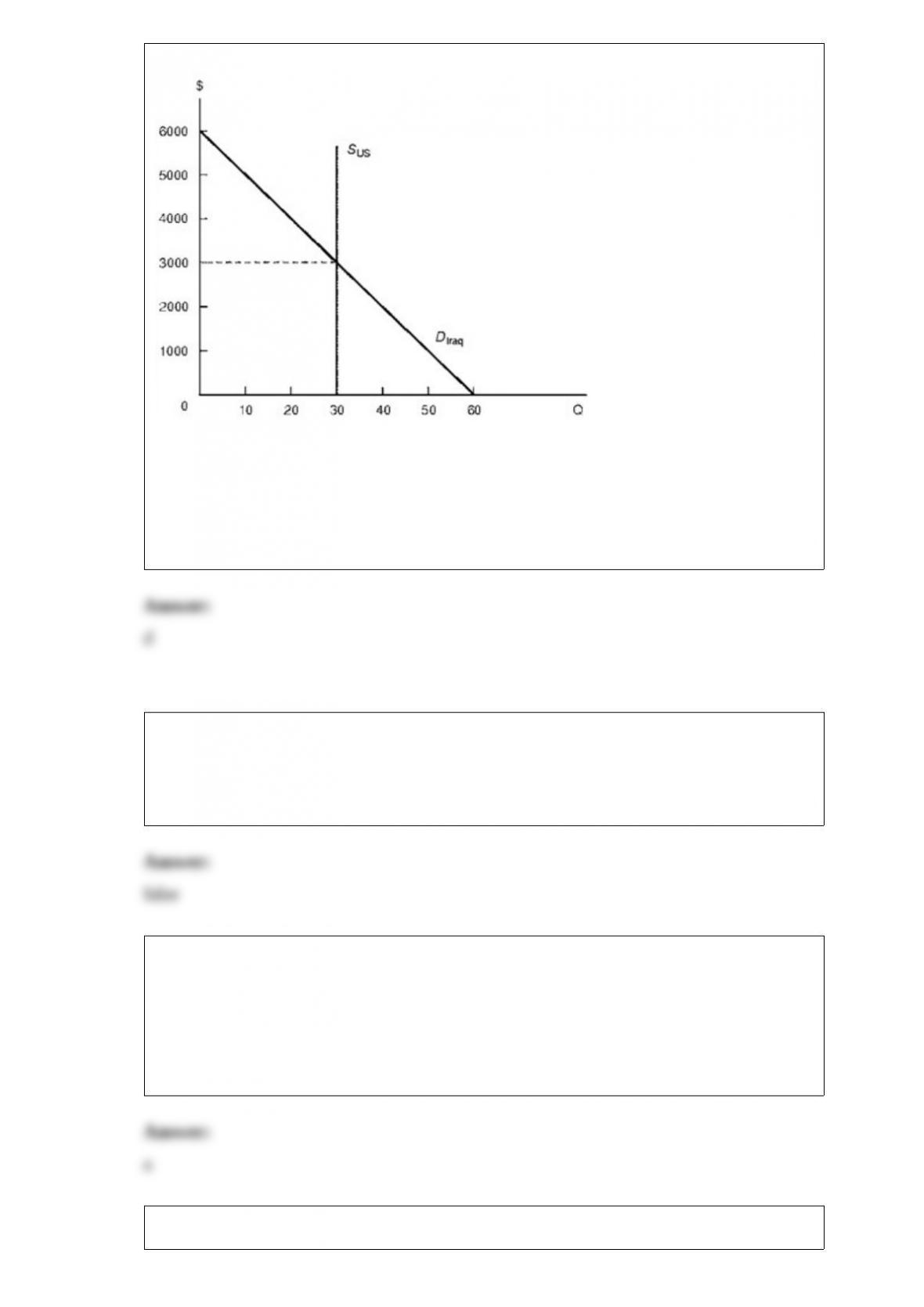
consider figure 6.3. of the quota-induced change in iraqi consumer surplus, $____ is not
transferred to other sectors of iraq’s economy and represents deadweight loss.
a.$5000
b.$10,000
c.$15,000
d.$20,000
10) there exists a direct relationship between the degree of exchange rate flexibility and
the need for international reserves.
a.true
b.false
11) ricardo’s theory of comparative advantage was of limited real-world validity
because it was founded on the:
a.labor theory of value
b.capital theory of value
c.land theory of value
d.entrepreneur theory of value
12) figure 5.1 illustrates the steel market for mexico, assumed to be a ‘small” country
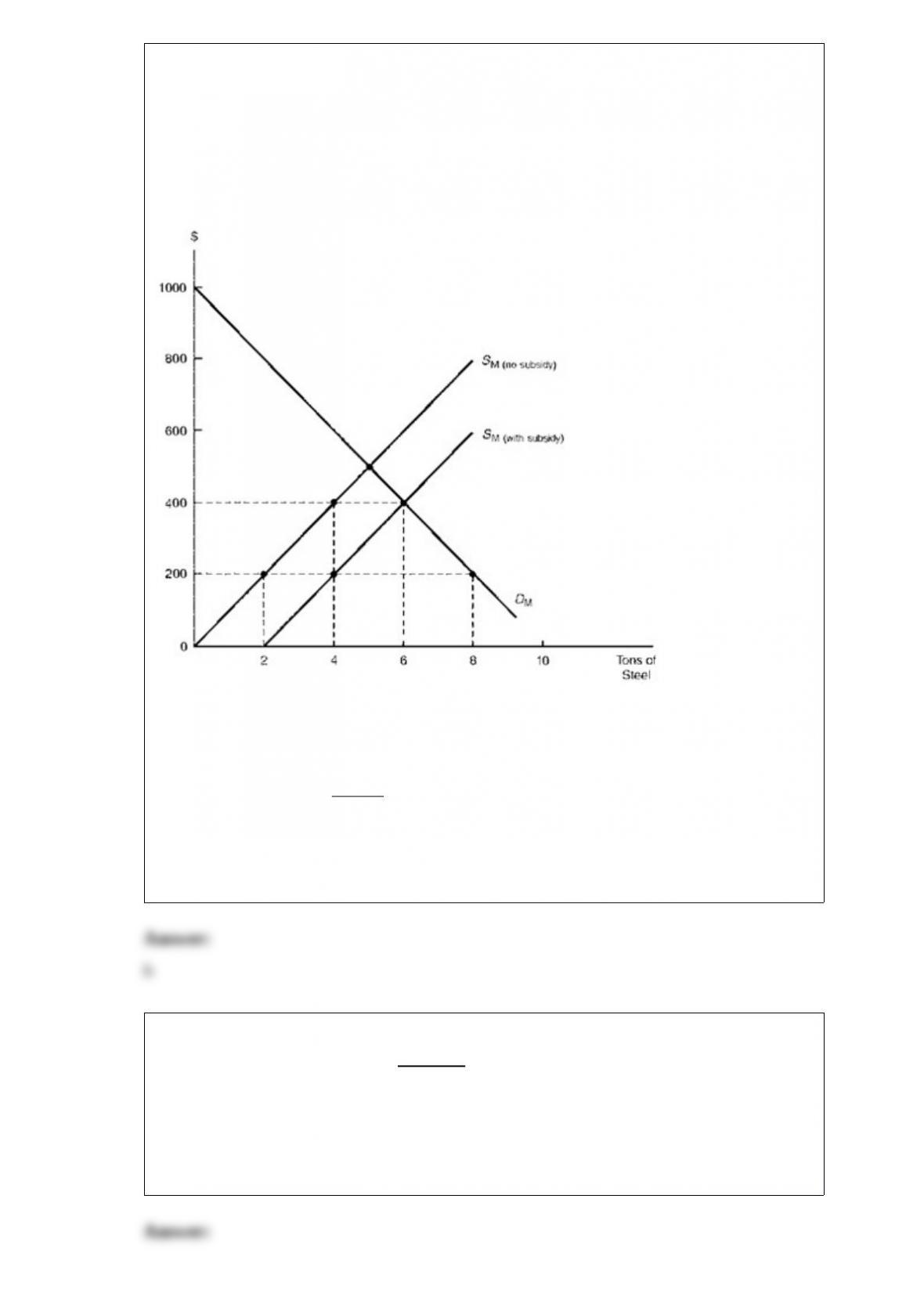
that is unable to affect the world price. suppose the world price of steel is given and
constant at $200 per ton. now suppose the mexican steel industry is able to obtain trade
protection.
figure 5.1. alternative nontariff trade barriers levied by a ‘small” country
referring to figure 5.1, suppose the mexican government imposes an import quota equal
to 2 tons of steel.
if mexican steel importers behave as monopoly buyers and foreign exporters behave as
competitive sellers, the overall welfare loss of the quota to mexico equals:
a.$200
b.$400
c.$600
d.$800
13) during the gold standard era, central bankers agreed to react positively to
international gold flows so as to reinforce the automatic adjustment mechanism. which
of the following best represents the above statement?
a.income-adjustment mechanism
b.price-adjustment mechanism
c.rules of the game
d.discretionary fiscal policy
14) for a nation to maximize its productivity in a global economy:
a.only imports are necessary
b.only exports are necessary
c.both imports and exports are necessary
d.neither imports nor exports are necessary
15) a main advantage of specialization results from:
a.economies of large-scale production
b.the specializing country behaving as a monopoly
c.smaller production runs resulting in lower unit costs
d.high wages paid to foreign workers
16) econometric models are best suited for forecasting long-run exchange rates rather
than short-run exchange rates.
a.true
b.false
17) voluntary export restraint agreements typically apply to all of the world’s exporting
nations rather than only the most important exporting nations.
a.true
b.false
18) figure 8.1 depicts the supply and demand schedules of calculators for greece, a
‘small” country that is unable to affect the world price. greece’s supply and demand
schedules of calculators are respectively depicted by sg and dg. assume that greece
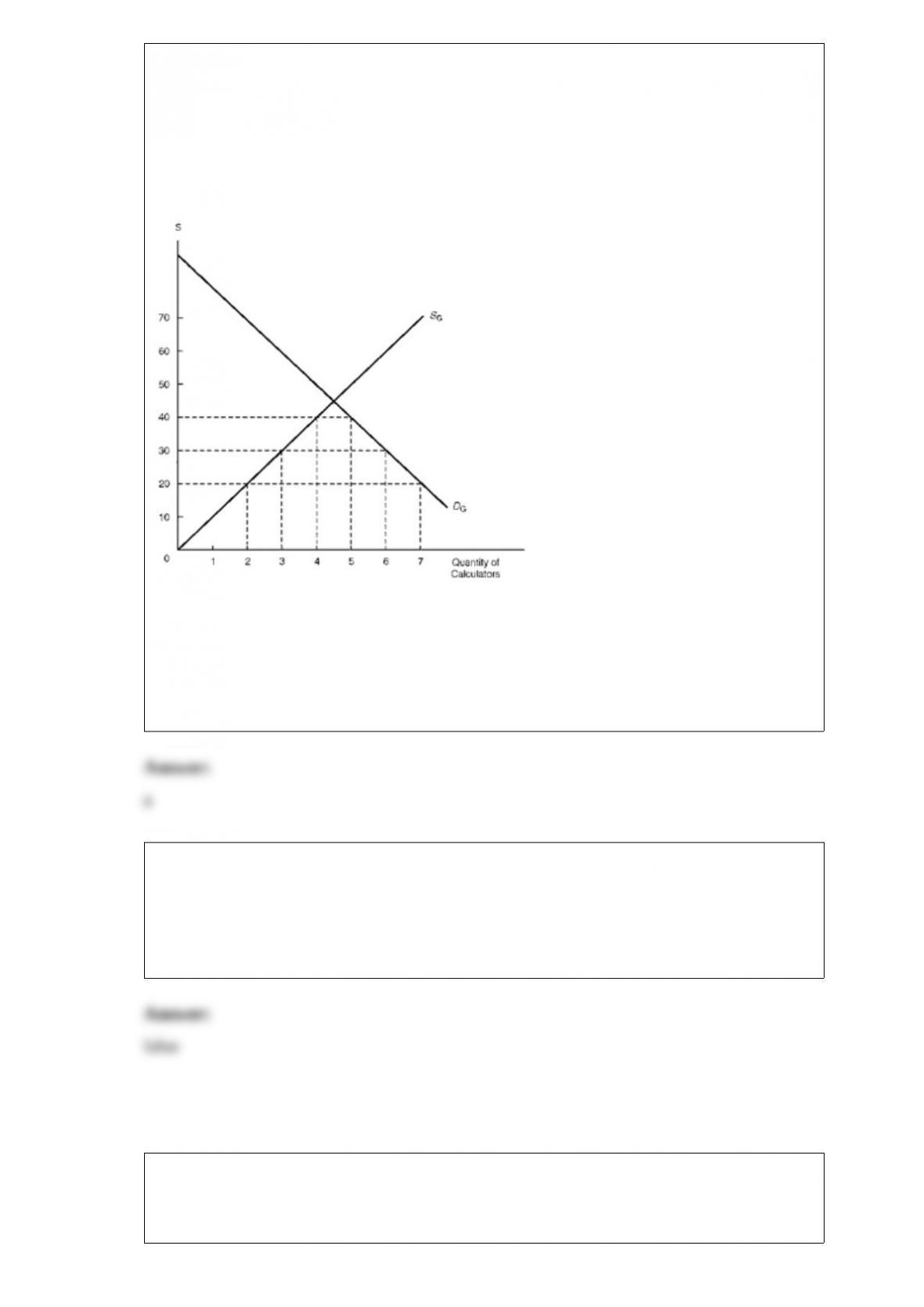
imports calculators from either germany or france. suppose germany is the world’s
low-cost producer who can supply calculators to greece at $20 per unit, while france
can supply calculators at $30 per unit.
figure 8.1. effects of a customs union
consider figure 8.1. suppose greece had formed a customs union with germany, rather
than france. the value of the trade diversion effect would be:
a.zero
b.$5
c.$10
d.$15
19) the “newly industrializing countries” of east asia have emphasized the
implementation of import-substitution policies to insulate their industries from
international competition.
a.true
b.false
20) expenditure-switching policies include fiscal policy and monetary policy.
a.true
b.false
21) does exposure to competition with the world leader in a particular industry improve
a firm’s productivity?
22) concerning the balance of international indebtedness, when is a country a net
creditor or a net debtor?
23) what is meant by economic integration?
24) who gains more from trade, when nations are of unequal economic size?
25) how does staffan linder explain world trade patterns?

26) what is the most important factor which contributes to competitiveness?
27) how can a bank reduce its exposure to the debt of developing nations?