
How much of U.S. garbage is disposed of in landfills?
a. 25 percent
b. 40 percent
c. 60 percent
d. 70 percent
e. 100 percent
If an increase in the price of a product from $100 to $200 per unit leads to a decrease in
the quantity demanded from 10 to 8 units, then demand is
a. elastic
b. inelastic
c. unit elastic
d. 0
e. inferior
If a firm can double inputs and, thereby, more than double output over the range of
output the market demands, it is a

a. natural monopoly
b. local monopoly
c. price discrimination monopoly
d. monopsony
e. candidate for antitrust prosecution
When an economy experiences strong economic growth,
a. the number of families in the bottom 10 percent of the income distribution decreases
b. the income of families in the bottom of the income distribution increases
c. only the top of the income distribution is affected
d. the accompanying inflation cancels out any change in income distribution
e. the rich are no better off because taxes rise with income
Caroline Jahn has a professional degree and is 51 years old. Bob Rubate also has a
professional degree and is 29 years old. On average, Caroline most likely earns
a. 75 percent less than Bob

b. 7 percent less than Bob
c. 75 percent more than Bob
d. 7 percent more than Bob
e. the same amount as Bob
An economic system
a. must answer the three economic questions to the satisfaction of everyone in society
b. must not allow some members of society to gain an unfair advantage when answering
the three economic questions
c. must choose pure capitalism to adequately answer the three economic questions
d. is a set of social institutions and mechanisms organized to answer the three economic
questions
e. can address problems of scarcity only by embracing the social institution of private
property
Union membership over the last five decades has
a. grown at the same rate as the labor force

b. become much more attractive and has grown more rapidly than the labor force
c. become much more attractive
d. grown more rapidly than the labor force
e. declined
Which oligopoly model was developed to explain price wars in an industry?
a. natural oligopolies
b. cartels
c. price leadership by a dominant firm
d. game theory
e. cost-plus theory
The incentives for oligopolists to cheat on collusive agreements are strongest during
periods of increasing industry sales.
a. True
b. False
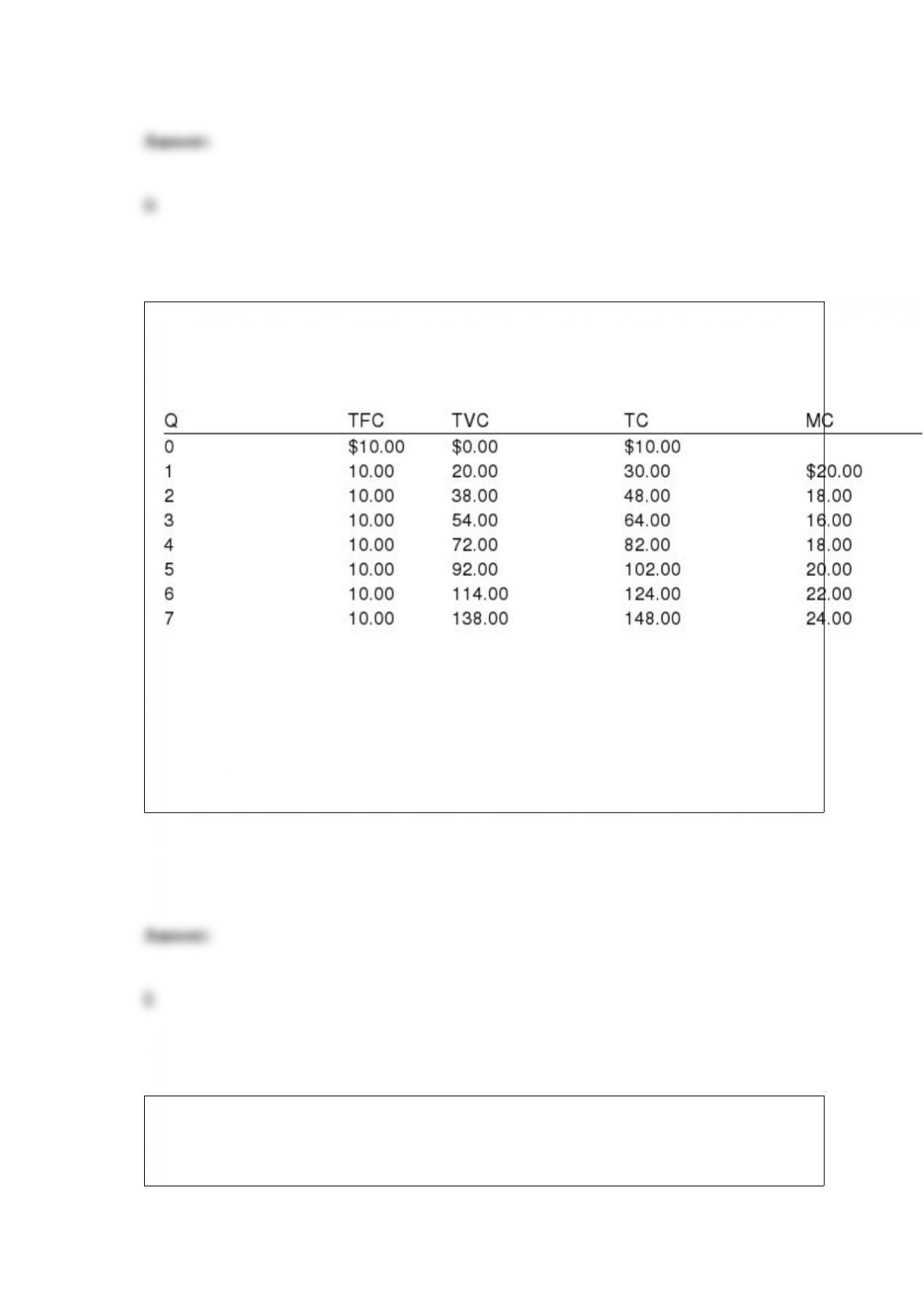
Exhibit 8-5
Consider Exhibit 8-5. Assume the firm is perfectly competitive and the market price is
$21. To maximize profit or minimize loss, the firm will
a. shut down
b. produce 7 units
c. produce 3 units
d. produce 4 units
e. produce 5 units
Exhibit 11-4
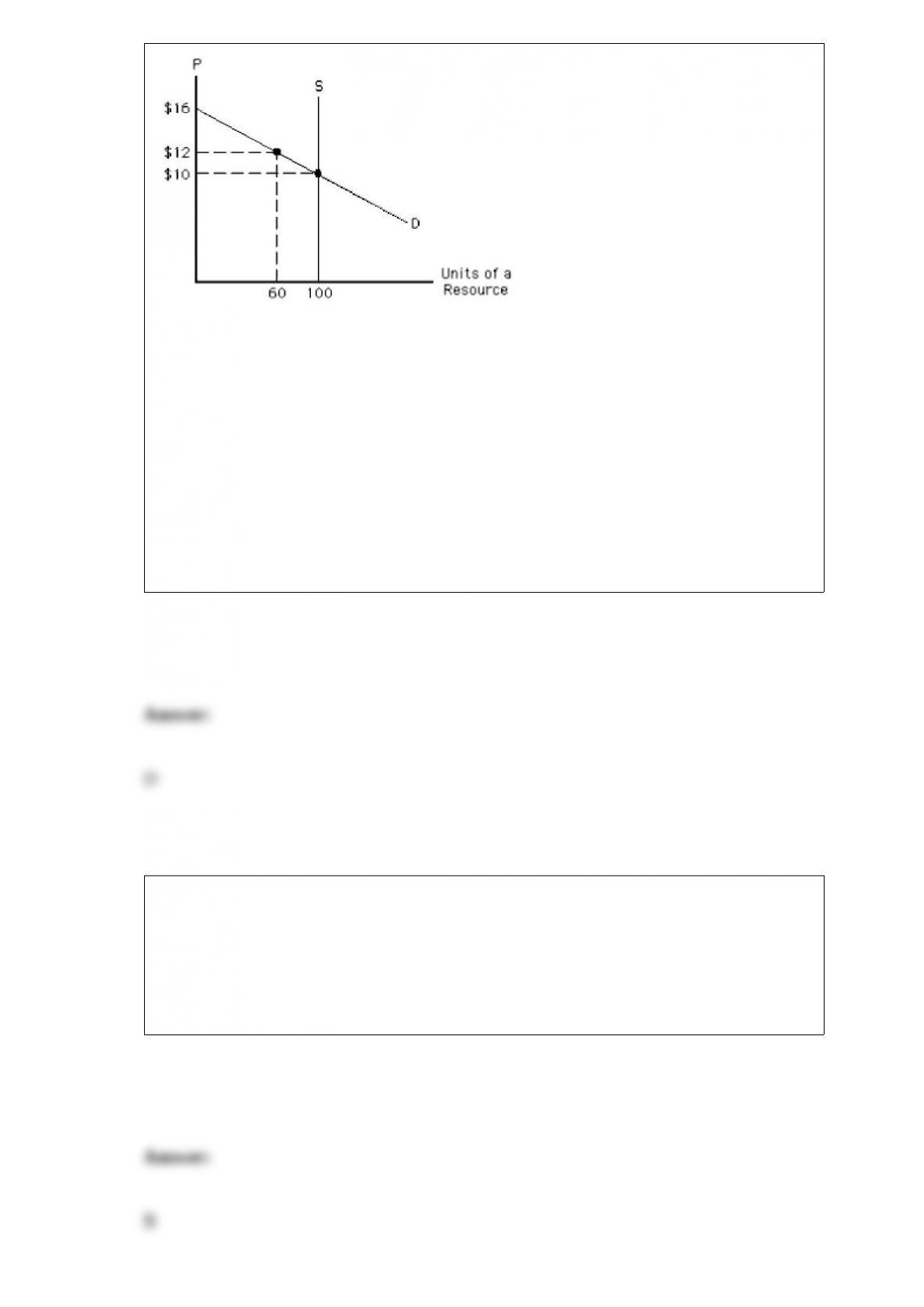
In Exhibit 11-4, total resource earnings in equilibrium equal
a. $12
b. $10
c. $720
d. $1,000
e. $1,200
If a person’s labor supply curve is positively sloped, the income effect outweighs the
substitution effect.
a. True
b. False

The U.S. demand curve for foreign currency is drawn holding constant all except one of
the following factors. Which is the exception?
a. income in the United States
b. the inflation rate in the United States
c. incomes in the rest of the world
d. the interest rate in the United States relative to the rest of the world
e. tastes and preferences of Americans for foreign goods
The lemons problem is that when there are hidden characteristics known only to the
seller of a used car,
a. the ratio of lemons to high-quality cars is likely to be high
b. the ratio of lemons to high-quality cars is likely to be low
c. good used cars will sell for more than their market value
d. no lemons will be offered on the market
e. the price of lemons will be below their market value

As concentration in an industry increases, the value of the Herfindahl index falls.
a. True
b. False
Which of the following tends to make demand for a good more elastic?
a. A reduction in the number of substitutes for the good.
b. Consumers have a long time to adjust to a price change.
c. The amount spent on the good is a small proportion of the consumer’s budget.
d. The good is broadly defined.
e. The good is a necessity.
Arthur Bach is worth $780 million dollars. He goes into an upscale men’s store and
buys 32 green sweaters, each costing $200. If Arthur has maximized his utility from this
purchase, what is the marginal utility of the thirty-third green sweater?
a. cannot tell
b. greater than $200
c. less than $200

d. 0
e. $200
In the long run in monopolistic competition, the demand curve facing the typical firm
a. is perfectly elastic
b. slopes upward
c. is tangent to the firm’s average total cost curve
d. lies above the firm’s average total cost curve
e. is the same as the portion of the firm’s marginal cost curve above average variable
cost
Exhibit 19-2
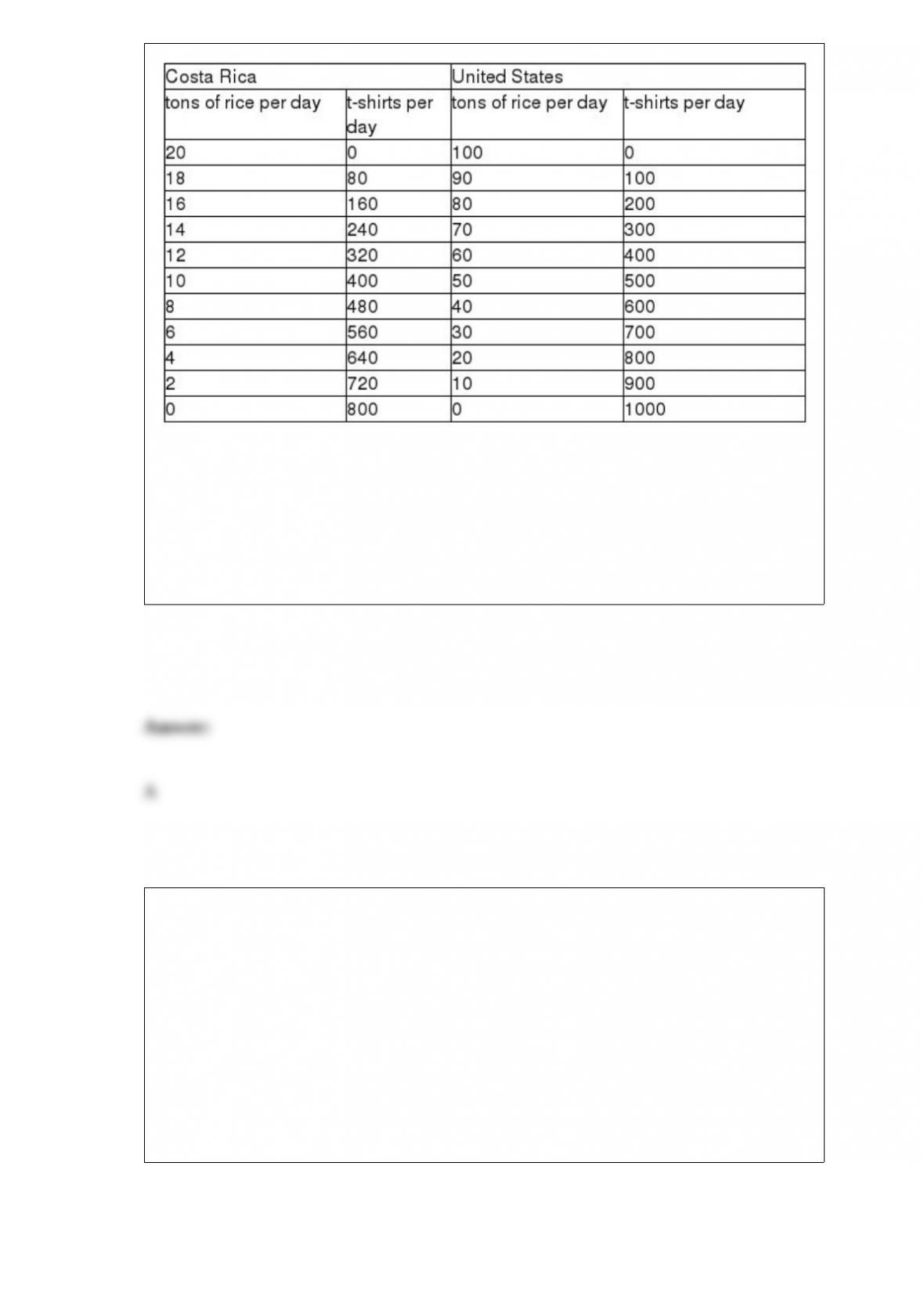
In Exhibit 19-2, the United States should produce rice and trade its rice for Costa Rica’s
t-shirts.
a. True
b. False
Barter is
a. illegal in the United States
b. an efficient system of exchange
c. most useful when there is much specialization and international trade
d. only possible if money is used as a medium of exchange
e. the direct exchange of goods, without the use of money

Economists assume that, within a given budget, consumers will
a. maximize average utility
b. minimize average utility
c. maximize total utility
d. face diminishing total utility after consuming the first unit of a good
e. continue to consume a good until its utility is negative
“I don’t feel so good. I shouldn’t have had that last doughnut.” Which statement best
describes this situation?
a. The marginal utility of the last doughnut was positive.
b. The marginal utility of doughnuts is still increasing.
c. The total utility from eating doughnuts is negative.
d. The marginal utility of the last doughnut was negative.
e. The marginal utility of the next doughnut will be positive.
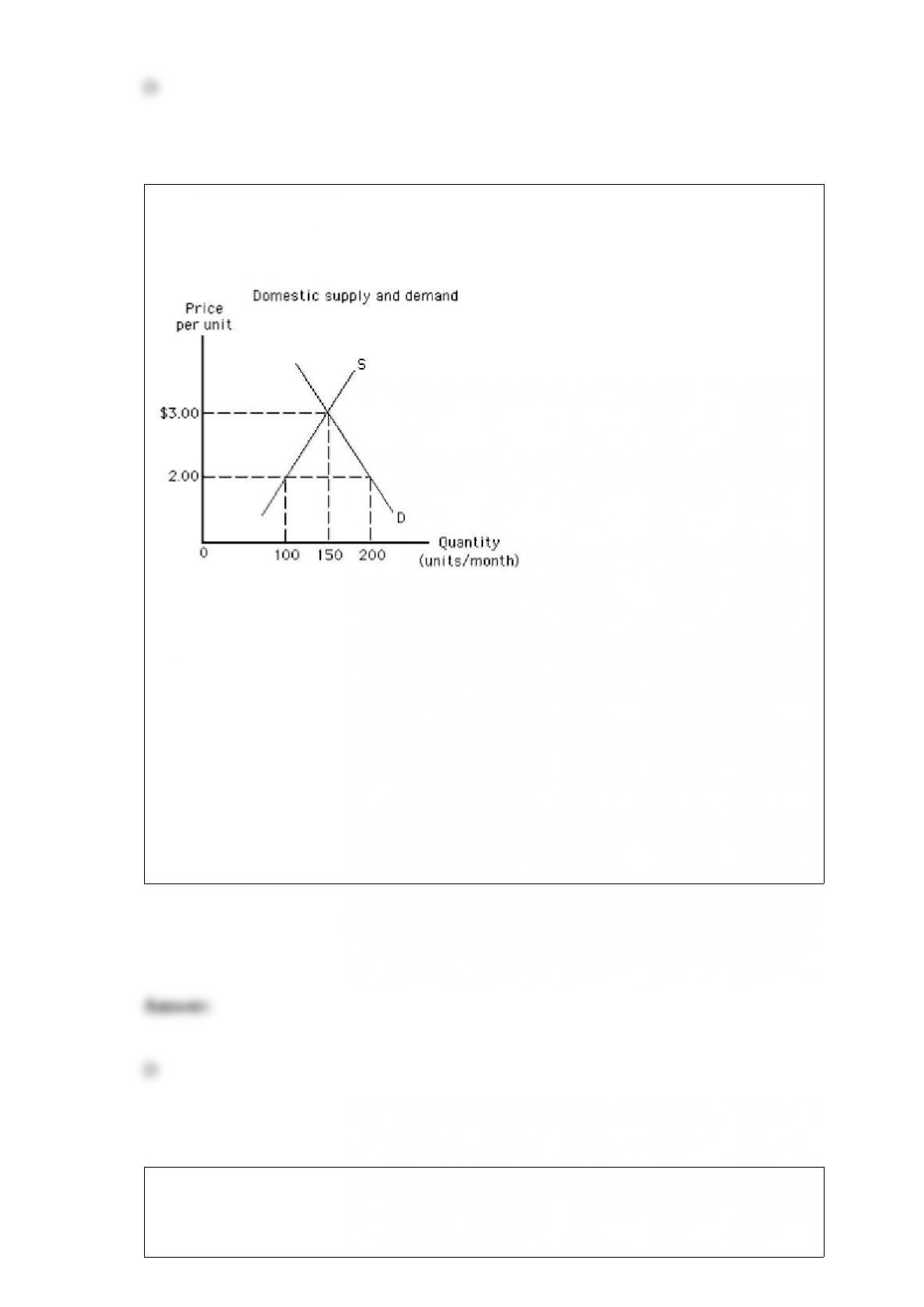
Exhibit 19-7
Suppose that the world price in Exhibit 19-7 is $2.00 per unit. What is the smallest
import quota that would not affect the level of imports in this country?
a. $3.00
b. $2.00
c. 50 units per month
d. 100 units per month
e. 150 units per month
Exhibit 6-22
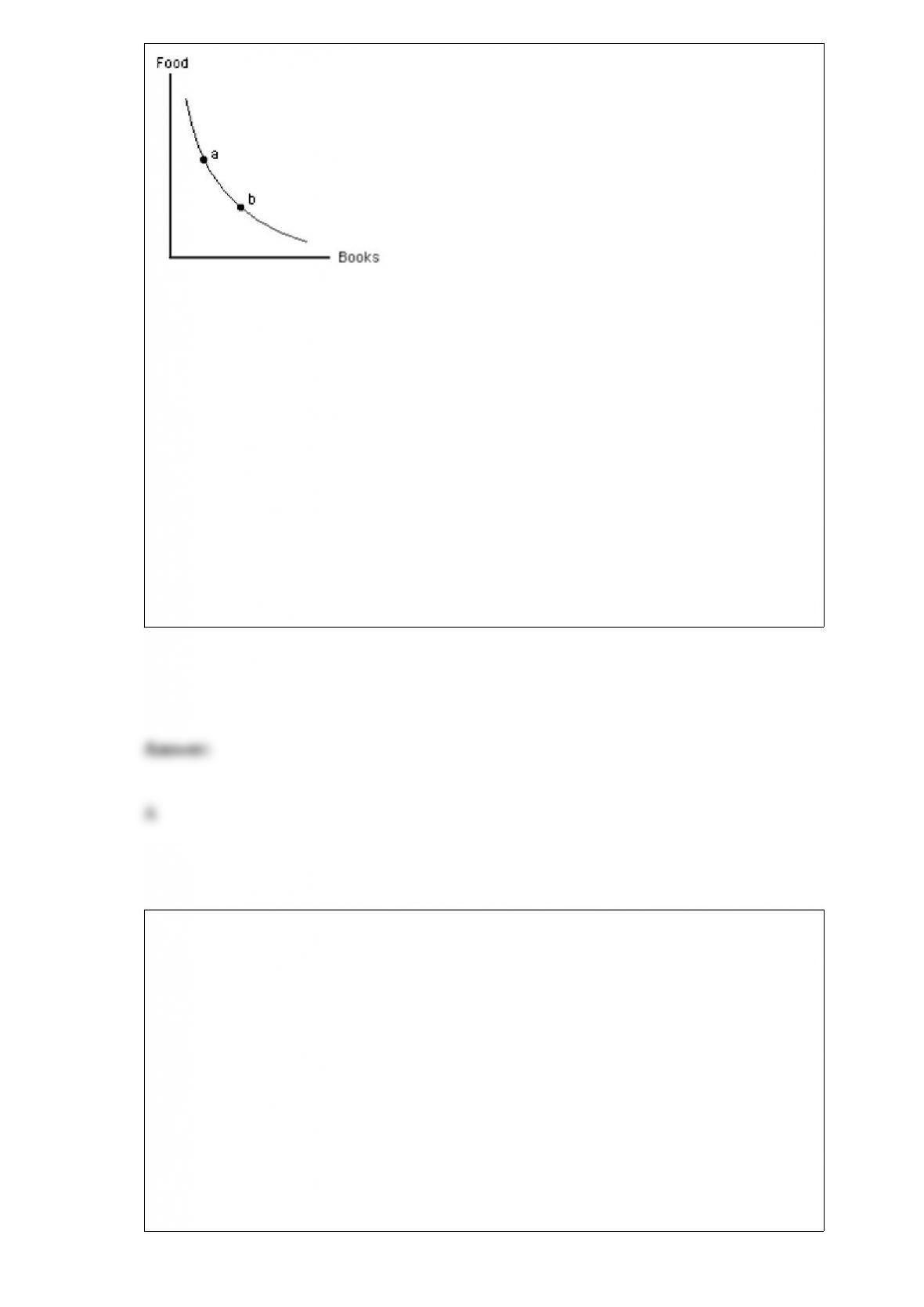
If a consumer moves from point a to point b on the indifference curve shown in Exhibit
6-22,
a. the consumer’s total utility from food and books remains unchanged
b. the consumer’s total utility from food and books falls
c. the consumer becomes more willing to give up additional units of books in order to
consume one more unit of food
d. the consumer’s willingness to give up additional units of books in order to consume
more units of food does not change
e. the consumer’s total utility from food and books rises
In the United States
a. only those who have made previous contributions to the program are entitled to
receive the benefits of social insurance programs
b. anyone with children is entitled to receive the benefits of social insurance programs
c. anyone over 65 is eligible to receive the benefits of social insurance programs
d. all taxpayers are eligible to receive the benefits of social insurance programs
e. all poor families with children are eligible to receive the benefits of social insurance
programs

Specialization of labor
a. increases productivity without creating any problems
b. reduces productivity, and is usually eliminated by business firms
c. can create problems of boredom and repetitive motion injuries
d. prevents the introduction of more sophisticated and efficient production techniques
e. ignores individual preferences and natural abilities
As a result of a tariff on imports, consumers in the importing country
a. purchase more domestically produced goods and fewer foreign goods, resulting in the
consumption of fewer total goods than without the tariff
b. purchase more domestically produced goods and fewer foreign goods, resulting in
the consumption of more total goods than without the tariff
c. purchase more domestically produced goods and more foreign goods, resulting in the
consumption of fewer total goods than without the tariff
d. purchase fewer domestically produced goods and fewer foreign goods, resulting in
the consumption of more total goods than without the tariff
e. cease importing any goods at all
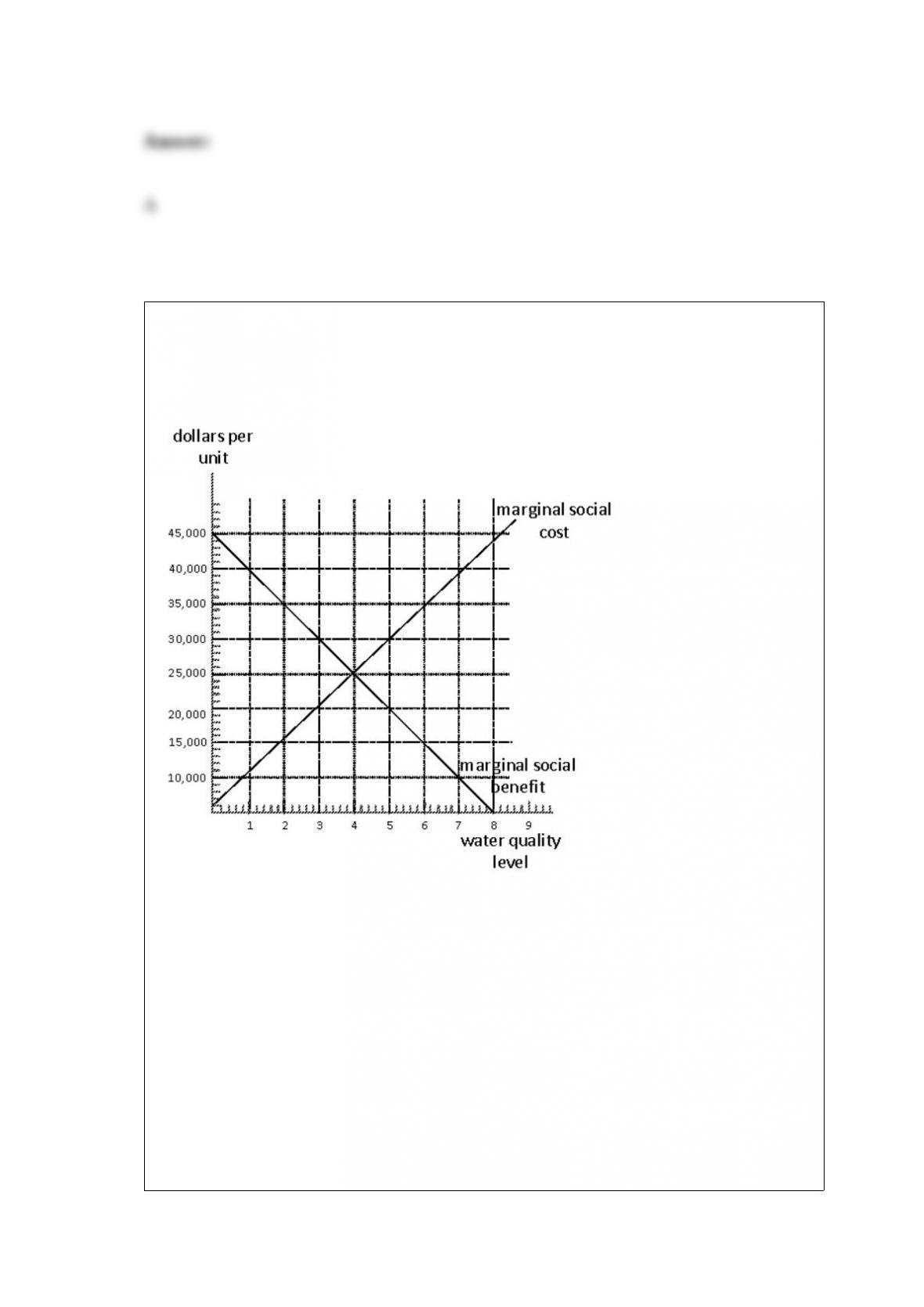
Exhibit 17-9
In Exhibit 17-9, the welfare loss (from society’s perspective) that results from 6 units of
water quality is shown by area
a. $5,000
b. $10,000
c. $15,000
d. $20,000
e. $25,000
When an activity results in the imposition of external costs, markets will produce more
than the socially optimal level of that activity.
a. True
b. False
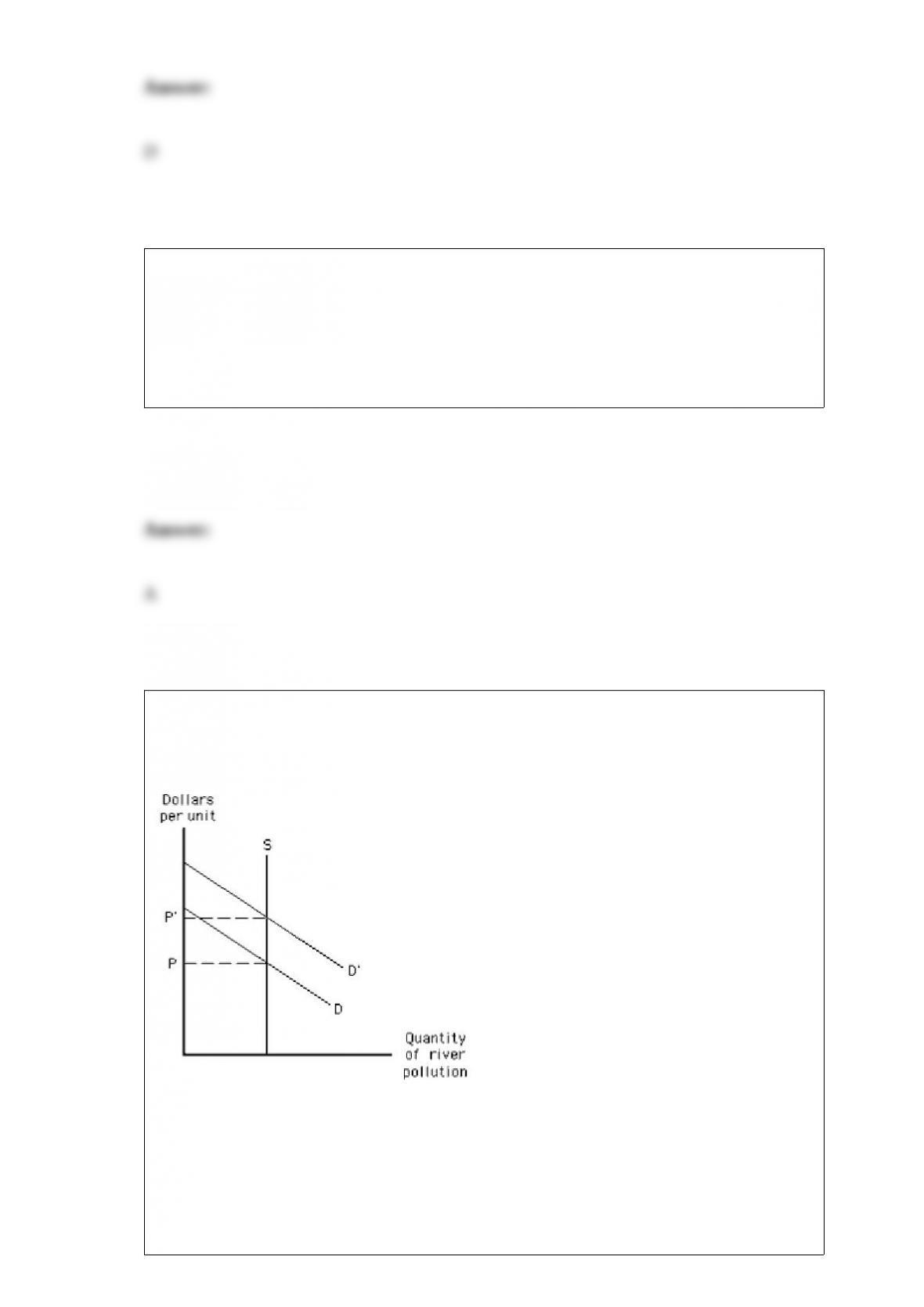
Exhibit 17-4
In Exhibit 17-4, the shift of the demand curve from D to D’ indicates that
a. producers want to discharge more pollution into the river
b. producers want to use more of the river in a nonpolluting way
c. consumers want producers to clean up the polluted river
d. consumers want to buy goods that use technology that does not pollute
e. consumers want to buy the river from the polluter
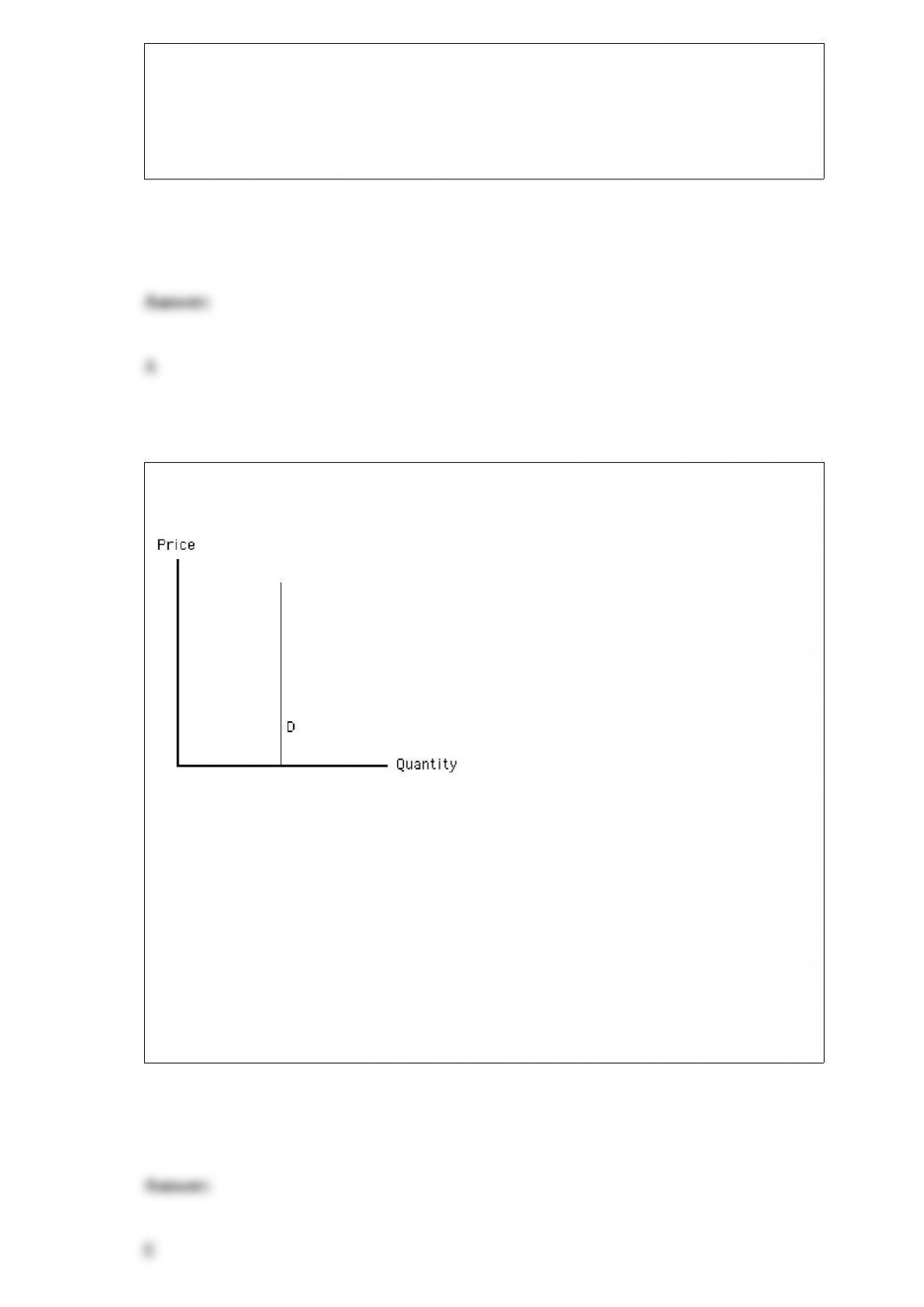
Exhibit 5-4
Demand in Exhibit 5-4 is
a. unit elastic
b. somewhat elastic
c. perfectly elastic
d. somewhat inelastic
e. perfectly inelastic

If the fraction of the population that is below the official poverty level has decreased,
then
a. the number of poor must have increased
b. the number of poor must have decreased
c. the population must have increased
d. the number of poor may have increased or decreased
e. the number of people above the official poverty level must have increased
Suppose there are only two goods, apples and oranges. What happens if the price of
each good increases by 15 percent?
a. The consumer will substitute apples for oranges.
b. The consumer will substitute oranges for apples.
c. There is no substitution effect because relative prices have remained constant.
d. Demand for both goods increases.
e. Demand for both goods decreases.
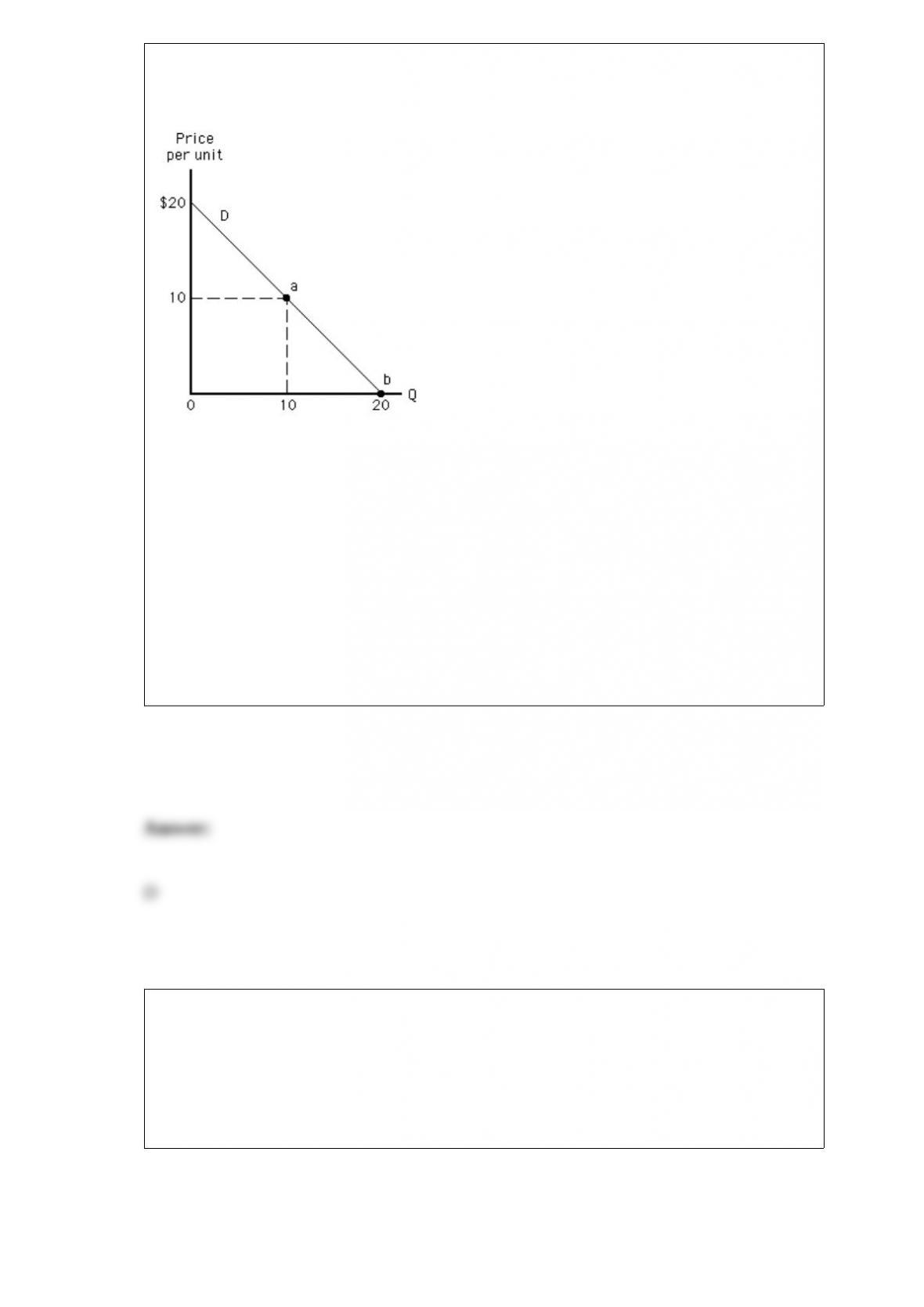
Exhibit 5-9
Between points a and b on the demand curve in Exhibit 5-9, demand is
a. perfectly elastic
b. elastic
c. perfectly inelastic
d. inelastic
e. unit elastic
Countries with reliable phone service have difficulty not only communicating, but also
reaping the benefits of other technology advances, such as the Internet.
a. True
b. False