1) (consider this) rising wages for women in the united states have:
a.increased the proportion of women working part time compared to working full time.
b.increased labor costs and thus shifted the nation’s production possibilities curve
inward.
c.increased average family size in the united states.
d.increased the percentage of married women in the workforce.
2)
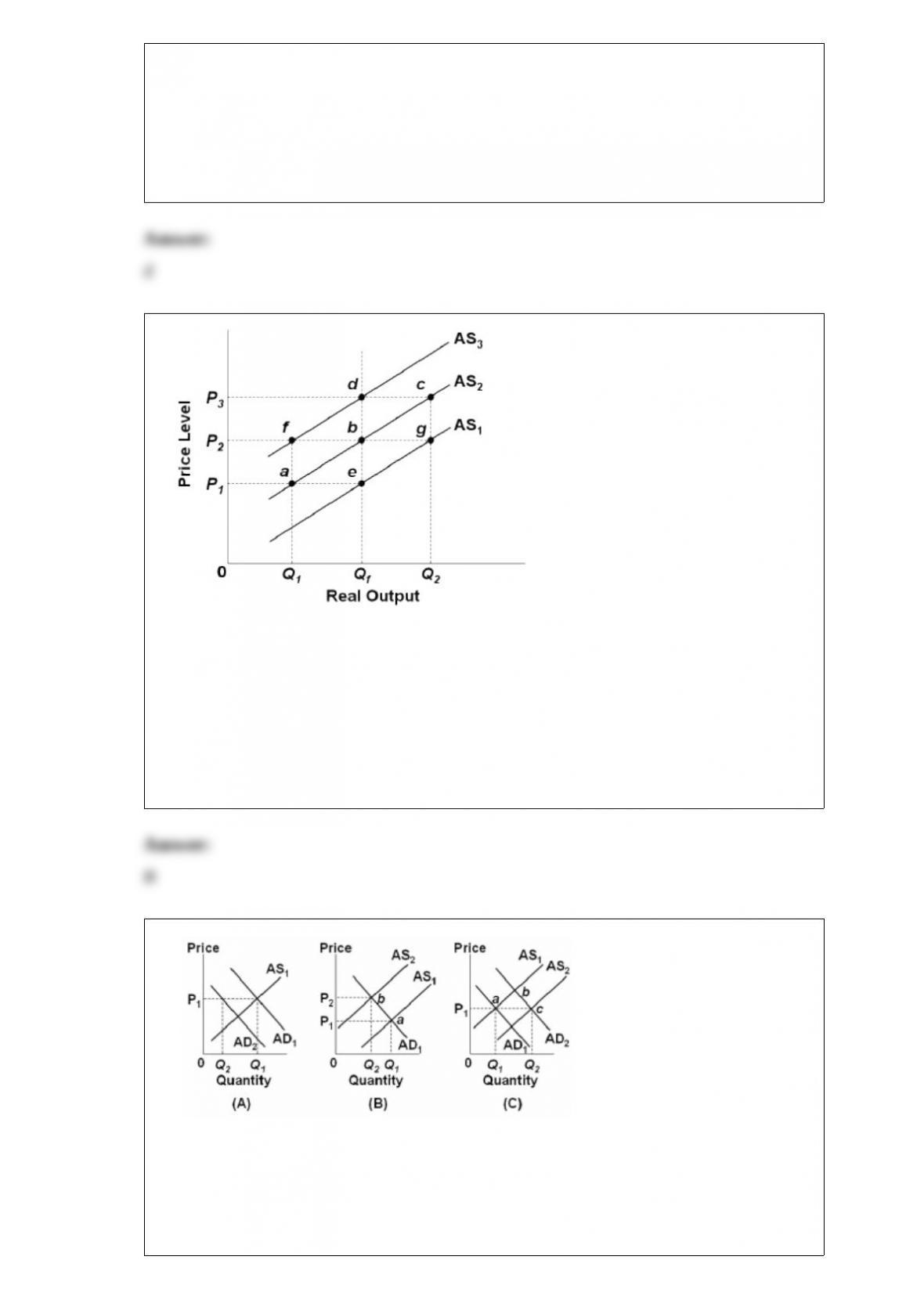
Refer to the above diagram. Assume that nominal wages initially are set on the basis of
the price level P2 and that the economy initially is operating at its full-employment
level of output Qf. In terms of this diagram, the long-run aggregate supply curve:
A.is AS2.
B.is a vertical line extending from Qf upward through e, b, and d.
C.may be either AS1, AS2, or AS3 depending on whether the price level is P1, P2, or
P3.
D.is a horizontal line extending from P2 rightward through f, b, and g.
3)
Refer to the above diagrams, in which AD1 and AS1 are the “before” curves and AD2
and AS2 are the “after” curves. Other things equal, a decline in investment spending
caused by the interest-rate effect of a price-level increase is depicted by the:
A.shift of the AD curve in panel (A).
B.shift of the AS curve in panel (B).

C.move from point a to point b in panel (B).
D.move from point a to point c in panel (C).
4) The lowest quintile of households in the income distribution receives about:
A.2.2 percent of the total income.
B.3.4 percent of the total income.
C.8.5 percent of the total income.
D.10 percent of the total income.
5) Most of the world’s population lives in:
A.North America.
B.the DVCs.
C.Western Europe.
D.the IACs.
6) an efficiency loss (or deadweight loss):
a.is measured as the combined loss of consumer surplus and producer surplus.
b.results from producing a unit of output for which the maximum willingness to pay
exceeds the minimum acceptable price.
c.can result from underproduction, but not from overproduction.
d.can result from overproduction, but not from underproduction.
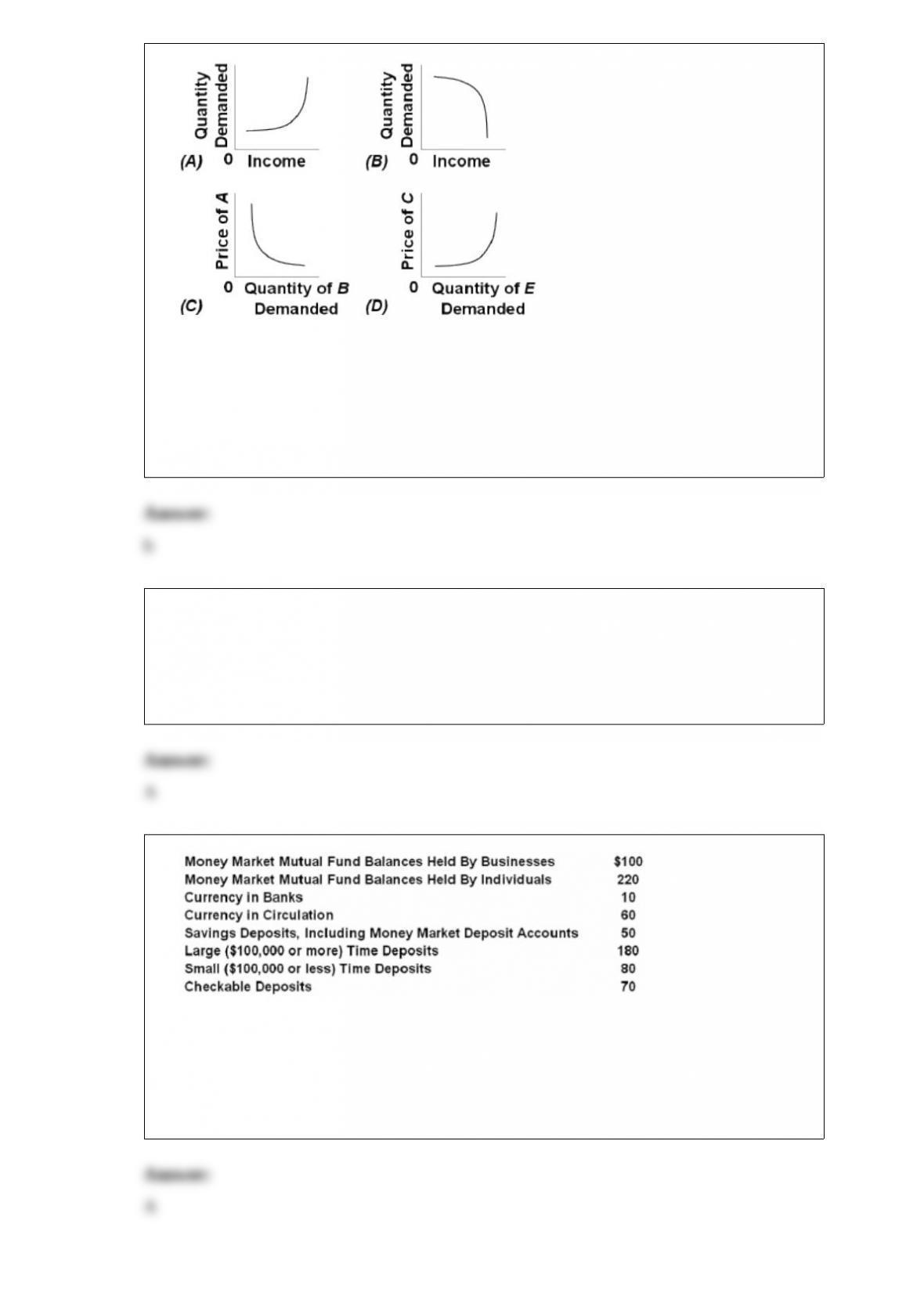
7)
refer to the above diagrams. in which case would the coefficient of income elasticity be
negative?
a.a
b.b
c.c
d.d
8) If property rights are weak or uncertain, resource extraction will tend to:
A.occur faster than the rate that would maximize the long-run stream of profits.
B.occur slower than the rate that would maximize the long-run stream of profits.
C.occur at the rate that would maximize the long-run stream of profits.
D.stop.
9)
Refer to the above information. Money supply M2 for this economy is:
A.$480.
B.$130.
C.$490.
D.$630.
10) The purpose of the Freedom to Farm Act of 1996 was to:
A.immediately end U.S. farm subsidies.
B.end 60 years of U.S. price supports for American grain crops.
C.eliminate U.S. tariffs and quotas on imported farm goods.
D.stabilize short-run crop prices.
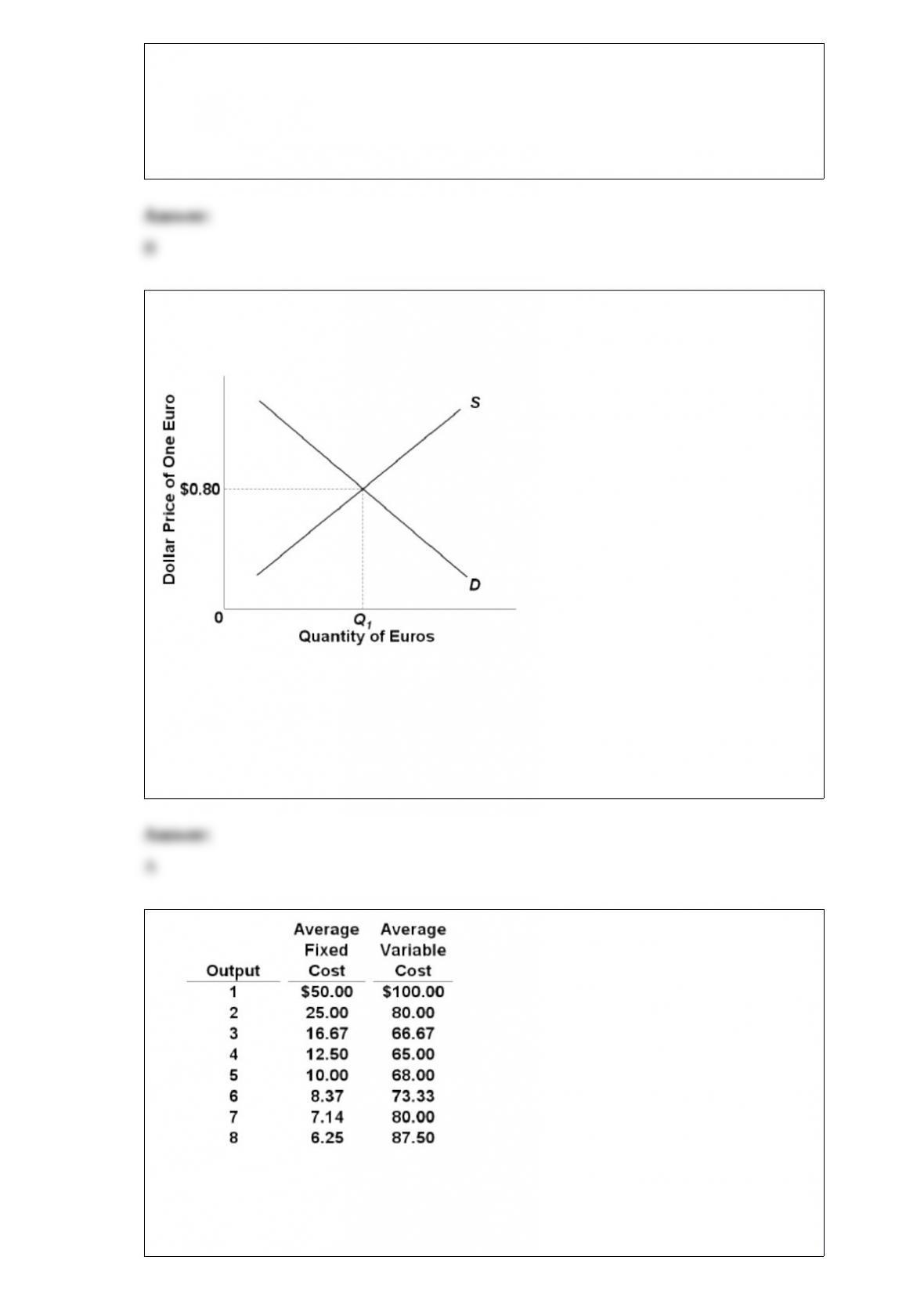
11) The following diagram is a flexible exchange market for foreign currency:
Refer to the above diagram. Other things equal, a rightward shift of the demand curve
would:
A.depreciate the dollar.
B.appreciate the dollar.
C.reduce the equilibrium quantity of euros.
D.depreciate the euro.
12)
refer to the above data. the average total cost of five units of output is:
a.$69.
b.$78.
c.$3.
d.$10.
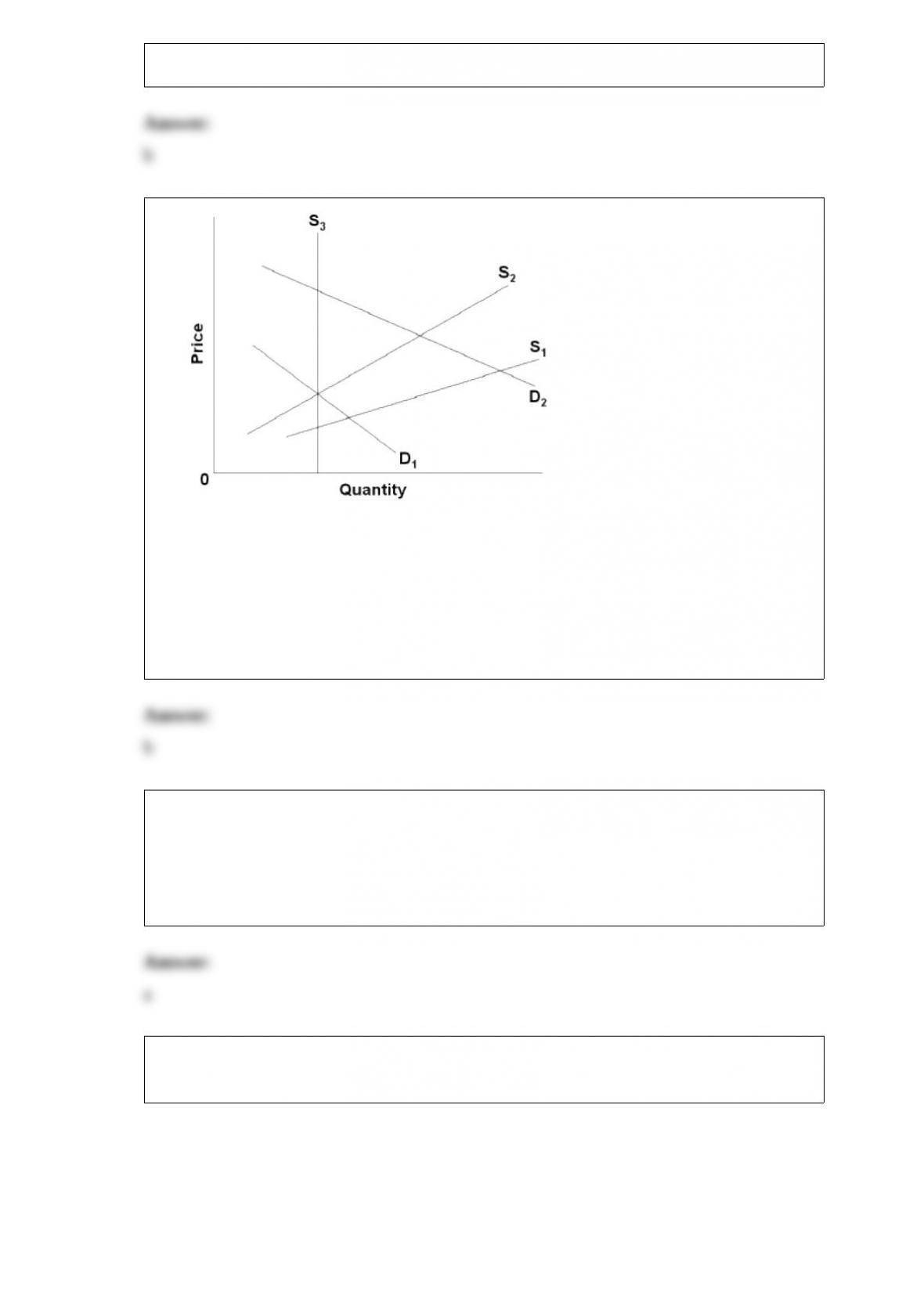
13)
the above diagram concerns supply adjustments to an increase in demand (d1to d2) in
the immediate market period, the short run, and the long run. in the immediate market
period the increase in demand will:
a.have no effect on either equilibrium price or quantity.
b.increase equilibrium price, but not equilibrium quantity.
c.increase equilibrium quantity, but not equilibrium price.
d.increase both equilibrium price and quantity.
14) as it relates to a public good, nonexcludability means that:
a.free riders cannot be barred from receiving the benefits.
b.there is no need or demand for the good.
c.either the public sector or the public sector can produce the good, but not both.
d.one person’s benefit from the good does not reduce the benefit available to others.
15) the following cost data for a firm that is selling in a purely competitive market.
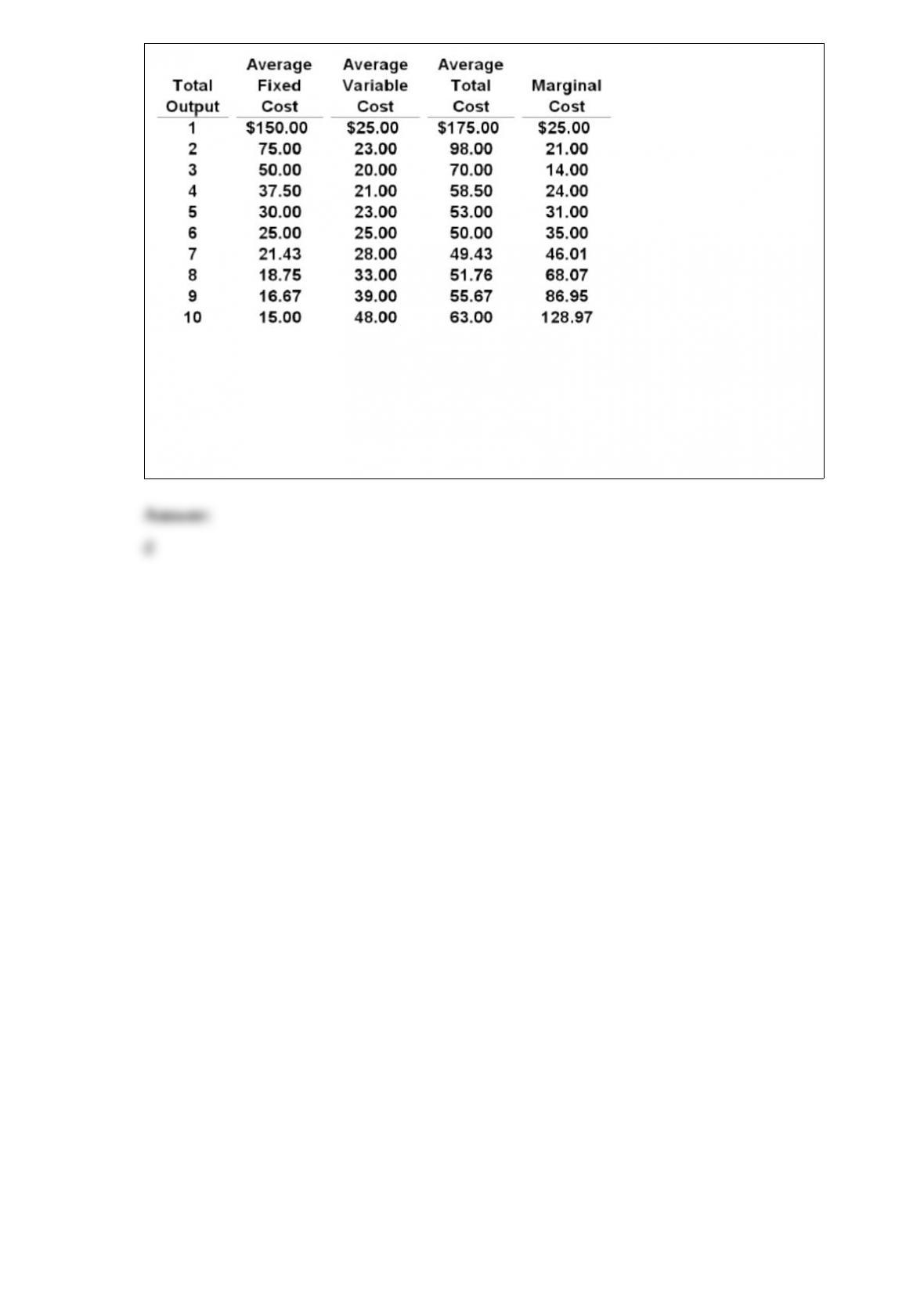
refer to the above data. if the market price for this firm’s product is $68.07, it will
produce:
a.8 units at an economic profit of zero.
b.6 units at a loss of $90.
c.9 units at an economic profit of $281.52.
d.8 units at an economic profit of $130.48.