The tax multiplier is smaller in absolute value than the government purchases multiplier
because some portion of the
A) decrease in taxes will be saved by households and not spent, and some portion will
be spent on imported goods.
B) decrease in taxes will be saved by households and not spent, and some portion will
be spent on consumer durable goods.
C) increase in government purchases will be saved by households and not spent, and
some portion will be spent on imported goods.
D) increase in government purchases will be saved by households and not spent, and
some portion will be spent on consumer durable goods.
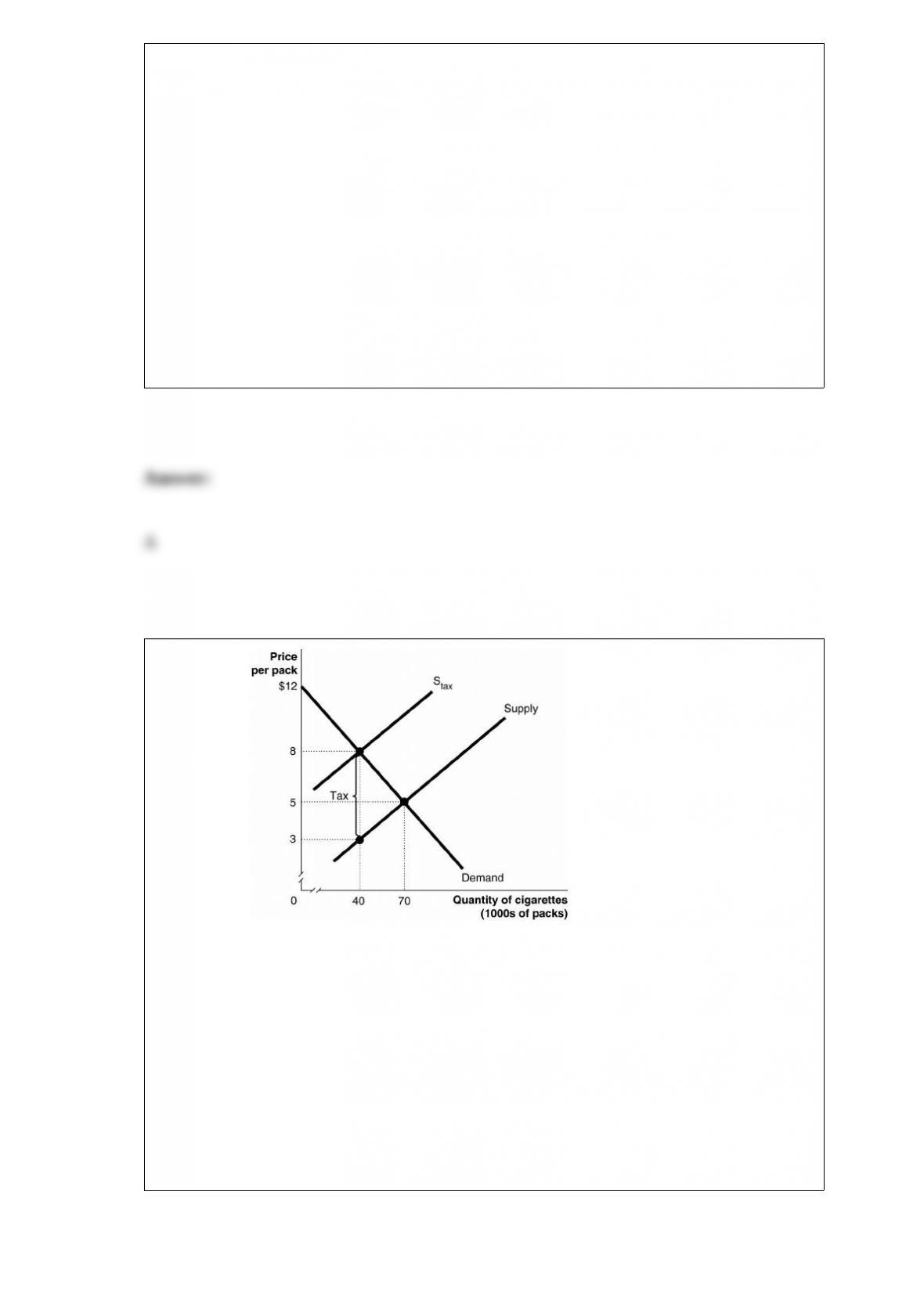
Figure 4-18 Figure 4-18 shows the market
for cigarettes. The government plans to impose a unit tax in this market.
The price buyers pay after the tax is
A) $12.
B) $8.
C) $5.
D) $3.
If a perfectly competitive firm’s price is less than its average total cost but greater than
its average variable cost, the firm
A) is earning a profit.
B) should shut down.
C) is incurring a loss.
D) is breaking even.
Since 1972, the world price of oil has been largely determined by OPEC, which
controls about 75 percent of the world’s proven oil reserves. Since 1972 the price of oil
has
A) fluctuated. OPEC’s situation is an example of a prisoner’s dilemma.
B) risen slowly, but steadily. Members of OPEC fear that if they raise the price of oil
too quickly this will lead oil-buying nations to accuse OPEC of price gouging, which is
illegal under international law.
C) steadily fallen through the 1970s, then risen continually in the years since then.
OPEC’s actions are an example of implicit collusion.
D) been tied by OPEC to the rate of inflation in the United States. If, for example, the
rate of inflation is 5 percent in one year, OPEC will raise the price of oil by 5 percent
the next year.
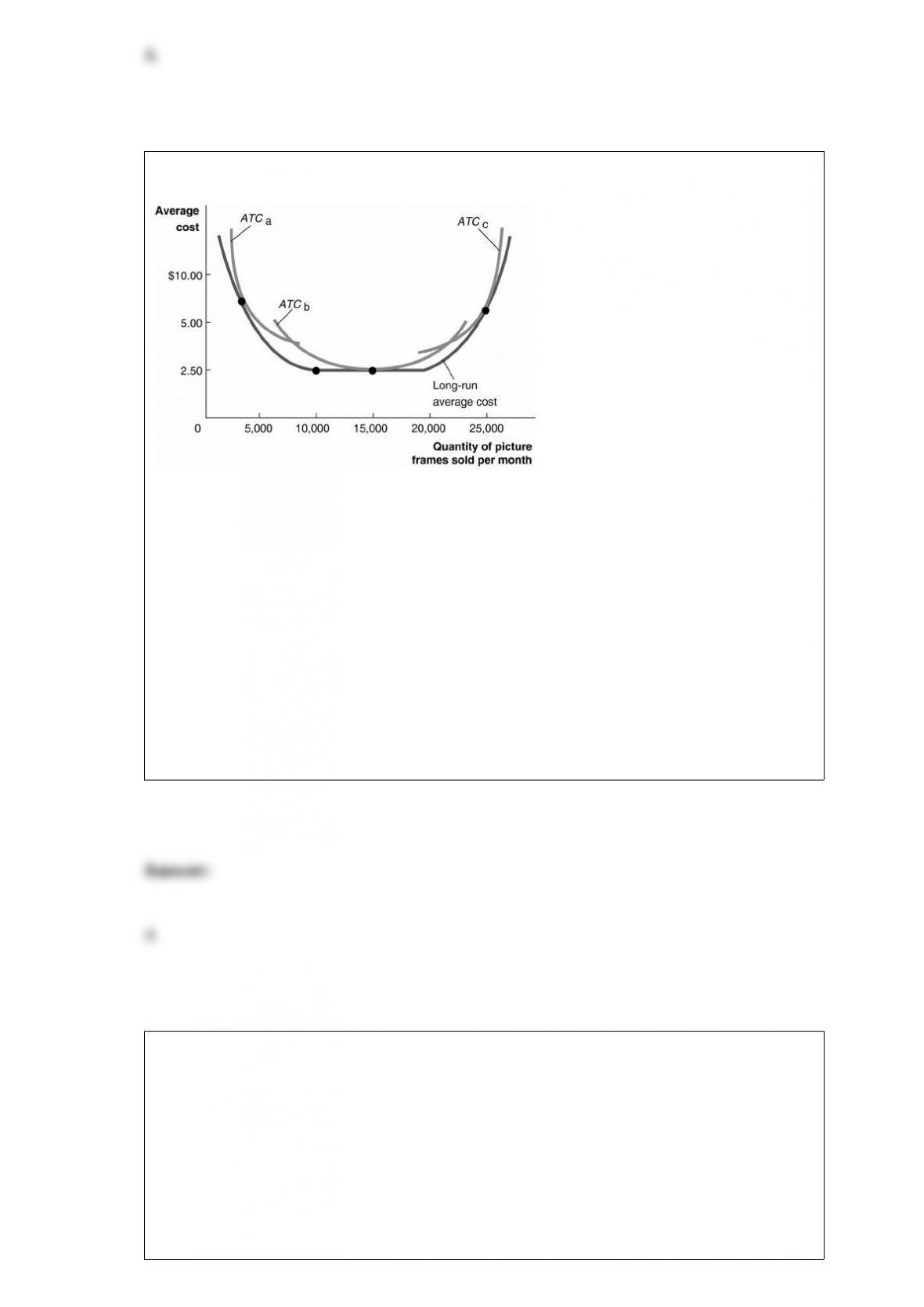
Figure 11-11
Figure 11-11 illustrates the long-run
average cost curve for a firm that produces picture frames. The graph also includes
short-run average cost curves for three firm sizes: ATCa, ATC and ATCc.
In the short run, if the firm sells fewer than 5,000 picture frames per month
A) it should produce with the scale of operation associated with ATCa.
B) it should produce with the scale of operation associated with ATC.
C) it should produce with the scale of operation associated with ATCc.
D) it will experience constant returns to scale.
The expansionary monetary and fiscal policies of the 1960s resulted in ________
inflation rates and ________ rates of unemployment.
A) high; high
B) low; low
C) low; high
D) high; low
Firms in Thailand that had borrowed dollars while the baht was pegged to the dollar
faced interest payments that were ________ than they had planned while the Thai
government continued trying to defend the peg, because the baht had been pegged
________ the equilibrium exchange rate for the baht.
A) higher; above
B) higher; below
C) lower; above
D) lower; below
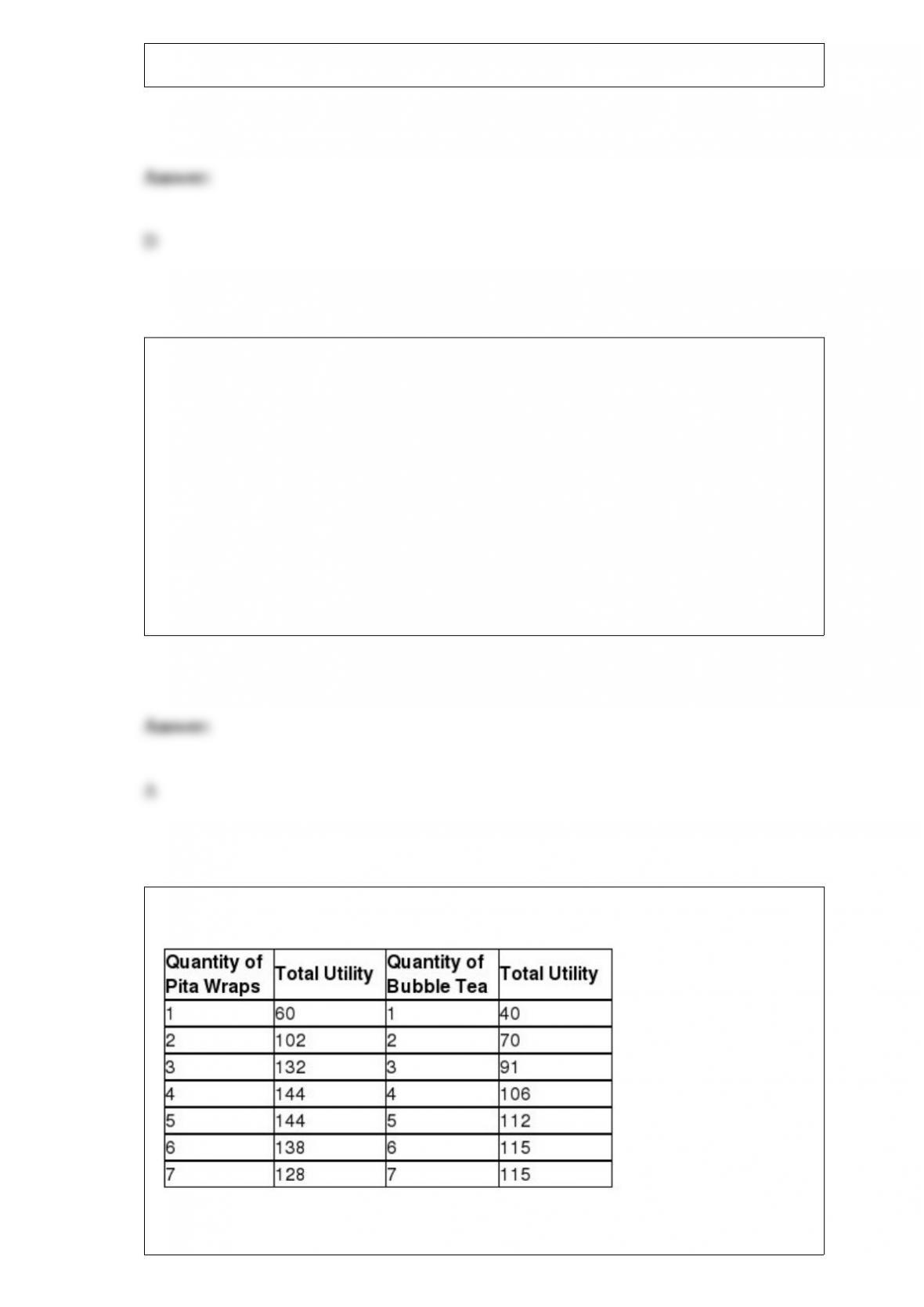
Table 10-1
Keegan has $30 to spend on Pita Wraps and Bubble Tea. The price of a Pita Wrap is $6
and the price of a glass of Bubble Tea is $3. Table 10-1 shows his total utility from
different quantities of the two items. If Keegan can drink all the bubble tea he wants for
free, how many glasses will he consume?
A) 4 glasses
B) 5 glasses
C) 6 glasses
D) 7 glasses
________ shows that if all resources are fully and efficiently utilized, more of one good
can be produced only by producing less of another good.
A) Comparative advantage
B) Absolute advantage
C) The mixed market system
D) The production possibilities frontier model
Which of the following is not one of the concerns of some policymakers and
economists that the increase in the share of income earned by the 1 percent is damaging
to the country?
A) The higher incomes of the 1 percent may give them disproportionate political
influence through campaign contributions.
B) Countries with high levels of income inequality have lower growth rates than do
countries with more equal distributions of income.
C) further increases in marginal tax rates may reduce work, saving, and investment,
thereby reducing economic growth.
D) Rising income inequality can lead to political unrest.
Monopolistic competition is a market structure in which
A) firms produce and sell products for which there are no close substitutes.
B) the demand curve for a typical firm is horizontal.
C) firms cannot influence the market price.
D) barriers to entry are low.
Figure 18-8
Answer the following questions.
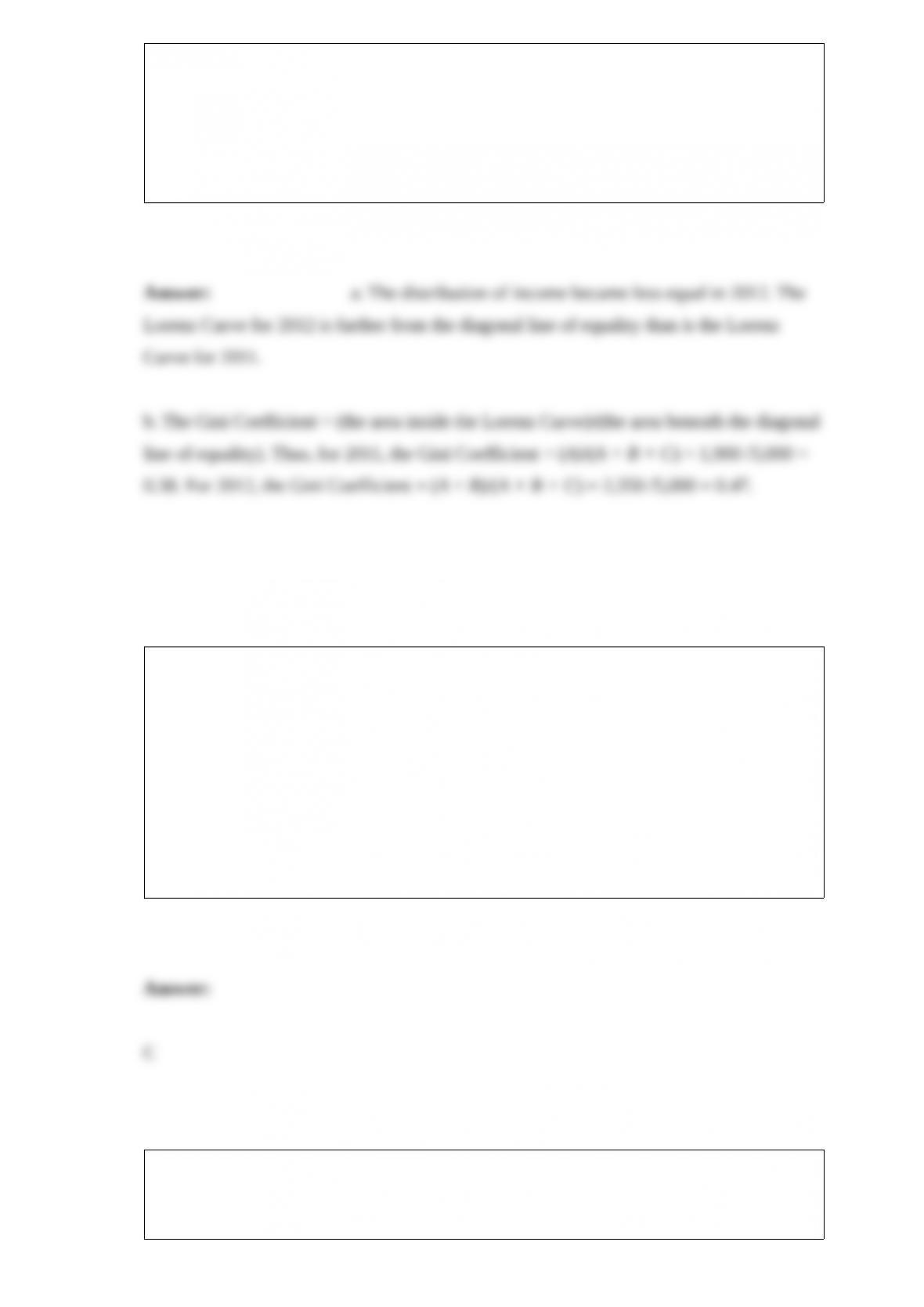
a. Did the distribution of income become more equal in 2012 than it was in 2011, or did
it become less equal? Explain.
b. If area A = 1,900, area B = 450, and area C = 2,650, calculate the Gini coefficient for
2011 and the Gini coefficient for 2012.
Of the $840 billion American Recovery and Reinvestment Act stimulus package which
was enacted in 2009, the largest tax cuts occurred in which category?
A) business tax cuts
B) energy tax cuts
C) individual tax cuts
D) infrastructure tax cuts
Identify whether each of the following transactions will take place in the factor market
or in the product market:
a. Shondra buys a Harley-Davidson Softail motorcycle.
b. Aimee works 20 hours a week at a grocery store.
c. Gustavo sells a warehouse to a produce delivery company.
d. Ocean Spray increases employment at its Middleboro, Massachusetts plant.
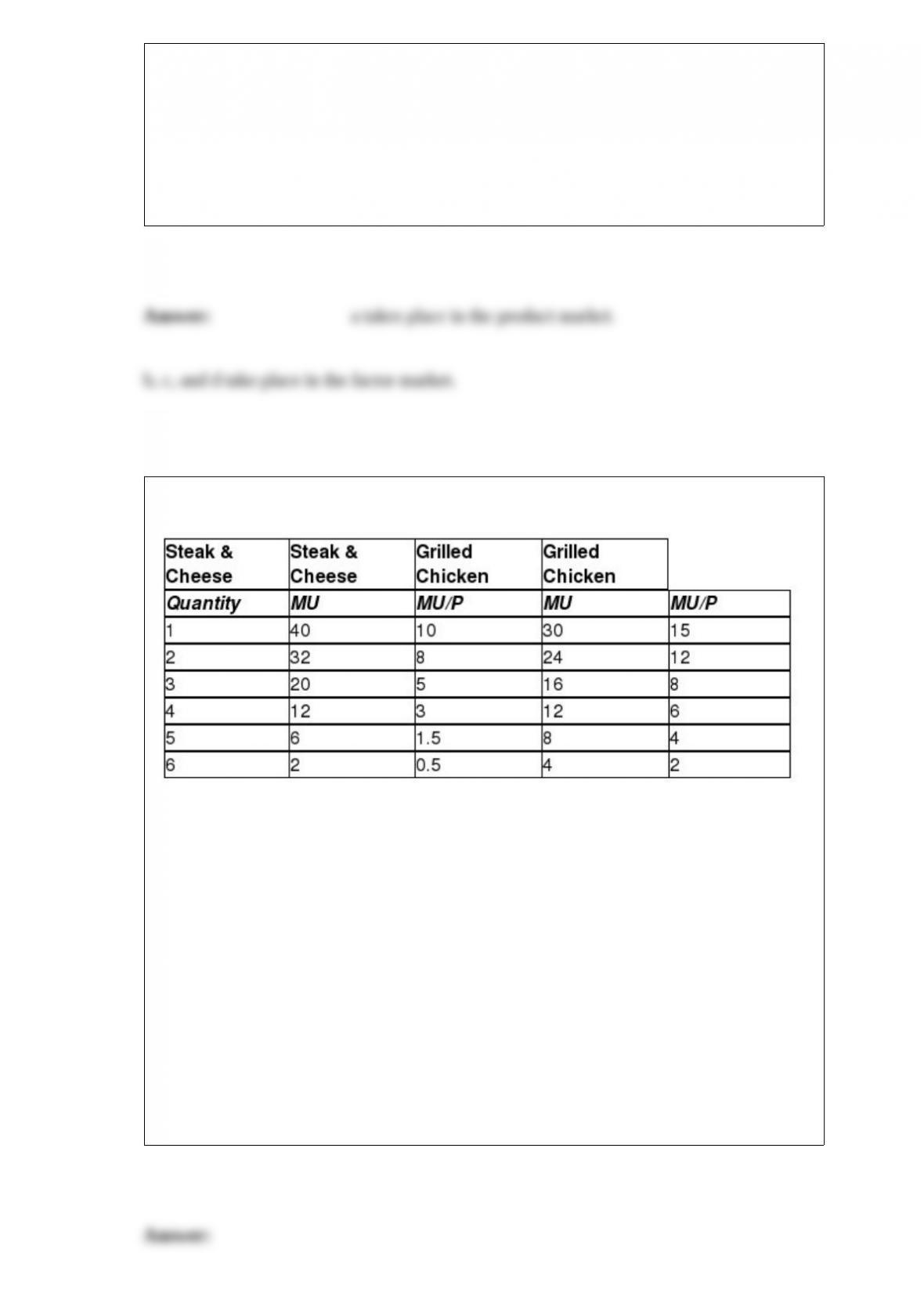
Table 10-4
For steak and cheese and grilled chicken sandwiches, the table contains the values of
the marginal utility (MU) and marginal utility per dollar (MU/P) for Mabel Jarvis.
Mabel has $14 to spend on steak and cheese and grilled chicken sandwiches. Which of
the following statements is false?
A) The price of steak and cheese sandwiches is $4. The price of grilled chicken
sandwiches is $2.
B) If Mabel maximizes her utility she will buy three grilled chicken sandwiches.
C) If Mabel maximizes her utility she will buy two steak and cheese sandwiches.
D) We do not have enough information to determine how many sandwiches Mabel will
buy to maximize her utility.
Economists estimated that the price elasticity of beer is -0.30 and the income elasticity
of beer is 0.09. This means that
A) an increase in the price of beer will increase the quantity demanded of beer and beer
is a normal good.
B) an increase in the price of beer will lead to an increase in revenue for beer sellers
and beer is a normal good.
C) a decrease in the price of beer will lead to an increase in revenue for beer sellers and
beer is an inferior good.
D) an increase in the price of beer will lead to a decrease in the quantity demanded of
beer and beer is a necessity.
Marginal revenue for an oligopolist is
A) identical to the demand for the firm’s product.
B) difficult to determine because the firm’s demand curve is typically unknown.
C) downward sloping beneath the firm’s demand curve.
D) horizontal on a price-quantity diagram.