1) a firm’s total variable cost will depend on:
a.the prices of variable resources.
b.the production techniques that are used.
c.the level of output.
d.all of these.
2)
Refer to the above diagram. Assume that nominal wages initially are set on the basis of
the price level P2 and that the economy initially is operating at its full-employment
level of output Qf. In the short run, an increase in the price level from P2 to P3 will:
A.change aggregate supply from AS2 to AS3.
B.increase real output from Q1 to Q2.
C.change aggregate supply from AS2 to AS1.
D.increase real output from Qf to Q2.
3) refer to the above diagram. if labor is the only variable input, the average product of
labor is at a:
a.minimum at point b
b.maximum at point b
c.maximum at point a
d.maximum at point c
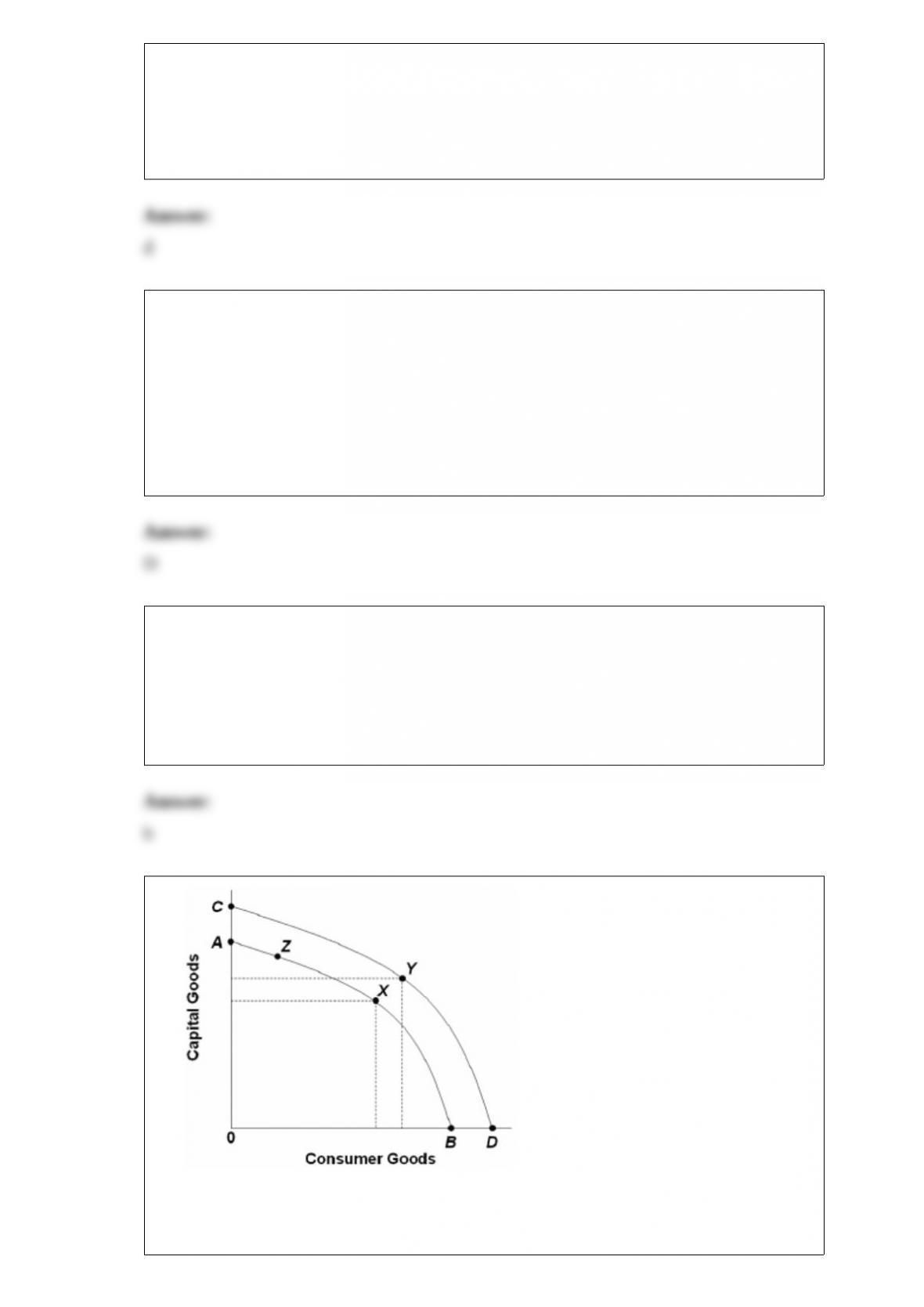
4)
refer to the above diagram. realized economic growth is best represented by a:
a.a move from z to x along ab.
b.move from x on ab to y on cd.

c.shift in the production possibilities curve from cd to ab.
d.move from x to z along ab.
5) shortages and unmet demand provide opportunities for individuals and firms to profit
under capitalism, but they present no such opportunities under central planning. this
reality represents central planning’s:
a.incentive problem.
b.coordination problem.
c.paradox of value.
d.x-efficiency problem.
6) The ability-to-pay principle of taxation:
A.has been declared unconstitutional because it deprives individuals of property
without due process of law.
B.suggests that people should pay taxes in proportion to the benefits they derive from
public goods and services.
C.suggests that taxes should vary directly with people’s income and wealth.
D.suggests that taxes should vary inversely with people’s income and wealth.
7) In the extended aggregate demand-aggregate supply model:
A.long-run equilibrium occurs wherever the aggregate demand curve intersects the
short-run aggregate supply curve.
B.the long-run aggregate supply curve is horizontal.
C.the price level is the same regardless of the location of the aggregate demand curve.
D.long-run equilibrium occurs at the intersection of the aggregate demand curve, the
short-run aggregate supply curve, and the long run aggregate supply.
8) for which of the following goods or services would a government subsidy be most
likely to improve the allocation of resources?
a.wheat
b.cancer research
c.newspaper publishing
d.toys
9) taxable income is:
a.total income less deductions and exemptions.
b.the same as gross income.
c.only income to which marginal tax rates apply.
d.the sum of all wage and property income.
10) at the point where the demand and supply curves intersect:
a.the buying and selling decisions of consumers and producers are inconsistent with one
another.
b.the market is in disequilibrium.
c.there is neither a surplus nor a shortage of the product.
d.quantity demanded exceeds quantity supplied.
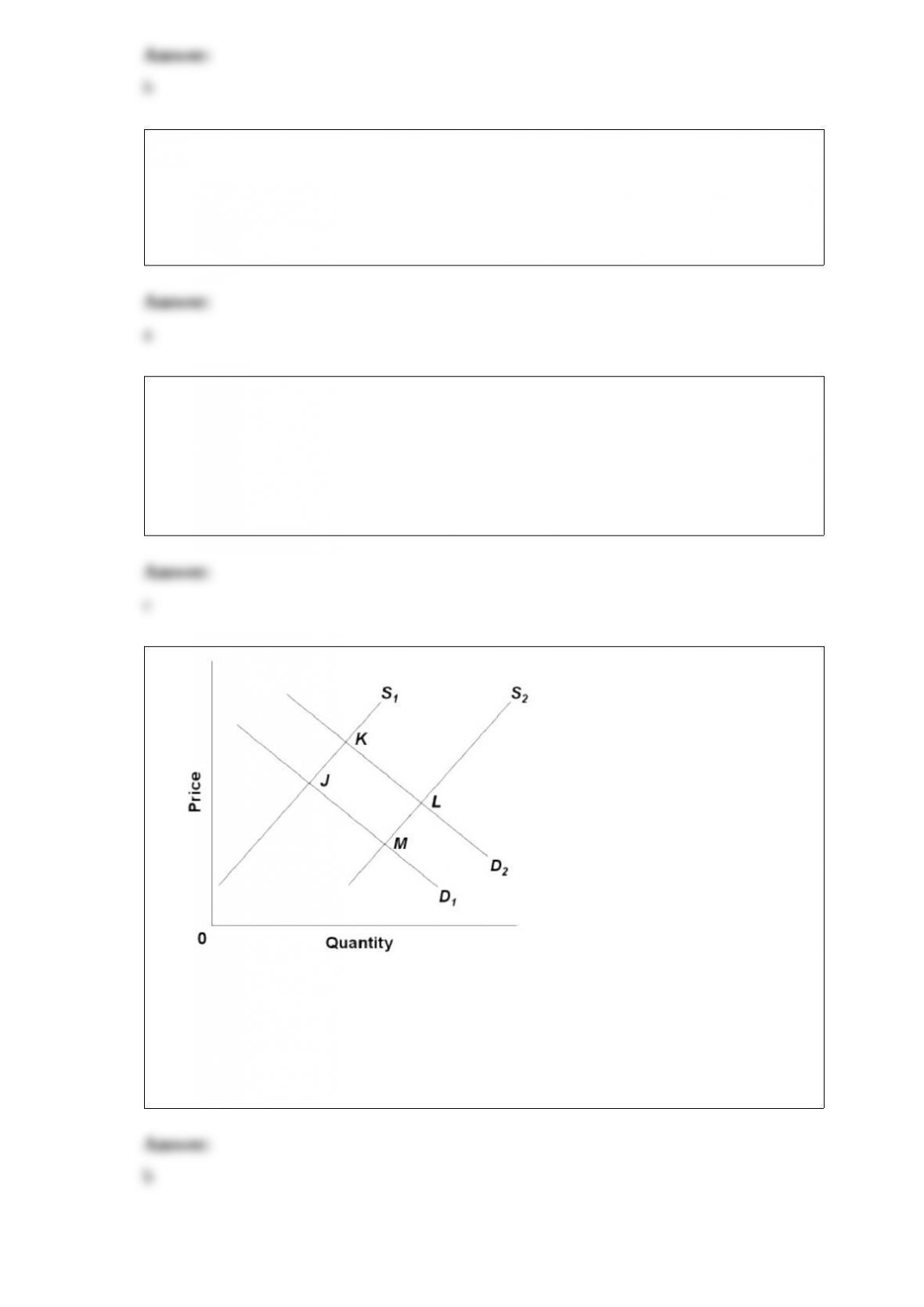
11)
refer to the above diagram, in which s1 and d1 represent the original supply and
demand curves and s2 and d2 the new curves. in this market:
a.the equilibrium position has shifted from m to k.
b.an increase in demand has been more than offset by an increase in supply.
c.the new equilibrium price and quantity are both greater than originally.
d.point m shows the new equilibrium position.