
A reduction in the rate of inflation is referred to as
A) unemployment.
B) recession.
C) disinflation.
D) deflation.
A standard which came to the market first, such as the QWERTY letter layout in
typewriters, can become entrenched (this layout is still used in computer keyboards
today). What is this phenomenon called?
A) network externalities
B) path dependency
C) sunk cost
D) comparative advantage
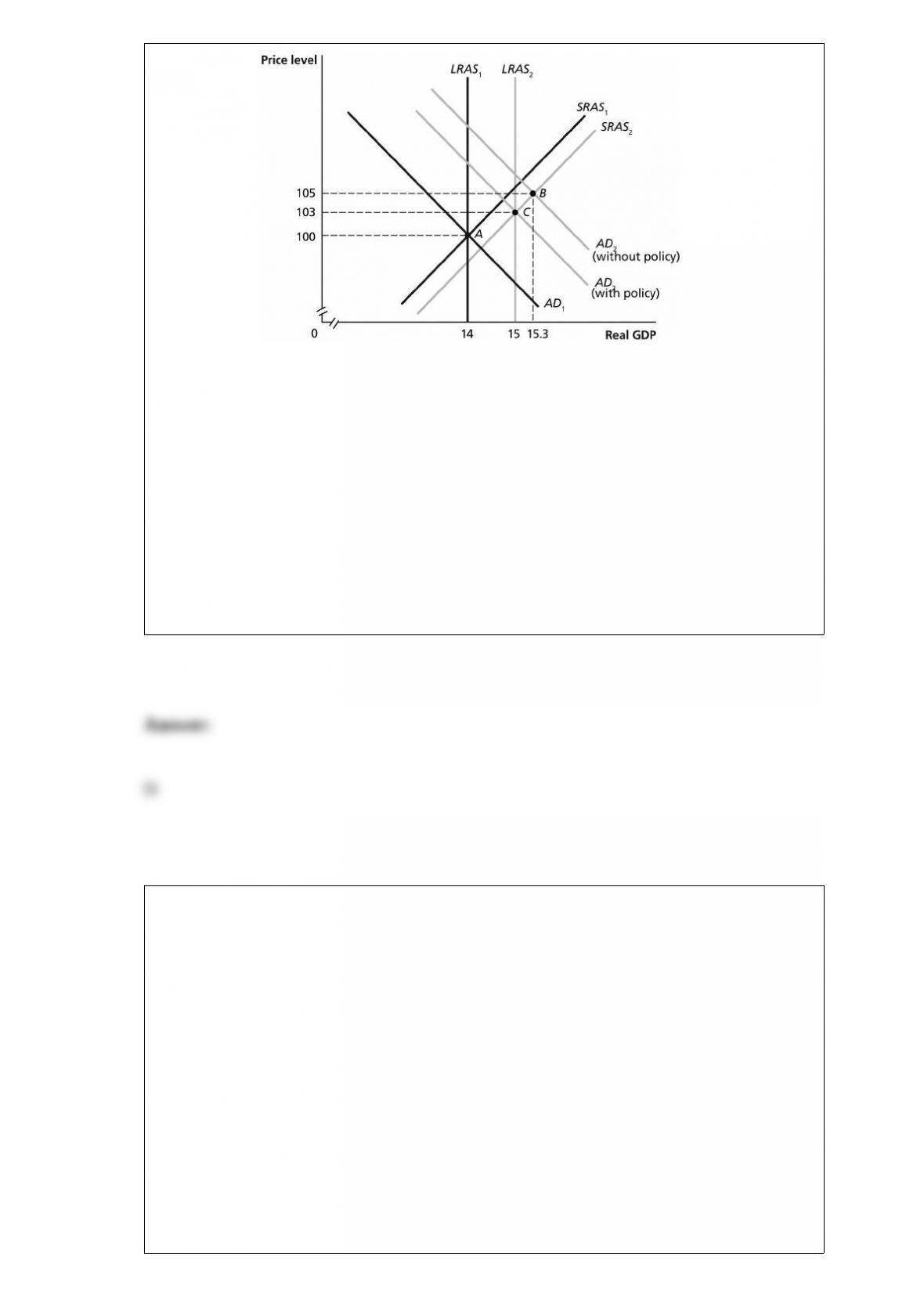
Figure 15-16
In the figure above, suppose the economy in Year 1 is at point A and expected in Year 2
to be at point B. Which of the following policies could the Federal Reserve use to move
the economy to point C?
A) decrease income taxes
B) decrease the required-reserve ratio
C) buy Treasury bills
D) sell Treasury bills
Suppose the California Nurses Union successfully secured a 12 percent increase in the
wages of registered nurses. If a hospital responds by reducing the quantity of registered
nurses hired and increasing the quantity of physician’s assistants hired, what conclusion
can you draw?
A) Physician’s assistants are more valuable in terms of their productivity.
B) The price elasticity of demand for registered nurses is negative while the price
elasticity of demand for physician’s assistants is positive.
C) The cross-price elasticity of demand between registered nurses and physician’s
assistants is positive.
D) The cross-price elasticity of demand between registered nurses and physician’s
assistants is negative.

What is a network externality?
A) It refers to having a network of suppliers and buyers for a good or service.
B) It refers to lobbying to form a public enterprise.
C) It refers to a situation in which a product’s usefulness increases with the number of
people using it.
D) It refers to a product that requires connection to a network for it to be useful.
In the economic sense, almost everything is scarce. ________ of a good or service
occurs when the quantity demanded is greater than the quantity supplied at the current
market price.
A) Scarcity
B) A shortage
C) A surplus
D) An overstock
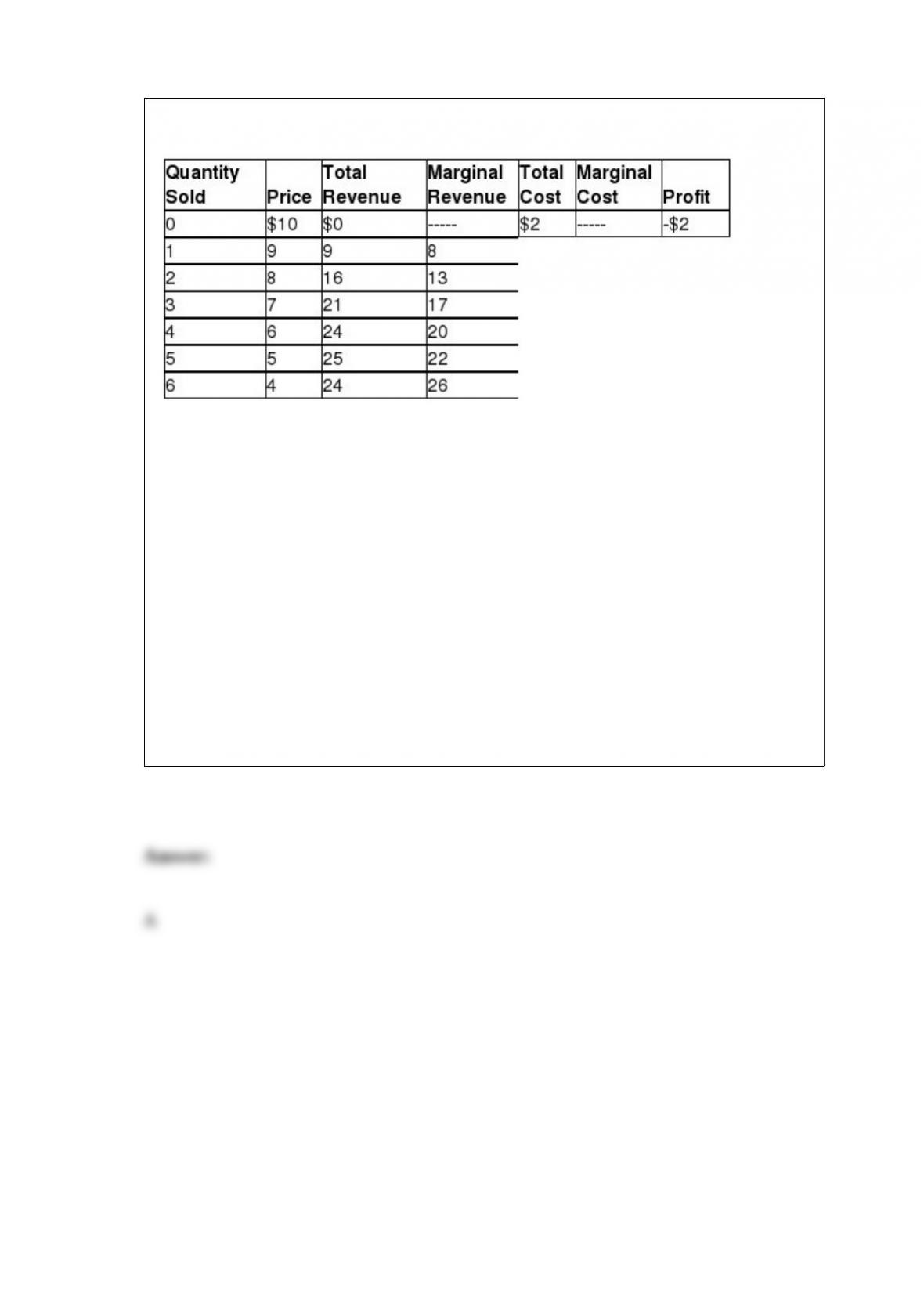
Table 13-4
Table 13-4 lists estimated revenues and costs (per week) for plastic vials (100 vials per
box) for the Victoria Biological Supplies Company. Victoria sells plastic vials to
university and private research laboratories.
Based on the data in the table, which of the following statements is true?
A) The table summarizes Victoria’s short-run, rather than long-run, market for plastic
vials.
B) Victoria could be either a monopolistically competitive or a perfectly competitive
firm.
C) Victoria should shut down temporarily.
D) Victoria should advertise more in order to increase the demand for plastic vials.
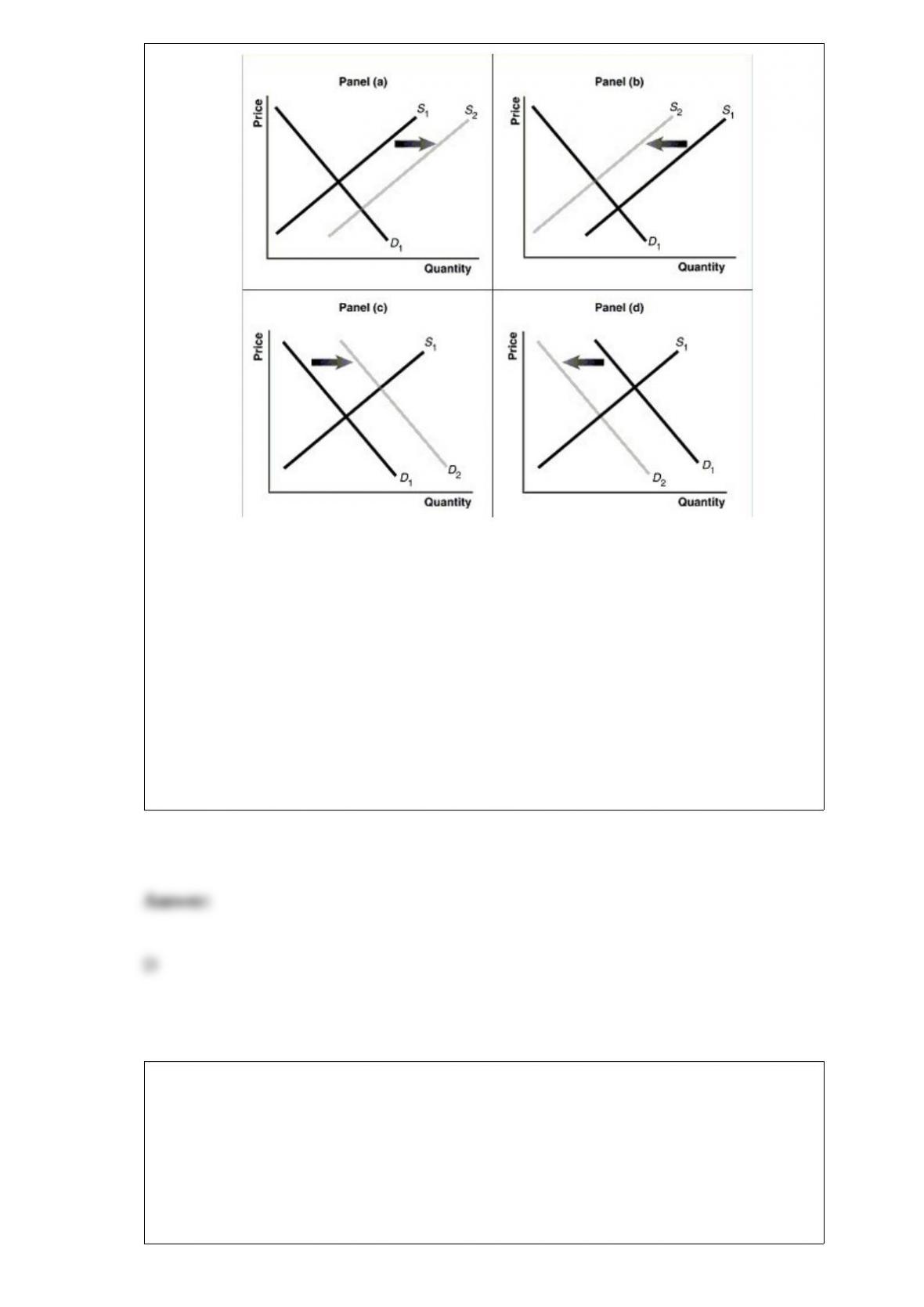
Figure 3-7
Assume that the graphs in this figure represent the demand and supply curves for ramen
noodles, an inferior good. Which panel describes what happens in this market as a result
of an increase in income?
A) Panel (a)
B) Panel (b)
C) Panel (c)
D) Panel (d)
Some economists argue that the apparent slowdown in economic growth in the United
States during the mid-1970s may not really have reduced the standard of living because
A) spending on new government regulations such as the Clean Air Act increased output
dramatically without increasing the standard of living of Americans.
B) significant improvements in the quality of services occurred, although the quantity

of these services did not increase much during this time.
C) changes in well-being are accurately reflected in statistics measuring economic
growth.
D) higher production costs from higher oil prices raised production and transportation
costs and reduced output.
Workers laid off as a result of a recession suffer
A) frictional unemployment.
B) structural unemployment.
C) cyclical unemployment.
D) seasonal unemployment.
E) natural unemployment.
In economics, money is defined as
A) the total value of one’s assets in current prices.
B) the total value of one’s assets minus the total value of one’s debts, in current prices.
C) the total amount of salary, interest, and rental income earned during a year.
D) any asset people generally accept in exchange for goods and services.

What is a ‘social cost” of production?
A) the cost of the natural resources used up in production
B) the total costs of producing a product, both implicit and explicit costs
C) the sum of all costs to individuals in society, regardless of whether the costs are
borne by those who produce the products or consume the product
D) the cost of the environmental damage created by production