
The single-price monopolist produces where price is ___________ than marginal cost
because for it price is __________ than marginal revenue and its demand curve lies
__________ its marginal revenue curve.
a. less; less; below
b. greater; greater; above
c. greater; greater; below
d. less; less; above
e. greater; less; below
A monopoly may exist because
a. government has refused to grant a public franchise.
b. one firm has the exclusive ownership of a necessary resource.
c. the firm is so large and is currently experiencing such vast diseconomies of scale that
it can out-compete all newcomers.
d. a and b
e. a, b, and c
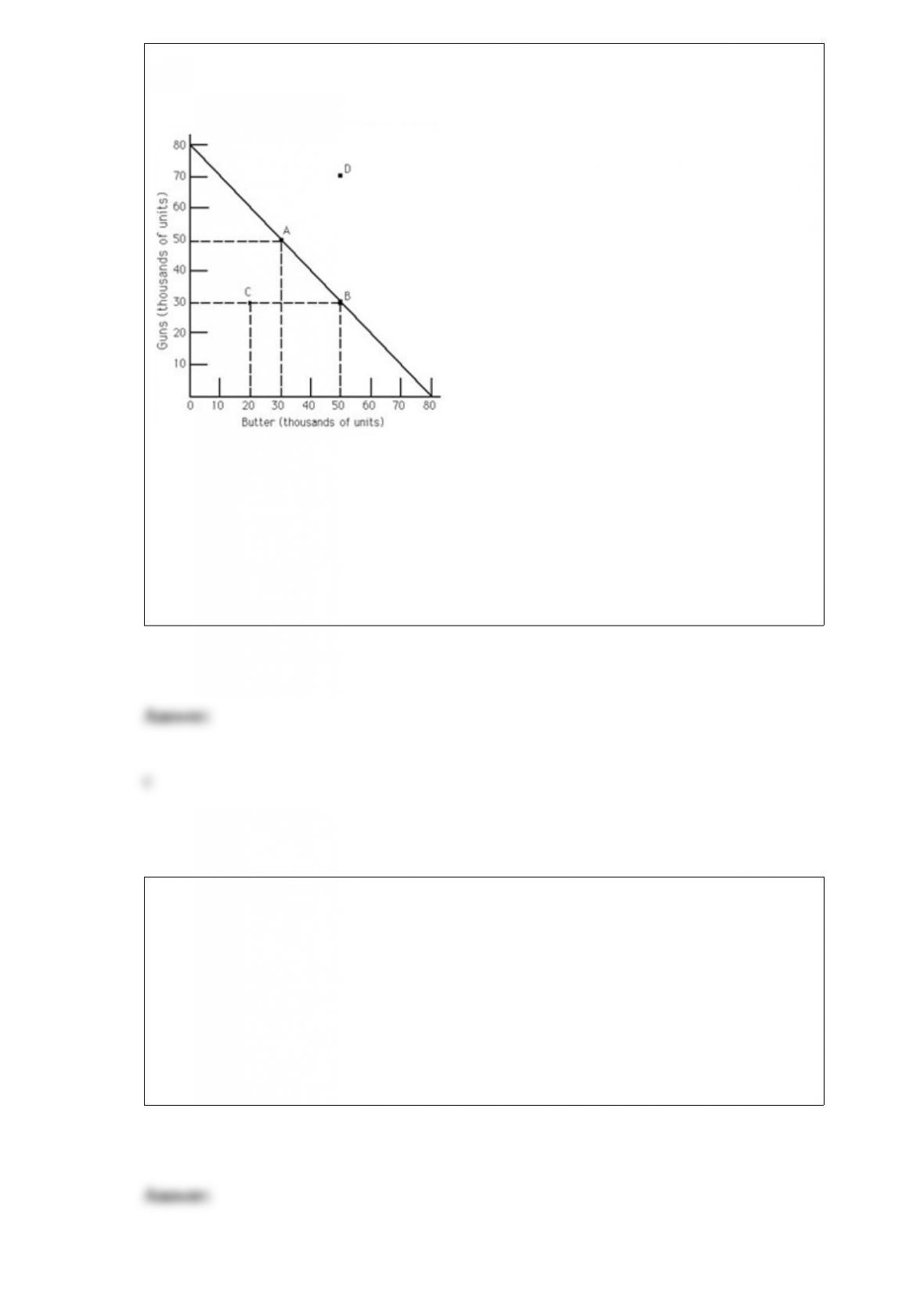
Refer to Exhibit 2-1. The movement from point A to point B is a movement from
Exhibit 2-1
a. a productive efficient point to a productive inefficient point.
b. a point with more guns and less butter to a point with more butter and even more
guns.
c. a productive efficient point to another productive efficient point.
d. a productive inefficient point to a productive efficient point.
If the wage rate is constant and diminishing marginal returns have already set in, then
a. the wage rate must increase.
b. marginal cost increases.
c. marginal cost decreases.
d. the wage rate must decrease.
In the long run, if inputs are increased by 10 percent and output increases by 10 percent,
then __________ are said to exist.
a. economies of scale
b. constant returns to scale
c. diseconomies of scale
d. diminishing marginal returns
Suppose farmers get together and decide to be less productive. They want to do this so
that they can shift the supply curve of farm products leftward and raise the price. What
are the thoughts of a profit-maximizing farmer most likely to be once this agreement
has been made?
a. If I break the agreement while everyone else holds to it, I can make myself better off.
b. I am happy that we decided to be unproductive; I can’t be unproductive by myself.
c. I will definitely hold to the agreement.
d. Everyone will break the agreement but me.
A change in price will lead to a change in __________ and to a change in __________,
while a change in government subsidies will lead to a change in __________ and a
change in the number of buyers will lead to a change in __________.
a. quantity demanded; quantity supplied; supply; demand
b. demand; quantity supplied; supply; quantity demanded
c. quantity demanded; supply; quantity supplied; demand
d. quantity supplied; quantity demanded; demand; supply
e. quantity demanded; demand; quantity supplied; supply
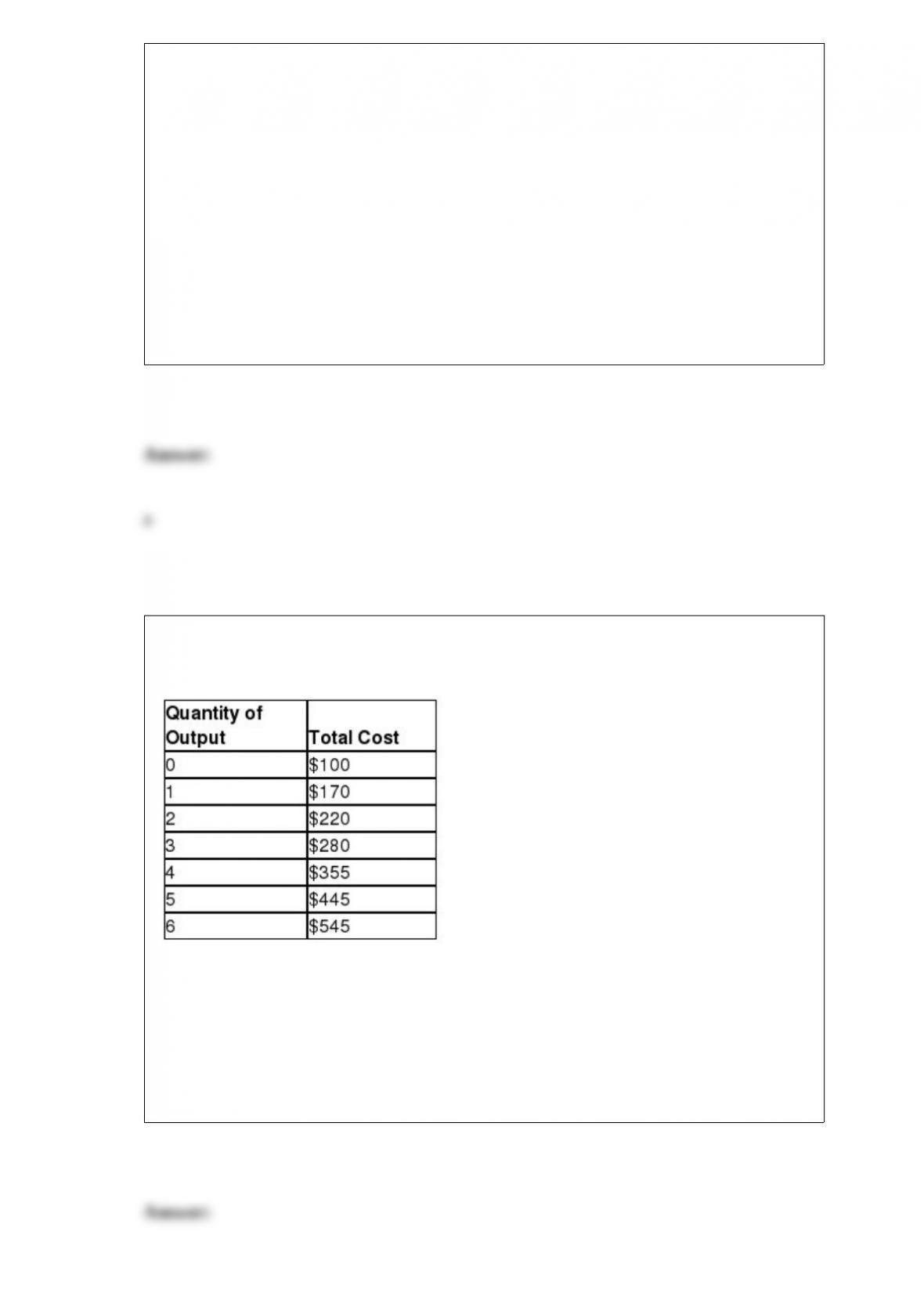
Refer to Exhibit 22-11. Marginal cost of the sixth unit of output is
Exhibit 22-11
a. $100.
b. $150.
c. $90.
d. $90.83.

A “closed shop” is
a. an organization in which a worker is not required to be a member of the union to be
hired, but must become a member within a certain period of time after being employed.
b. an organization in which an employee must belong to the union before he or she can
be hired.
c. an organization of domestic firms that is closed to foreign firms.
d. a political organization that seeks to raise tariffs on foreign-produced goods imported
into the United States.
e. none of the above
If natural monopolies are regulated to produce where there is a normal profit, they
produce where
a. price equals average total cost.
b. marginal revenue equals marginal cost.
c. price equals marginal cost.
d. marginal revenue equals average total cost.
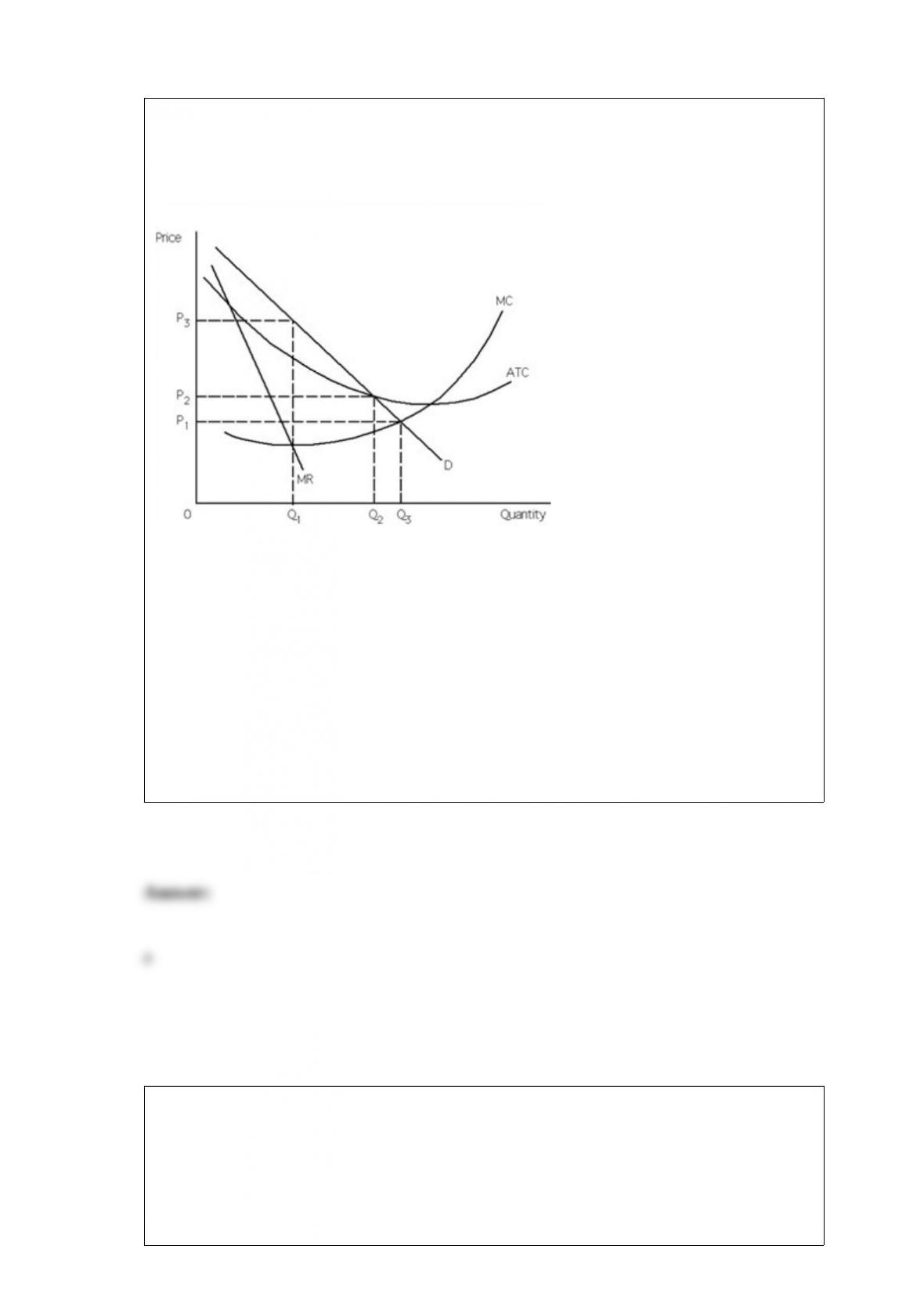
Refer to Exhibit 26-5. If the natural monopoly firm were to maximize profits it would
produce __________ quantity of output and charge a price of __________ per unit.
Exhibit 26-5
a. Q1; P3
b. Q1; P2
c. Q2; P3
d. Q3; P2
e. Q3; P3
In a college course it is likely that there will be ___________ shirking in a group
project than in an individual project because the costs of shirking are relatively
_________ in the group project.
a. less; higher
b. more; higher
c. less; lower
d. more; lower
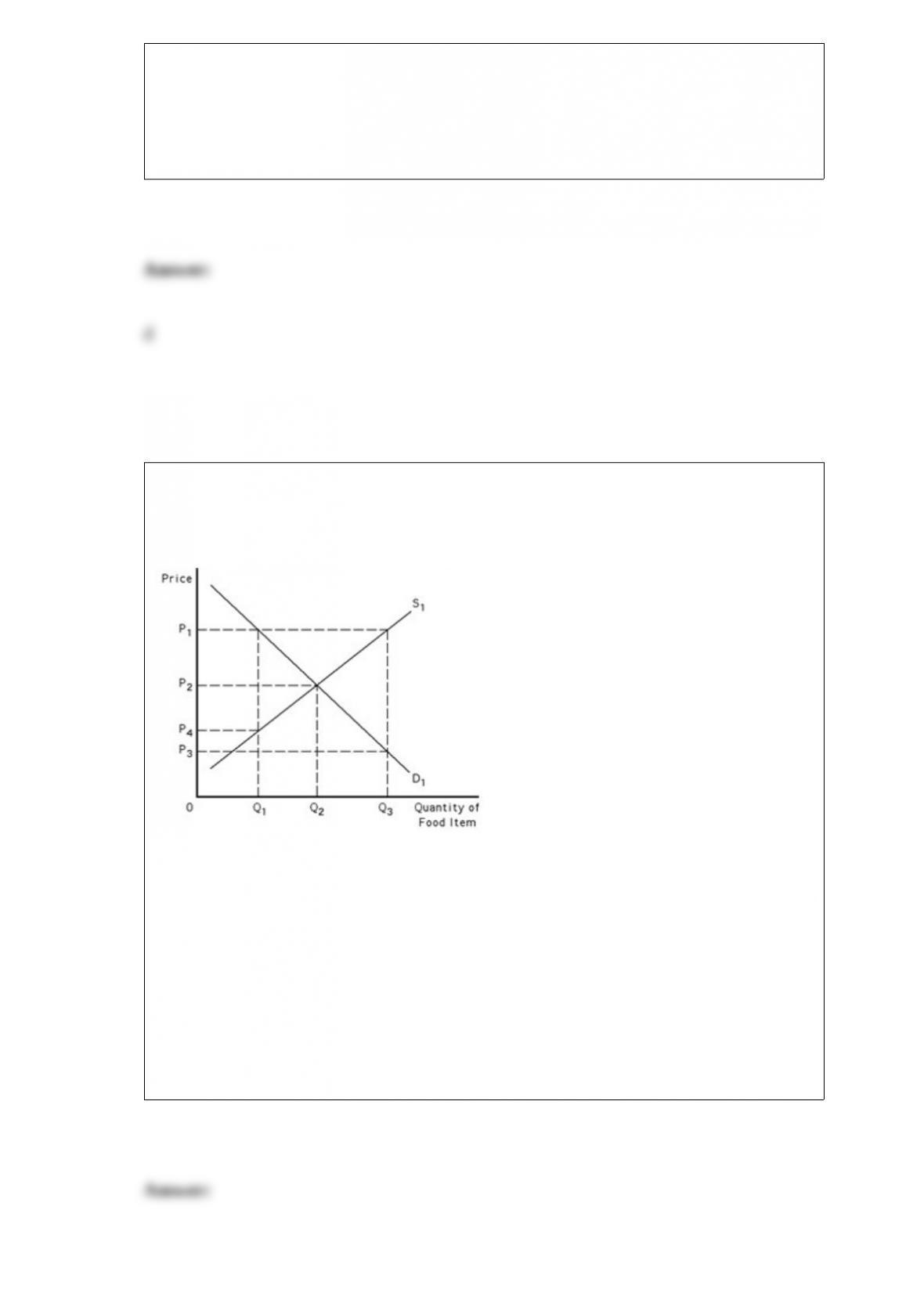
Refer to Exhibit 39-9. Under a target price system, with the target price set at P1, the
per-unit deficiency payment will be:
Exhibit 39-9
a. P2 – P4.
b. P1 – P3.
c. P2 – P3.
d. P1 – P2.
e. none of the above
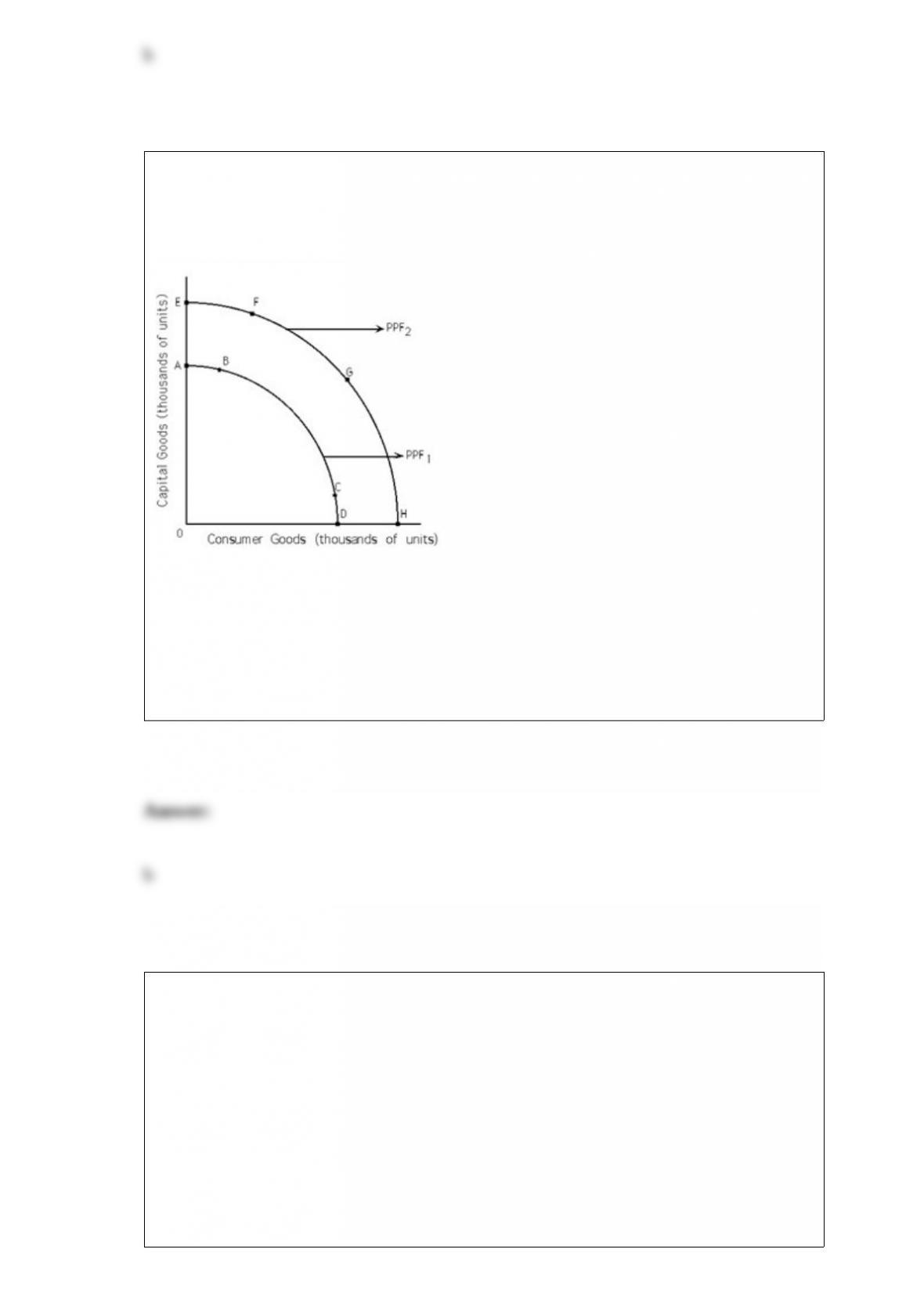
Refer to Exhibit 2-3. If PPF1 is the relevant production possibilities frontier, society can
choose points that lie only
Exhibit 2-3
a. below PPF1.
b. below or on PPF1.
c. on PPF2.
d. none of the above
Suppose the U.S. price level rises 25 percent at a time when Japan experiences stable
prices. As a result, the U.S. demand for Japanese goods will __________, and the
Japanese demand for U.S. goods will __________; in turn, this will increase the
demand for Japanese yen and decrease the supply of Japanese yen; in turn, the dollar
will depreciate and the yen will appreciate.
a. rise; fall
b. fall; rise
c. rise; rise, too

d. fall; fall, too
Within the production possibilities frontier (PPF) framework, choice is depicted by the
a. PPF itself.
b. PPF being bowed outward.
c. need to select among the points making up the PPF.
d. straight-line PPF.
The Gini coefficient is computed by dividing the
a. area between the line of perfect income equality and the actual Lorenz curve by the
area below the Lorenz curve.
b. area below the Lorenz curve by the total area below the line of perfect equality.
c. area between the line of perfect income equality and the actual Lorenz curve by the
total triangular area below the line of perfect income equality.
d. either a or b
e. any of the above
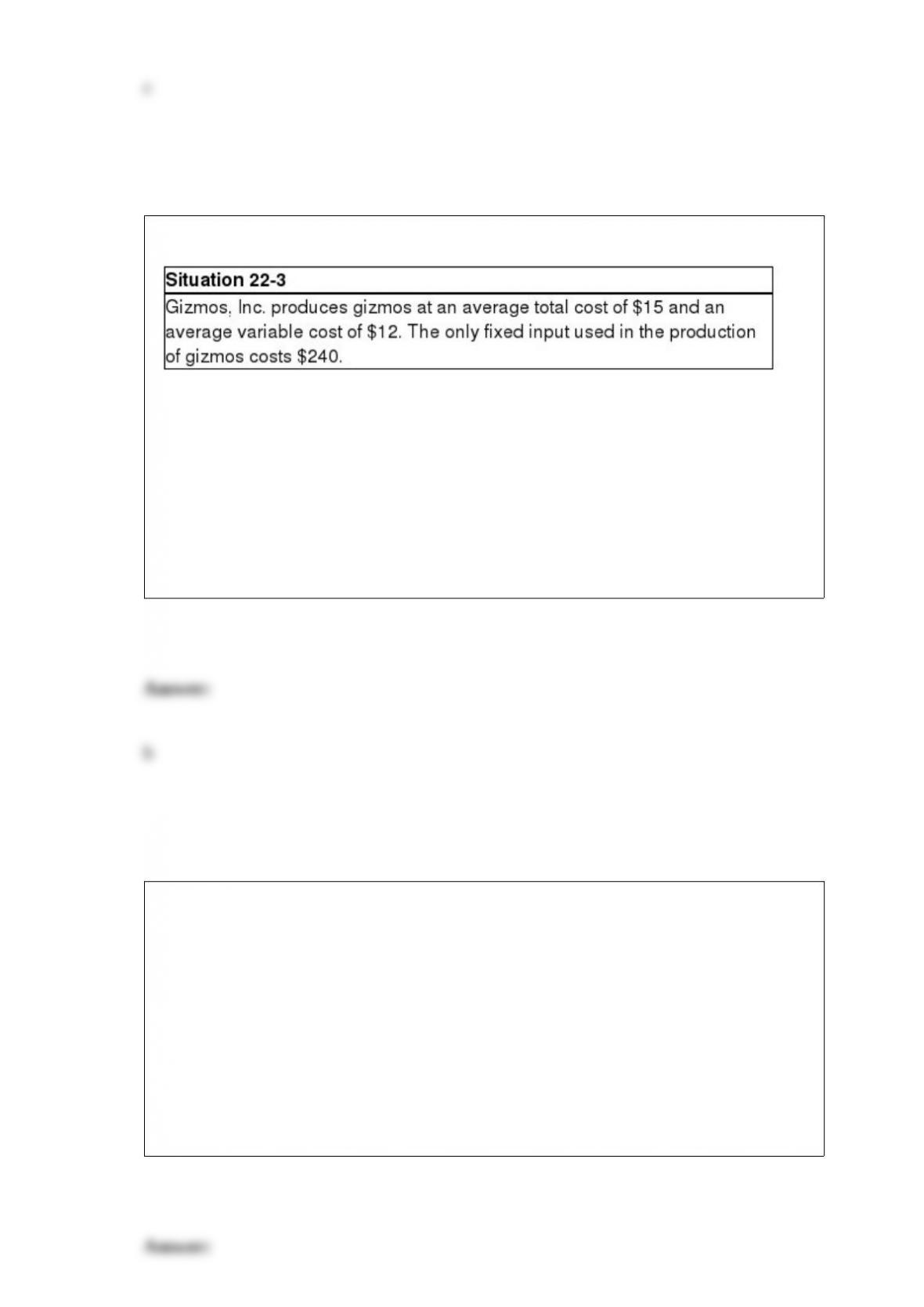
Refer to Situation 22-3. How many gizmos does Gizmos, Inc. produce?
a. 75
b. 80
c. 20
d. 25
e. There is not enough information to answer the question.
Ultimately, market supply curves are upward sloping because of
a. the law of diminishing marginal returns.
b. economies of scale.
c. average fixed cost falling continually as more output is produced.
d. the law of the short run marginal cost curve.
e. specialization.
Which antitrust legislation was passed in an attempt to decrease the failure rate of small
businesses by protecting them from competition from large and growing chain stores?
a. the Sherman Act.
b. the Clayton Act.
c. the Federal Trade Commission Act.
d. the Robinson-Patman Act.
e. none of the above
In order for a price floor to have an impact on a market it must be set above the
equilibrium price.
a. True
b. False
A futures contract is a contract in which the seller agrees to provide a given good to the
buyer on a predetermined future date at an agreed-upon price.
a. True
b. False