
Which of the following is not a credit item (+) in the U.S. balance of payments?
a. imports of cars from Japan
b. any transaction that results in an inflow of dollars
c. a capital outflow
d. a U.S. firm’s purchase of steel from a European steel mill
e. an increase in American vacations abroad
If income rises and a good is inferior, then demand for that good will decrease.
a. True
b. False
Exhibit 7-20
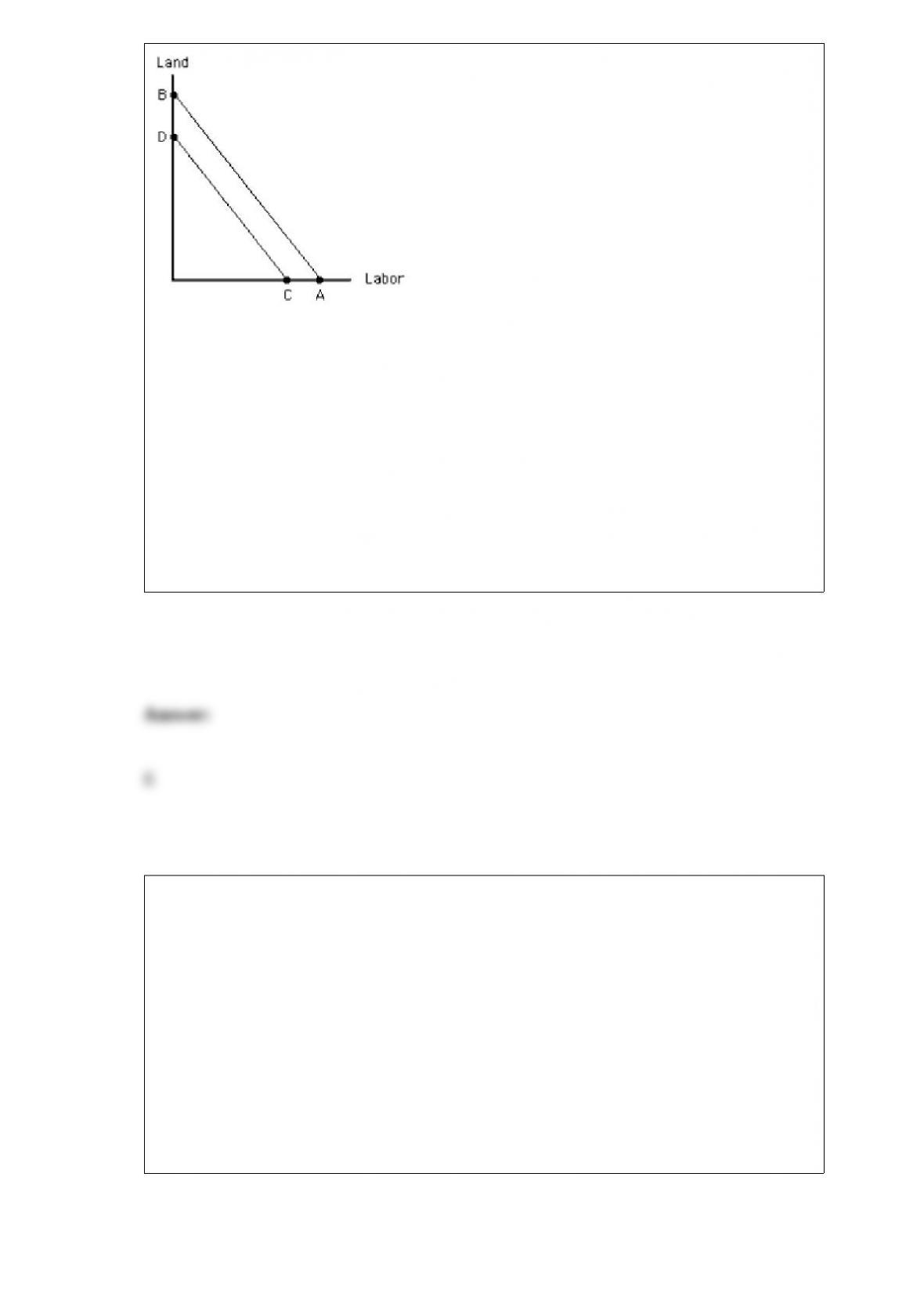
In Exhibit 7-20, the movement from CD to AB might reflect a(n)
a. increase in the prices of both labor and land
b. decrease in the amount the producer can spend
c. increase in the price of labor and a decrease in the price of land
d. decrease in the price of labor and an increase in the price of land
e. increase in the amount the producer can spend
Resource price differentials that do not trigger the reallocation of resources are known
as
a. temporary differentials
b. market differentials
c. conditional differentials
d. permanent differentials
e. sustainable differentials
During the Industrial Revolution,
a. technological changes shifted production from rural cottages to large urban factories
b. technological changes shifted production from urban factories to individual workers’
homes
c. political changes made it dangerous to organize production in large,
centrally-powered factories
d. the price of land rose, so managers tried to shift production out of factories
e. the “virtual office” came into vogue
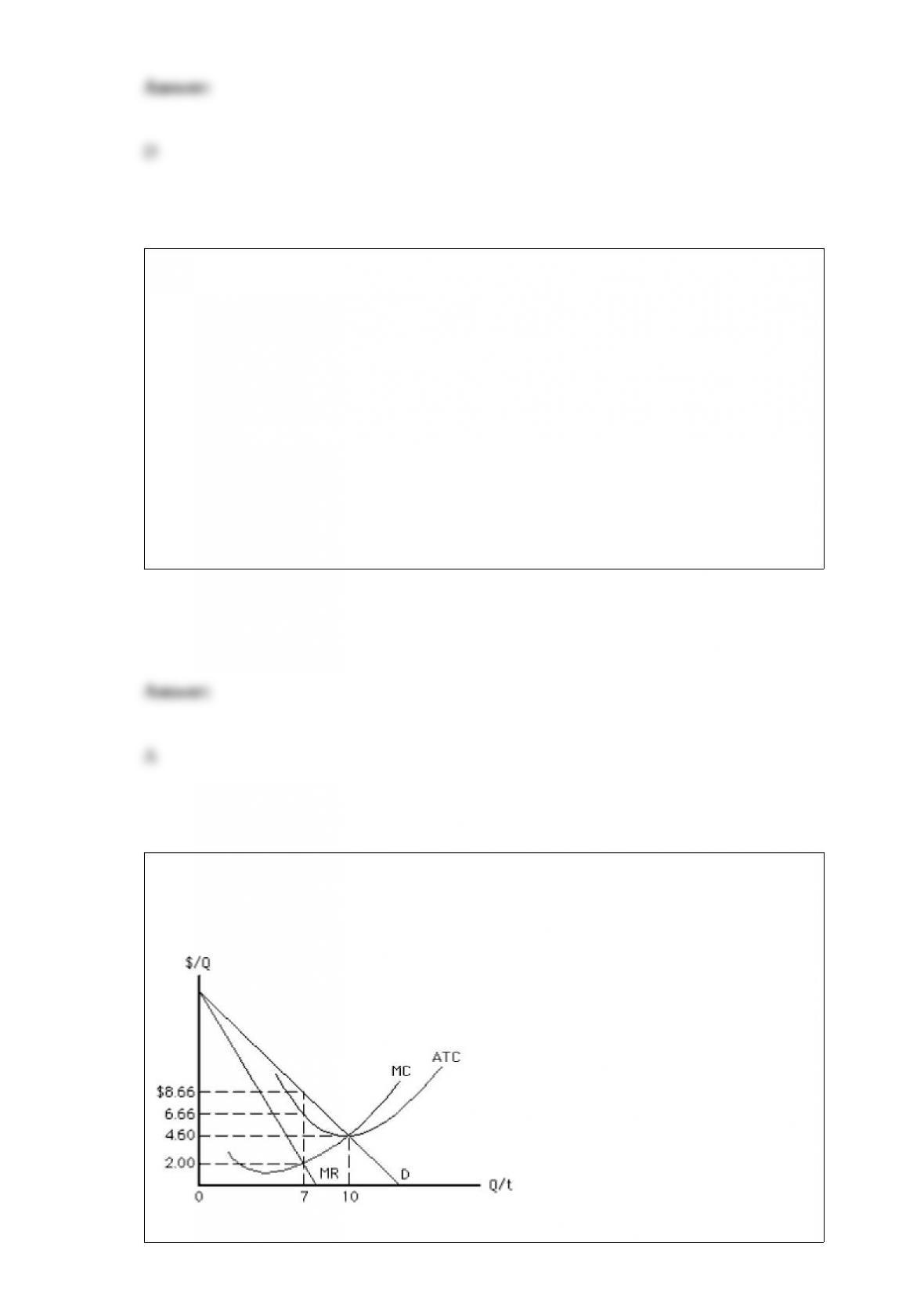
Exhibit 9-10
What price would maximize the profit of the nondiscriminating monopolist in Exhibit
9-10?
a. 0
b. $2
c. $4.60
d. $6.66
e. $8.66
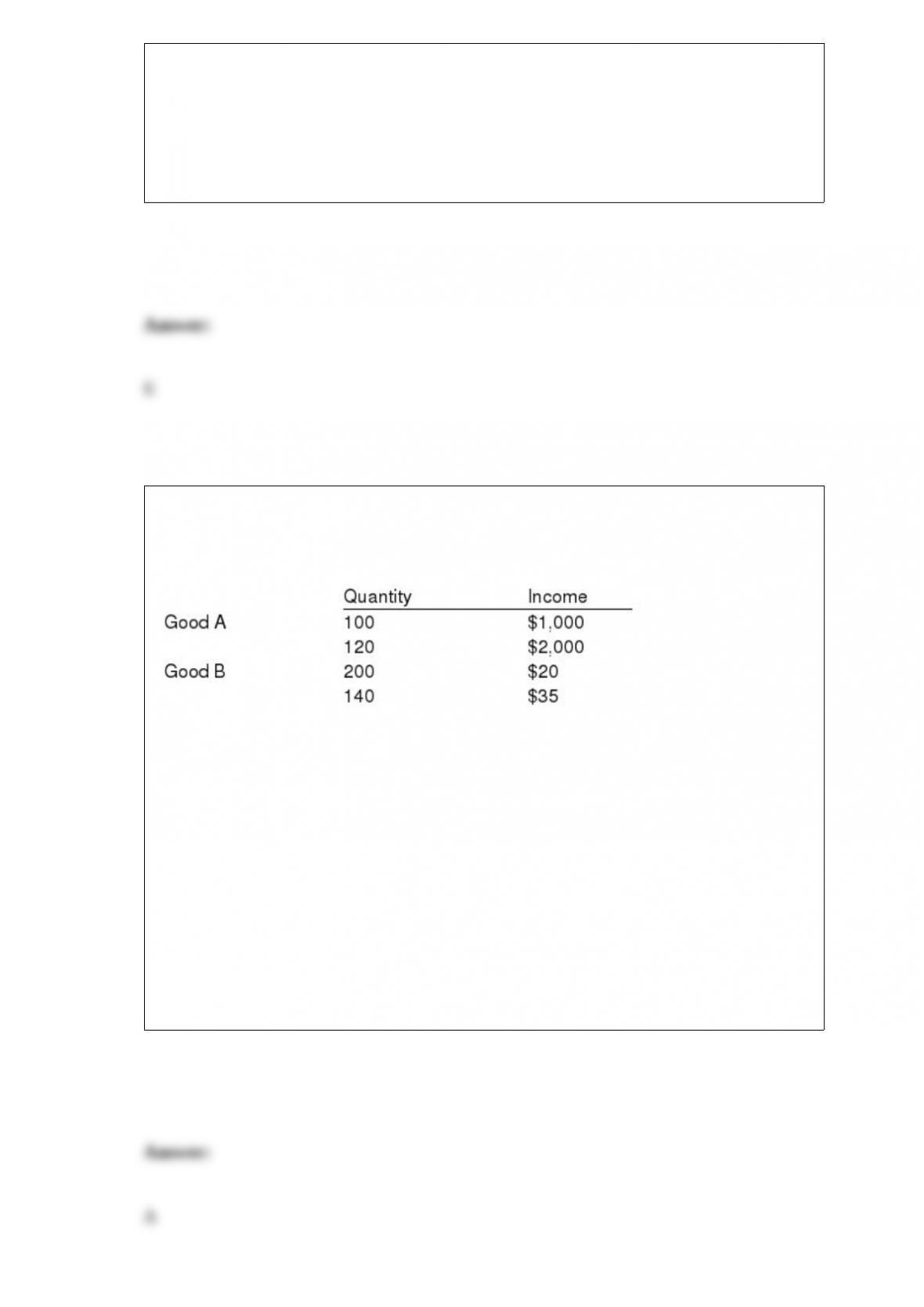
Exhibit 5-22
Use the information in Exhibit 5-22 to calculate the value of income elasticity of
demand for Good B.
a. -11/17
b. 17/9
c. 10/3
d. -3/10
e. 1

With special-interest legislation,
a. benefits are concentrated but costs are widespread
b. both benefits and costs are concentrated
c. benefits are widespread but costs are concentrated
d. both benefits and costs are widespread
e. there is no predictable relationship between costs and benefits
Which of the following is not an example of a business operated by a consumer
cooperative?
a. grocery store
b. apartment building
c. Sunkist, a farm cooperative owned and operated by citrus growers
d. health plan
e. electric power facility

Private firms and public bureaus differ in the sense that public bureaus
a. sometimes have top-level managers chosen by shareholders
b. sell most of their output on a per unit basis
c. receive most of their revenues through a budget appropriation rather than through the
sales of goods or services
d. are sometimes inefficient
e. hire consultants to solve difficult problems
For which of the following goods is the income elasticity of demand likely to be
largest?
a. paperback mystery stories
b. best-selling hardcover novels
c. used textbooks
d. children’s books
e. leather-bound editions of Shakespeare
As the baby boom ended, fewer families had young children and, as a consequence, the

a. demand curve for preschool services shifted outward
b. demand curve for preschool services shifted inward
c. supply curve for preschool services shifted outward
d. supply curve for preschool services shifted inward
e. supply and demand curves for preschool services remained constant
Gross Domestic Product is the value of all
a. goods and services produced during a particular year
b. goods and services sold during a particular year
c. final goods and services sold during a particular year
d. final goods and services produced during a particular year
e. final goods and services produced and sold during a particular year
Which of the following is unique to oligopoly among all the market structures?
a. product differentiation

b. profit maximization
c. mutual interdependence
d. advertising
e. long-run economic profits
Which economic concept does the expression “time is money” reflect?
a. opportunity cost
b. specialization
c. market exchange
d. comparative advantage
e. efficiency
Exhibit 5-26
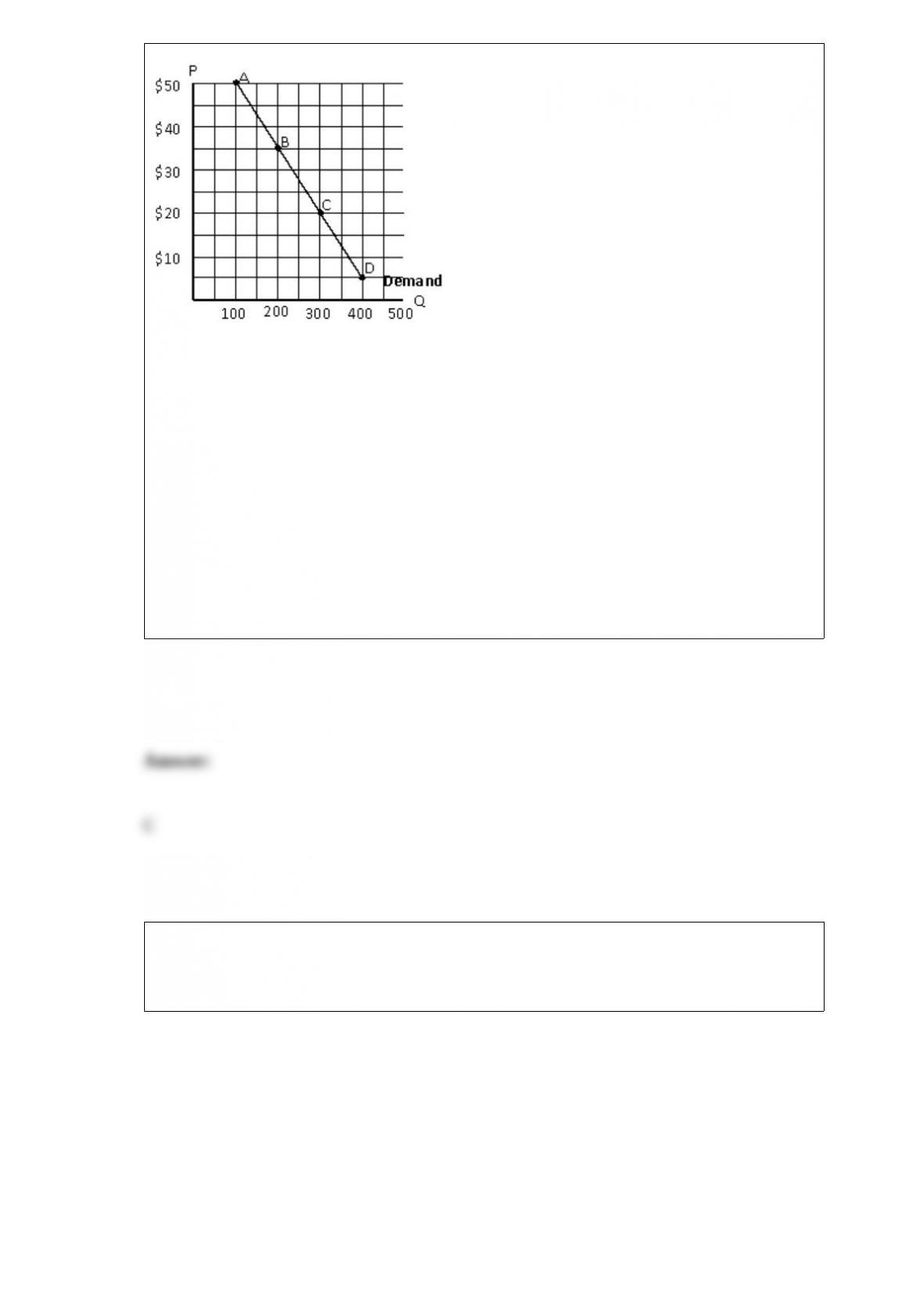
Refer to Exhibit 5-26. As you move from A to B on the demand curve, total revenue
__________ and therefore the price elasticity must be ____________ between A and B.
a. stays the same; unitary
b. decreases; inelastic
c. increases; elastic
d. decreases; elastic
e. increases, inelastic
Exhibit 17-2
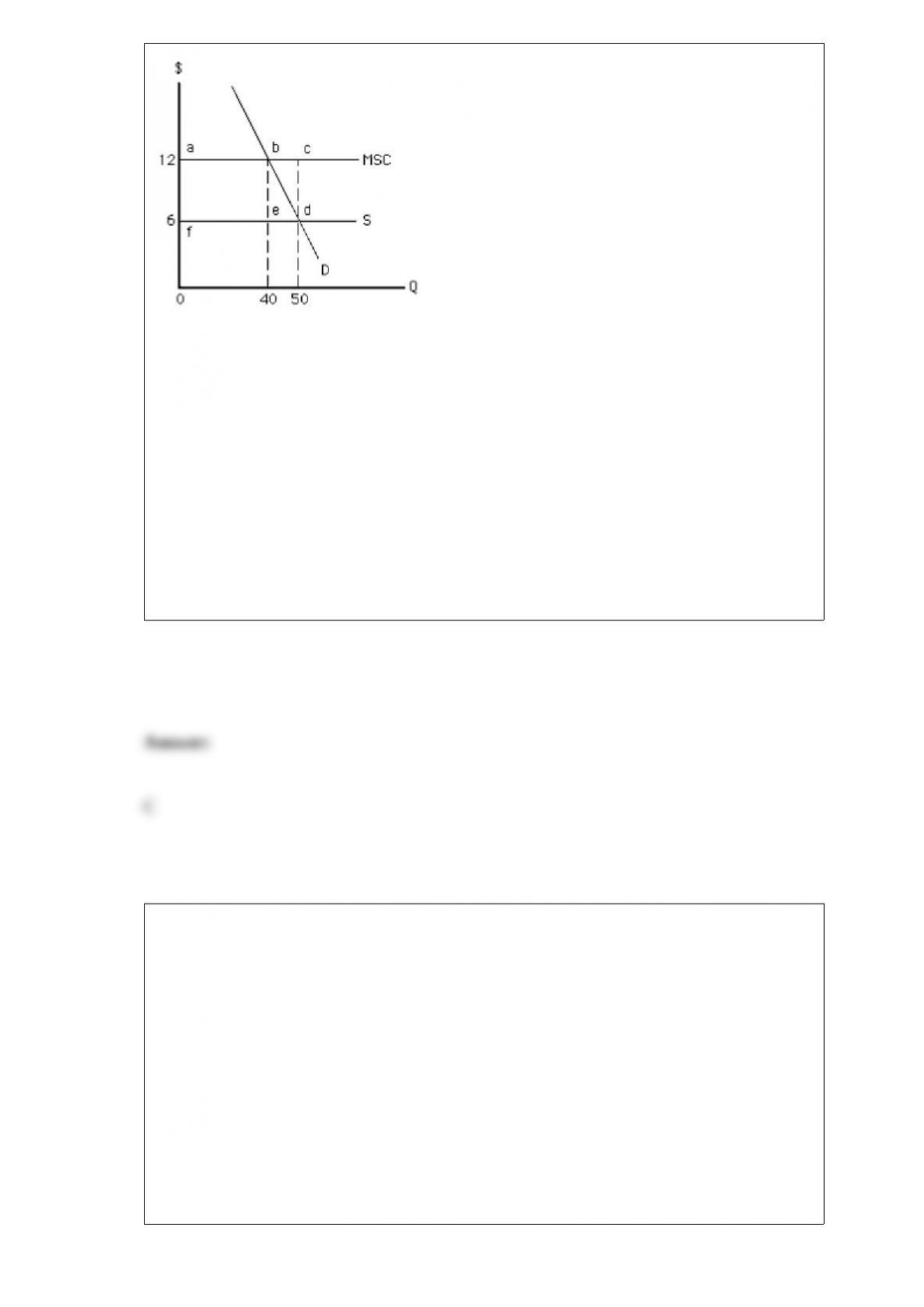
In Exhibit 17-2, the total social gain from producing the socially efficient output rather
than the private equilibrium output is shown by area
a. abdf
b. bed
c. bcd
d. acdf
e. bcde
A monopolistically competitive firm is producing an output level at which marginal
revenue is less than marginal cost. This firm should __________ quantity and
__________ price to increase profit or reduce losses.
a. increase, increase
b. increase; decrease
c. decrease; increase
d. decrease; decrease
e. increase; not change

If a union negotiates a wage greater than the competitive wage, the total union wage bill
will necessarily decrease.
a. True
b. False
Which of the following is not a characteristic of indifference curves?
a. They do not intersect.
b. They are bowed out from the origin.
c. They slope downward.
d. Total utility on each curve is constant.
e. Total utility levels are greater on curves that are farther from the origin.

The market supply curve of capital is
a. upward sloping
b. perfectly inelastic
c. upward sloping at first but then bends backward
d. downward sloping
e. perfectly elastic
An improvement in technology that allows workers to process twice as many insurance
forms in an hour than before will cause
a. more labor to be employed because its marginal revenue product has fallen
b. an increase in insurance premiums
c. fewer workers to be employed because their marginal revenue product has decreased
d. more workers to be employed because their marginal revenue product has increased
e. fewer workers to be employed because their marginal revenue product has increased
A metal-stamping factory moves next to a day care center. Noise from the factory
makes it impossible for the kids to nap. What would be the optimal solution to this
problem?
a. The factory should move.
b. The day care center should move.
c. The factory should install sound insulation.
d. The day care center should install sound insulation.
e. We cannot determine the solution without more information.
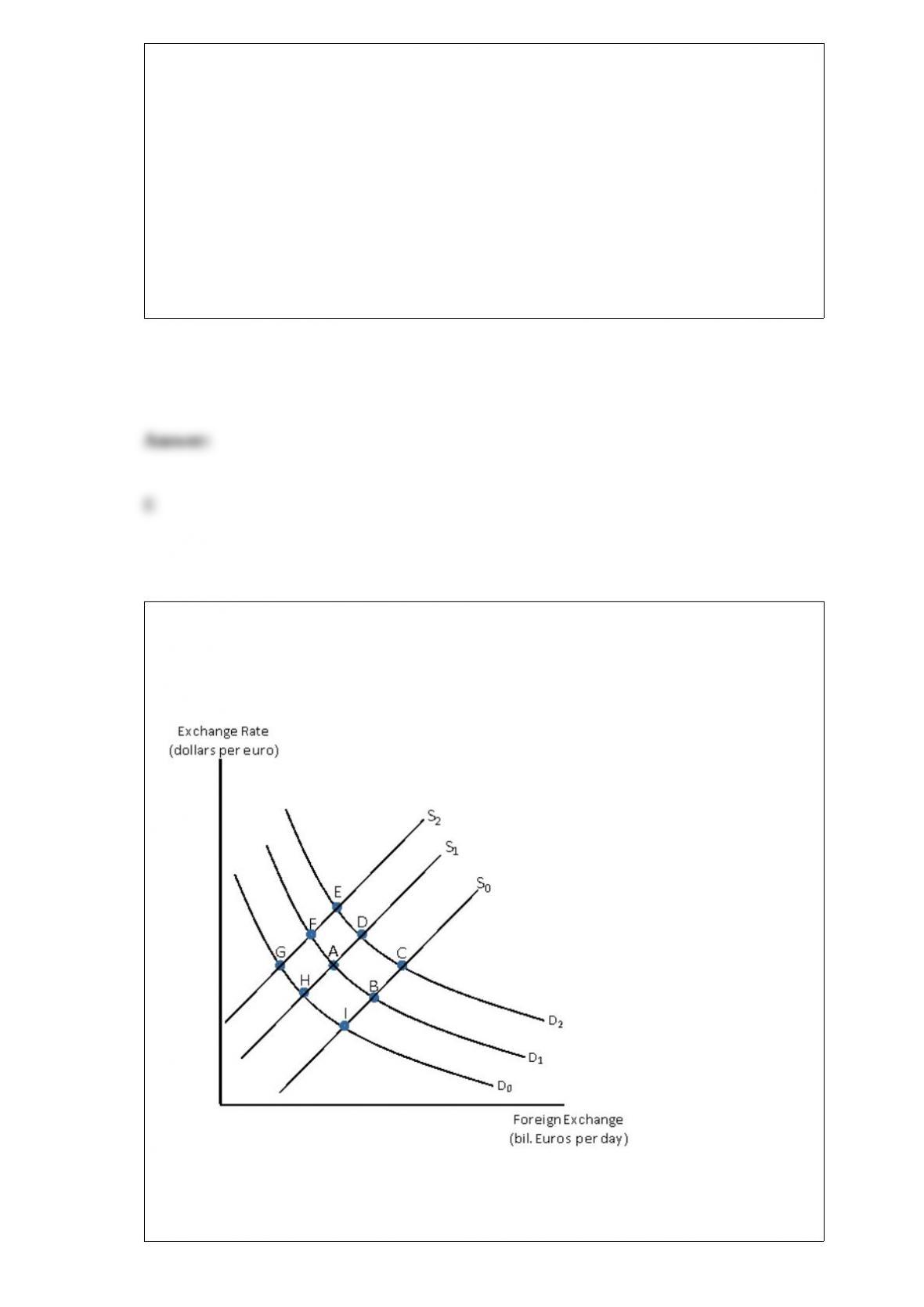
In the following situation, the tax system is
a. progressive throughout all levels of income
b. progressive between $1,000 and $2,000 of income but regressive above $2,000
c. regressive throughout all levels of income
d. regressive between $1,000 and $2,000 of income but progressive above $2,000
e. proportional throughout all levels of income

If a market is such that, at the market equilibrium quantity, the benefit of the last unit
produced just equals its marginal cost
a. it has earned a positive economic profit
b. it has achieved productive efficiency
c. it has achieved allocative efficiency
d. it has achieved economies of scale
e. there are further trades than can increase producer surplus
Which of the following explains the relationship between price and the quantity
supplied?
a. When expanding output, firms will incur greater total costs.
b. As the price of a commodity falls, producers will find it more profitable to use
higher-priced inputs in their production process.
c. As a result of rising production costs, firms can increase profits by expanding output
only if the price of output increases.
d. To expand output, firms must hire more resources, which are always of poorer
quality.
e. Consumers want more at lower prices.
A shortage of textbooks will cause
a. a decrease in the supply of textbooks
b. a decrease in the demand for textbooks
c. both an increase in the supply of textbooks and a decrease in the demand for
textbooks
d. an increase in the price of textbooks, caused by a shift of either the supply curve or
the demand curve
e. an increase in the price of textbooks
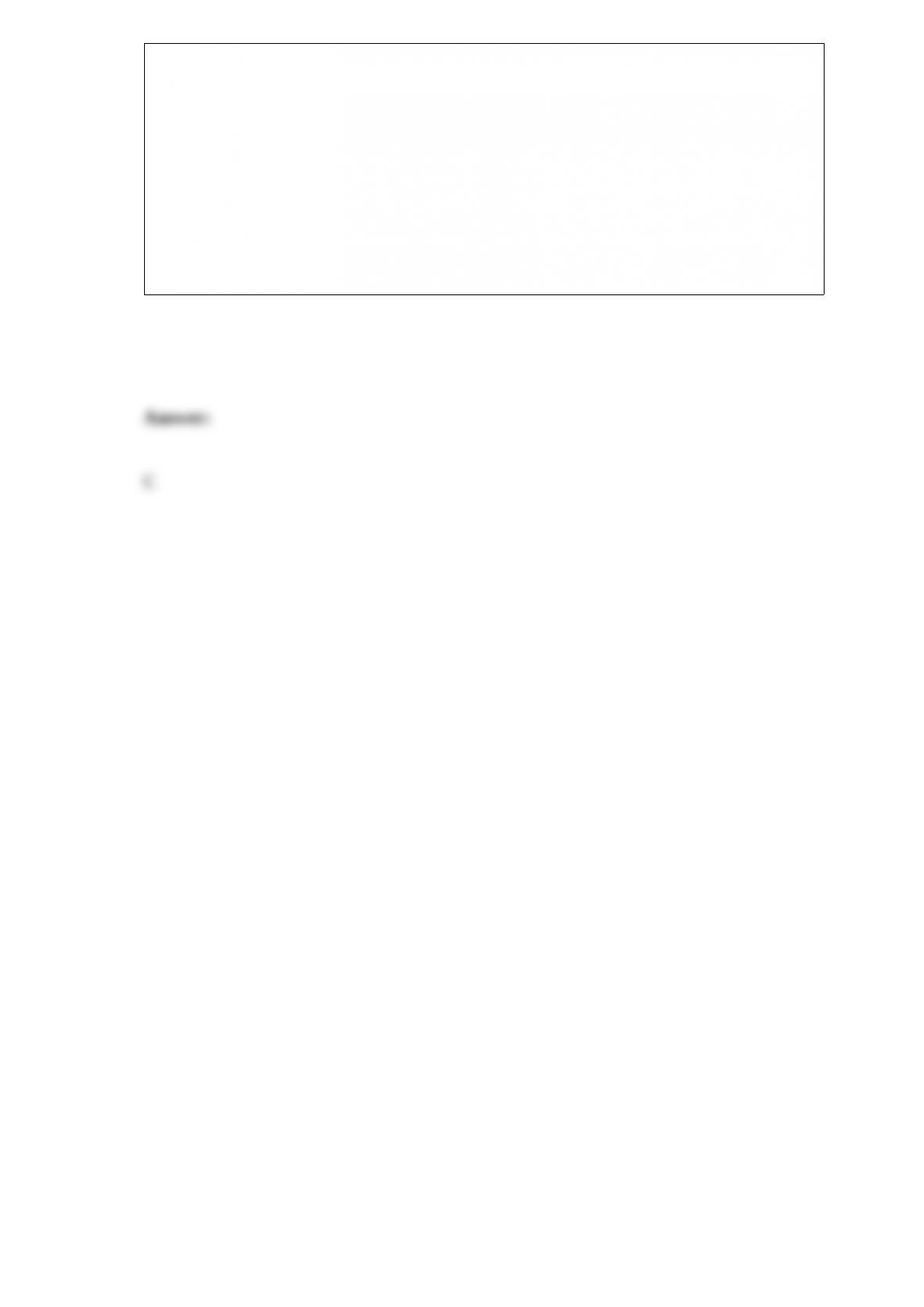
Exhibit 20-8
Exhibit 20-8 shows the market for euros in the US. Initially the demand for euros is
represented by D1 and the supply of euros is represented by S1. Equilibrium in the

market for euros is at point A. In response to an increase in the income of US
consumers the equilibrium moves to point D and the dollar ________.
a. appreciates in value
b. depreciates in value
c. is devalued
d. is revalued
e. accommodates
One of the most centrally planned economies in the world today is found in
a. the United States
b. Germany
c. Canada
d. Japan
e. North Korea
If city officials expect that an increase in bus fares will raise mass transit revenues, they
must think that the demand for bus travel is
a. elastic
b. unit elastic
c. inelastic
d. perfectly inelastic
e. -10