
The CPI in 1990 was 131, and the CPI in 2010 was 218. If you earned a salary of
$40,000 in 1990, what would be a salary with equivalent purchasing power in 2010?
A) $45,977
B) $66,565
C) $87,200
D) $143,486
Digital video recorders (DVRs) were introduced to the market in 1999, and new
technology has allowed for the cost of manufacturing the recorders to decline
significantly since the initial introduction. How did this change in technology affect the
market for DVRs?
A) The new technology caused an increase in the supply of DVRs and a decrease in
price of DVRs.
B) The new technology caused an increase in the supply of DVRs and an increase in
price of DVRs.
C) The new technology caused an decrease in the demand for DVRs.
D) The new technology caused an increase in the quantity of DVRs supplied.
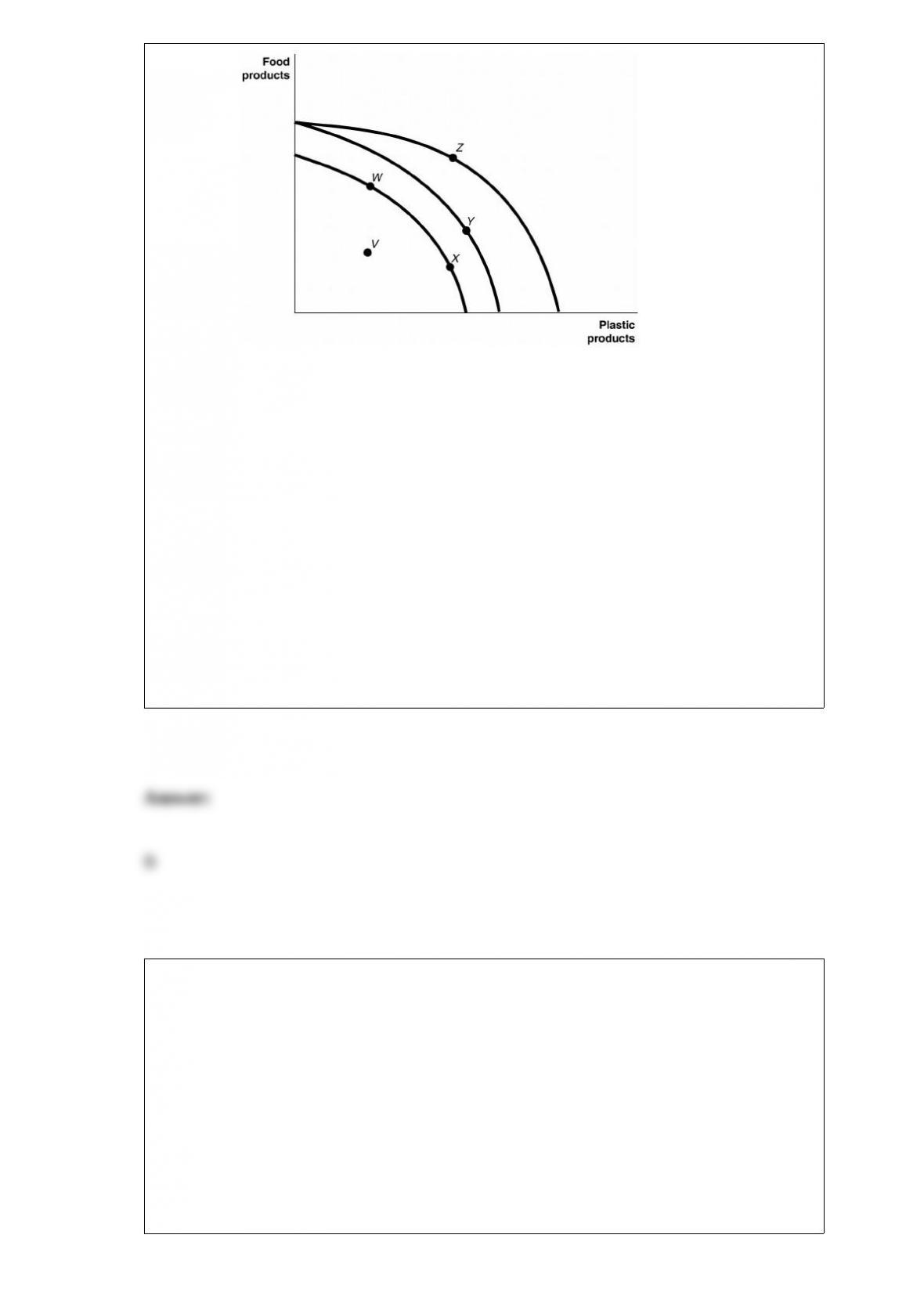
Figure 2-4
Figure 2-4 shows various points on three Different production possibilities frontiers for
a nation.
A movement from X to Y
A) could be due to a change in consumers’ tastes and preferences.
B) could occur because of an influx of immigrant labor.
C) is the result of advancements in food production technology only, with no change in
the technology for plastic production.
D) is the result of advancements in plastic production technology only, with no change
in food production technology.
If the Federal Reserve chooses to fight high unemployment with expansionary
monetary policy and firms and consumers expect this policy to increase inflation, which
of the following would you expect to see?
A) an upward shift of the short-run Phillips curve
B) a downward shift of the short-run Phillips curve
C) a decrease in the long-run aggregate supply curve
D) Both B and C are correct answers.
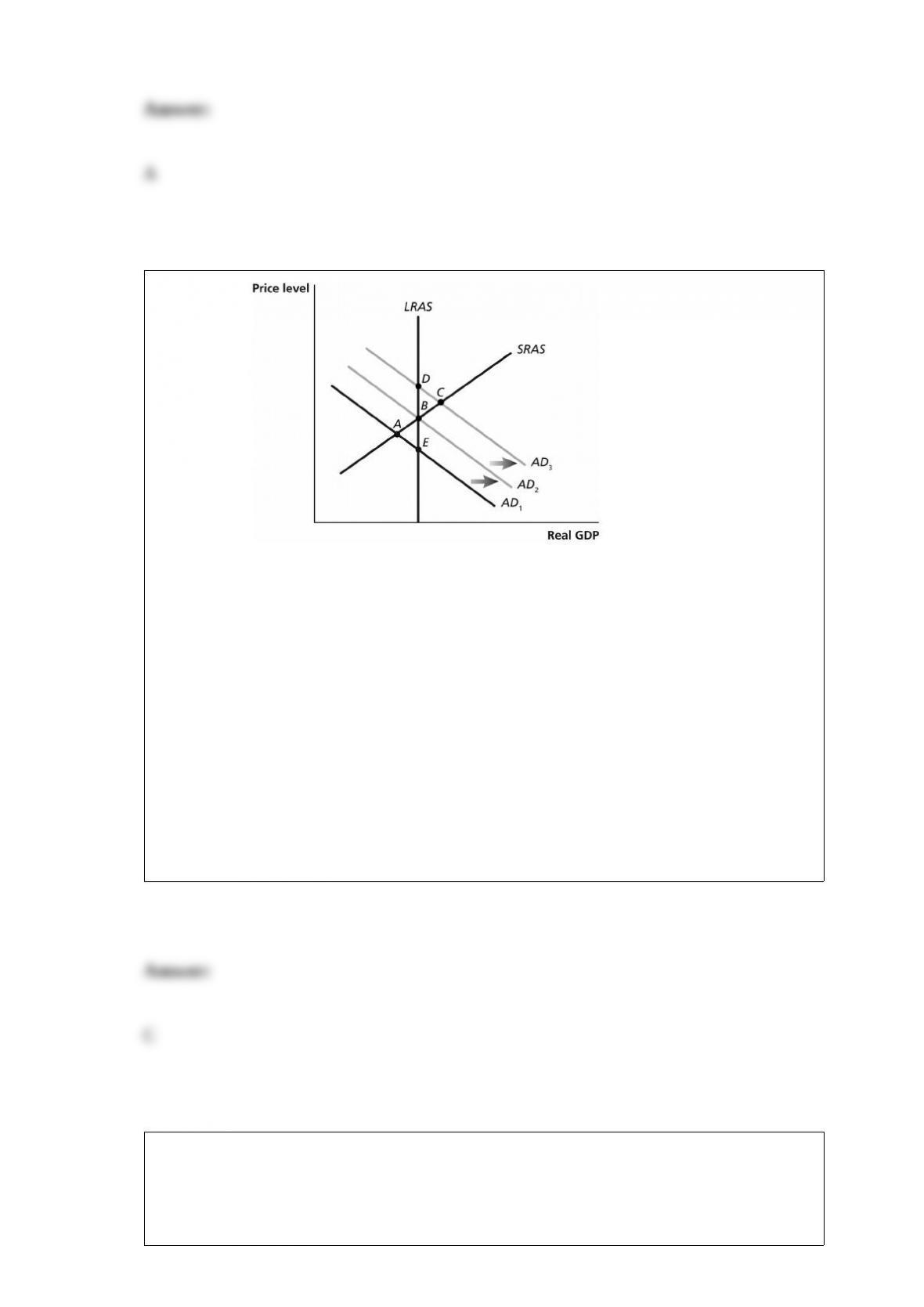
Figure 16-1
Suppose the economy is in short-run equilibrium above potential GDP and automatic
stabilizers move the economy back to long-run equilibrium. Using the static AD–AS
model in the figure above, this would be depicted as a movement from
A) D to C.
B) A to E.
C) C to B.
D) B to A.
E) E to A.
Suppose real GDP is $13 trillion, potential real GDP is $13.5 trillion, and Congress and
the president plan to use fiscal policy to restore the economy to potential real GDP.
Assuming a constant price level, Congress and the president would need to increase
government purchases by

A) $500 billion.
B) less than $500 billion.
C) more than $500 billion.
D) None of the above are correct. Congress must act to decrease government purchases
in this case.
Because Federal Reserve Notes (paper currency) are legal tender,
A) U.S. workers must accept them as payment for labor services.
B) U.S. creditors must accept them in payment of debts.
C) U.S. firms must accept them as payment for goods and services.
D) All of he above are correct.
The term “derived demand” refers to
A) the demand for financial products called derivatives.
B) the demand for a factor of production that is derived from the demand for the good
the factor produces.
C) a firm’s estimated demand curve derived from sales data.
D) a demand curve that derives from the availability of resources.
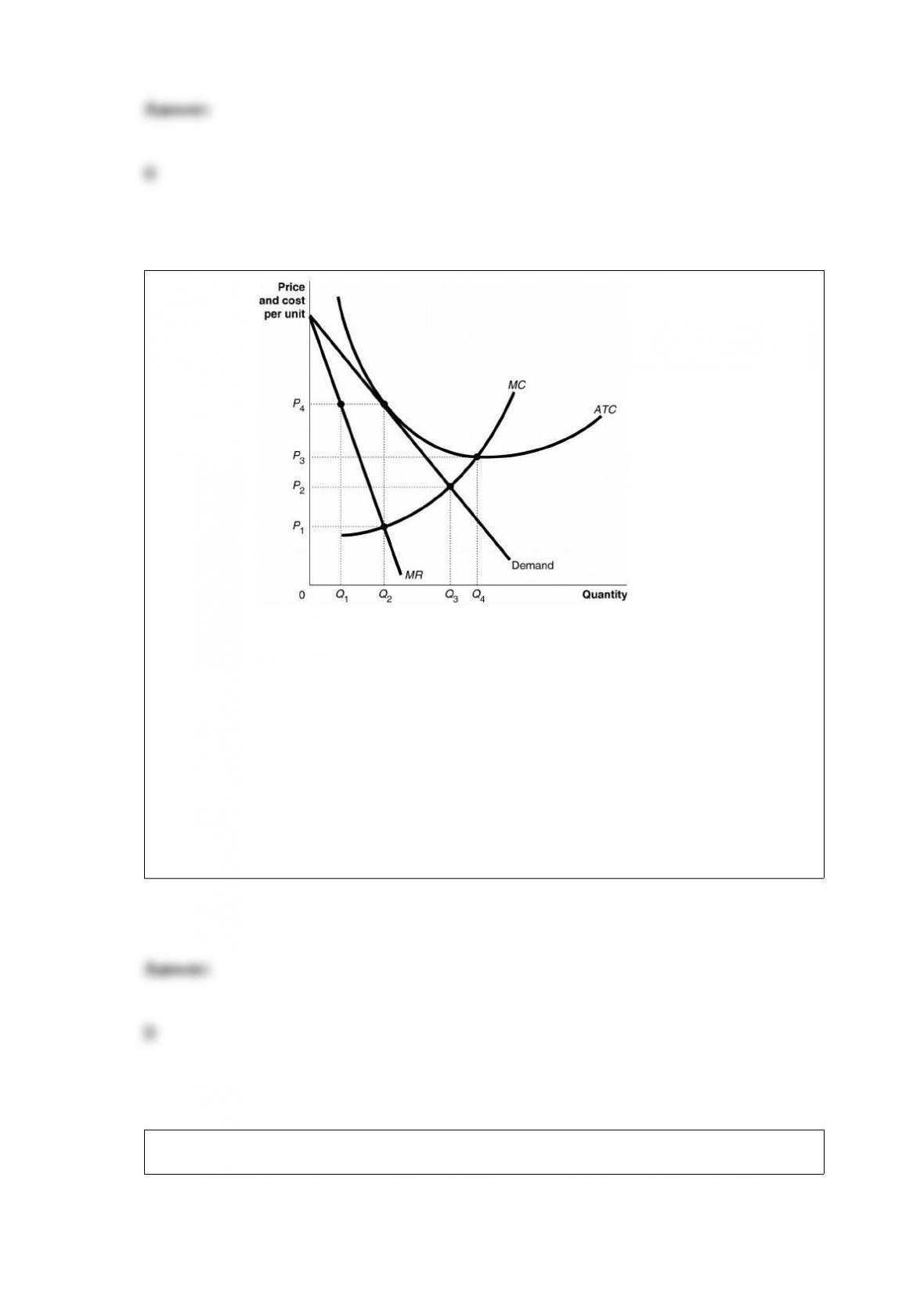
Figure 13-11
What is the monopolistic competitor’s profit-maximizing output?
A) Q1 units
B) Q2 units
C) Q3 units
D) Q4 units
Figure 11-14
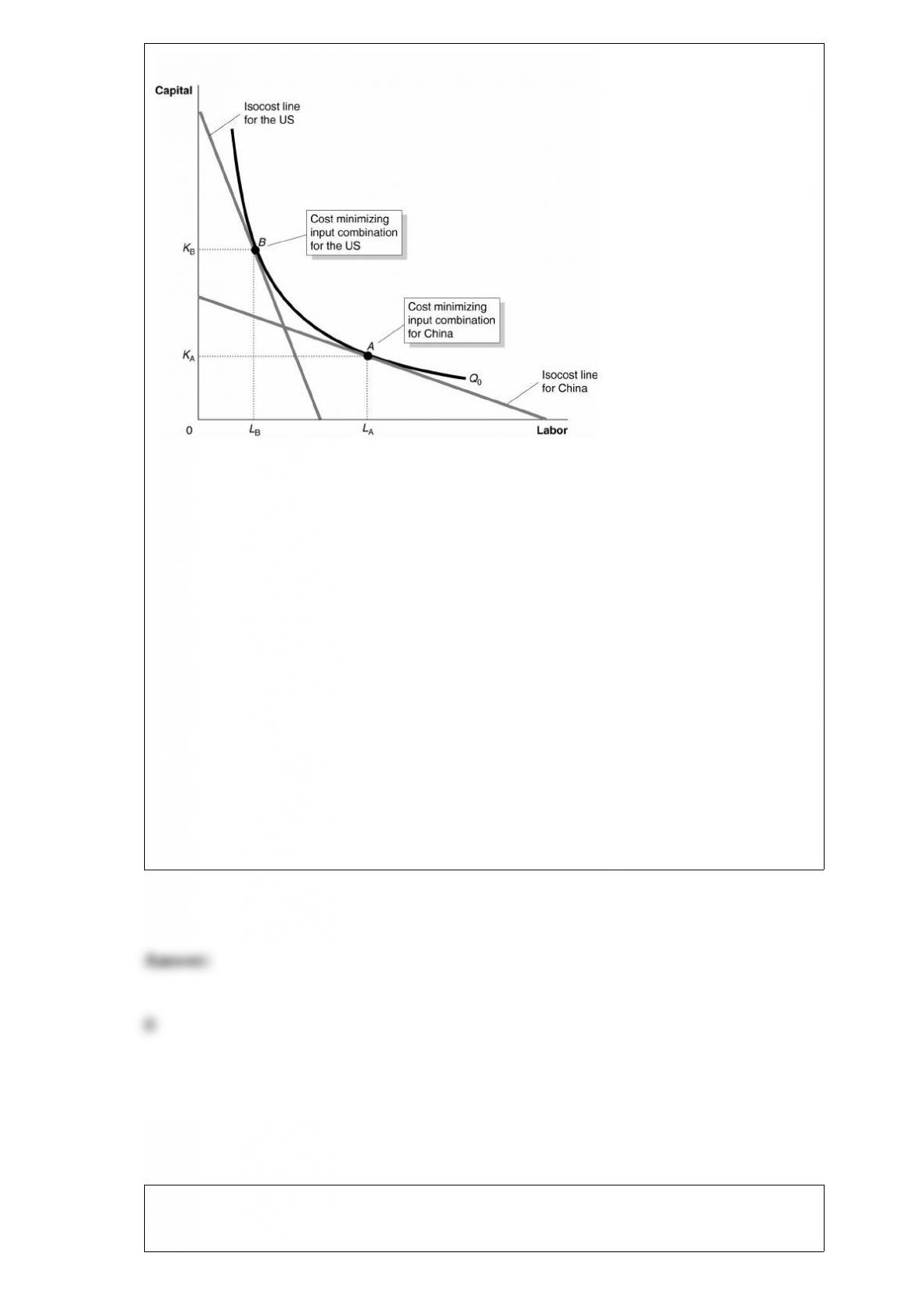
Figure 11-14 shows the
optimal input combinations for the production of a given quantity of cotton in the
United States and in China.
Which of the following could explain why the United States and China use different
input combinations to produce a given quantity of cotton and yet, each country
produces that quantity at the lowest possible cost?
A) because the prices of inputs are not the same for the two countries: labor is relatively
lower-priced and capital is relatively higher priced in the United States
B) because the prices of inputs are not the same for the two countries: labor is relatively
lower-priced and capital is relatively higher priced in China
C) because the United States has more sophisticated technology and therefore is more
efficient in cotton production
D) because the marginal product per dollar spent on capital yields a higher return in the
United States than in China
Which of the following is a microeconomics question?

A) When will the government better secure the borders?
B) Why hasn’t the federal government raised the minimum wage?
C) How does Fiat decide on the price of the 500 Pop model?
D) What determines the level of U.S. imports and exports?
When the value of a currency is determined ________, the exchange rate system is
defined as managed float.
A) only by supply and demand
B) by its issuing government
C) mostly by supply and demand, but with occasional government intervention
D) by its issuing government, with occasional readjustments in value
One would speak of a change in the quantity of a good supplied, rather than a change in
supply, if
A) supplier expectations about future prices change.
B) the price of the good changes.
C) the cost of producing the good changes.
D) prices of substitutes in production change.
If the social cost of producing a good or service exceeds the private cost
A) a positive externality exists.
B) the sum of consumer surplus and producer surplus is maximized.
C) the market achieves economic efficiency.
D) a negative externality exists.
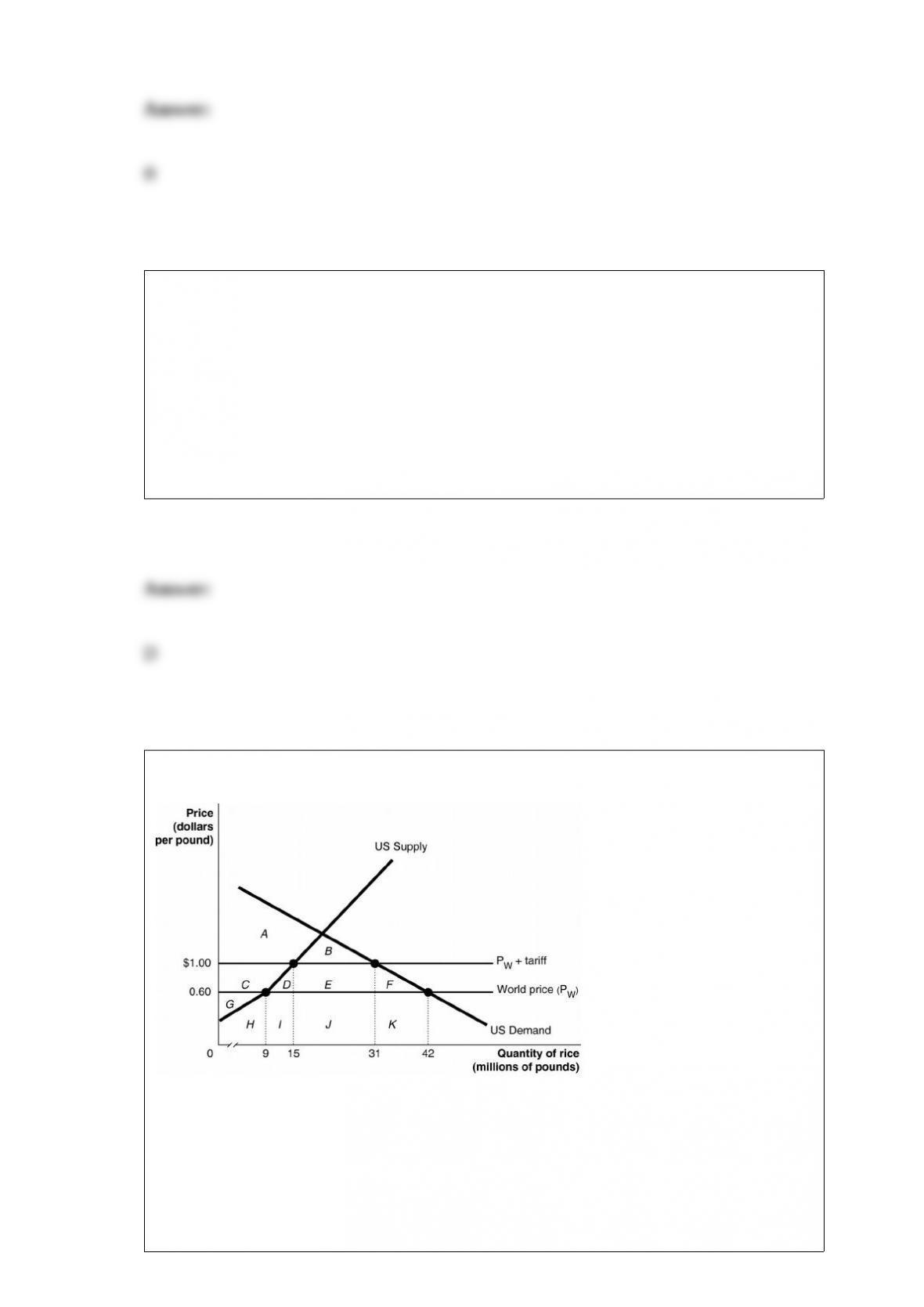
Figure 9-2
Suppose the U.S. government
imposes a $0.40 per pound tariff on rice imports. Figure 9-2 shows the impact of this
tariff. The tariff revenue collected by the government equals the area
A) D + E + F.
B) E.

C) B + D + E + F.
D) C + D + E + F.
In the short run, a firm that is operating at a loss has two options. These options are
A) to reduce output or reduce its variable costs.
B) to go out of business or declare bankruptcy.
C) to shut down temporarily or continue to produce.
D) to adopt new technology or change the size of its physical plant.
________ spending follows a smooth trend whereas, ________ spending is more
volatile and subject to fluctuations.
A) Consumer; government
B) Consumer; investment
C) Investment; consumer
D) Government; consumer
Which of the following describes a characteristic of a perfectly competitive market?
A) There are many buyers but few sellers.
B) There are many sellers but few buyers.
C) There are many buyers and sellers.
D) Equilibrium is achieved when demand for the product sold in the market equals the
supply.
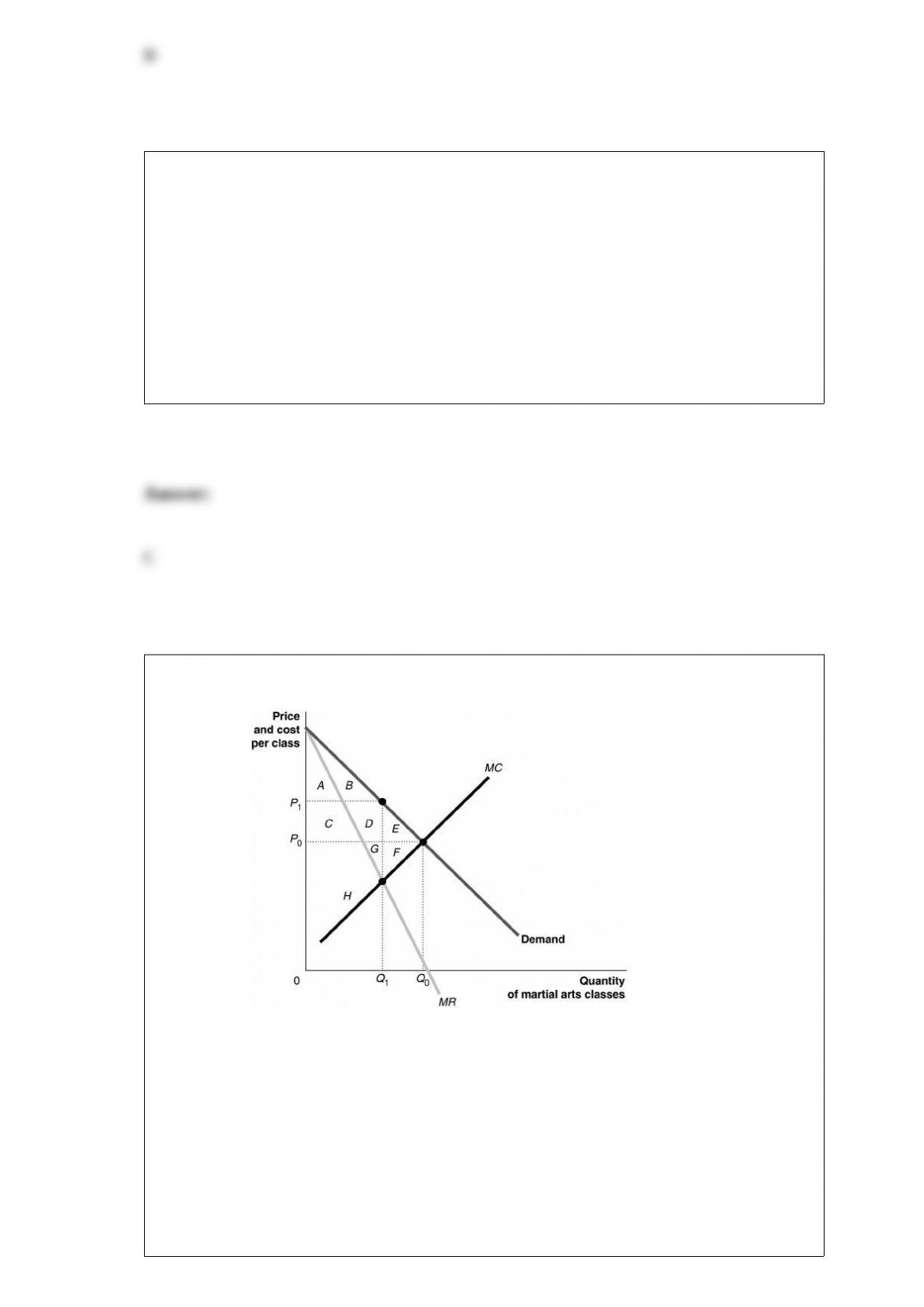
Figure 16-6 Watanabe Sensei
operates the only martial arts school in Hartfield. For simplicity, assume that consumers
have identical demand curves and that Sensei knows what this demand curve is. Figure
16-6 shows this demand curve.
With a two-part pricing scheme€a monopoly price for classes and a one-time
membership fee€what is the amount of producer surplus Sensei will earn?
A) an amount equal to the area A + B + C + D
B) an amount equal to the area E + F

C) an amount equal to the area A + C + H
D) an amount equal to the area A + B + C + D + H + G