The firm’s factor demand curve is the
a. MRP curve if the firm is a price taker (perfectly competitive firm).
b. MFC curve if the firm is a price taker (perfectly competitive firm).
c. VMP curve if the firm is a price searcher (monopolist, monopolistic competitor,
oligopolist).
d. MFC curve if the firm is a price searcher (monopolist, monopolistic competitor,
oligopolist).
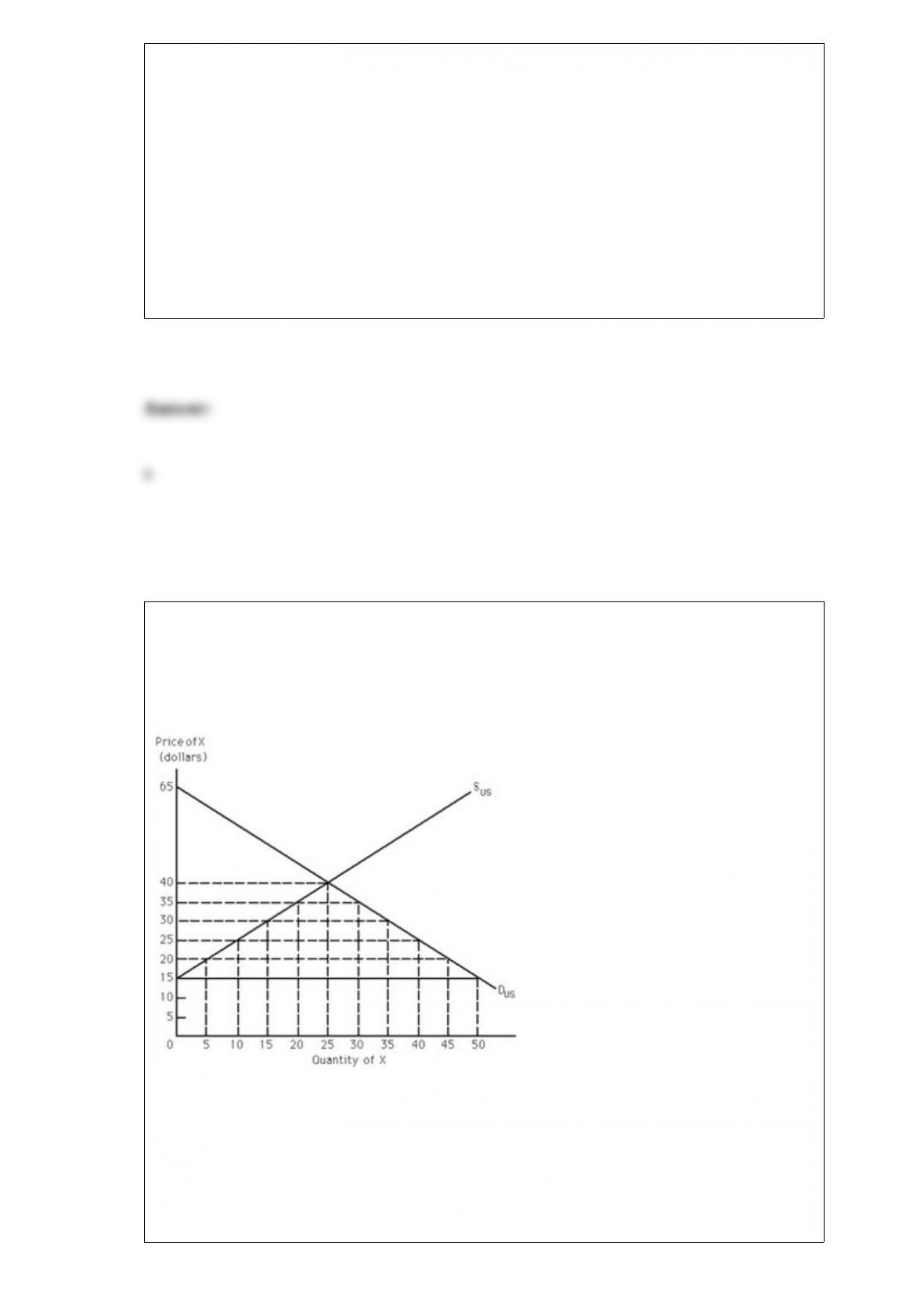
Refer to Exhibit 34-7. The world price of good X is $15. If imports of good X are
legally limited to 30 units, the price of X in the United States would be
Exhibit 34-7
a. $20.
b. $25.
c. $30.

d. $35.
e. none of the above
If the relative price of one unit of good X is 5 units of good Y, then it follows that the
absolute price of good X can be __________ and the absolute price of good Y can be
__________.
a. $20,000; $10,000
b. $40,000; $8,000
c. $30,000; $5,0000
d. $5,000; $40,000
e. a and c
According to economists, money is a resource.
a. True
b. False
Which of the following statements is true?
a. The union-as-collective-voice view of the labor union holds that labor unions have a
negative impact on productivity and efficiency.
b. The traditional view of the labor union is that the union acts as a collective voice for
workers and probably leads to lower quit rates (among employees).
c. The union-as-collective-voice view of the labor union holds that labor unions often
have unnecessary staffing requirements, which means that they insist that only certain
persons be allowed to do certain jobs.
d. b and c
e. none of the above
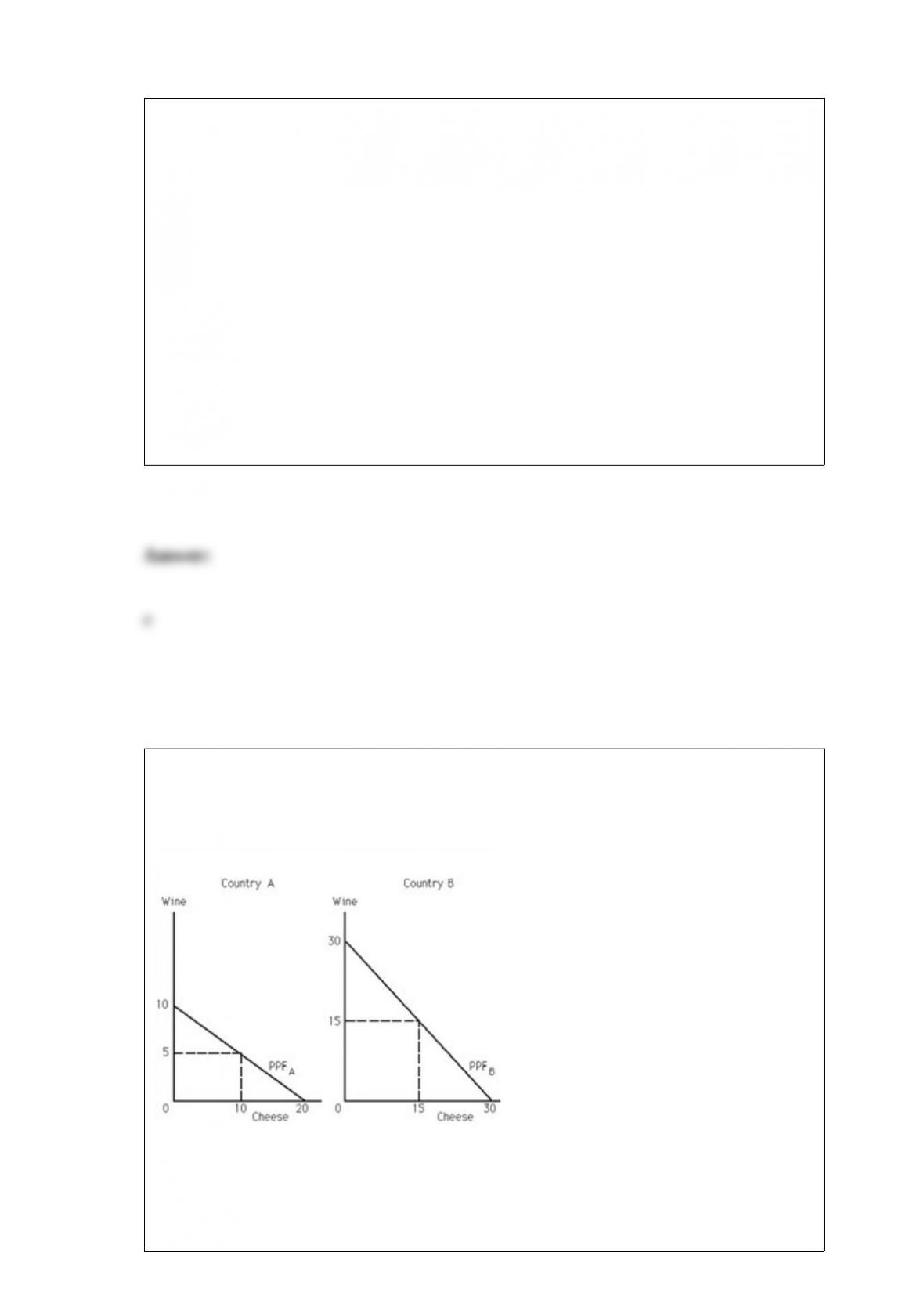
Refer to Exhibit 34-6. Which of the following terms of trade would both countries agree
on?
Exhibit 34-6
a. 1 unit of wine = 2.5 units of cheese
b. 1 unit of wine = 1.5 units of cheese
c. 2.5 units of wine = 1 unit of cheese
d. 1.5 units of wine = 1 unit of cheese
e. none of the above
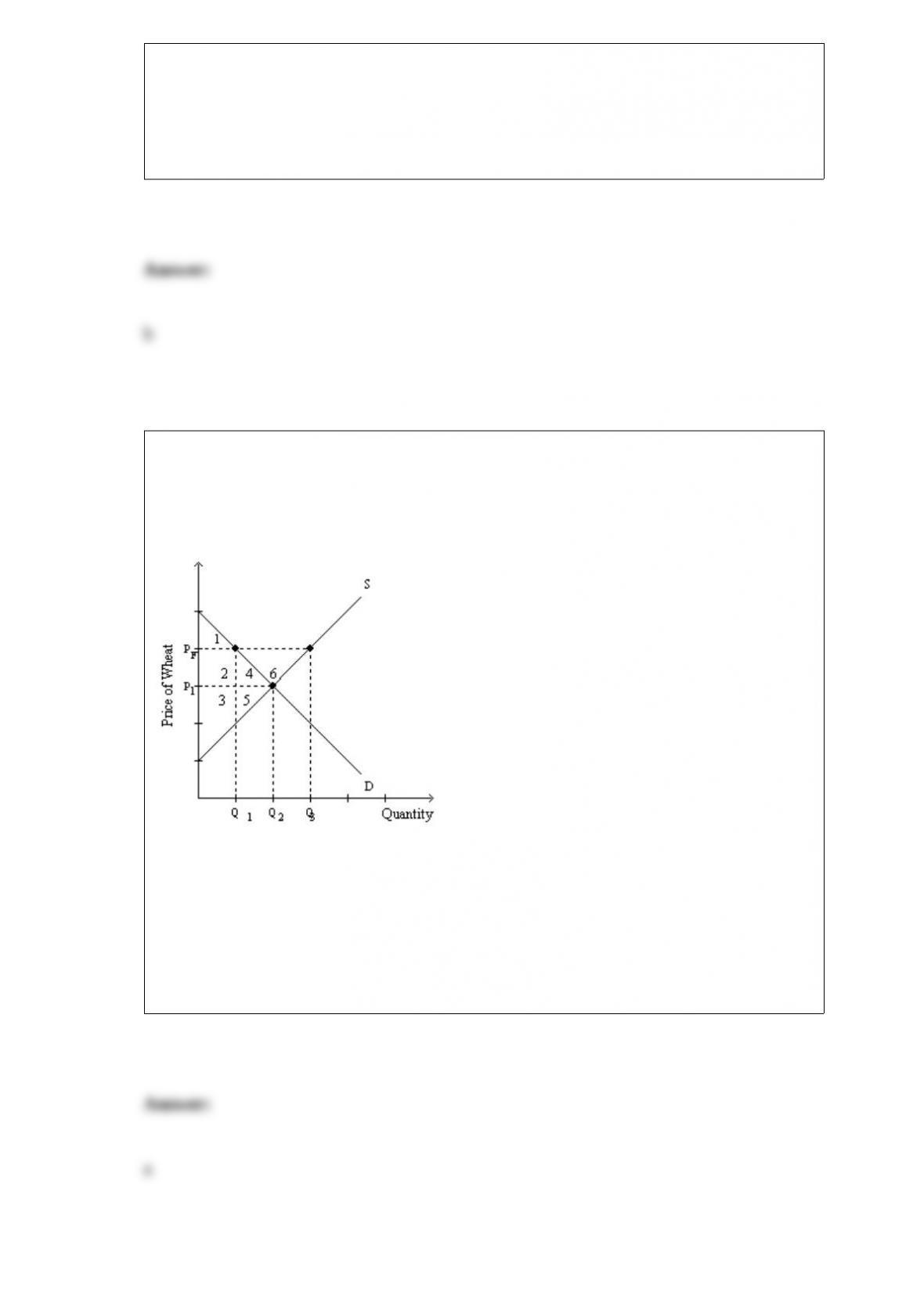
Refer to Exhibit 4-8.Suppose that wheat producerslobby the government for a price
floor and receive one.This price floor is set at PF.What has happened to the consumers’
surplus as a result of the imposition of the price floor?
Exhibit 4-8
a. consumers’ surplus has gone down by (area 2 + 4)
b. consumers’ surplus has risen by (area 2 + 4)
c. consumers’ surplus has gone down by (area 3 – area 5)
d. consumers’ surplus has risen by (area 2 + 3)
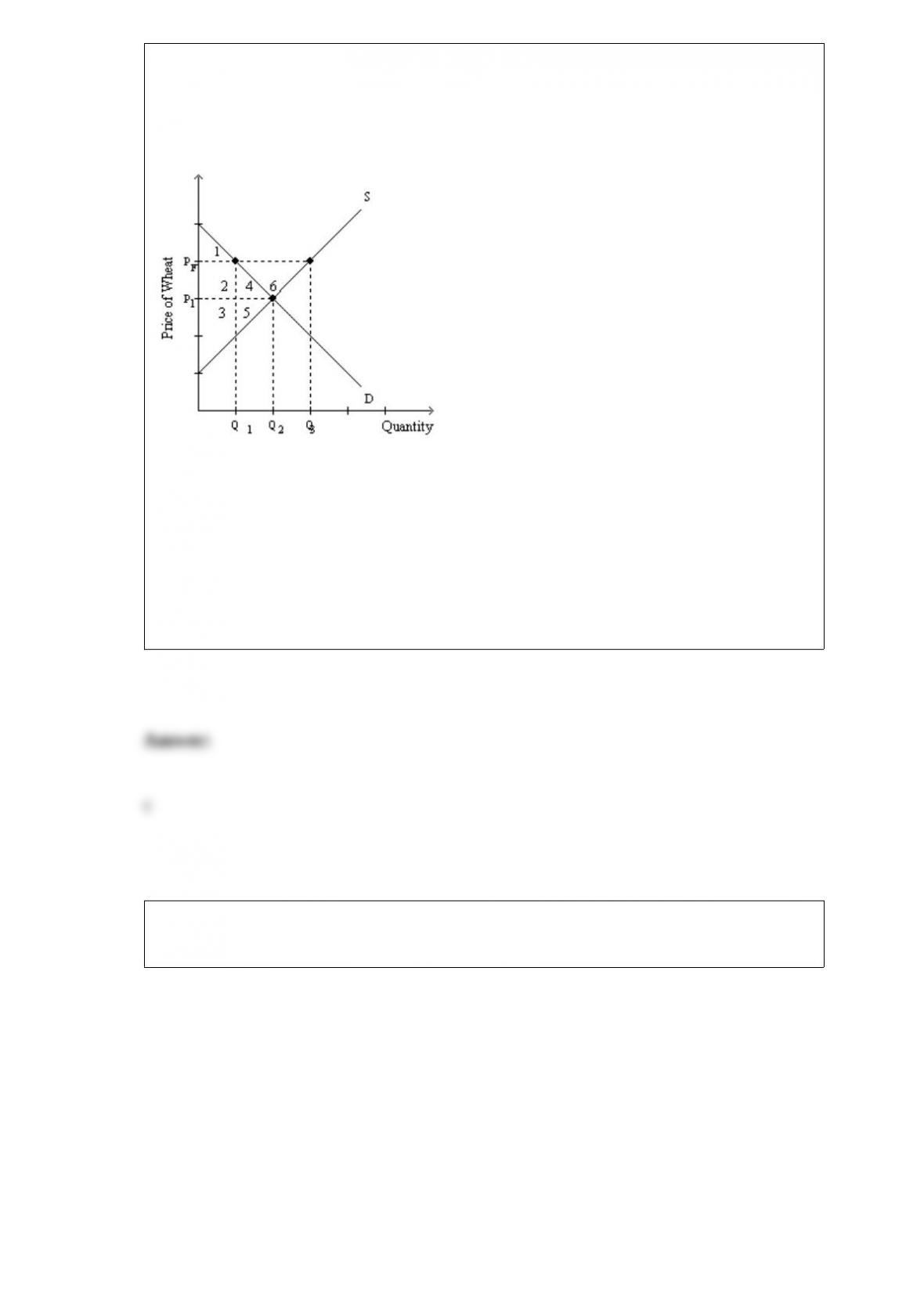
Refer to Exhibit 4-8.Suppose that wheat producerslobby the government for a price
floor and receive one.This price floor is set at PF.What is the change in the total surplus
at the price floor, compared to at the equilibrium price?
Exhibit 4-8
a. There was a gain in total surplus equal to (area 1 + 2 + 3)
b. There was a gain in total surplus equal to (area 1 + 2 + 3 + 4 + 5)
c. There was a loss in total surplus equal to (area 4 + 5)
d. There was a loss in total surplus equal to (area 4 + 5 + 6 )
Refer to Exhibit 27-4. The marginal factor cost of labor
Exhibit 27-4
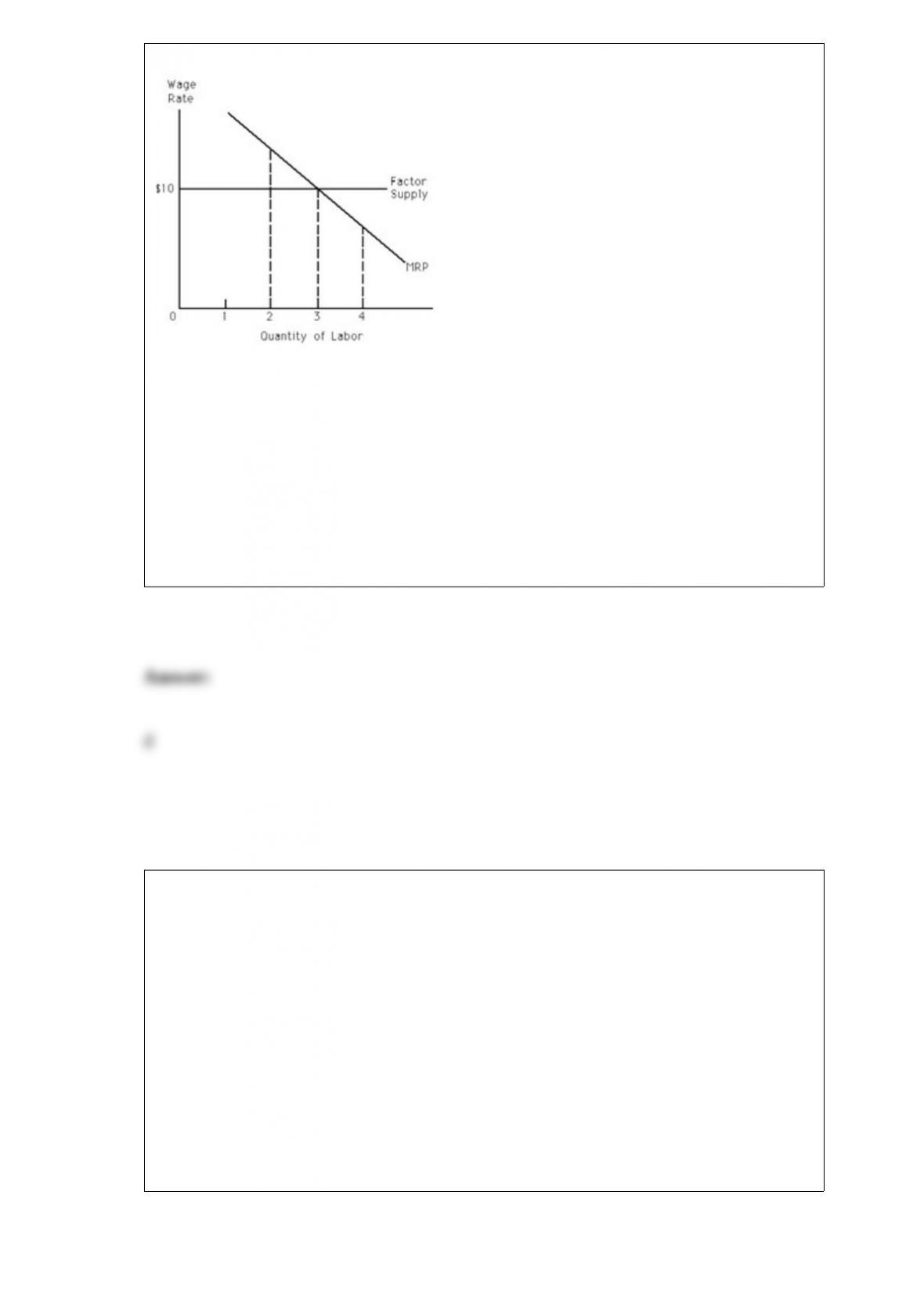
a. is $14.
b. is $7.
c. is $3.
d. is $10.
e. depends on the amount of labor employed.
A concentration ratio indicates the
a. number of firms in an industry.
b. number of large firms in an industry compared to the number of large firms in
another related industry.
c. percentage of total sales accounted for by the (for example) four largest firms.
d. percentage of sellers in an industry relative to the number of buyers.
e. percentage of sellers in an industry protected by barriers to entry relative to the
number of sellers that wish to enter.
A nonexcludable public good is characterized by nonrivalry in
a. production and nonexcludability.
b. consumption and rivalry in production.
c. consumption and excludability.
d. consumption and nonexcludability.
e. none of the above
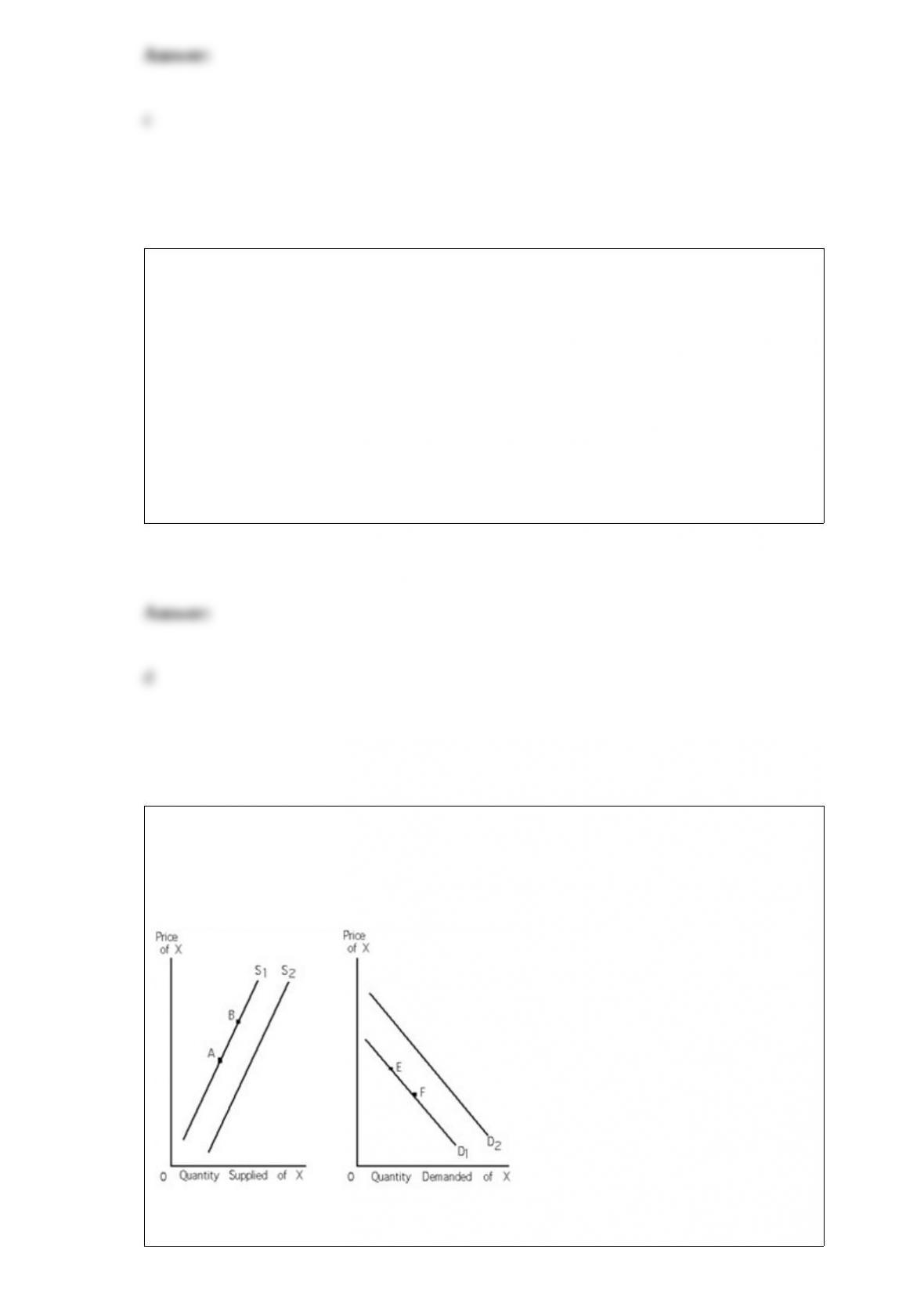
Refer to Exhibit 3-9. A severe recession has sharply decreased the incomes of
consumers. Knowing that X is a normal good, you expect a movement in the market for
X from
Exhibit 3-9
a. A to B.

b. E to F.
c. F to E.
d. B to A.
Michelle can work at job A earning $50,000 a year, job B earning $83,000 a year, or job
C earning $85,000 a year. If Michelle chooses job C, then her economic rent for
working at job C rather than job B is
a. $35,000.
b. $2,000.
c. $0.
d. $33,000.
Producers’ surplus is
a. the difference between the price a buyer pays for a good and the highest price he
would have paid for the good.
b. the difference between the price a seller receives for a good and the minimum price
for which he would have sold the good.
c. the difference between the price a seller receives for a good and the price a buyer

pays for the good.
d. equal to price times quantity sold.
e. equal to the seller’s minimum price and the buyer’s maximum price.
The government’s provision of nonexcludable public goods such as national defense is
accepted because
a. government is more efficient than private firms at producing goods.
b. the market fails to produce nonexcludable public goods as a result of the free-rider
problem.
c. people do not value public goods such as national defense very highly.
d. a and c
e. all of the above