A partnership is ________ type of business.
A) the most common.
B) the least common
C) the least risky
D) the most profitable
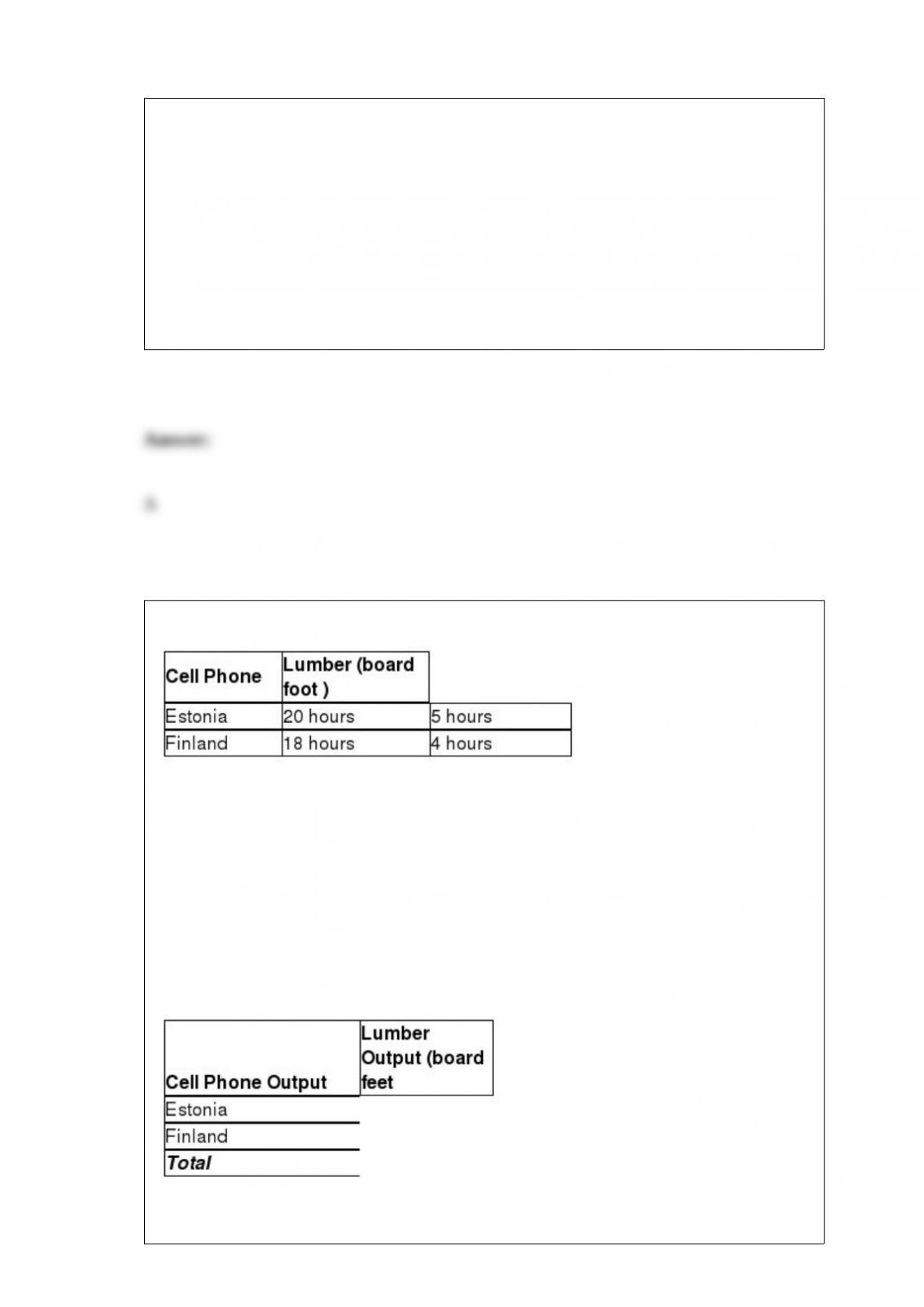
Figure 7-3 Since 1953 the
United States has imposed a quota to limit the imports of peanuts. Figure 7-3 illustrates
the impact of the quota. What is the value of consumer surplus after the imposition of
the quota?
A) $8 million
B) $26.25 million
C) $45.5 million
D) $72.25 million
A decrease in a fixed exchange rate from $1.75 per pound to $1.60 per pound is called
a(n) ________ of the pound.
A) devaluation
B) depreciation
C) appreciation
D) revaluation
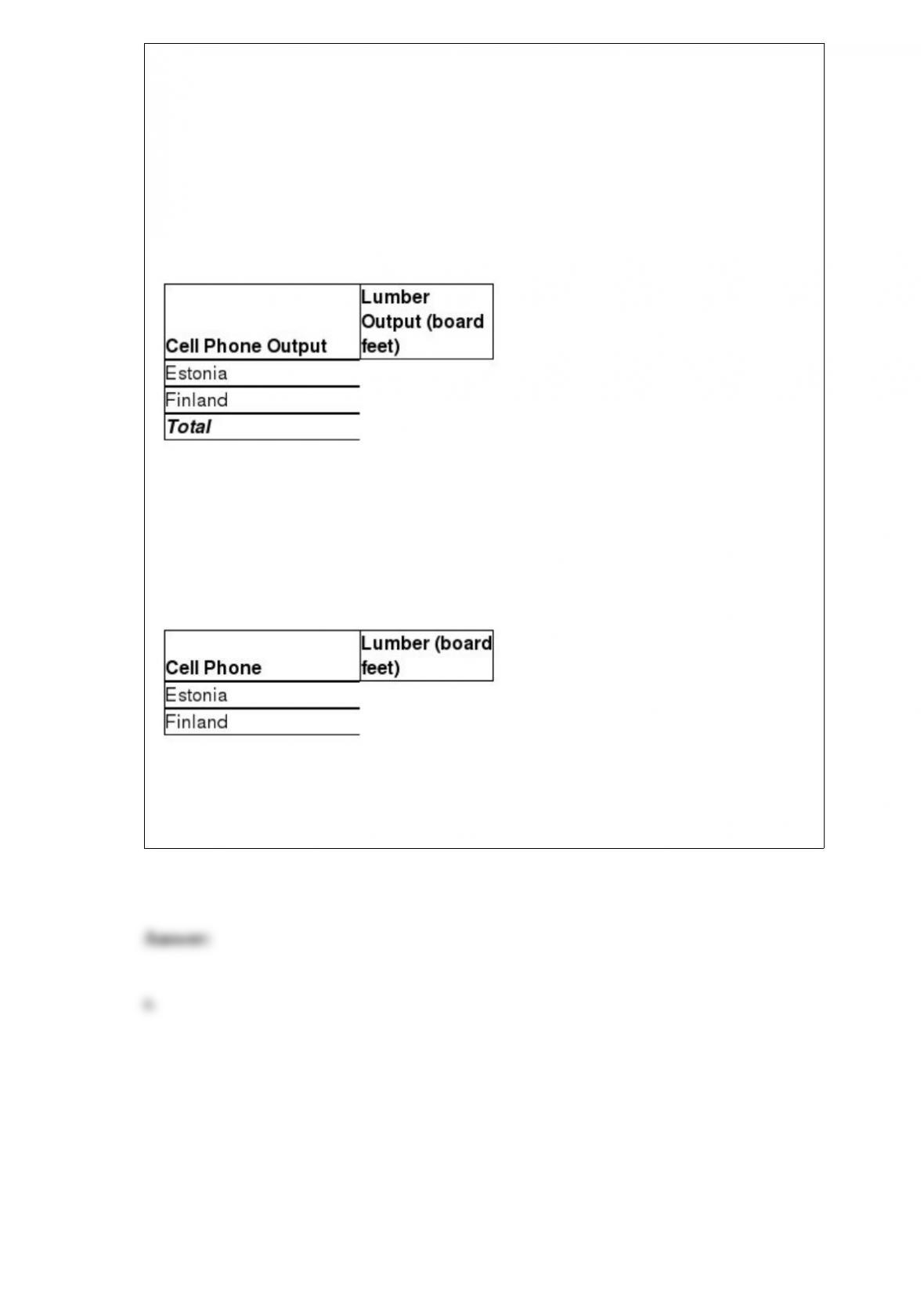
Table 2-32
This table shows the number of labor hours required to produce a cell phone and a
board foot of lumber in Estonia and Finland. a. If each country has a total of 3,600 labor
hours to devote to the production of the two goods, draw the production possibilities
frontier for each country. Put “Cell Phone” on the horizontal axis and “Lumber” on the
vertical axis. Be sure to identify the intercept values on your graphs.
b. Suppose each country allocates 55% its labor hours to lumber production and 45% to
the production of cell phones. Complete Table 2-33 below to show each country’s
output of the two products. Table 2-33: Production and Consumption with no Trade
c. If the two countries do not trade and consume whatever they produce, identify the
current production and consumption point for each country on their respective
production possibilities frontiers. Label Estonia’s consumption point “E” and Finland’s
consumption point, “F.”
d. Suppose the two countries specialize and trade. Who should produce cell phones and
who should produce lumber? Explain your answer.
e. Complete Table 2-34 below to show each country’s output with specialization. Table
2-34: Output with Specialization
f. Did specialization increase the combined output for the two countries without any
increase in resources? If so, by how much?
g. Suppose Estonia and Finland agree to trade so that in exchange for 400 board feet of
lumber, the exporter of lumber receives 90 cell phones. Complete Table 2-35 below to
show each country’s consumption bundle after trade. Table 2-35: Consumption with
Trade
h. Show the consumption points after trade on each country’s production possibilities
frontier. Label these points “X” for Estonia and “Y” for Finland.
i. Has trade made the two countries better off? Explain your answer.
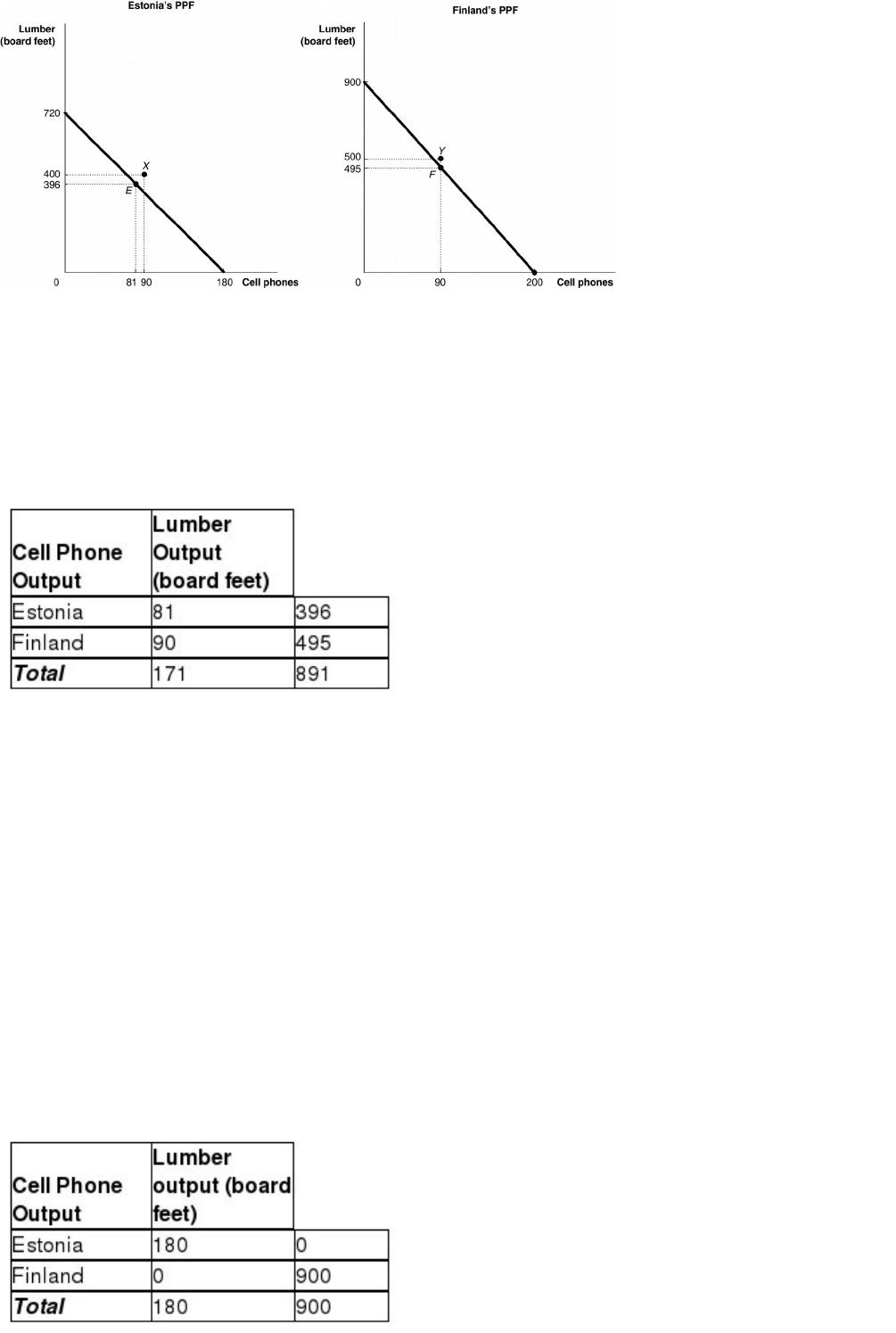
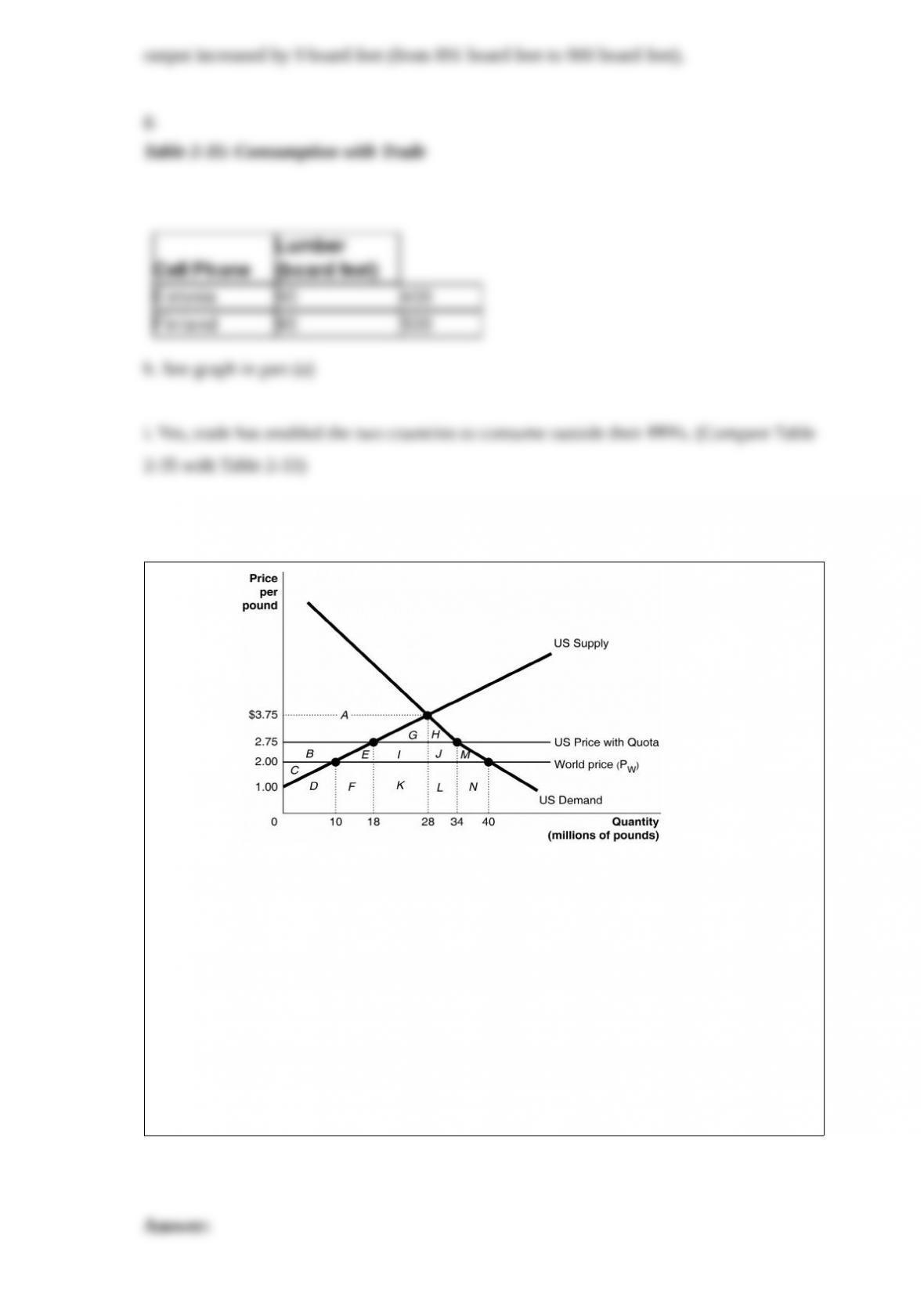
Figure 9-3 Since 1953 the
United States has imposed a quota to limit the imports of peanuts. Figure 9-3 illustrates
the impact of the quota. Without the quota, the domestic price of peanuts equals the
world price which is $2.00 per pound. What is the quantity of peanuts supplied by
domestic producers in the absence of a quota?
A) 10 million pounds
B) 28 million pounds
C) 30 million pounds
D) 40 million pounds

The required reserves of a bank equal its ________ the required reserve ratio.
A) deposits divided by
B) deposits multiplied by
C) loans divided by
D) loans multiplied by
Microeconomics is the study of
A) how households and firms make choices.
B) the economy as a whole.
C) the global economy.
D) topics such as unemployment, inflation, and economic growth.
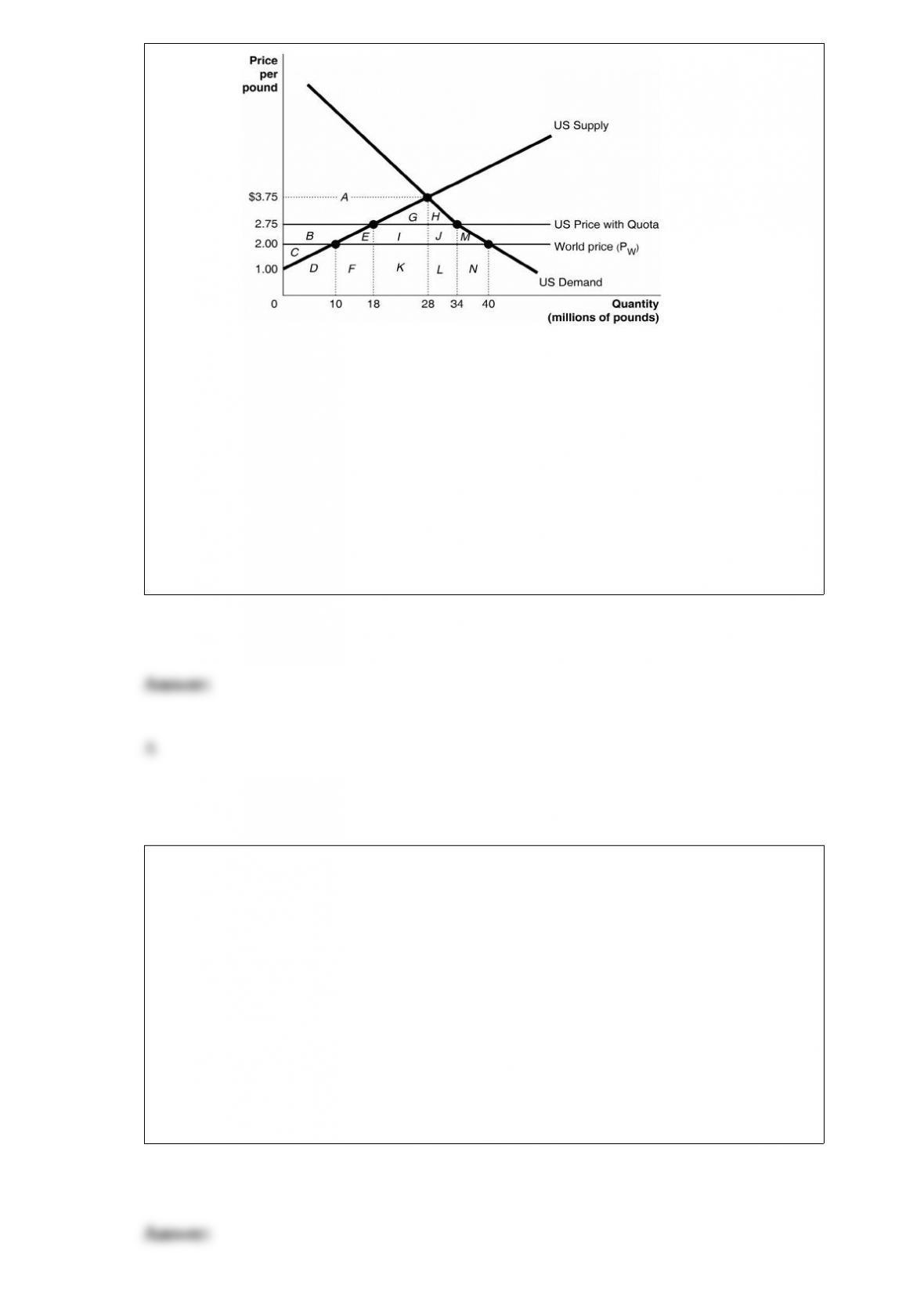
Figure 7-3 Since 1953 the
United States has imposed a quota to limit the imports of peanuts. Figure 7-3 illustrates
the impact of the quota. What is the value of domestic producer surplus without a
quota?
A) $5 million
B) $15.75 million
C) $38.5 million
D) $53.5 million
Suppose that the Federal Reserve Open Market Committee adheres to the ideas
expressed by ________. If the economy moves into a recession, the Fed would
recommend that the federal funds target rate decrease as long as the inflation rate did
not rise above the publicly announced goal for inflation.
A) the gold standard
B) the monetarist school of thought
C) inflation targeting
D) the Taylor Rule

Who was the economist who first proposed that governments use taxes and subsidies to
correct for externalities?
A) Ronald Coase
B) A. C. Pigou
C) Adam Smith
D) David Hume
Explain whether each of the following is a fixed cost or a variable cost for Damian
Dandridge’s tattoo parlor.
a. The payment he makes to buy tattoo ink.
b. The wages he pays his employees.
c. The $500-per-month payment he makes to advertise his shop on highway billboards.
d. The lease payment he makes to the landlord who owns the building where his shop is
located.
e. The payment he makes on his liability insurance policy.
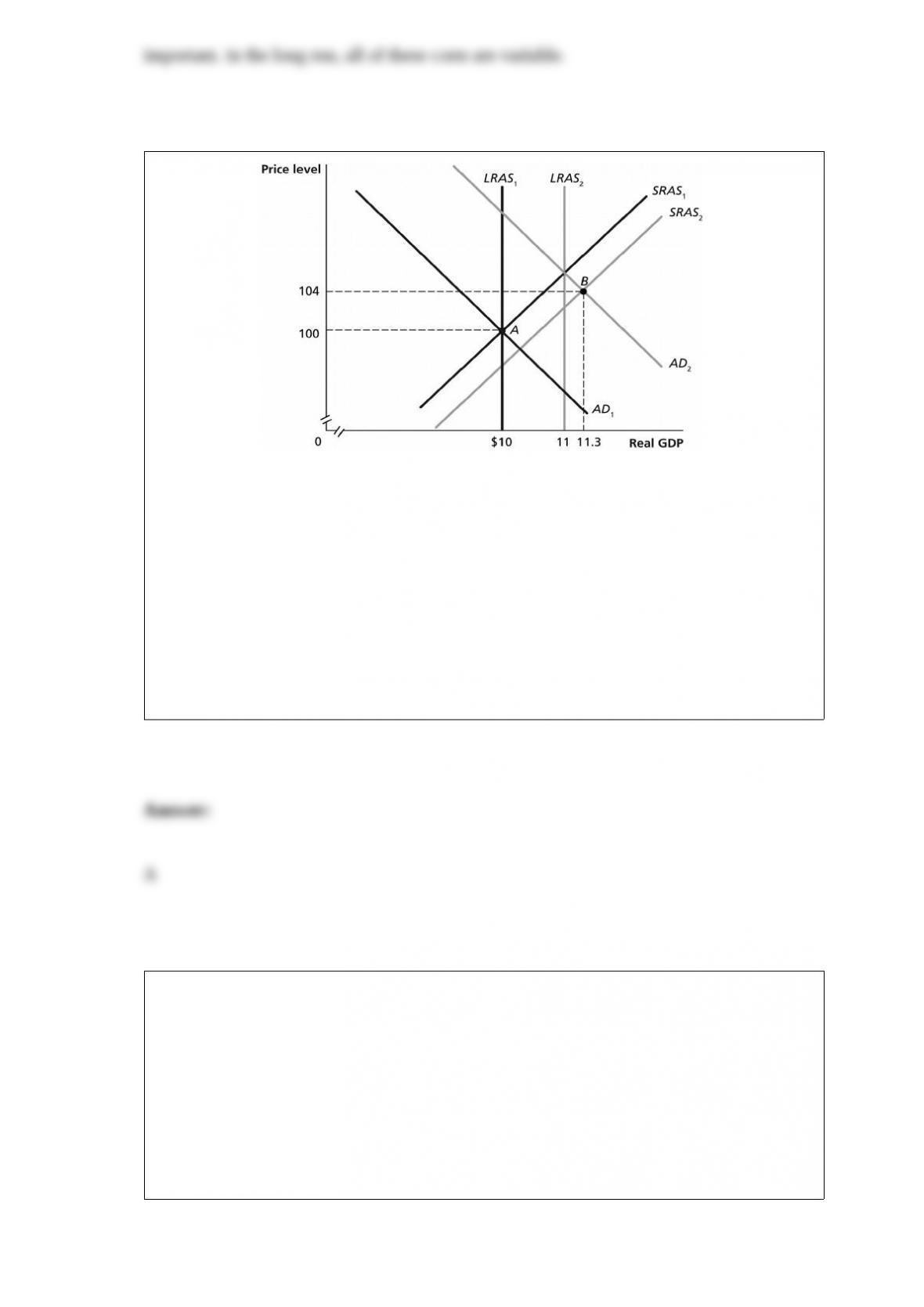
Figure 15-12
In the dynamic AD–AS model, if the economy is at point A in year 1 and is expected to
go to point B in year 2, and the Federal Reserve pursues no policy, then at point B
A) firms are producing above capacity.
B) there is pressure on wages and prices to fall.
C) the unemployment rate is greater than the natural rate of unemployment.
D) incomes and profits are falling.
In economics, the practical application of an invention is known as
A) technology.
B) entrepreneurship.
C) physical capital.
D) innovation.

If the price of lattes, a normal good you enjoy, falls
A) the income and substitution effects offset each other but the price effect leads you to
buy more lattes.
B) both the income and substitution effects lead you to buy more lattes.
C) the income effect which causes you to increase your latte consumption outweighs
the substitution effect which causes you to reduce your latte consumption, resulting in
more latte purchased.
D) the substitution effect which causes you to increase your latte consumption
outweighs the income effect which causes you to reduce your latte consumption,
resulting in more latte purchased.
Hotspur Incorporated, a manufacturer of microwaves, is a price taker in both the input
and output markets. To maximize its profit, Hotspur will hire labor up to the point
where
A) the marginal product of labor is no longer positive.
B) all economies of scale have been exhausted.
C) the marginal revenue product of labor equals the wage rate.
D) the marginal revenue product of labor equals the output price.
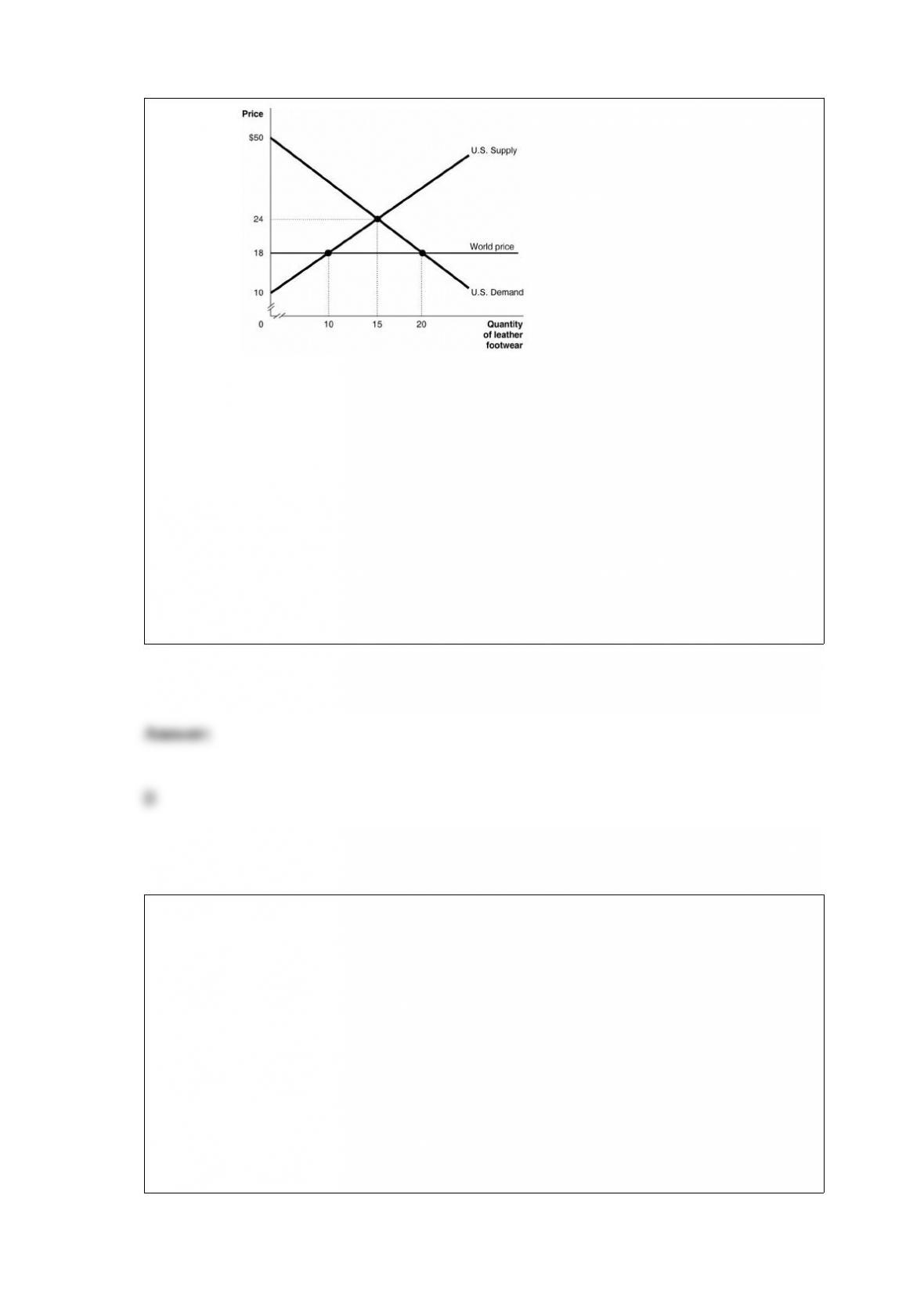
Figure 9-1 Figure 9-1 shows the U.S. demand
and supply for leather footwear.
Suppose the government allows imports of leather footwear into the United States. The
market price falls to $18. What is the value of domestic producer surplus?
A) $0.
B) $40
C) $320
D) $360
Absolute advantage is
A) the ability to produce more of a good or service than competitors when using the
same amount of resources.
B) the ability to produce higher quality goods compared to one’s competitors.
C) the ability to produce a good or service at a higher opportunity cost than one’s
competitors.
D) the ability to produce more of a good or service than competitors that have more
resources.
Which of the following are positive economic statements and which are normative
economic statements? a. An increase in the price of gasoline will decrease the quantity
of gasoline purchased..
b. The government should eliminate the minimum wage.
c. All states should raise the minimum wage to at least $10 per hour.
d. The government should scrap its current income tax structure in favor of a flat tax.
e. Unemployment has increased since the onset of the recession.
f. The government should not bail out investment banks during a financial crisis.