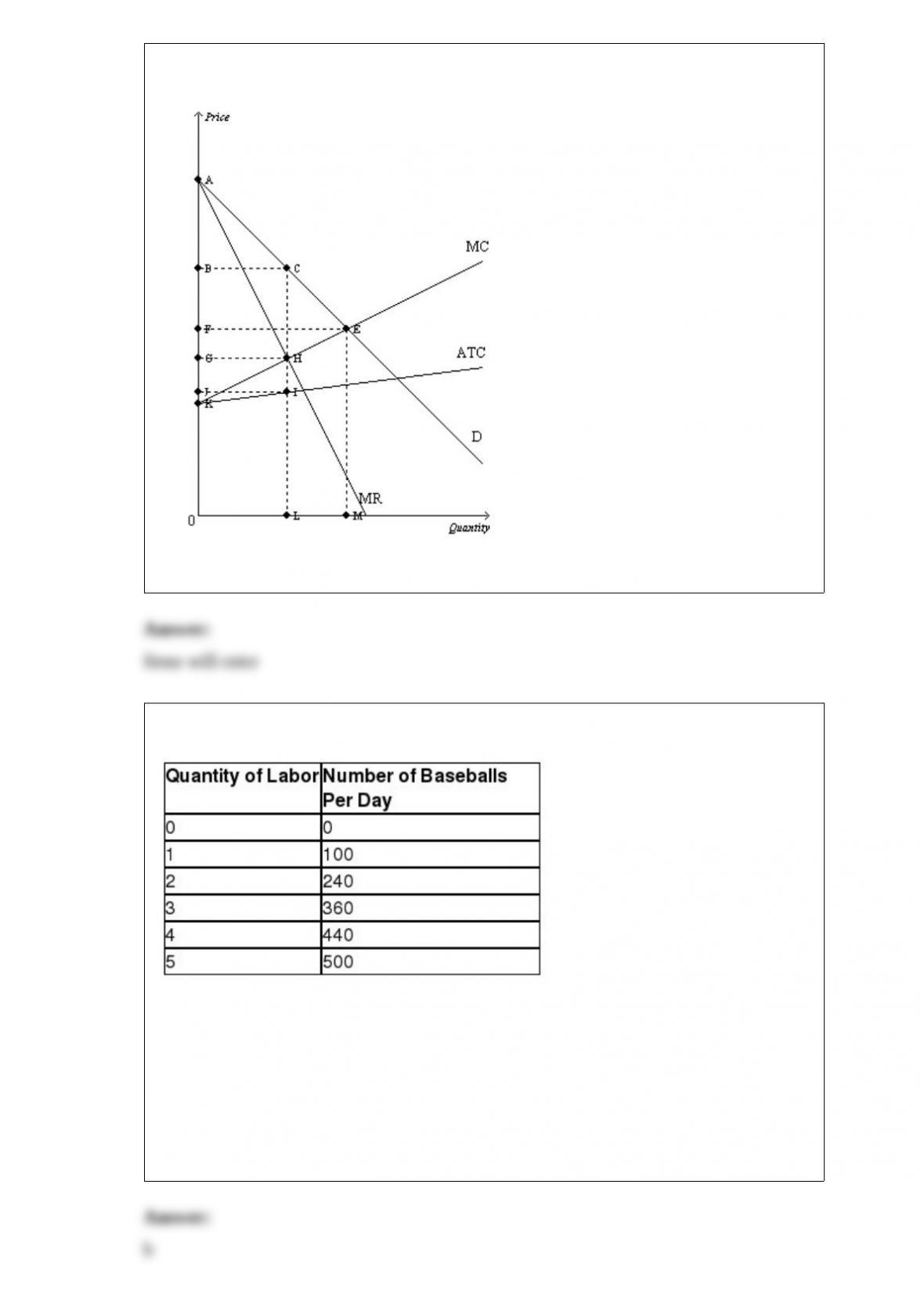
1) Figure 16-13
What is the first step in this industry’s adjustment to long run equilibrium?
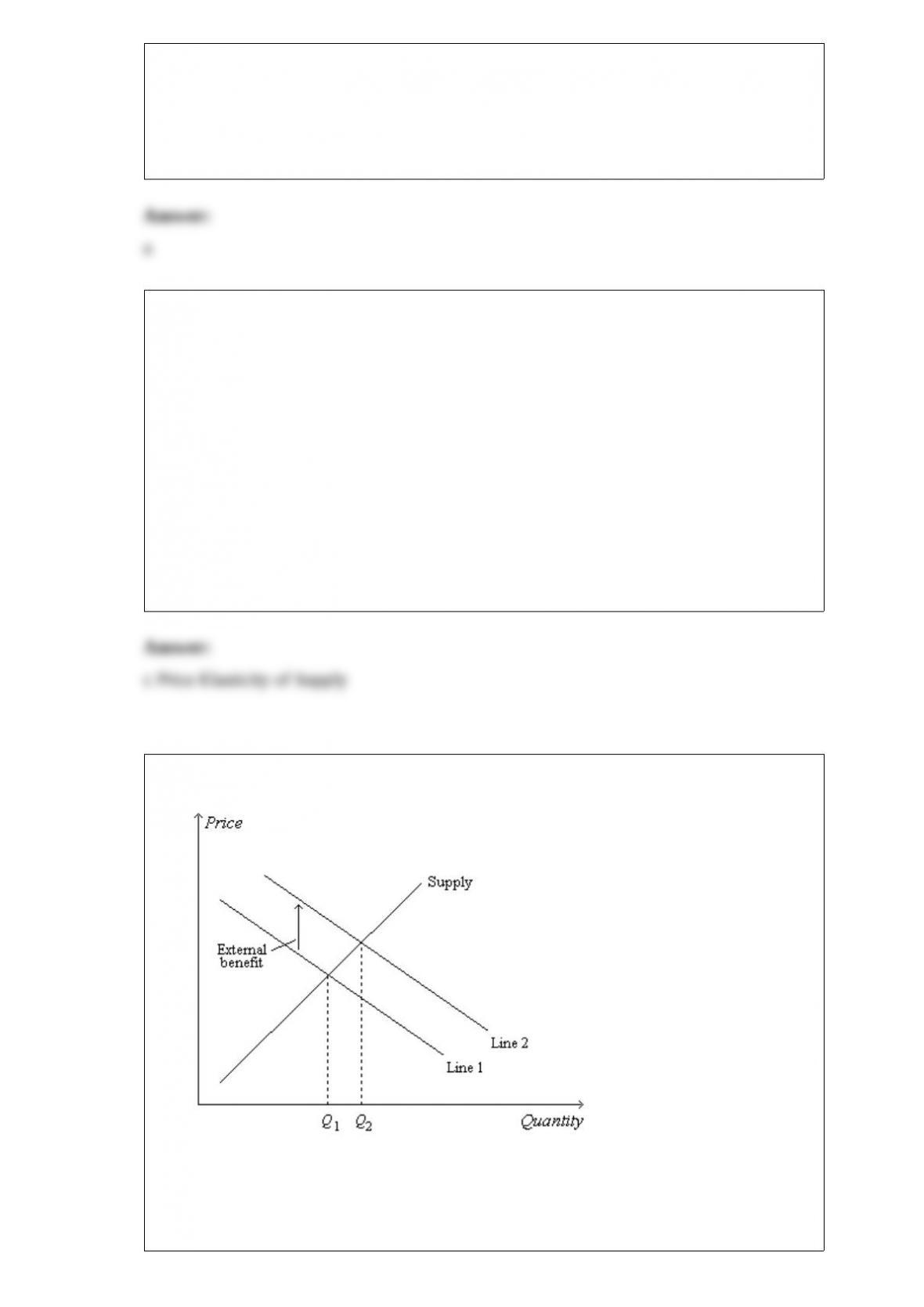
2) Table 18-10
Refer to Table 18-10. This table describes the number of baseballs a manufacturer can
produce per day with different quantities of labor. Each baseball sells for $5 in a
competitive market. For which level of employment is the marginal product of labor
greatest?
a.1 worker
b.2 workers
c.3 workers
d.4 workers

3) Michael faces tradeoffs between consuming in the current period when he is young
and consuming in a future period when he is old. Michael experiences a decrease in the
current interest rate he earns on his savings. Michael will save
a.less in the current period if the substitution effect is greater than the income effect.
b.less in the current period if the income effect is greater than the substitution effect.
c.more in the current period if the substitution effect is greater than the income effect.
d.more in the current period, regardless of the sizes of the income and substitution
effects.
4) Jamar used to work as an office manager, earning $40,000 per year. He gave up that
job to start a life-coaching business. In calculating the economic profit of his
life-coaching business, the $40,000 income that he gave up is counted as part of the
life-coaching business’s
a.total revenue.
b.opportunity costs.
c.explicit costs.
d.marginal costs.
5) The invisible hand directs economic activity through
a.advertising.
b.prices.
c.central planning.
d.government regulations.
6) Robin owns a horse stables and riding academy and gives riding lessons for children
at €pony camp.€ Her business operates in a competitive industry. Robin gives riding
lessons to 20 children per month. Her monthly total revenue is $4,000. The marginal
cost of pony camp is $250 per child. In order to maximize profits, Robin should
a.give riding lessons to more than 20 children per month.
b.give riding lessons to fewer than 20 children per month.
c.continue to give riding lessons to 20 children per month.
d.We do not have enough information to answer the question.
7) The benefit to buyers of participating in a market is measured by
a.consumer surplus.
b.producer surplus.
c.total surplus.
d.deadweight loss.
8) In January the price of dark chocolate candy bars was $2.00, and Willy’s Chocolate
Factory produced 80 pounds. In February the price of dark chocolate candy bars was
$2.50, and Willy’s produced 110 pounds. In March the price of dark chocolate candy
bars was $3.00, and Willy’s produced 140 pounds. The price elasticity of supply of
Willy’s dark chocolate candy bars was about
a.0.70 when the price increased from $2.00 to $2.50 and 0.76 when the price increased
from $2.50 to $3.00.
b.0.88 when the price increased from $2.00 to $2.50 and 1.08 when the price increased
from $2.50 to $3.00.
c.1.42 when the price increased from $2.00 to $2.50 and 1.32 when the price increased
from $2.50 to $3.00.
d.1.50 when the price increased from $2.00 to $2.50 and 1.18 when the price increased
from $2.50 to $3.00.
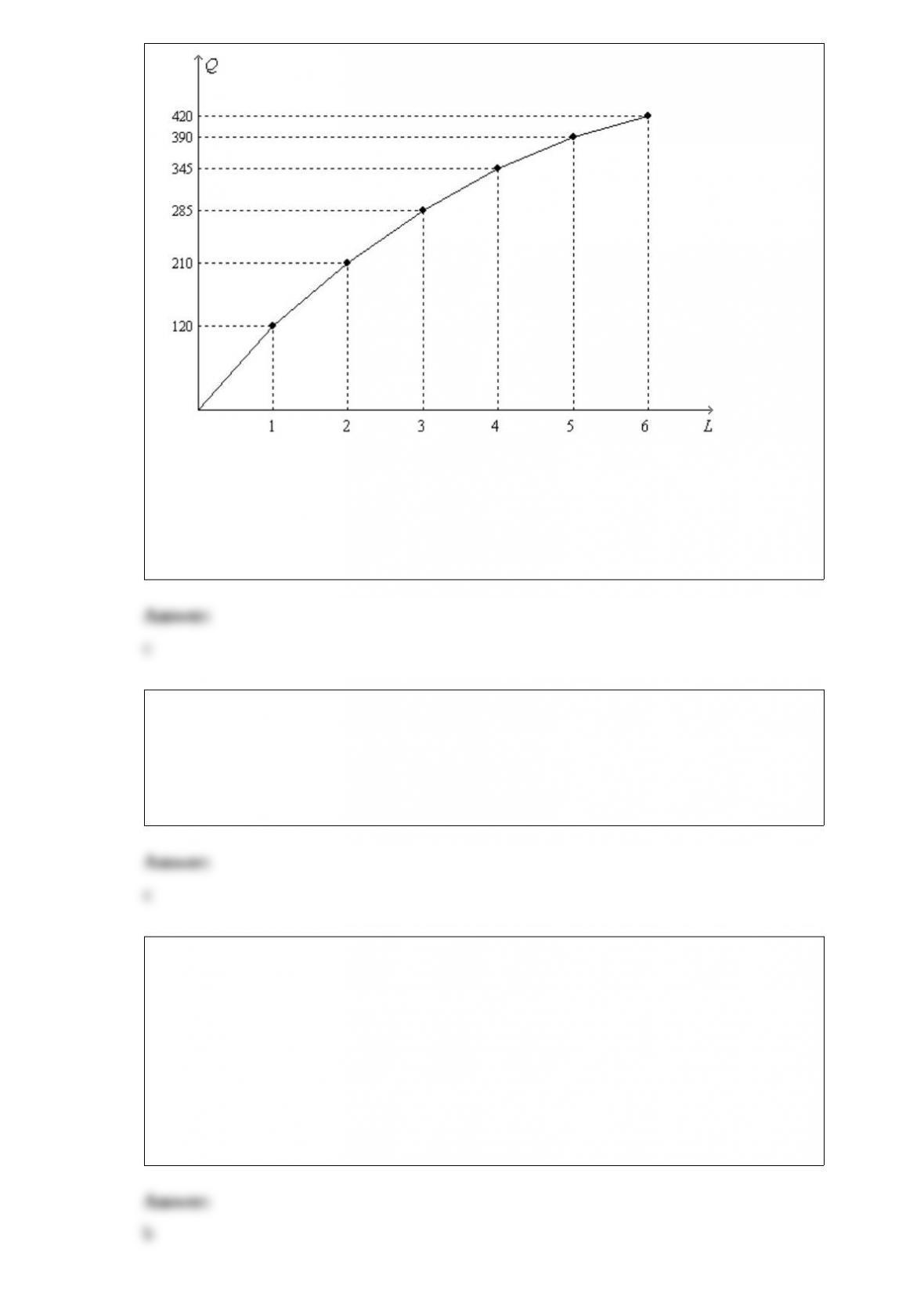
9) Figure 10-12
An alternative label for the line labeled €Supply€ would be
a.private value.
b.external value.
c.private cost.

d.external cost.
10) A perfectly elastic demand implies that
a.buyers will not respond to any change in price.
b.any rise in price above that represented by the demand curve will result in a quantity
demanded of zero.
c.quantity demanded and price change by the same percent as we move along the
demand curve.
d.price will rise by an infinite amount when there is a change in quantity demanded.
11) The accumulation of machinery and buildings used in the production of new goods
and services is referred to as
a.production factors.
b.output factors.
c.capital.
d.equity.
12) Product differentiation always leads to some measure of market power.
a.True
b.False
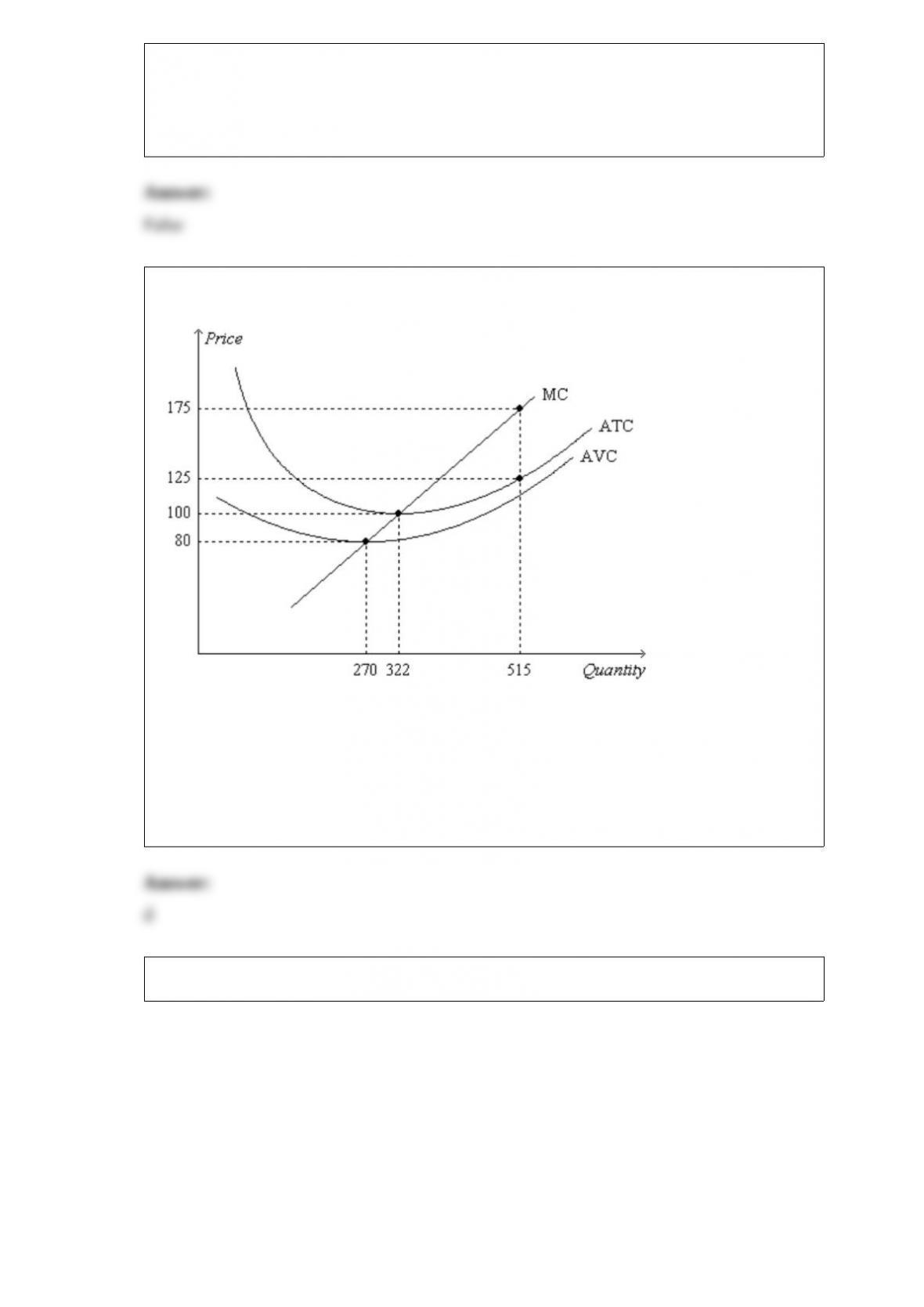
13) Figure 18-1
On the graph, L represents the quantity of labor and Q represents the quantity of output
per week.
Refer to Figure 18-1. The figure illustrates the
a.demand for labor.
b.supply of labor.
c.production function.
d.wage function.
14) An import quota
a.is preferable to a tariff since an import quota does not create a deadweight loss.
b.is a tax on imported goods.
c.reduces the welfare of domestic consumers.
d.reduces the welfare of domestic producers.
15) Which of the following statements is correct?
a.The United States has a more equal distribution of income than other developed
countries such as Japan and Germany.
b.The statement “a rising tide lifts all boats” illustrates how economic growth reduces
the number of people with income levels below the poverty line.
c.The economic life cycle explains why people base spending decisions on transitory
income.
d.The United States has more income inequality than developing countries, including
Mexico and Brazil.
16) Government policies that improve equality usually increase efficiency at the same
time.
a.True
b.False
17) Figure 14-7
Suppose AVC = $113 when the firm produces 515 units of output. Then the firm‘s fixed
cost amounts to
a.$5,500, and its profit amounts to $20,375.
b.$5,750, and its profit amounts to $20,375
c.$5,980, and its profit amounts to $25,750.
d.$6,180, and its profit amounts to $25,750.
18) Figure 16-4

The maximum total short-run economic profit for the monopolistically competitive firm
in this figure is
a. -$3,000.
b. $3,000.
c. $9,000.
d. $24,000.
19) When producers operate in a market characterized by negative externalities, a tax
that forces them to internalize the externality will
a.give sellers the incentive to account for the external effects of their actions.
b.increase demand.
c.increase the amount of the commodity exchanged in market equilibrium.
d.restrict the producers’ ability to take the costs of the externality into account when
deciding how much to supply.