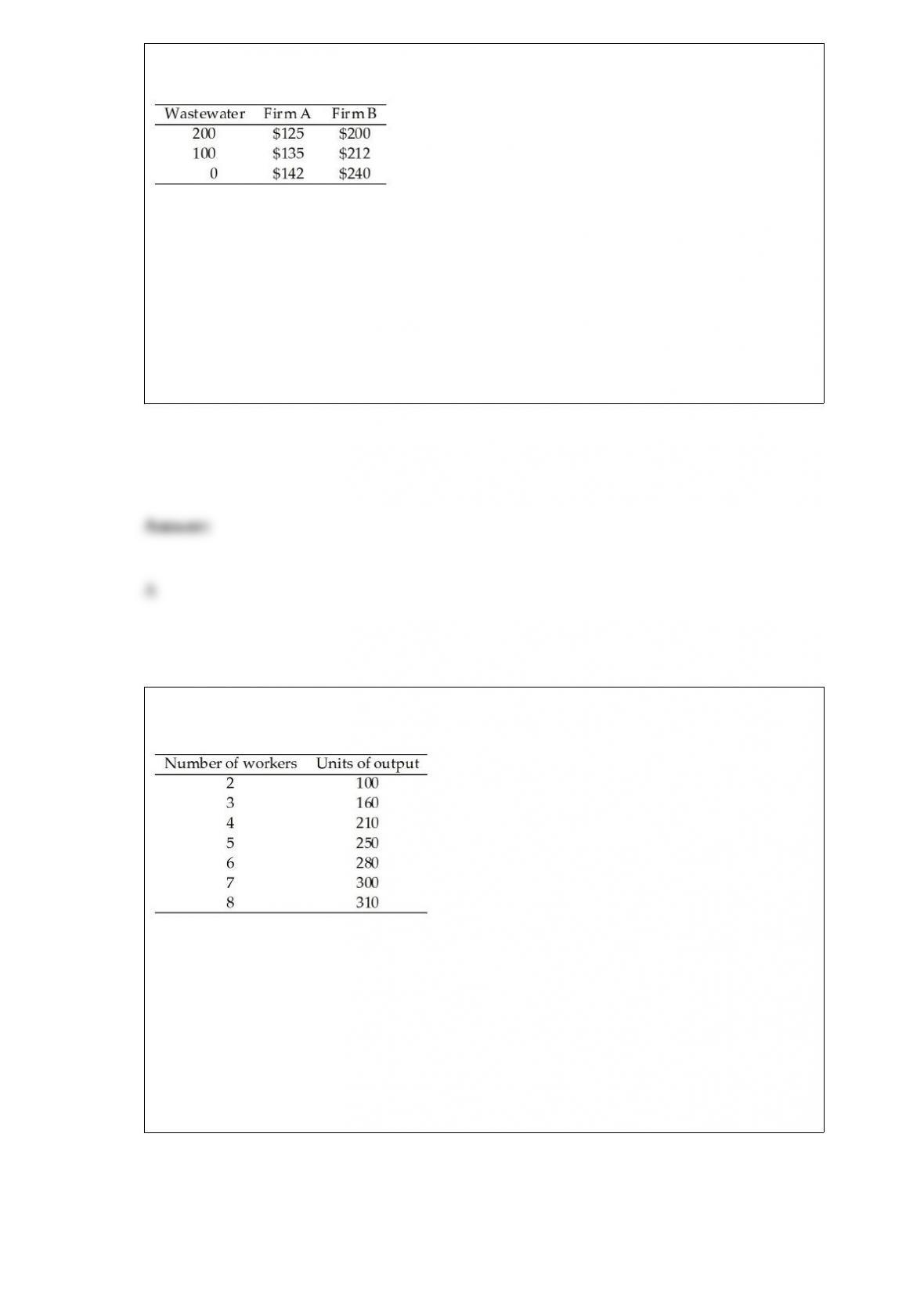
Consider the data in Table 16.2. Both firms can benefit if Firm A sells its pollution
permit allowing it to generate 100 gallons of wastewater to Firm B for:
Table 16.2
A) a price between $7 and $12.
B) a price between $0 and $7.
C) a price between $12 and $18.
D) Both firms cannot benefit if A sells permits to B.
Refer to Table 17.1. If the price of output is $2 per unit, the marginal revenue product of
the fourth unit of labor is:
Table 17.1
A) $50.
B) $52.50.
C) $100.
D) $105.

The Nucleus Accumbens (NAcc) is the key region of the brain for:
A) cost valuation.
B) benefit valuation.
C) decision making.
D) all of the above.
Public Broadcasting, in its fund drives, often arranges for a corporation to match
donations made by its employees. This is likely to ________ the free-rider problem and
lead to a ________ level of contribution to the public good.
A) reduce; smaller
B) reduce; larger
C) increase; smaller
D) increase; larger

As consumers prefer smaller and more fuel-efficient cars, the:
A) demand for SUVs will decrease.
B) quantity demanded for SUVs will rise.
C) demand for SUVs will increase.
D) quantity demanded for SUVs will fall.
An example of a private good is:
A) national defense.
B) a bottle of perfume.
C) city streets and highways.
D) clean air.
Which of the following statements about rent control is FALSE?
A) Rent control is an effective way to help the poor.
B) Many wealthy and famous people benefit from rent control.
C) A person does not have to be poor to qualify for a rent-controlled apartment.

D) All of the above are false statements.
Movie theaters often offer reduced rates for children under 10. This suggests that
demand for adult admission is ________ than demand for children’s admission.
A) more elastic
B) less elastic
C) more variable
D) lower
Refer to Figure 10.6. The profit-maximizing price:
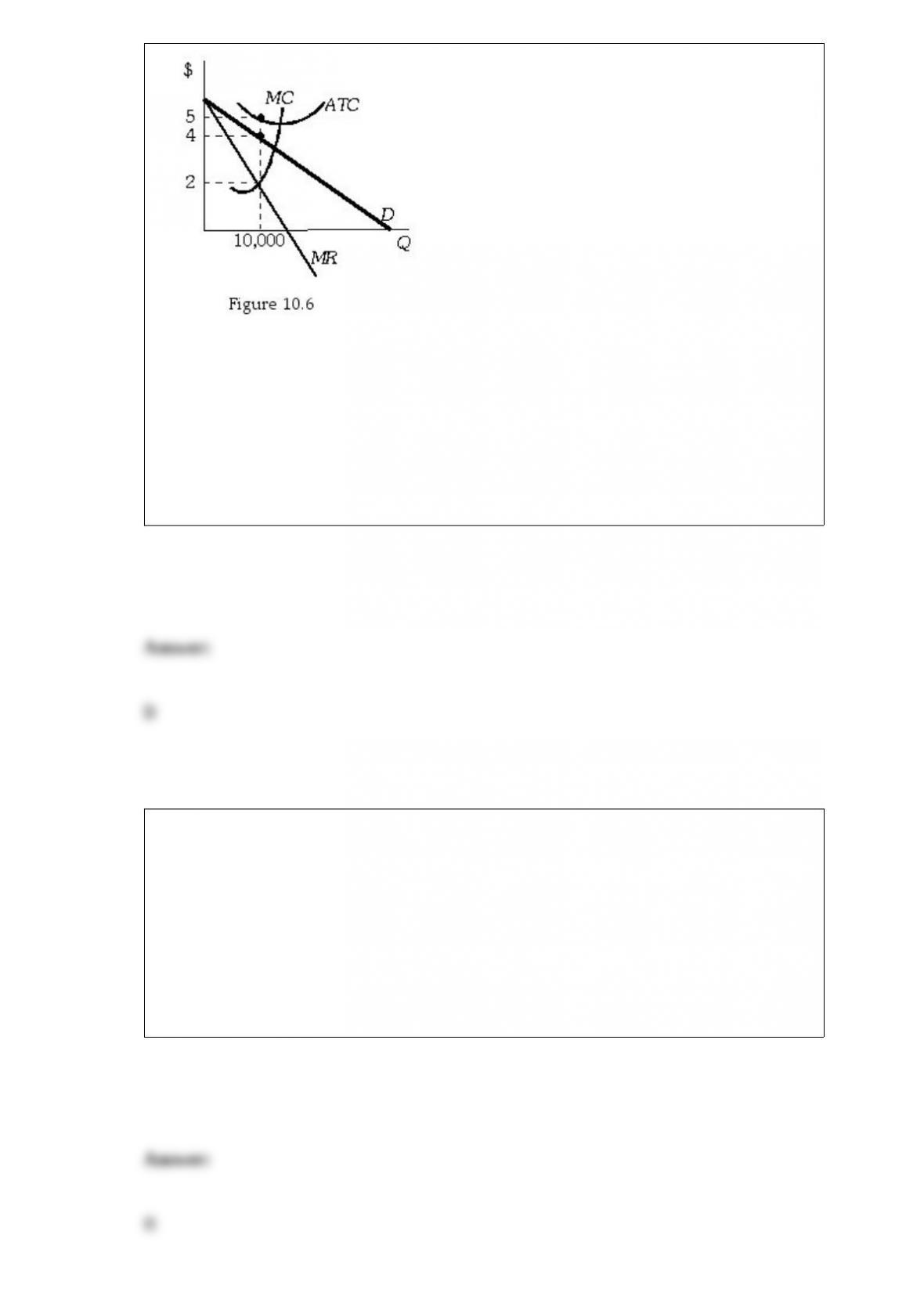
A) is $2.
B) is $4.
C) is $5.
D) is approximately $4.50.
If a person drives less carefully after purchasing automobile insurance:
A) it is due to adverse selection.
B) moral hazard exists.
C) the person’s insurance deductible must be large.
D) the insurance company must have perfect information.
Studies of real world markets suggest that prices and the number of firms of
comparable size in a market are:
A) positively related.
B) negatively or inversely related.
C) not related.
D) sometimes negatively or inversely related, but usually positively related.
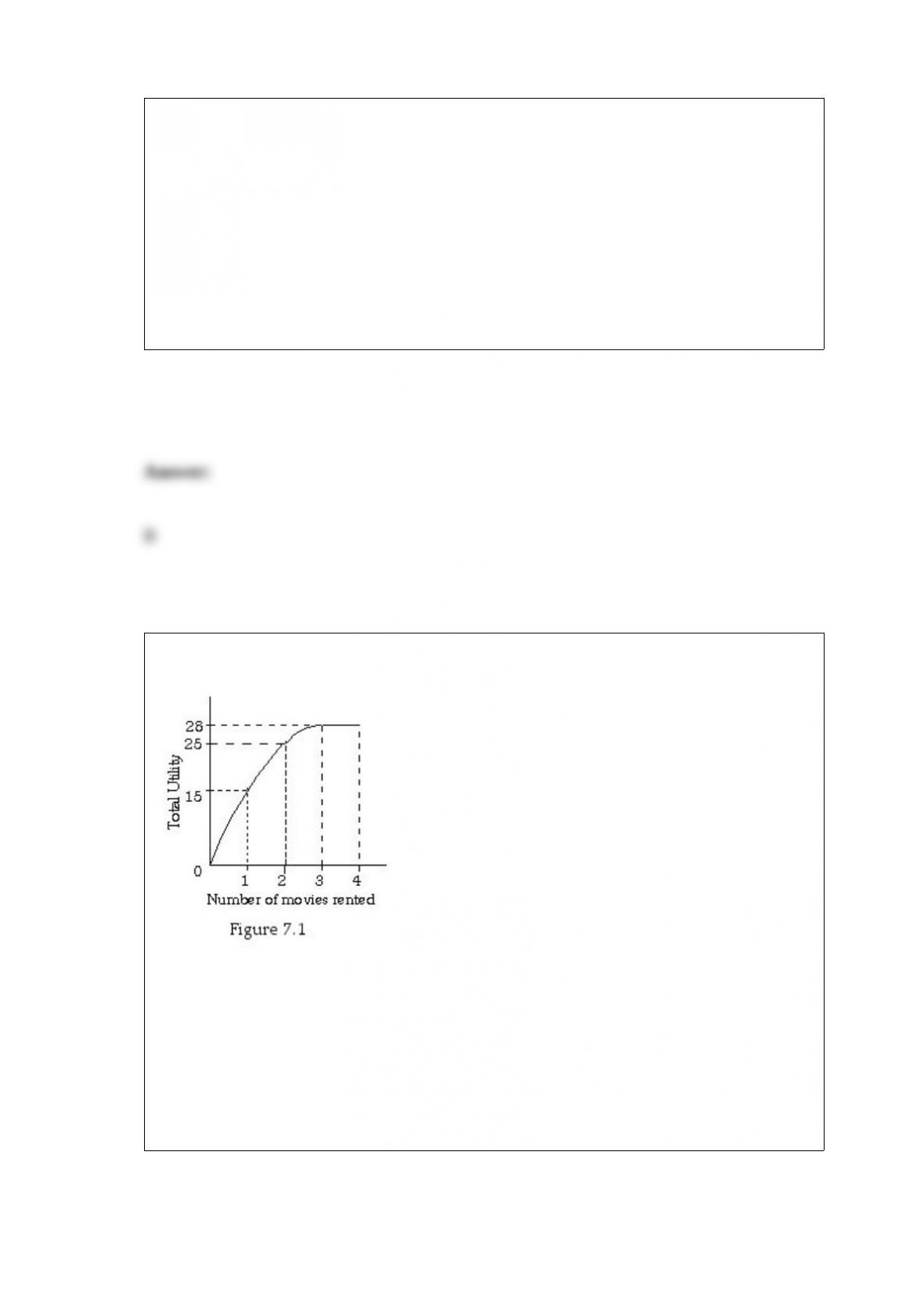
Refer to Figure 7.1. The marginal utility of the second movie rental is:
A) 10.
B) 12.5.
C) 25.
D) 40.

Disposable income is defined as:
A) all earnings received from labor and real estate markets.
B) all income from stocks, bonds, and real estate.
C) market income plus government transfers minus taxes paid.
D) all income minus contributions to 401K accounts and IRAs.
Suppose that in 2011, 4 million plasma TVs were purchased at $950 each, while in
2012, 3 million plasma TVs were purchased at $800 each. What might have caused this
change?
A) The price of LCD TVs (a substitute for plasma TVs) fell.
B) The price of LCD TVs (a substitute for plasma TVs) rose.
C) Plasma TV manufacturing technology increased.
D) Plasma TV manufacturing technology decreased.
Which of the following companies was broken up by the government?
A) American Tobacco
B) Office Depot
C) Wonder Bread
D) Southwest Airlines
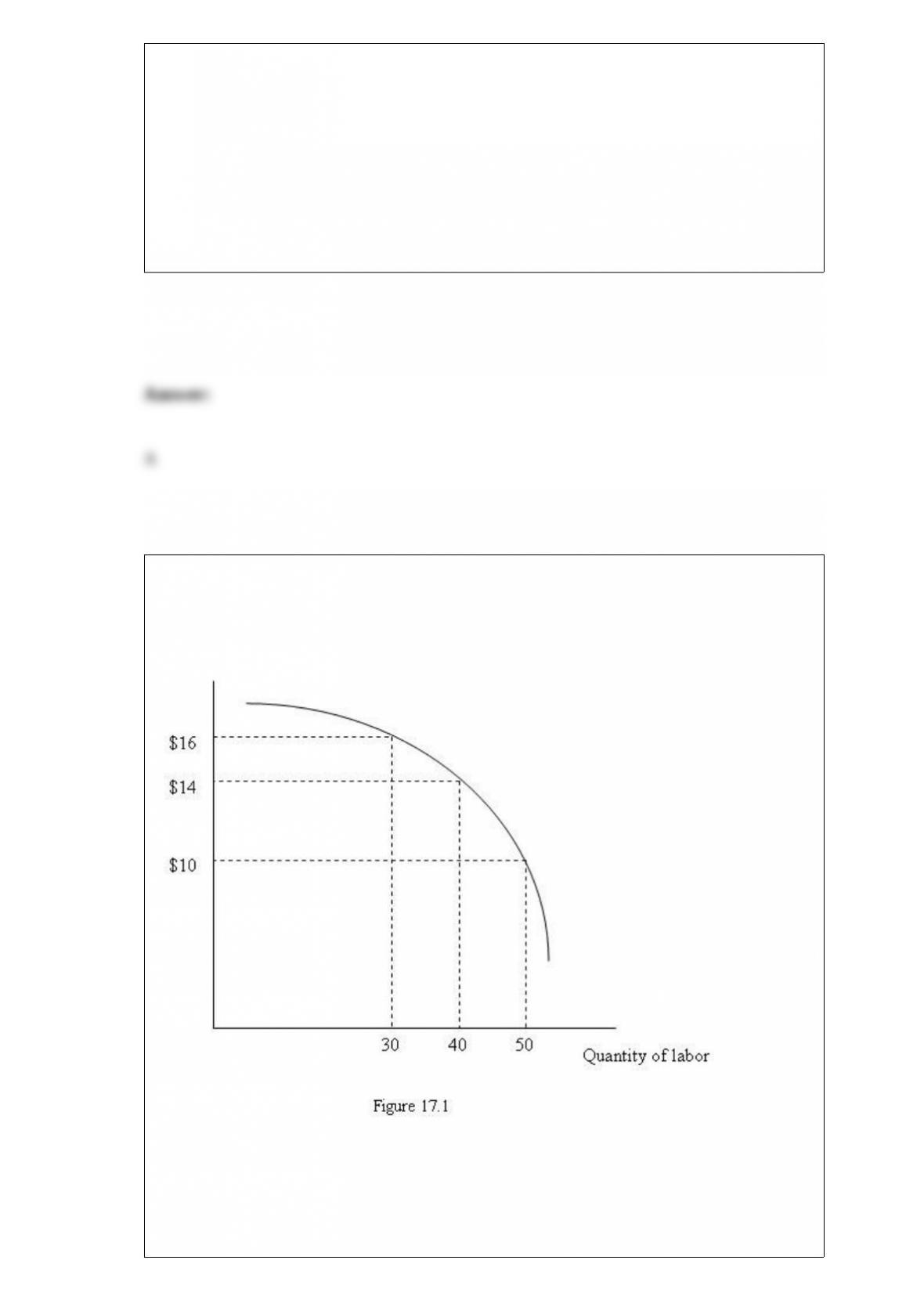
Figure 17.1 depicts a firm’s marginal revenue product curve. Why does the marginal
revenue product of labor decrease faster as the firm increases its use of labor by 10
hours?
A) because the marginal product of labor decreases at an increasing rate
B) because the marginal product of labor decreases at a decreasing rate

C) because the marginal product of labor increases at an increasing rate
D) because the marginal product of labor increases at a decreasing rate
The principle of opportunity cost:
A) is more relevant for firms than for individuals.
B) only refers to monetary payments.
C) is only relevant in economics.
D) is applicable to all decision-making.
Suppose the wage rate in a certain industry falls, and firms hire more workers. The best
explanation of this is that labor:
A) demand fell.
B) demand increased.
C) supply fell.
D) supply increased.

Which of the following tend to reduce economic uncertainty?
A) unemployment insurance
B) health insurance
C) social security
D) All of the above are correct.
Which of the following trade agreements provides for the development of a single
market among its members?
A) North American Free Trade Agreement
B) World Trade Organization
C) European Union
D) Asian Pacific Economic Cooperation

When Tom’s income decreases, he purchases more hamburgers. We can conclude that
for Tom, hamburger is a(n) ________ good.
A) substitute
B) complementary
C) normal
D) inferior
In a constant cost industry, an increase in price causes:
A) some firms to exit the industry.
B) quantity supplied to remain constant.
C) some firms to enter the industry.
D) price controls.
If an economy is fully utilizing its resources, it can produce more of one product only if
it:
A) doubles manufacturing of the product.
B) produces less of another product.

C) adds more people to the labor force.
D) reduces the prices of the most expensive products.
________ occurs when a firm is shifting part of its production to another country.
A) Outsourcing
B) Importing
C) Exporting
D) All of the above are correct.
The main reason why the government enforces contracts and maintains a legal system
that punishes those who violate contracts is:
A) to facilitate exchange.
B) to decrease imperfect competition.
C) to decrease imperfect information.
D) to increase uncertainty.
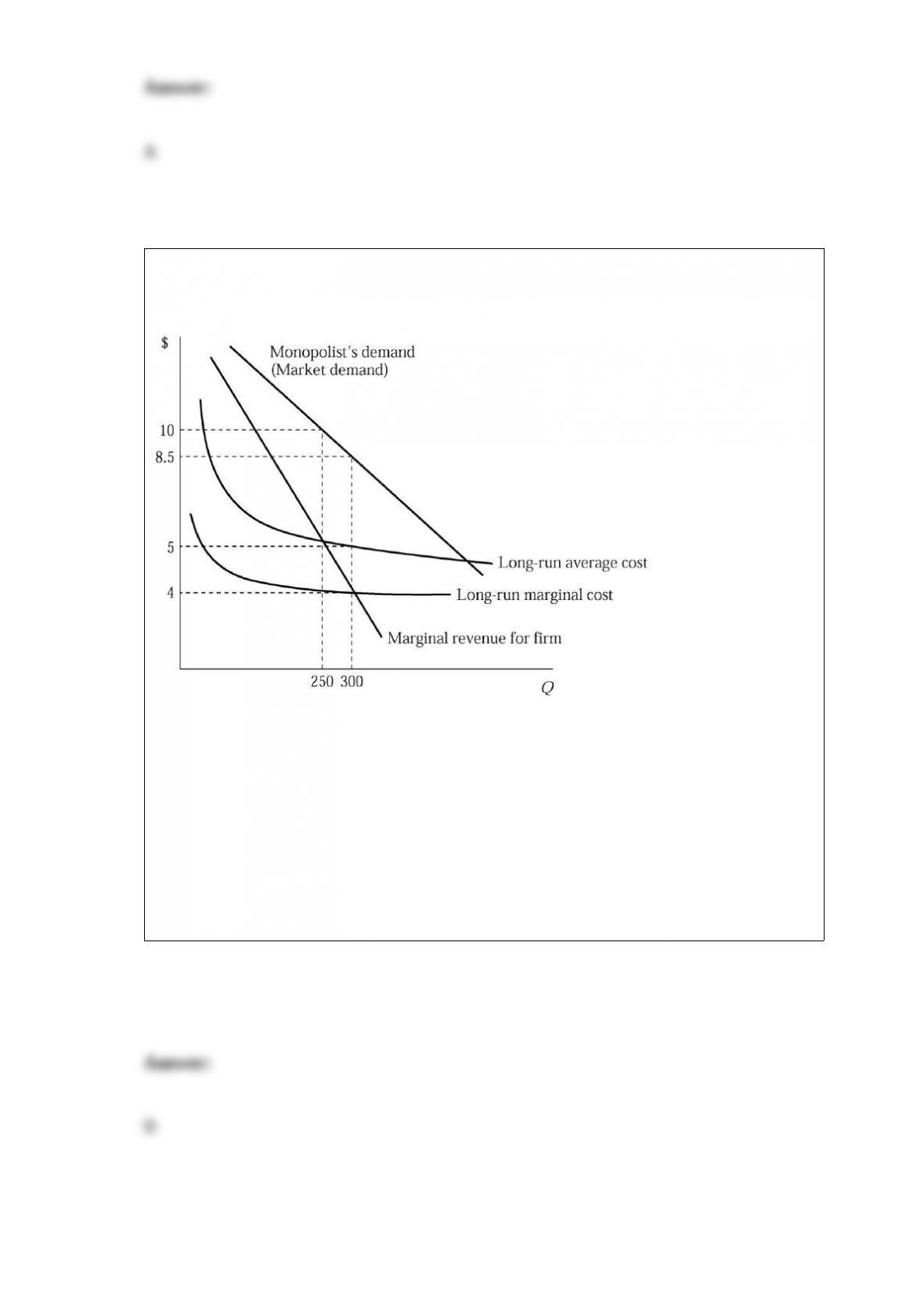
Figure 11.2 shows demand and costs for a monopolistically competitive firm. In the
long run we expect:
Figure 11.2
A) the firm to produce more output at a higher price.
B) the firm to charge a price which is equal to its average cost of production.
C) the firm to experience a decrease in the average cost of production.
D) the firm to earn a greater profit.

Price discrimination is when a firm charges:
A) the same price to all consumers.
B) different prices for different goods to different consumers.
C) different prices for the same goods to different consumers.
D) None of the above is correct.
Relative to a competitive market equilibrium, the profit maximizing quantity chosen by
a monopolist will result in a deadweight loss because:
A) the monopolist will produce at a quantity lower than the competitive equilibrium.
B) the monopolist will produce at a quantity higher than the competitive equilibrium.
C) the monopolist will charge a price lower than the competitive equilibrium.
D) the monopolist will keep producing at a quantity even though the MR < MC.
An action that is the best choice under all conditions is known as a:
A) profit-maximizing strategy.
B) dilemma.

C) trigger strategy.
D) dominant strategy.
Recall the application about the failure of the salt cartel, why did the salt cartels around
the 19th century fail to get established, even though they paid new firms not to produce
salt for a year?
A) Individual firms cheated on the cartel by selling outside the cartel.
B) Artificially high price also caused new firms to enter the market.
C) Salt consumers found substitutes and brought the price of salt down.
D) A and B are correct.