
1) according to the j-curve effect, currency appreciation:
a.decreases a trade surplus
b.increases a trade surplus
c.decreases a trade surplus before increasing a trade surplus
d.increases a trade surplus before decreasing a trade surplus
2) according to the product life cycle model, comparative advantage shifts from
cheap-labor countries to high-technology countries after a manufactured good becomes
standardized.
a.true
b.false
3) open economies have more:
a.competition
b.firm turnover
c.new firms entering the market
d.all of these
4) current trade rules permit countries to enact measures to protect the health and safety
of their citizens as long as all goods are treated equally, the tobacco companies argue.
a.true
b.false
5) which example of market expectations causes the dollar to depreciate against the
yen–expectations that the u.s. economy will have:
a.faster economic growth than japan
b.higher future interest rates than japan

c.less rapid money supply growth than japan
d.lower inflation rates than japan
6) by decreasing the relative production costs of u.s. companies, a dollar appreciation
tends to lower u.s. export prices in foreign-currency terms, which induces an increase in
the amount of u.s. goods exported abroad.
a.true
b.false
7) the equilibrium prices and quantities established after trade are fully determinate if
we know:
a.the location of all countries’ indifference curves
b.the shape of each country’s production possibilities curve
c.the comparative costs of each trading partner
d.the strength of world supply and demand for each good
8) because the value of the sdr is tied directly to the value of the u.s. dollar, a 10 percent
dollar depreciation would result in a 10 percent decrease in the sdr’s value.
a.true
b.false
9) regarding the applicability of free trade to cigarettes, it is correct to say:
a.the rules of free trade apply to cigarettes
b.the rules of free trade should not apply to cigarettes
c.a and b are the topic of current debate
d.there are special rules applying to cigarettes world-wide
10) the high point of u.s. protectionism occurred with the passage of the kennedy act in
the 1960s.
a.true
b.false
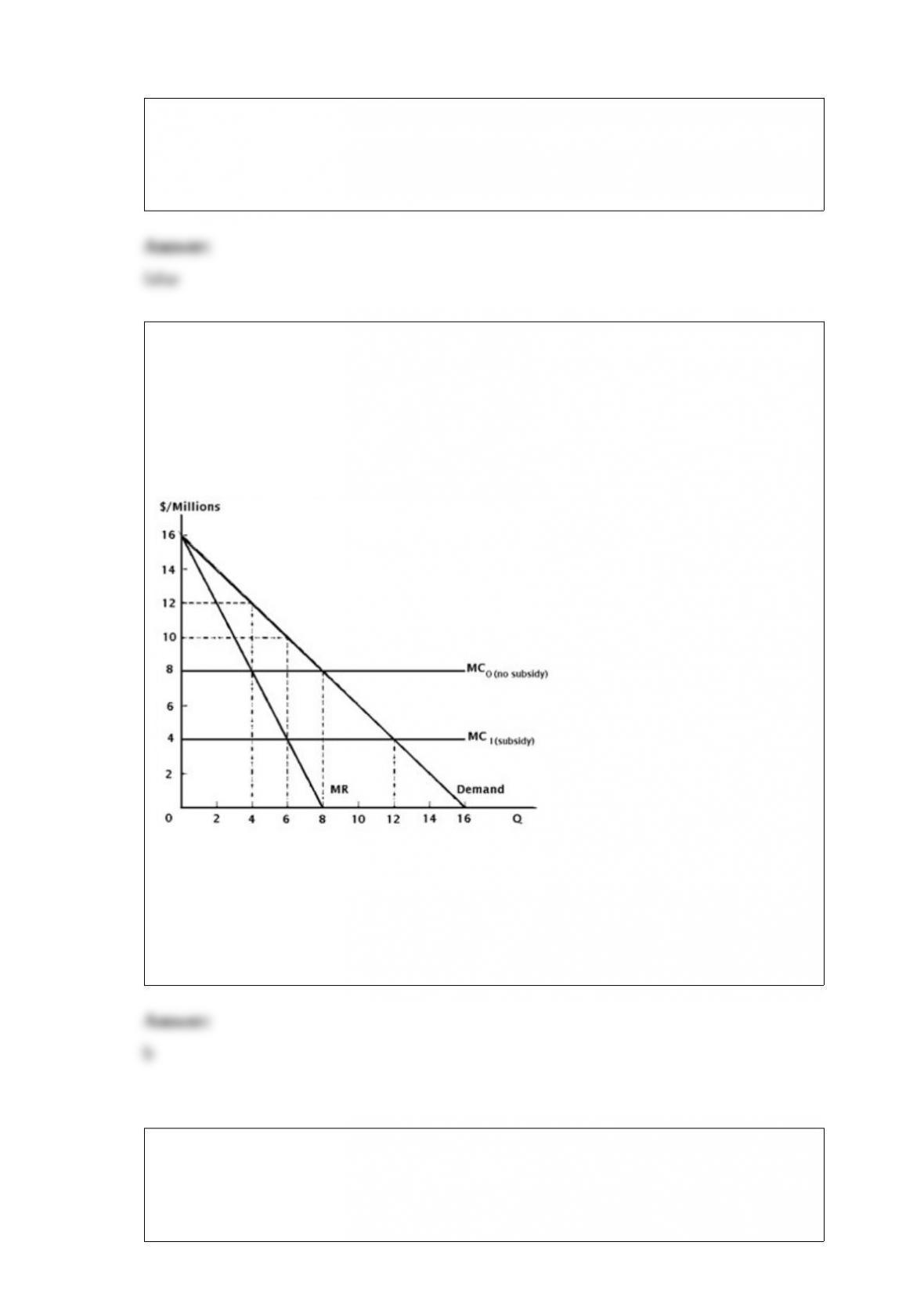
11) assume boeing inc. (of the united states) and airbus industrie (of europe) rival for
monopoly profits in the canadian aircraft market. suppose the two firms face identical
cost and demand conditions, as seen in figure 6.1.
figure 6.1. strategic trade policy: boeing versus airbus
consider figure 6.1. at the monopoly price as established by boeing, canadian
consumers realize $____ of consumer surplus from the availability of aircraft.
a.$4 million
b.$8 million
c.$12 million
d.$16 million
12) which approach predicts that if an economy operates at full employment and faces a
trade deficit, currency devaluation (depreciation) will improve the trade balance only if
domestic spending is cut, thus freeing resources to produce exports?
a.the absorption approach
b.the marshall-lerner approach
c.the monetary approach
d.the elasticities approach
13) which approach analyzes a nation’s balance of payments in terms of money demand
and money supply?
a.expenditures approach
b.absorption approach
c.elasticities approach
d.monetary approach
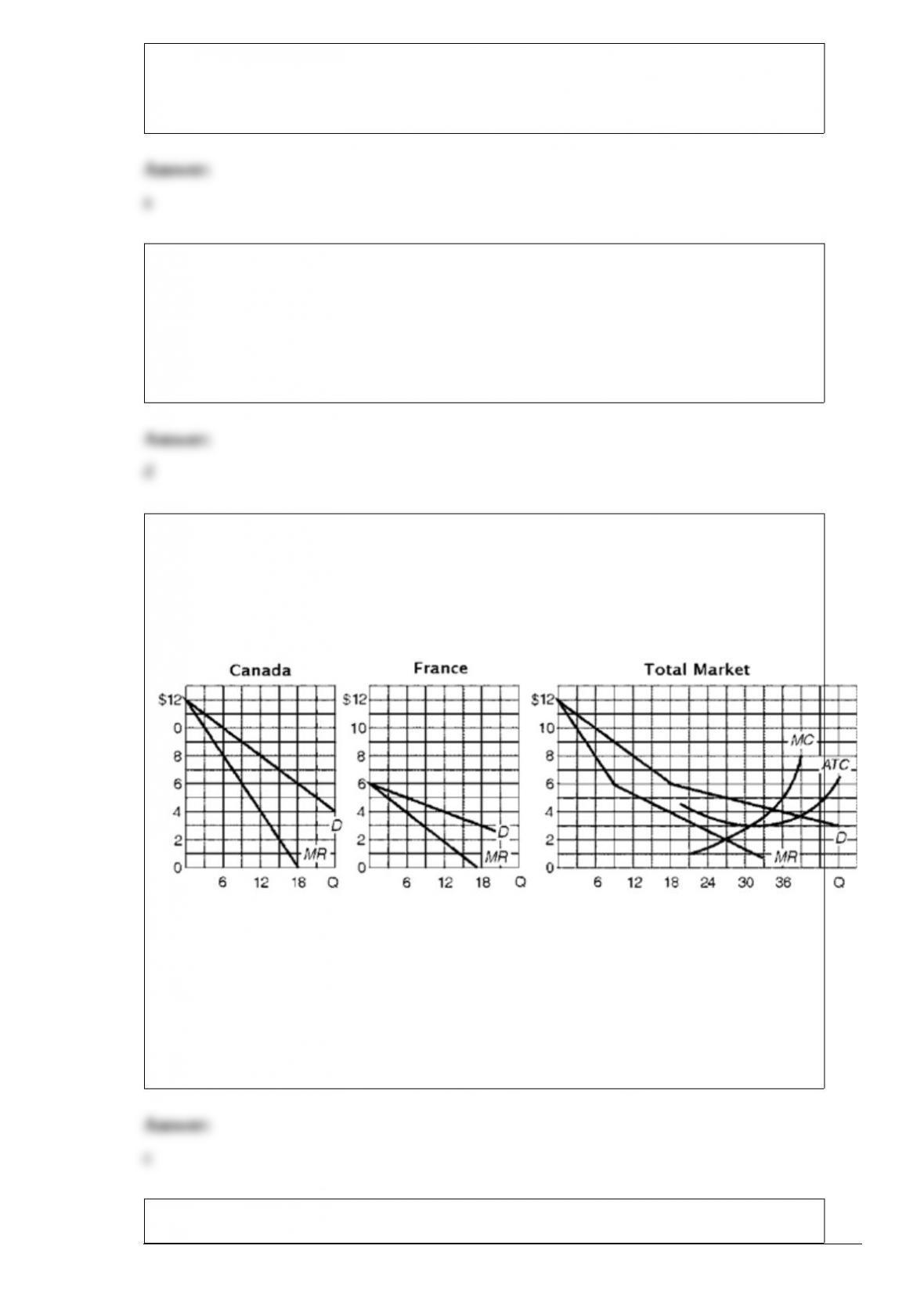
14) figure 5.2 illustrates the revenue and cost conditions of abc inc. which sells
calculators in canada and france.
figure 5.2. international dumping
referring to figure 5.2, consider if abc inc. sells 27 calculators at a price of $5 each,
realizing profits totaling $54. of this quantity, abc inc. sells ____ calculators in canada
and realizes revenues totaling $____; the firm sells ____ calculators in france and
realizes revenues totaling $____.
a.15, $35, 9, $45
b.15, $45, 9, $35
c.21, $105, 6, $30
d.21, $30, 6, $105
15) although free trade provides benefits for consumers, it is often argued that import

protection should be provided to domestic producers of strategic goods and materials
vital to the nation’s security.
a.true
b.false
16) during the era of dollar appreciation, in the 1980s, a main reason why the dollar did
not fall in value was:
a.flows of foreign investment into the united states
b.rising price inflation in the united states
c.a substantial decrease in u.s. imports
d.a substantial increase in u.s. exports
17) in the market for british pounds the demand is represented by d0 and supply by s0.if
the exchange rate is flexible and the demand for pounds increases to d1, us monetary
authorities will need to
a.supply 8 million pounds to the market
b.supply 4 million pounds to the market
c.supply 2 million pounds to the market
d.do nothing
18) in a country’s balance of payments, which of the following transactions are debits?
a.domestic bank balances owned by foreigners are decreased
b.foreign bank balances owned by domestic residents are decreased
c.assets owned by domestic residents are sold to nonresidents
d.securities are sold by domestic residents to nonresidents
19) small nations, such as angola and barbados, peg their currencies to the u.s. dollar
since the prices of many of their traded goods are determined in markets in which the
dollar is the key currency.
a.true
b.false