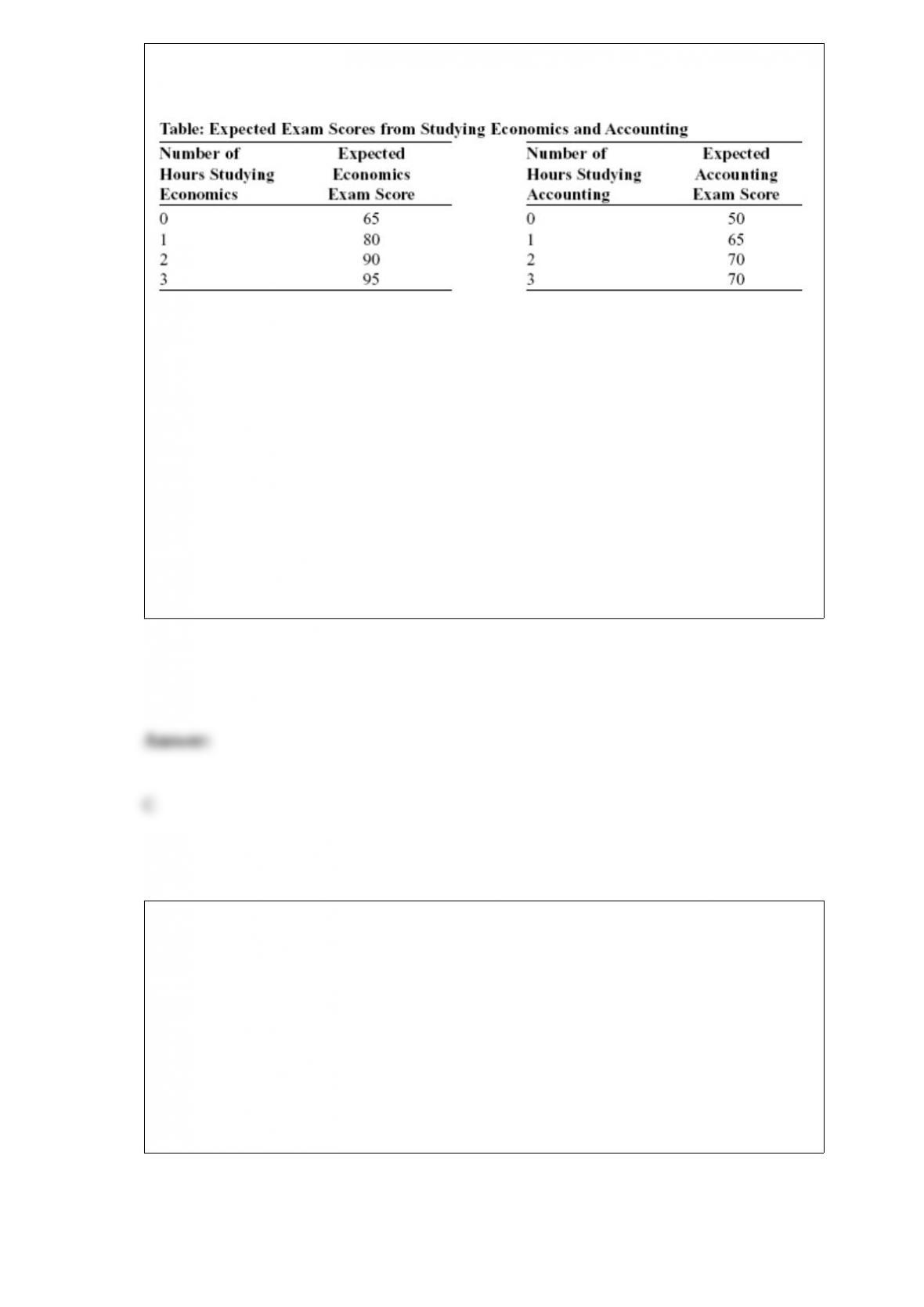
(Table: Expected Exam Scores from Studying Economics and Accounting) Look at the
table Expected Exam Scores from Studying Economics and Accounting. If you studied
for a total of three hours and divided your time to maximize your combined scores, you
would expect your combined scores to be _____ points.
A) 145
B) 150
C) 155
D) 165
A price floor above equilibrium will cause a larger surplus when demand is _____ and
supply is _____.
A) elastic; inelastic
B) inelastic; inelastic
C) elastic; elastic
D) perfectly inelastic; elastic
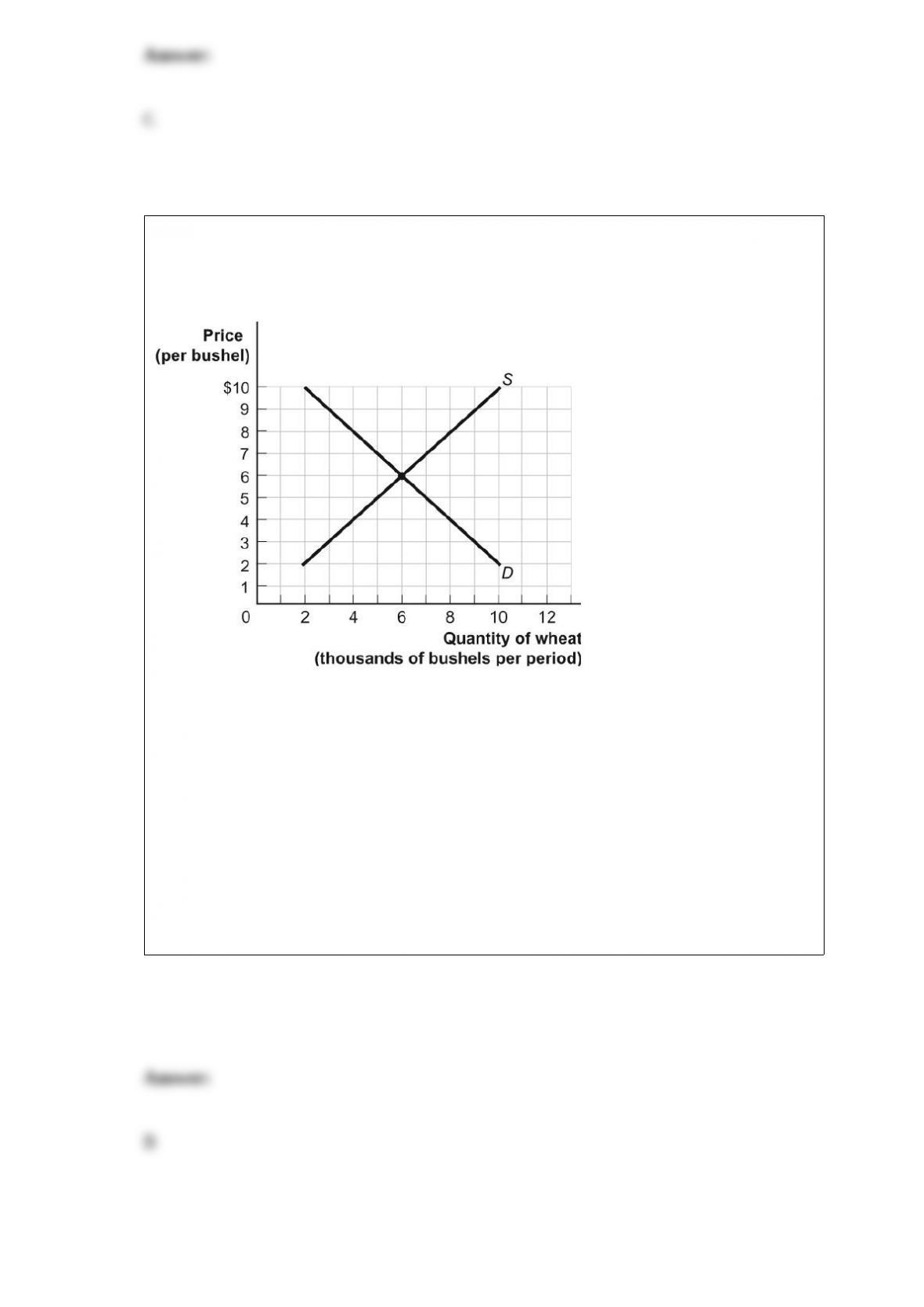
Figure: The Demand and Supply of Wheat
(Figure: The Demand and Supply of Wheat) Look at the figure The Demand and
Supply of Wheat. If there is a decrease in supply of 2,000 bushels at each price, the
equilibrium price and quantity will be _____ and _____ bushels, respectively.
A) $5; 5,000
B) $7; 5,000
C) $6; 4,000
D) $8; 6,000
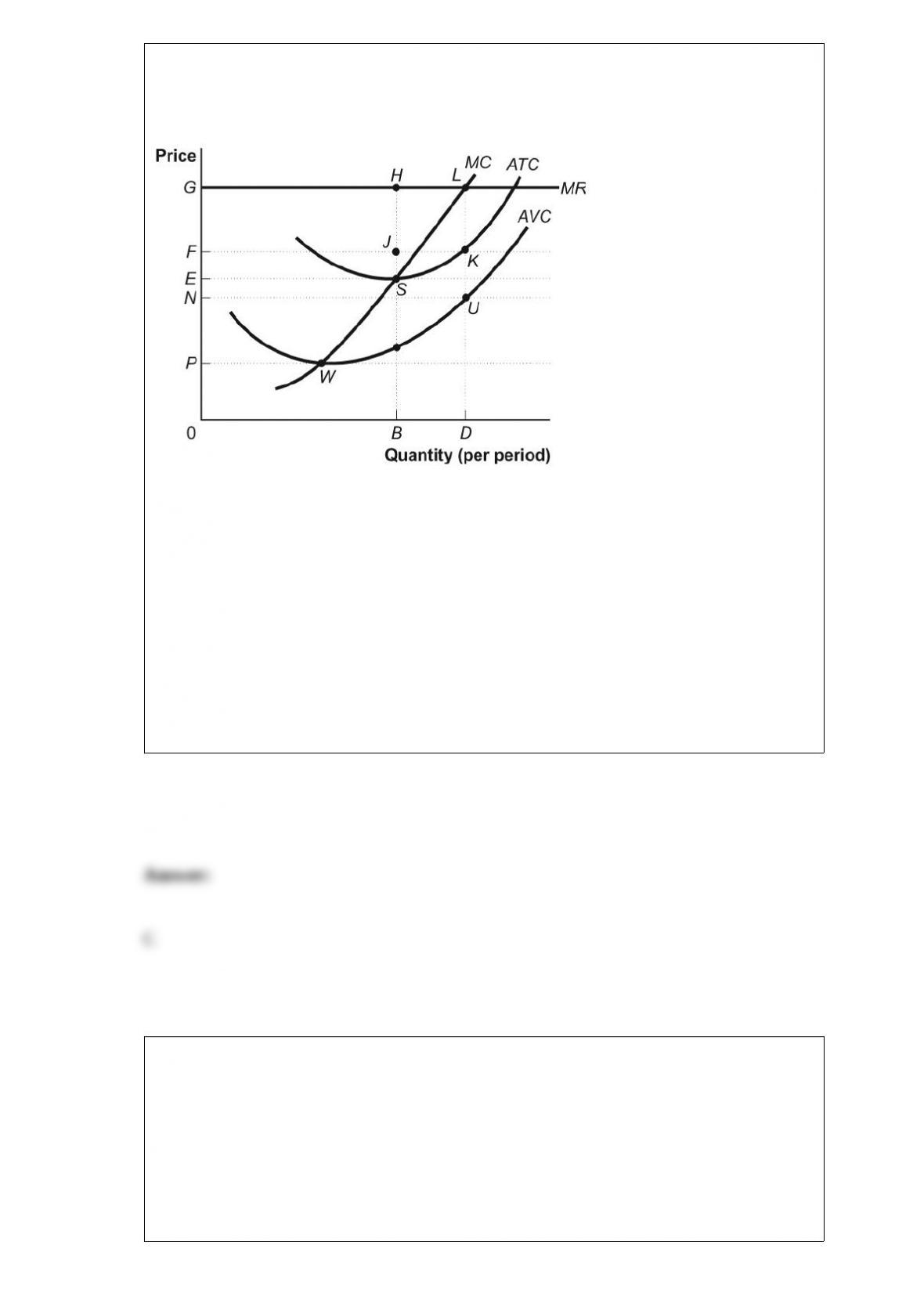
Figure: A Perfectly Competitive Firm in the Short Run
(Figure: A Perfectly Competitive Firm in the Short Run) Look at the figure A Perfectly
Competitive Firm in the Short Run. If the market price is G, the firm’s total cost of
producing its most profitable level of output is:
A) BS.
B) DK.
C) 0FKD.
D) 0ESB.
Luis is willing to sell his pool table for no less than $600, but if he gets $840, the
producer surplus Luis receives is:
A) $600.
B) $840.
C) $240.
D) $1,440.
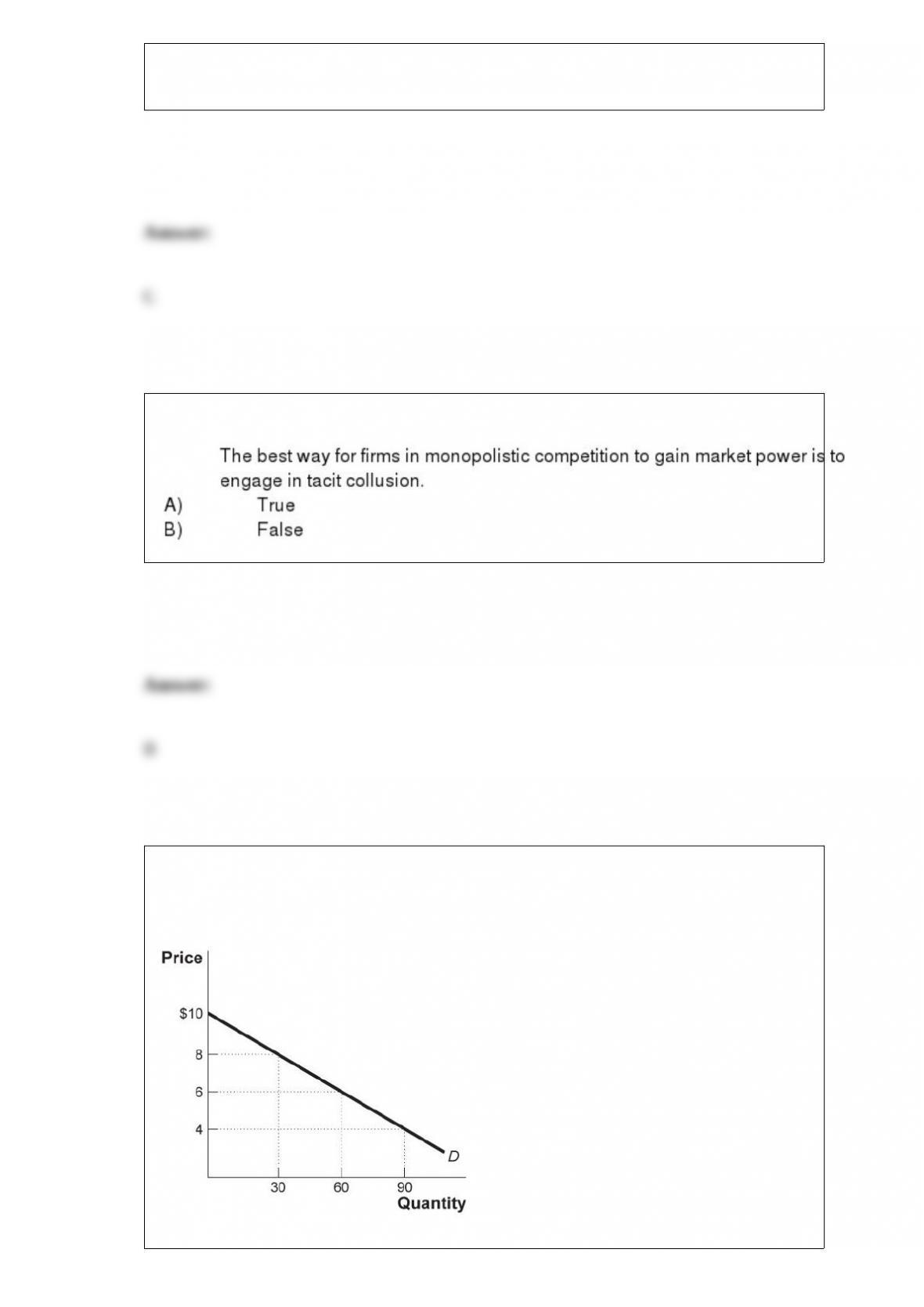
Figure: The Demand for e-Books

(Figure: The Demand for e-Books) If the price of e-Books decreases from $6 to $4,
total revenue _____, which means that demand is _____.
A) changes from $60 to $90; elastic
B) remains constant; unit-elastic
C) changes from $240 to $360; elastic
D) changes from $40 to $50; inelastic
Jim is being paid $7.25 an hour to work at a restaurant. In the circular flow this is an
example of a:
A) business selling goods and services in the product market.
B) household buying goods and services in the product market.
C) business buying resources in the factor market.
D) household buying a resource in the factor market.
To calculate the Herfindahl”Hirschman index (HHI), one must _____ market share(s) of
_____ in the industry.
A) sum the; the four largest firms
B) sum the; all of the firms
C) divide the; the largest firm by the sum of the four largest firms
D) sum the squared; all firms
The government might impose a price floor if _____ can make a strong moral or
political argument for _____ prices.
A) demanders; lower
B) suppliers; lower
C) demanders; higher
D) suppliers; higher
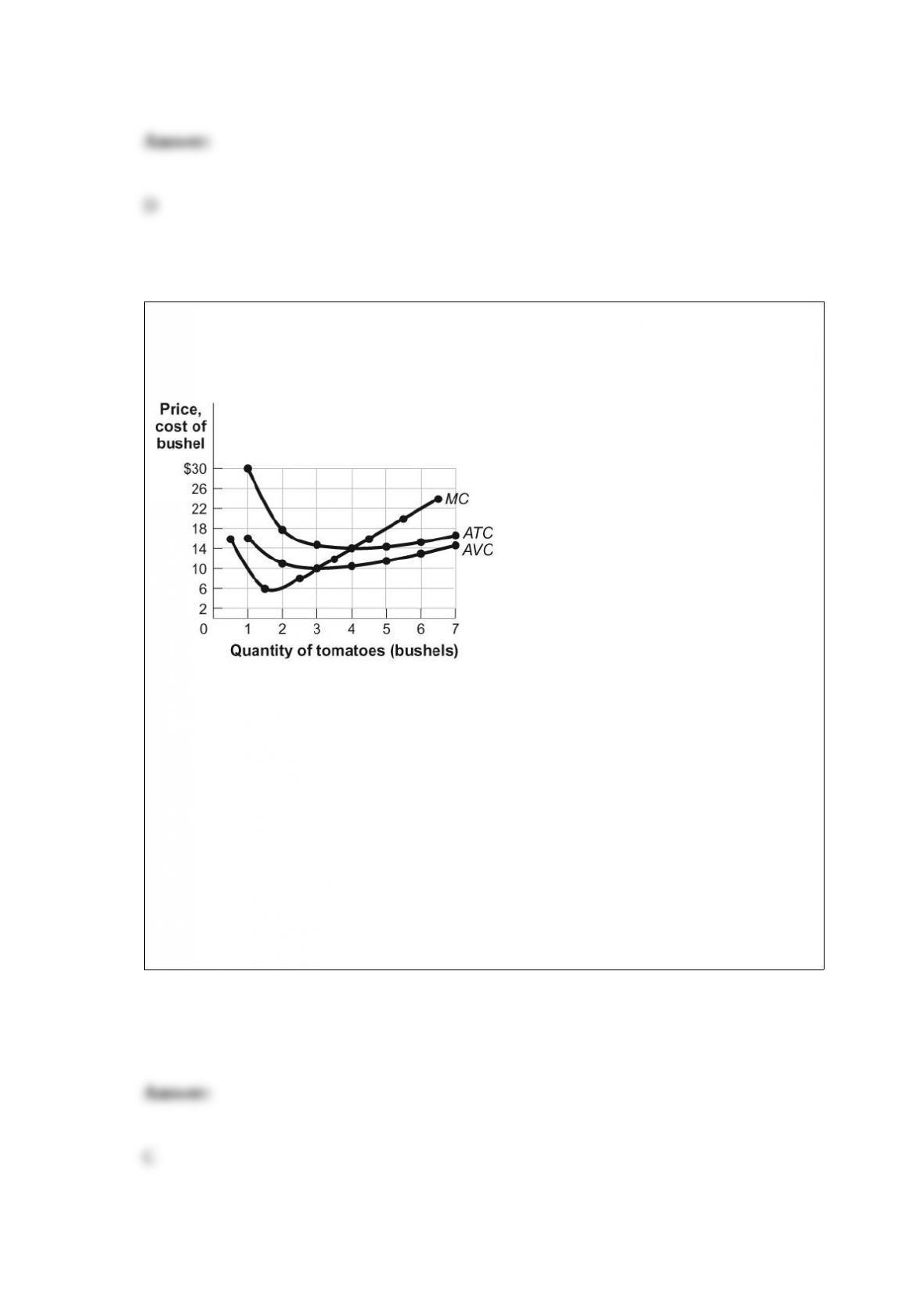
Figure: Revenues, Costs, and Profits for Tomato Producers III
(Figure: Revenues, Costs, and Profits for Tomato Producers III) Look at the figure
Revenues, Costs, and Profits for Tomato Producers III. The market for tomatoes is
perfectly competitive. If the market price of a bushel of tomatoes is $14, in the short run
the farmer’s profit-maximizing output is _____ bushels.
A) 2
B) 3
C) 4
D) 5

If the price of a good changes so that the income effect and the substitution effect
reinforce one another, this means the good is:
A) inferior.
B) always on the budget line.
C) normal.
D) not likely to be bought.
Which of the following is most likely to INCREASE consumer surplus in the market
for cotton T-shirts?
A) Weather provides for a bountiful cotton harvest.
B) Consumer incomes fall and cotton T-shirts are normal goods.
C) The price of polyester T-shirts falls.
D) The price of industrial sewing machines used to produce garments increases.
Figure: Pollution and Efficiency
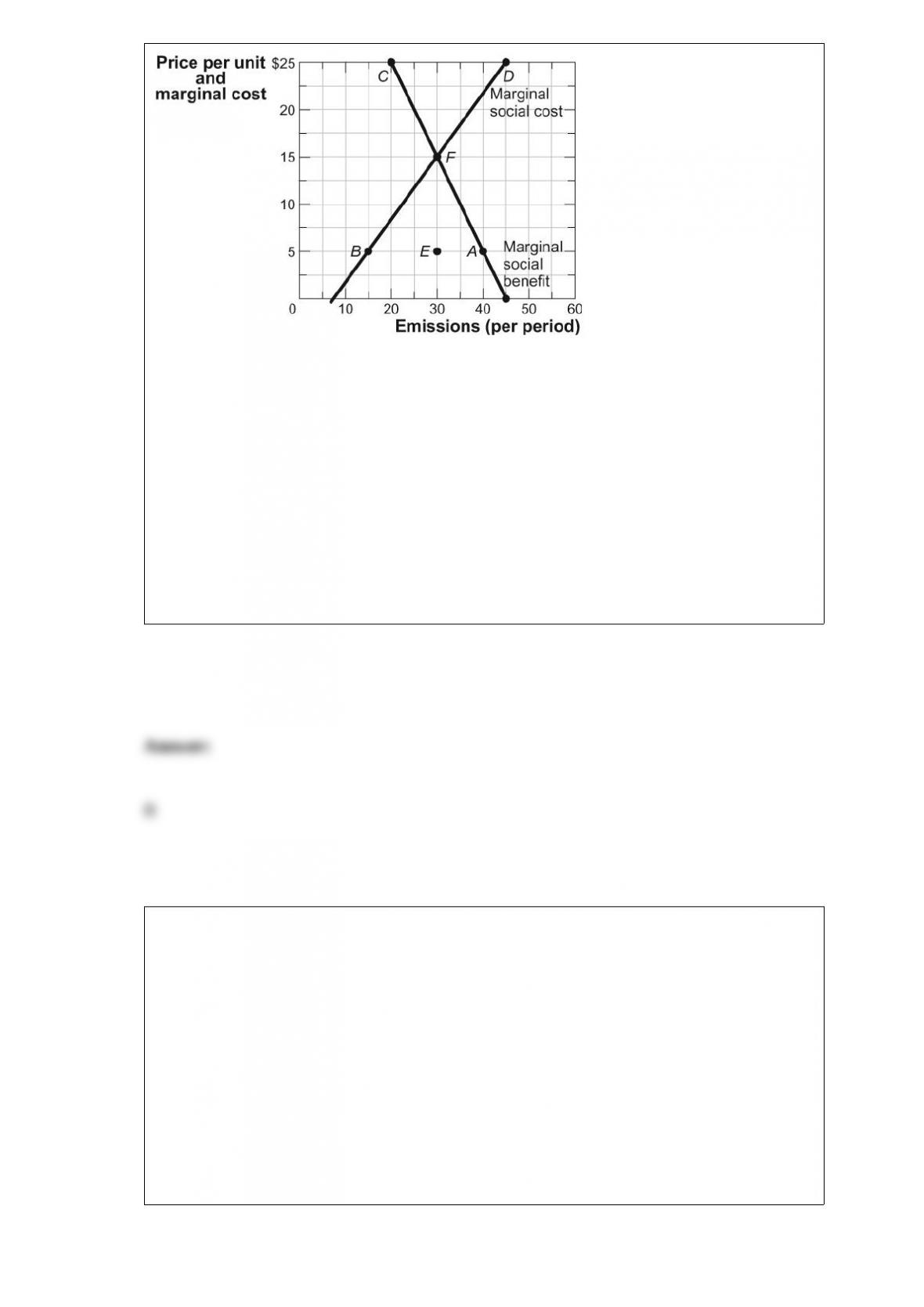
(Figure: Pollution and Efficiency) Look at the figure Pollution and Efficiency. In this
market, whose sulfur emission is a result of production, too much pollution is found
when the price is _____ and the quantity is _____.
A) $5; 15
B) $5; 40
C) $25; 20
D) $5; 30
Everyone benefits from street lighting, yet the marginal benefit to any one individual
usually falls short of the marginal cost. This is an example of:
A) individual actions whose side effects are not properly taken into account by the
market.
B) one party preventing mutually beneficial trades in an attempt to capture a greater
share of resources for itself.
C) the unsuitability of some goods for efficient management by markets.
D) regulating self-interest.
If you are willing to give up 8 units of good A (on the vertical axis) for 4 units of good
B (on the horizontal axis) and your level of satisfaction is unchanged, the marginal rate
of substitution of B for A is:
A) 0.5.
B) 2.
C) 1.
D) 5.

Scenario: Betty’s Cookie Shop
Betty runs a cookie shop where she sells cookies for $1 each. She employs five people,
each of whom worked a total of 500 hours last year; she paid them $10 per hour. Her
costs of equipment and raw materials add up to $75,000. Her business ability is
legendary, and other companies have offered to pay Betty $100,000 to come to work for
them. She also knows she could sell her cookie shop for $150,000. The bank in town
pays an annual interest rate of 3% on all funds deposited with it.
(Scenario: Betty’s Cookie Shop) Betty is trying to decide at what point she should stop
selling cookies, and she knows she cannot change the price of a cookie. She should stop
selling cookies if:
A) her economic profit is positive.
B) her explicit and implicit costs are less than her revenues.
C) her implicit costs are greater than her accounting profits.
D) her economic profit is equal to her accounting profit.
In the circular-flow diagram firms receive money for _____ in the _____ market.
A) selling goods and services; product
B) selling resources; product
C) selling resources; factor
D) selling goods and services; factor

An excise tax that the government collects from the producers of a good:
A) shifts the supply curve upward.
B) reduces revenue for the government.
C) has an effect similar to that of a tax subsidy.
D) shifts the supply curve downward.
Gwen is consuming the optimal consumption bundle of potatoes and steak. Call this
bundle A. Her income is $100, the price of steak is $10, and the price of potatoes is $1.
Put potatoes on the vertical axis and put steak on the horizontal axis. Her income
increases to $500, and the prices of steak and potatoes remain constant. With the
increase in income, Gwen changes her consumption of the two goods and now
maximizes utility at bundle B. If potatoes are inferior goods for Gwen,
A) at bundle B, Gwen consumes more potatoes.
B) at bundle B, Gwen consumes fewer steaks.
C) at both bundles, the relative price is 10.
D) at both bundles, Gwen consumes the same amount of potatoes and steaks.
The demand curve for a firm operating in a monopolistically competitive market is best
described as:
A) U-shaped.
B) upward-sloping.
C) downward-sloping.
D) horizontal.
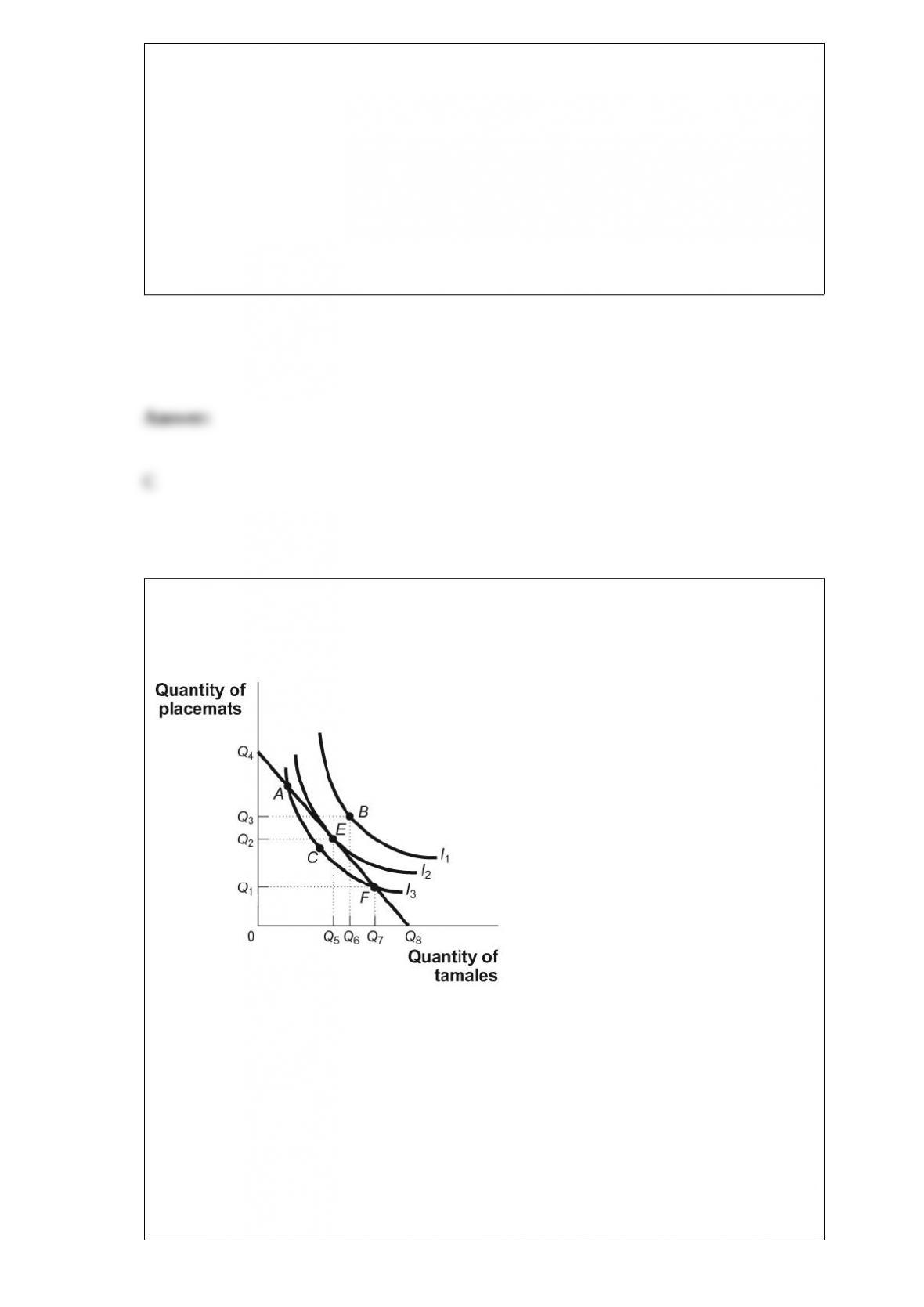
Figure: Consumer Equilibrium III
(Figure: Consumer Equilibrium III) Look at the figure Consumer Equilibrium III.
Which of the following statements is TRUE?
A) Q4 indicates the price of placemats.
B) Q8 indicates the price of tamales.
C) Points A and E represent the same level of total utility.

D) Kurt is better off at point E than at point A.
Suppose Indiana produces only steel and corn, with fixed amounts of land, labor, and
capital resources. Which of the following best sets the stage for economic growth?
A) The unemployment rate in Indiana rises from 5% to 6%.
B) The Midwest has a devastating drought.
C) The percentage of Indiana residents with a college degree rises from 25% to 30%.
D) The United States imports more and more low-cost steel from Asian countries.
If you wanted to make sure that your calculation of elasticity between two points was
the same regardless of your initial point, you would use:
A) the absolute value of elasticity.
B) supply elasticity.
C) the midpoint formula calculation of elasticity.
D) the point formula calculation of elasticity.

Quotas often:
A) result in few incentives to engage in illegal activities.
B) lead to deadweight losses resulting from a wedge between the price of sellers and
that of demanders.
C) lead to efficient market outcomes.
D) are necessary to increase the quantity of the goods in the market.
Which of the following U.S. welfare programs is an in-kind benefit that is NOT
means-tested?
A) Medicaid
B) Medicare
C) food stamps
D) Social Security income

Suppose the government decides to fight obesity in America by imposing an excise tax
based on the saturated fat content of food. The most likely effect of this tax would be to:
A) lower the profits of ice cream suppliers.
B) decrease revenue for the government.
C) decrease black market activity.
D) raise the profits of ice cream suppliers.
The supply curve for a good will be more elastic if:
A) spending on the good accounts for a large share of a consumer’s income.
B) the good is a luxury item.
C) production inputs are readily available at a relatively low cost.
D) there is very little time for producers to respond to a price change.
If your farm had the only known source of a rare cocoa bean needed to make
chocolate-covered peanuts, your monopoly would result from:
A) control of a scarce resource or input.
B) technological superiority.

C) increasing returns to scale.
D) government-set barriers.