1) which of the following has been an outcome of the north american free trade
agreement (nafta)?
a.a lower standard of living in canada, mexico, and the united states
b.lower wages in the united states and canada
c.increased trade among canada, mexico, and the united states
d.lower wages and reduced employment in mexico
2) Over the long run, real earnings per worker can increase only at about the same rate
as the economy’s rate of growth of:
A.total output.
B.stock of capital.
C.output per worker.
D.international trade.
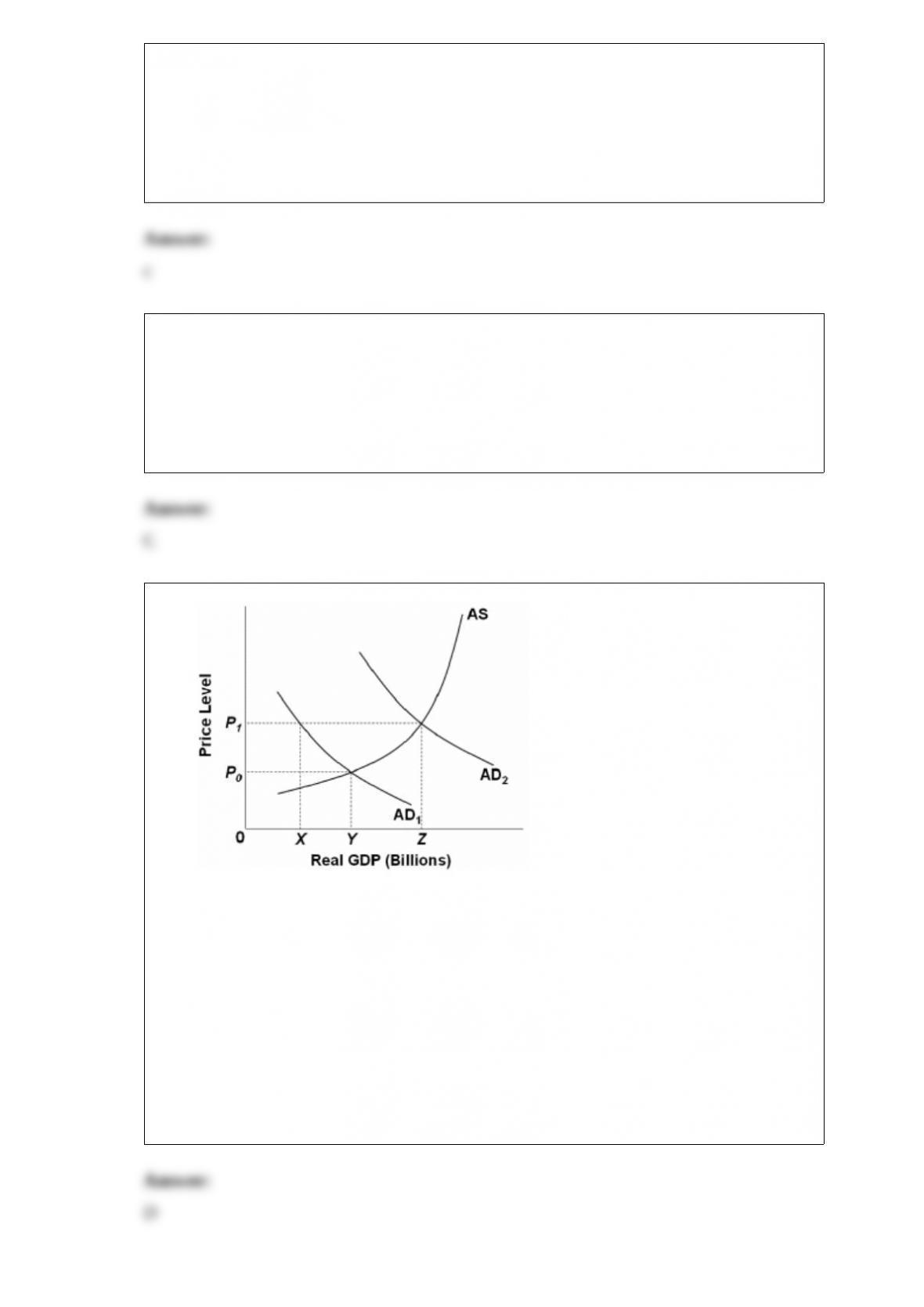
3)
Refer to the above figure. Suppose that the economy is currently operating at the
intersection of AS and AD2, and that the full employment level of output is Y. Because
of the ratchet effect:
A.it is impossible to enact fiscal policy that will both reduce output to Y and reduce
demand-pull inflation.
B.fiscal policy will need to be more contractionary to reduce output to Y than if no
ratchet effect occurred.
C.tax increases will be more effective at reducing demand-pull inflation than cuts in
government spending.
D.contractionary fiscal policy that shifts aggregate demand to AD1 will cause real GDP
to fall below its full employment level.
4) The retained earnings that corporations often use to finance R&D are also known as:
A.venture capital.
B.undistributed corporate profits.
C.dividends.
D.mutual funds.
5) The proposition that under some circumstances externalities can get resolved through
private negotiation is known as:
A.the paradox of externalities.
B.the median-voter theory.
C.the Coase theorem.
D.logrolling.
6) specialization in production is important primarily because it:
a.results in greater total output.
b.allows society to avoid the coincidence-of-wants problem.
c.allows society to trade by barter.
d.allows society to have fewer capital goods.
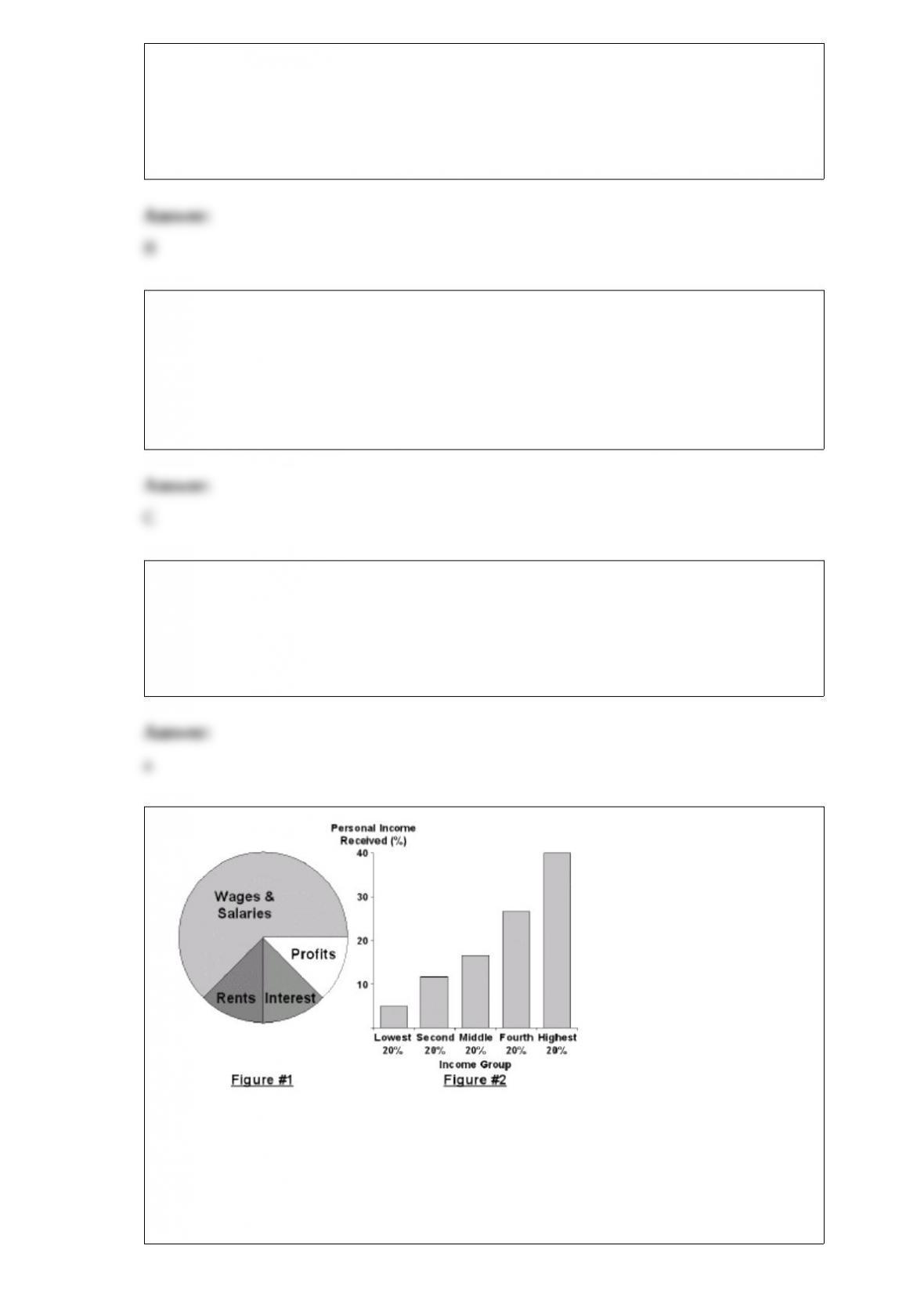
7)
in the above diagrams for a hypothetical economy, from figure 2 we can conclude that:
a.income is quite equally distributed.
b.wages are the main source of income.
c.the distribution of income has become more unequal over time.
d.the top one-fifth of all income receivers get about eight times as much income as the
lowest one-fifth.
8) According to monetarists, an expansionary fiscal policy:
A.will be ineffective because the interest rate will rise and crowd out private investment
spending.
B.should not be permitted so long as a public debt exists.
C.should be used only when unemployment exceeds 6 percent of the labor force.
D.will be effective, provided the money supply is held constant.
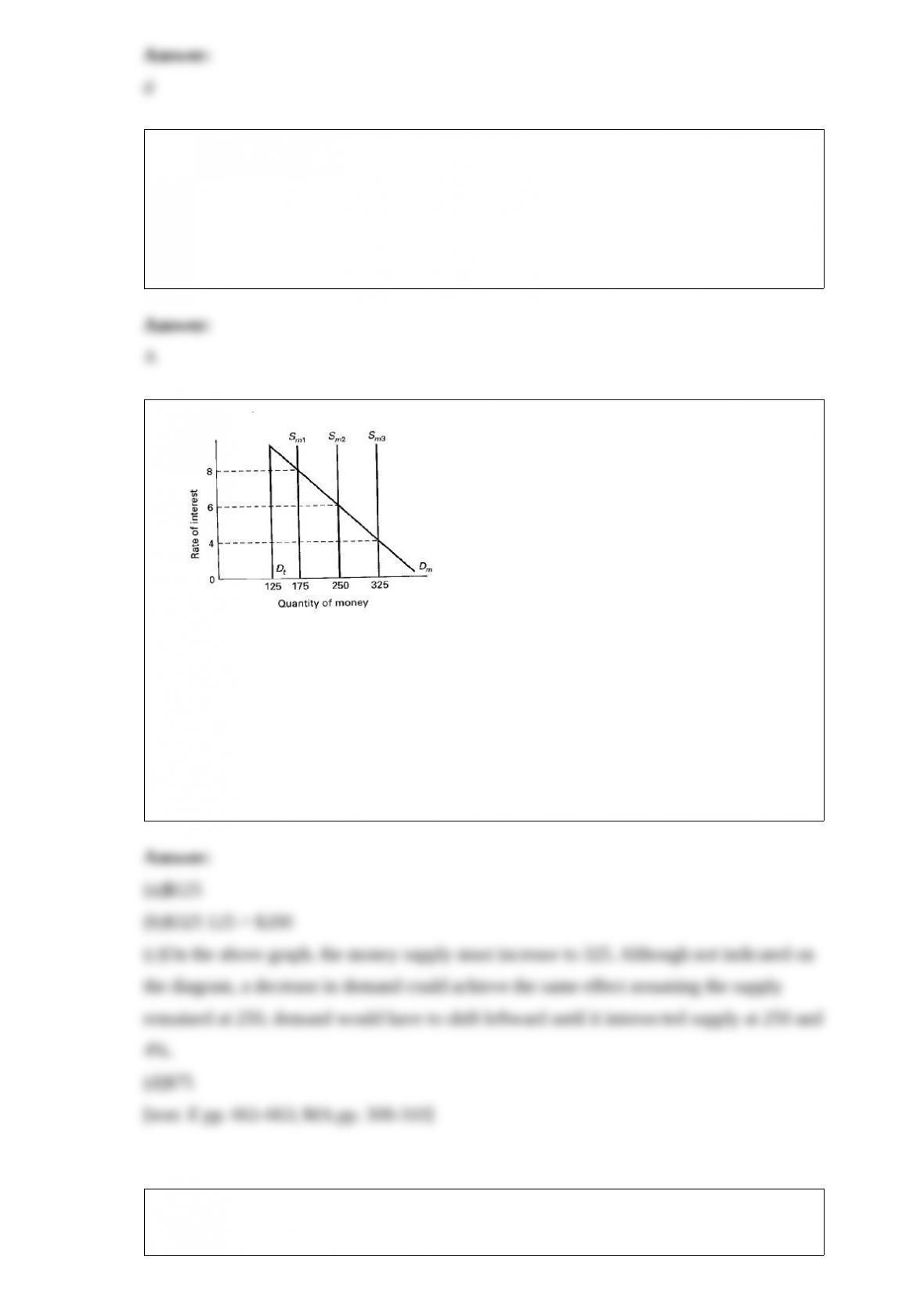
9) Use the graph below to answer the following
questions. Dt is the transactions demand for money, Dm is the total demand for money,
and Sm is the supply of money.
(a)What is the transactions demand for money in this market?
(b)What is the asset demand for money if the interest rate is 4%?
(c)If the money market is in equilibrium at 6%, describe the change that must occur for
the equilibrium rate to change to 4%.
(d)If the money market is in equilibrium at 6% and the money supply has increased to
Sm3, by how much has total demand for money changed?
10) Creative destruction is not automatic because:
A.there are major obstacles to the entry of new innovative firms into concentrated
industries.
B.consumer tastes are highly unstable.
C.corporate takeovers increase dynamic competition.
D.large firms rarely are technologically progressive.
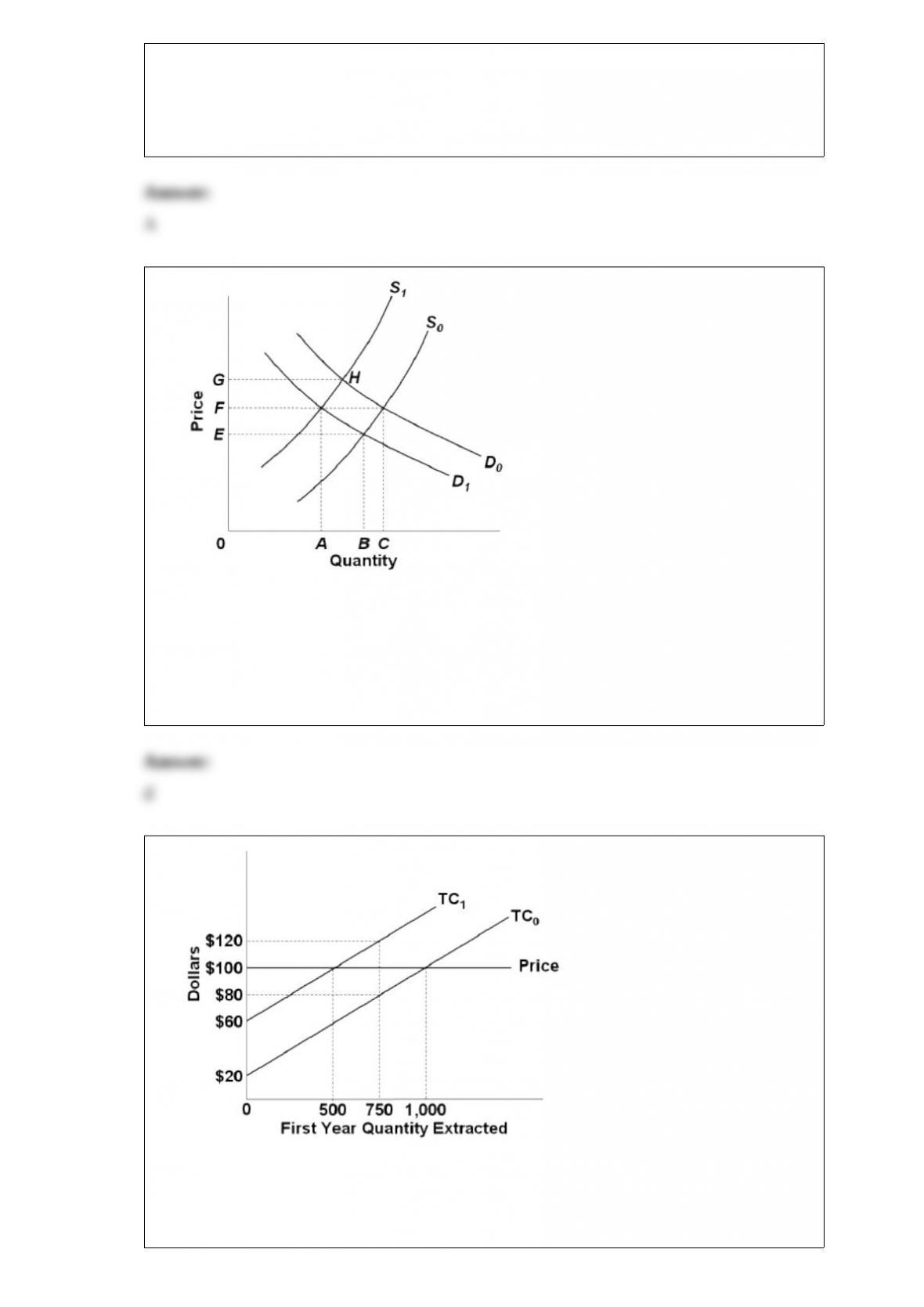
11)
refer to the above diagram, which shows demand and supply conditions in the
competitive market for product x. if supply is s1 and demand d0, then
a.at any price above 0g a shortage would occur.
b.0f represents a price that would result in a surplus of ac.
c.a surplus of gh would occur.
d.0f represents a price that would result in a shortage of ac.
12)
Refer to the diagram above. An increase in extraction costs could be shown by:
A.An increase in the first year quantity extracted.
B.A shift from TC1 to TC0.
C.A shift from TC0 to TC1.
D.An upward shift of the price line.
13) In the Microsoft antitrust case, the Federal government said in essence that:
A.the mere presence of monopoly violated the Sherman Act, irrespective of Microsoft’s
behavior.
B.Microsoft was a “bad monopoly.”
C.Microsoft was generally a “good monopoly,” but that its tying contracts involving
Internet Explorer violated the Clayton Act.
D.the case was similar to the U.S. Steel case of 1920.
14) marginal cost is the:
a.rate of change in total fixed cost that results from producing one more unit of output.
b.change in total cost that results from producing one more unit of output.
c.change in average variable cost that results from producing one more unit of output.
d.change in average total cost that results from producing one more unit of output.
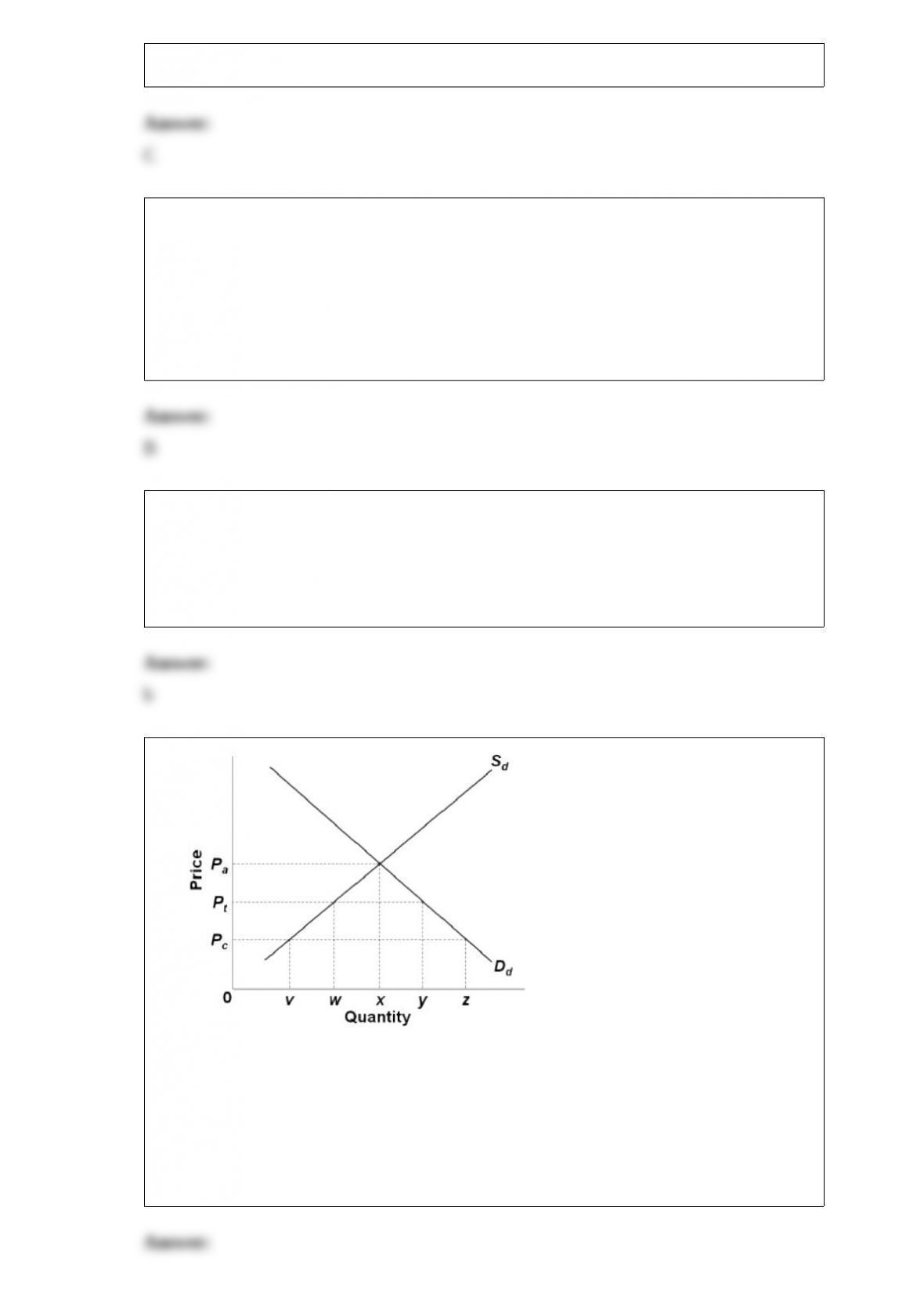
15)
Refer to the above diagram, where Sd and Dd are the domestic supply and demand for a
product and Pc is the world price of that product. With a per unit tariff of PcPt, the total
amount of tariff revenue collected on this product will be:
A.PaPt times wy
B.PcPa times x
C.PcPt times wy
D.PcPt times z

16) which of the following will shift the production possibilities curve to the right?
a.an increase in the unemployment rate from 6 to 8 percent
b.a decline in the efficiency with which the present labor force is allocated
c.a decrease in the unemployment rate from 8 to 6 percent
d.a technological advance that allows farmers to produce more output from given inputs
17) Public choice theory focuses on the economics of:
A.fiscal and monetary policy.
B.the behavior of business firms.
C.antitrust and regulatory policy.
D.government decision making, politics, and elections.