1) (Last Word) Construction of the first working computer “mouse” best exemplifies:
A.invention.
B.scientific determinism.
C.diffusion.
D.creative destruction.
2) graphically, consumer surplus is measured as the triangle:
a.under the demand curve and below the actual price.
b.under the demand curve and above the actual price.
c.above the supply curve and above the actual price.
d.above the supply curve and below the actual price.
3) (Consider This) Suppose that Susie creates a work of art and displays it in a public
place. Economists would expect:
A.those enjoying the art to contribute money to compensate Susie for her costs.
B.those enjoying the art to “free ride” since they cannot be made to bear any of the cost.
C.government to tax those entering the public place in order to pay Susie for her efforts.
D.asymmetric information to lead some to pay Susie while others do not.
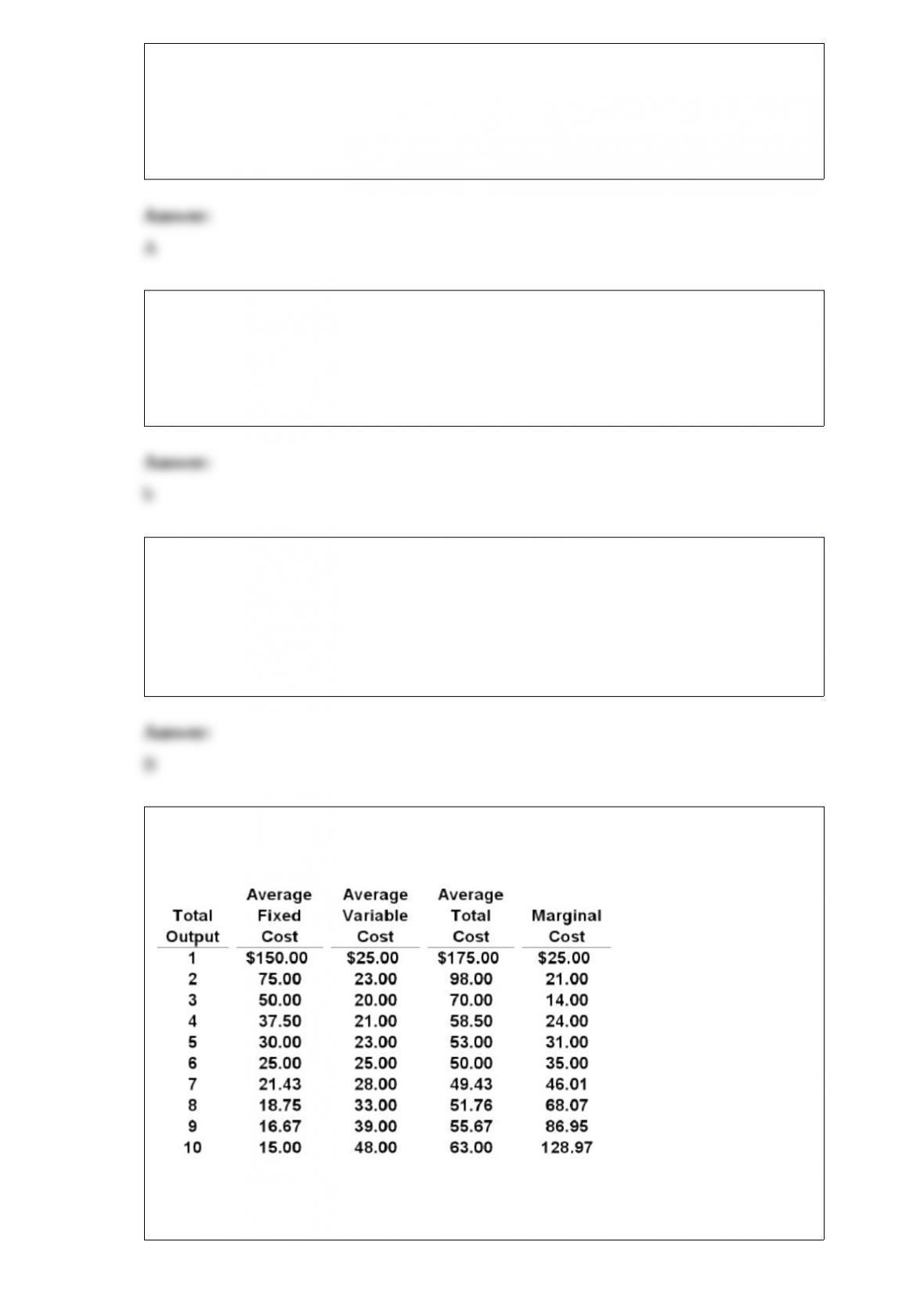
4) the following cost data for a firm that is selling in a purely competitive market.
refer to the above data. the marginal cost column reflects:
a.the law of diminishing returns.
b.the law of diminishing marginal utility.
c.diseconomies of scale.
d.economies of scale.
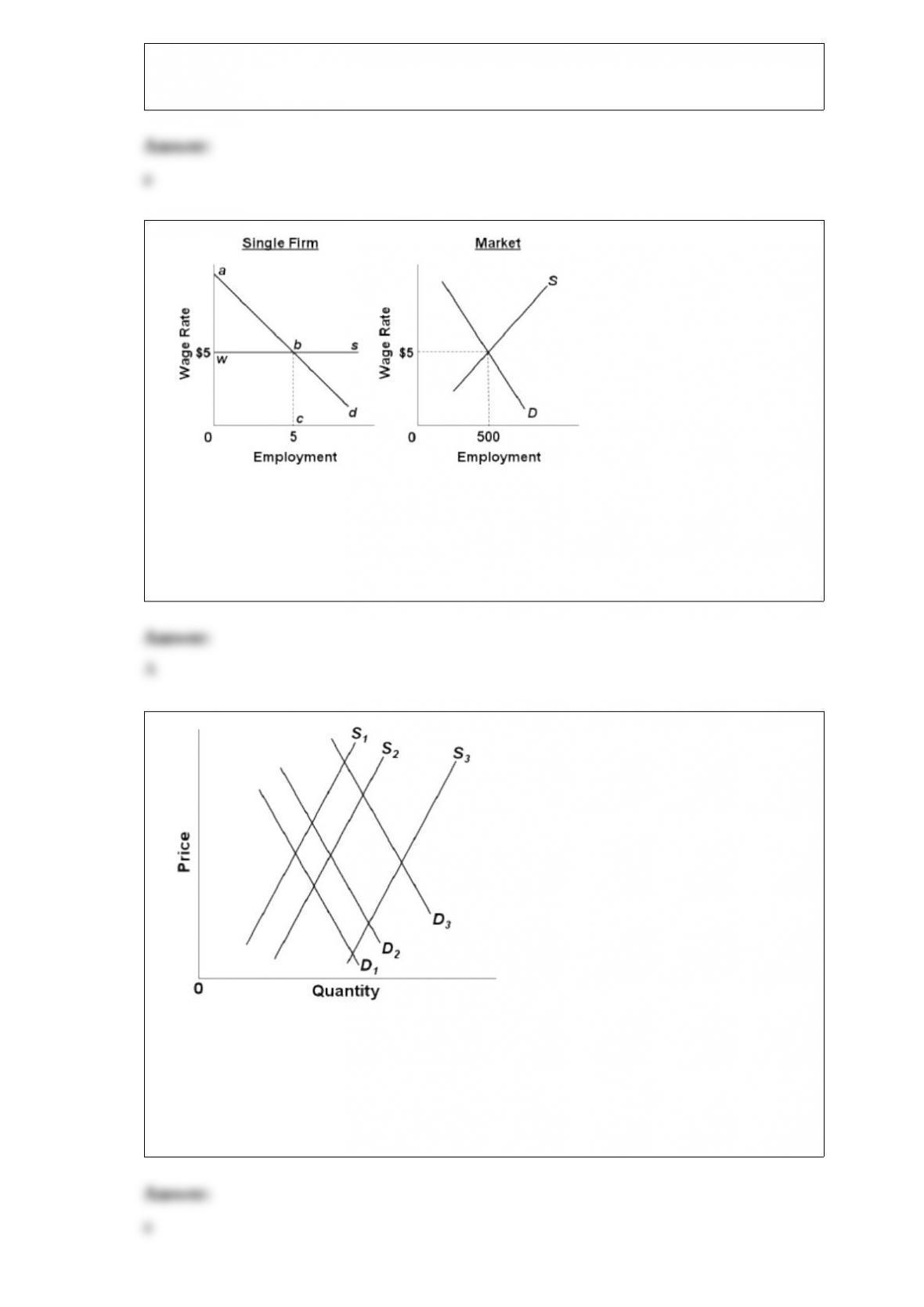
5)
Refer to the above diagrams. The profit-maximizing firm’s total revenue:
A.is 0abc.
B.is 0wbc.
C.is wab.
D.cannot be determined.
6)
refer to the above figure that shows the market for u.s. health care. other things equal,
which of the following would shift the supply curve for medical care from s1 to s2?
a.greater reliance on skilled nurses rather than physicians.
b.higher insurance copayments and deductibles.
c.higher physician fees.
d.higher medical malpractice insurance premiums.

7) if total revenue is less than total variable costs at the mr = mc output, a purely
competitive firm should:
a.shut down.
b.produce, but will necessarily realize a loss.
c.produce and may or may not realize a profit.
d.increase its output.
8) Suppose that a firm introduces a highly profitable new product. If this new product
offers less marginal utility per unit to consumers than existing substitute products, then
the:
A.laws of economics have been violated.
B.new product must have increasing, not diminishing, marginal utility.
C.existing products were being produced at a loss.
D.new product has a lower price than the existing substitute products.
9) (Last Word) Suppose you borrow $500 and agree to pay this $500 plus $75 of
interest at the end of a year. The interest rate is:
A.10 percent.
B.15 percent.
C.12.5 percent.
D.7.5 percent.
10) If the MPC is .50 and the equilibrium GDP is $40 billion below the
full-employment GDP, then the size of the recessionary expenditure gap is:
A.$40 billion.
B.$20 billion.
C.$60 billion.
D.$80 billion.
11) refer to the above diagram. which line(s) show(s) a negative vertical intercept?
a.c only.
b.both c and e
c.b, c, and e
d.both b and c
12) the demand for autos is likely to be:
a.less elastic than the demand for honda accords.
b.more elastic than the demand for honda accords.
c.of the same elasticity as the demand for honda accords.
d.perfectly inelastic.
13) The four main tools of monetary policy are:
A.tax rate changes, the discount rate, open-market operations, and the Federal funds
rate.
B.tax rate changes, changes in government expenditures, open-market operations, and
the term auction facility.
C.the discount rate, the reserve ratio, the term auction facility, and open-market
operations.
D.changes in government expenditures, the reserve ratio, the Federal funds rate, and the
discount rate.
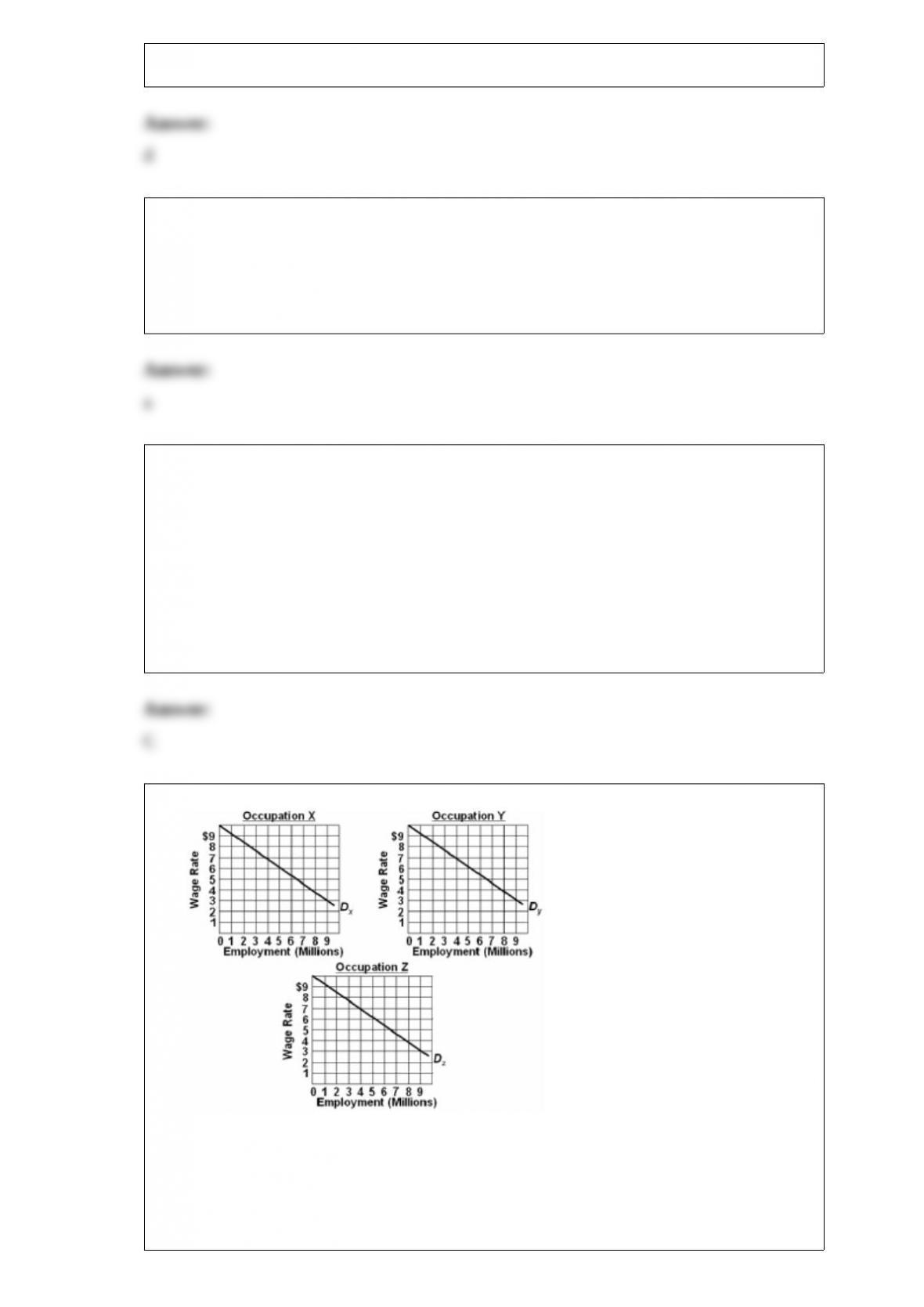
14)
Assumptions: (1) the labor force is comprised of 9 million men and 9 million women
workers; (2) the economy has 3 occupations, X, Y, and Z, each having identical demand
curves for labor; (3) men and women workers are homogeneous with respect to their
labor-market capabilities; (4) women are discriminated against by being excluded from
occupations X and Y and are confined to Z; and (5) aside from discrimination, the

economy is competitive.
Refer to the above diagram and list of assumptions. The elimination of gender
discrimination:
A.may either increase or reduce real domestic output, depending on what happens to the
level of wages.
B.will increase real domestic output.
C.will have no effect on real domestic output.
D.will reduce real domestic output.
15) The money supply is backed:
A.by the government’s ability to control the supply of money and therefore to keep its
value relatively stable.
B.by government bonds.
C.dollar-for-dollar with gold and silver.
D.dollar-for-dollar with gold bullion.