
Unlike a monopoly, a monopolistic competitive firm in long run equilibrium is likely to
produce a level of output at which
a. MR = MC.
b. P > MC.
c. P = ATC.
d. resource-allocative efficiency is achieved.
In the theory of perfect competition, the assumption of easy entry into and exit from the
market implies
a. positive economic profits in the long run.
b. losses in the long-run equilibrium.
c. zero economic profits in the long run.
d. zero economic profits in both the short run and the long run.
e. positive economic profits in both the short run and the long run.
Exhibit 23-10
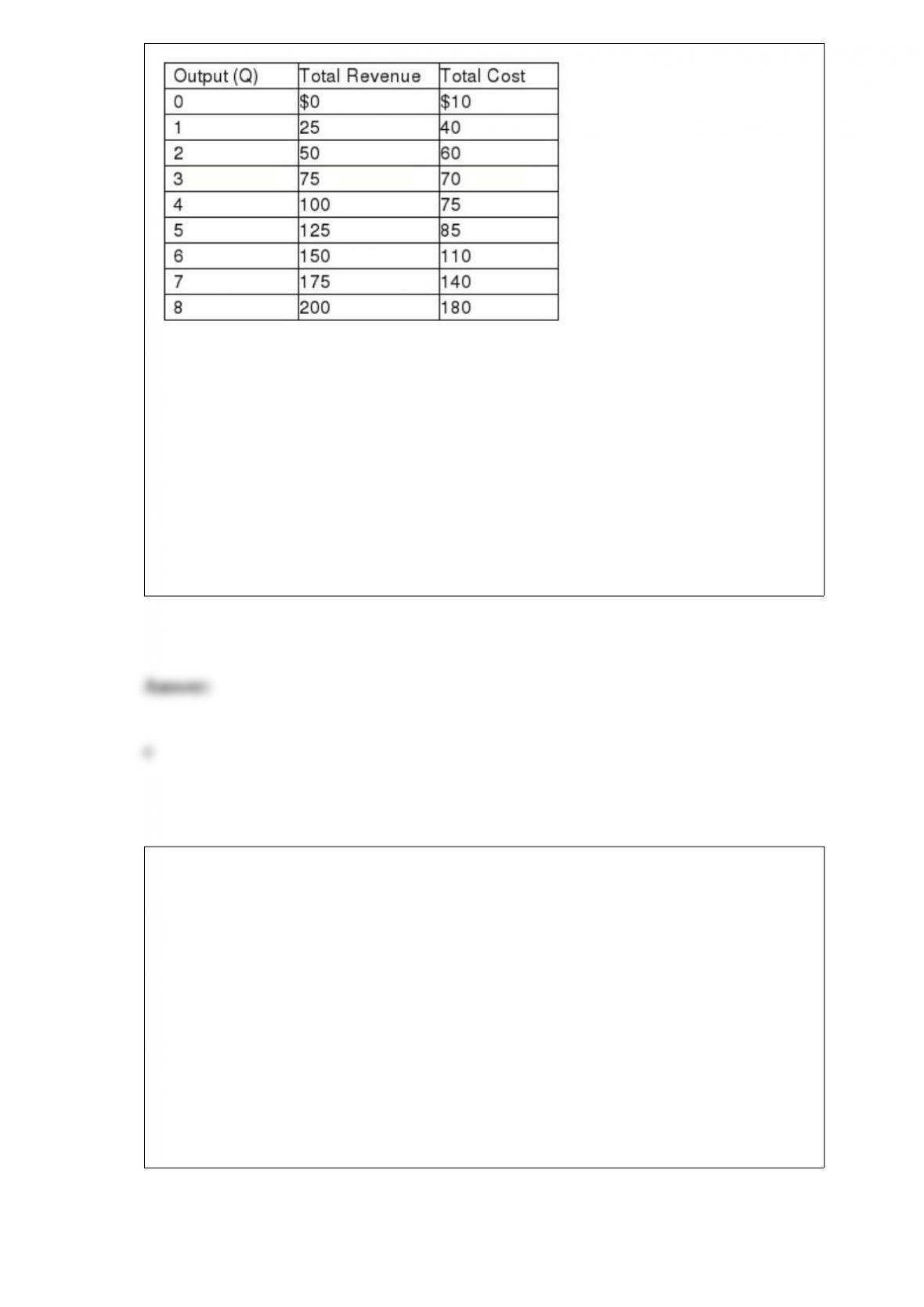
Is the firm depicted here a perfectly competitive firm?
a. Yes, because marginal revenue is constant.
b. Yes, because total revenue increases as output increases.
c. No, because marginal cost is not constant.
d. No, because marginal cost falls for some levels of output and rises for other levels of
output.
The return on capital is greater than the price of loanable funds. It follows that firms
will
a. borrow funds, the capital stock will rise, and eventually the return on capital will fall.
b. borrow funds, the capital stock will fall, and eventually the return on capital will rise.
c. not borrow funds and, as a result, the price of credit will rise.
d. not borrow funds and eventually the capital stock will decrease and the return on
capital will fall.
e. none of the above

Which of the following statements is true?
a. The real interest rate matters more to borrowers than the nominal interest rate.
b. The nominal interest rate is equal to the real interest rate minus the expected inflation
rate.
c. If there is expected deflation (expected decline in the price level), instead of expected
inflation, the nominal interest rate will be greater than the real interest rate.
d. The nominal interest rate is determined by the demand for credit and the supply of
credit, or by the demand for loanable funds and the supply of loanable funds.
e. If there is expected deflation, the nominal interest rate will necessarily be negative.
Technological __________ in American agriculture has __________ other types of
employment.
a. improvement; drawn labor away from
b. improvement; released labor to go to
c. stagnation; drawn labor away from
d. stagnation; released labor to go to

In long run equilibrium, the monopolistic competitor will most likely
a. be earning zero economic profit.
b. be operating at the lowest point on its average total cost curve.
c. charge a price that is equal to marginal revenue.
d. charge a price that is equal to marginal cost.
e. c and d
According to economists Frank and Cook, one reason there are more winner-take-all
markets today than in the past is because
a. government has limited the choices that people can make when they are choosing
what to buy.
b. changes in technology, communications, and transportation costs have made it
possible for consumers to buy from a small handful of “the best” suppliers in the world.
c. changes in technology have lowered prices.
d. of the importance that today is placed on ideas instead of things.
e. a and b

The price at which a perfectly competitive firm sells its product is determined by
a. the individual seller based on his costs of production and his profit margin.
b. all sellers and buyers of the product.
c. the buyers of the product, because there are so many sellers that they cannot agree on
a price.
d. the government, because there are so many buyers and sellers of the product that
together they cannot agree on the price.
Economic growth causes the PPF to
a. shift leftward.
b. shift rightward.
c. remain constant.
d. go from a straight line to a curve.
Exhibit 23-10
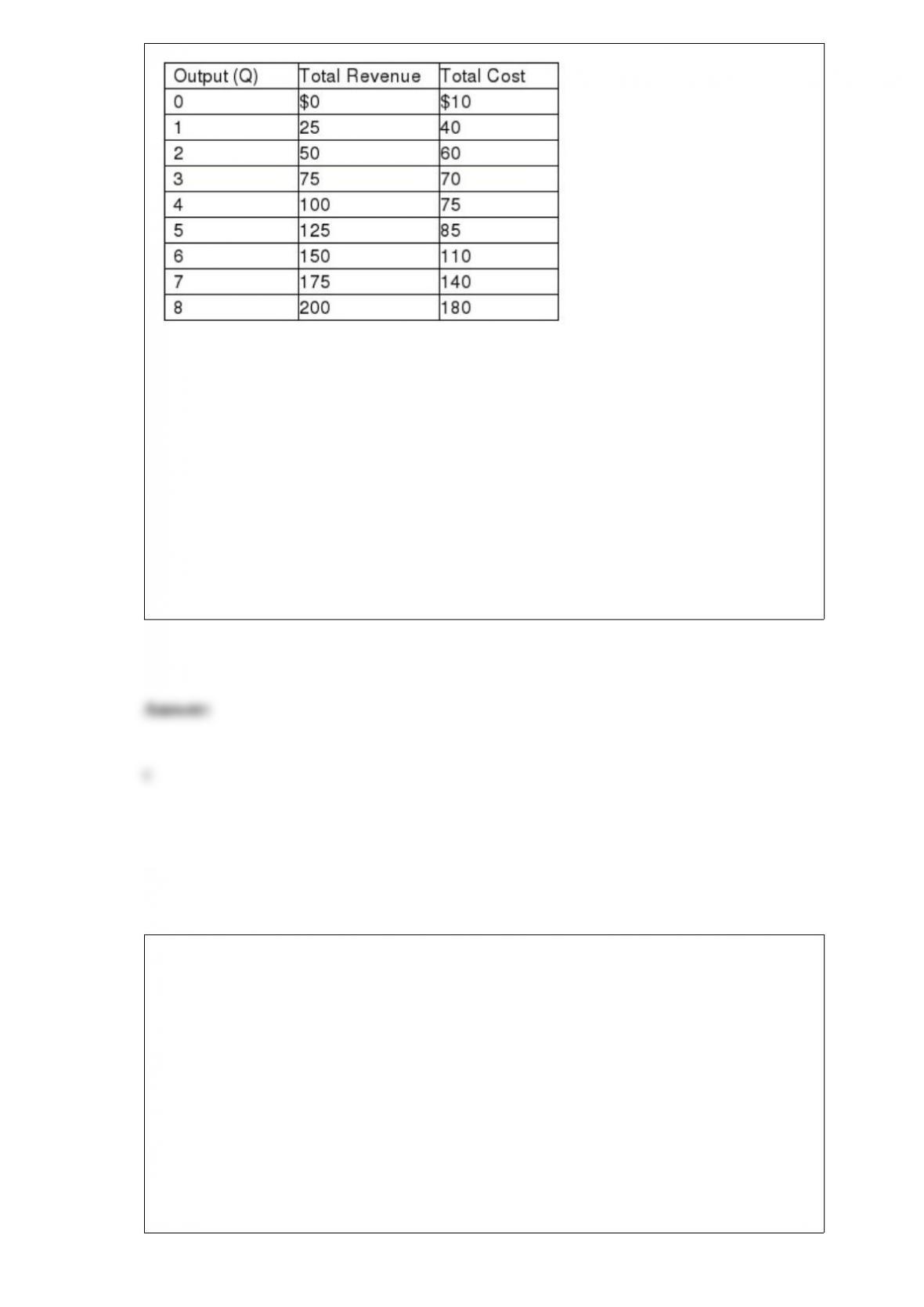
What quantity of output should the profit-maximizing firm produce?
a. 0
b. 4
c. 6
d. 7
e. 8
For a given firm, marginal factor cost is the same dollar amount no matter what quantity
of a factor it purchases. This firm is a
a. product price taker.
b. product price searcher.
c. factor price taker.
d. factor price searcher.
e. none of the above

Both a price taker and a price searcher maximize profits (or minimize losses) by
producing the quantity of output at which __________ equals __________.
a. total revenue; total cost
b. average total cost; price
c. average variable cost; marginal cost
d. marginal revenue; marginal cost
e. marginal cost; average fixed cost
Two variables are independent if as one variable __________, the other variable
__________.
a. rises; rises.
b. falls; falls.
c. rises; falls.
d. changes; does not change.
Right-to-work laws
a. say that everyone has the right to work and that it is the responsibility of the
government to make available employment opportunities.
b. ensure that employers cannot prevent persons from gaining employment simply
because they are members of a union.
c. allow everyone to gain employment at a firm without being a union member but also
require that once hired the employee must join the union.
d. make it illegal to require union membership for purposes of employment.
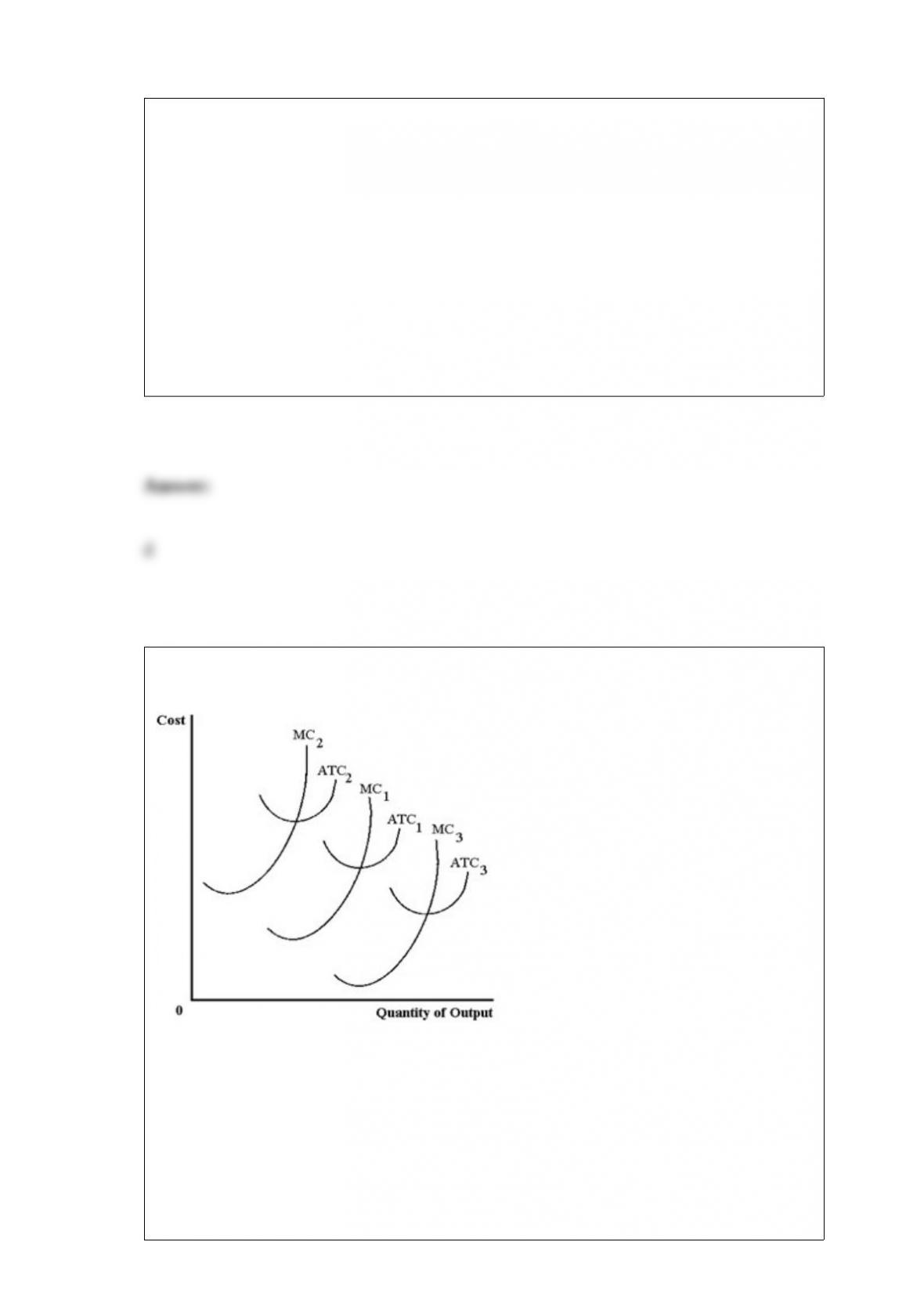
Exhibit 22-9
Let MC1 and ATC1 represent the initial cost curves of a peanut butter producer. In
which of the following cases is it most likely that the firm€s curves will shift leftward
to MC2 and ATC2?
a. The market price of peanuts decreases.
b. There is an improvement in technology in the production of peanut butter.

c. The government raises taxes paid by peanut butter producers.
d. a and b