
1) Which of the following is a tool of monetary policy?
A.open market operations
B.changes in banking laws
C.changes in tax rates
D.changes in government spending
2) Assume the legal reserve ratio is 25 percent and the Fourth National Bank borrows
$10,000 from the Federal Reserve Bank in its district. As a result:
A.commercial bank reserves are increased by $10,000.
B.the supply of money automatically declines by $7,500.
C.commercial bank reserves are increased by $7,500.
D.the supply of money is automatically increased by $10,000.
3) determine, other things equal, the effects of a given change in a determinant of
demand or supply for product x upon (1) the demand (d) for, or supply (s) of, x, (2) the
equilibrium price (p) of x and (3) the equilibrium quantity (q) of x.
refer to the above. an increase in income, if x is a normal good, will:
a.increase d, increase p, and increase q.
b.increase d, increase p, and decrease q.
c.increase s, increase p, and increase q.
d.decrease d, increase p, and increase q.
4) the functional distribution of income refers to the:
a.division of income between personal taxes, consumption expenditures, and saving.
b.division of income on the basis of industry sources, for example, agriculture,
transportation, mining, etc.
c.distribution of income to basic resource classes, that is, wages, rents, interest, and
profits.
d.way income is distributed among specific households or spending units.
5)
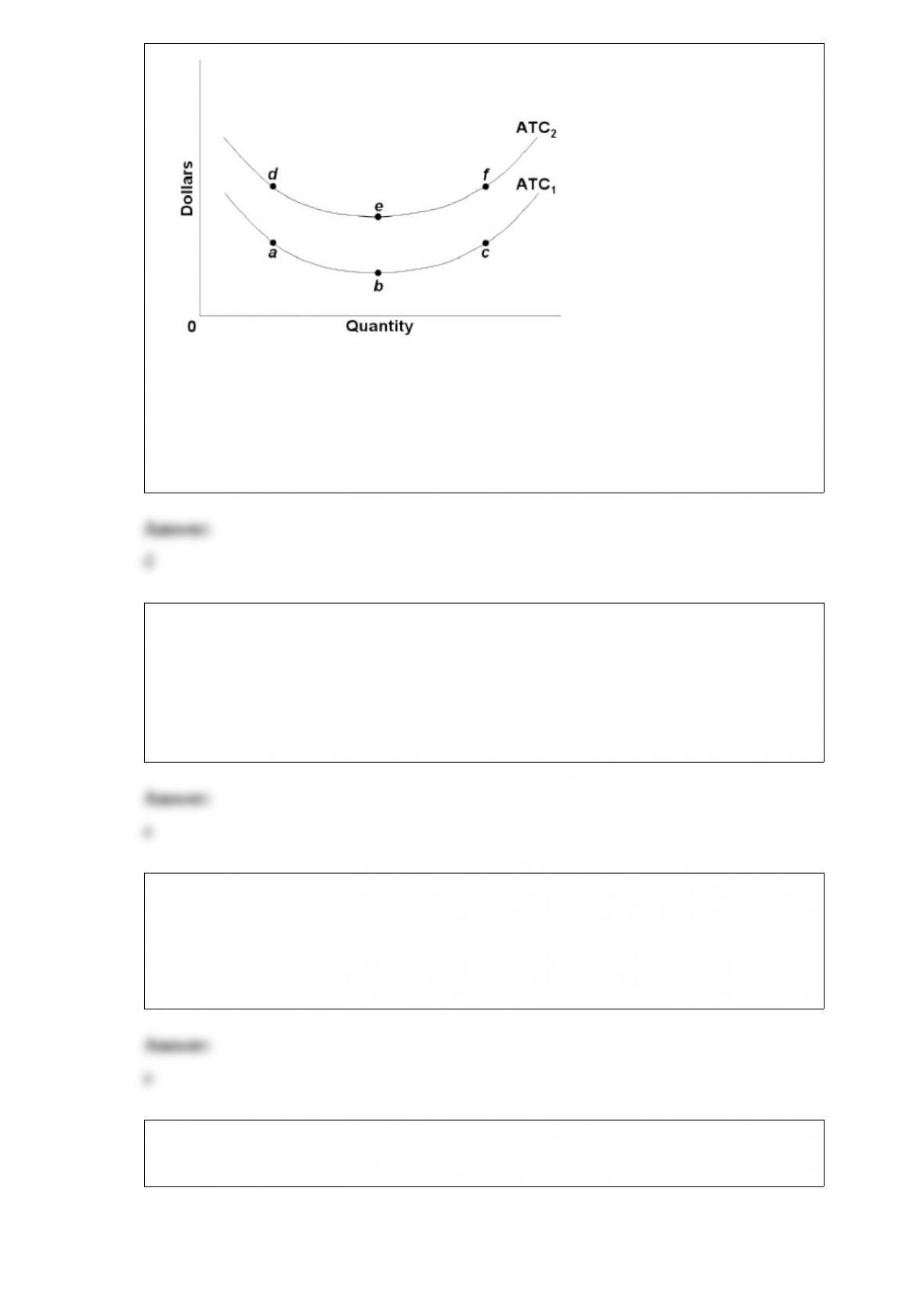
refer to the above graph. which one of the following would cause a move from point d
to point e along short-run average total cost curve atc2?
a.diminishing marginal returns
b.an increase in the wage rate
c.a decrease in the wage rate
d.increasing marginal returns
6) if the dollar price of one yen is $.04, a japanese good priced at 560 yen would cost an
american:
a.$22.40.
b.$2240.
c.$14,000.
d.$2.40.
7) which of the following sayings relates most closely to the idea of sunk costs:
a.don’t cry over spilt milk.
b.a bird in the hand is worth two in the bush.
c.he who hesitates is lost.
d.show me the money.
8) Answer the next two questions on the basis of the following demand and supply data
for a competitive market:
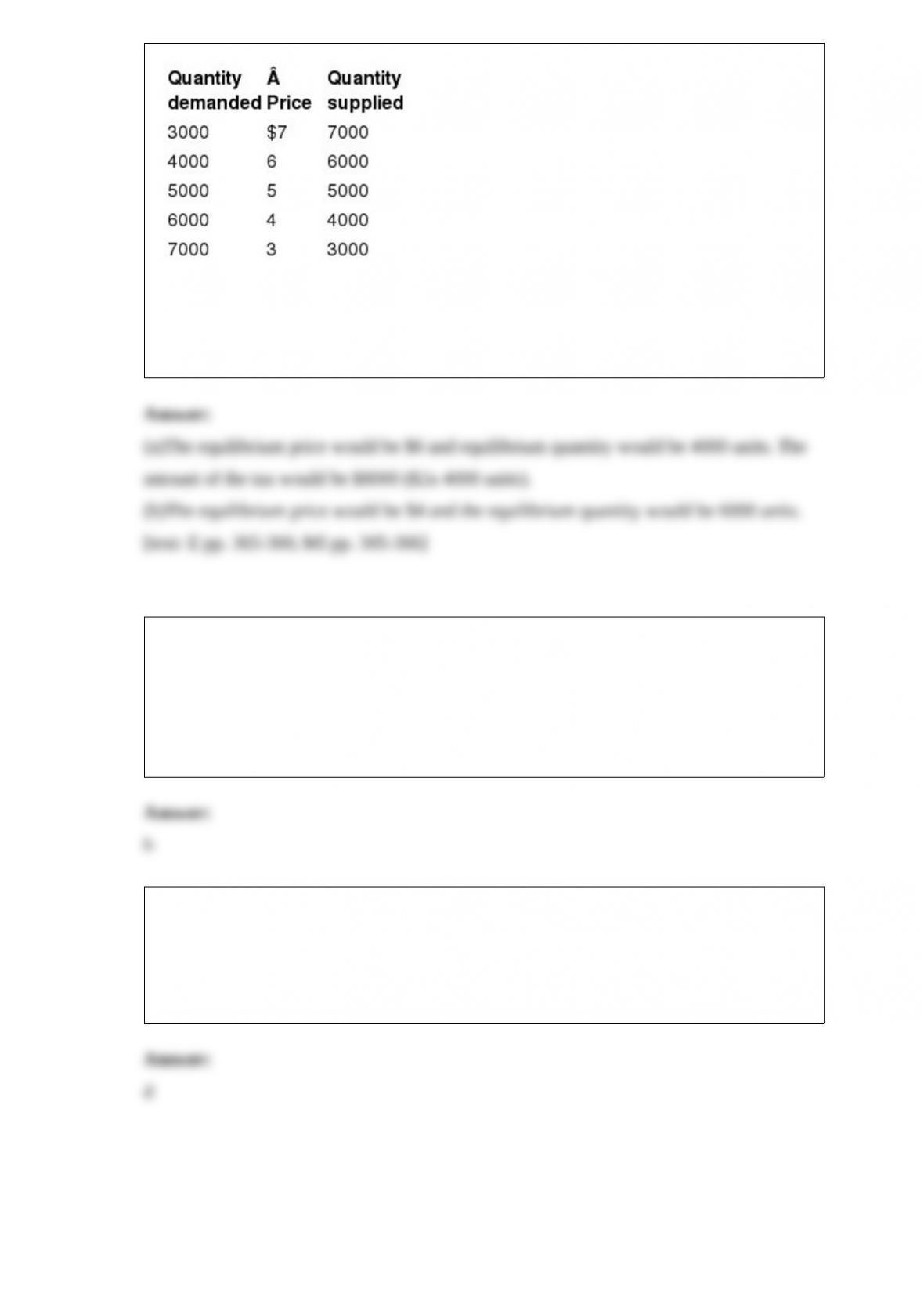
(a)If government levies a per unit excise tax of $2 on suppliers of this product, what
would the equilibrium price and quantity be? How much tax will be paid?
(b)If government has instead provided a per unit subsidy of $2 to suppliers of this
product, what would the equilibrium price and quantity be?
9) as it relates to economic growth, the term long-run trend refers to:
a.the long-run increase in the relative importance of durable goods in the u.s. economy.
b.the long-term expansion or contraction of business activity that occurs over 50 or 100
years.
c.fluctuations in business activity that average 40 months in duration.
d.fluctuations in business activity that occur around christmas, easter, and so forth.
10) the majority of personal consumption expenditures go to purchase:
a.nondurable goods.
b.durable goods.
c.capital goods.
d.services.
11)
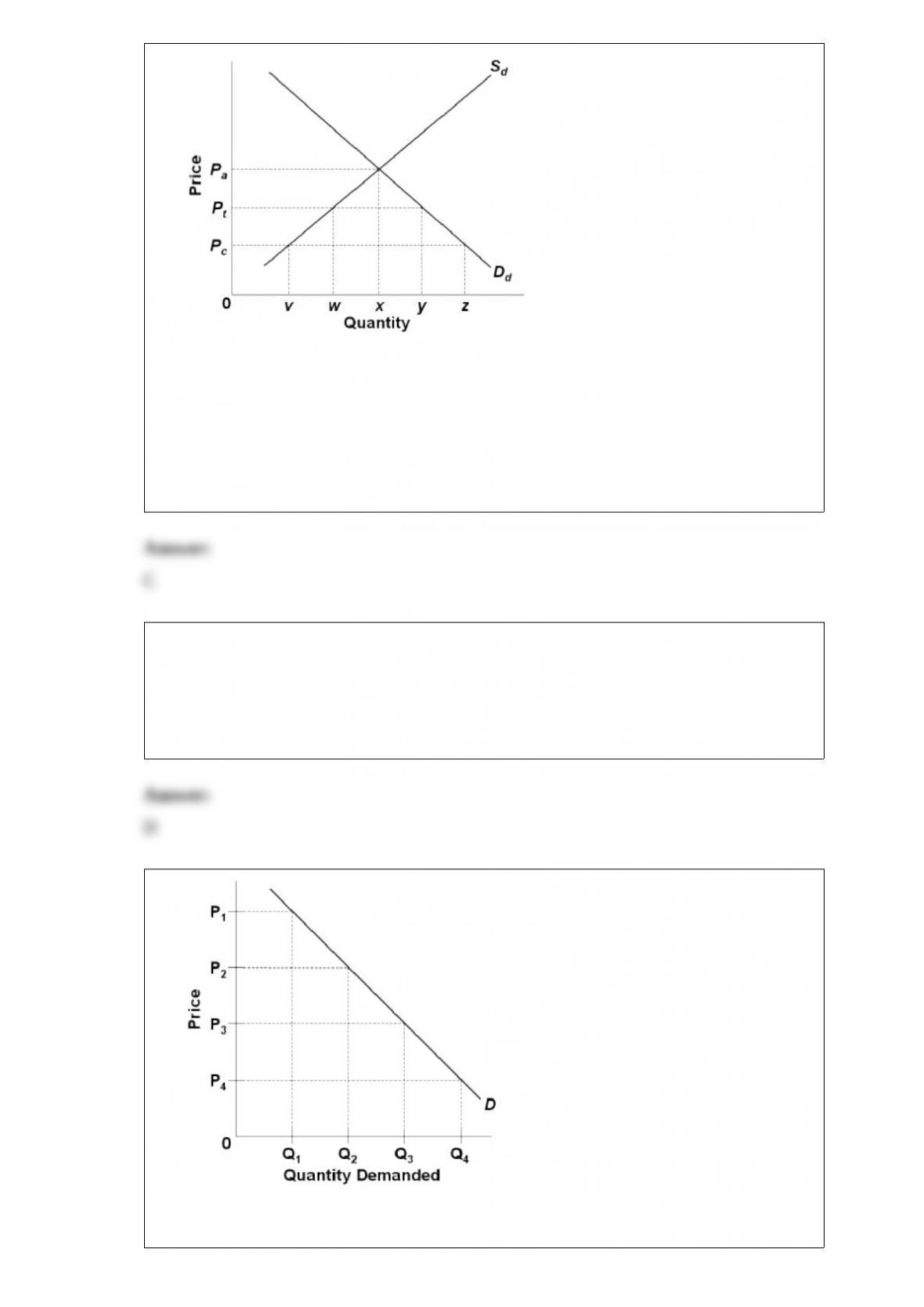
Refer to the above diagram, where Sd and Dd are the domestic supply and demand for a
product and Pc is the world price of that product. With a per unit tariff in the amount
PcPt, price and total quantity sold will be:
A.Pt and x
B.Pc and z
C.Pt and y
D.Pa and x
12) (Last Word) Say’s law and classical macroeconomics were disputed by:
A.Adam Smith.
B.Jeremy Bentham.
C.John Stuart Mill.
D.John Maynard Keynes.
13)
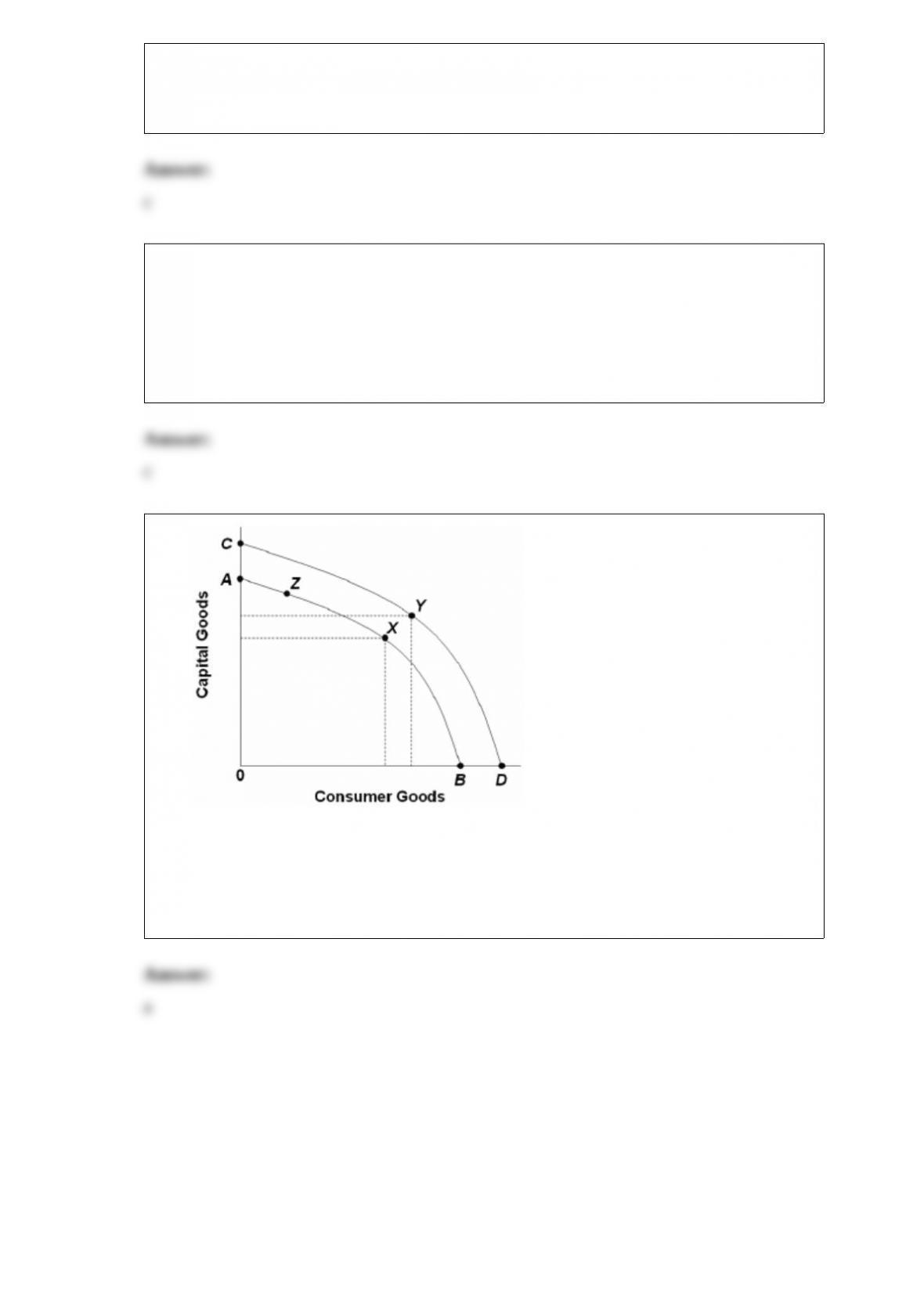
refer to the above diagram. in the p1p2price range demand is:
a.of unit elasticity.
b.relatively inelastic.
c.relatively elastic.
d.perfectly elastic.
14) assume a firm closes down in the short run and produces no output. under these
conditions:
a.tvc is positive, but tfc and tc are zero.
b.tfc is positive, but tvc and tc are zero.
c.tfc and tc are positive, but tvc is zero.
d.tfc, tvc, and tc will all be positive.
15)
refer to the above diagram. the most likely cause of a shift from ab to cd would be a(n):
a.increase in productivity.
b.increase in the price level.
c.decrease in the size of the labor force.
d.recession.
16)
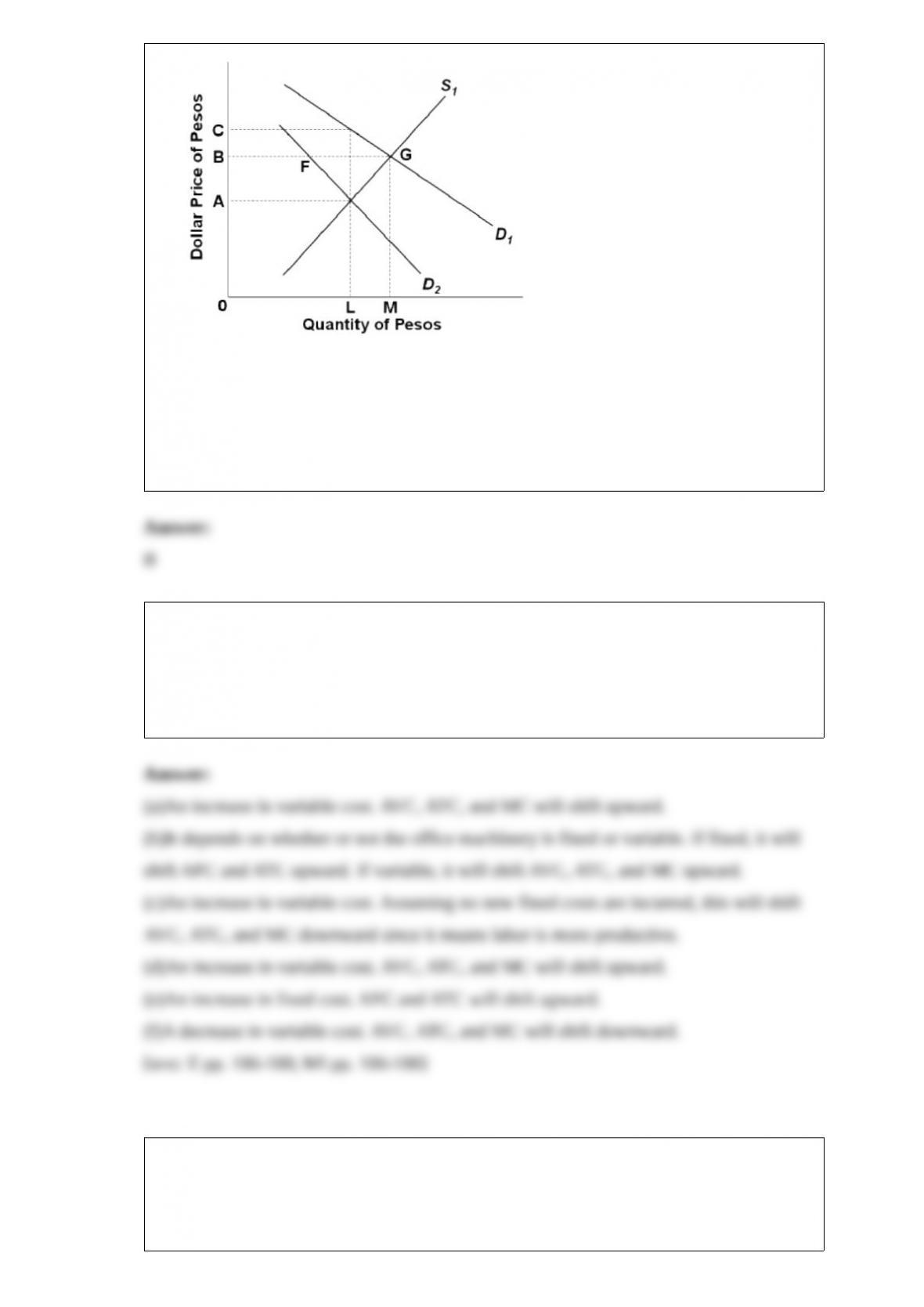
Refer to the above diagram. The initial demand for and supply of pesos are shown by
D1 and S1. The exchange rate will be:
A.M dollars for one peso.
B.1/B pesos for one dollar.
C.A dollars for one peso.
D.C dollars for one peso.
17) How will the marginal and average cost curves of the typical pure competitor shift
or change as a result of the following events: (a) an increase in wages of all labor; (b)
an increase in the rental payments on office machinery; (c) a technological advance; (d)
an increase in sales taxes; (e) an increase in property taxes; and (f) a decline in the price
of a basic raw material?
18) Suppose that the price of capital increases relative to the wage rate and, as a result,
the demand for labor increases. This means that:
A.the substitution effect is greater than the output effect.
B.labor and capital are complementary resources.
C.it is impossible to substitute labor for capital.
D.the output effect is greater than the substitution effect.
19) The short-run aggregate supply curve is upsloping because:
A.of the interest rate effect.
B.higher price levels create incentives to expand output when resource prices are
unresponsive to price-level changes.
C.of the net export effect.
D.higher price levels create an expectation among producers of still higher price levels.