
In a market economy, who decides what goods and services will be produced?
A) only the producers
B) only consumers
C) consumers and producers
D) the government
Under a floating exchange rate, the exchange rate
A) will change whenever the price of gold changes.
B) is controlled by central bank intervention.
C) is determined by the interaction of supply of the currency and demand for the
currency.
D) is pegged against the euro.
Figure 2-1
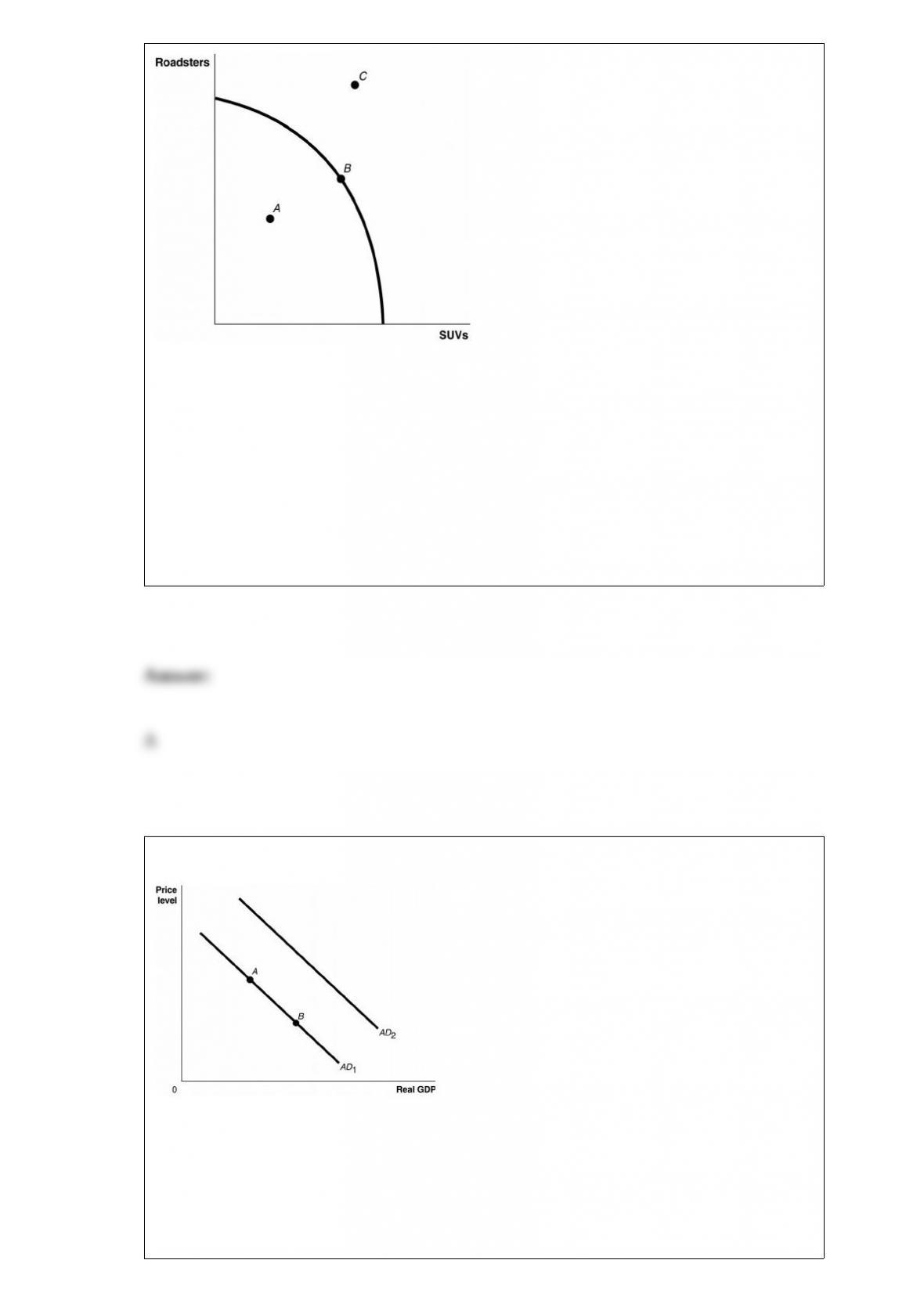
Refer to Figure 2-1. ________ is (are) inefficient in that not all resources are being
used.
A) Point A
B) Point B
C) Point C
D) Points A and C
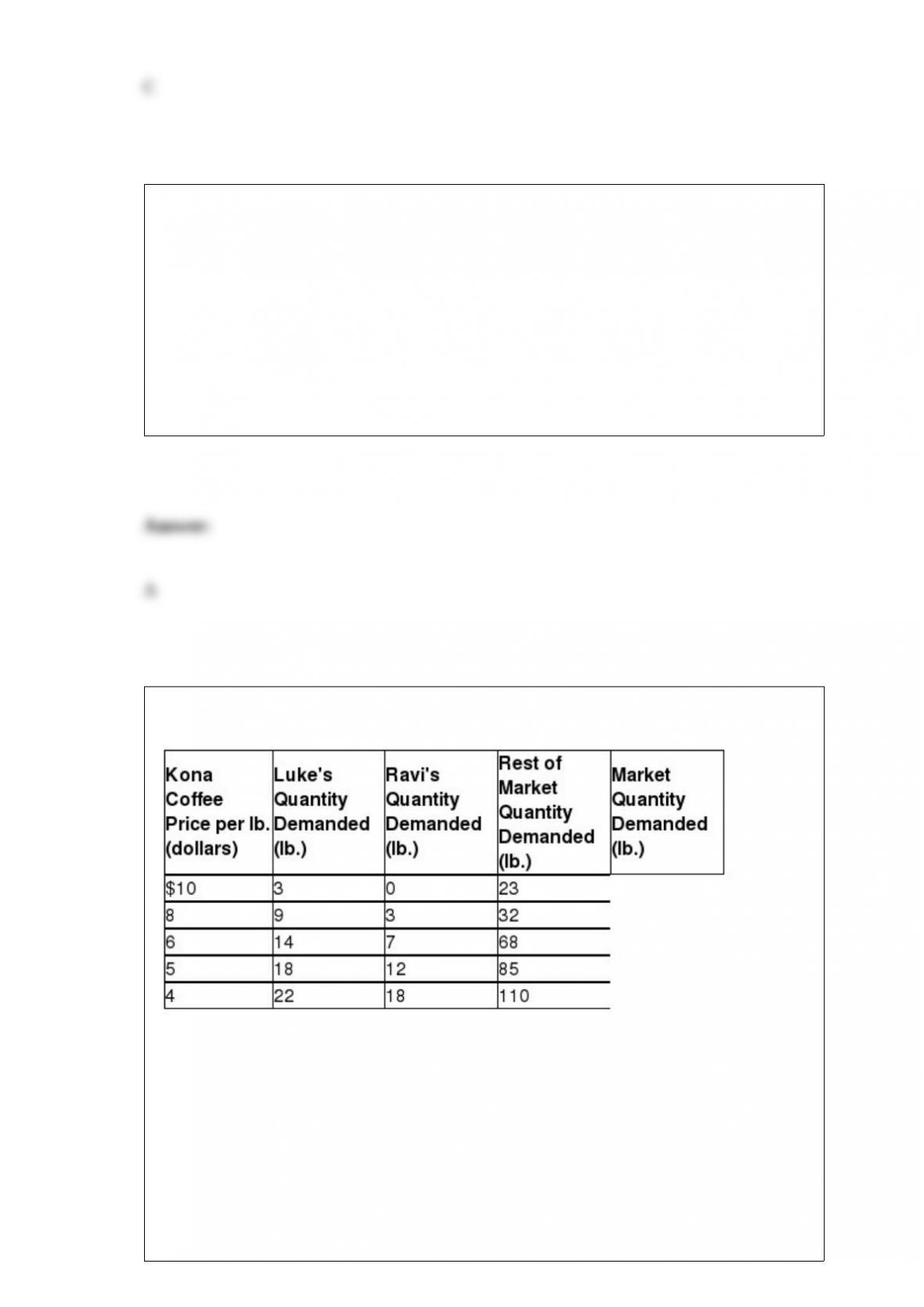
Figure 13-1
Refer to Figure 13-1. Ceteris paribus, a decrease in interest rates would be represented
by a movement from
A) AD1 to AD2.
B) AD2 to AD1.

C) point A to point B.
D) point B to point A.
The smaller the fraction of an investment financed by borrowing,
A) the greater the potential return and potential loss on that investment.
B) the smaller the potential return and potential loss on that investment.
C) the greater the potential return and the smaller the potential loss on that investment.
D) the smaller the potential return and the greater the potential loss on that investment.
Table 2-8
Table 2-8 shows the output per month of two people, Wilma and Betty. They can either
devote their time to making marble statues or making marble benches.
Refer to Table 2-8. What is Wilma’s opportunity cost of making a bench?
A) 1/3 statue
B) 3 statues

C) 1/2 bench
D) 1.3 statues
Suppose a developing country receives more machinery and capital equipment as
foreign entrepreneurs increase the amount of investment in the economy. As a result,
A) the long-run aggregate supply curve will shift to the right.
B) the long-run aggregate supply curve will shift to the left.
C) the economy will move up along the long-run aggregate supply curve.
D) the economy will move down along the long-run aggregate supply curve.
In the long run, ________ differences in economic growth rates result in ________
differences in GDP per capita.
A) large; small
B) large; no
C) small; large
D) small; no
Firms in a small economy anticipated that inventories would grow over the past year by
$750,000, and over that year, inventories grew by exactly $750,000. This implies that
A) aggregate expenditure and GDP were equal that year.
B) there was an unplanned increase in inventories that year.
C) there was an unplanned decrease in inventories that year.
D) aggregate expenditure was greater than GDP that year.
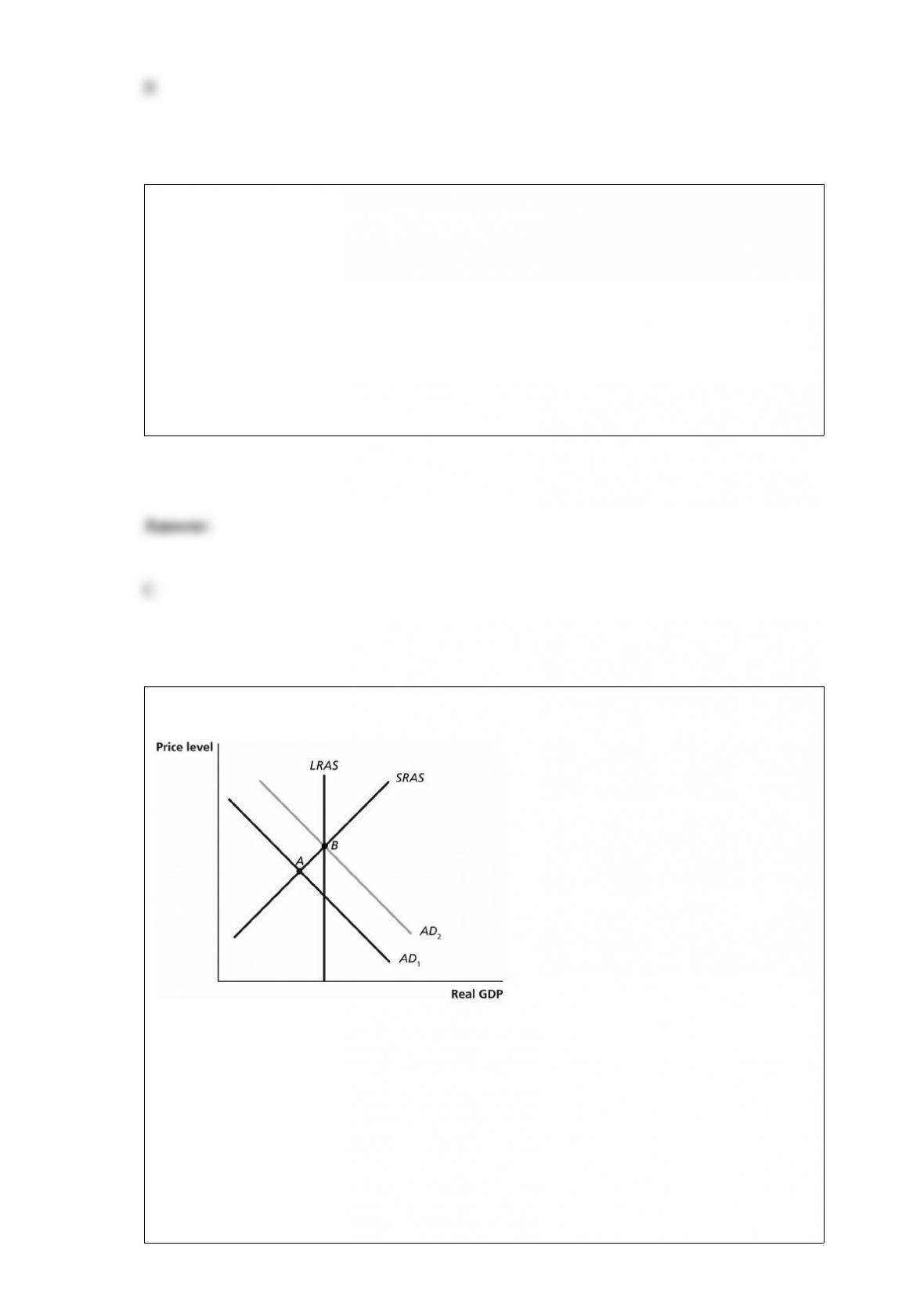
Table 3-1
Refer to Table 3-1. The table above shows the demand schedules for Kona coffee of
two individuals (Luke and Ravi) and the rest of the market. At a price of $4, the
quantity demanded in the market would be
A) 40 lb.
B) 70 lb.
C) 110 lb.

D) 150 lb.
If a straight line passes through the point x = 8 and y = 4 and also through the point x =
12 and y = 6, the slope of this line is
A) negative 4 divided by 2.
B) two.
C) negative one half.
D) one half.
Consumption spending is $5 million, planned investment spending is $8 million, actual
investment spending is $8 million, government purchases are $10 million, and net
export spending is $2 million. Based on this information, which of the following is
true?
A) There was an unplanned change in inventories.
B) Aggregate expenditure is equal to GDP.
C) Aggregate expenditure is greater than GDP.
D) Aggregate expenditure is less than GDP.
Someone who is available for work but has not actively looked for work in the previous
four weeks would be classified as
A) employed.
B) unemployed.
C) not in the labor force.
D) not in the working-age population.
Figure 15-9
Refer to Figure 15-9. In the figure above suppose the economy is initially at point A.
The movement of the economy to point B as shown in the graph illustrates the effect of
which of the following policy actions by the Federal Reserve?
A) a decrease in income taxes
B) an increase in the required reserve ratio
C) an open market purchase of Treasury bills
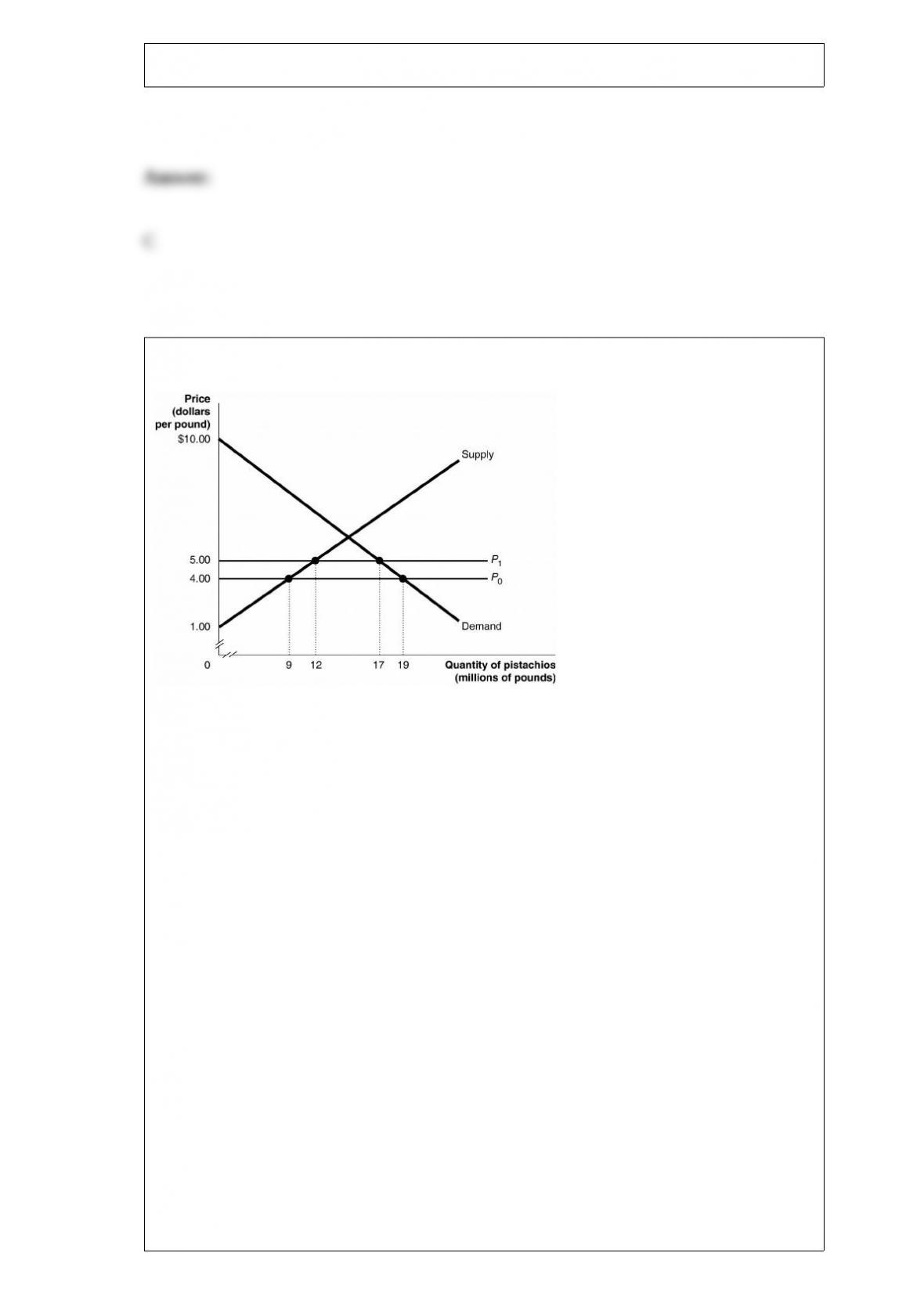
D) an open market sale of Treasury bills
Figure 7-5
Refer to Figure 7-5. Fenwick currently both produces and imports pistachios. The
government of Fenwick decides to restrict international trade in pistachios by imposing
a quota that allows imports of only 5 million pounds each year. Figure 7-5 shows the
estimated demand and supply curves for pistachios in Fenwick and the results of
imposing the quota. Answer questions a-j using the figure.
a. If there is no quota what is the domestic price of pistachios and what is the quantity
of pistachios demanded by consumers?
b. If there is no quota how many pounds of pistachios would domestic producers supply
and what quantity would be imported?
c. If there is no quota what is the dollar value of consumer surplus?
d. If there is no quota what is the dollar value of producer surplus received by producers
in Fenwick?
e. If there is no quota what is the revenue received by foreign producers who supply
pistachios to Fenwick?
f. With a quota in place what is the price that consumers of Fenwick must now pay and
what is the quantity demanded?
g. With a quota in place what is the dollar value of consumer surplus? Are consumers
better off?
h. With a quota in place what is the dollar value of producer surplus received by
producers in Fenwick? Are domestic producers better off?
i. Calculate the revenue to foreign producers who are granted permission to sell in
Fenwick after the imposition of the quota.
j. Calculate the deadweight loss as a result of the quota.