1) For a typical worker, her income will be lower when she is younger, peak around age
50, and decrease drastically when she retires. This pattern of changes in income for a
typical worker is called
a.the life cycle.
b.permanent income.
c.transitory income.
d.in-kind transfers.
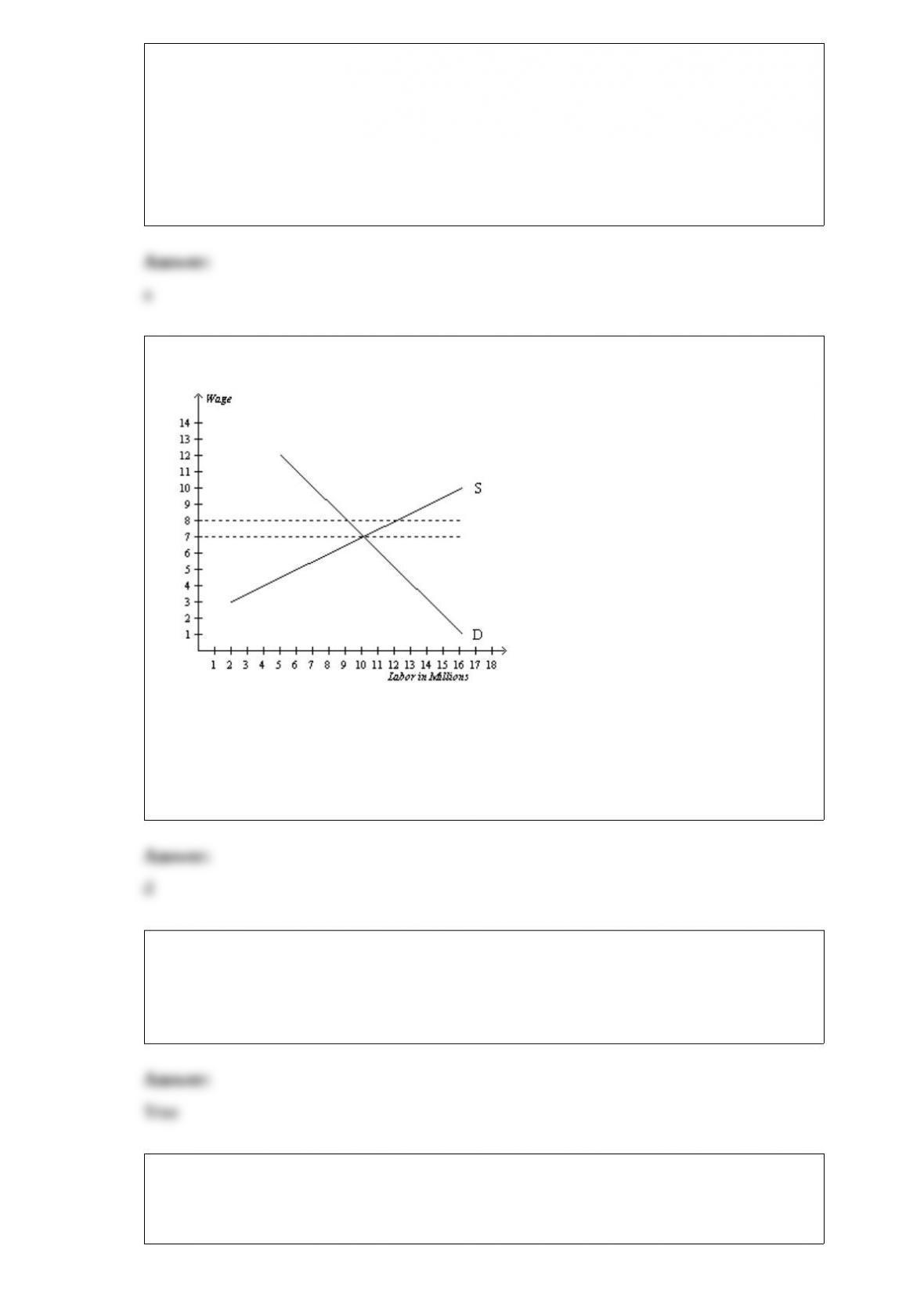
2) Figure 19-1
Refer to Figure 19-1. If the minimum wage in this market is $8, then
a.employment is 10 million
b.employment is 12 million
c.there is a surplus of 1 million workers
d.there is a surplus of 3 million workers
3) The elasticities of the supply and demand curves in the market for cigarettes affect
how much a tax distorts that market.
a.True
b.False
4) As a result of an increase in the earnings gap between skilled and unskilled jobs, the
incentive to get a college education has been declining.
a.True
b.False
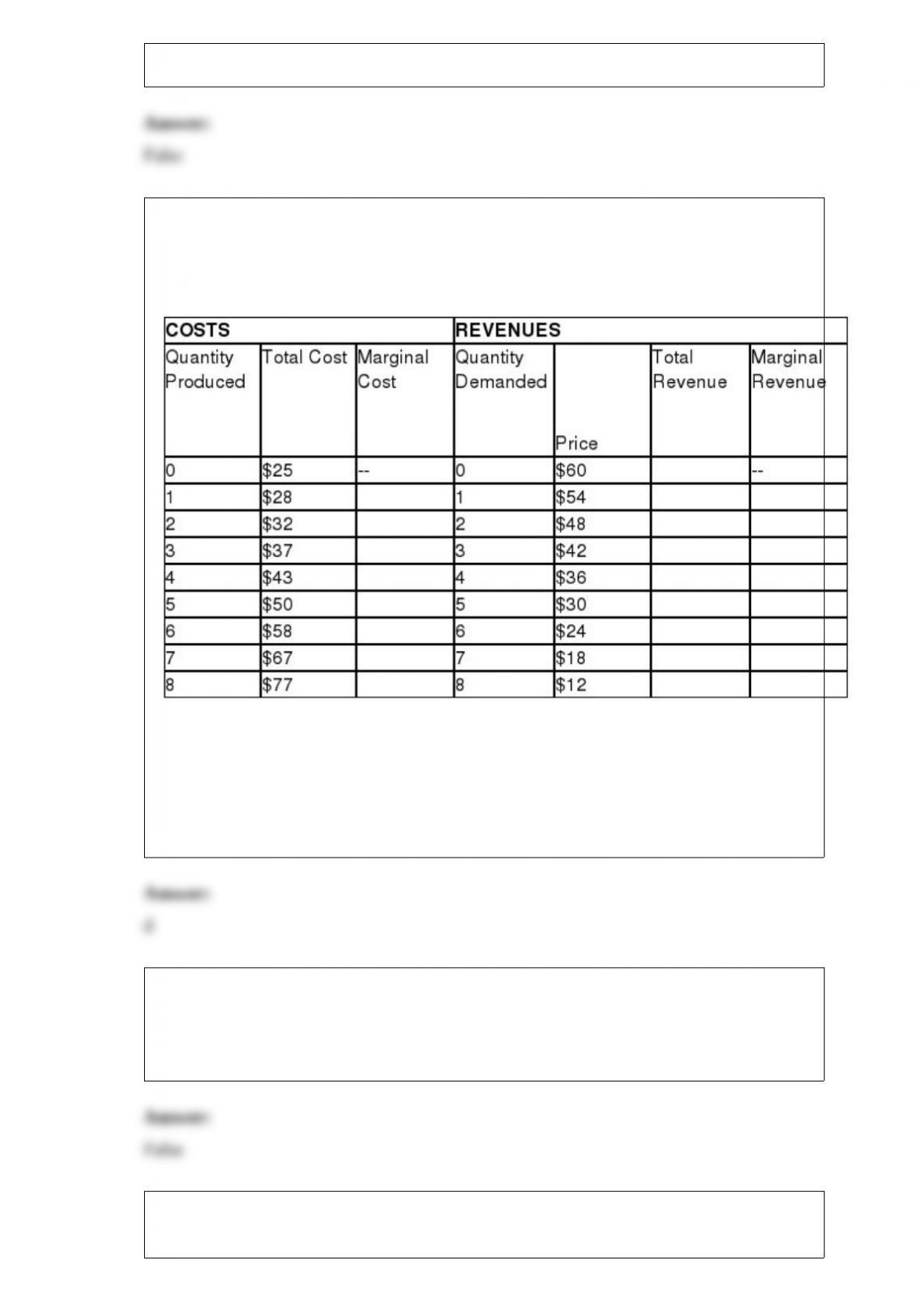
5) Table 16-6
Beatrice’s Birthday Cakes is one bakery among many in the market for birthday cakes.
The following table presents cost and revenue data for birthday cakes at Beatrice’s.
If the government required Beatrice’s to produce at the efficient scale of output, how
many cakes would Beatrice’s sell?
a.4
b.5
c.6
d.7
6) When indifference curves are downward sloping, the marginal rate of substitution is
usually constant.
a.True
b.False
7) Workers with more human capital on average earn substantially higher pay than
workers with less human capital in

a.most countries but not in the United States.
b.the United States but not in most other countries.
c.the United States and in most other countries.
d.None of the above is correct; the evidence fails to indicate that human capital is a
significant factor in determining earnings anywhere in the world.
8) Suppose that a college student receives an offer for a summer internship with a stock
brokerage firm. Unfortunately for the student, the internship is unpaid. Is it ever
economically beneficial to accept an unpaid job?
a.Yes, because the experience gained during the internship would increase the student’s
human capital.
b.No, because the opportunity cost is too high.
c.No, because the student is signaling to future employers that he or she is willing to
accept low wages.
d.Yes, because accepting an unpaid job signals to future employers that the student has
stable personal finances.
9) You are considering staying in college another semester so that you can complete a
major in economics. In deciding whether or not to stay you should
a.compare the total cost of your education to the total benefits of your education.
b.compare the total cost of your education to the benefits of staying one more semester.
c.compare the cost of staying one more semester to the benefits of staying one more
semester.
d.compare the total benefits of your education to the cost of staying one more semester.
10) Figure 18-6

Refer to Figure 18-6. The graph above illustrates the market for bakers who make
homemade breads and breakfast pastries in Northern Minnesota. If Northern Minnesota
experiences an increase in immigration from Canada, what happens in the market for
bakers?
a.Demand increases from D1 to D2.
b.Demand decreases from D2 to D1.
c.Supply increases from S1 to S2.
d.Supply decreases from S2 to S1.
11) Which of the following is a characteristic of a natural monopoly?
a.Average cost exceeds marginal cost over large regions of output.
b.Increasing the number of firms increases each firm’s average total cost.
c.One firm can supply output at a lower cost than two firms.
d.All of the above are correct.
12) When a tax is placed on a product, the price paid by buyers
a.rises, and the price received by sellers rises.
b.rises, and the price received by sellers falls.
c.falls, and the price received by sellers rises.
d.falls, and the price received by sellers falls.
13) In a labor market free from discrimination, wages for workers that are employed by
the same company will still differ.
a.True
b.False

14) The least expensive way to clean up the environment is for all firms to reduce
pollution by an equal percentage.
a.True
b.False
15) A markup of price over marginal cost is inconsistent with free entry and zero profit.
a.True
b.False
16) Evidence points to the fact that, in the real world, people appear to care about
fairness
a.only when it coincides with their own self-interest.
b.only when it coincides with their determination to be consistent over time.
c.even when it does not coincide with their own self-interest.
d.not at all.
17) When this economy produces 30 doghouses and 25
dishwashers there is full employment.
a.True
b.False
18) Scenario 18-1
Harry owns a snow-removal business. He hires workers to shovel driveways for him
during the winter. The first worker he hires can shovel twelve driveways in one day.
When Harry hires two workers, they can shovel a total of 22 driveways in one day.
When Harry hires a third worker, he shovels an additional eight driveways in one day.
Refer to Scenario 18-1. What is the marginal productivity of the second worker?
a.7
b.10
c.12
d.22
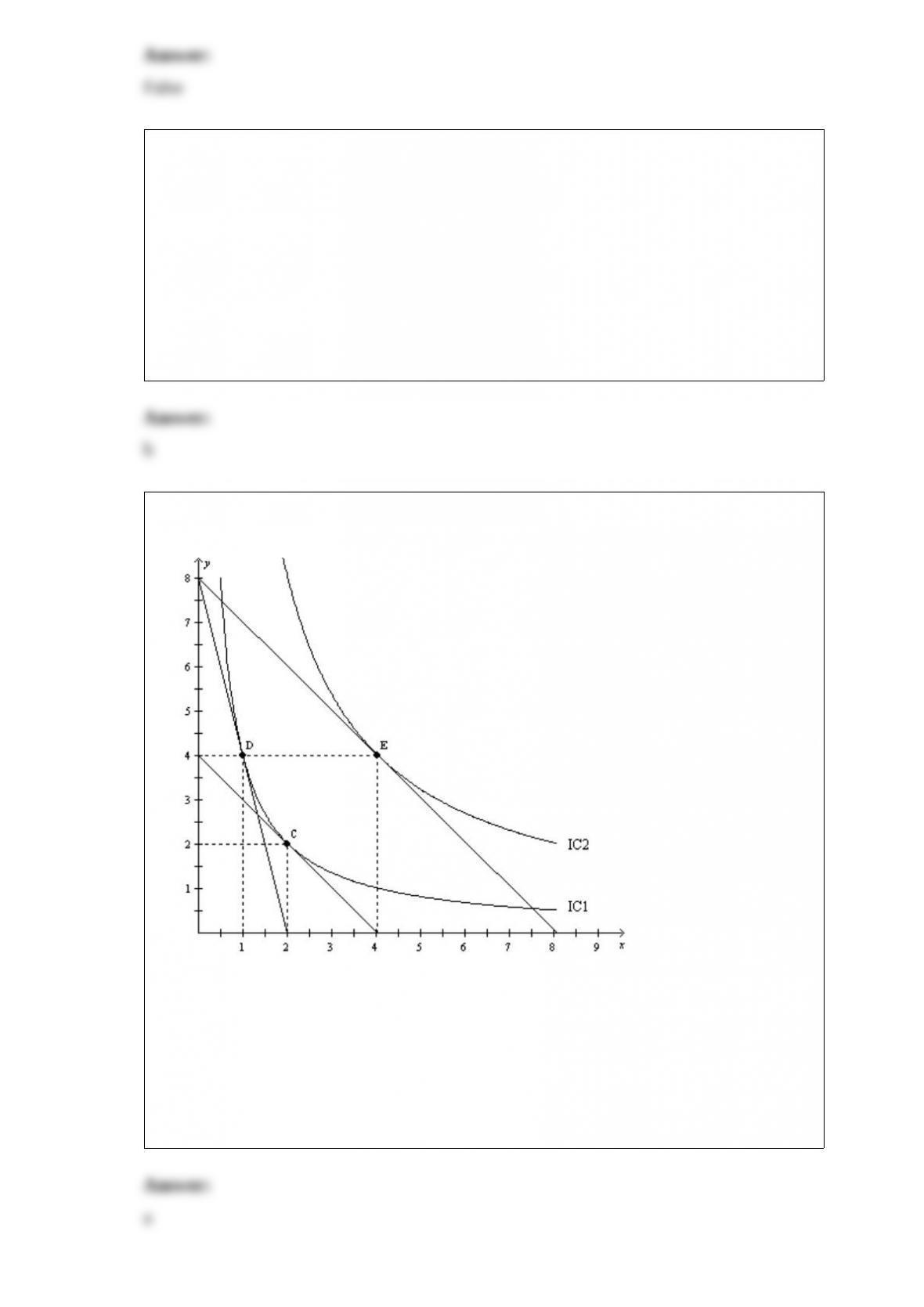
19) Figure 21-23
Refer to Figure 21-23. When the price of X is $80, the price of Y is $20, and the
consumer’s income is $160, the consumer’s optimal choice is D. Then the price of X
decreases to $20. The demand curve can be illustrated as the movement from
a.D to E.
b.D to C.
c.C to E.
d.E to D.
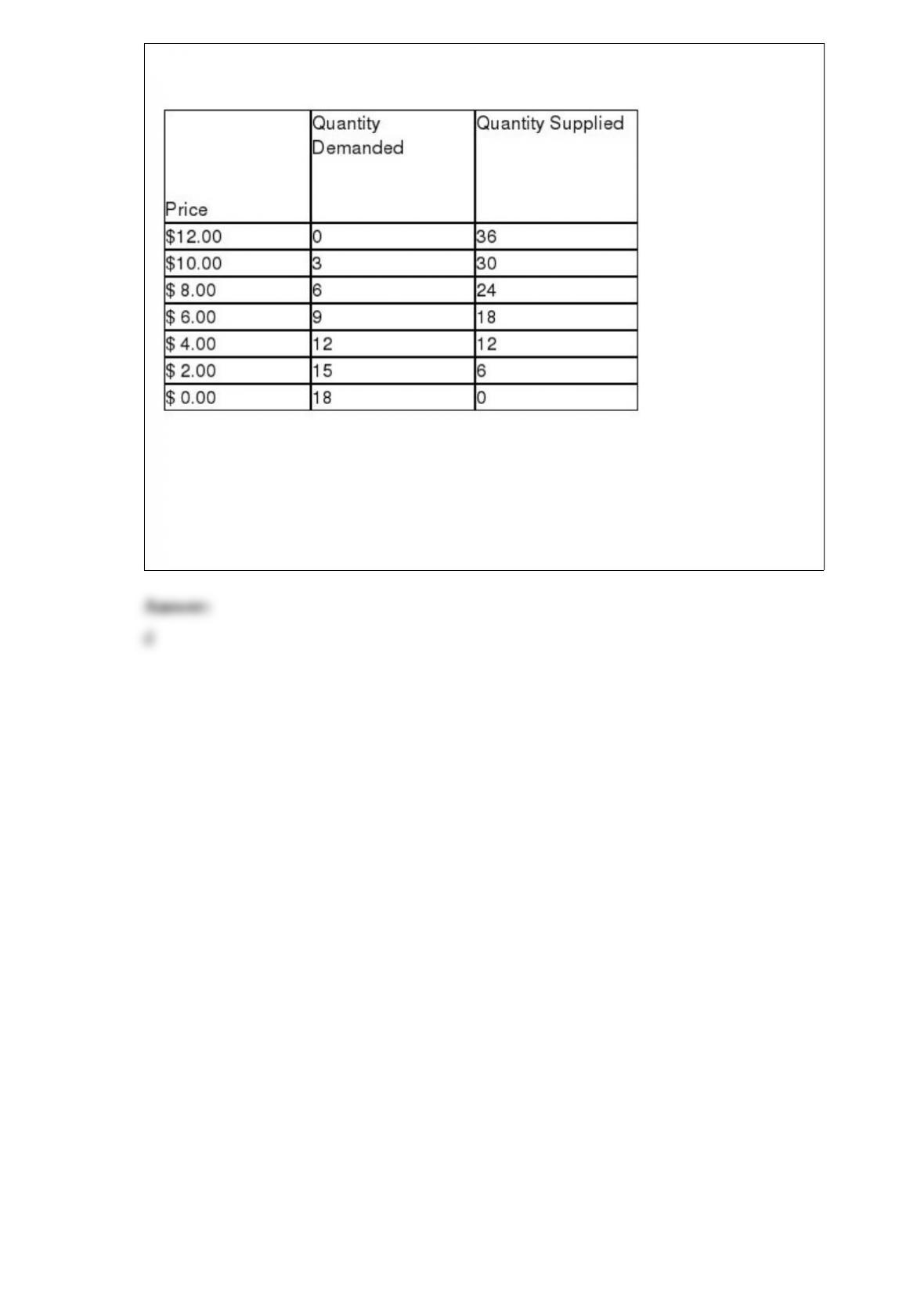
20) Table 7-17
Both the demand curve and the supply curve are straight lines. At equilibrium,
consumer surplus is
a.$24.
b.$36.
c.$42.
d.$48.