1) A decrease in the reserve ratio increases the:
A.amount of actual reserves in the banking system.
B.amount of excess reserves in the banking system.
C.number of government securities held by the Federal Reserve Banks.
D.ratio of coins to paper currency in the economy.
2) Suppose the transportation industry has been regulated for many years. Government
now proposes to deregulate the industry, only to find that firms in the industry oppose
this action. This is consistent with the:
A.public interest theory of regulation.
B.theory of natural monopolies.
C.legal cartel theory of regulation.
D.Alcoa and U.S. Steel court decisions.
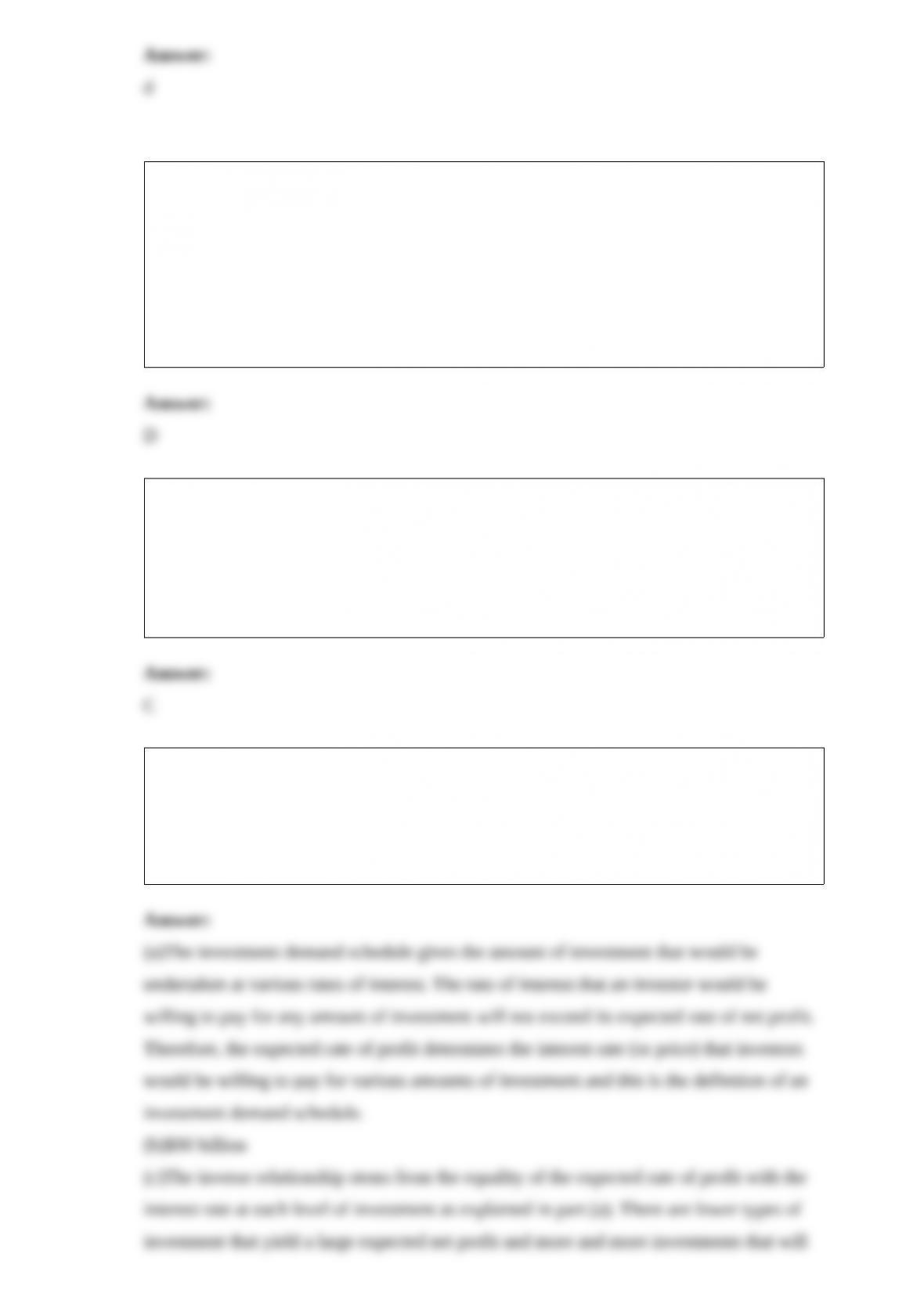
3) The following table for a commercial bank or thrift:
Refer to the above table. When the legal reserve ratio is 25 percent, the excess reserves
of this single bank are:
A.$0.
B.$1,000.
C.$5,000.
D.$30,000.
4) kara is considering migrating to another country. which of the following represents a
cost she will face if she decides to move?
a.financial expenditures to transport herself and her belongings to her new country.
b.the income she currently earns in her home country.
c.the application fee for a green card.
d.all of these.
5) Suppose that the Federal government suddenly declared that wheat was to be used as
money. What is a possible outcome of that decision?
A.The value of the “wheat dollar” would be unstable depending on crop yields from
year to year.
B.Farmers would replace corn and soy crops with wheat.
C.Wheat would function as money so long as people accept it in exchange for goods
and services.
D.All of these are possible outcomes.
6) The tendency for society to overuse and therefore abuse common resources is called
the:
A.law of conservation of matter and energy.
B.moral hazard problem.
C.tragedy of the commons.
D.the Coase theorem.
7) Use the following data to answer the questions.
(a)Explain why this table is essentially an investment demand schedule.
(b)If the interest rate was 8%, how much investment would be undertaken?
(c)Why is there an inverse relationship between the rate of interest and the amount of
investment?
8) Under a system of fixed exchange rates, a nation that has chronic balance of
payments deficits may:
A.initiate protectionist trade policies.
B.run short of international monetary reserves.
C.be forced to invoke contractionary monetary and fiscal policies.
D.do all of these.
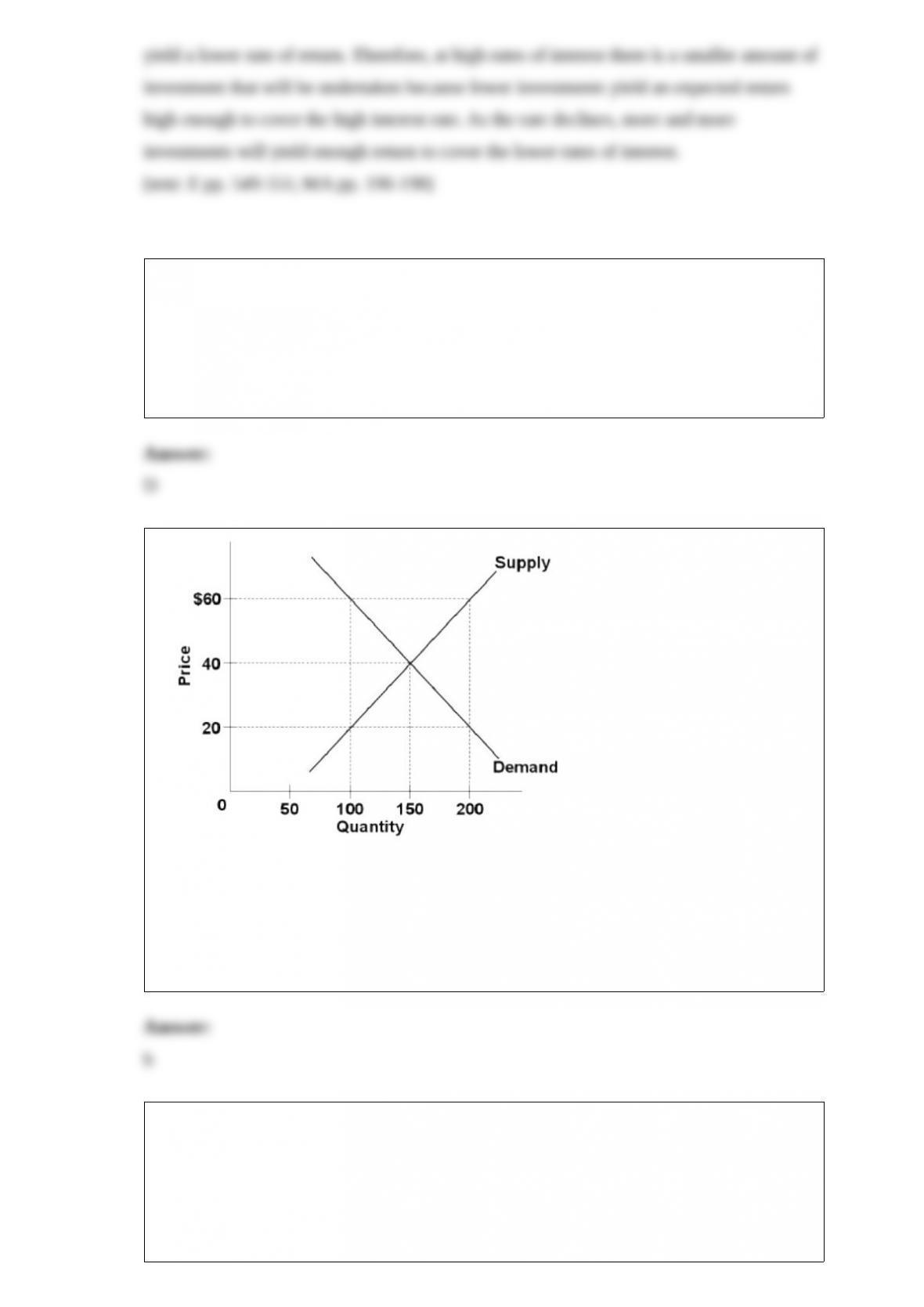
9)
refer to the above diagram. the highest price that buyers will be willing and able to pay
for 100 units of this product is:
a.$30.
b.$60.
c.$40.
d.$20.
10) a price discriminating pure monopolist will attempt to charge each buyer (or group
of buyers):
a.different prices to compensate for differences in the characteristics of the product.
b.the same price if per unit cost is constant for each unit of the product.
c.that price which equals the buyer’s marginal cost.
d.the maximum price each would be willing to pay.
11) Ignoring international trade, in a mixed economy aggregate expenditures are
comprised of:
A.Ca + S + G.
B.Ca + Ig + G.
C.Ca + S + Ig.
D.Ca + T + Ig.
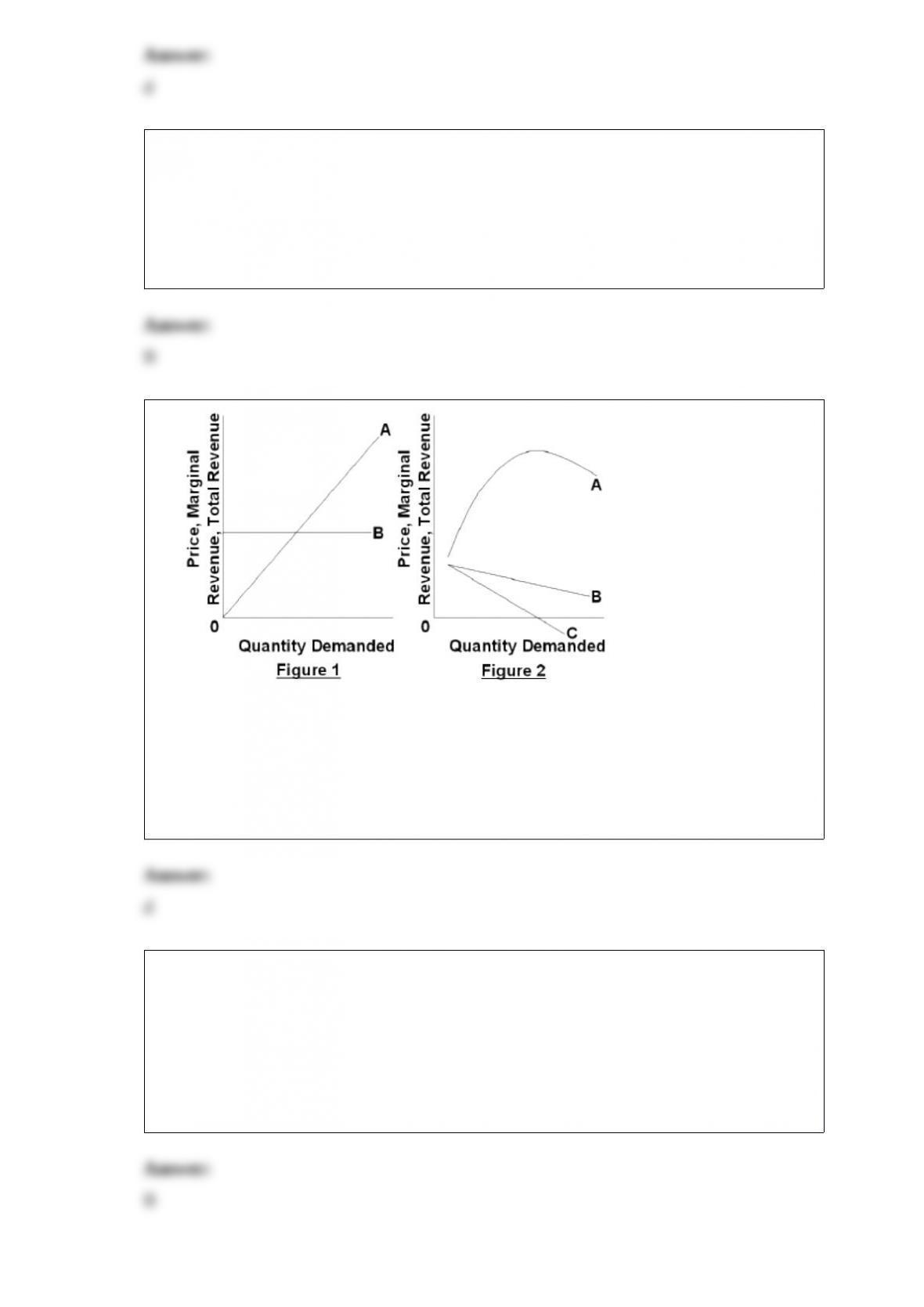
12)
refer to the above two diagrams for individual firms. in figure 1, line a represents the
firm’s:
a.demand and marginal revenue curves.
b.demand curve only.
c.marginal revenue curve only.
d.total revenue curve only.
13) In year 1 the price level is constant and the nominal rate of interest is 6 percent. But
in year 2 the inflation rate is 3 percent. If the real rate of interest is to remain at the
same level in year 2 as it was in year 1, then in year 2 the nominal interest rate must:
A.rise by 9 percentage points.
B.rise by 3 percentage points.
C.fall by 3 percentage points.
D.rise by 6 percentage points.
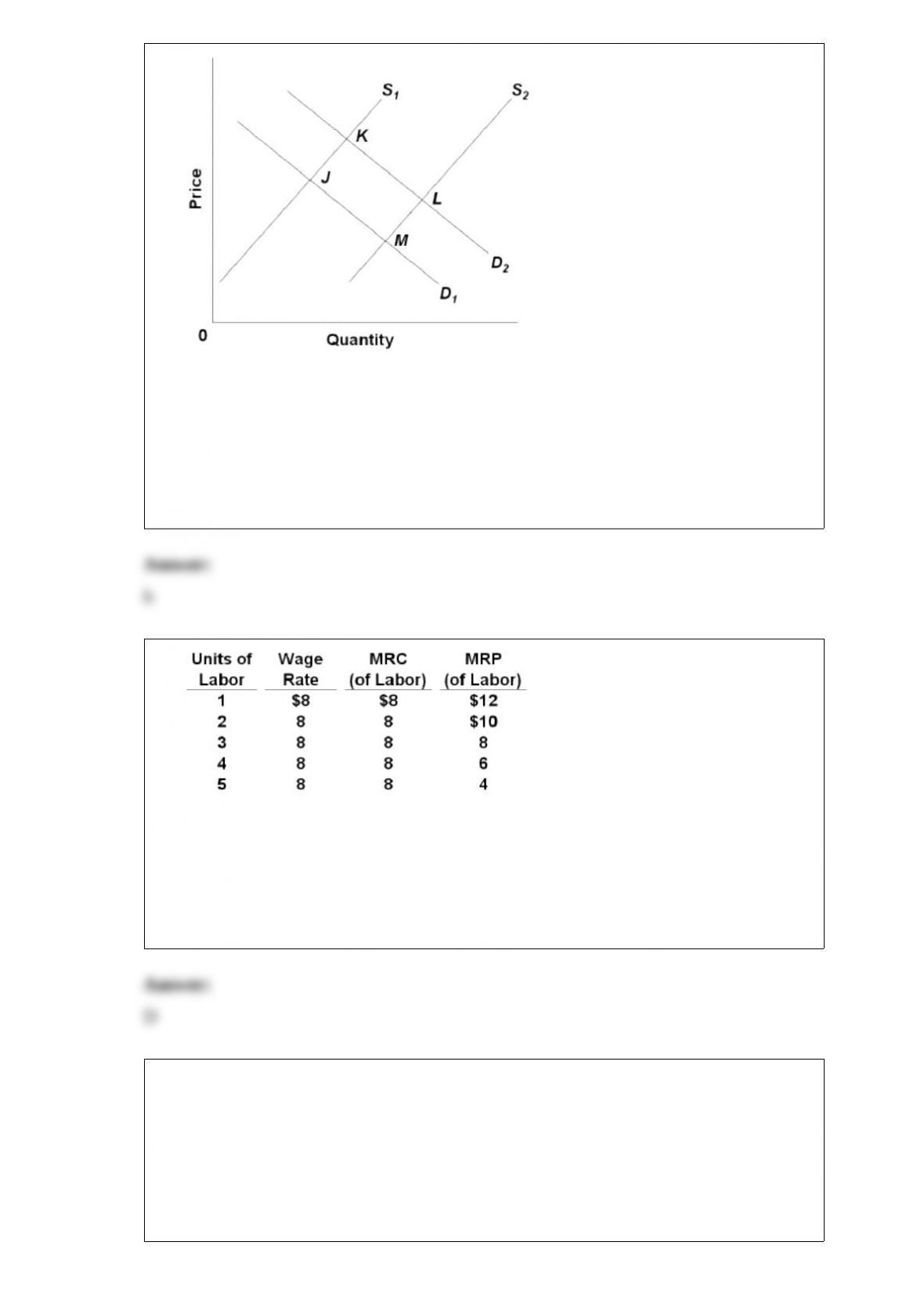
14)
refer to the above diagram, in which s1 and d1 represent the original supply and
demand curves and s2 and d2 the new curves. in this market the indicated shift in
supply may have been caused by:
a.an increase in the wages paid to workers producing this good.
b.the development of more efficient machinery for producing this commodity.
c.this product becoming less fashionable.
d.an increase in consumer incomes.
15)
Refer to the above data. At the profit maximizing level of employment, this firm’s, total
revenue will be:
A.$16.
B.$32.
C.$24.
D.$30.
16) An economic analysis of the relationship between proposed legislation affecting
major employers in each state and the voting patterns of Senators and representatives in
Congress on that legislation would fit within the subcategory of economics called:
A.the economics of fiscal policy.
B.public choice theory.
C.behavioral economics.
D.monetarism.
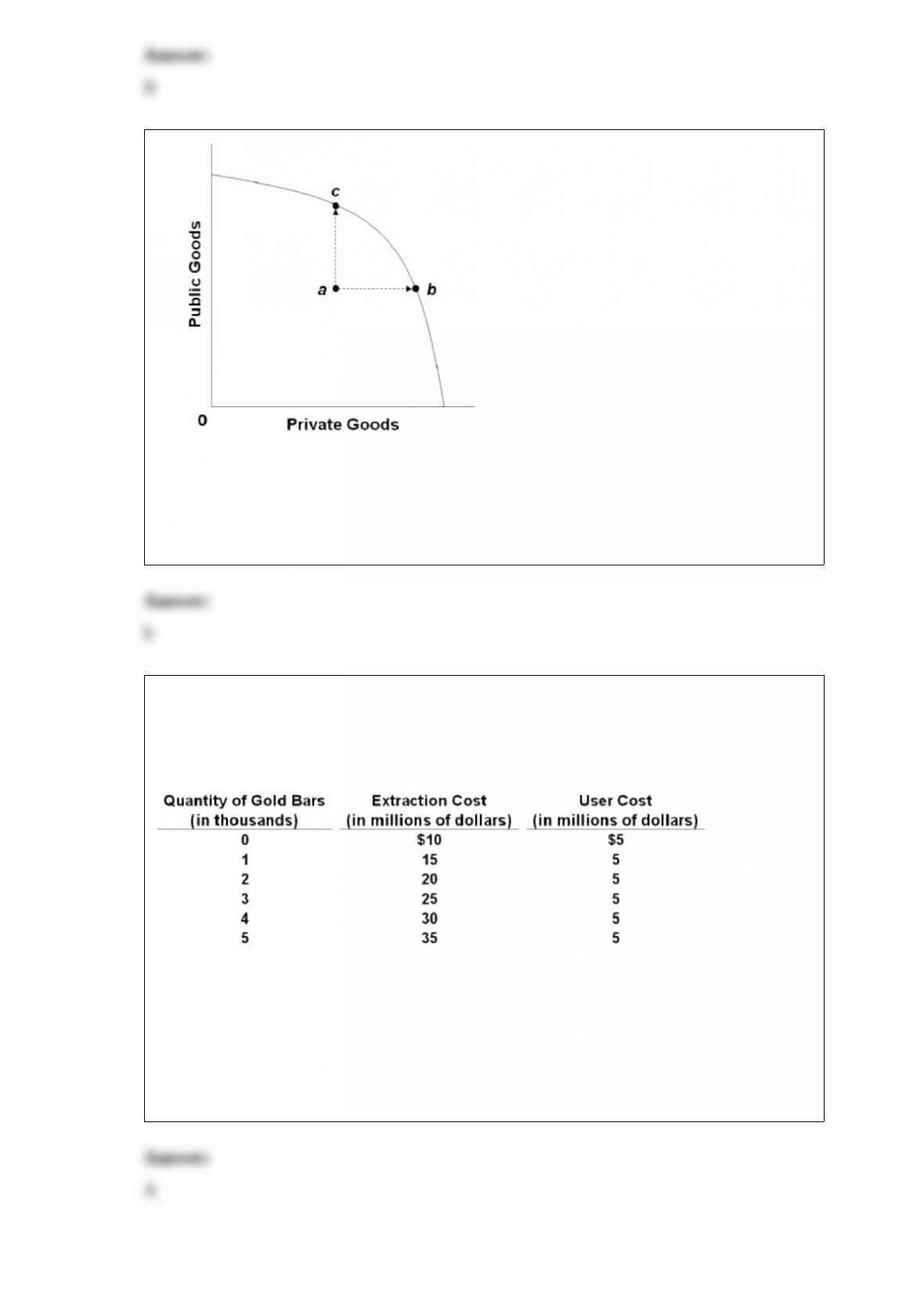
17)
refer to the above diagram. the movement from point b to point c suggests that more:
a.private goods are being produced at the expense of fewer public goods.
b.public goods are being produced at the expense of fewer private goods.
c.public goods are being produced by employing currently idle resources.
d.private goods are being produced by employing currently idle resources.
18) The table below shows the quantity of gold bars (Qb) in thousands, the extraction
cost for each thousand bars (in millions of dollars), and user cost of each thousand bars
(in millions of dollars) facing the OZ Mining Company this year.
Suppose that a new government regulation is going to shut down OZ’s mining operation
1 year from now. If the current price per bar of gold is $25,000, how many bars (in
thousands) should OZ extract and sell this year?
A.3
B.4
C.5
D.As many as possible
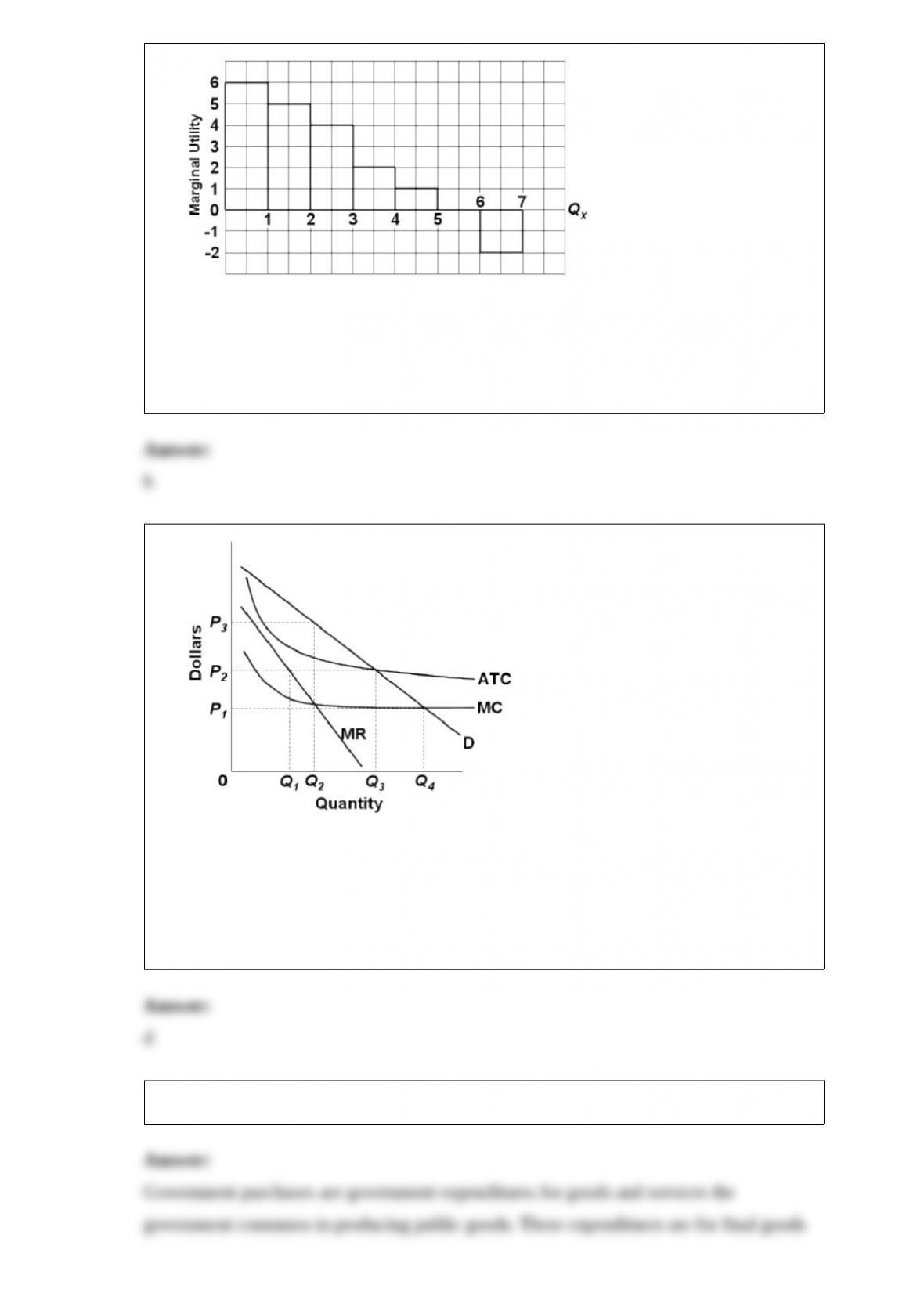
19)
refer to the above diagram. the marginal utility of the third unit of x is:
a.5
b.4
c.2
d.1
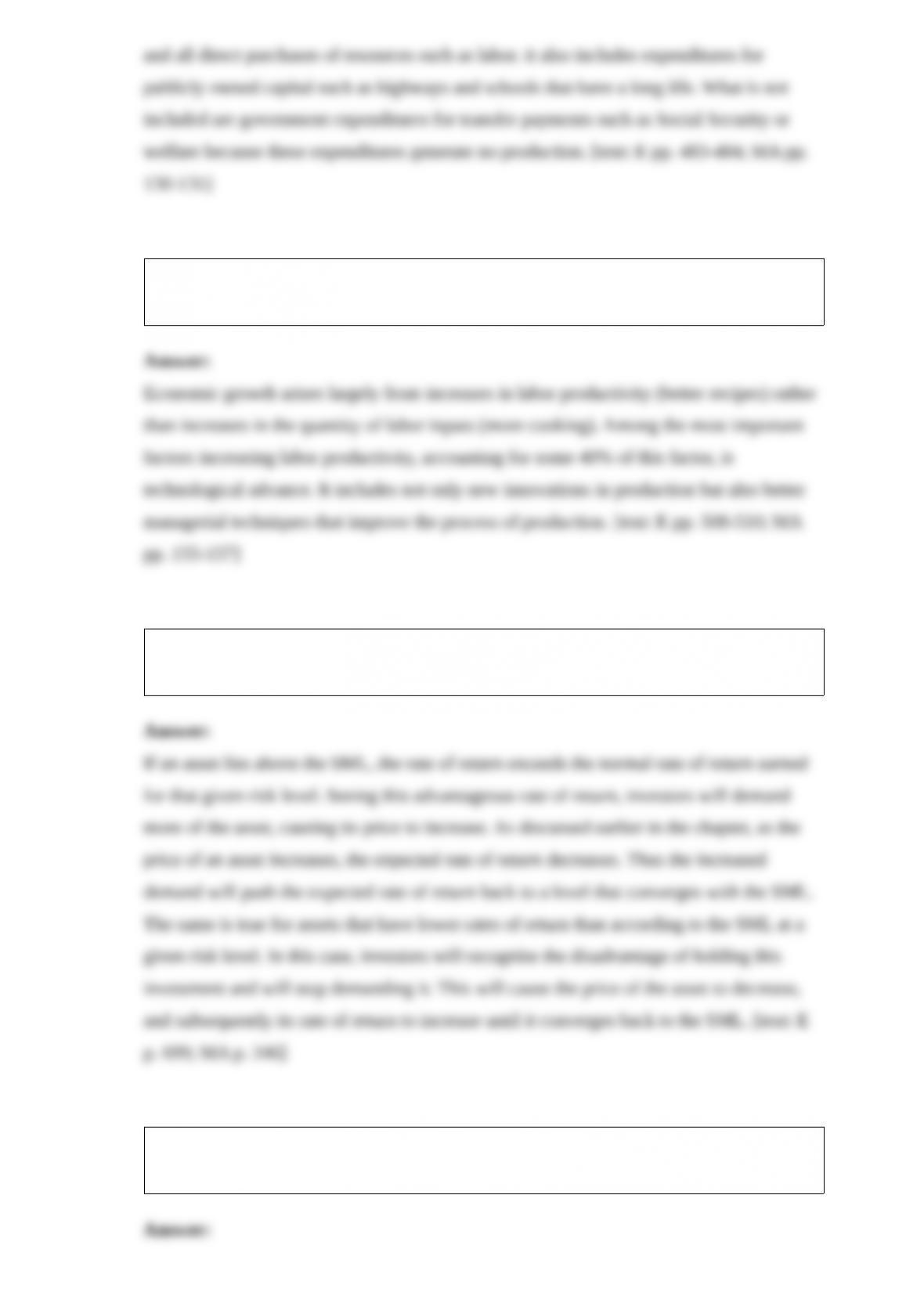
20)
refer to the above diagram for a natural monopolist. if a regulatory commission set a
maximum price of p2, the monopolist would:
a.produce output q1 and realize an economic profit.
b.produce output q3 and realize an economic profit.
c.close down in the short run.
d.produce output q3 and realize a normal profit.
21) Explain what is and what is not included in government purchases in GDP.
22) Discuss the meaning of the statement: Human history teaches us that economic
growth springs from better recipes, not just more cooking.
23) How does arbitrage tend to move any asset divergent from the Security Market Line
back to it?
24) Explain why even small changes in the rate of economic growth are significant. Use
the rule of 70 to demonstrate the point.
25) How does monopoly result in income transfers?
26) What is the consumer price index? How is it different from the GDP price index?
27) Is the Federal Reserve an independent institution?