In the United States, the average length of expansions from 1950 to 2009 was more
than twice as long than they were from 1900 to 1950.
Real business cycle models argue that fluctuations in real GDP are caused by
unanticipated changes in the money supply.
The fact that the prices for McDonald’s Big Mac sandwich are not the same around the
world illustrates one reason why purchasing power does not hold: Many goods are not
traded internationally.
A decrease in the number of firms in a market will cause supply to increase.

All else equal, as the price of a product falls, the quantity supplied decreases.
Prior to the 1930s, the majority of dollars spent by government was spent at the state
and local levels.
An increase in population results in an increase in demand.
In a centrally planned economy, the government decides how economic resources will
be allocated.

If the long-run aggregate supply curve is vertical,
A) the economy stays at the natural rate of inflation in the long run.
B) the short-run Phillips curve must be vertical.
C) unemployment and inflation are positively related in the long run.
D) the trade-off between unemployment and inflation cannot be permanent.
How can freedom of the press promote economic growth?
A) A free press can act as a watchdog for corruption, increasing chances for economic
growth.
B) A free press can be more easily swayed to report only one side of any issue.
C) A free press reduces the likelihood that judges will protect private property rights.
D) A free press does not promote economic growth.
Table 4-4
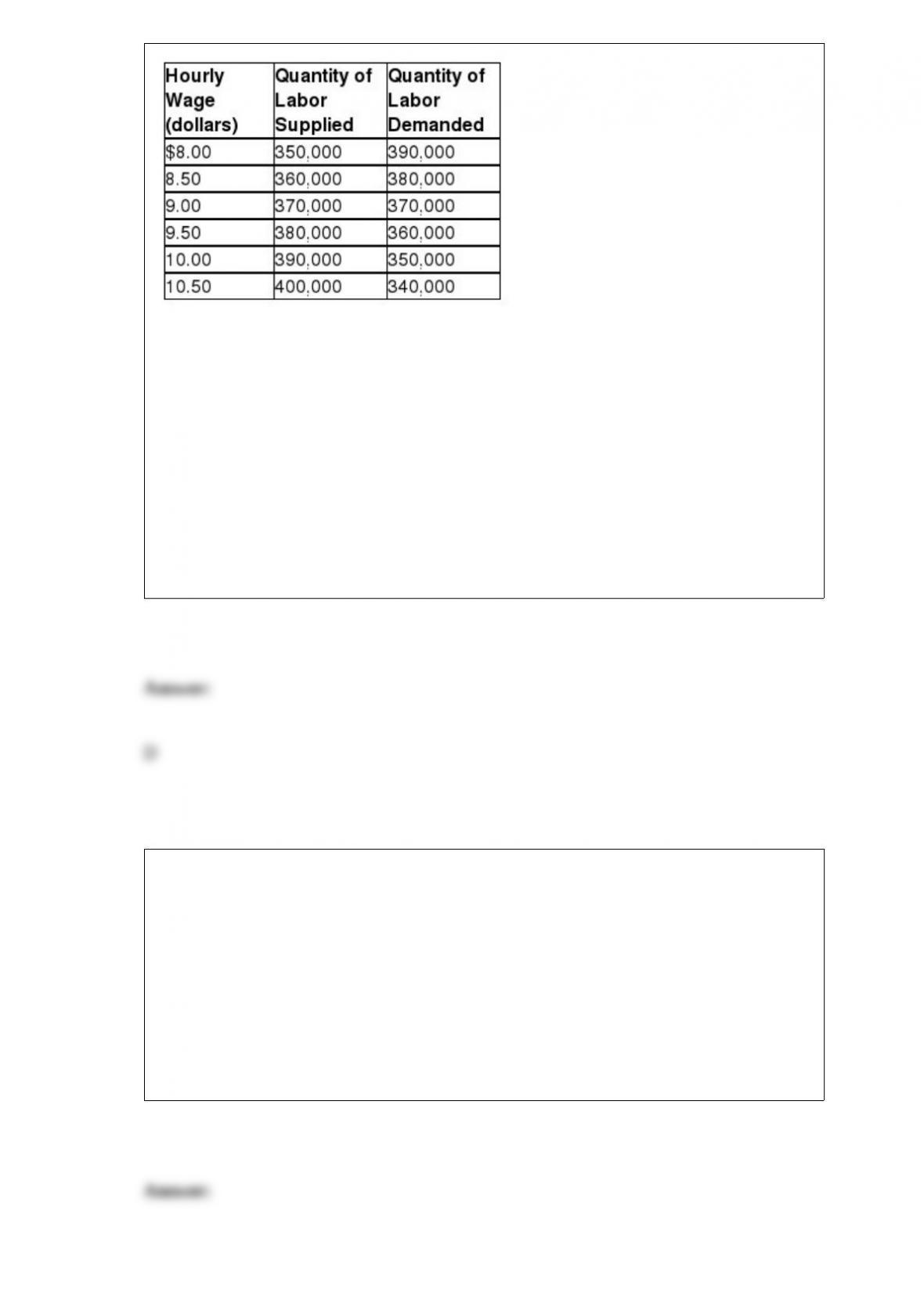
Table 4-4 shows the demand and supply schedules for the low-skilled labor market in
the city of Westover.
Refer to Table 4-4. If a minimum wage of $10.00 is mandated there will be a
A) shortage of 20,000 units of labor.
B) surplus of 20,000 units of labor.
C) shortage of 40,000 units of labor.
D) surplus of 40,000 units of labor.
If GDP grew 3% in 1970, 2.2% in 1971 and 2.5% in 1972 then, what is the average
annual growth rate over this period?
A) 5%
B) 4%
C) 2.6%
D) -2.2%

If the Federal Reserve attempts to continue reducing unemployment by manipulating
monetary policy, which of the following would you expect to see?
A) The Fed will follow deflationary monetary policies.
B) The Fed will follow inflationary monetary policies.
C) The rate of inflation will fall as Fed tries to reduce the unemployment rate.
D) The Fed will reduce the natural rate of unemployment.
A tariff
A) makes domestic consumers better off.
B) makes both domestic producers and consumers better off.
C) makes everyone worse off.
D) makes domestic producers better off.
Table 9-6

Refer to Table 9-6. Consider the following values of the consumer price index for 1996,
1997, and 1998: The inflation rate for 1997 was equal to
A) 1.2 percent.
B) 2.0 percent.
C) 2.5 percent.
D) 4.0 percent.
Enforcing property rights in an economy will
A) cause the market system to work less efficiently.
B) decrease the level of foreign portfolio investment.
C) encourage corruption and expand the underground economy.
D) raise the level of investment.
Table 8-16
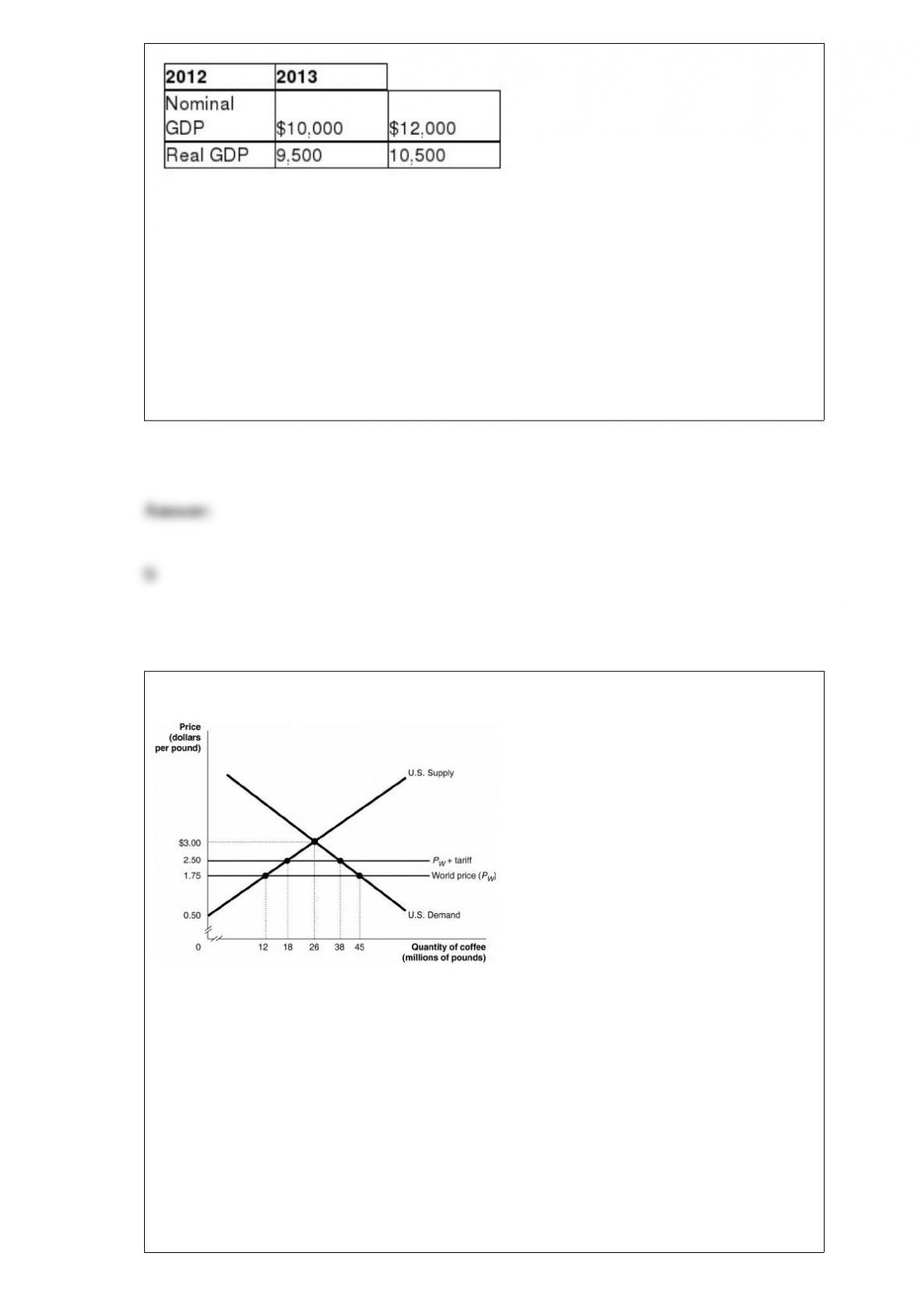
Refer to Table 8-16. Given the information above, what can we say has happened in the
economy from 2012 to 2013?
A) The price level has fallen.
B) The price level has risen.
C) The price level has remained constant.
D) Not enough information is available to determine what has happened to prices.
Figure 7-2
Suppose the U.S. government imposes a $0.75 per pound tariff on coffee imports.
Figure 7-2 shows the impact of this tariff.
Refer to Figure 7-2. Without the tariff in place, the United States consumes
A) 12 million pounds of coffee.
B) 26 million pounds of coffee.
C) 33 million pounds of coffee.
D) 45 million pounds of coffee.
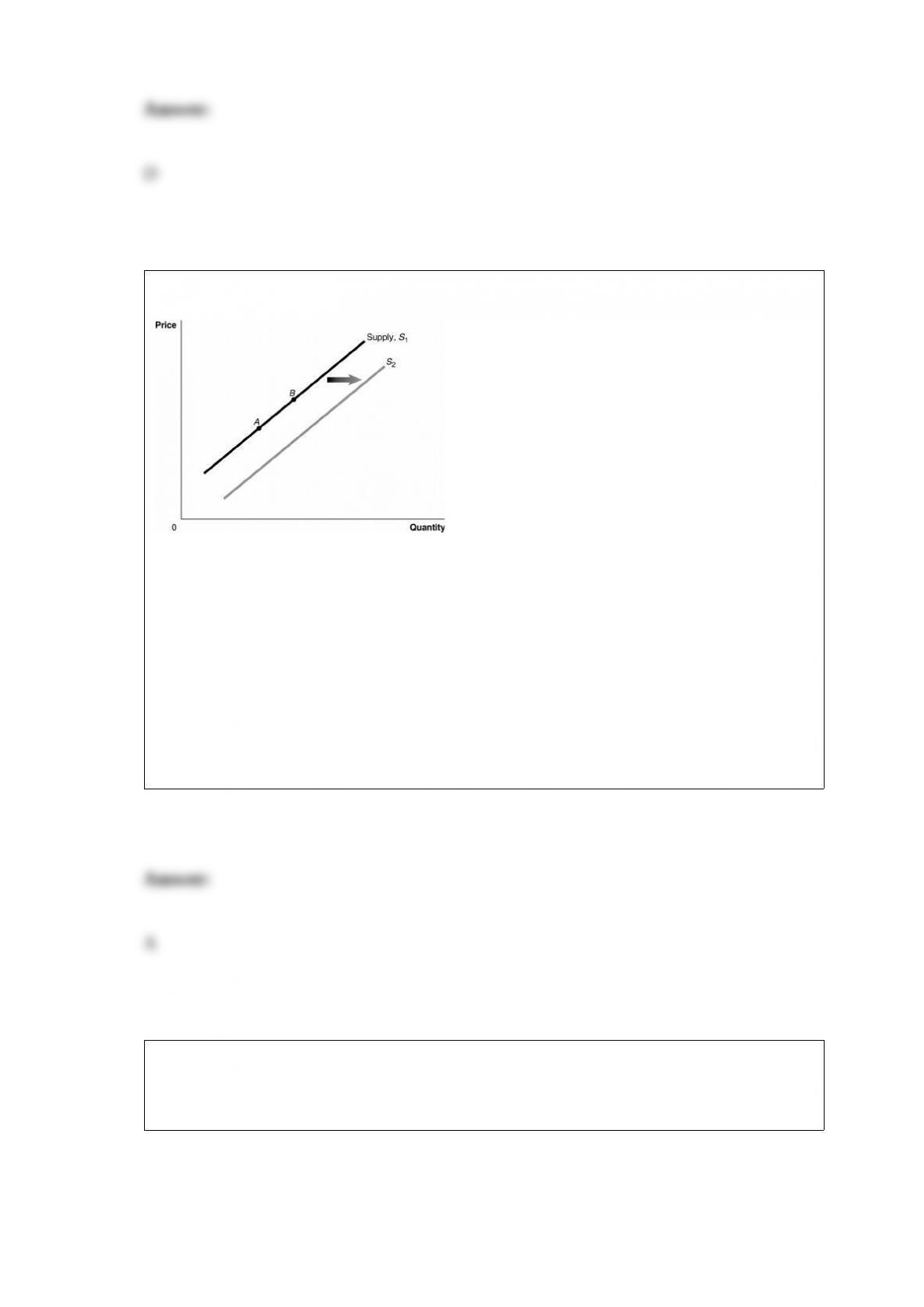
Figure 3-2
Refer to Figure 3-2. An increase in the price of the product would be represented by a
movement from
A) A to B.
B) B to A.
C) S1 to S2.
D) S2 to S1.
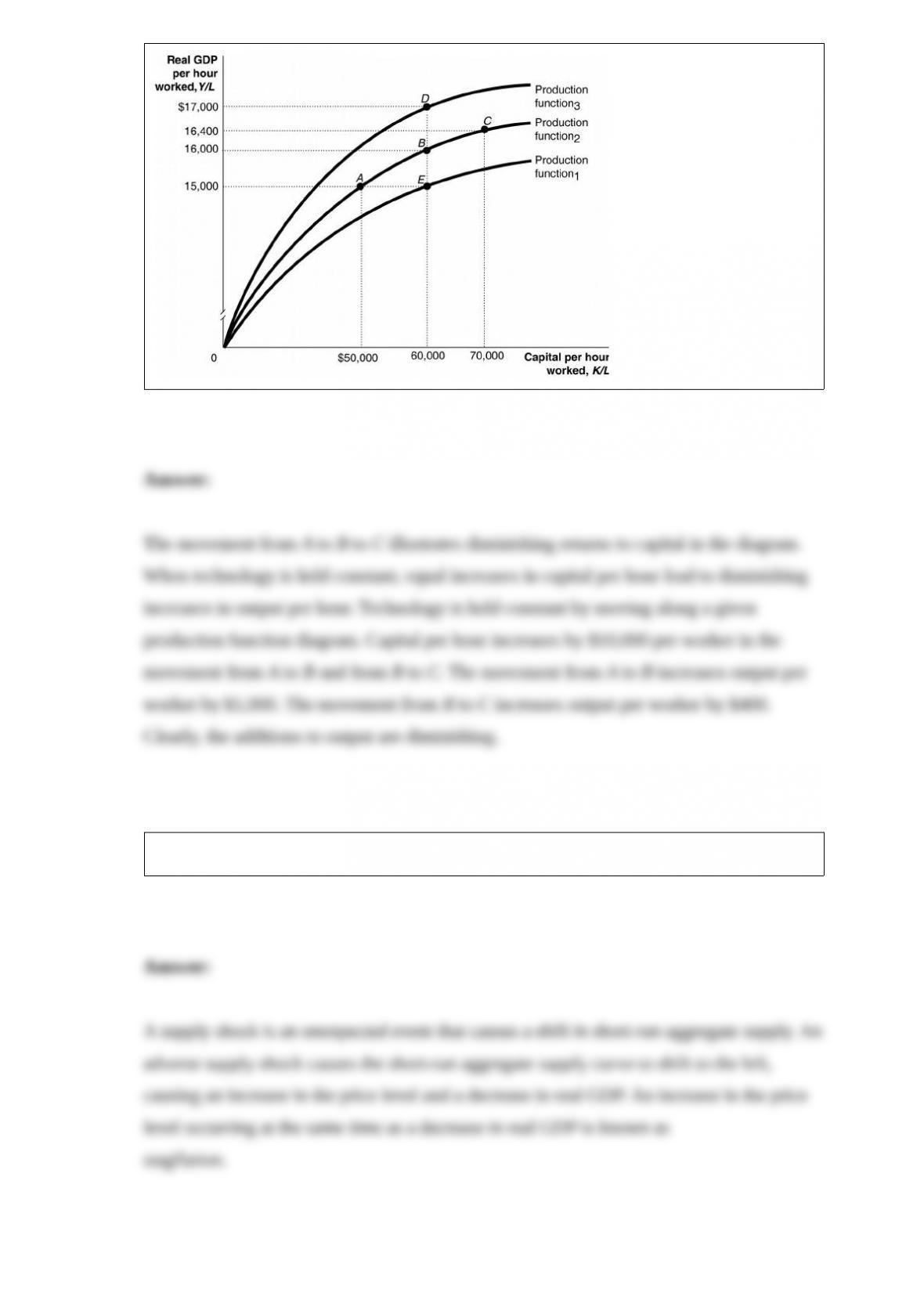
Using the points on the diagram below, identify which combinations of these points
illustrate diminishing returns to capital. Give a brief explanation to support your
answer.
What is a supply shock, and why might a supply shock lead to stagflation?
The reasons why someone cannot get a job are similar to the reasons why someone
cannot get a date. Using the ideas of frictionally unemployed, structurally unemployed,
and cyclically unemployed, describe and explain how a student at your university might
be frictionally “undated,” structurally “undated,” and cyclically “undated.”
According to monetary theory, if the money supply is growing at a rate of 5 percent,
real GDP is growing at a rate of 2 percent, and velocity is constant, what will the
inflation rate be?
Why is the balance of payments always zero?