
The law of increasing opportunity costs states that as
a. less of a good is produced, the higher the opportunity costs of producing that good.
b. more of a good is produced, the lower the opportunity costs of producing that good.
c. more of a good is produced, the higher the opportunity costs of producing that good.
d. more of a good is produced, the opportunity cost of producing the good remains the
same.
e. a and b
How does the classical position on saving differ from Keynes’s position?
a. Classical position: people save more at lower interest rates. Keynes’s position: people
save less at lower interest rates.
b. Classical position: changes in the interest rate are irrelevant to saving decisions.
Keynes’s position: saving is directly related to the interest rate.
c. Classical position: saving is directly related to the interest rate. Keynes’s position: at
times, saving may be inversely related to the interest rate.
d. Classical position: saving can be inversely related to the interest rate. Keynes’s
position: consumption rises as saving rises.
e. none of the above
Suppose there are five goods in the economy, A-E. The current-year quantity of each is

10A, 20B, 30C, 40D, and 50E. Current-year prices are $1 for each unit of A, $2 for
each unit of B, $3 for each unit of C, $4 for each unit of D, and $5 for each unit of E.
Base-year prices are $1 for each good. Real GDP in the current year equals _________
and GDP equals _________.
a. $550; $150
b. $130; $530
c. $150; $550
d. $530; $130
e. none of the above
Which of the following is not an example of a “lag” that diminishes the potential impact
of fiscal policy?
a. the data lag
b. the recessionary lag
c. the legislative lag
d. the transmission lag
e. None of the above; all are examples of such lags.
Exhibit 4-7
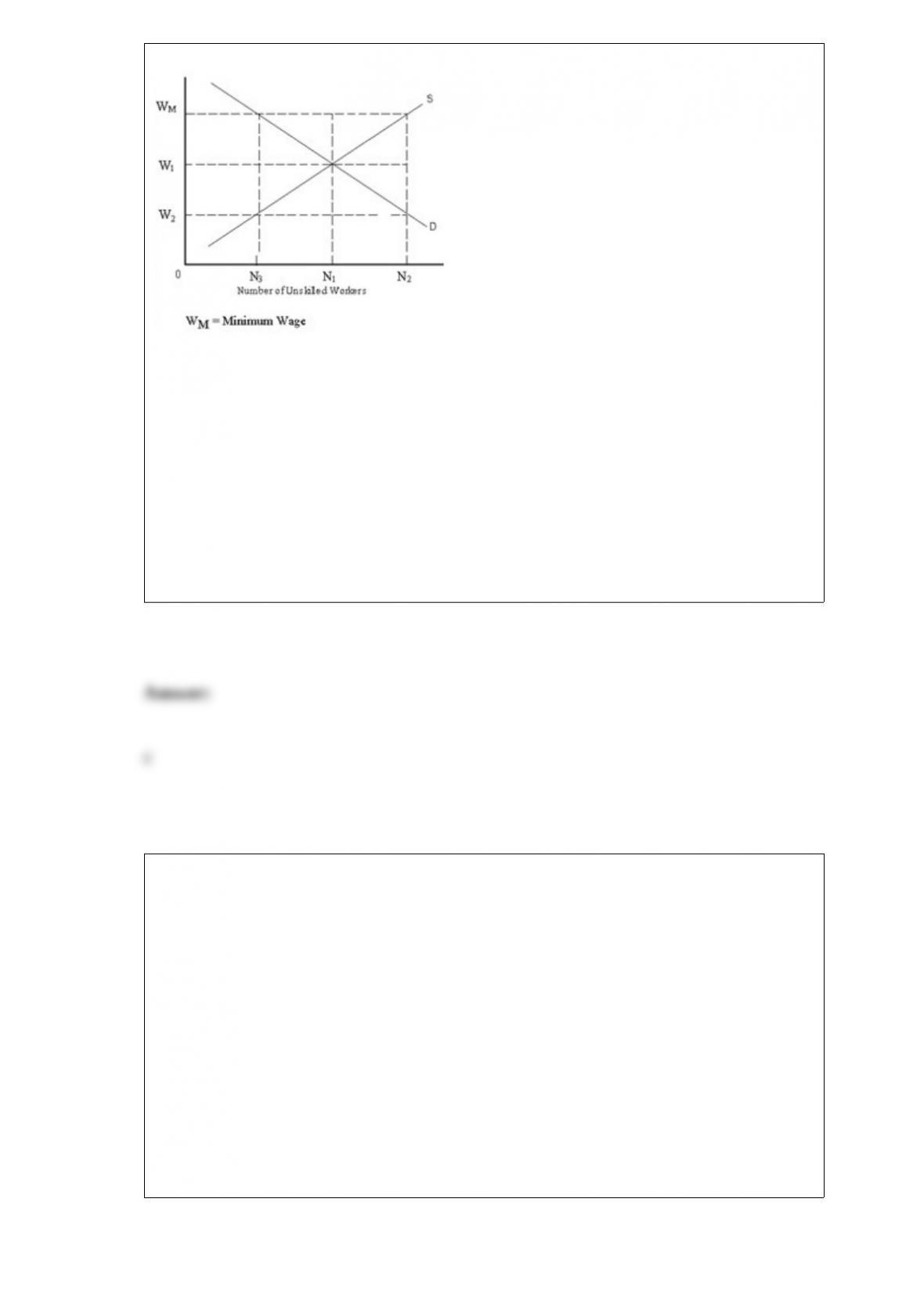
How many unskilled workers do firms want to employ at the minimum wage?
a. N2
b. N1
c. N3
d. N1 + N3
Keynesians are more likely to propose
a. contractionary monetary policy to eliminate an inflationary gap than expansionary
monetary policy to eliminate a recessionary gap.
b. contractionary monetary policy to eliminate a recessionary gap than contractionary
monetary policy to eliminate an inflationary gap.
c. expansionary monetary policy to eliminate a recessionary gap than contractionary
monetary policy to eliminate an inflationary gap.
d. none of the above; instead, Keynesians are as likely to propose expansionary
monetary policy to eliminate a recessionary gap as they are to propose contractionary
monetary policy to eliminate an inflationary gap.
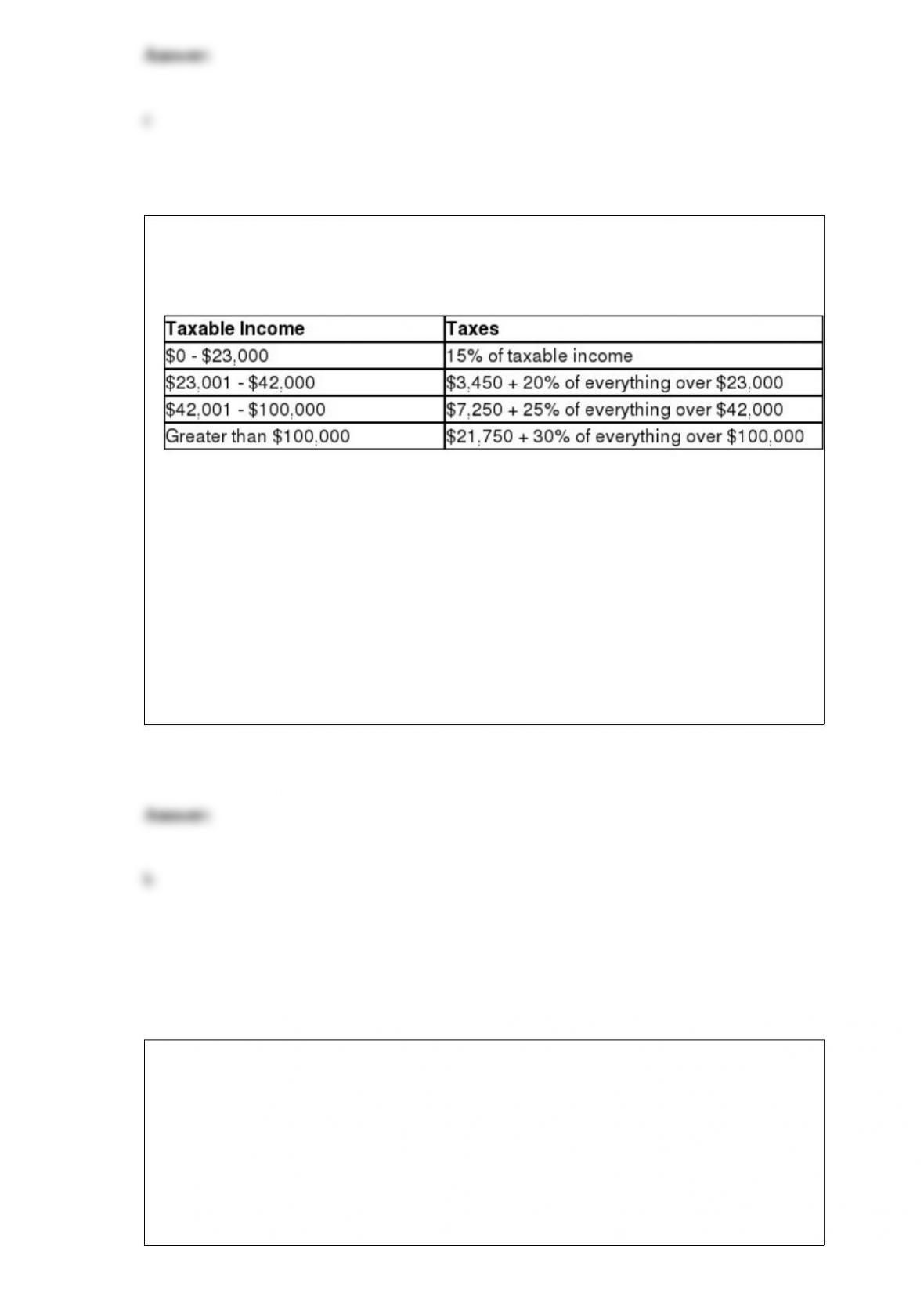
Use the information provided in Exhibit 11-4
What is the marginal tax rate on the 23,001st dollar of taxable income earned?
a. 15%
b. 20%
c. 25%
d. 30%
e. There is not enough information provided to answer this question.
In the short run, an increase in investment, ceteris paribus, shifts the
a. AD curve to the right, causing equilibrium price level to rise and equilibrium Real
GDP to increase.
b. AD curve to the left, causing equilibrium price level to fall and equilibrium Real
GDP to decrease.

c. SRAS curve to the right, causing equilibrium price level to fall and equilibrium Real
GDP to increase.
d. SRAS curve to the left, causing equilibrium price level to rise and equilibrium Real
GDP to decrease.
When the Fed sells government securities to a bank, the
a. bank’s reserves increase.
b. bank’s reserves decrease.
c. bank’s reserves do not change.
d. securities are an asset for the bank.
e. b and d
Why is bad weather sometimes good news for farmers?
a. Bad weather shifts the supply curve of agricultural products leftward, driving up
price and total revenue (assuming demand is inelastic).
b. Bad weather shifts the supply curve of agricultural products leftward, driving down
price, and raising total revenue (assuming demand is elastic).
c. Bad weather increases the demand for and price of agricultural products.
d. Bad weather increases both the demand for and supply of agricultural products.
A divisive society is a nonexcludable public _____________ because it comes with
____________.
a. good; utility
b. bad; disutility
c. bad; utility
d. good; disutility
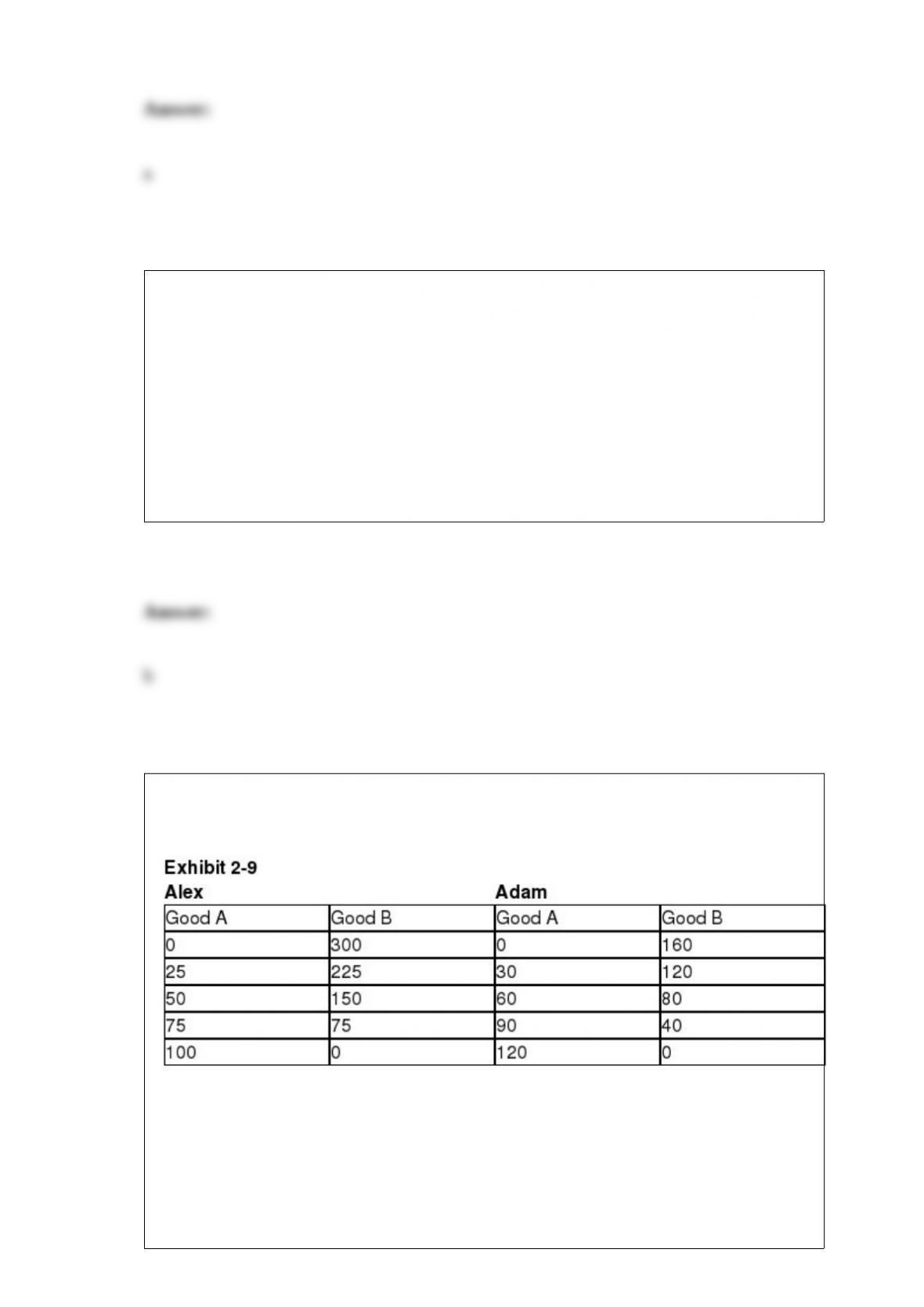
For Adam, the opportunity cost of producing one unit of good B is ____________
unit(s) of good A.
a. 3.00
b. 0.33

c. 0.75
d. 1.33
If the government legalizes the purchase and sale of marijuana, the equilibrium quantity
would _________ and the price would ________ if the supply of marijuana increased
by _______ than the demand for marijuana increased as a result of the legalization.
a. rise; rise; more
b. fall; rise; more
c. rise; fall; more
d. rise; rise; less
e. none of the above
There is demand for and supply of dollars and a demand for and supply of pesos. Under
a flexible exchange rate system, if income growth in the United States is greater than
income growth in Mexico, then
a. the demand for dollars will shift to the right and the demand for pesos will shift to the
left.

b. the demand for pesos will shift to the right and the supply of dollars will shift to the
left.
c. the demand for pesos will shift to the left and the supply of pesos will shift to the
right.
d. the supply of pesos will shift to the right and the supply of dollars will shift to the
right.
e. none of the above
Theories should be judged based upon how
a. well they explain things.
b. consistently and accurately they predict.
c. famous the economist is making the prediction.
d. the amount of attention given to them by the media.
e. a and b
“As the price of apples goes up, the demand for apples goes down.” The author of this
statement
a. implies that price and demand are unrelated.
b. uses the word “demand” when he should use the word ‘supply.”

c. uses the word “demand” when he should use the words “quantity demanded.”
d. implies that demand and price have a direct relationship.
If total production is greater than total expenditures,
a. there will be an increase in saving.
b. there will be an increase in inventories.
c. firms will then increase production.
d. firms will then increase prices.
If nominal GDP is declining, it is necessarily true that Real GDP is also declining.
a. True
b. False

If the government establishes a price floor for agricultural products, then
a. consumers will pay a lower price for the products.
b. consumers will increase the quantity that they are willing to consume.
c. farmers will want to decrease their production.
d. the government will need to purchase the resulting surplus.
e. all of the above
The NCAA rule governing the limits on the amount of a scholarship a college can offer
an athlete is an effective price floor.
a. True
b. False