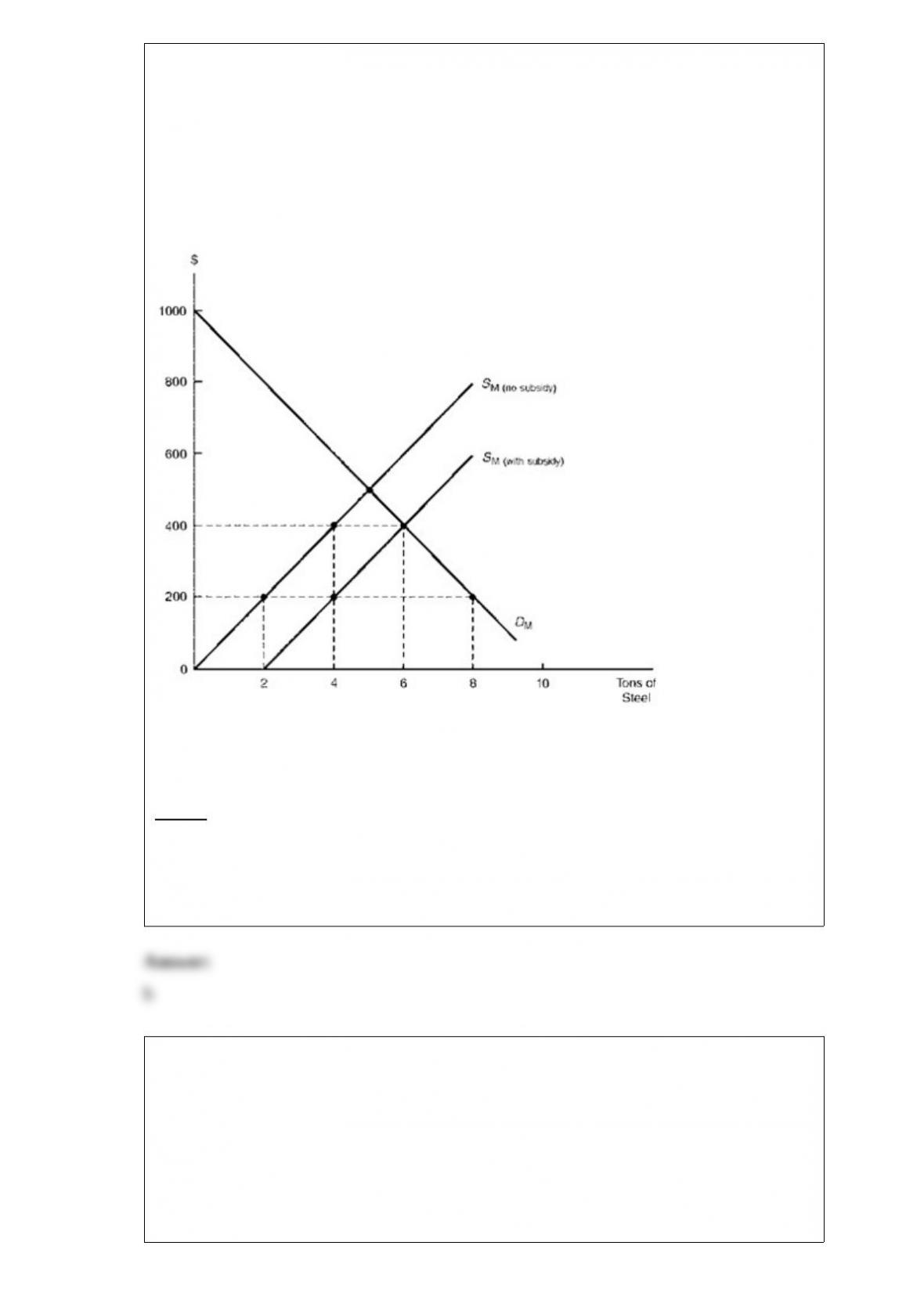
1) figure 5.1 illustrates the steel market for mexico, assumed to be a ‘small” country that
is unable to affect the world price. suppose the world price of steel is given and constant
at $200 per ton. now suppose the mexican steel industry is able to obtain trade
protection.
figure 5.1. alternative nontariff trade barriers levied by a ‘small” country
referring to figure 5.1, suppose the mexican government imposes an import quota equal
to 2 tons of steel.
if the mexican government auctions import licenses to the highest foreign bidder, the
overall welfare loss of the quota to mexico equals:
a.$200
b.$400
c.$600
d.$800
2) according to the specific factors trade theory:
a.owners of factors specific to export industries suffer from trade, while owners of
factors specific to import-competing industries gain
b.owners of factors specific to export industries gain from trade, while owners of
factors specific to import-competing industries suffer
c.both owners of factors specific to export industries and owners of factors specific to
import-competing industries gain from trade
d.both owners of factors specific to export industries and owners of factors specific to

import-competing industries suffer from trade
3) current trade rules permit countries to enact measures to protect the health and safety
of their citizens as long as all goods are treated equally, the tobacco companies argue.
a.true
b.false
4) the marshall-lerner condition asserts that if the sum of a country’s elasticity of
demand for imports and the foreign elasticity of demand for the country’s exports equals
1.0, a depreciation of the country’s currency will not affect its balance of trade.
a.true
b.false
5) the shift in focus toward imperfectly competitive markets in domestic and
international trade questions the concept of:
a.official exchange rates
b.complete currency pass-through
c.exchange arbitrage
d.trade-adjustment assistance
6) an antidumping duty levied on imports of foreign-produced steel leads to an increase
in consumer surplus in the home country.
a.true
b.false
7) assume that brazil has a constant money supply and that it devalues its currency. the
monetary approach to devaluation reasons that one of the following tends to occur for
brazil:
a.domestic prices rise–purchasing power of money falls–consumption falls
b.domestic prices rise–purchasing power of money rises–consumption rises
c.domestic prices fall–purchasing power of money rises–consumption falls
d.domestic prices fall–purchasing power of money rises–consumption rises
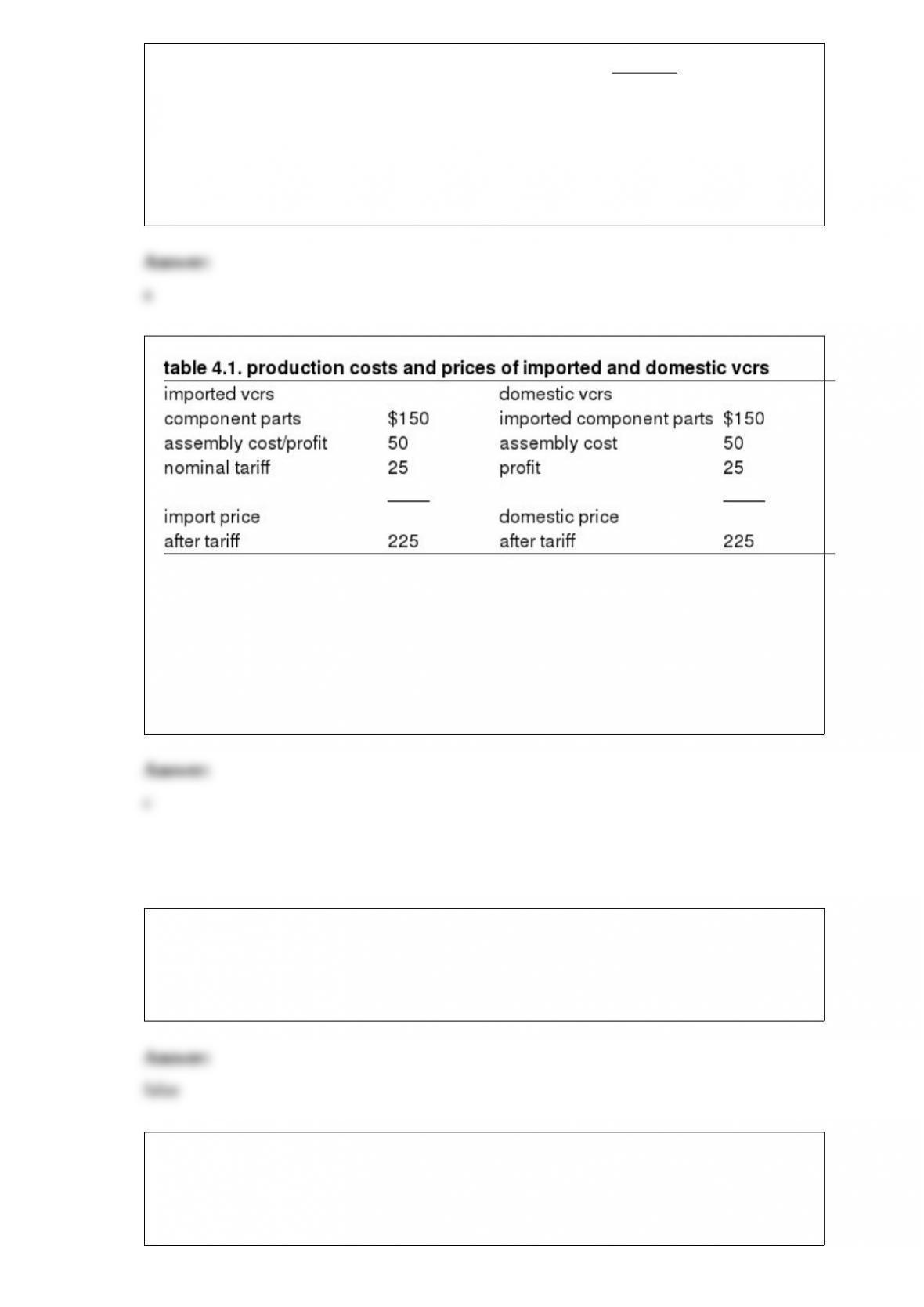
8) consider table 4.1. after the tariff, domestic value added equals:
a.$25
b.$50
c.$75
d.$100
9) a currency speculator’s goal is to buy a currency at a low price and immediately
resell it at a higher price, thus realizing a riskless profit.
a.true
b.false
10) the figure below illustrates the supply and demand schedules of swiss francs in a
market of freely-floating exchange rates.
figure 12.1 the market for francs
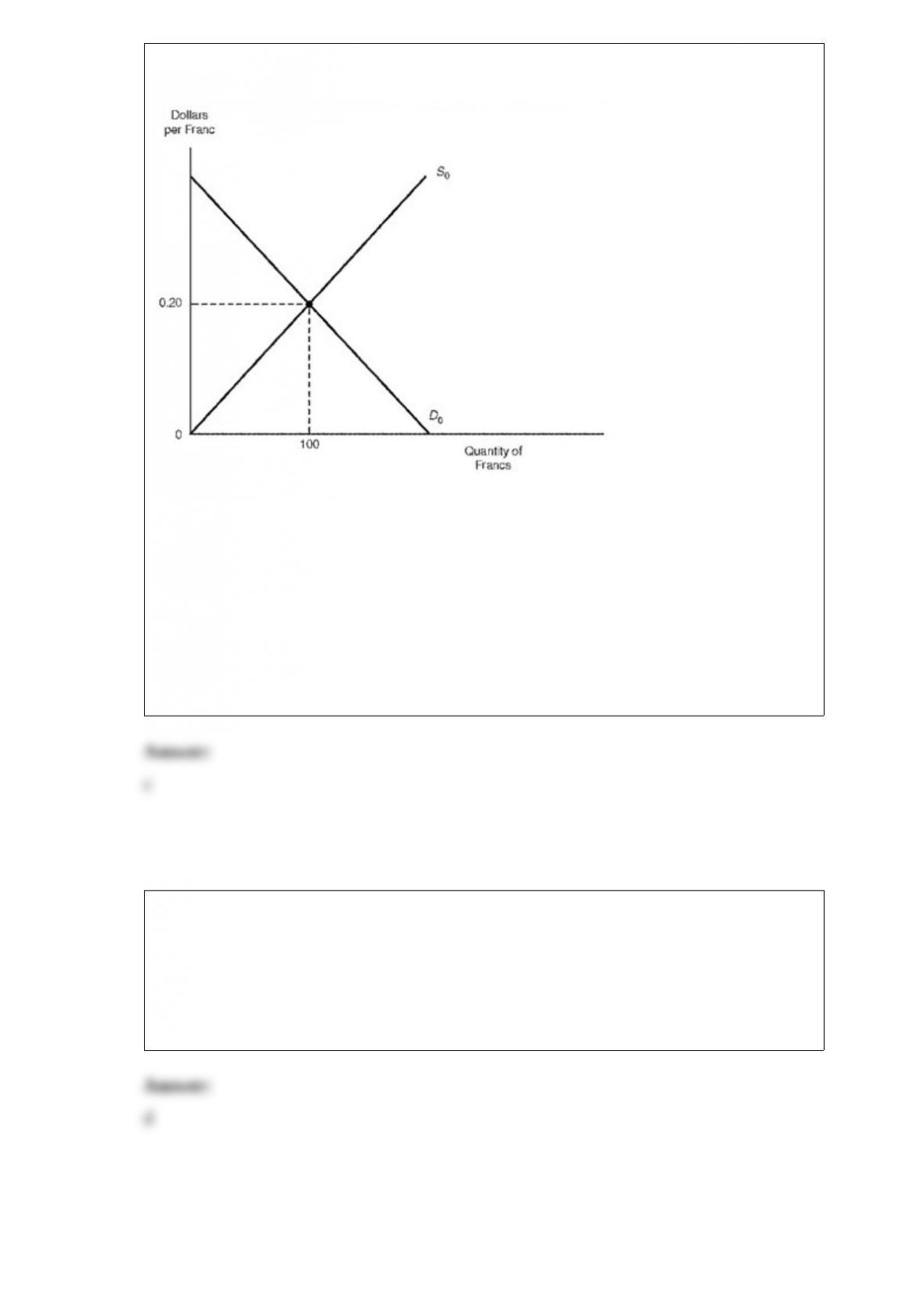
refer to figure 12.1. should real interest rates in the united states rise relative to real
interest rates in switzerland, there would occur a (an):
a.increase in the demand for francs–decrease in the supply of francs-depreciation of the
dollar
b.increase in the demand for francs–decrease in the supply of francs-appreciation of the
dollar
c.decrease in the demand for francs–increase in the supply of francs-appreciation of the
dollar
d.decrease in the demand for francs–decrease in the supply of francs-depreciation of
the dollar
11) which of the following is likely to result in long-run appreciation of the u.s. dollar
relative to the peso?
a.relatively high interest rates in mexico
b.relatively high labor productivity in mexico
c.tariffs applied by mexico on computer imports from the united states
d.stronger mexican preferences for goods produced in the united states

12) by reducing available supplies of a product, an export embargo leads to falling
prices in the target nation and increasing target-nation consumer surplus.
a.true
b.false
13) under the government procurement policy of the world trade organization,
federal-state-local governments are prevented from discriminating in favor of the
products of domestic suppliers on contracts valued at $1 million and more.
a.true
b.false
14) complete specialization usually occurs under the assumption of increasing
opportunity costs.
a.true
b.false