1) The U-shaped yield curve in the figure above indicates that short-term interest rates
are expected to
A) rise in the near-term and fall later on
B) fall sharply in the near-term and rise later on
C) fall moderately in the near-term and rise later on
D) remain unchanged in the near-term and rise later on
2) Under parent company theory, the amount of consolidated net income is equal to the
amount of ________ under entity theory.
A) noncontrolling interest share
B) noncontrolling interest income
C) income attributable to controlling stockholders
D) income attributable to noncontrolling stockholders
3) Which of the following bonds would have the highest default risk?
A) Municipal bonds
B) Investment-grade bonds
C) US Treasury bonds
D) Junk bonds
4) Picasso Co. issued 5,000 shares of its $1 par common stock, valued at $100,000, to
acquire shares of Seurat Company in an all-stock transaction. Picasso paid the
investment bankers $35,000 and will treat the investment banker fee as
A) an expense for the current year.
B) a prior period adjustment to Retained Earnings.
C) additional goodwill on the consolidated balance sheet.
D) a reduction to additional paid-in capital.
5) The SEC requires push-down accounting for SEC filings of subsidiaries when the
subsidiary has no substantial publicly-held debt or preferred stock outstanding and
A) the parent has substantial ownership (5% or greater)
B) the parent has substantial ownership (20% or greater)
C) the parent has substantial ownership (50% or greater)
D) the parent has substantial ownership (90% or greater)
6) For nonprofit, nongovernmental organizations, unconditional promises to give that
include promises of payments due in future periods (next year or later) are reported as
A) unrestricted revenues
B) unrestricted support
C) deferred revenues until payment is received
D) restricted revenues
7) Pace Corporation owns 70% of Abaza Corporation and 60% of Babon Corporation.
Abaza Corporation owns 20% of Babon Corporation. Pace’s investment in Abaza was
consummated in one transaction at a purchase price $20,000 in excess of the book
value. Pace’s purchase of Babon was made in one transaction at a price $30,000 above
book value. Abaza’s investment in Babon was completed in one transaction at a
purchase price $10,000 in excess of the book value. The purchase price differential for
all three investments was attributable to goodwill. (There were no fair value/book value
differences in assets and liabilities for each investment.) Pace’s separate net income for
the current year is $100,000. Abaza’s separate net income is $190,000, which includes a
$10,000 unrealized loss on the sale of land to Pace. Babon’s separate net income is
$150,000. Separate net incomes exclude investment income.
The controlling interest share of consolidated net income for the current year is
A) $341,000
B) $348,400
C) $351,000
D) $355,000
8) On October 4, 2010, Sooty Corporation borrowed 250,000 British pounds from a
London bank, evidenced by an interest-bearing note payable due in one year. The note
was payable in pounds. Exchange rates for pounds were:
October 4, 2010$1.59
December 31, 2010$1.55
October 4, 2011$1.61
What is the final amount of the loan payable that Sooty repaid?
A) $250,000
B) $287,500
C) $397,500
D) $402,500
9) When examining revenue transactions, which of the following transactions is
classified as an exchange transaction?
A) When a homeowner pays property taxes
B) When a university receives a federal grant that mandates a certain type of research
activity
C) When an aquatic center receives cash for a group swim
D) When an employer deducts money for state tax withholding
10) On November 2, 2011, Bellamy Corporation sells product to their Danish customer.
At the same time, Bellamy signed a forward contract to sell 200,000 Danish krone in
ninety days to hedge the account receivable at $0.1905, the 90-day forward rate. The
receivable is expected to be collected in ninety days. Assume the forward contract will
be settled net and this is a fair value hedge. The related exchange rates are shown
below:
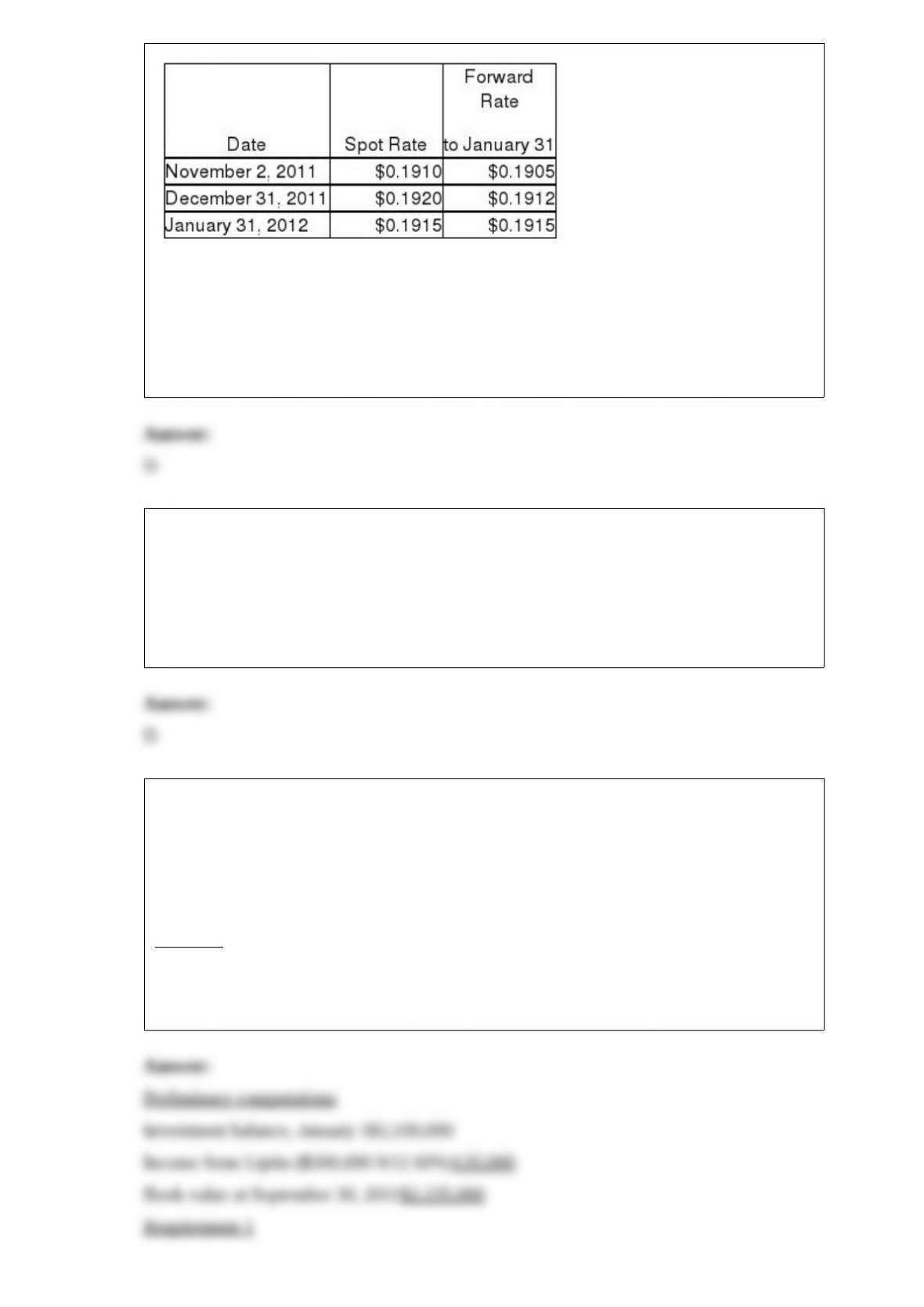
Assuming a present value factor of 1 for simplicity, what is the fair value of this
forward contract on January 31?
A) $-0-
B) $ 60 asset
C) $160 liability
D) $200 liability
11) What method must be used if FASB Statement No. 94 prohibits full consolidation
of a 70% owned subsidiary?
A) The cost method
B) The Liquidation value
C) Market value
D) Equity method
12) On January 1, 2011, Fly Corporation held a 60% interest in Liptin Corporation. The
investment account balance was $2,100,000, consisting of 60% of Liptin’s $3,500,000
of net assets.
During 2011, Liptin earned $300,000 uniformly and paid dividends of $110,000 on
November 1 . On October 1, 2011, Fly sold 10% of its investment in Liptin for
$364,000, thereby reducing its interest in Liptin to 54%.
Required: Compute the following using the actual sales date assumption:
1> Gain or loss on sale.
2> Income from Liptin for 2011 .
3> Noncontrolling interest share for 2011 .

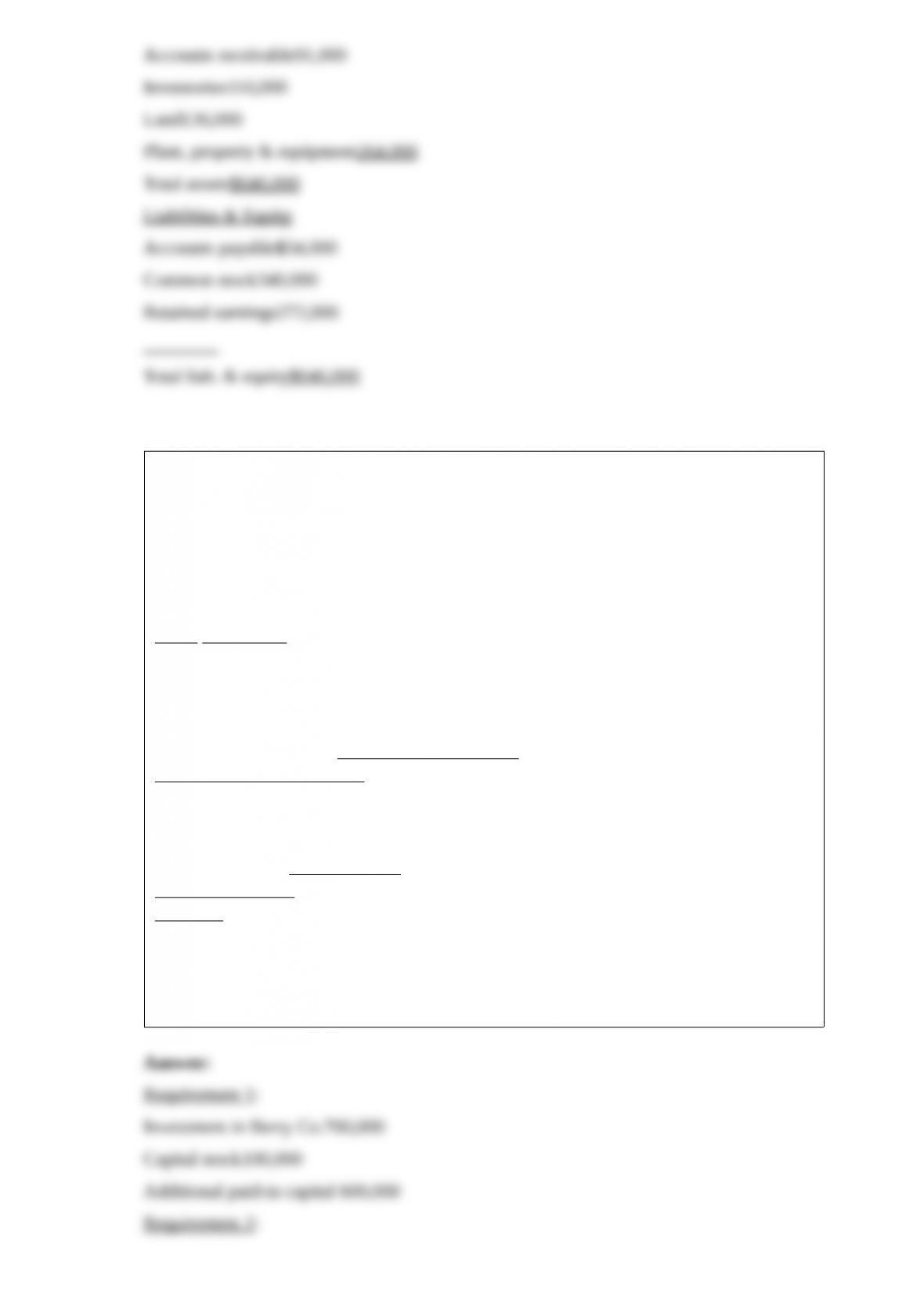
13) Patch Corporation has a 50% undivided interest in Saric Corporation, a joint
venture. Patch accounts for its interest in Saric by the equity method and also prepares
consolidated financial statements for external reporting purposes. Patch follows
specialized industry practices and uses proportionate consolidation for its interest in
Saric. Separate financial statements for Patch and Saric are as follows:
PatchSaricConsolidation
Cash$30,000$18,000________
Accounts receivable70,00042,000________
Inventories80,00072,000________
Investment in Saric140,000________
Land116,00040,000________
Plant, property, equipment200,000128,000________
Total assets$636,000$300,000________
Accounts payable$24,000$20,000________
Common stock340,0000________
Retained earnings272,000________
Venture capital________280,000________
Total liab. & equity$636,000$300,000________
Required:
Prepare the consolidated balance sheet for Patch Corporation and its undivided interest
in Saric Corporation.
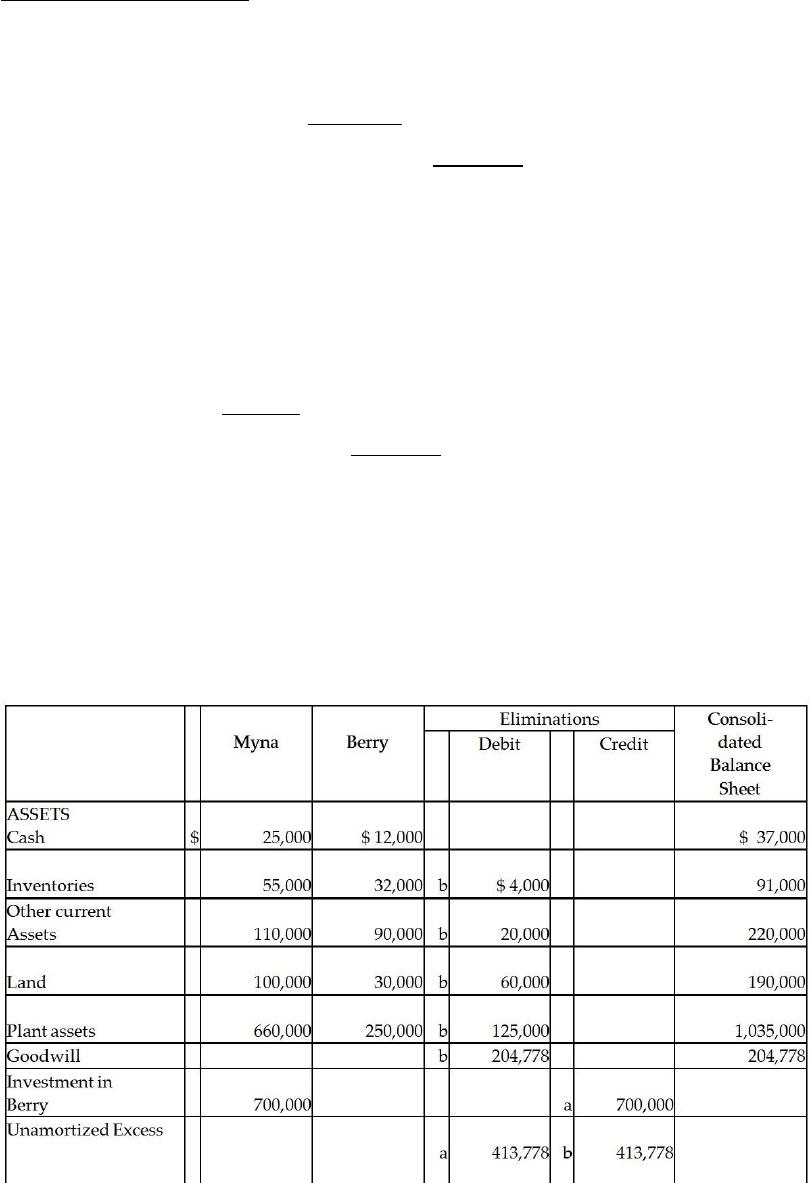
14) On January 1, 2005, Myna Corporation issued 10,000 shares of its own $10 par
value common stock for 9,000 shares of the outstanding stock of Berry Corporation in
an acquisition. Myna common stock at January 1, 2005 was selling at $70 per share.
Just before the business combination, balance sheet information of the two corporations
was as follows:
MynaBerryBerry
Book BookFair
Value ValueValue
Cash$25,000$12,000$12,000
Inventories55,00032,00036,000
Other current assets110,00090,000110,000
Land100,00030,00090,000
Plant and equipment-net660,000250,000375,000
$950,000$414,000$623,000
Liabilities$220,000$50,000$50,000
Capital stock, $10 par value500,000100,000
Additional paid-in capital170,00040,000
Retained earnings60,000224,000
$950,000$414,000
Required:
1>Prepare the journal entry on Myna Corporation’s books to account for the investment
in Berry Company.
2>Prepare a consolidated balance sheet for Myna Corporation and Subsidiary
immediately after the business combination.

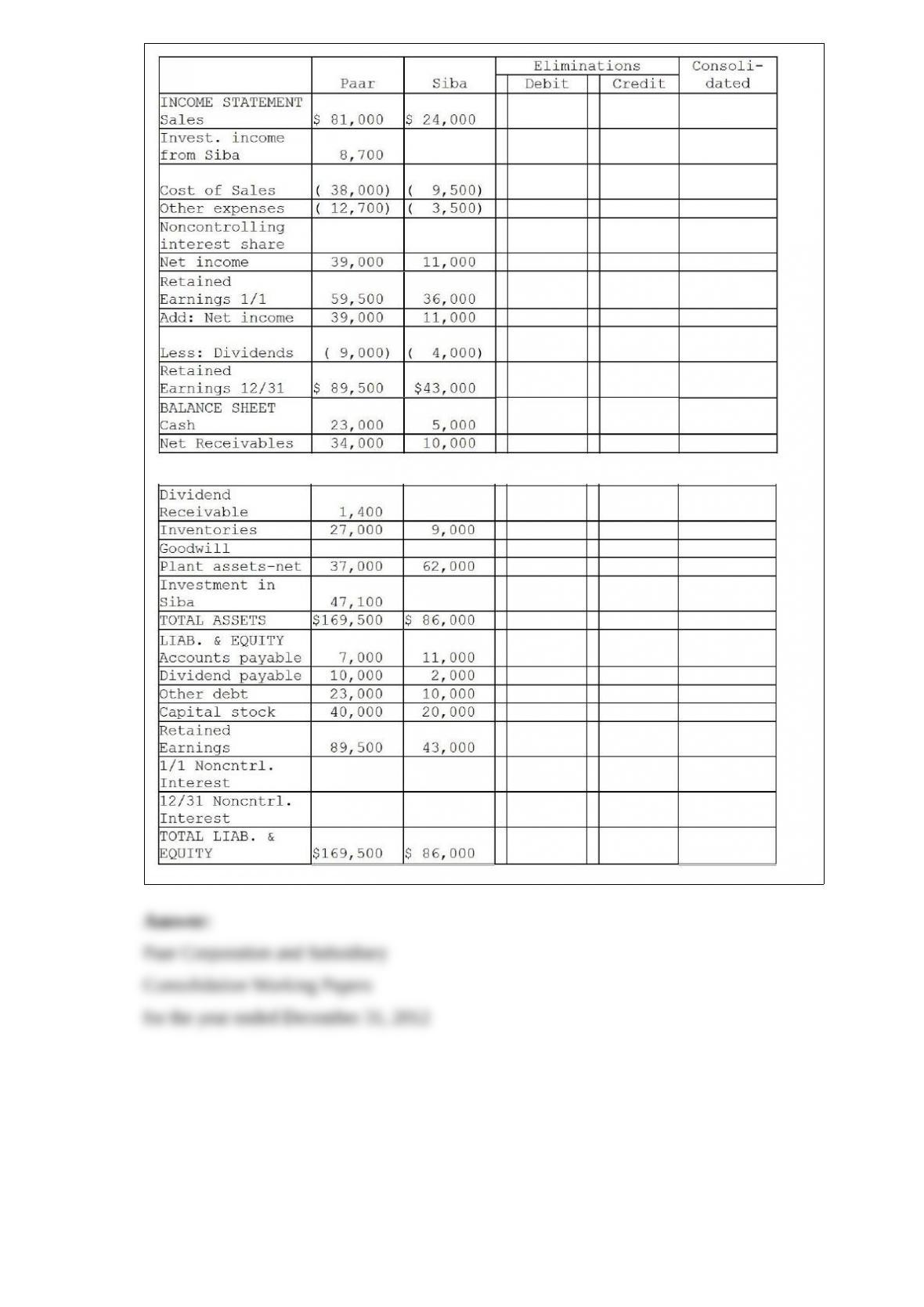
15) On January 1, 2011, Paar Incorporated paid $38,500 for a 70% interest in Siba
Enterprises, at a time when Siba’s stockholder’s equity consisted of $20,000 in Capital
stock and $30,000 in Retained Earnings. The fair values of Siba’s assets and liabilities
equaled their recorded book values at that time, so any additional amount paid was
attributed to goodwill.
In 2011, Siba purchased merchandise from Paar at a price of $6,000. The products
originally cost Paar $4,000, and 75% of this merchandise remained in inventory at
December 31, 2011 . This inventory was sold in 2012 . Siba reported net income of
$9,000 and paid dividends of $3,000 during 2011 .
In 2012, Siba purchased merchandise from Paar at a price of $8,000. The products had a
cost to Paar of $7,000, and 50% of this merchandise remained in inventory at December
31, 2012 . Siba still owed Paar $1,800 for these purchases at December 31, 2012 .
Required:
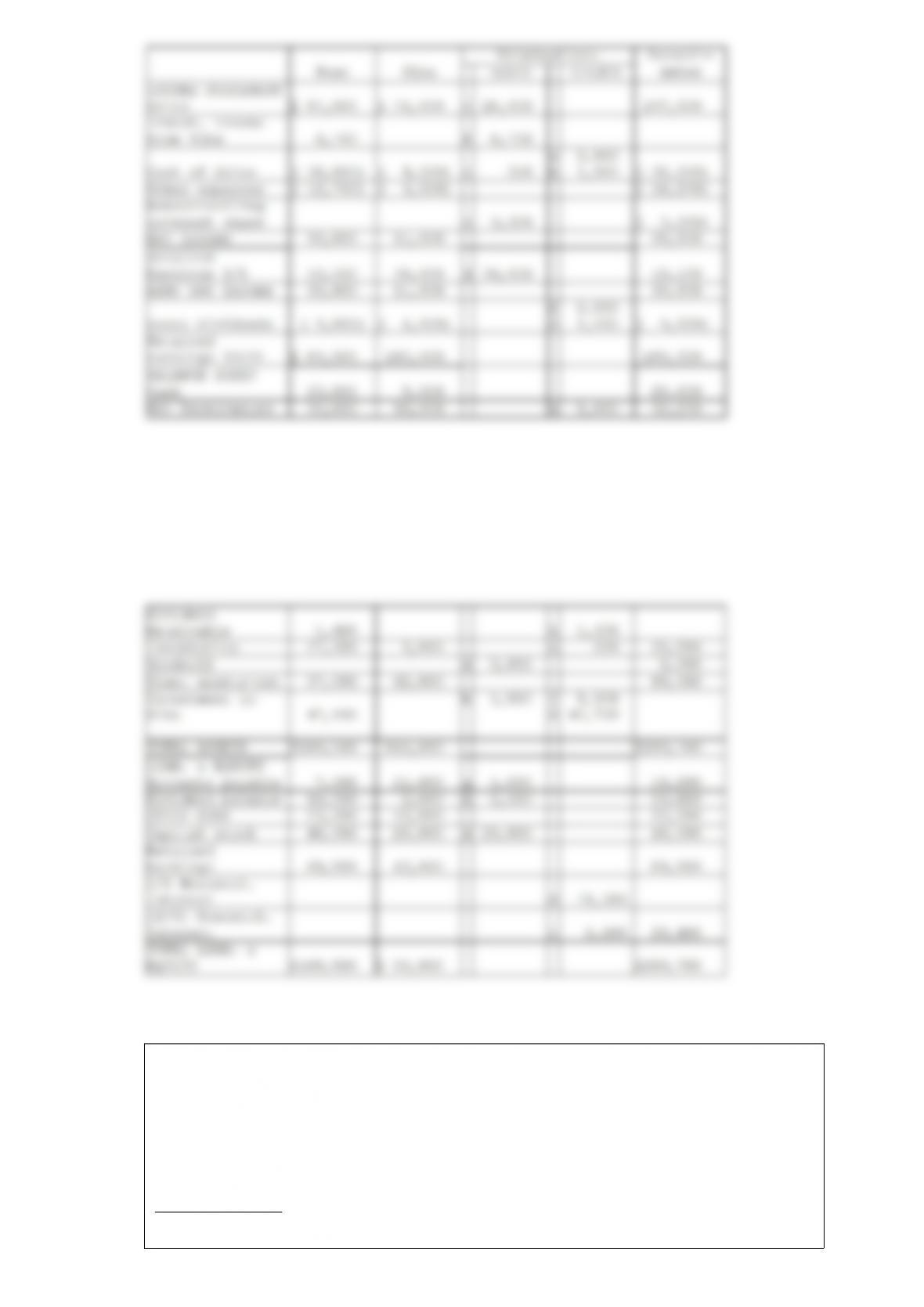
Financial statements of Paar and Siba appear in the first two columns of the partially
completed working papers. Complete the consolidation working papers for Paar
Corporation and Subsidiary for the year ended December 31, 2012 .
Paar Corporation and Subsidiary
Consolidation Working Papers
for the year ended December 31, 2012
16) Pool Industries paid $540,000 to purchase 75% of the outstanding stock of
Swimmin Corporation, on December 31, 2011 . Any excess fair value over the
identified assets and liabilities is attributed to goodwill. The following year-end
information was available just before the purchase:
PoolSwimmin Swimmin
BookBook Fair
ValueValueValue
Cash$756,000$80,000$80,000
Accounts Receivable260,000152,000152,000
Inventory480,000100,000120,000
Land440,000160,000140,000
Plant and equipment-net1,320,000400,000430,000
$3,256,000$892,000$922,000
Accounts Payable$880,000$22,000$22,000
Bonds Payable936,000200,000180,000
Capital stock, $10 par value400,000
Capital stock, $15 par value450,000
Additional paid-in capital400,000160,000
Retained earnings640,00060,000
$3,256,000$892,000
Using the data provided above, assume that Pool decided rather than paying $540,000
cash, Pool issued 10,000 shares of their own stock to the owners of Swimmin. At the
time of issue, the $10 par value stock had a market value of $60 per share.
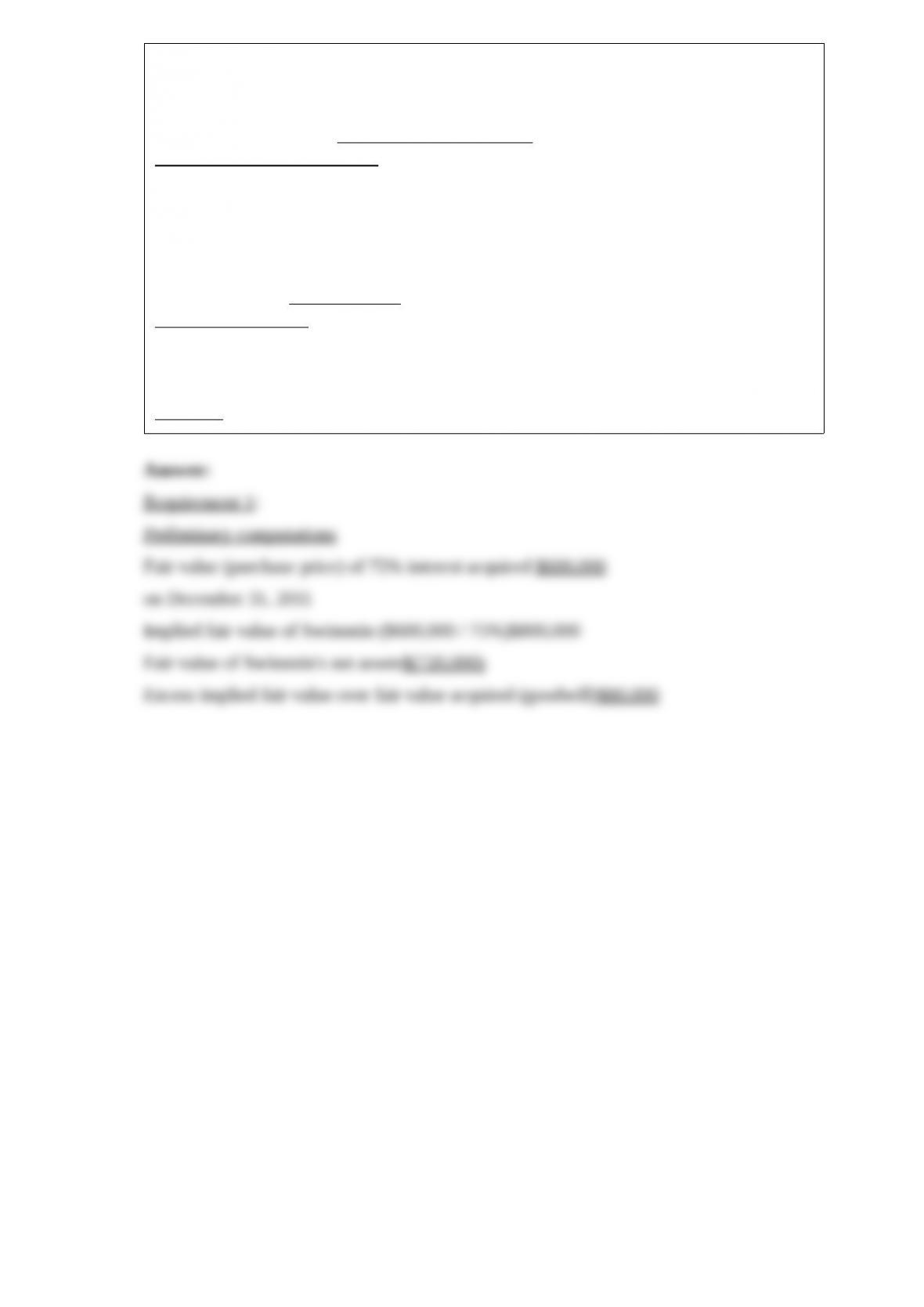
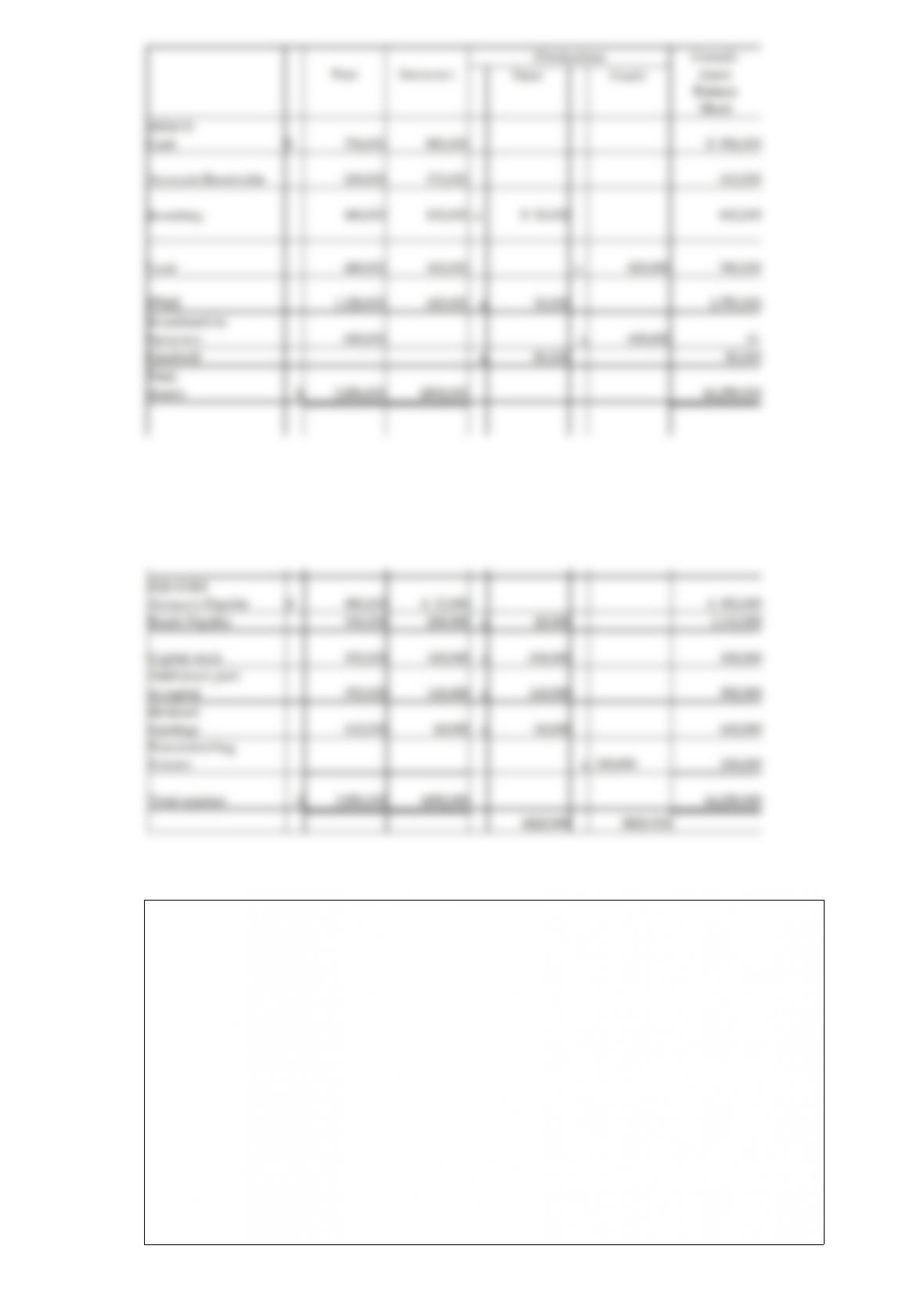
Required: Prepare Pool’s consolidated balance sheet on December 31, 2011 .
17) The following information was taken from the accounts and records of the Helping
Hands Foundation, a private, not-for-profit organization classified as a VHWO. All
balances are as of June 30, 2011, unless otherwise noted.
Unrestricted Support – Contributions$2,000,000
Unrestricted Support – Membership Dues640,000
Unrestricted Revenues – Investment Income80,000
Temporarily restricted gain on sale of investments25,000
Expenses – Program Services1,860,000
Expenses – Supporting Services350,000
Expenses – Supporting Services550,000
Temporarily Restricted Support – Contributions640,000
Temporarily Restricted Revenues – Investment Income60,000
Permanently Restricted Support – Contributions100,000
Unrestricted Net Assets, July 1, 2010450,000
Temporarily Restricted Net Assets, July 1, 20102,100,000
Permanently Restricted Net Assets, July 1, 201060,000
The unrestricted support from contributions was received in cash during the year. The
expenses included $1,350,000 paid from temporarily-restricted cash donations.
Required:
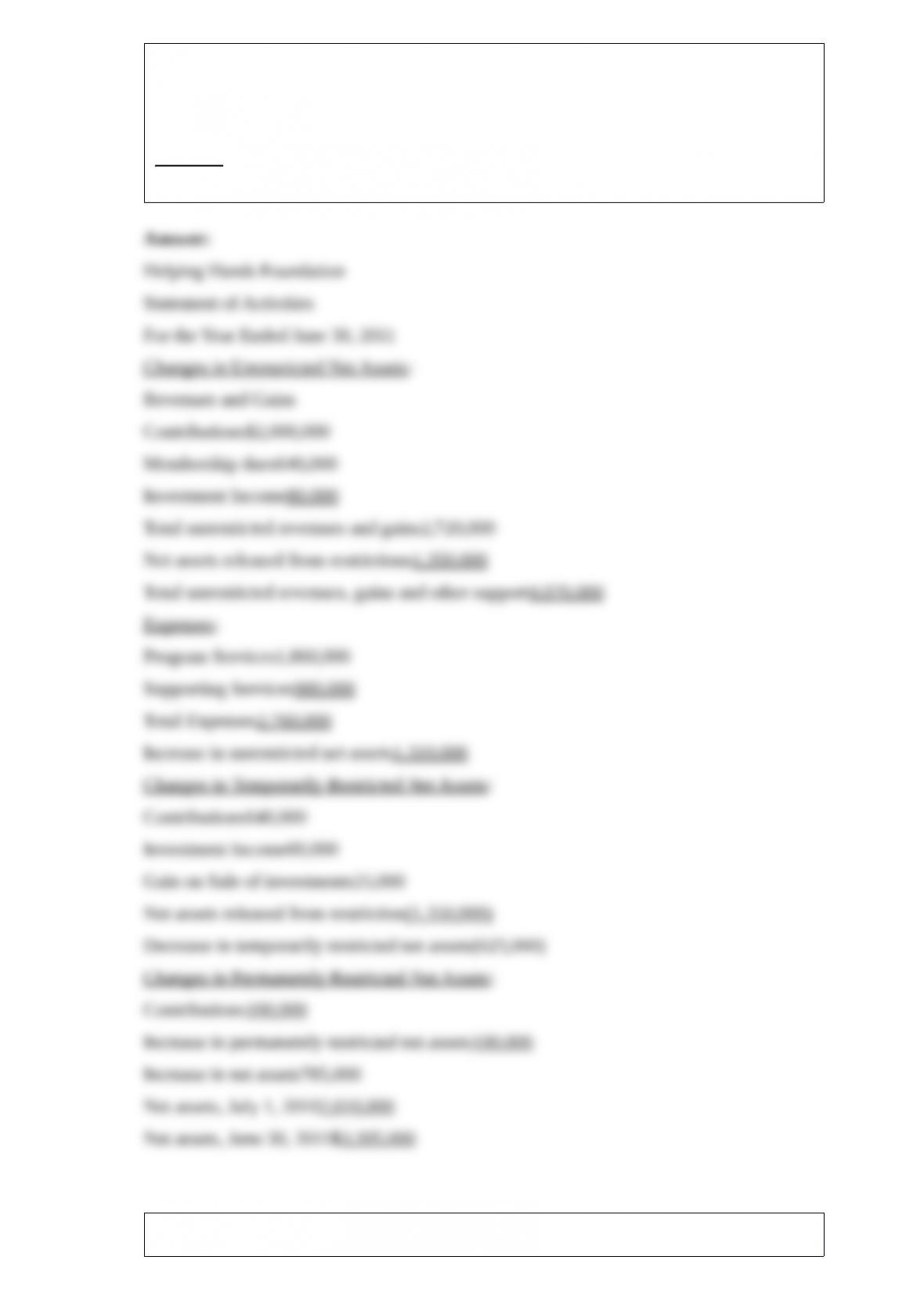
Prepare Helping Hands’ Statement of Activities for the fiscal year ended June 30, 2011 .
18) Patterson Company acquired 90% of Starr Corporation on January 1, 2011 for
$2,250,000. Starr had net assets at that time with a fair value of $2,500,000. At the time
of the acquisition, Patterson computed the annual excess fair-value amortization to be
$20,000, based on the difference between Starr’s net book value and net fair value.
Assume the fair value exceeds the book value, and $20,000 pertains to the whole
company. Separate from any earnings from Starr, Patterson reported net income in 2011
and 2012 of $550,000 and $575,000, respectively. Starr reported the following net
income and dividend payments:
20112012
Net Income$150,000$180,000
Dividends$30,000$30,000
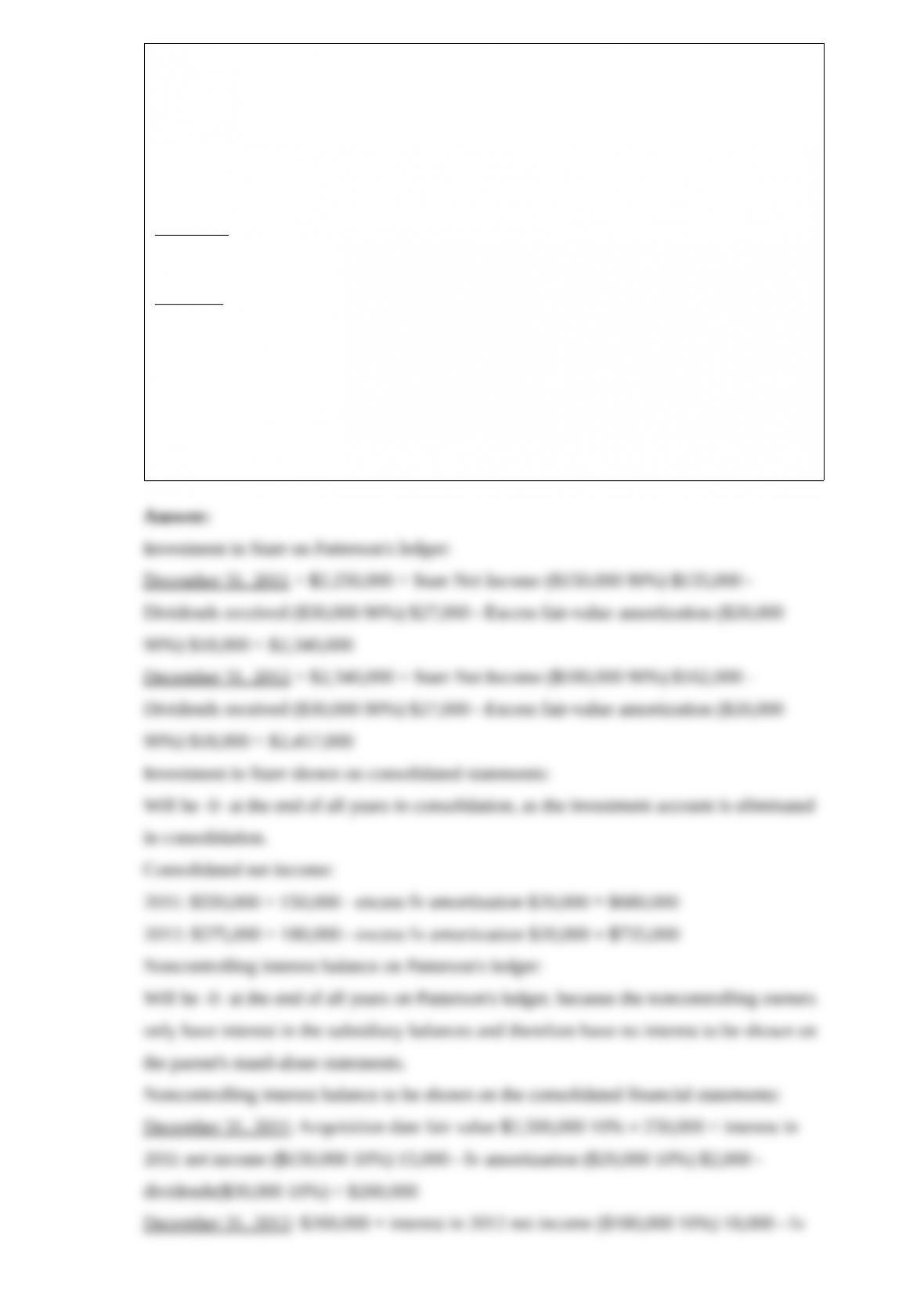
Required: Calculate the following:
Investment in Starr shown on Patterson’s ledger at December 31, 2011 and 2012 .
Investment in Starr shown on the consolidated statements at December 31, 2011 and
2012 .
Consolidated net income for 2011 and 2012 .
Noncontrolling interest balance on Patterson’s ledger at December 31, 2011 and 2012 .
Noncontrolling interest balance on the consolidated statements at December 31, 2011
and 2012 .
19) Platts Incorporated purchased 80% of Scarab Company several years ago when the
fair value equaled the book value. On January 1, 2010, Scarab has $100,000 of 8%
bonds that were issued at face value and have five years to maturity. Interest is paid
annually on December 31 . Both Platts and Scarab would use the straight-line method to
amortize any premium or discount incurred in the issuance or purchase of bonds. On
January 1, 2011, Platts purchased all of Scarab’s bonds for $96,000.
Required:
1>Prepare the journal entries in 2011 that would be recorded by Platts and Scarab on
their separate financial records.
2>Prepare the consolidating working paper entries required for the year ending
December 31, 2011 .
20) The balance sheets of Palisade Company and Salisbury Corporation were as follows
on December 31, 2010:
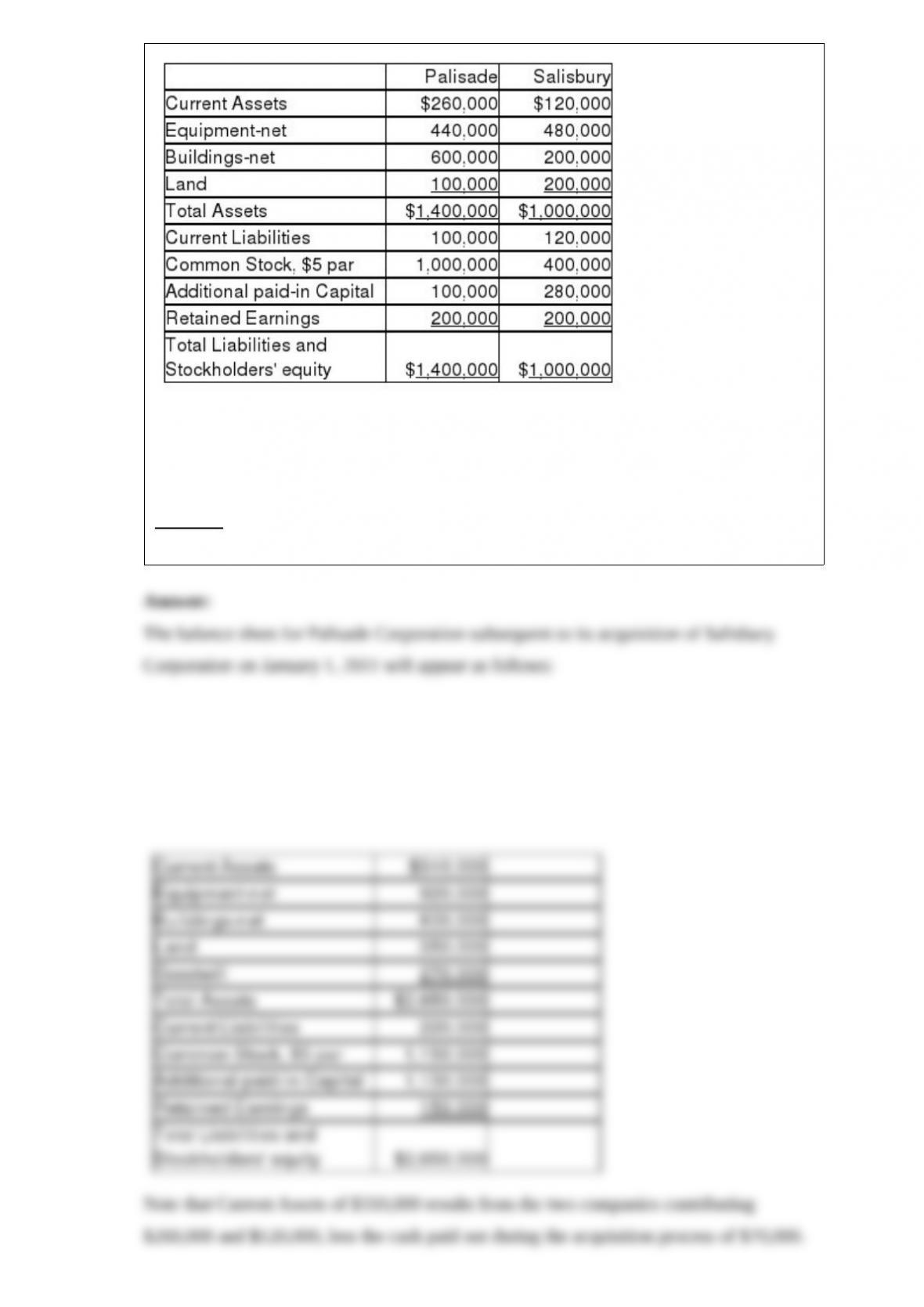
On January 1, 2011 Palisade issued 30,000 of its shares with a market value of $40 per
share in exchange for all of Salisbury’s shares, and Salisbury was dissolved. Palisade
paid $20,000 to register and issue the new common shares. It cost Palisade $50,000 in
direct combination costs. Book values equal market values except that Salisbury’s land
is worth $250,000.
Required:
Prepare a Palisade balance sheet after the business combination on January 1, 2011 .
21) For each of the following transactions that could be introduced to fund the
maintenance of the city park, state the type of fund(s) that would be affected. Assume
that a capital project fund will be used to handle any long-term improvements or
additions to the park.
1>Resources used to make 60 monthly installments on outstanding long-term debt.
2>Implemented a tax on alcohol purchases specifically designated for the park upkeep.
3>A local sports organization that uses the park raises funds and donates the money,
stating that the principal may not be spent, but designating earnings to the park upkeep.
4>City council approves the funds from existing resources for the upkeep required in
the upcoming year.
5>Resources used only to pay principal and interest of debt outstanding to finance park
maintenance.