
The principle of consistency means that:
A. the accounting methods used by an entity never change.
B. the same accounting methods are used by all firms in an industry.
C. the effect of any change in an accounting method will be disclosed in the financial
statements or notes thereto.
D. there are no alternative methods of accounting for the same transaction.
Retained Earnings represents:
A. the amount invested in the entity by the stockholders.
B. cash that is available for dividends.
C. cumulative net income that has not been distributed to stockholders as dividends.
D. par value of common stock outstanding.
ABU Co. has several products, each with a different contribution margin ratio. If the
same number of units were sold in July as in June, but the sales mix changed:
A. operating income would be the same in June and July.
B. fixed expenses in July would be in a different relevant range than in June.
C. the company’s overall contribution margin ratio would be the same in June and July.
D. total contribution margin in July would be different from that in June.
Stockholders’ equity refers to which of the following?
A. A listing of the organization’s assets and liabilities.
B. The ownership right of the stockholder(s) of the entity.
C. Probable future sacrifices of economic benefits.
D. All of the above.
E. None of the above.

Which of the following is the correct balance sheet presentation for current assets?
A. Cash, inventories, account receivables, prepaid expenses.
B. Cash equivalents, cash, other current assets, accounts receivable.
C. Accounts receivable, inventories, prepaid expenses, other current assets.
D. Marketable securities, cash, notes receivable, prepaid expenses.
The key data element on which the entire budget is based is the:
A. sales/revenue forecast.
B. income statement budget.
C. cash budget.
D. balance sheet forecast.
Assume that on September 1, 2016, a 6-month rent payment for $12,000 per month (for
a total of $72,000) was made with respect to a commercial lease that the company
entered into on that date as a tenant. The company took occupancy of the rented space
immediately. The lease term will expire on February 28, 2017. The $72,000 payment
was recorded as a debit to Prepaid Rent on September 1, 2016. The adjusting entry on
December 31, 2016, is as follows:
A. Dr. Prepaid Rent 24,000 Cr. Rent Expense 24,000
B. Dr. Prepaid Rent 48,000 Cr. Rent Expense 48,000
C. Dr. Rent Expense 24,000 Cr. Prepaid Rent 24,000
D. Dr. Rent Expense 48,000 Cr. Prepaid Rent 48,000
Management accounting is:
A. a highly technical subject that people in personnel or engineering should not be
expected to understand.
B. performed by individuals who seldom work with people in other functional areas of
the organization.
C. the principal activity involved in determining the goals and objectives of the entity.
D. an activity that gets involved with virtually all of the other functional areas of the
organization.
When a firm purchases supplies for its business:
A. the supplies account should always be debited.
B. the supplies expense account should always be debited.
C. either the supplies account or the supplies expense account should be credited.
D. an adjustment will probably be required as supplies are used.
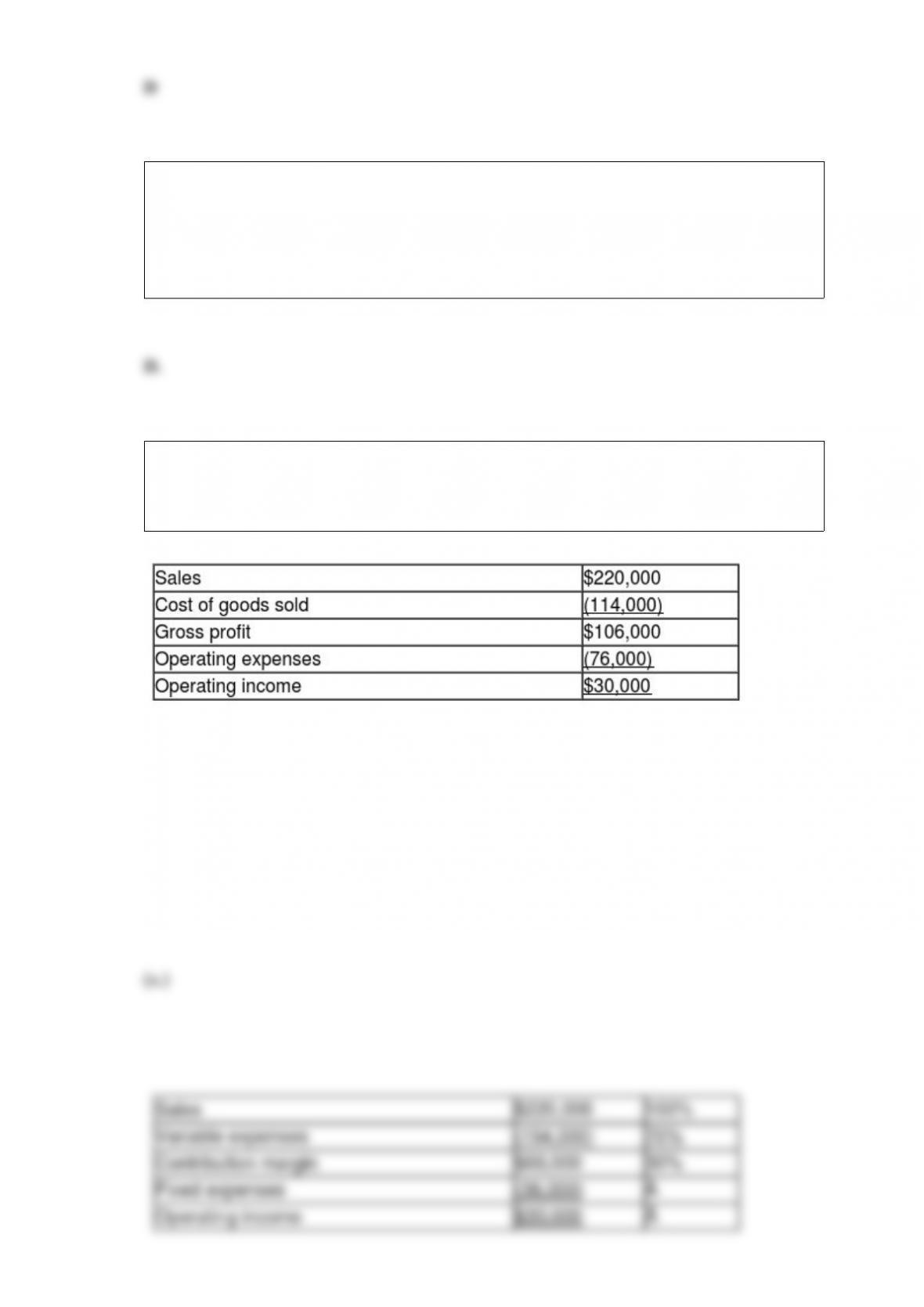
Presented below is the income statement for Breckenridge Farms for the month of
October:
Based on an analysis of cost behavior patterns, it has been determined that the company’s
contribution margin ratio is 30%.
(a.) Rearrange the income statement to the contribution margin format.
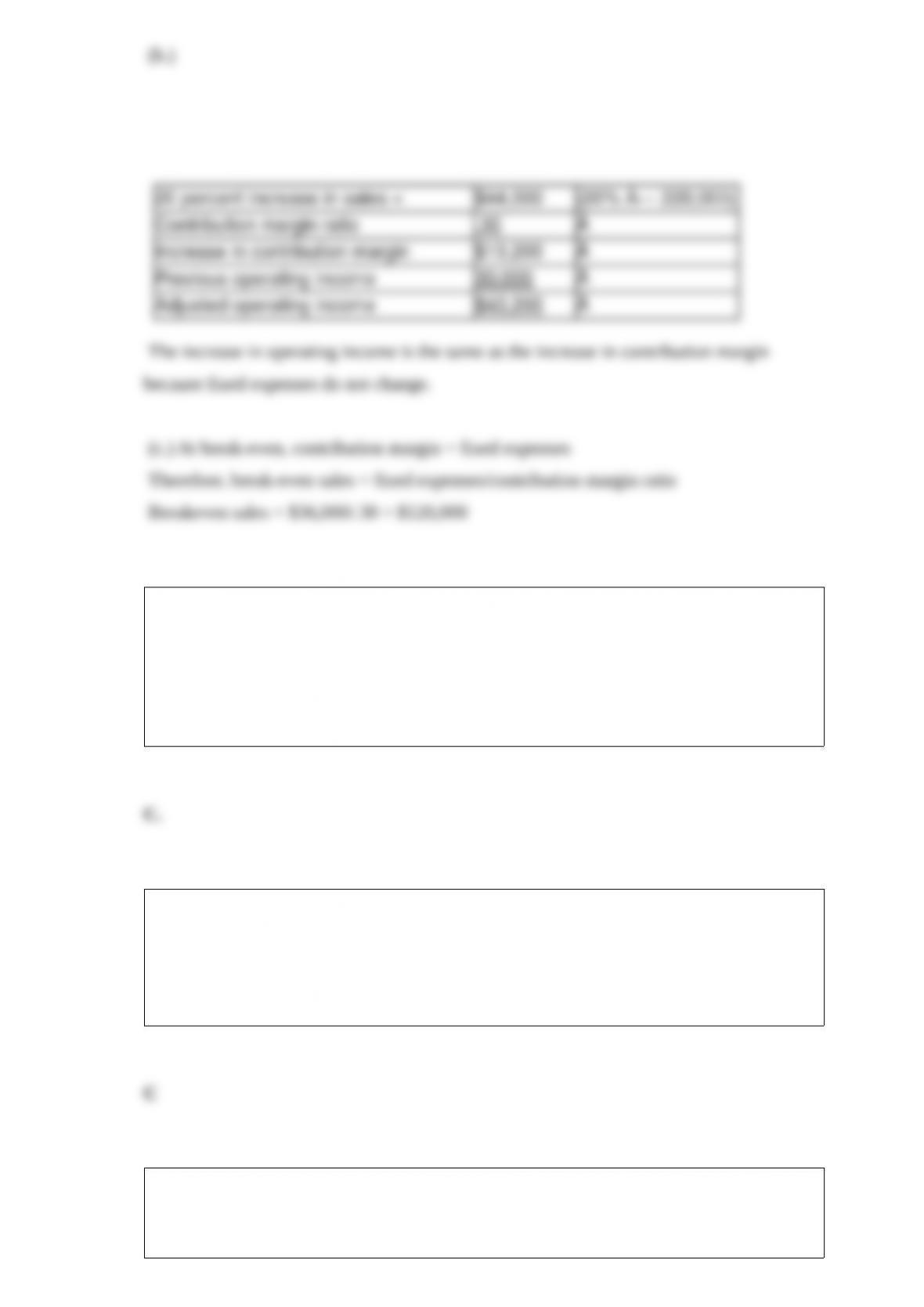
(b.) If sales increase by 20 percent, what will be the firm’s operating income?
(c.) Calculate the amount of revenue required for Breckenridge Farms to break even.
How is performance evaluated for an investment center?
A. Actual costs incurred compared to budgeted costs.
B. Actual segment margin compared to budgeted segment margin.
C. Comparison of actual and budgeted return on investment (ROI) based on segment
margin and assets controlled by the segment.
D. None of the above.
Simplifying assumptions made when using cost behavior pattern data include:
A. relevant range and liquidity.
B. fixed activity and linearity.
C. relevant range and linearity.
D. activity range and variability.
When a stock dividend is declared and issued:
A. total paid-in capital does not change.
B. total stockholders’ equity does not change.
C. retained earnings is normally decreased by the par value of the shares issued in the
dividend.
D. total paid-in capital is decreased by the market value of the shares issued in the
dividend.
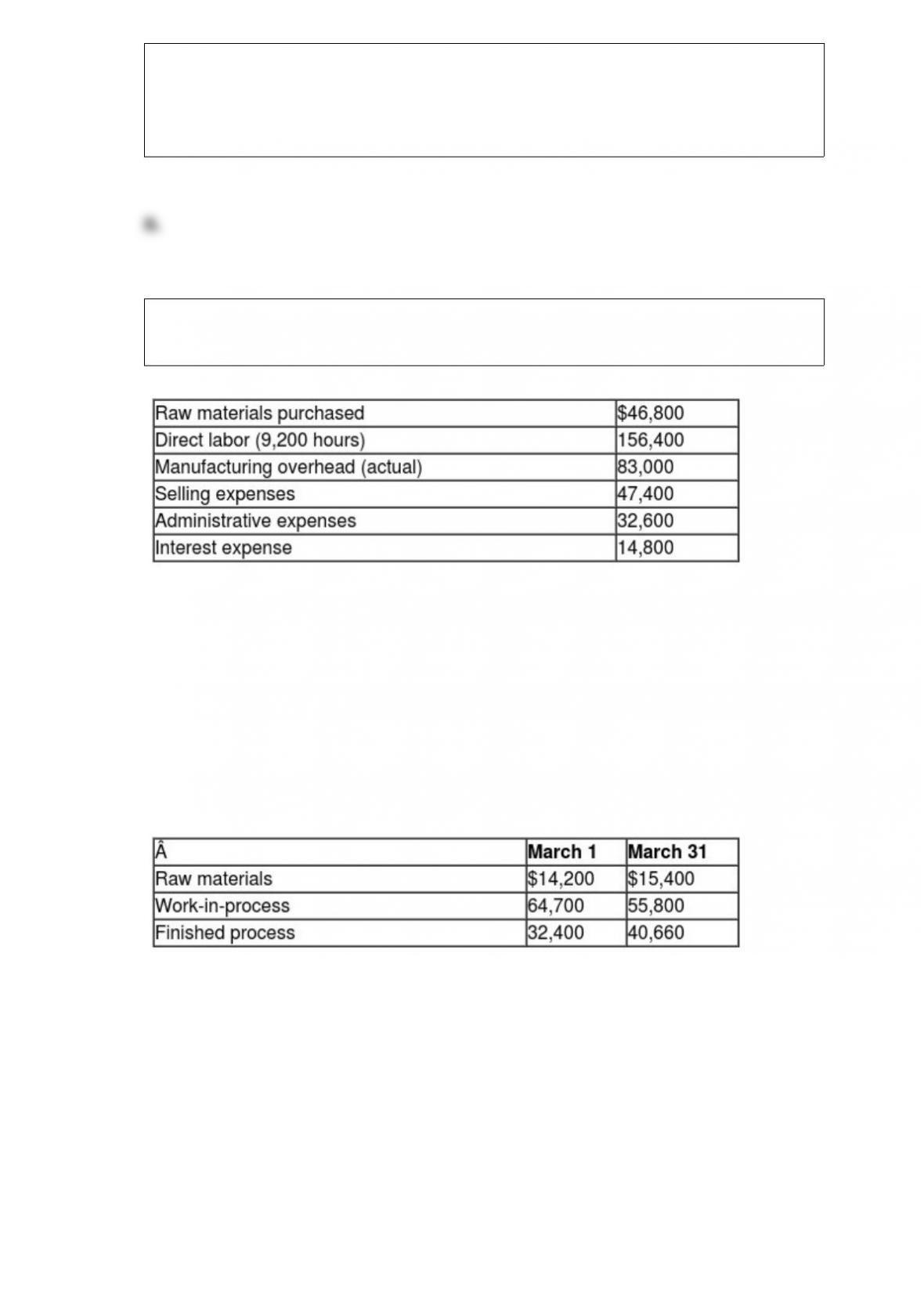
Partridge, Inc. incurred the following costs during March:
Manufacturing overhead is applied on the basis of $8.50 per direct labor hour. Assume
that overapplied or underapplied overhead is transferred to cost of goods sold only at the
end of the year. During the month, 3,500 units of product were manufactured and 3,400
units of product were sold. On March 1 and March 31, Partridge carried the following
inventory balances:
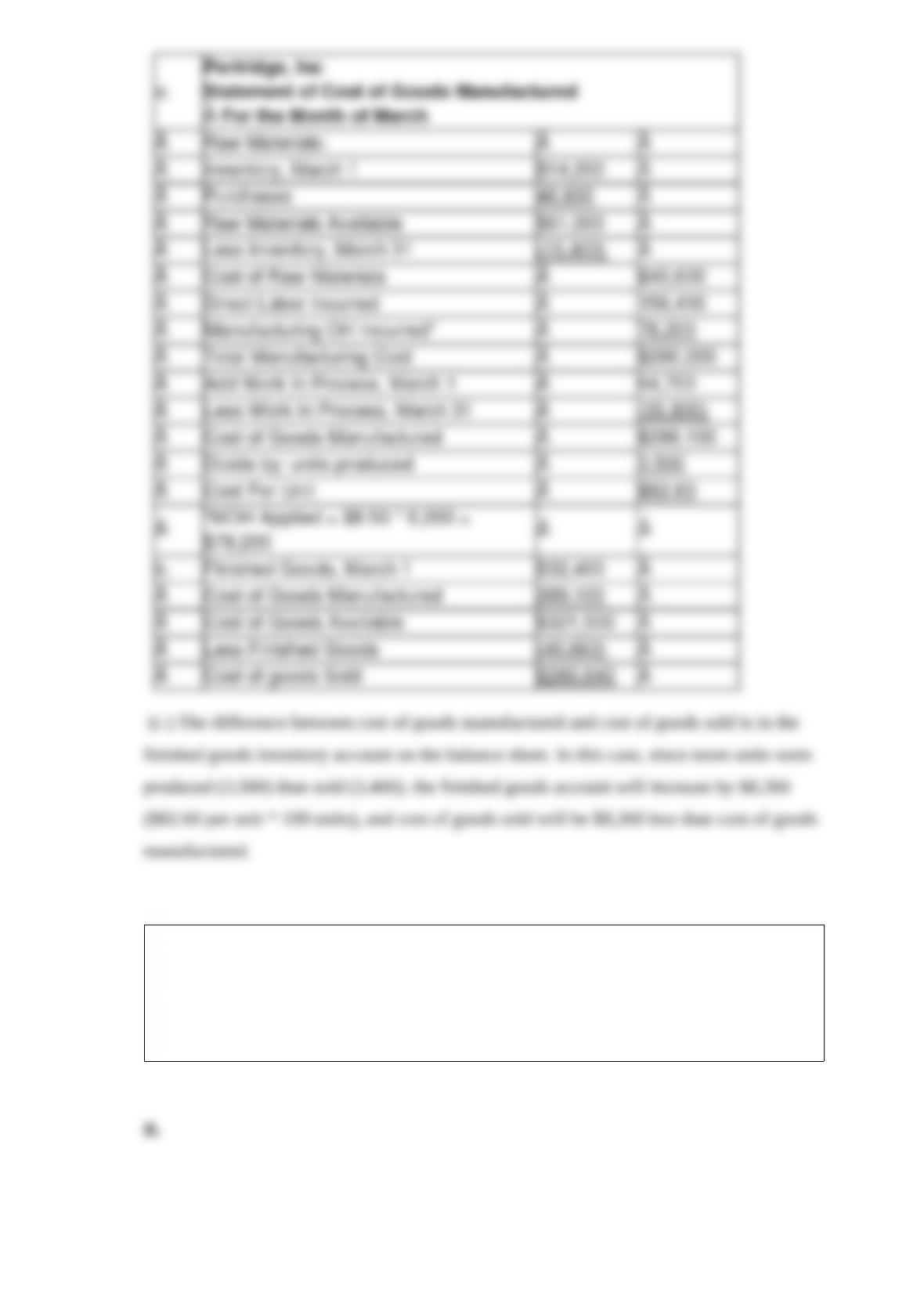
(a.) Prepare a Statement of Cost of Goods Manufactured for the month of March, and
calculate the average cost per unit produced.
(b.) Calculate the cost of goods sold during March.
(c.) Where in the financial statements will the difference between cost of goods
manufactured and cost of goods sold be classified?
The operating budget depends on key information developed in the:
A. cash forecast.
B. sales forecast.
C. labor forecast.
D. operating forecast.
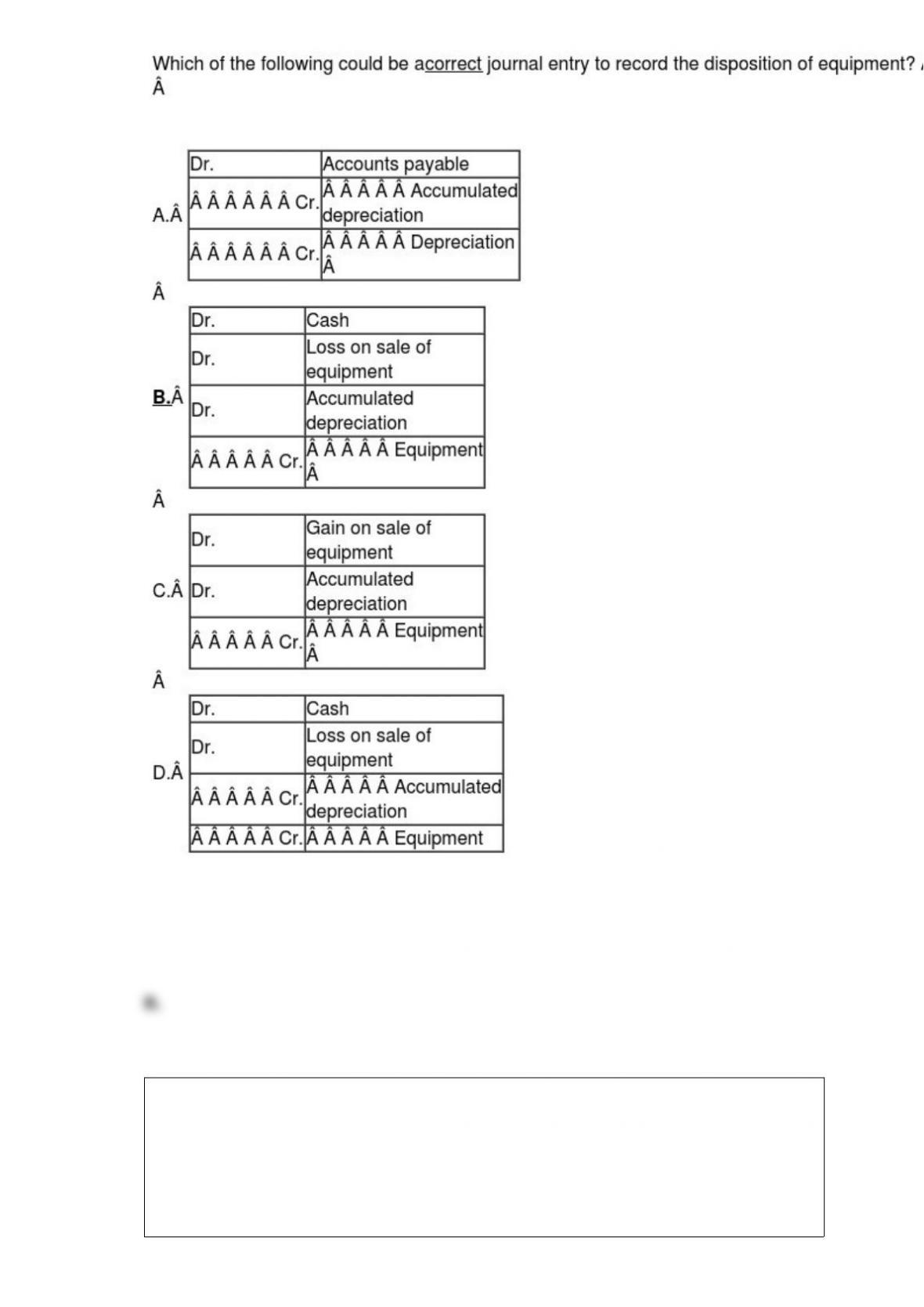
The entry to record depreciation expense:
A. increases a contra asset and decreases net income.
B. decreases a contra asset and decreases net income.
C. decreases working capital and decreases net income.
D. decreases an asset and increases a contra asset.
The cost of capital used in the capital budgeting analytical process is primarily a
function of:
A. ROE.
B. ROI.
C. the cost of acquiring the funds that will be invested.
D. the discount rate.
Knowledge about the behavior pattern of a cost is important to understanding the effect
on net income of a change in sales volume because as sales volume changes:
A. net income will change proportionately.
B. the effect on net income will depend on the behavior pattern of various costs.
C. fixed costs will rise proportionately.
D. variable costs will not change.
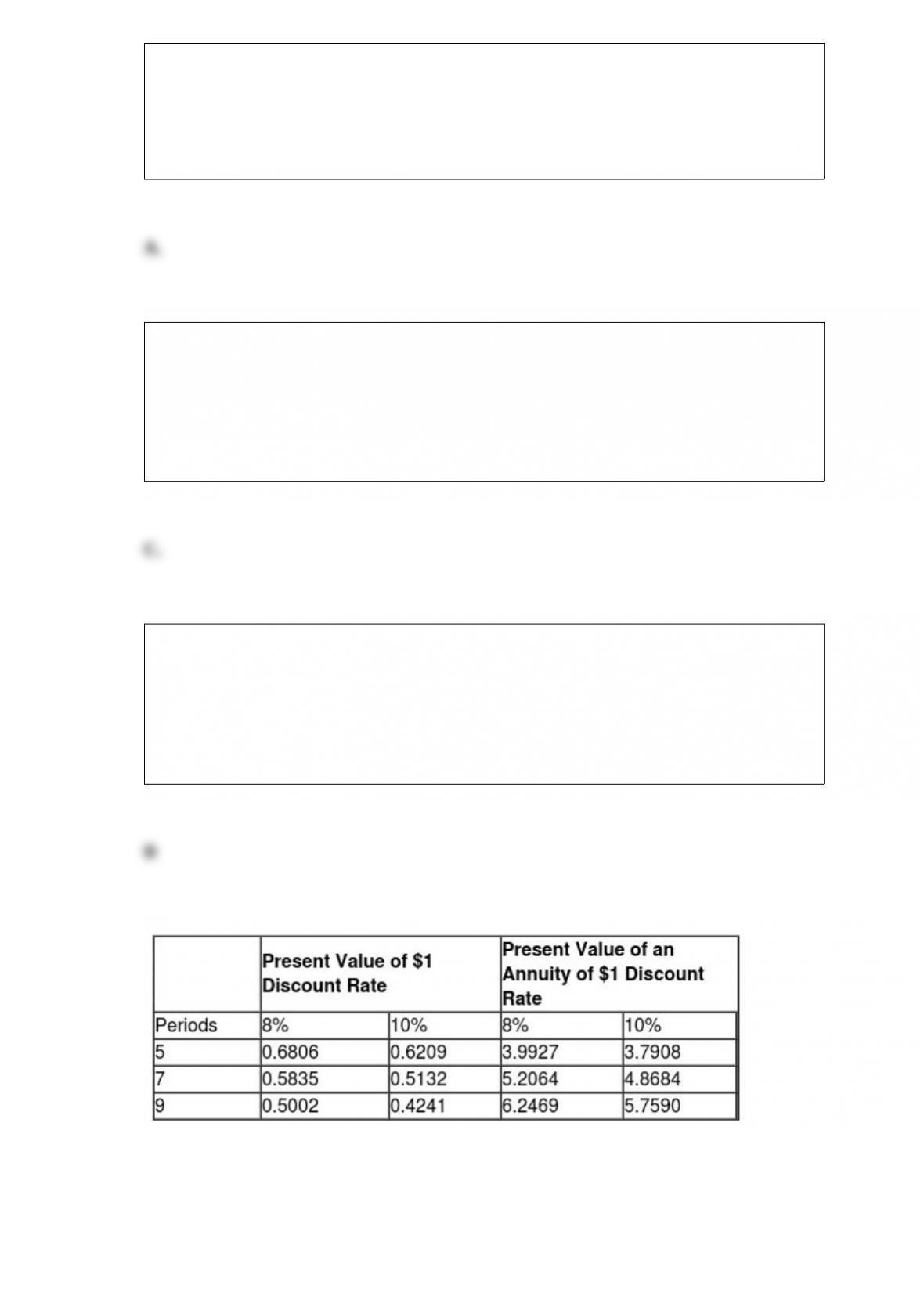
Psyche Company wants to acquire Trim Company. Trim’s ROI has been above average for
its industry; net income has averaged $140,000 a year more than the industry average.
These “excess” earnings are expected to continue at this amount for 5 years. Assuming a
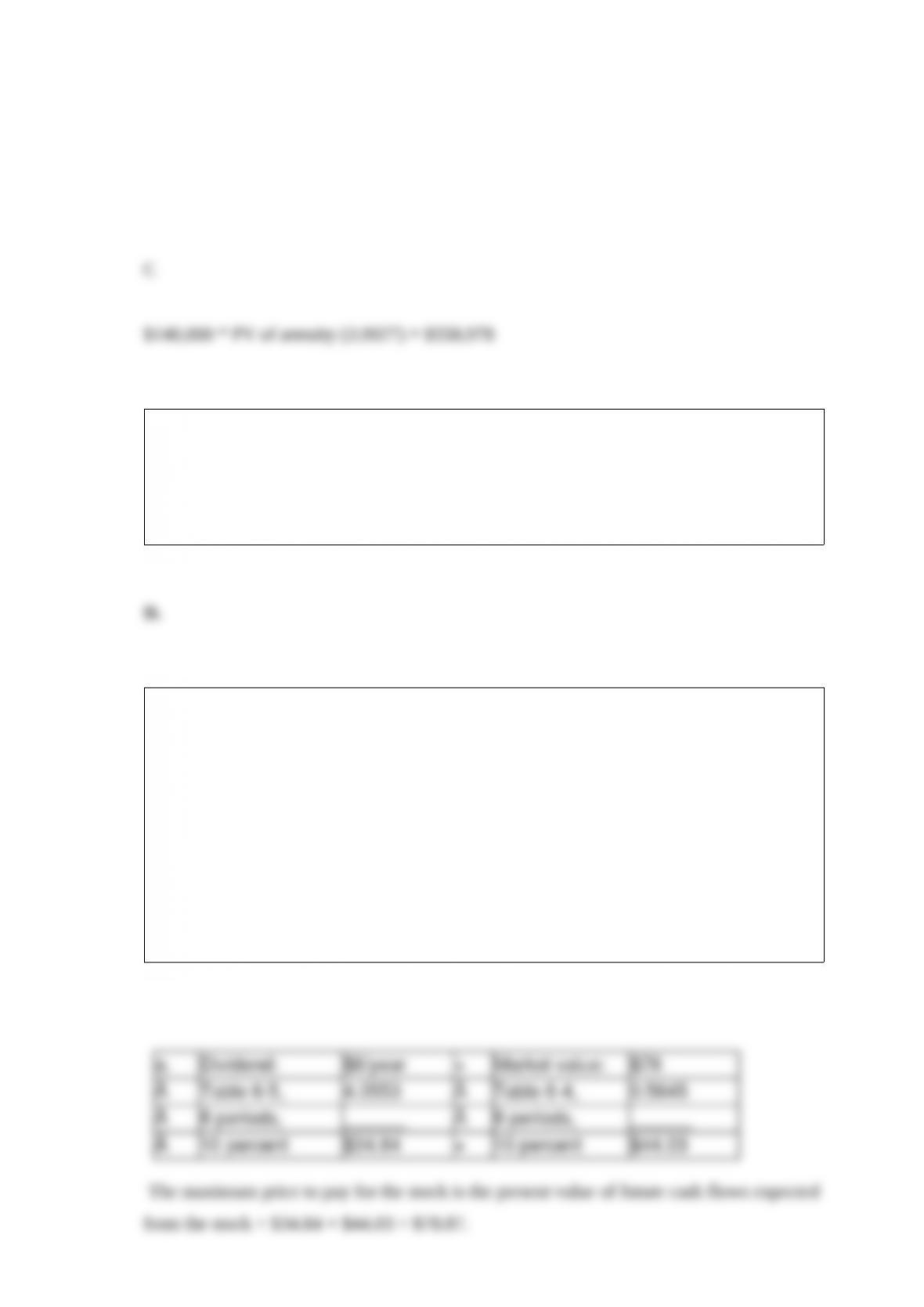
discount rate of 8%, how much goodwill will arise from Psyches’ purchase of Trim?
A. $81,672
B. $176,314
C. $558,978
D. $700,000
Another term for return on equity is:
A. return on investment.
B. return on assets.
C. return on retained earnings.
D. none of these.
Use the appropriate factors from Table 6-4 or Table 6-5 to answer the following
question.
(a.) ABC Co.’s common stock is expected to have a dividend of $8 per share for each of
the next six years, and it is estimated that the market value per share will be $78 at the
end of six years. If an investor requires a return on investment of 10%, what is the
maximum price the investor would be willing to pay for a share of ABC Co. common
stock today?
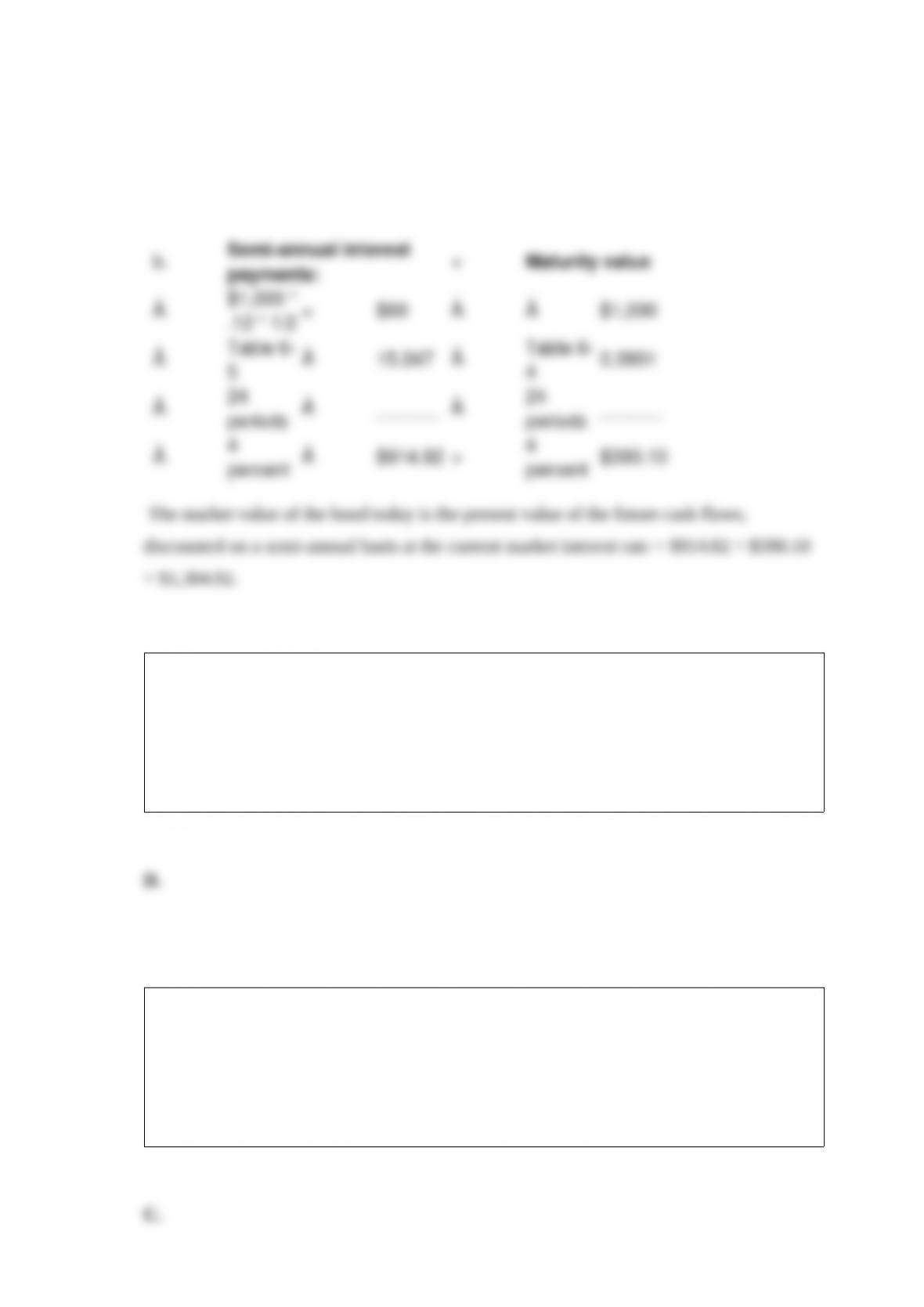
(b.) Gregory bought a bond with a face amount of $1,000, a stated interest rate of 12%,
and a maturity date 20 years in the future for $980. The bond pays interest on a
semi-annual basis. Eight years have gone by and the market interest rate is now 8%.
What is the market value of the bond today?
The budgeting process that most likely creates an attitude supportive of achieving
organization goals is:
A. top-down approach.
B. zero based approach.
C. proportionate increase approach.
D. participative approach.
Which of the following is NOT an account that over/under applied overhead is
transferred to at the end of an accounting period?
A. Cost of Goods Sold.
B. Work-in-Process.
C. Raw Materials.
D. Finished Goods.

The declaration date pertains to:
A. The date used to determine who receives dividends.
B. The date on which the board of directors declares it’s going to liquidate the firm.
C. The date on which the board of directors declares a dividend.
D. The date a dividend is paid.
A loan discount is:
A. a loan used to purchase a bond at a discount.
B. a discount market interest rate on a loan.
C. the same as a bond discount.
D. none of the above.
An activity-based costing system involves identifying the activity that causes the
incurrence of a cost; this activity is known as a:
A. cost driver.
B. cost applier.
C. direct cost.
D. cost object.
Recognition of revenue in accrual accounting requires:
A. that cash be received.
B. only that the amount of cash to be received from the sale of a product or service be
known.
C. only that a product be delivered or a service be performed.
D. that the revenue be realized or realizable, and earned.
Which of the following is not a principal category of “Other operating expenses”
frequently reported on the income statement?
A. Cost of goods sold
B. Selling expenses
C. General and administrative expenses
D. Research and development expenses

In the seller’s records, the sale of merchandise on account would:
A. increase assets and increase expenses.
B. increase assets and decrease liabilities.
C. increase assets and increase paid-in capital.
D. increase assets and decrease revenues.
A 10% change in a firm’s revenues is likely to result in a change of more than 10% in
the firm’s operating income because:
A. not all of the firm’s costs will change in proportion to the revenue change.
B. the firm has financial leverage.
C. the contribution margin ratio will change in proportion to the revenue change.
D. only fixed expenses will change in proportion to the revenue change.
Performance analysis in the planning and control cycle relates to the act of:
A. planning.
B. managing.
C. controlling.
D. revising plans.
Which of the following costs would be classified as a period cost?
A. production line maintenance costs.
B. advertising expense for the product.
C. plant electricity.
D. indirect labor.
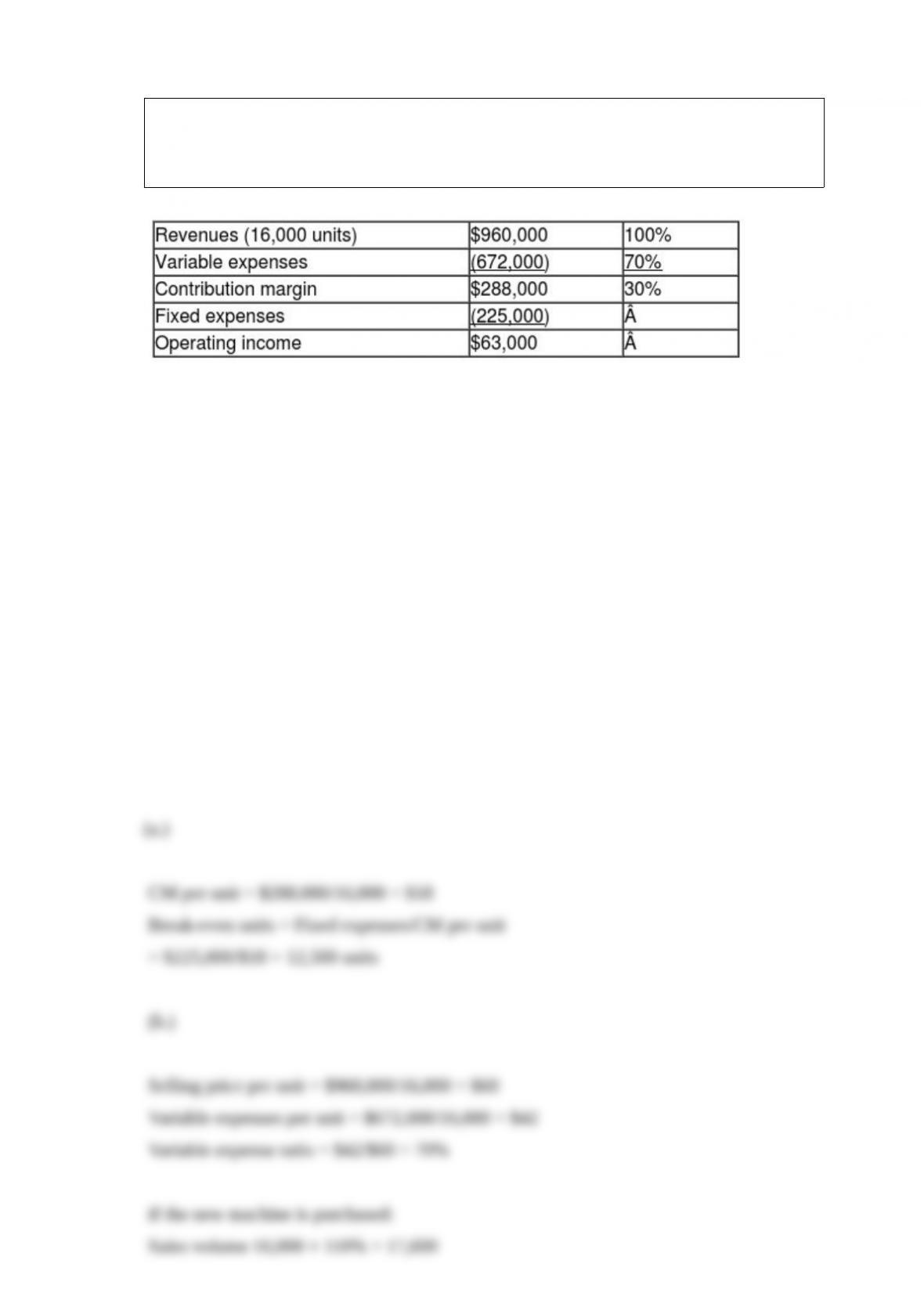
SoundPro, Inc. produces amplifiers for electric guitars. The firm’s income statement
showed the following:
An automated machine has been developed that can produce several components of the
amplifiers. If the machine is purchased, fixed expenses will increase to $526,500 per year.
The firm’s production capacity will increase, which is expected to result in a 10 percent
increase in sales volume. It is also estimated that the variable expense ratio will be reduced
to half of what it is now.
(a.) Calculate the firm’s current contribution margin per unit and break-even point in units.
(b.) Calculate the firm’s contribution margin per unit and break-even point in terms of
units if the new machine is purchased.
(c.) Calculate the firm’s operating income assuming that the new machine is purchased.
(d.) Do you believe that management of SoundPro, Inc. should purchase the new
machine? Explain your answer.
Opportunity costs are:
A. included in inventory.
B. foregone benefits.
C. sunk costs.
D. included in cost of goods sold.