
A budget adjusted to reflect a budget allowance based on actual activity achieved rather
than the planned level of activity in the original budget is a:
A. static budget.
B. rolling budget.
C. controllable budget.
D. flexible budget.
A standard cost or production standard that is achievable under actual operating
conditions is called a(n):
A. attainable standard.
B. ideal standard.
C. past experience standard.
D. average standard.
For the partial value chain functions given below, which sequence is correct?
A. design, production, marketing.
B. marketing, production, distribution.
C. research and development, production, distribution.
D. customer service, marketing, distribution.
The principle of full disclosure pertains to:
A. The entity fully discloses all client data.
B. The entity fully discloses all proprietary information.
C. The entity fully discloses all necessary information to prevent a reasonably astute
user of financial statements from being misled.
D. The entity fully discloses all necessary information to prevent all users of financial
statements from being misled.
E. All of the above.
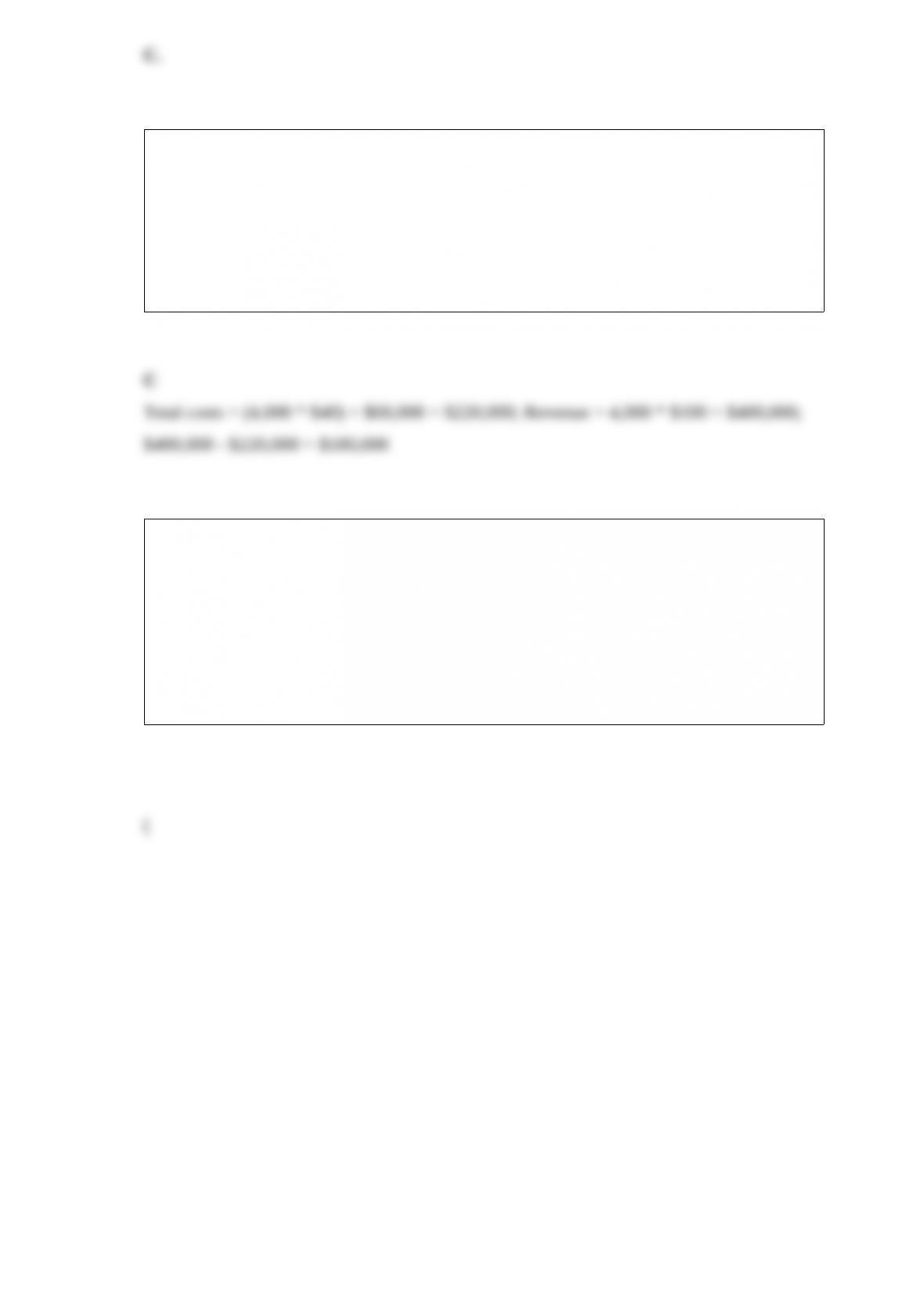
Selling price per unit $100 Variable expenses per unit $40 Fixed expenses per month
$60,000
Operating income at a volume of 4,000 units per month is:
A. $240,000.
B. $200,000.
C. $180,000.
D. $120,000.
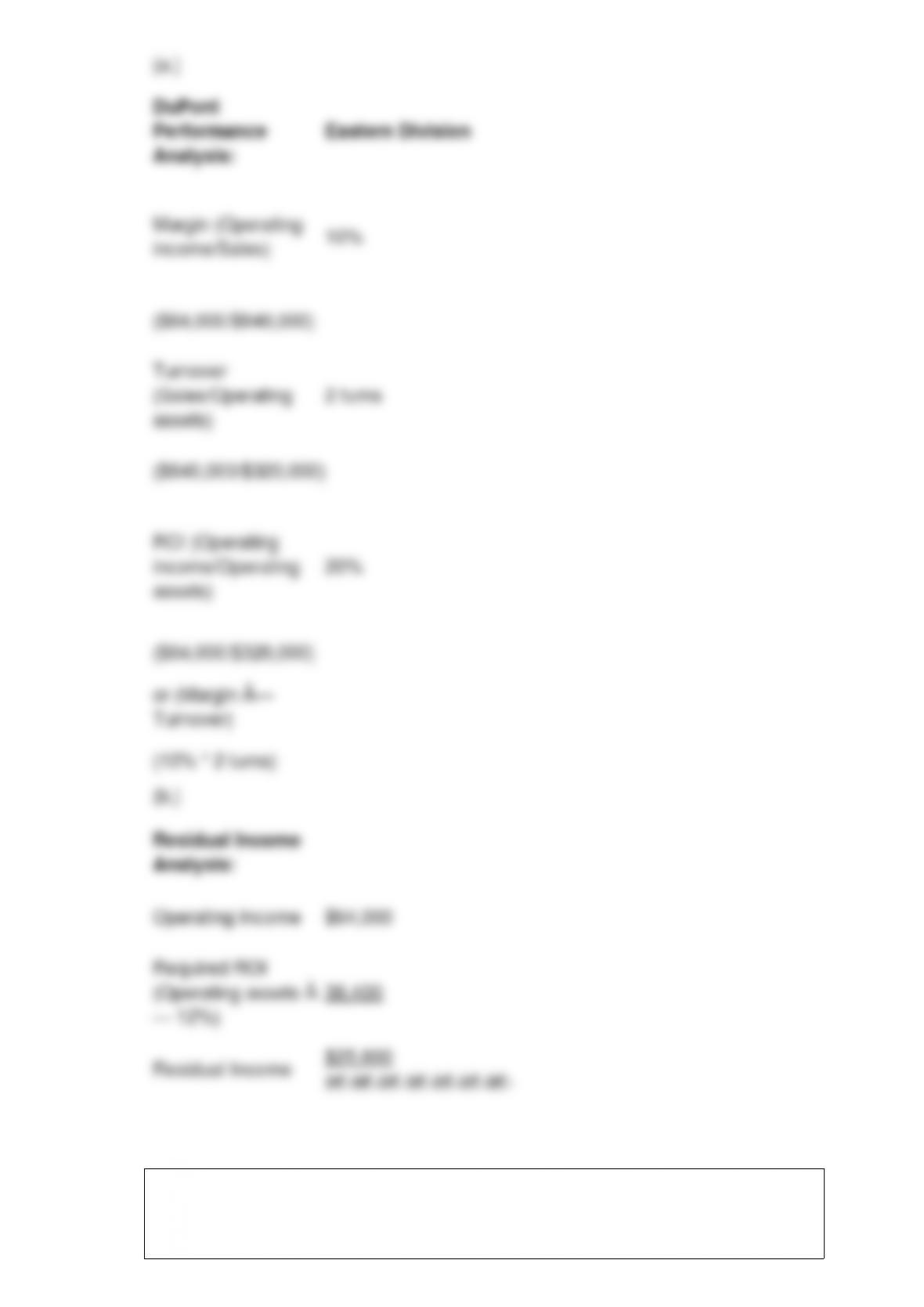
The Central Division of AAA, Inc., has operating income of $64,000 on sales revenue
of $640,000. Divisional operating assets are $320,000 and management of AAA has
determined that a minimum return of 12% should be expected from all investments.
(a.) Using the DuPont model, calculate the Central Division’s margin, turnover, and
ROI.
(b.) Calculate the Central Division’s residual income.
If an asset costs $16,000, has an expected useful life of 8 years, is expected to have a
$2,000 salvage value and generates net annual cash inflows of $2,000 a year, the cash
payback period is

A. 8 years.
B. 7 years.
C. 6 years.
D. 5 years. $16,000/$2,000 = 8 years
In most states, par value of issued shares represents:
A. legal capital.
B. no par capital.
C. noncontrolling capital.
D. corporate capital.
The difference between standard and actual cost per unit of input is measured by:
A. the raw materials price variance.
B. the direct labor rate variance.
C. the variable overhead spending variance.
D. all of the above.
Once the budgeted income statement is prepared, the __________ budget must be
prepared prior to the preparation of the budgeted balance sheet.
A. sales
B. purchases
C. operating expense
D. cash
Which of the following is(are) a category for securities?
A. Trading.
B. Held-to-maturity.
C. Available-for-sale.
D. All of the above.
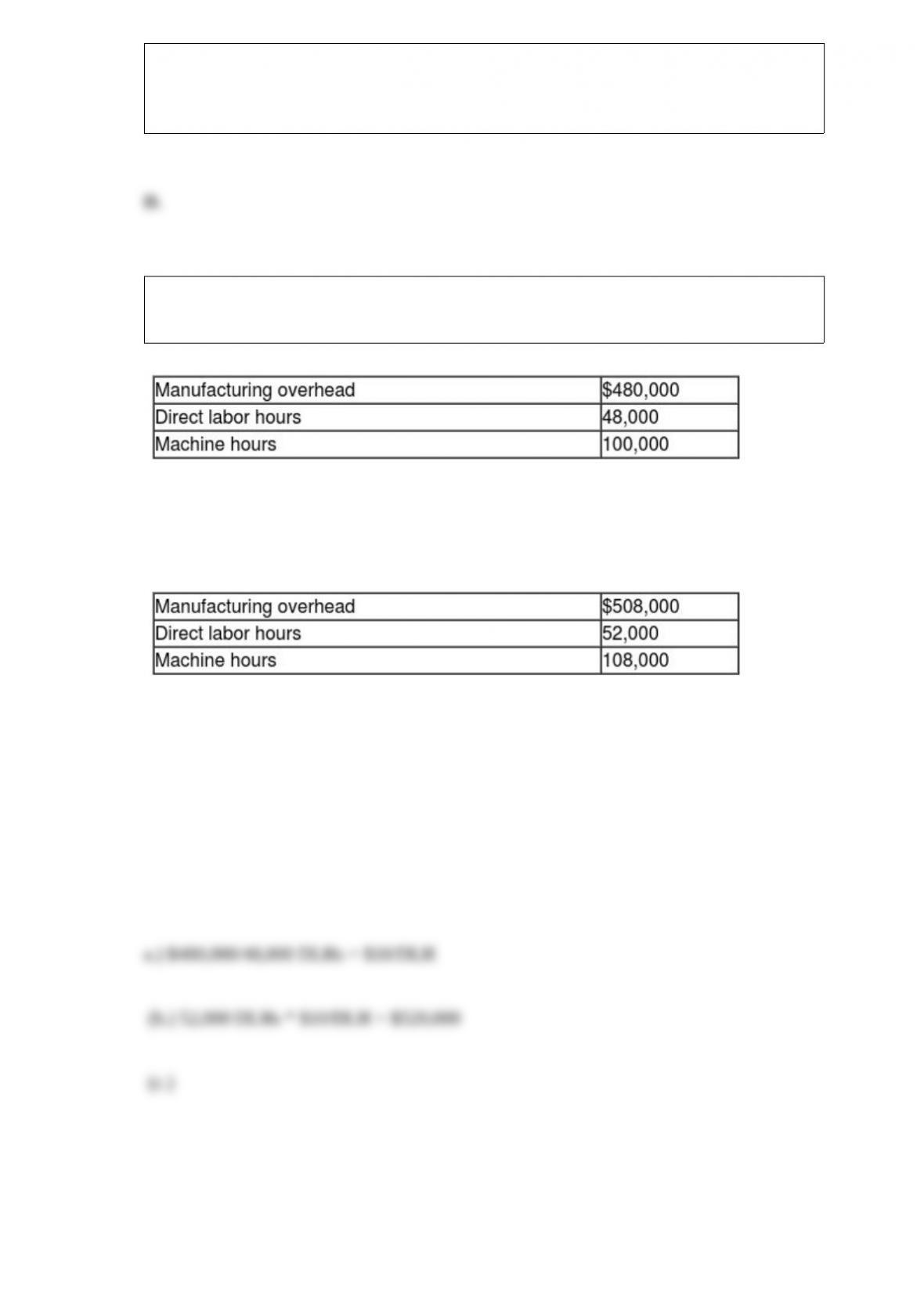
Eberlin Boats estimates the following for 2016:
During 2016 Eberlin incurs the following costs and activity:
Eberlin uses direct labor hours to calculate the predetermined overhead rate for the year.
(a.) Calculate the predetermined overhead rate for 2016.
(b.) Calculate the applied overhead for 2016.
(c.) Calculate the amount of overapplied or underapplied overhead for 2016.
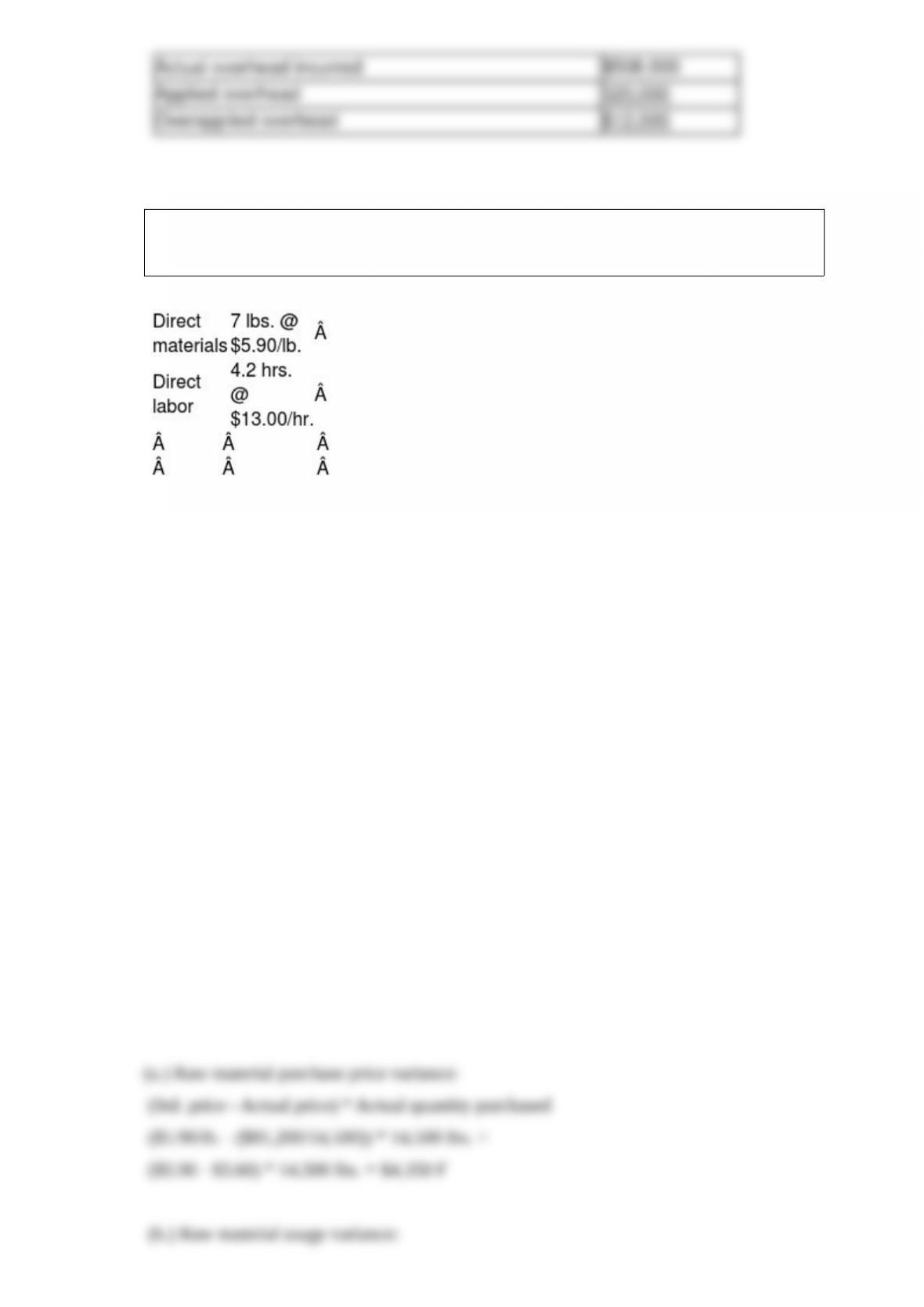
The standards for one case of Saycheles are:
During the week ended April 15, the following activity took place:
• 14,500 lbs. of raw material were purchased for inventory at a total cost of $81,200;
• 1,800 cases of finished product were produced;
• 13,680 lbs. of raw material were used;
• 7,380 labor hours were worked at an average rate of $13.40 per hour.
Calculate each of the following variances:
(a.) Raw materials purchase price variance.
(b.) Raw materials usage variance.
(c.) Direct labor rate variance.
(d.) Direct labor efficiency variance.
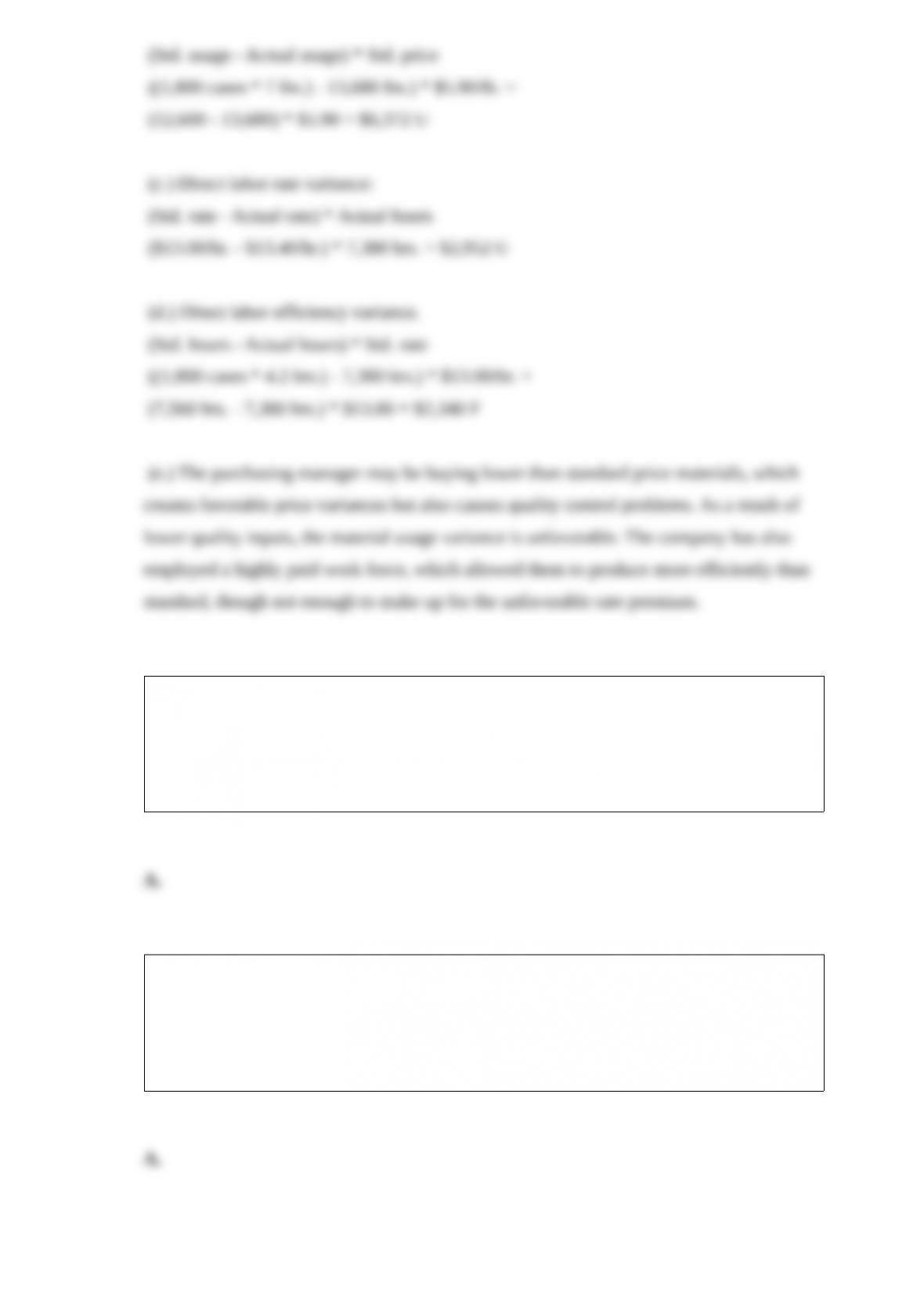
(e.) Explain the factors that most likely caused the variances computed above.
Book value per share of common stock of a manufacturing company:
A. is not a very useful measure most of the time.
B. is calculated by dividing market value per share by earnings per share.
C. reflects the fair value of the company’s stock.
D. is the same as the total balance sheet asset value per share of common stock.
Relevant costs in decision-making:
A. are future costs that represent differences between decision alternatives.
B. result from past decisions.
C. should not influence the decision.
D. none of the above.
Selling price per unit $100 Variable expenses per unit $40 Fixed expenses per month
$60,000
If the selling price per unit were to drop $2, from $100 to $98, the sales volume were to
increase 500 units to 4,500 units per month, and advertising expense were to increase
by $1,000:
A. the break-even point would increase.
B. the break-even point would decrease.
C. the contribution margin ratio would increase.
D. operating income would decrease.
Revenues are:
A. cash receipts.
B. increases in net assets from selling a product.
C. increases in net assets from occasional sales of equipment.
D. increases in net assets from selling common stock.
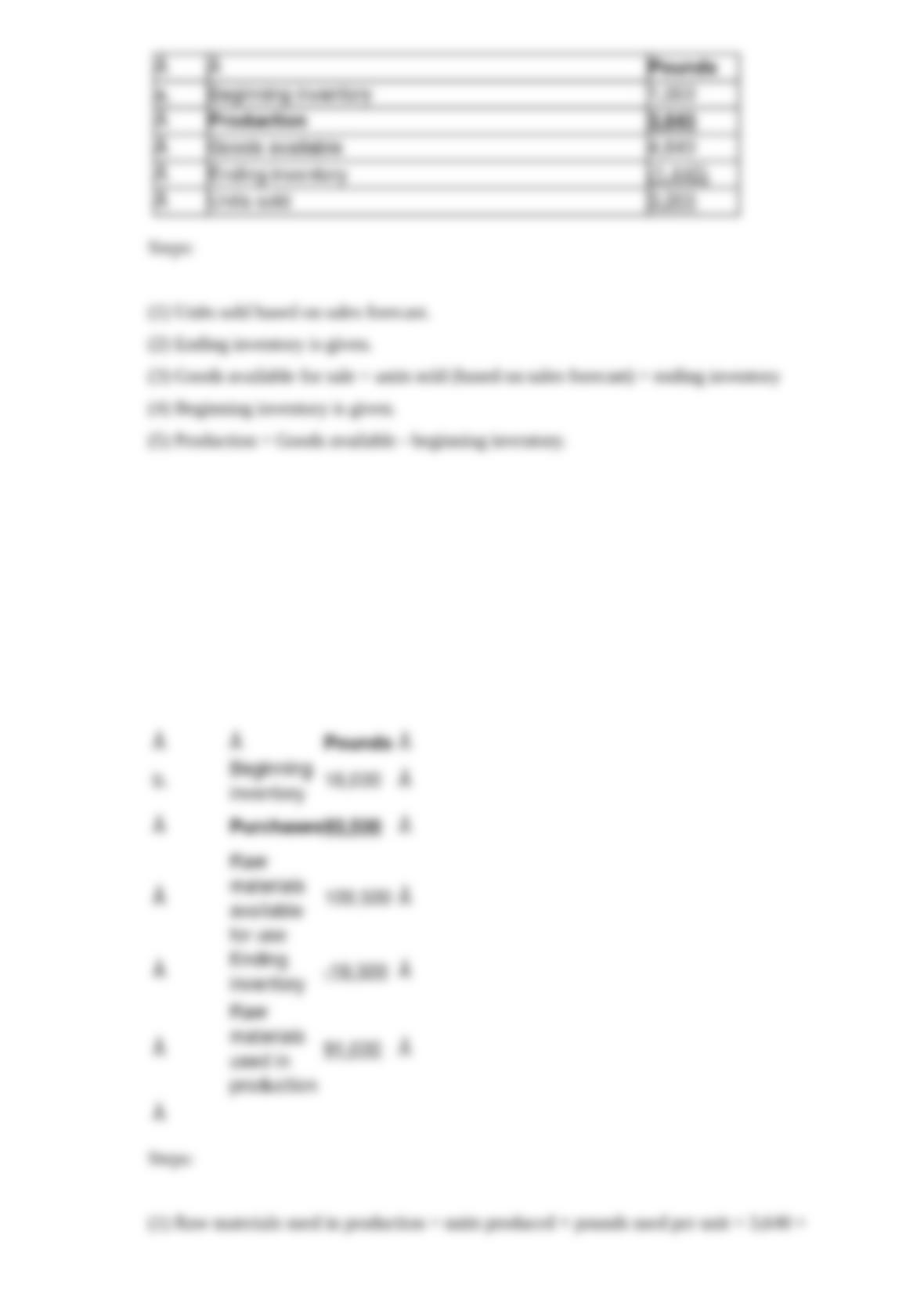
Pinedale, Inc. makes wooden tables. Each table requires 25 pounds of lumber to
produce. The sales forecast for May is 3,200 tables. Estimated beginning and desired
ending inventories for May are the following:
(a.) Calculate the number of tables to be produced in May.
(b.) Calculate the number of pounds of lumber to be purchased in May.
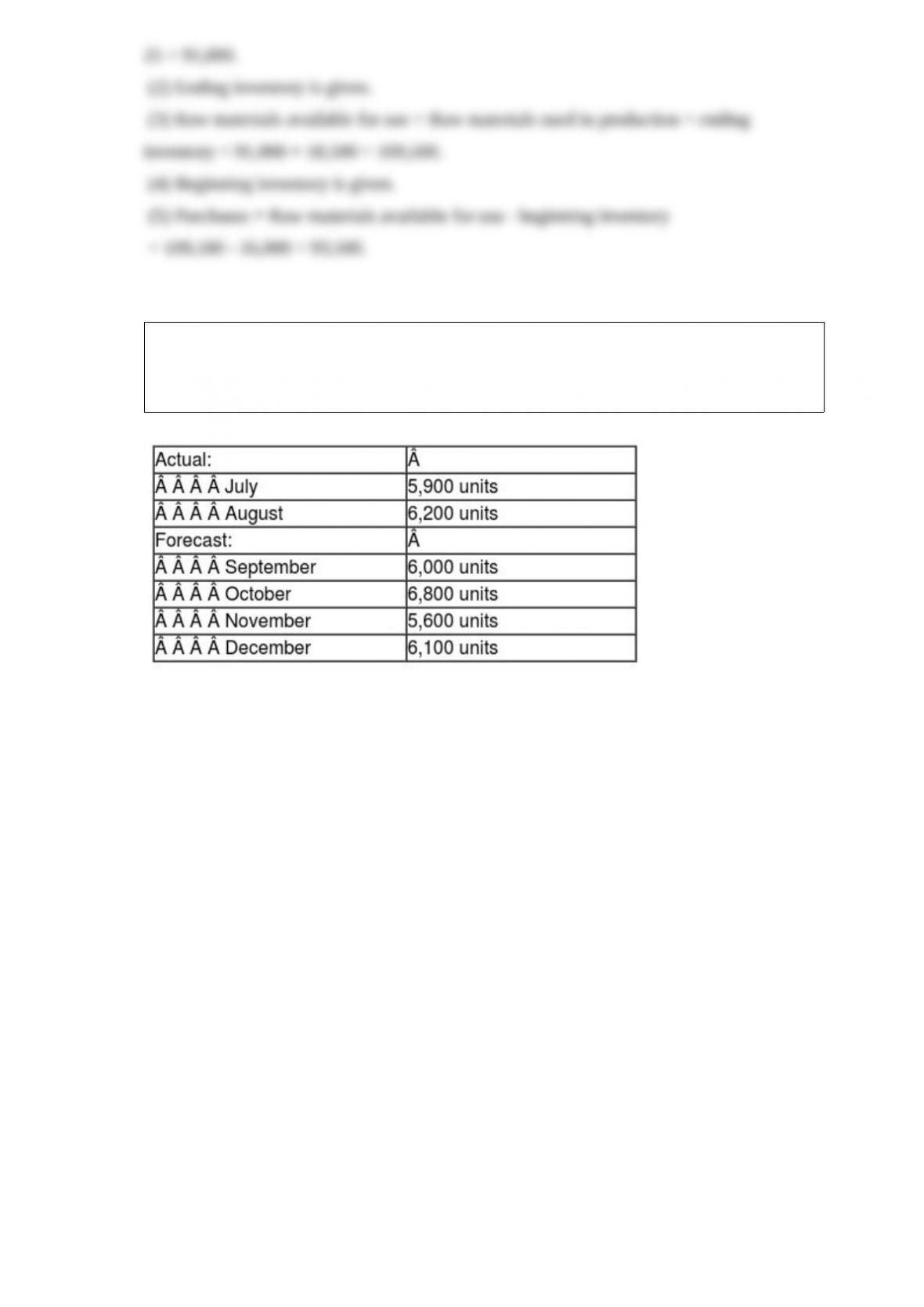
Pacesetters, Inc., has actual sales for July and August and forecasted sales for
September, October, November, and December as follows:
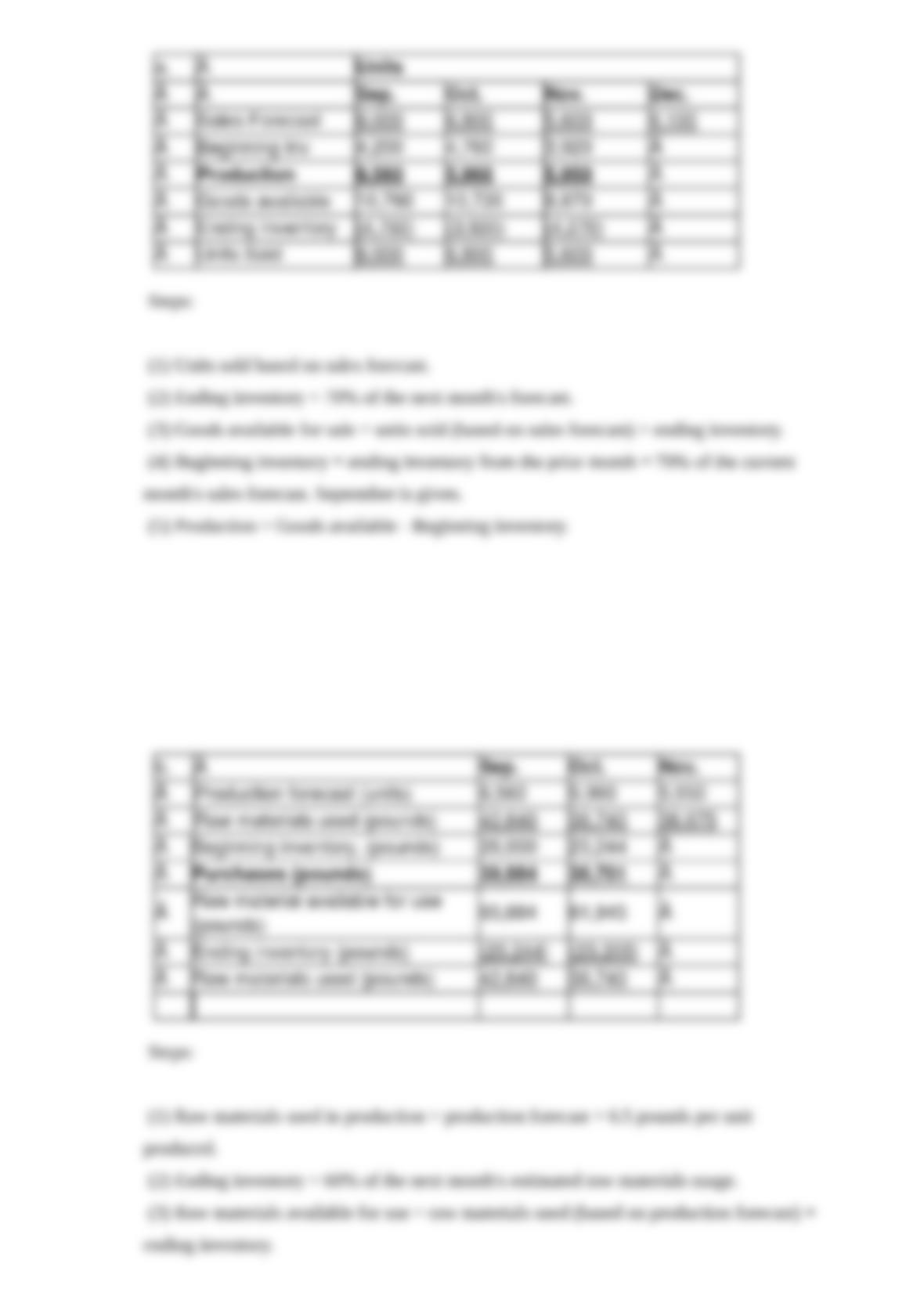
(a.) The firm’s policy is to have finished goods inventory on hand at the end of the month
that is equal to 70 percent of the next month’s sales. It is currently estimated that there will
be 4,200 units on hand at the end of August. Calculate the number of units to be produced
in each of the months of September, October, and November.
(b.) Each unit of finished product requires 6.5 pounds of raw materials. The firm’s policy
is to have raw material inventory on hand at the end of each month that is equal to 60
percent of the next month’s estimated usage. It is currently estimated that 26,000 pounds of
raw materials will be on hand at the end of August. Calculate the number of pounds of raw
materials to be purchased in each of the months of September and October.

The overhead component of product cost is:
A. the sum of the actual overhead costs incurred in the manufacture of the product.
B. likely to be the same amount for every product made by the company.
C. includes all manufacturing costs except those for raw materials and direct labor.
D. determined at the end of the year when actual costs and actual production are known.
The capital budget provides an overall blueprint to help an organization meet it’s:
A. operating budget goals.
B. current period profitability.
C. relevant costing objectives.
D. long-term growth and profitability objectives.
An excess of cost of goods manufactured over cost of goods sold for the period
represents:
A. an increase in gross profit.
B. a decrease in work in process inventory.
C. overapplied manufacturing overhead.
D. an increase in finished goods inventory.
Which of the following statements concerning the accounting for leases is not true?
A. The economic impact of a capital lease isn’t really any different from buying the
asset outright and signing a note payable that will be paid off, with interest, over the life
of the asset.
B. At the inception of a capital lease, the lessee’s total assets and total stockholders’
equity are both increased for the present value of the lease payments to be made over
the life of the lease.
C. Assets rented under an operating lease are not reflected on the lessee’s balance sheet,
and the rent expense involved is reported in the income statement as an operating
expense.
D. A capital lease results in the lessee assuming virtually all the benefits and risks of
ownership of the leased asset.
Baja Industries has recently switched its method of applying manufacturing overhead
from a single predetermined overhead rate based on direct labor hours to activity-based
costing (ABC). Assume that the direct labor rate is $18.00 per hour and that there were
no beginning inventories. The following cost drivers and rates have been developed for
allocating manufacturing overhead costs:
The following production, costs, and activities occurred during the month of August:
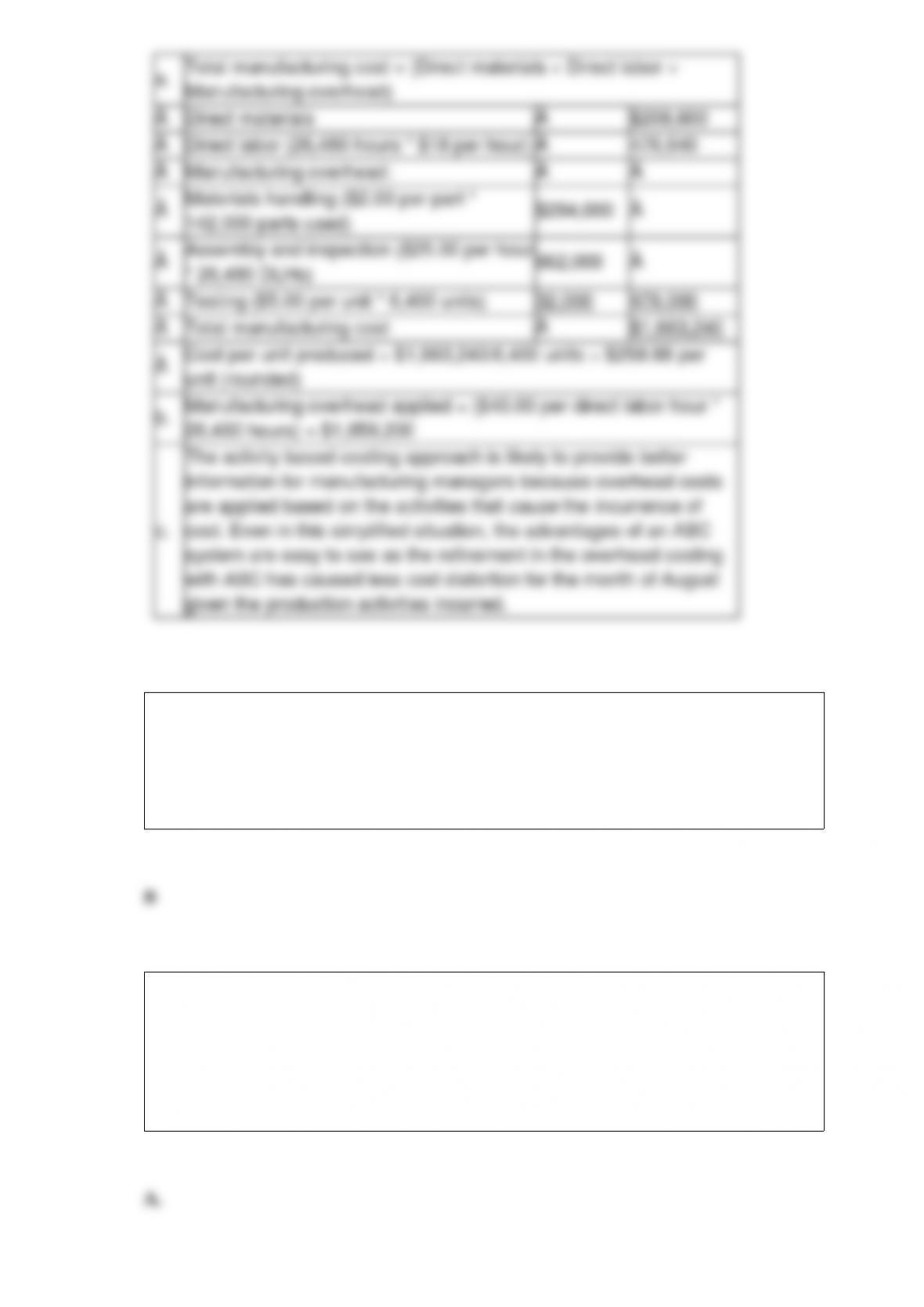
(a.) Calculate the total manufacturing cost and the cost per unit for the month of August.
(b.) Assume instead that Baja Industries applies manufacturing overhead on the basis of
$40.00 per direct labor hours (rather than the ABC method). Calculate the total
manufacturing overhead cost applied for the month of August.
(c.) Which method of applying overhead do you think provides better information for
manufacturing managers?
An income statement organized by cost behavior does not include:
A. operating income.
B. gross profit.
C. contribution margin.
D. revenues.
An entity’s current ratio will be influenced by:
A. the inventory cost flow assumption used.
B. writing off an overdue account receivable against the allowance for uncollectible
accounts.
C. the depreciation method used.
D. issuance of a stock dividend.
______________ standards allow inefficiencies from prior years to be incorporated into
the budget, thus providing little incentive for improvement.
A. Ideal
B. Engineered
C. Attainable
D. Past experience
The following information is from ABC Company’s general ledger: Beginning and
ending inventories, respectively, for raw materials were $16,000 and $20,000 and for
work in process were $40,000 and $44,000. Raw material purchases and direct labor
costs incurred were $72,000 each, and manufacturing overhead applied amounted to
$40,000. Determine the total cost of goods manufactured during the period.
A. $176,000.
B. $180,000.
C. $184,000.
D. $220,000.
An example of a cost that is likely to have a variable behavior pattern is:
A. sales force salaries.
B. depreciation of production equipment.
C. salaries of production supervisors.
D. production labor wages.
The valuation of short-term marketable securities on the balance sheet is likely to be for
an amount that is approximately equal to the cost of these investments because:

A. the market value of short-term marketable securities does not fluctuate from cost.
B. the high quality and close maturity date of the securities cause their market values to
be relatively stable.
C. generally accepted accounting principles require that short-term marketable
securities be reported at cost.
D. the question statement is false; the valuation of short-term marketable securities on
the balance sheet is not likely to be for an amount that is approximately equal to the
cost of these investments.
The effect of an error resulting in an understatement of ending inventory is to:
A. overstate the next period’s beginning inventory.
B. understate cost of goods sold of the current period.
C. overstate cost of goods sold of the current period.
D. overstate operating expenses of the current period.
Direct costs pertain to costs that:
A. are traceable to a cost object.
B. are not traceable to a cost object.
C. are commonly incurred.
D. are variable costs.