Dual distribution can violate the Sherman Act and the Clayton Act if the
a. prices charged for items sold through one channel are different from the prices
charged for the same items in another channel.
b. manufacturer’s behavior is viewed as lessening competition by eliminating
wholesalers or retailers.
c. manufacturer has a corporate vertical marketing system with one channel and an
administered vertical system with the other.
d. manufacturer uses both a direct and indirect marketing channel.
e. product is not available through more than one marketing channel.
Answer:
Under the Clayton Act, __________ with existing channel members may be illegal.
a. refusal to cooperate
b. refusal to deal
c. sharing proprietary information
d. horizontal integration
e. disintermediation
Answer:
During the planning phase of an IMC program, a firm will identify the target audience,
__________, set the budget, select the right promotional tools, design the promotion,
and schedule the promotion.
a. specify the promotion objectives
b. pretest the promotion
c. state the mission
d. identify possible advertising or promotional firms
e. carry out the promotion
Answer:
Ultimately, ethical choices are based on
a. the personal moral philosophy of the decision maker.
b. societal culture and norms.
c. business culture and industry practices.
d. laws enacted by Congress and regulations by federal and state governments.
e. chance and opportunity.
Answer:
Making an unsubstantiated or misleading claim about the environmental benefits of a
product, service, technology, or company practice is referred to as ___________.
a. greenwashing
b. whitewashing
c. environmental slander
d. green gouging
e. demarketing
Answer:
The social network that is used solely for sharing videos is
a. Google.
b. Facebook.
c. YouTube.
d. Twitter.
e. LinkedIn.
Answer:
The practice of using barter rather than money for making global sales is referred to as
a. trade balancing.
b. tariffs.
c. the trade feedback effect.
d. countertrade.
e. currency forbearance.
Answer:
Which of the following quotes from a new product adopter would signal the need for a
firm to counteract a value barrier?
a. “But it might make me fat.”
b. “What if I can”t make the monthly payments?”
c. “I don”t want to try this if it means I have to swallow it with milk.”
d. “Big deal, the only difference is the shape of the package.”
e. “Sure I”ll try it; why not!”
Answer:
The complementary role of different communication and delivery channels is referred
to as
a. the cumulative effect.
b. the primary effect.
c. the cross-over effect.
d. the complementary effect.
e. the influence effect.
Answer:
In the hierarchy of effects, the consumer’s repeated purchase and use of the product or
brand is referred to as the _________ stage.
a. evaluation
b. adoption
c. awareness
d. interest
e. trial
Answer:
Recent studies comparing advertising in different media suggest that magazine
advertising
a. takes a relatively short time to read.
b. incorporates four-color graphics too frequently.
c. usually has little competition with other media features.
d. is quickly replacing television advertising.
e. is perceived to be more trustworthy, inspirational, and engaging than other media.
Answer:
Cardiac Science is a California-based company that makes defibrillators, heart
monitors, and other medical equipment. It is preparing to market its products in Greece.
The company’s marketing manager is responsible for the promotional campaign in
Greece, and she wants to avoid any problems that might arise because her field of
experience does not coincide with that of her Greek target audience. Which of the
following is the best example of a communications problem that might arise because
her field of experience is different from that of her audience?
a. The name of the product, when translated into Greek, has an unintentional meaning.
b. Her target audience is strongly ethnocentric.
c. The trade journals in which the company wants to run its ads do not accept ads from
foreign companies.
d. A Greek bureaucrat who is responsible for determining that the Cardiac Science
products meet national standards has taken a personal dislike to her.
e. The ads are in trade journals that Greek hospital administrators don”t read.
Answer:
Since its launch, Netflix has changed its “business model” in order to
a. compete with Blockbuster retail store expansion.
b. respond to changing consumer demand and the evolution of new technologies.
c. expand its focus from entertainment to movie collectibles and memorabilia.
d. avoid head-to-head with satellite television providers, which recently announced a
strategic partnership with Blockbuster that offers a similar service as Netflix.
e. begin preparations to withdraw from its traditional method of mail delivery, which
takes 4-6 business days and introduce next-day delivery through FedEx.
Answer:
Independently owned firms that take title to the merchandise they handle are referred to
as
a. brokers.
b. agencies.
c. virtual retailers.
d. merchant wholesalers.
e. merchant retailers.
Answer:
Bombardier is the leading marketer of corporate jets. Its brand name is well known and
respected in the corporate jet market. The aircraft company relies on outside suppliers
for design support and to share development costs and market risks, but Bombardier is
considered the leader in determining design and marketing of its planes. For its newest
plane, Bombardier has about 30 prime suppliersabout 10 of those have been involved
since the initial design phase. Bombardier is an example of a __________.
a. product champion
b. channel general
c. channel director
d. channel coordinator
e. channel captain
Answer:
The value added dimension of the retail positioning matrix includes elements such as
location, prestige, and __________.
a. level of service
b. market share
c. price
d. number of employees
e. product reliability
Answer:
A paid form of nonpersonal communication about an organization, product, service, or
idea by an identified sponsor is referred to as __________.
a. sales promotion
b. publicity
c. advertising
d. direct marketing
e. mass communication
Answer:
As the content of a marketing website for a product moves from words to photos,
videos, and animation, the media richness of the site
a. decreases.
b. is not affected.
c. increases.
d. can be manipulated.
e. is undermined.
Answer:
Because the average consumer operates in a complex environment, the human brain
attempts to organize and interpret information with a process referred to as
a. selective retention.
b. selective attention.
c. selective exposure.
d. selective perception.
e. stimulus discrimination.
Answer:
Key problems that emerge in a firm’s strategic marketing process include: (1) bad news
is filtered out as information goes up the line to give top management a very rosy
picture; (2) plans are based on very poor assumptions about environmental forces; (3)
planners and their plans may have lost sight of their customers’ needs; (4) too much
time and effort may be spent on data collection and writing plans that are too complex
to implement; and (5) __________.
a. there is poor communication between the firm and its stakeholders
b. although management says they are behind the plans, they do not allocate resources
to the degree necessary for success
c. there is a lack of leadership
d. plans can be thwarted by disgruntled employees, other departments, or competitors
e. line operating managers often feel no sense of ownership in implementing the plans
Answer:
The retail price of a mobile phone (unsubsidized) has decreased from $4,000 in 1983
when Motorola commercialized the device to less than $99 today as the volume
increased from zero to millions of units sold. This is due in large part to which type of
pricing approach?
a. skimming pricing
b. prestige pricing
c. experience curve pricing
d. odd-even pricing
e. customary pricing
Answer:
To gauge stickiness, a company monitors
a. the average time it takes customers to make a purchase from the time they enter a
website until they complete a financial transaction.
b. the average time it takes for customers to move from one page of a website to
another.
c. the amount of time per month, in minutes, visitors spend on a company’s website.
d. the number of visits by a unique customer to the same website before an actual
purchase is made.
e. the total time, in hours and minutes, that it takes for a customer to make an online
purchase.
Answer:
Promotion represents the fourth element in the marketing mix. The promotional element
consists of communication tools, including advertising, personal selling, sales
promotion, public relations, and __________.
a. people
b. merchandising
c. direct marketing
d. social media
e. branding
Answer:
The process of continually acquiring information on events occurring outside the
organization to identify and interpret potential trends is referred to as
a. significant trend analysis.
b. organizational scanning.
c. environmental scanning.
d. a SWOT analysis.

e. marketing intelligence.
Answer:
A nonpersonal, indirectly paid presentation of an organization, product, or service that
can take the form of a news story, editorial, or product announcement is referred to as
__________.
a. direct sales
b. publicity
c. direct marketing
d. a public service announcement
e. personal selling
Answer:
A marketing strategy to increase sales of current products in current markets is referred
to as
a. market penetration.
b. market development.
c. product development.
d. diversification.
e. marketing synergy.
Answer:
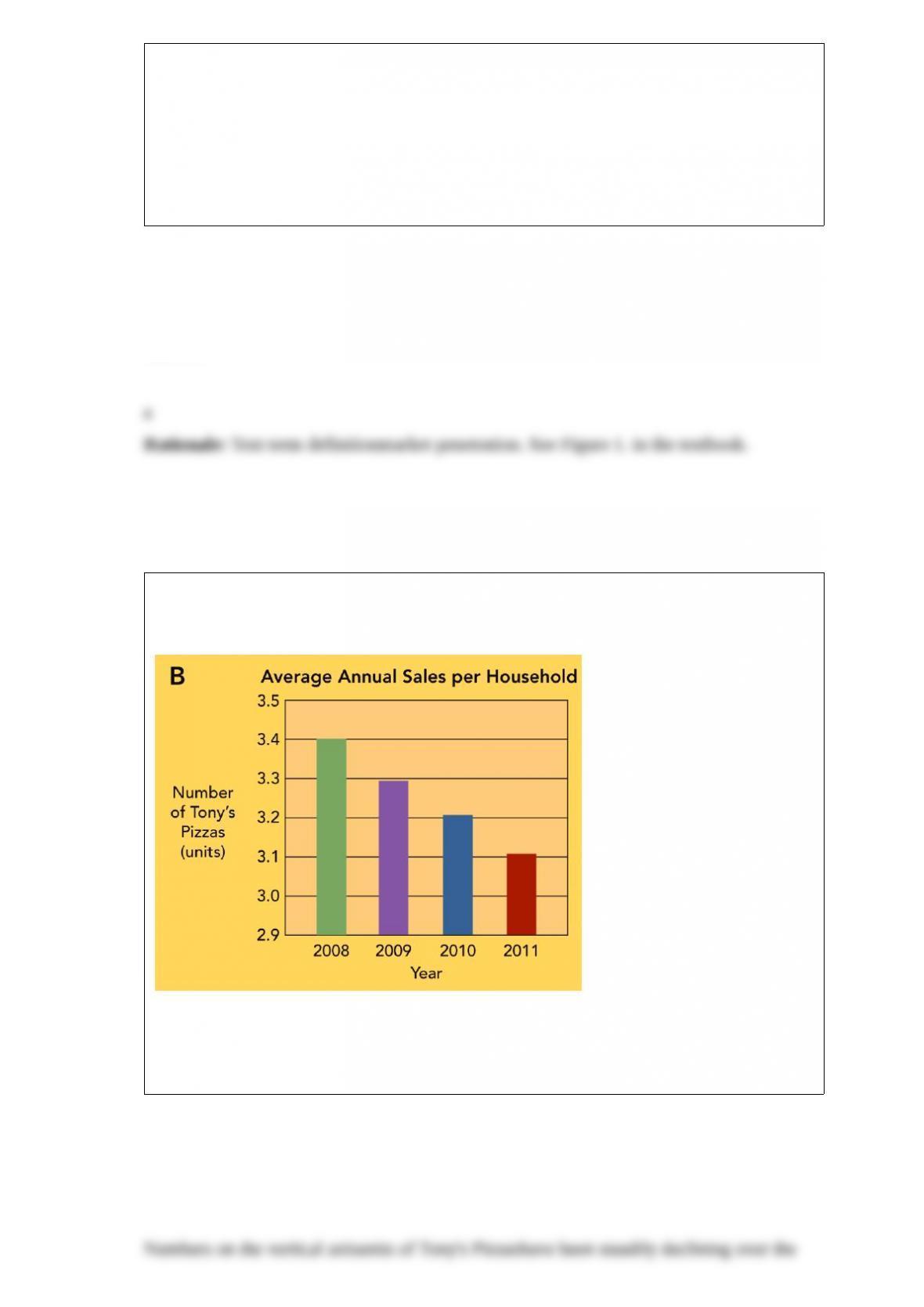
Figure 1.B: Average Annual Sales of Tony’s Pizza per Household
Figure 1.B above shows the average unit sales per household, by household size for
Tony’s Pizza. Analyze this chart. What findings would you present to a supervisor?
Answer:
The practice of shielding one or more sectors of a country’s economy from foreign
competition through the use of tariffs or quotas is referred to as
a. domestic imperialism.
b. protectionism.
c. blocked competition.
d. import taxation.
e. trade restrictions.
Answer:
In marketing, the four basic forms of competition are
a. pure competition, limited competition, oligopoly, and monopoly.
b. dictatorship, monarchy, oligarchy, and democracy.
c. pure competition, cross-market competition, oligopoly, and pure monopoly.
d. pure competition, monopolistic competition, oligopoly, and pure monopoly.
e. technological competition, market competition, governmental competition, and
environmental competition.
Answer:
Russ Berry Company sells stuffed animals and holiday gifts. When its salesperson asks
a retailer, “Do you want to order the two dozen assorted bears or two dozen white-only
bears?” he has executed which stage of the selling process?
a. approach
b. presentation
c. handling objections
d. closing
e. follow-up
Answer:
The person who assumed the __________ role in the buying center shook the
salesperson’s hand and said, “Ms. Hron, my manager has accepted your bid. I”ll expect
48 boxes of ring shank nails to be delivered by November 8th, and we will pay the
agreed-upon price of $21. per box.”
a. gatekeeper
b. broker
c. buyer
d. influencer
e. user
Answer:
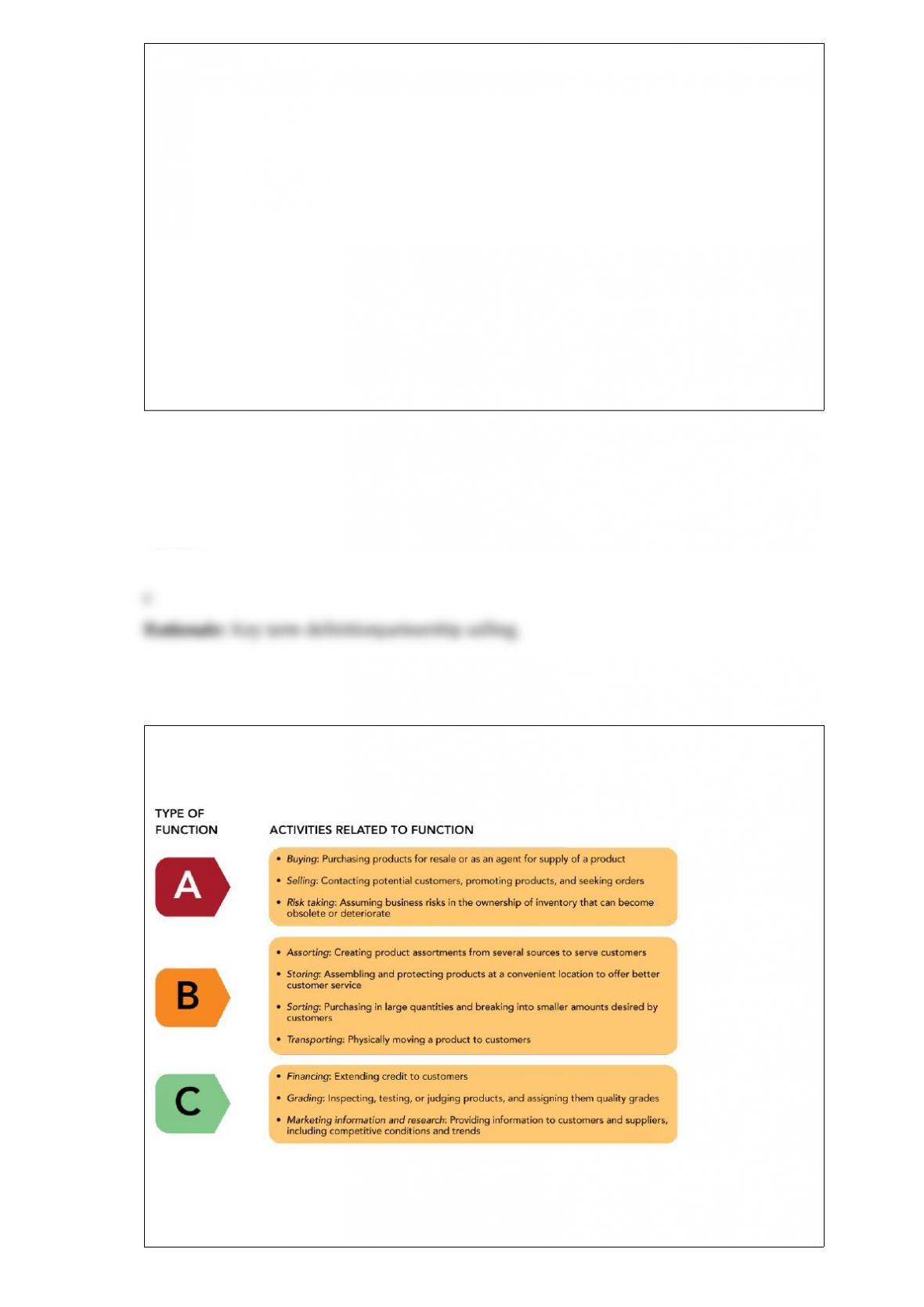
Figure 1.
In Figure 1. above, letter “B” represents which era in U.S. business history?

a. sales era
b. production era
c. age of consumerism
d. marketing concept era
e. customer relationship era
Answer:
The word “Free” in relation to the acronym “FOB” signals the point or location where
the seller is
a. free of responsibility for customer invoicing.
b. free of product liability.
c. free to choose method of transportation.
d. free to choose the point of loading.
e. free to choose the method of payment.
Answer:
The practice whereby buyers and sellers combine their expertise and resources to create
customized solutions, commit to joint planning, and share customer, competitive, and
company information for their mutual benefit, and ultimately the benefit of the
customer, is referred to as __________.
a. multichannel selling
b. cross-functional selling
c. partnership selling
d. relationship selling
e. customized ordering
Answer:
Figure 1.
Intermediaries perform three basic functions. According to Figure 1. above, “C”
represents a(n) __________.
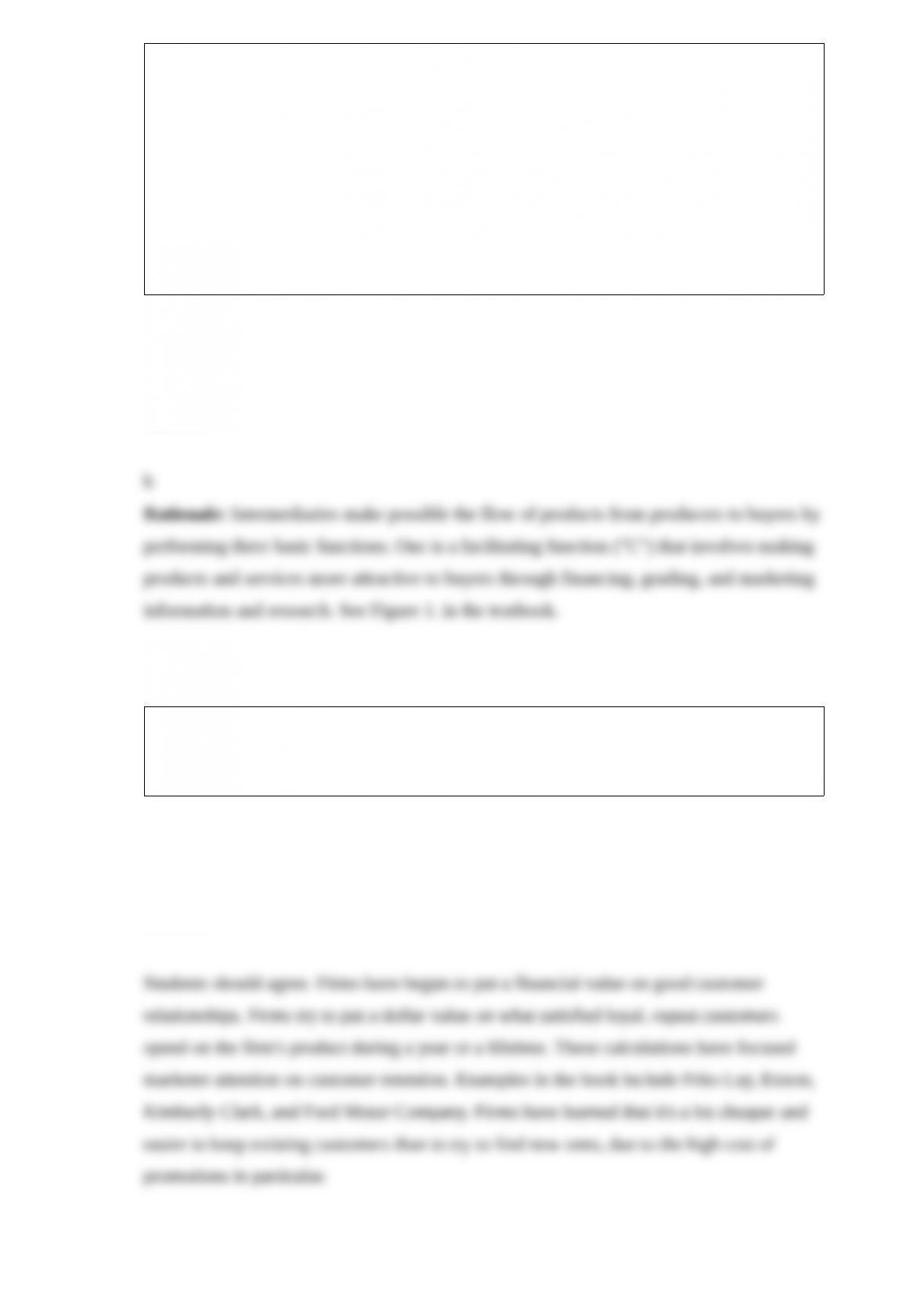
a. transactional function
b. facilitating function
c. middleman function
d. logistical function
e. operational function
Answer:
Would you agree or disagree with the following statement: “It’s a lot cheaper and easier
to keep existing customers than to try to find new ones.” Explain your answer.
Answer:
Explain the differences in promotion between convenience, shopping, specialty, and
unsought products.
Answer:
Explain how the racial and ethnic composition of the U.S. is expected to change
between 2010 and 2030.
Answer:
Identify and briefly describe each of the five promotional elements.
Answer:
Describe the three levels in an organization.
Answer:
What is the difference between a one-price policy and a flexible-price policy?
Answer:
What are the product and promotion strategies available to a company seeking to enter
the global marketplace? How do they relate to each other in terms of the same or
adapted product and promotion?
Answer:
What are the six major steps involved in setting prices?
Answer:
What are some specific cost trade-offs that can be made in a logistics system?
Answer:
Assume you are manager of The Outback Steak House, a franchised restaurant that has
opened at new location in St. Louis. Describe which segmentation base(s) and its (their)
respective segmentation variable(s) you would use to segment the U.S. market and
explaining why each the appropriate market segmentation strategy.
Answer:
List and explain two types of marketing plans.
Answer:
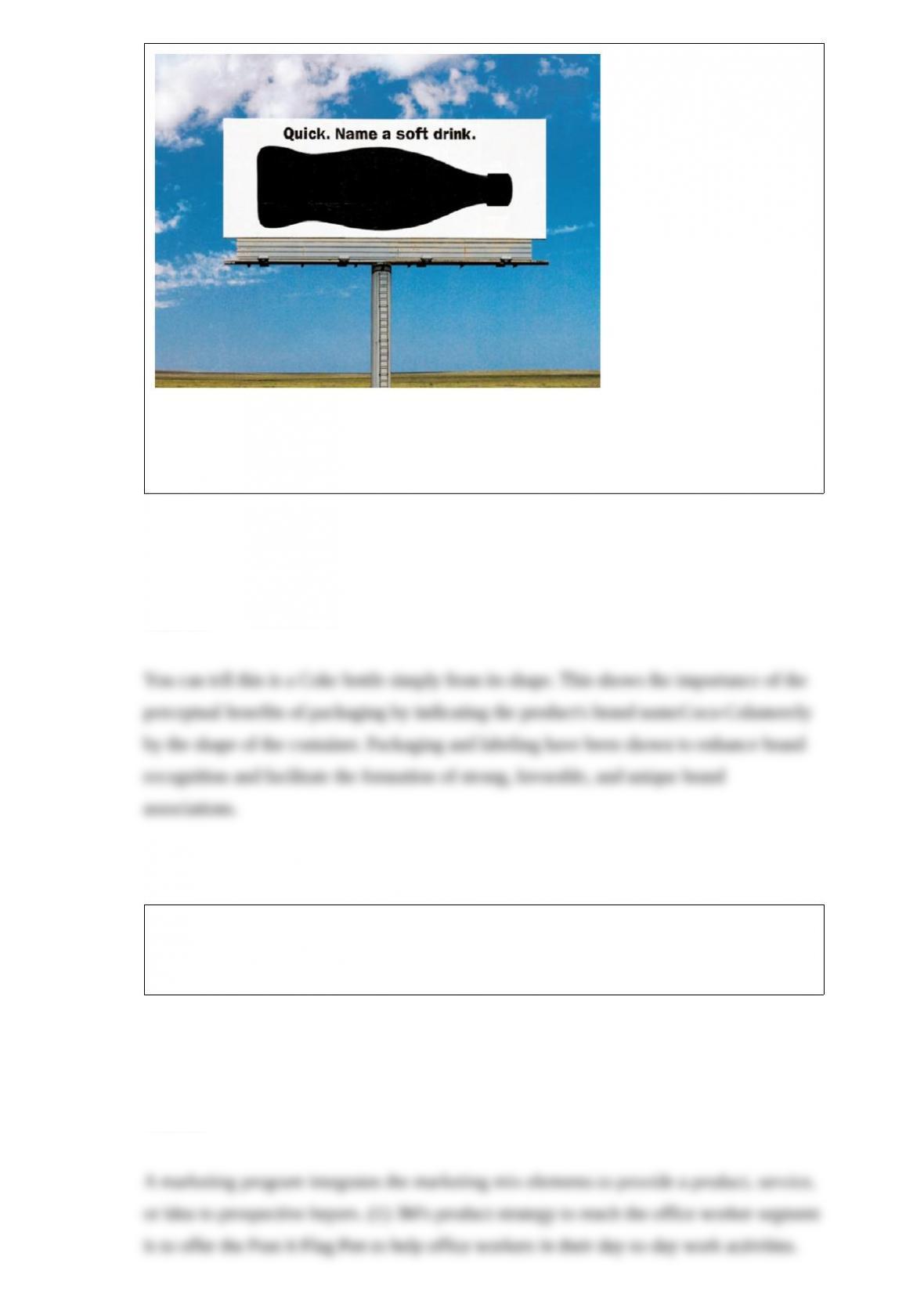
Soft Drink Ad
What is the brand name of the soft drink ad shown above? Why are you able to answer
this question? Specifically, what packaging benefit does the firm use?
Answer:
Explain the marketing program 3M used to reach the office worker segment with its
Post-it Flag Pen.
Answer:
What is an important limitation of NAICS codes that inhibit their usefulness?
Answer:
Name and briefly describe the seven types of organizational goals or objectives.
Answer:
Describe the difference between ethics and laws
Answer:
What is a subculture? What are some examples of products targeted at American
subcultures?
Answer:
Services incorporate the four I’s of product marketing. How would each of these four
elements apply to a stock brokerage service?
Answer:
Explain the difference between a hypermarket and a supercenter.
Answer:
A campus service organization annually raises money through the sale of T-shirts. What
are the major components of the marketing program it should use to increase sales?
Give one example of each.
Answer: