
The information needed for the marketing program, Step 3 of the planning phase,
includes: (1) marketing mix actions and (2) __________.
a. positioning studies
b. market-product grids with target segments and product groupings
c. detailed plans to execute the marketing program
d. projected future sales, expenses, and profits
e. trends for industry and competitors
Answer:
Netflix is a company that rents DVD movies either by mail or streams movies over the
Internet. It jumped into an industry where there were many competitors from other local
and national video stores. Initially, it established a loyal clientele by providing a service
that was not availablereliable and fast shipment. Its delivery system created Netflix’s
a. viable mission.
b. competitive advantage.
c. tactical innovation.
d. core benefit.
e. sales orientation.
Answer:
A box of Cascade dishwasher detergent shrink-wrapped with a bottle of Jet Dry for 10
cents more than the regular price of the dishwasher detergent is an example of
__________ pricing.
a. penetration
b. prestige
c. bundle
d. odd-even
e. standard mark-up
Answer:
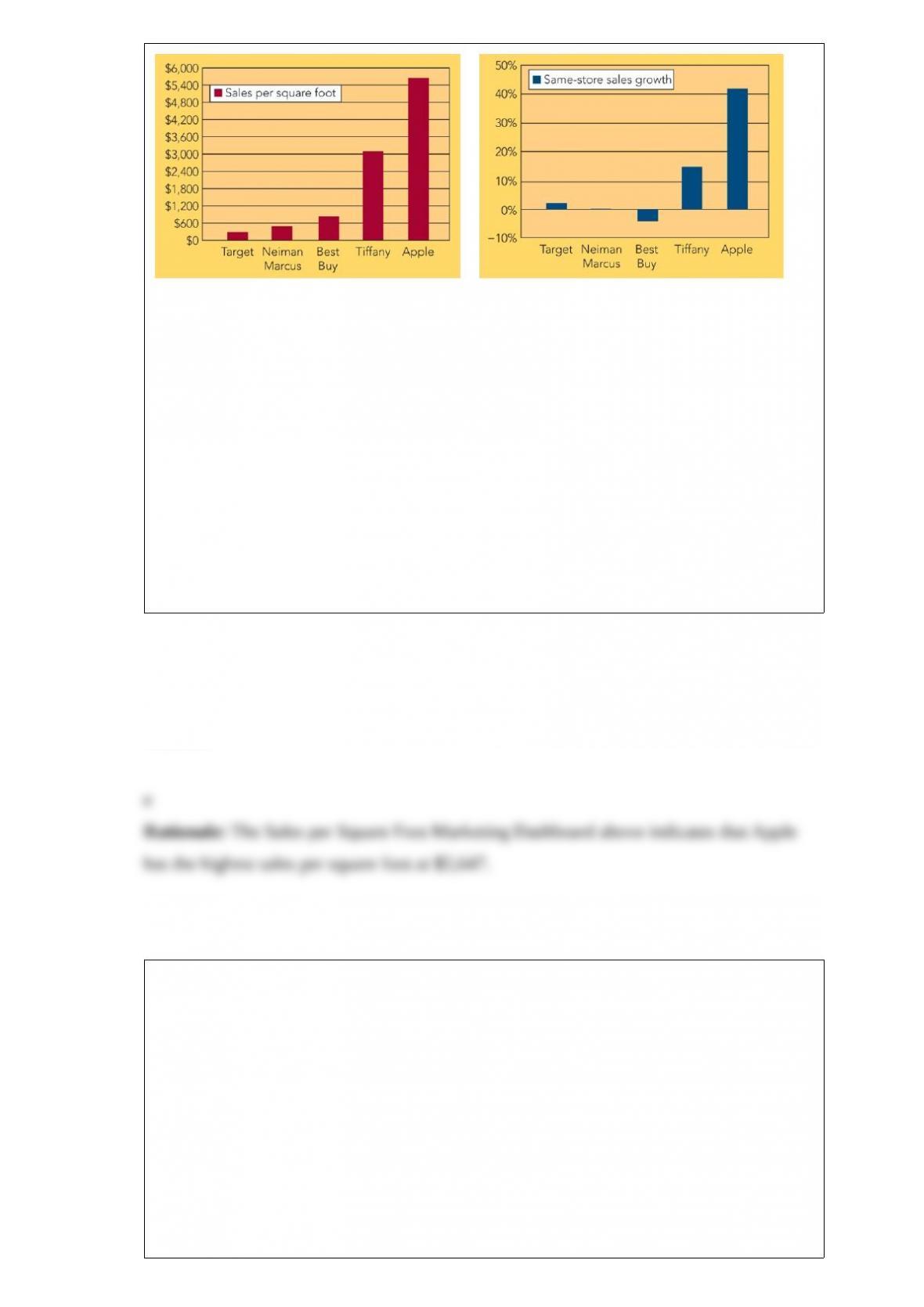
Sales per Square Foot and Same-Store Sales Growth Marketing Dashboards
Which of the following stores shown in the Sales per Square Foot Marketing Dashboard
above has the highest sales per square foot?
a. Target
b. Neiman Marcus
c. Best Buy
d. Tiffany
e. Apple
Answer:
Which of the following statements is true about Facebook?
a. Facebook is second to Twitter in the number of registered users.
b. Facebook has remained a “closed system,” which means outside search engines such
as Google or Bing cannot catalog information about a particular brand or topic.
c. Facebook is the social media website where users upload more videos to its site than
any other site.
d. Facebook’s official smartphone app uses location-based technology so users can
“check-in” to local businesses to receive targeted promotional offers.
e. Facebook is a social media website with the primary purpose of enabling users to
network and connect with others in their profession.
Answer:
Figure 1.
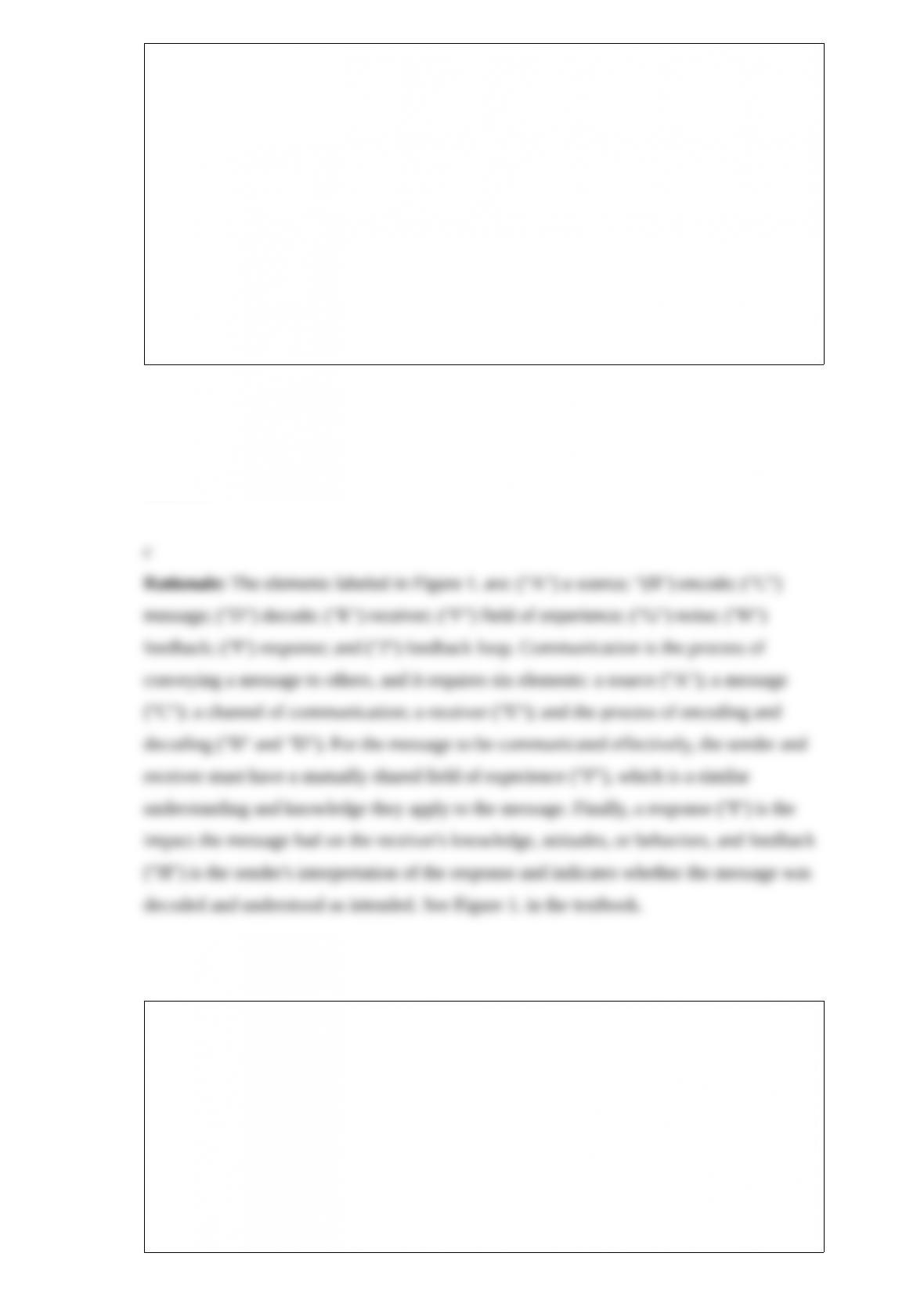
Figure 1. above depicts the communication process, which consists of 10 key elements
(“A” through “J”). The position labeled “A” is referred to as __________.
a. the message
b. the receiver
c. the source
d. the field of experience
e. feedback
Answer:
A virtual _________ is a social network of individuals who interact through
user-to-user communications hosted by a company to enhance customer experience and
build a favorable buyer-seller relationship.
a. village
b. community
c. district
d. area
e. population
Answer:
Deceptive pricing practices are outlawed by legislation and enforced by which federal
agency?
a. Consumer Protection Agency.
b. U.S. Department of Justice.
c. Federal Communications Commission.
d. U.S. Department of Commerce.
e. Federal Trade Commission.
Answer:
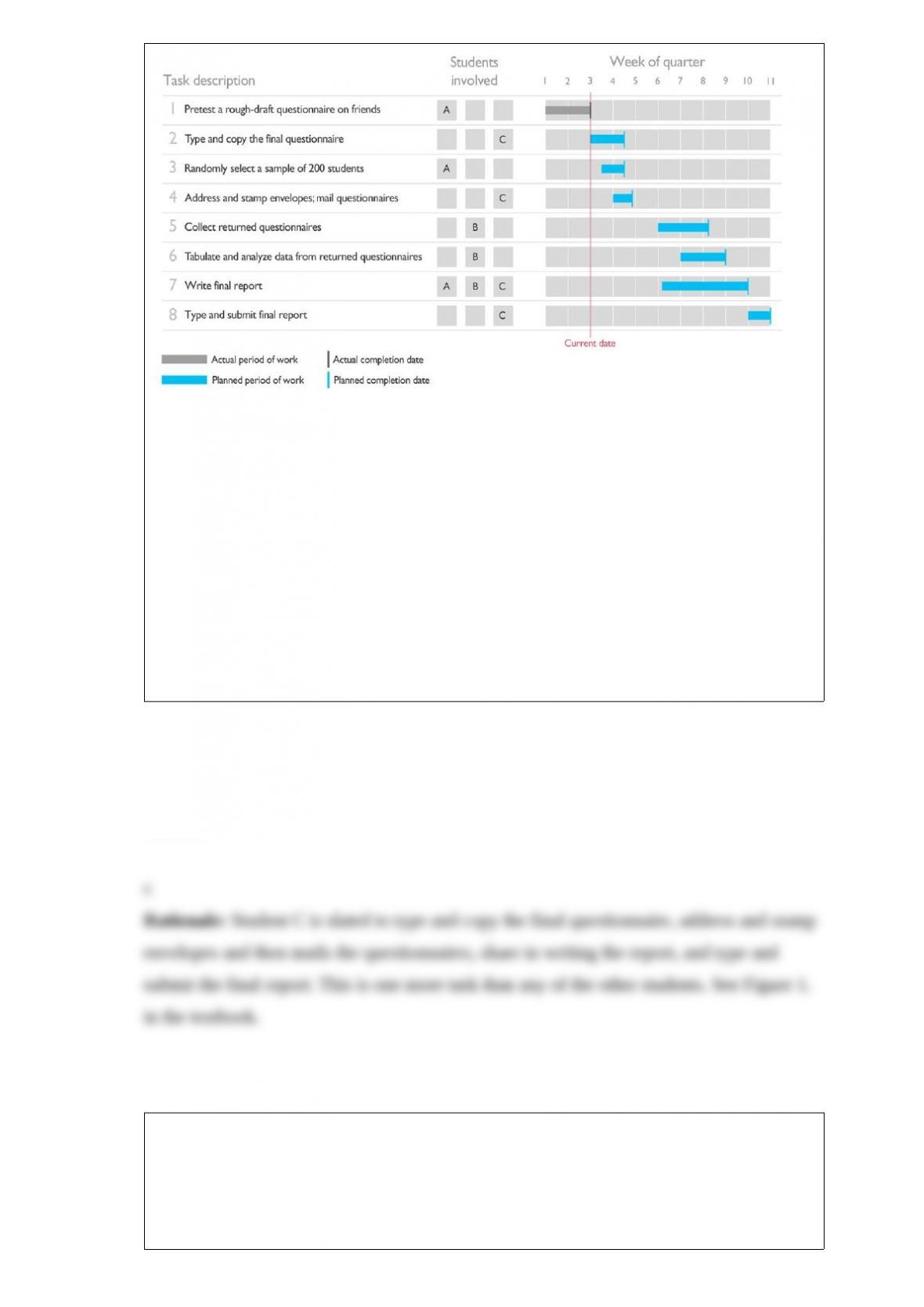
Figure 1.
According to Figure 1. above, which student has the greatest number of assigned tasks?
a. Student A
b. Student B
c. Student C
d. Students A and B
e. The students have the same number of tasks split between them.
Answer:
The two-way flow of communication between a buyer and seller, often in a face-to-face
encounter, designed to influence a person’s or group’s purchase decision is referred to as
__________.
a. sales management
b. personal selling
c. sales promotion
d. direct selling
e. marketing management
Answer:
What is the best way a brand manager might deal with “key influencers” during a social
media attack on a brand?
a. Respond with aggression to get them to back down.
b. Ignore them and they will stop commenting.
c. Undermine their credibility by emphasizing the fact that they are not “experts.”
d. Communicate directly and honestly.
e. Accept whatever solution they offer, as they will not cooperate any other way.
Answer:
The division of products into durable and nondurable goods is to __________.
a. comply with NAICS guidelines
b. address issues of environmental concern
c. comply with ISO 9000 requirements
d. classify products for tax purposes
e. provide direction for marketing actions
Answer:
Order cycle time refers to
a. the time between when an order is placed and when payment is received.
b. the time between the sale of the first production batch to the sale of the next
production batch.
c. the cycle between one full warehouse shipment to the next full warehouse shipment.
d. the lag from ordering an item until it is received and ready for use or sale.
e. the average time between reorders by a given wholesaler or retailer in the marketing
channel.
Answer:
Personal selling assumes many forms based on the __________ and the __________ to
perform the sales task.
a. size of the salesforce; financial outlay
b. complexity of the product; amount of sales training
c. amount of selling done; amount of creativity required
d. amount of creativity required; amount of sales training required
e. complexity of the product; financial outlay
Answer:
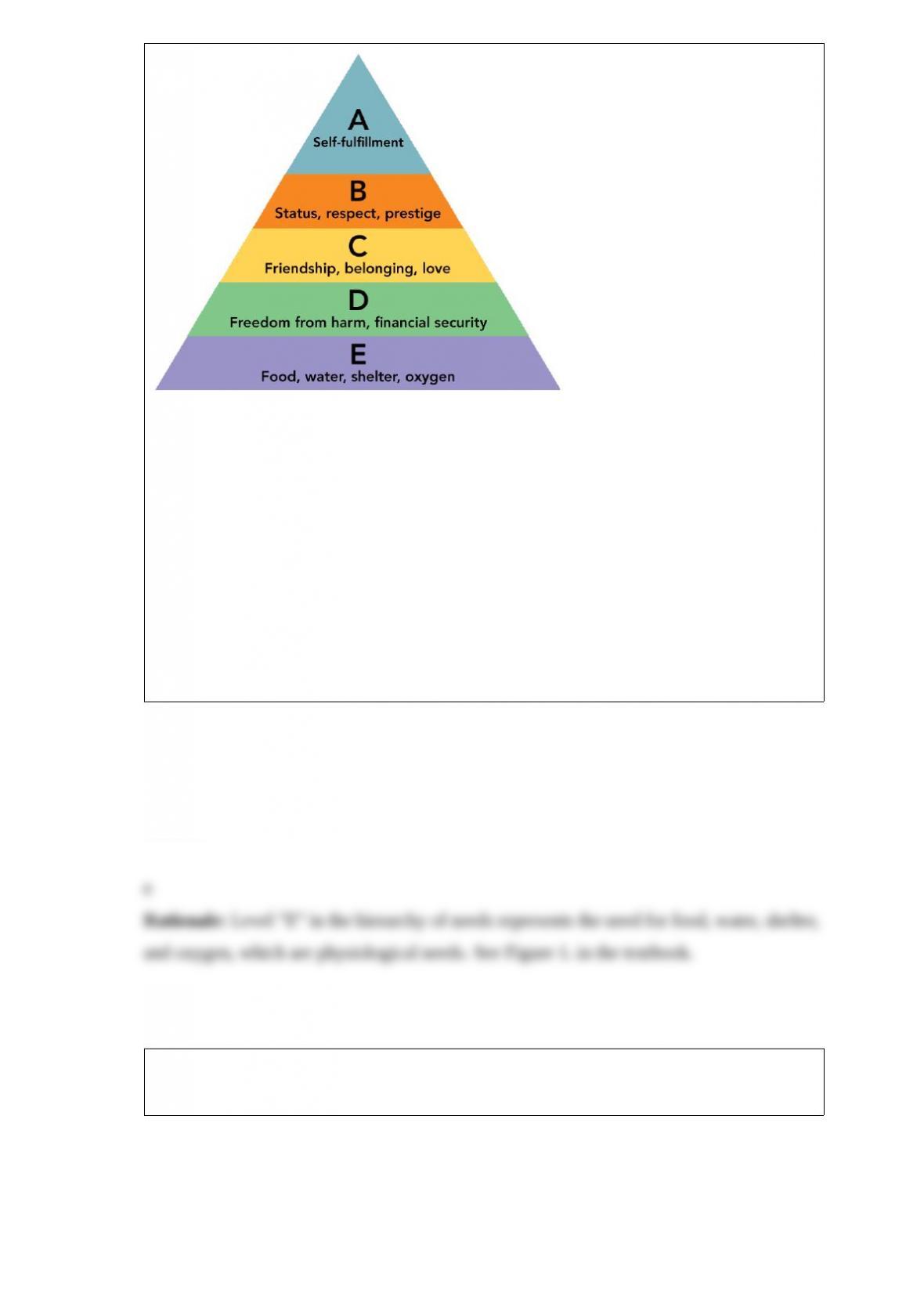
Figure 1.
According to Figure 1. above, “E” defines what level in the hierarchy of needs?
a. self-actualization
b. personal
c. social
d. safety
e. physiological
Answer:
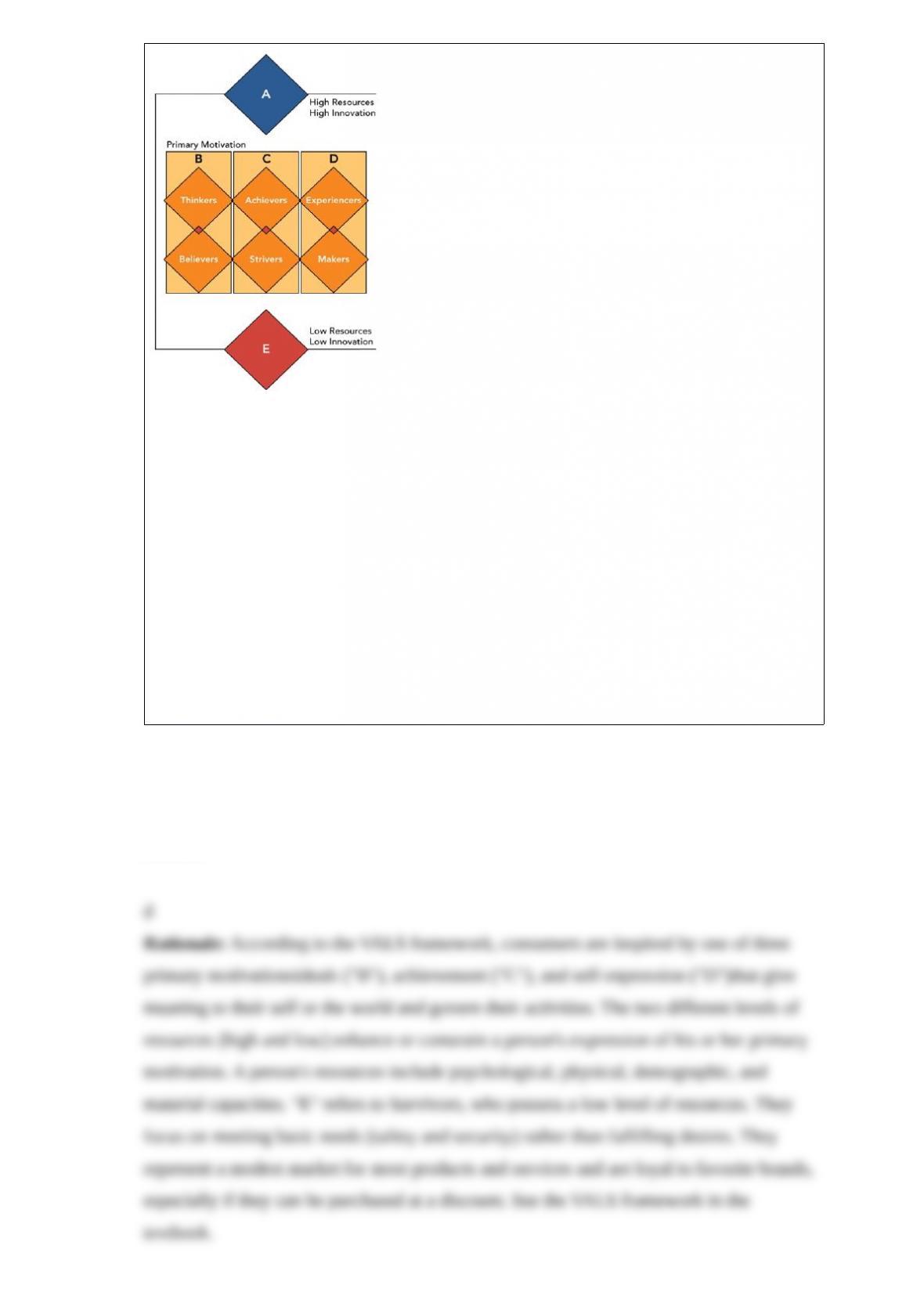
VALS Framework
VALS creates profiles of people based on their primary motivation and resources. In the
VALS framework above, “E” refers to
a. Ideals
b. Achievement
c. Self-Expression
d. Survivors
e. Innovators
Answer:
One of the disadvantages associated with radio as an advertising medium is that it
a. has a short exposure time.
b. cannot target specific audiences.
c. cannot use humor, sound, and intimacy effectively.
d. has a very limited amount of advertising time available.
e. is easy to convey complex messages.
Answer:
Which of the following statements accurately distinguishes between laws and ethics?
a. Laws reflect the beliefs of the majority of society while ethics reflect the beliefs of
the minority of society.
b. Ethics deal with religious and moral beliefs while laws deal with social, economic,
and environmental behaviors.
c. Ethics deal with internal (personal) issues while laws deal with external (social)
issues.
d. There is no significant difference between laws and ethics; these terms can be used
interchangeably.
e. Ethics deal with personal and moral principles whereas laws are society’s values that
are enforceable in the courts.

Answer:
Cost per action refers to
a. a fixed amount of money paid to the site for every time a visitor clicks on the ad.
b. a fixed amount of money paid to the site for placement of the ad.
c. a fixed amount of money paid to the site for every sale that originated from an ad
posted on that site.
d. a fixed percentage the site gets paid for placing the ad.
e. a fixed discount given to a visitor for clicking on the ad.
Answer:
As the salesperson for West Plains Band Saw talked to a group from Conner Industries,
he overheard one of the men on the production line saying, “This band saw has a
36-inch wheel that could really save us time, and with its adjustable height, it can be
operated by someone tall like me and by some of our shorter workers. I bet this would
speed up production time by 30 percent. Why don”t we order this band saw?” The
person the salesperson heard giving input has which buying center role?
a. purchasing agent
b. decider
c. buyer
d. user
e. motivator
Answer:
In 2007, Agro Farms launched its Chobani Greek Yogurt that has achieved spectacular
success. This success is largely due to its
a. price, which is about 25 percent less than competing yogurts.
b. partnership with Yoplait yogurt from General Mills, which is #1 in the yogurt product
category.
c. creative distribution strategy, starting with Greek restaurants and eventually rolling
out to supermarkets.
d. powerful points of difference that stress natural ingredients, quality, and taste.
e. replacing Kraft Foods in the yogurt business, Kraft now selling neither regular nor
Greek yogurt.
Answer:
A mother bought what she thought was a large box of unsweetened cereal. It was the
same 22 oz. size as other brands whose boxes clearly marked. However, when she
opened the box it was barely full. The Fair Packaging and Labeling Act would not
protect her unless
a. the package printed the disclaimer that the product might settle during shipping.
b. the package states that the contents should be purchased by weight rather than by
volume.
c. the package clearly states 22 oz. on the front but the actual weight of the contents was
only 16 oz.
d. the package lists all the ingredients including the total amount of sugar.
e. an identical package by the same manufacturer had the exact same amount inside.
Answer:
A company in Virginia that manufactures and sells peanut brittle to retailers charges
higher shipping costs for orders sent to customers living west of the Mississippi River.
This Virginia company is using
a. single-zone pricing.
b. FOB origin pricing.
c. freight absorption pricing.
d. multiple-zone pricing.
e. basing-point pricing.

Answer:
A stimulus-response presentation refers to a format that __________.
a. focuses on problem identification, in which the salesperson serves as an expert on
problem recognition and resolution
b. consists of information that must be provided in an accurate, thorough, and
step-by-step manner to inform the prospect
c. assumes that given the appropriate stimulus by a salesperson, the prospect will buy
d. involves adjusting the presentation to fit the selling situation, such as knowing when
to offer solutions and when to ask for more information
e. emphasizes probing and listening by the salesperson to identify the needs and
interests of prospective buyers
Answer:
Walmart, Southwest Airlines, and Costco all have been successful by offering
consumers the best
a. experience.

b. products/services.
c. price.
d. customer service.
e. availability.
Answer:
A business refers to
a. the daily operational decisions that must be implemented for an organization to
remain viable.
b. exchange transactions between seller and buyer in order for the seller to make sales
and earn profits.
c. the clear, broad, underlying industry or market sector of an organization’s offering.
d. an organization that develops an offering.
e. the objectives of a firm and the strategies and tactics that will allow it to achieve
them.
Answer:

Creative marketers engage in value-pricing, which is the practice of simultaneously
increasing product and service benefits and __________.
a. increasing costs
b. increasing price
c. increasing advertising
d. decreasing costs
e. maintaining or decreasing price
Answer:
Adding value to the product (or line) through additional features or higher-quality
materials is referred to as __________.
a. trading up
b. trading down
c. product enhancement
d. product extension
e. quality infusement
Answer:
The formula to calculate a BDI = __________.
a. (Percent of the total U.S. population in a market segment Percent of a brand’s total
U.S. sales in a market segment) 100
b. (Percent of a product category’s total U.S. sales in a market segment Percent of the
total U.S. population in a market segment) 100
c. (Percent of a brand’s total U.S. sales in a market segment Percent of the total U.S.
population in a market segment) 100
d. (Percent of the total U.S. population in a market segment Percent of a product
category’s total U.S. sales in a market segment) 100
e. There is not enough information to make any conclusions.
Answer:
_________ often come at the expense of _________ because a single customer segment
will likely require a variety of products, each of which will have to designed and
manufactured.
a. product synergies; marketing synergies
b. marketing synergies; product synergies
c. supplier synergies; consumer synergies
d. distributor synergies; supplier synergies
e. marketing synergies; finance synergies
Answer:
Which of the following statements accurately describes the global perspective on world
trade?
a. Exports are of significantly greater importance than imports.
b. Imports are of significantly greater importance than exports.
c. Imports and exports should be complementary economic flows: a country’s imports
affect its exports and exports affect its imports.
d. Exports and imports should always be kept in a state of equilibrium.
e. Imports and exports should be controlled through extensive use of international
tariffs, quotas, and other trade regulations.
Answer:
The key goal for retailers in the accelerated development phase of the retail life cycle is
to
a. recover start-up costs.
b. establish a dominant position in the fight for market share.
c. delay entering the decline stage of the retail life cycle.
d. find ways of discouraging their customers from moving to low-margin, mass-volume
outlets.
e. establish a retail concept that is a sharp departure from existing competition.
Answer:
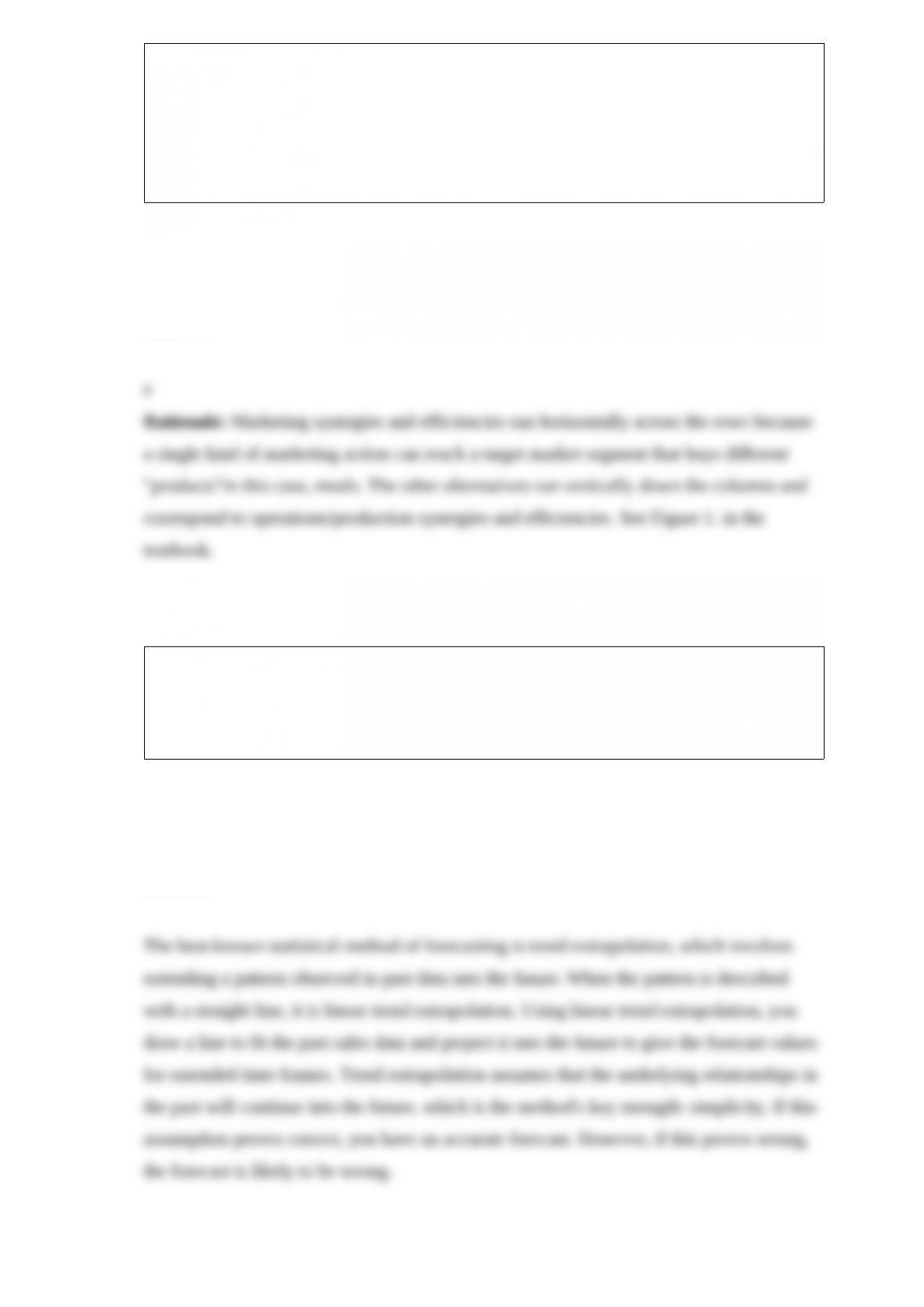
Figure 1.
Figure 1. above shows the market-product grid for a Wendy’s restaurant next to a large
urban university campus. The strategy most likely to exploit marketing synergies and
efficiencies would be to target
a. lunch customers.
b. between-meal snack customers.
c. dinner customers.
d. after-dinner snack customers.
e. dormitory customers.
Answer:
Briefly explain the best-known statistical method used by marketers to develop a
company’s sales forecasts. In your explanation, explain the strengths and weaknesses of
using this method.
Answer:
Explain the difference between order takers and order getters.
Answer:
What is environmental scanning? How is it used in marketing?
Answer:
Which generational cohort is often referred to as the echo-boom or baby boomlet?
Describe the interests and lifestyles of this cohort and explain why it is important to
marketers.
Answer:
Describe the objectives of institutional advertising. List and briefly define the four
forms of institutional advertising.
Answer:
Explain the difference between marketing synergies and product synergies.
Answer:
How do movie studios use marketing research?
Answer:
Channels are typically designed to satisfy one or more of four consumer interests. What
are they and why are they important?
Answer:
One of the first sales management decisions a firm must make is whether the company
should build its own salesforce or hire independent agents such as manufacturers’
representatives. Abacus Designs sells high-end furniture to retailers and needs to make
this decision. Independent agents would receive a 5 percent commission on sales while
a company salesforce would receive a 3 percent commission, salaries, and benefits. In
addition, with company salespeople, sales administration costs would be incurred for a
total fixed cost of $500,000 per year. At what sales level would independent salespeople
be less costly?
Answer:
List four key factors used to estimate demand.
Answer:
How does technology affect customer value?
Answer:
Play devil’s advocate. Select any American industry and argue persuasively why
protectionism is not only patriotic, it is absolutely essential for survival.
Answer:
Which generational cohort is also known as the baby bust? Describe the interests and
lifestyles of this cohort and explain why it is important to marketers.
Answer:
What are the six stages of the personal selling process? What is the objective of each
stage?
Answer:
Three types of companies populate and compete in the global marketplace. Identify and
succinctly describe each type.
Answer:
Research on unethical consumer behavior, such as fraudulent automobile insurance
claims or unauthorized downloading of music, movies, and software, indicates that
these acts are rarely motivated by economic need. What influences these behaviors?
Answer:
Media buyers use many terms to help select the right media for an advertising
campaign. Define reach, rating, frequency, gross rating points (GRPs), and cost per
thousand (CPM).
Answer:
Explain the difference between indirect exporting and direct exporting. What are the
advantages and disadvantages of each approach?
Answer: