
Geographical groupings refer to organizational groupings
a. that group specific customer segments.
b. in which sales territories are subdivided according to geographic location.
c. that represent the different departments or business activities within a firm.
d. in which a unit is responsible for specific product offerings.
e. that combine both market-based groupings with product groupings.
Answer:
The four most popular types of franchise arrangements are
a. service-sponsored franchise systems, service-sponsored retail franchise systems,
manufacturer-sponsored wholesale franchise systems, and manufacturer-sponsored
retail franchise systems.
b. service-sponsored retail franchise systems, corporate vertical marketing systems,
wholesaler-sponsored voluntary chains, and service-sponsored franchise systems.
c. manufacturer-sponsored wholesale franchise systems, service-sponsored retail
franchise systems, corporate vertical marketing systems, and wholesaler-sponsored
voluntary chains.
d. manufacturer-sponsored retail franchise systems, service-sponsored retail franchise
systems, corporate vertical marketing systems, and wholesaler-sponsored voluntary
chains.
e. administered vertical marketing systems, service-sponsored retail franchise systems,
corporate vertical marketing systems, and wholesaler-sponsored voluntary chains.
Answer:
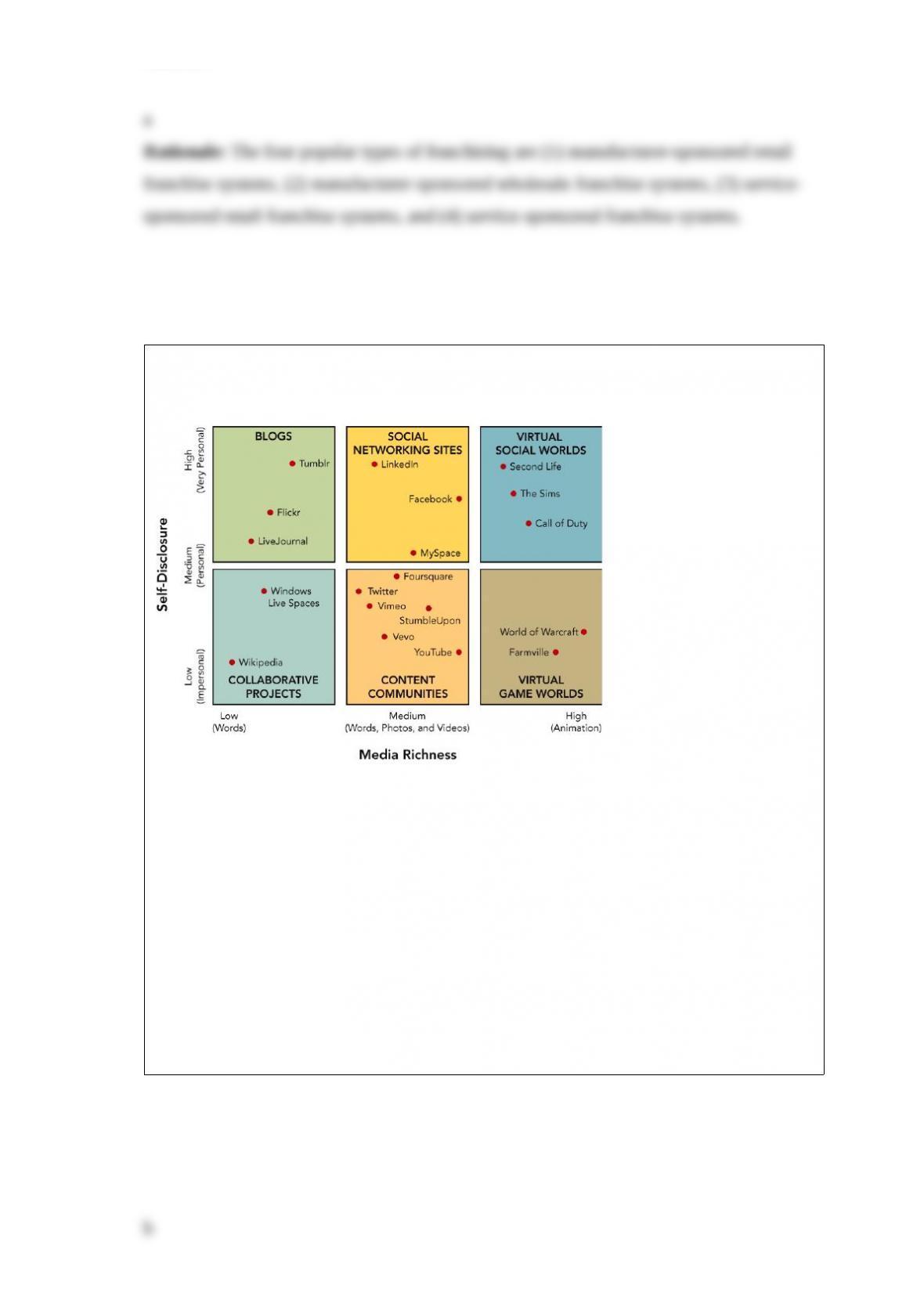
Figure 1.
Based on the social media identified in Figure 1. above, LinkedIn is
a. medium in self-disclosure and low in media richness.
b. high in self-disclosure and medium in media richness.
c. high in self-disclosure and high in media richness.
d. low in self-disclosure and medium in media richness.
e. low in self-disclosure and low in media richness.
Answer:
In the VALS framework, each consumer segment exhibits unique media preferences.
Which segment would be the most likely to read business and news magazines?
a. Experiencers
b. Thinkers
c. Believers
d. Strivers
e. Makers
Answer:
The Infant Formula Act (1980), the Nutritional Labeling and Education Act (1990), and
the Fair Packaging and Labeling Act (1966) are all examples of
a. pricing-related legislation.
b. consumer-oriented federal laws.
c. fair trade legislation.
d. distribution-related legislation.

e. requirement contracts.
Answer:
A business market is also referred to as
a. a transactional market.
b. a corporate market.
c. organizational buyers.
d. a reseller market.
e. an industrial market.
Answer:
Trading down refers to __________ when repositioning a product.
a. reducing the number of features, qualities, or price
b. reducing the amount of product carried as inventory
c. reducing the number of product items in a product line

d. redirecting marketing resources from a “cash cow” target market to one that is not
performing as well in the hopes of increasing sales and profits
e. encouraging consumers through the use of coupons and deals to purchase a firm’s
lower-priced products
Answer:
A firm’s profit potential and control over marketing activities __________ as it moves
from exporting to direct investment as a global market-entry strategy.
a. becomes more stable
b. increases
c. levels off
d. decreases
e. becomes more unpredictable
Answer:

Among business products, legal counsel for patent information for a firm’s R&D
department would most likely be classified as which type of support product?
a. ancillary services
b. contractual services
c. specialty services
d. accessory services
e. industrial services
Answer:
Showstoppers refer to
a. creative or innovative members of a marketing team.
b. unexpected alternative uses for a product that result in a sudden increase in sales.
c. factors that might doom a product in the marketplace.
d. a sudden loss of financial backing even though the item is in production.
e. a situation when a competitor’s product suddenly beats a firm’s new product to the
marketplace.
Answer:
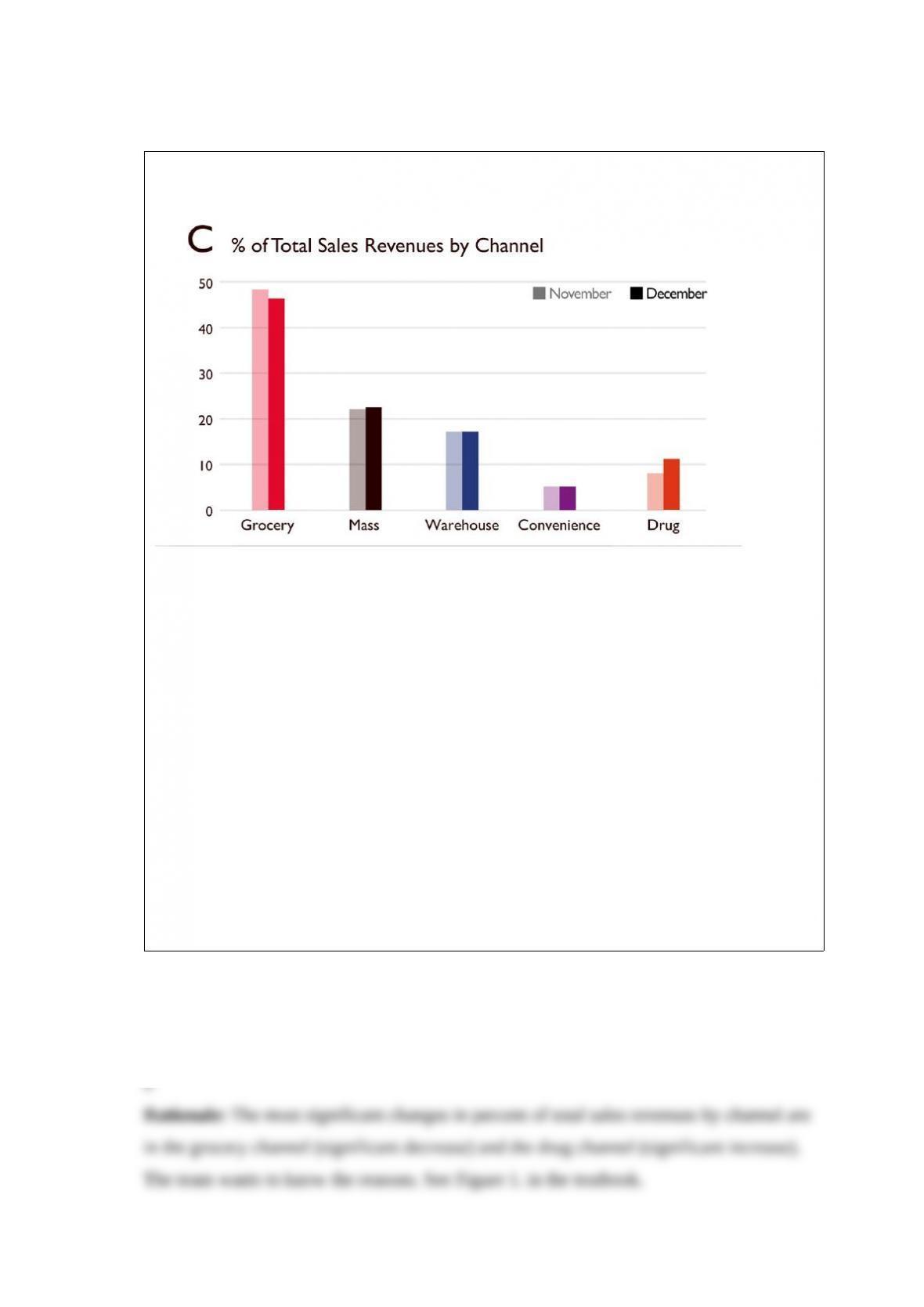
Figure 1.: General Mills Marketing Dashboard Chart “C”
Consider Figure 1.: General Mills Marketing Dashboard Chart “C” above. As part of the
Warm Delights team at General Mills, you are asked to analyze and interpret the
marketing dashboard for Warm Delights Minis. After a careful analysis of Chart “C,”
you are especially interested in major changes from November to December. As a
result, you would look most carefully at
a. mass and drug channels.
b. grocery and drug channels.
c. grocery and mass channels.
d. drug and warehouse channels.
e. mass and warehouse channels.
Answer:

A strip mall refers to a
a. suburban mall containing up to 100 stores that draws customer from a 5-to 10-mile
radius.
b. a cluster of stores in a downtown area.
c. retail location that typically has one primary store (usually a department store branch)
with 20 to 40 smaller outlets serving a population of consumers who are within a 10- to
20-minute drive.
d. cluster of neighborhood stores designed to serve people within a five- to ten- minute
drive.
e. collection of category killers usually located outside a major amusement park or
attraction.
Answer:
In terms of performance measures important to marketing managers, unique visitors are
a. the total number of pages fans visit on any of a brand’s social media sites in a given
time period.
b. the total number of Facebook Page views in one day.
c. the total number of product website views on YouTube.
d. visitors who post unique comments on a product’s Facebook Page.
e. the total number of unique visitors to a Facebook Page in a given time period.

Answer:
__________ is the form of competition where distribution is the only element of the
marketing mix that exerts an impact on the firm.
a. Cross-market competition
b. Limited competition
c. Pure competition
d. Monopolistic competition
e. A monopoly
Answer:
Which of the following statements is most accurate?
a. Some companies use mobile marketing to reach geographic concentrations of ethnic
groups on their smartphones or tablet devices.
b. Most consumer packaged good firms have now moved their advertising accounts
from multicultural agencies to their own in-house advertising agency to realize greater
marketing efficiencies.
c. Most companies have failed to encourage their advertising agencies to develop
cross-cultural campaigns with messages that reach all ethnic groups.

d. Since racial and ethnic groups tend to be equally dispersed throughout the United
States, multicultural marketing programs need not be developed.
e. Due to the “melting pot” effect, racial and ethnic groups in the United States tend to
have very similar attitudes, communication preferences, and lifestyles, which means
that they will respond similarly to advertising messages.
Answer:
Which of the following would be an example of an objective in Step 1 of the
price-setting process?
a. “We need to set an initial price of $259 dollars per unit.”
b. “We need to find the least expensive distributor.”
c. “We need to make a profit of at least $1. million.”
d. “We need to make allowances for large quantity orders.”
e. “We need to increase the price during the holiday shopping season.”

Answer:
Express warranties __________.
a. provide a written statement of manufacturer liability
b. state the bounds of coverage, and more importantly, areas of noncoverage
c. have no limits of noncoverage
d. assign responsibility for product deficiencies to the manufacturer
e. assign responsibility for product deficiencies on misuse by the consumer
Answer:
Marketspace refers to
a. the two-way buyer’seller electronic communication in a computer-mediated
environment in which the buyer controls the kind and amount of information received
from the seller.
b. websites that allow people to congregate online and exchange views on topics of
common interest.
c. Internet search engines used for the purpose of data mining.
d. an information- and communication-based electronic exchange environment mostly
occupied by sophisticated computer and telecommunication technologies and digitized
offerings.
e. the blending of different communication and delivery channels that are mutually
reinforcing in attracting, retaining, and building relationships with consumers who shop
and buy in traditional intermediaries and online.
Answer:
One advantage of using magazines as an advertising medium is
a. the ability to target specific audiences.
b. the relatively short time it takes to place an ad.
c. the extremely low cost.
d. the opportunity to compete with other magazine features.
e. the simplicity of the message.
Answer:

Within the strategic marketing process, the__________ is the result of the planning
phase that proceeds to the implementation phase where it is carried out.
a. marketing tactics
b. business plan
c. product protocol
d. marketing plan
e. marketing strategy
Answer:
The horizontal dimension of the retail positioning matrix is
a. depth of product line.
b. value added.
c. relative market share.
d. breadth of product line.
e. stage in the retail life cycle.
Answer:
The total money received from the sale of a product is referred to as __________.
a. profit
b. total revenue
c. average revenue
d. marginal revenue
e. derived demand
Answer:
After Microsoft launched its Xbox 360 video-game console, millions began to
experience the “red ring of death.” The problem: The consoles’ microprocessors ran too
hot, causing them to “pop off” their motherboards. This cost the company not only in
money to extend its product warranty, but a huge portion of future sales and market
share to competitors Sony and Nintendo. This failure was due to
a. not satisfying customer needs on critical factors.
b. poor product quality.
c. an insignificant point of difference.
d. incomplete market and product protocol.
e. too little market attractiveness.

Answer:
In the VALS framework, __________ groups are consumers motivated by physical
activity, variety, and risk.
a. ideals-motivated
b. rewards-and-success-motivated
c. self-expression-motivated
d. achievement-motivated
e. high-and-low-resource
Answer:
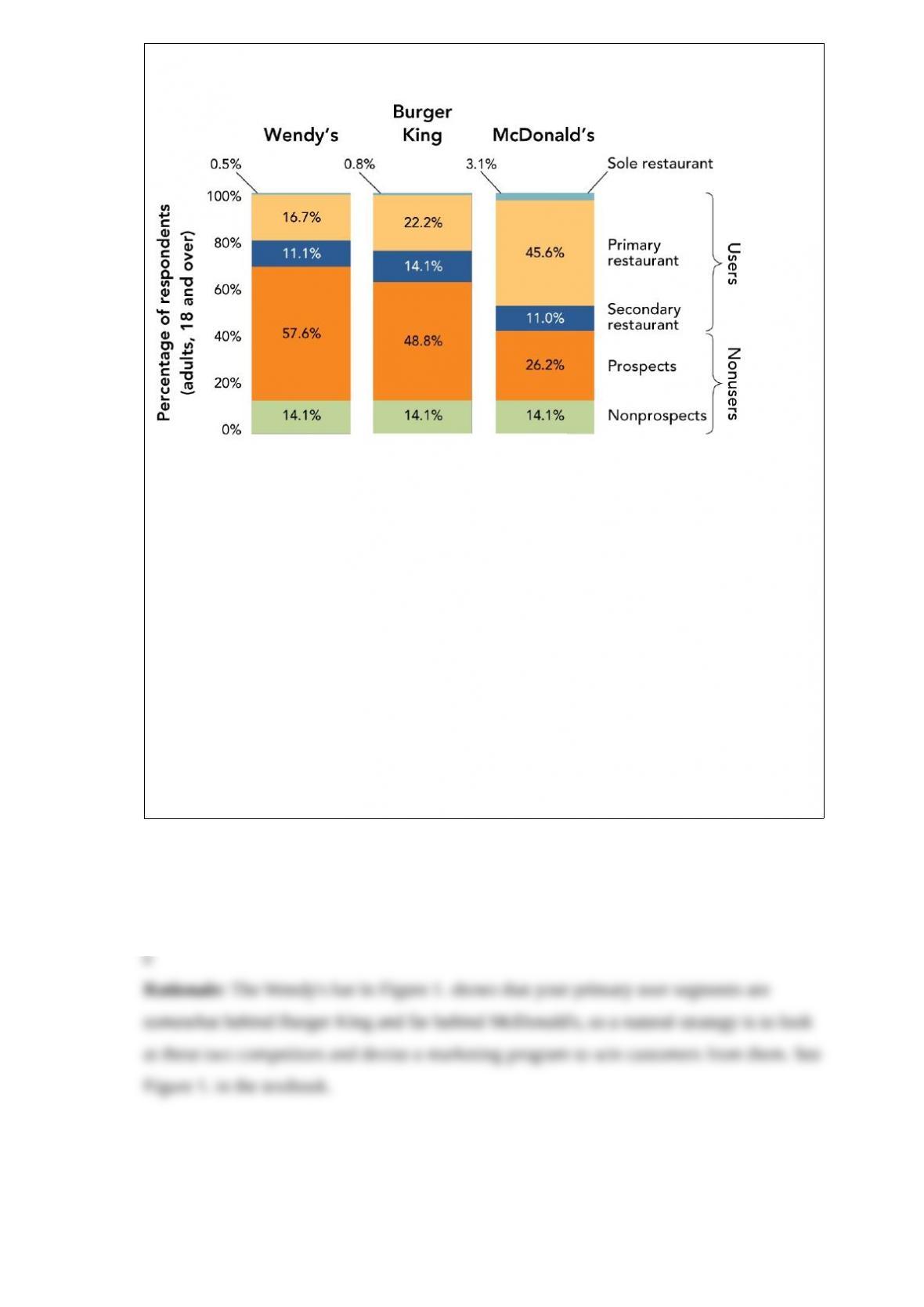
Figure 1.
As an owner of a Wendy’s fast-food restaurant, the information in Figure 1. above
suggests
a. you have an advantage over both McDonald’s and Burger King as being the most
preferred ‘second choice” restaurant.
b. most of the respondents think of Wendy’s as their primary fast food restaurant.
c. McDonald’s has fewer “exclusively loyal” customers than does Wendy’s.
d. Burger King is closing in on your market share.
e. a need to devise a marketing program to win customers from McDonald’s and Burger
King.
Answer:

The Electronic Signatures in Global and National Commerce Act makes digital
signatures as valid as non-digital pen-and-ink signatures. This act created a demand for
software and hardware that would collect, transmit, and receive digital signatures. This
example indicates how __________ forces can work together in the marketing
environment.
a. technological and regulatory
b. technological and competitive
c. social and competitive
d. social and economic
e. regulatory and economic
Answer:
Facebook is
a. a website where users may create a personal profile, add other users as friends, and
exchange comments, photos, videos, and “likes” with them.
b. a website that enables users to send and receive “tweets,” messages up to 140
characters long.
c. a business-oriented website that lets users post their professional profiles to connect
to a network of businesspeople.
d. a video-sharing website in which users can upload, distribute, view, and comment on
videos.
e. a website that enables online customers to use their collective buying power to take
advantage of deeply discounted prices for a product or service each day.

Answer:
All of the different product lines offered by an organization are collectively referred to
as a
a. product class.
b. product mix.
c. product SKUs.
d. marketing mix.
e. target mix.
Answer:
The blended family refers to a family
a. that is formed by merging two previously separated units into a single household.
b. that contains both male and female children.
c. that houses two or more generational cohorts under the same roof.
d. in which its members are of multiple races and/or ethnicities.
e. in which parents raise nonbiological children, either through adoption or foster care.

Answer:
Four important aspects of product life cycles are: (1) their length; (2) the shape of their
sales curves; (3) how they vary with different levels of products; and (4) the rate at
which __________.
a. consumers recognize products
b. consumers adopt products
c. consumers abandon products
d. competitors create “me too” products
e. environmental forces affect products
Answer:
Supplier development refers to
a. the deliberate effort by suppliers to build relationships that shape buyers’ products,
services, and capabilities to fit both the buyer’s and seller’s needs, as well as the needs
of ultimate consumers.

b. the deliberate effort by organizational buyers to build relationships that shape
suppliers’ products, services, and capabilities to fit a buyer’s needs and those of its
customers.
c. the practice of dividing up large orders among several suppliers rather than a single
one to avoid possible manufacturing delays due to bad weather, plant mishaps, union
issues, etc.
d. the practice of establishing a close relationship with one supplier rather than many to
insure loyalty and preferential treatment when filling exceptionally large orders.
e. the shift of a firm from that of supplier to manufacturer when repeated experience
with a product and excellent buyer/seller relationships make the shift both more feasible
and profitable.
Answer:
Yield management is considered to be a __________ approach to pricing.
a. demand-oriented
b. cost-oriented
c. profit-oriented
d. competition-oriented
e. service-oriented
Answer:
A __________ is the action taken by a consumer to satisfy a drive.
a. cue
b. demotivator
c. motivator
d. response
e. stimulus
Answer:
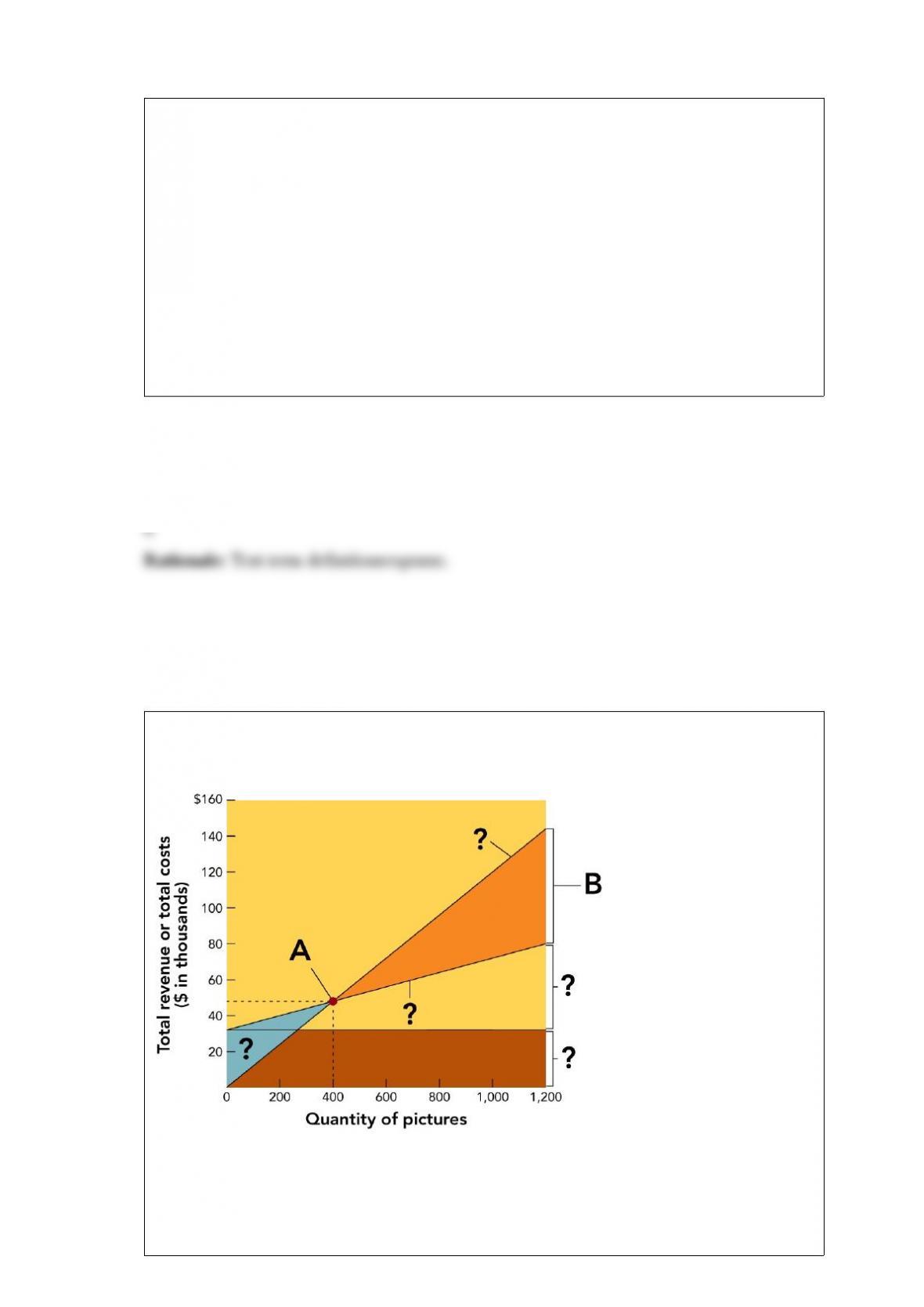
Figure 1.
Figure 1. above shows that by selling 800 pictures, the firm will
a. break even.

b. earn a profit.
c. incur a loss.
d. have no fixed costs.
e. have no variable costs.
Answer:
Apps are
a. computer-based networks that trigger actions by sensing changes in the real or digital
world.
b. software programs to measure the number of times an ad loads on a webpage.
c. small, downloadable software programs that can run on tablet devices or smartphones
to provide special functions for these devices.
d. a failed marketing gimmick to advertise the benefits of smartphones.
e. programs that can be used to organize large groups to form protests on social
networking sites.
Answer: