364)
364)
Why is the Clean Air Act’s Title VI, Section 608 relevant for technicians?
A)
It recommends self–enforcement on coolant emissions.
B)
It bans piercing sealed air conditioning systems.
C)
It regulates refrigerant emissions.
D)
It repeals requirements on technician certifications.
Answer:
C
Explanation:
A)
B)
C)
D)
365)
365)
The compressor in an existing split system is being replaced. The system has a 35 ft line set. The
factory charge for the condensing unit is 80 oz. The installation instructions state that the factory
charge assumes a line length of 15 ft and gives the per–ft adjustment as 0.6 oz per foot. How much
refrigerant should be added to the system after the system has been evacuated?
A)
(35 — 15) × 0.6 = 12 oz
B)
80 oz + ((35 — 15) × 0.6) = 92 oz
C)
80 oz + (35 × 0.6) = 101 oz
D)
80 oz
Answer:
B
Explanation:
A)
B)
C)
D)
366)
366)
To avoid electrical shock, technicians should:
A)
Make sure they are grounded.
B)
Make sure the unit is grounded.
C)
Make sure they are not grounded and the unit is grounded.
D)
Make sure they are not grounded.
Answer:
C
Explanation:
A)
B)
C)
D)
95
367)
367)
The refrigerants that a particular recovery unit is designed for can be determined by:
A)
Trying different refrigerants, measuring the unit amp draw, and comparing against the
nameplate.
B)
Recovery machines must work with all refrigerants to be EPA certified.
C)
Measuring the pressure and temperature of the refrigerant in the recovery unit and
comparing them to a saturated pressure–temperature chart.
D)
Looking for the AHRI/UL certification label.
Answer:
D
Explanation:
A)
B)
C)
D)
368)
368)
For air conditioners, a rise in the return air wet–bulb temperature causes:
A)
A decrease in the temperature difference across the evaporator coil.
B)
A decrease in suction pressure.
C)
A decrease in compressor amp draw.
D)
An increase in the temperature difference across the evaporator coil.
Answer:
A
Explanation:
A)
B)
C)
D)
369)
369)
A ground fault circuit interrupter is designed to:
A)
Prevent electrical shock to individuals.
B)
Protect electric motors.
C)
Prevent too much current on the conductor.
D)
Prevent too much voltage through the conductor.
Answer:
A
Explanation:
A)
B)
C)
D)
96
370)
370)
After adding refrigerant to a nonpressurized container used with a system–dependent recovery
device, the pressure of the container will:
A)
Decrease in proportion to the refrigerant added.
B)
Increase in proportion to the amount of refrigerant added.
C)
Increase to the saturation point.
D)
Remain at 0 psig.
Answer:
D
Explanation:
A)
B)
C)
D)
371)
371)
The most reliable source of information on how to charge any particular piece of equipment is:
A)
The local inspection authorities.
B)
The equipment manufacturer.
C)
AHRI.
D)
ASHRAE.
Answer:
B
Explanation:
A)
B)
C)
D)
372)
372)
What gauge wire is most often used for residential receptacle circuits?
A)
12 gauge
B)
16 gauge
C)
14 gauge
D)
18 gauge
Answer:
A
Explanation:
A)
B)
C)
D)
373)
373)
When using a recovery device manufactured before November 15, 1993, the recovery level for
Type I appliances is:
A)
80 percent of the system charge.
B)
0 psig.
C)
80 percent of the system charge if the compressor is operational, 90 percent if the
compressor is nonoperational.
D)
80 percent of the system charge if the compressor is nonoperational, 90 percent if the
compressor is operational.
Answer:
A
Explanation:
A)
B)
C)
D)
97
374)
374)
Before checking a system’s operating superheat, the technician should first check:
A)
The condenser subcooling.
B)
The outdoor wet–bulb temperature.
C)
The compressor contactor.
D)
The evaporator airflow.
Answer:
D
Explanation:
A)
B)
C)
D)
375)
375)
A product that is fully manufactured, charged, and hermetically sealed in a factory with 5 lb or
less of refrigerant is defined as:
A)
A Type III system.
B)
A residential appliance.
C)
A small appliance.
D)
A Type II system.
Answer:
C
Explanation:
A)
B)
C)
D)
376)
376)
An air conditioner with a fixed–restriction metering device is operating with an evaporator
saturation temperature of 40°F and a suction line temperature of 42°F. The factory–specified
superheat for the current operating condition is 12°F. After checking the airflow and determining
that it is within specifications, the technician should:
A)
Recover charge because the system is overcharged.
B)
Move some of the charge from the low side of the system to the high side of the system to
balance the charge.
C)
Add charge because the system is undercharged.
D)
Leave the charge alone because it is cooling even better than factory specifications.
Answer:
A
Explanation:
A)
B)
C)
D)
377)
377)
A dirty air filter would likely cause which of the following symptoms?
A)
High condenser pressure
B)
Low subcooling
C)
Low evaporator pressure
D)
High superheat
Answer:
C
Explanation:
A)
B)
C)
D)
98

378)
378)
Returning water temperature, along with the water flow through the evaporator, are critical
variables that will impact the performance of:
A)
Air–cooled units.
B)
Air conditioners.
C)
Water–cooled units.
D)
Chillers.
Answer:
D
Explanation:
A)
B)
C)
D)
99
Answer Key
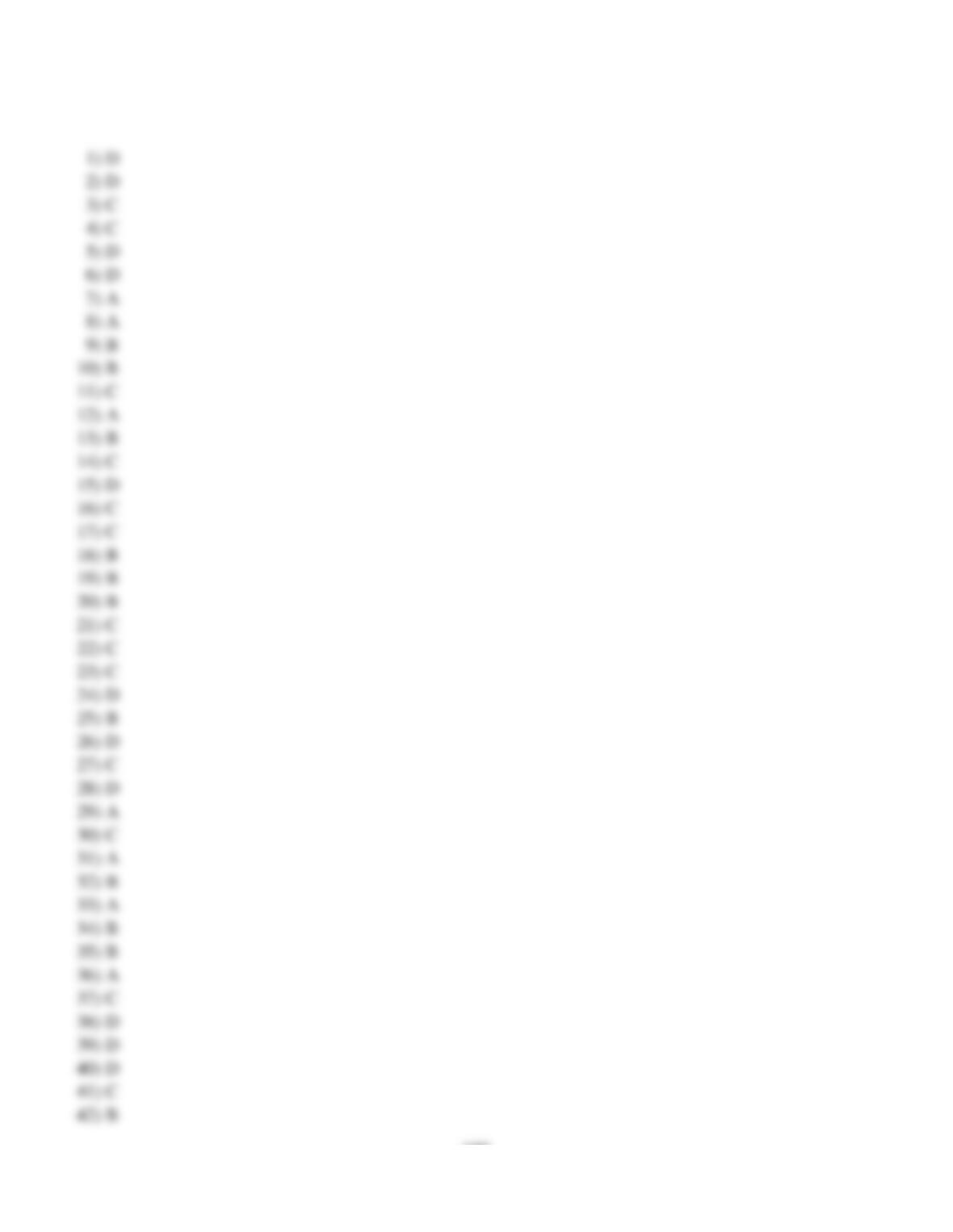
Testname: UNIT 21 TO 30
1)
D
2)
D
3)
C
4)
C
5)
D
6)
D
7)
A
8)
A
9)
B
10)
B
11)
C
12)
A
13)
B
14)
C
15)
D
16)
C
17)
C
18)
B
19)
B
20)
B
21)
C
22)
C
23)
C
24)
D
25)
B
26)
D
27)
C
28)
D
29)
A
30)
C
31)
A
32)
B
33)
A
34)
B
35)
B
36)
A
37)
C
38)
D
39)
D
40)
D
41)
C
42)
B
100
Answer Key
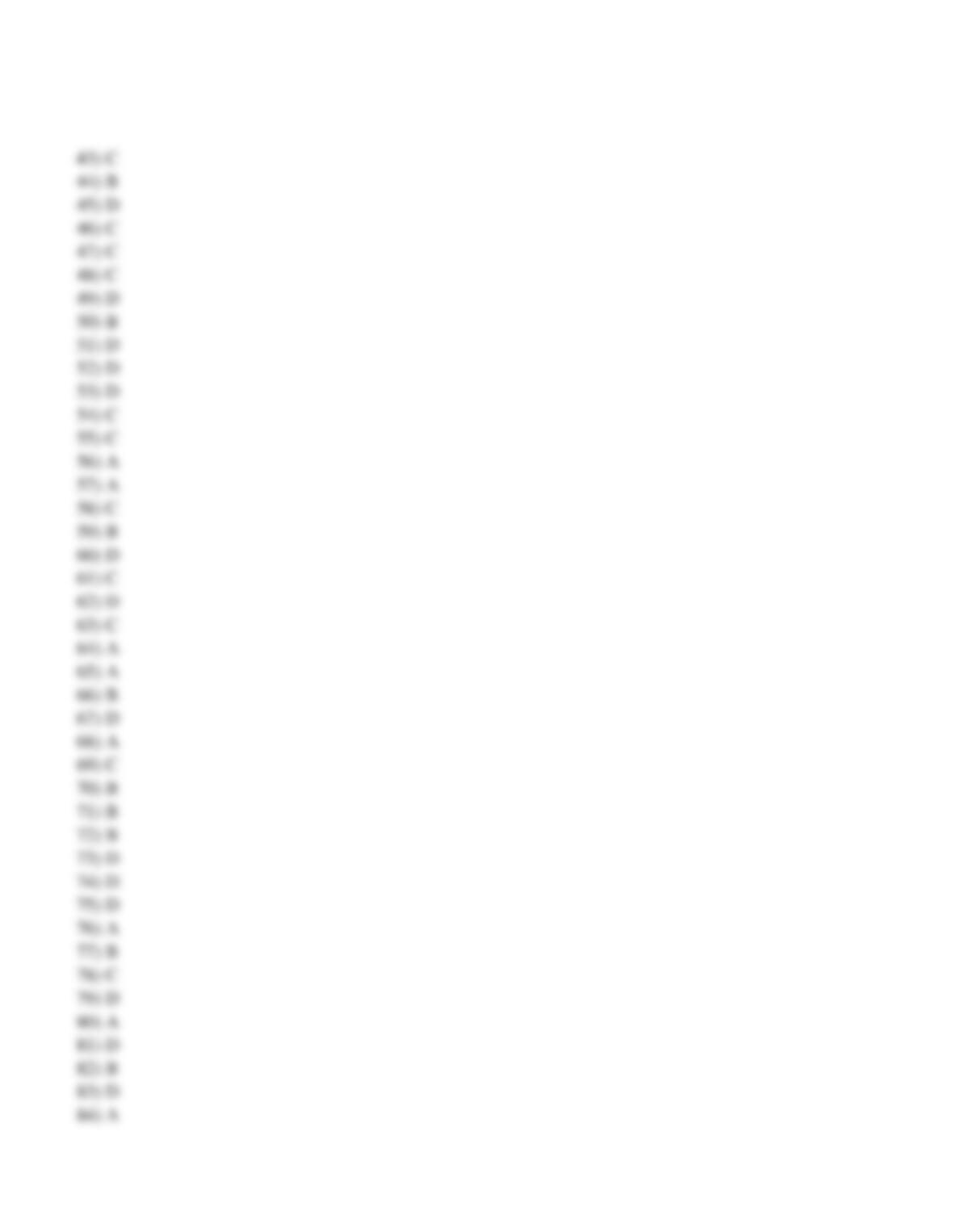
Testname: UNIT 21 TO 30
43)
C
44)
B
45)
D
46)
C
47)
C
48)
C
49)
D
50)
B
51)
D
52)
D
53)
D
54)
C
55)
C
56)
A
57)
A
58)
C
59)
B
60)
D
61)
C
62)
D
63)
C
64)
A
65)
A
66)
B
67)
D
68)
A
69)
C
70)
B
71)
B
72)
B
73)
D
74)
D
75)
D
76)
A
77)
B
78)
C
79)
D
80)
A
81)
D
82)
B
83)
D
84)
A
101
Answer Key
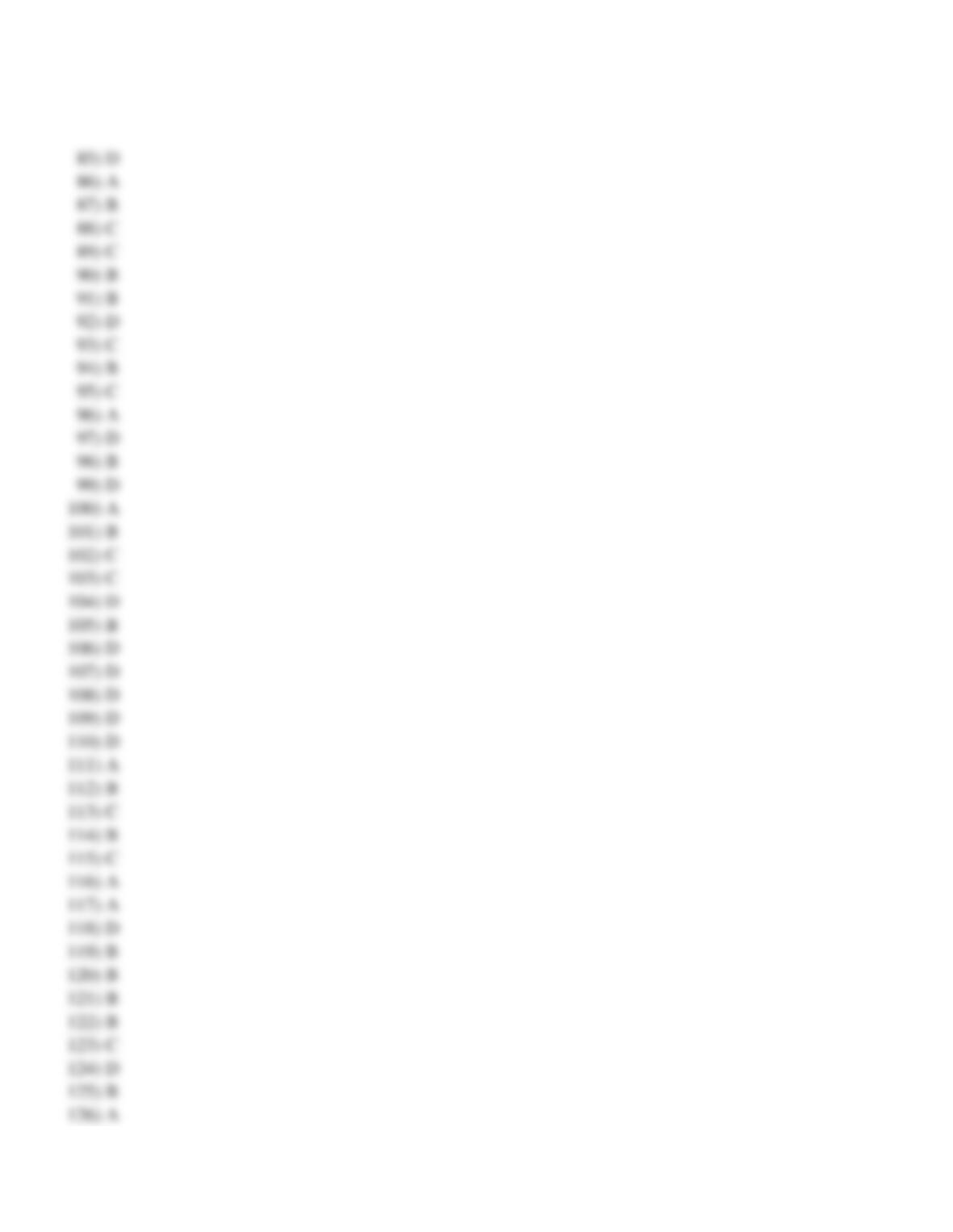
Testname: UNIT 21 TO 30
85)
D
86)
A
87)
B
88)
C
89)
C
90)
B
91)
B
92)
D
93)
C
94)
B
95)
C
96)
A
97)
D
98)
B
99)
D
100)
A
101)
B
102)
C
103)
C
104)
D
105)
B
106)
D
107)
D
108)
D
109)
D
110)
D
111)
A
112)
B
113)
C
114)
B
115)
C
116)
A
117)
A
118)
D
119)
B
120)
B
121)
B
122)
B
123)
C
124)
D
125)
B
126)
A
102
Answer Key
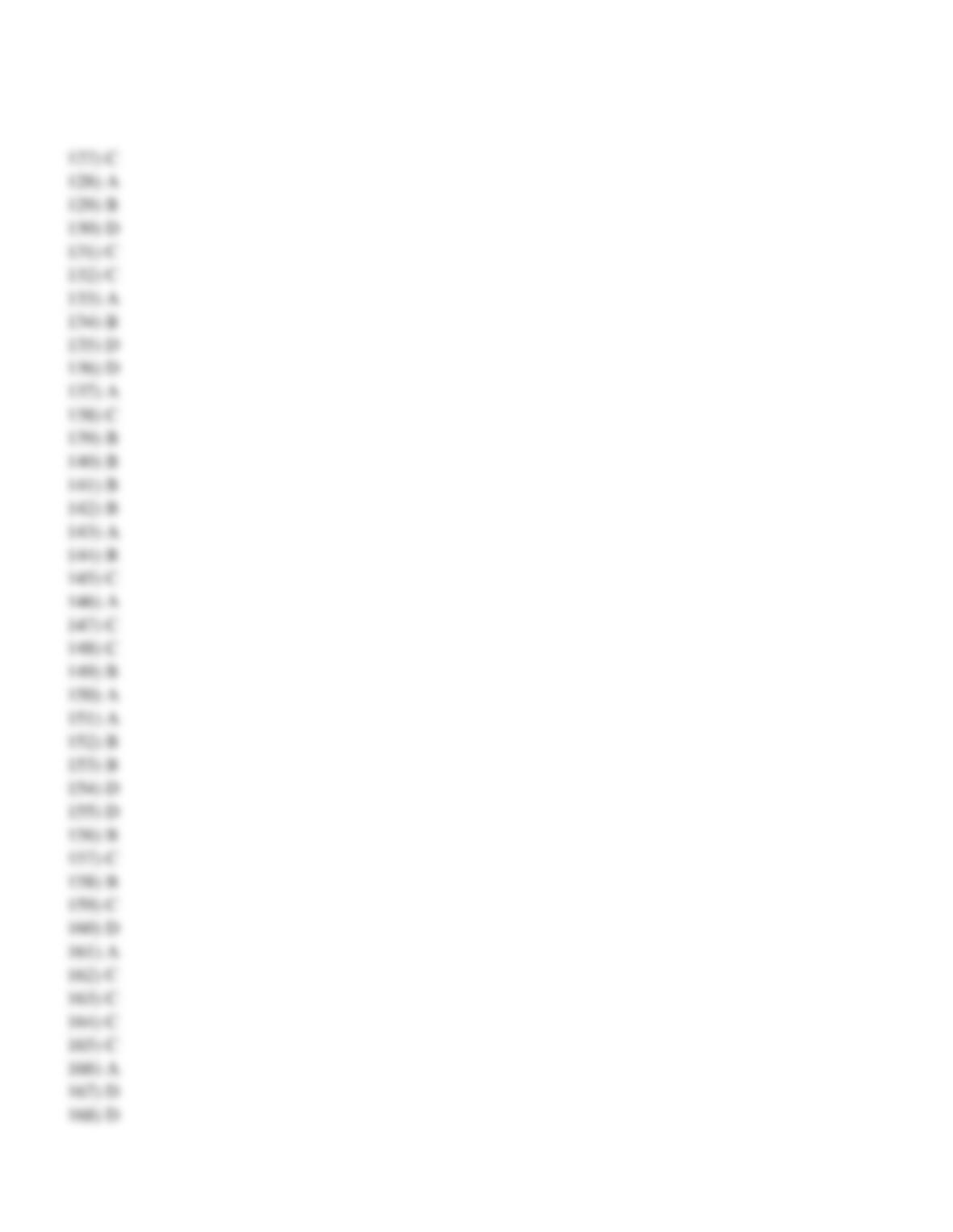
Testname: UNIT 21 TO 30
127)
C
128)
A
129)
B
130)
D
131)
C
132)
C
133)
A
134)
B
135)
D
136)
D
137)
A
138)
C
139)
B
140)
B
141)
B
142)
B
143)
A
144)
B
145)
C
146)
A
147)
C
148)
C
149)
B
150)
A
151)
A
152)
B
153)
B
154)
D
155)
D
156)
B
157)
C
158)
B
159)
C
160)
D
161)
A
162)
C
163)
C
164)
C
165)
C
166)
A
167)
D
168)
D
103
Answer Key
Testname: UNIT 21 TO 30
169)
B
170)
A
171)
D
172)
C
173)
A
174)
B
175)
A
176)
D
177)
D
178)
C
179)
A
180)
C
181)
B
182)
D
183)
B
184)
C
185)
C
186)
A
187)
B
188)
C
189)
C
190)
D
191)
B
192)
A
193)
B
194)
C
195)
D
196)
C
197)
B
198)
D
199)
C
200)
C
201)
D
202)
B
203)
A
204)
B
205)
C
206)
C
207)
B
208)
B
209)
C
210)
C
104
Answer Key
Testname: UNIT 21 TO 30
211)
A
212)
D
213)
C
214)
B
215)
A
216)
B
217)
B
218)
C
219)
B
220)
A
221)
B
222)
B
223)
D
224)
B
225)
A
226)
C
227)
A
228)
C
229)
D
230)
C
231)
D
232)
D
233)
D
234)
D
235)
A
236)
A
237)
A
238)
D
239)
D
240)
B
241)
B
242)
A
243)
C
244)
A
245)
B
246)
C
247)
D
248)
C
249)
A
250)
D
251)
D
252)
B
105
Answer Key
Testname: UNIT 21 TO 30
253)
D
254)
D
255)
B
256)
B
257)
B
258)
B
259)
B
260)
B
261)
D
262)
C
263)
D
264)
C
265)
A
266)
D
267)
A
268)
D
269)
A
270)
D
271)
A
272)
C
273)
C
274)
D
275)
B
276)
C
277)
B
278)
D
279)
B
280)
A
281)
C
282)
A
283)
D
284)
C
285)
B
286)
D
287)
C
288)
C
289)
D
290)
B
291)
C
292)
D
293)
D
294)
D
106
Answer Key
Testname: UNIT 21 TO 30
295)
C
296)
D
297)
D
298)
D
299)
B
300)
C
301)
D
302)
B
303)
D
304)
A
305)
B
306)
B
307)
A
308)
B
309)
D
310)
C
311)
D
312)
B
313)
D
314)
B
315)
A
316)
B
317)
A
318)
B
319)
D
320)
A
321)
A
322)
B
323)
D
324)
B
325)
A, C, E, F
326)
C
327)
B
328)
B
329)
A
330)
D
331)
A
332)
B
333)
A
334)
B
335)
B
336)
D
107
Answer Key
Testname: UNIT 21 TO 30
337)
B
338)
B
339)
A
340)
B
341)
C
342)
B
343)
D
344)
C
345)
A
346)
C
347)
C
348)
A
349)
D
350)
B
351)
B
352)
C
353)
C
354)
D
355)
A
356)
A
357)
C
358)
D
359)
B
360)
B
361)
A
362)
D
363)
D
364)
C
365)
B
366)
C
367)
D
368)
A
369)
A
370)
D
371)
B
372)
A
373)
A
374)
D
375)
C
376)
A
377)
C
378)
D
108