140
Chapter 17: Proportional Reasoning
MULTIPLE CHOICE. Choose the one alternative that best completes the statement or
answers the question.
1) Complete this statement, “A ratio is a number that relates two quantities or measures within a
given situation in a…”
A) Multiplicative relationship.
B) Difference relationship.
C) Additive relationship.
D) Multiplicative comparison.
2) What is the type of ratio that would compare the number of girls in a class to the number of
students in a class?
A) Ratio as rates.
B) Ratio as quotients.
C) Ratio as part-whole.
D) Ratio as part-to-part.
3) What should you keep in mind when comparing ratios to fractions?
A) Conceptually, they are exactly the same thing.
B) They have the same meaning when a ratio is of the part-to-whole type.
C) They both have a fraction bar that causes students to mistakenly think they are related in some
way.
D) Operations can be done with fractions while they can’t be done with ratios.
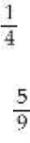
4) In the scenario “Billy’s dog weighs 10 pounds while Sarah’s dog weighs 8 pounds,” the ratio
10/8 can be interpreted in the following ways EXCEPT:
A) For every 5 pounds of weight Billy’s dog has, Sarah’s dog has 4 pounds.
B) Billy’s dog weighs 1 times what Sarah’s dog does.
C) Sarah’s dog weighs 8 out of a total of 10 dog pounds.
D) Billy’s dog makes up of the total dog weight.
5) A ________ refers to thinking about a ratio as one unit.
A) Multiplicative comparison.
B) Ratio as a rate.
C) Cognitive task.
D) Composed unit.
6) The following statements are ways to define proportional reasoning EXCEPT:
A) Ratios as distinct entities.
B) Develop a specialized procedure for solving proportions.
C) Sense of covariation.
D) Recognize proportional relationships distinct from nonproportional relationships.

141
7) Identify the problem below that is a constant relationship.
A) Janet and Jean were walking to the park, each walking at the same rate. Jean started first.
When Jean has walked 6 blocks, Janet has walked 2 blocks. How far will Janet be when Jean is
at 12 blocks?
B) Kendra and Kevin are baking muffins using the same recipe. Kendra makes 6 dozen and
Kevin makes 3 dozen. If Kevin is using 6 ounces of chocolate chips, how many ounces will
Kendra need?
C) Lisa and Linda are planting peas on the same farm. Linda plants 4 rows and Lisa plants 6
rows. If Linda’s peas are ready to pick in 8 weeks, how many weeks will it take for Lisa’s peas to
be ready?
D) Two weeks ago, two flowers were measured at 8 inches and 12 inches, respectively. Today
they are 11 inches and 15 inches tall. Did the 8-inch or 12-inch flower grow more?
8) Covariation means that two different quantities vary together. Identify the problem that is
about a covariation between ratio.
A) Apples are 4 for $2.00.
B) 2 apples for $1.00 and 1 for $0.50.
C) Apples at Meyers were 4 for $2.00 and at HyVee 5 for $3.00.
D) Apples sold 4 out of 5 over oranges.
9) Using proportional reasoning with measurement helps students with options for finding what?
A) Conversions.
B) Similarities.
C) Differences.
D) Rates.
10) What is one method for students to see the connection between multiplicative reasoning and
proportional reasoning?
A) Solving problems with rates.
B) Solving problems with scale drawings.
C) Solve problems with between ratios.
D) Solving problems with costs.
11) The following are examples of connections between proportional reasoning and another
mathematical strand EXCEPT:
A) The area of a rectangle is 8 square units and the length is four units long. How long is the
width?
B) The negative slope of the line on the graph represents the fact that, for every 30 miles the car
travels, it burns one gallon of gas.
C) The triangle has been enlarged by a scale factor of 2. How wide is the new triangle if its
original width is 4 inches?
D) Sandy ate of her Halloween candy and her sister also ate of Sandy’s candy. What fraction
of Sandy’s candy was left?
12) Which of the following is an example of using unit rate method of solving proportions?

142
A) If = , find the cross products, 30 = 3x, and then solve for x. x = 10.
B) Allison bought 3 pairs of socks for $12. To find out how much 10 pairs cost, find that $12
divided by 3 is $4 a pair, and multiply $4 by 10 for a total of $40.
C) A square with a length of 2 inches was enlarged by a scale factor of 4 and is now 8 inches
long.
D) If 5 candy bars cost $4.50, then 10 would cost $9. (Because 5 × 2 = 10, multiply $4.50 by 2).
13) Which of the following is an example of using a buildup strategy method of solving
proportions?
A) Allison bought 3 pairs of socks for $12. To find out how much ten pairs cost, find that $12
divided by 3 is $4 a pair, and multiply $4 by 10 for a total of $40.
B) A square with a length of 2 inches was enlarged by a scale factor of 4 and is now 8 inches
long.
C) If 5 candy bars cost $4.50, then 10 would cost $9. (Because 5 × 2 = 10, multiply $4.50 by 2).
D) If = , find the cross products, 30 = 3x, and then solve for x. x = 10.
14) A variety of methods will help students develop their proportional thinking ability. All of the
ideas below support this thinking EXCEPT:
A) Provide ratio and proportional tasks within many different contexts.
B) Provide examples of proportional and non-proportional relationships to students and ask them
to discuss the differences.
C) Relate proportional reasoning to their background knowledge and experiences.
D) Provide practice in cross-multiplication problems.
15) Creating ratio tables or charts helps students in all of the following ways EXCEPT:
A) Application of build up strategy.
B) Organize information.
C) Show nonproportional relationships.
D) Used to determine unit rate.
16) What statement below describes an advantage of using strip diagrams, bar models, fraction
strips or length models to solve proportions?
A) A concrete strategy that can be done first and then connected to equations.
B) A strategy that connects ratio tables to graphs.
C) A common method to figure out how much goes in each equation.
D) A strategy that helps set up linear relationships.
17) Posing problems for students to solve proportions situations with their own intuition and
inventive method is preferred over what?
A) Scaling up and down.
B) Ratio tables.
C) Graphs.
D) Cross products.
18) Graphing ratios can be challenging. Identify the statement that would NOT be a challenge.
143
A) Slope m is always one of the equivalent ratios.
B) Decide what points to graph.
C) Which axes to use to measure.
D) Sense making of the graphed points.
ESSAY. Write your answer in the space provided or on a separate sheet of paper.
19) Construct an example of when confusing additive and proportional thinking could result in
an incorrect answer. Describe an incorrect process that a learner might follow. Describe a correct
way to find the solution and a way you might help the learner to see his or her error.
20) Discuss the reasoning behind “restraining the path to computation” for solving proportional
problems.