Prices in vending machines tend to be higher because
a. machines are placed in high demand/traffic areas.
b. maintenance, operating, and leasing costs are high.
c. only small unit volume items are sold.
d. customary pricing requires certain coin and currency amounts regardless of the
normal retailer markup.
e. few people buy from vending machines.
Answer:
Figure 1.
Figure 1. above shows there are six stages in the personal selling process (“A” through
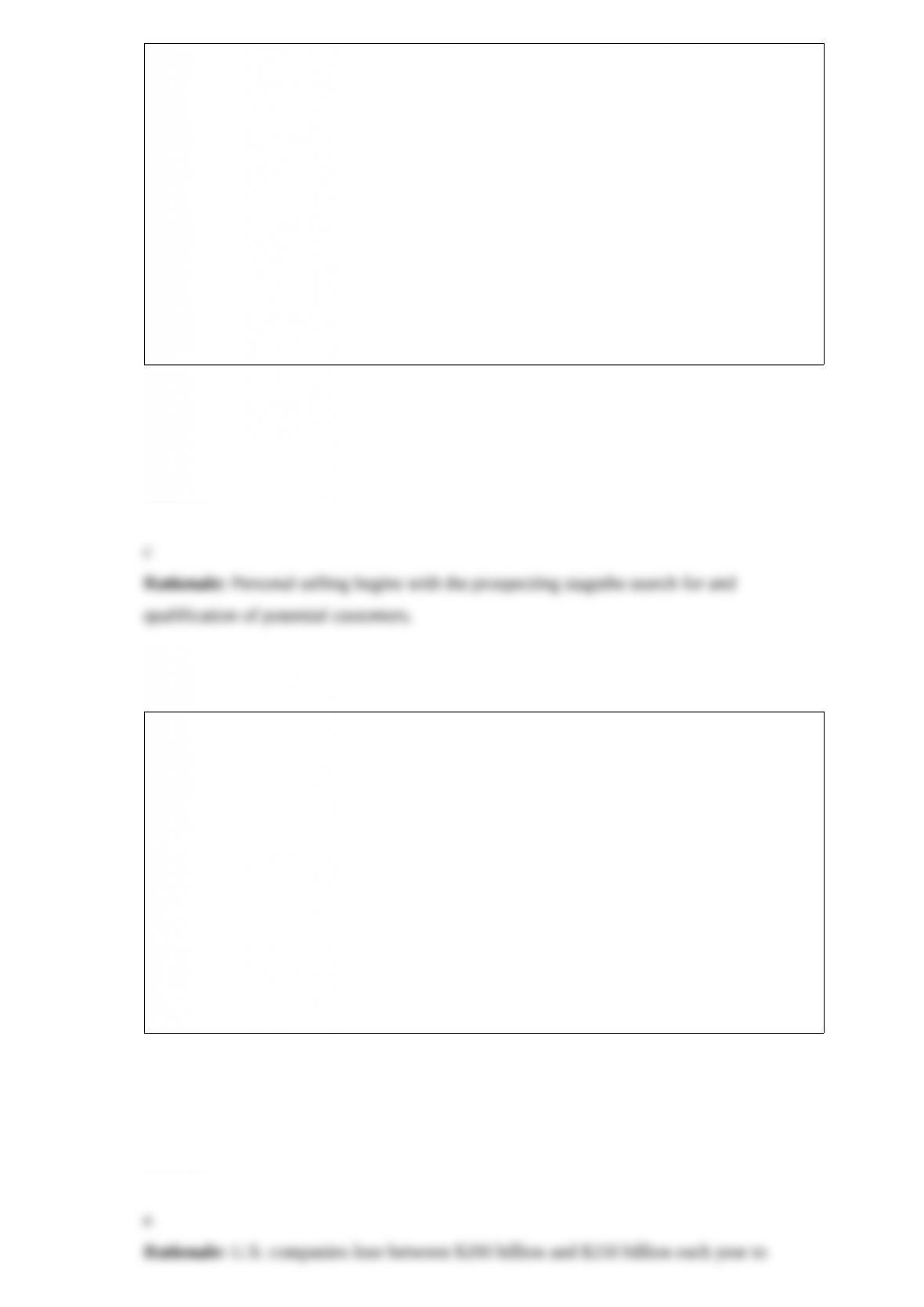
“F”) along with the objective(s) of each stage. If the salesperson’s objective is to ‘search
for and qualify potential customers,” what stage of the personal selling process is the
salesperson engaged in?
a. presentation
b. approach
c. prospecting
d. follow-up
e. preapproach
Answer:
Counterfeit products steal sales from the original manufacturer or harm the company’s
reputation. U.S. companies lose up to __________ each year to counterfeit products.
a. $100 million
b. $1 billion
c. $10 billion
d. $100 billion
e. $250 billion
Answer:
Compared to marketing strategies, marketing tactics generally involve actions that
a. are detailed day-to-day operational decisions.
b. are long-term rather than short-term.
c. involve upper levels of management rather than front-line managers.
d. are general rather than specific in nature.
e. have been successfully implemented in the past.
Answer:
An off-price retailer that requires customers to purchase an annual membership card for
the privilege of shopping at the store is referred to as a __________.
a. outlet store
b. single-price retailer
c. hypermarket
d. warehouse club
e. supercenter
Answer:
Wholly-owned extensions of the producer that perform wholesaling activities are
referred to as
a. general merchandise wholesalers.
b. cash and carry wholesalers.
c. agents and brokers.
d. manufacturer’s branches and sales offices.
e. merchant wholesalers.
Answer:
After defining the problem and developing the research plan, the next step in the
five-step marketing research approach is to
a. collect relevant information.
b. develop findings and recommendations.
c. take marketing actions.
d. plan the research budget.
e. identify the constraints on the process.
Answer:
When firms originate, produce, and market their products and services worldwide, it is
referred to as __________.
a. acculturation
b. global competition
c. free trade
d. global branding
e. transactional exchange
Answer:
An organization’s use of a name, phrase, design, symbol, or combination of these to
identify its products and distinguish them from those of competitors is referred to as
__________.
a. a label
b. branding
c. a trademark
d. a brand name
e. a trade name
Answer:
It is not recommended that a firm select a target segment that
a. is incompatible with its company’s goals or objectives.
b. requires more than one marketing action.
c. has few competitors that target this same segment.
d. would require entry in a global marketplace.
e. has a growth potential that would require increasing the current workforce.
Answer:
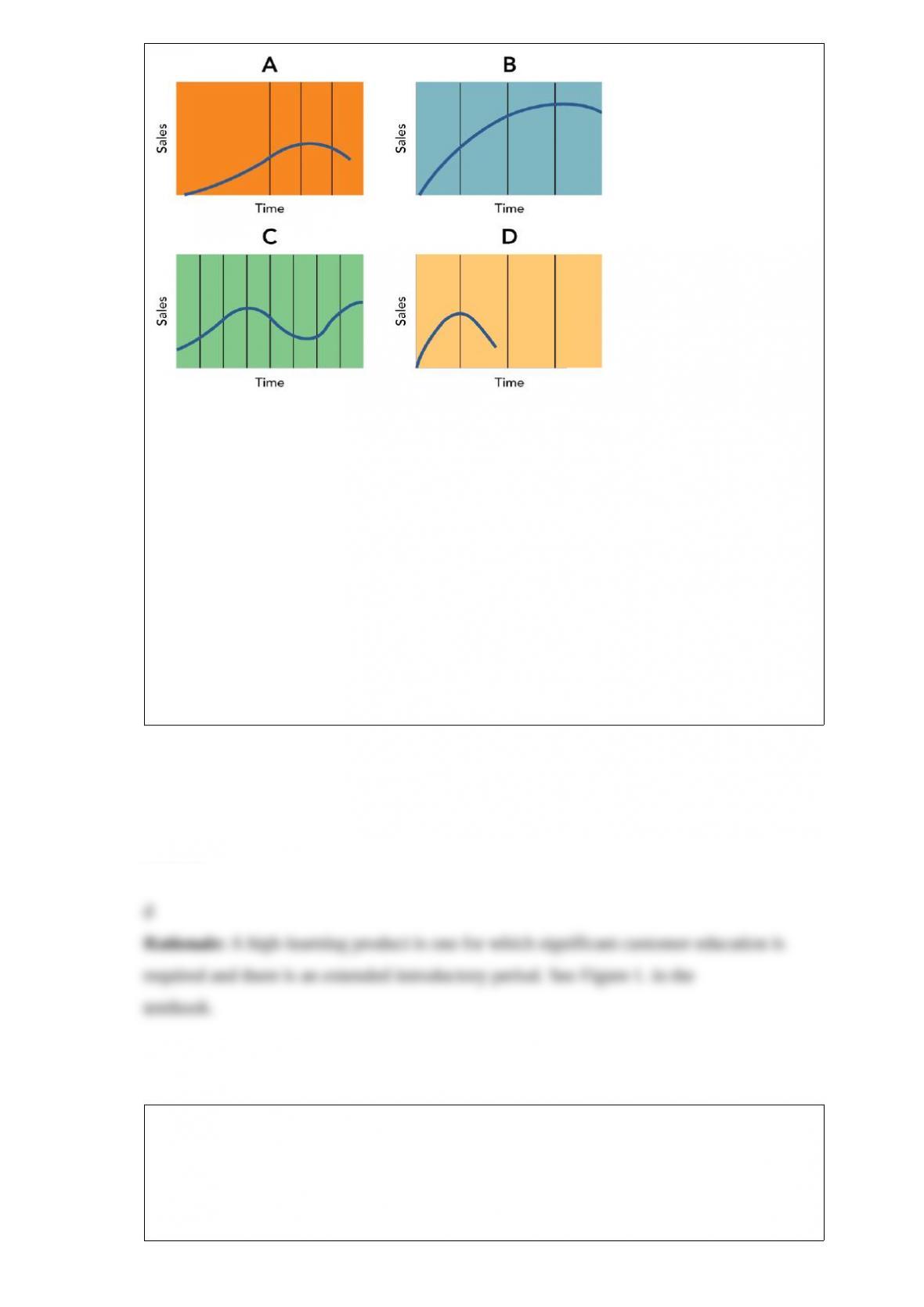
Figure 1.
The product life cycle shown in “A” in Figure 1. above is an example of a __________
product.
a. low-learning
b. fashion
c. fad
d. high-learning
e. generalized
Answer:
Evaluating the results of a marketing decision involves
a. asking prospective customers if they are likely to buy the product during a specified
future time period.

b. requesting the firm’s salespeople to estimate sales during a coming period.
c. determining if the marketing research and analysis used to develop the
recommendations was effective.
d. collecting projections from all regional sales managers and making projections based
on a region to region basis.
e. monitoring the marketplace to determine what actions are necessary in the future.
Answer:
Which of the following pieces of information is used in market-product focus and goal
setting, the second step of the planning phase of the strategic marketing process?
a. marketing return on investment
b. positioning studies
c. revenues associated with each point of market share
d. possible cannibalization effects on other products in the line
e. trends for industry and competitors
Answer:
Concept tests are part of which stage in the new-product process?
a. development
b. screening and evaluation
c. idea generation
d. new-product strategy development
e. business analysis
Answer:
Hasbro is a $4 billion toy company that prides itself on donating to organizations that
help children, since they and their parents comprise the target market for its business.
This is an example of a(n)
a. unit sales goal.
b. market share goal.
c. sales revenue goal.
d. customer satisfaction goal.
e. social responsibility goal.
Answer:
The difference between the monetary value of a nation’s exports and imports is called
its
a. countertrade.
b. trade feedback effect.
c. balance of trade.
d. gross domestic product.
e. tariffs.
Answer:
An ad for Campbell’s soup reads, “We haven”t changed that great taste your family’s
always loved.” This is an example of __________ advertising.
a. advocacy
b. comparative
c. persuasive
d. informative
e. reminder
Answer:
The Philadelphia Phillies offer different promotions to meet the needs of specific
segments. Offering discounts on dinners would most likely be targeted towards
__________.
a. diehard baseball fans
b. ball team members, their families, and friends
c. married families with children
d. 20- and 30-somethings
e. seniors 60 years and older
Answer:
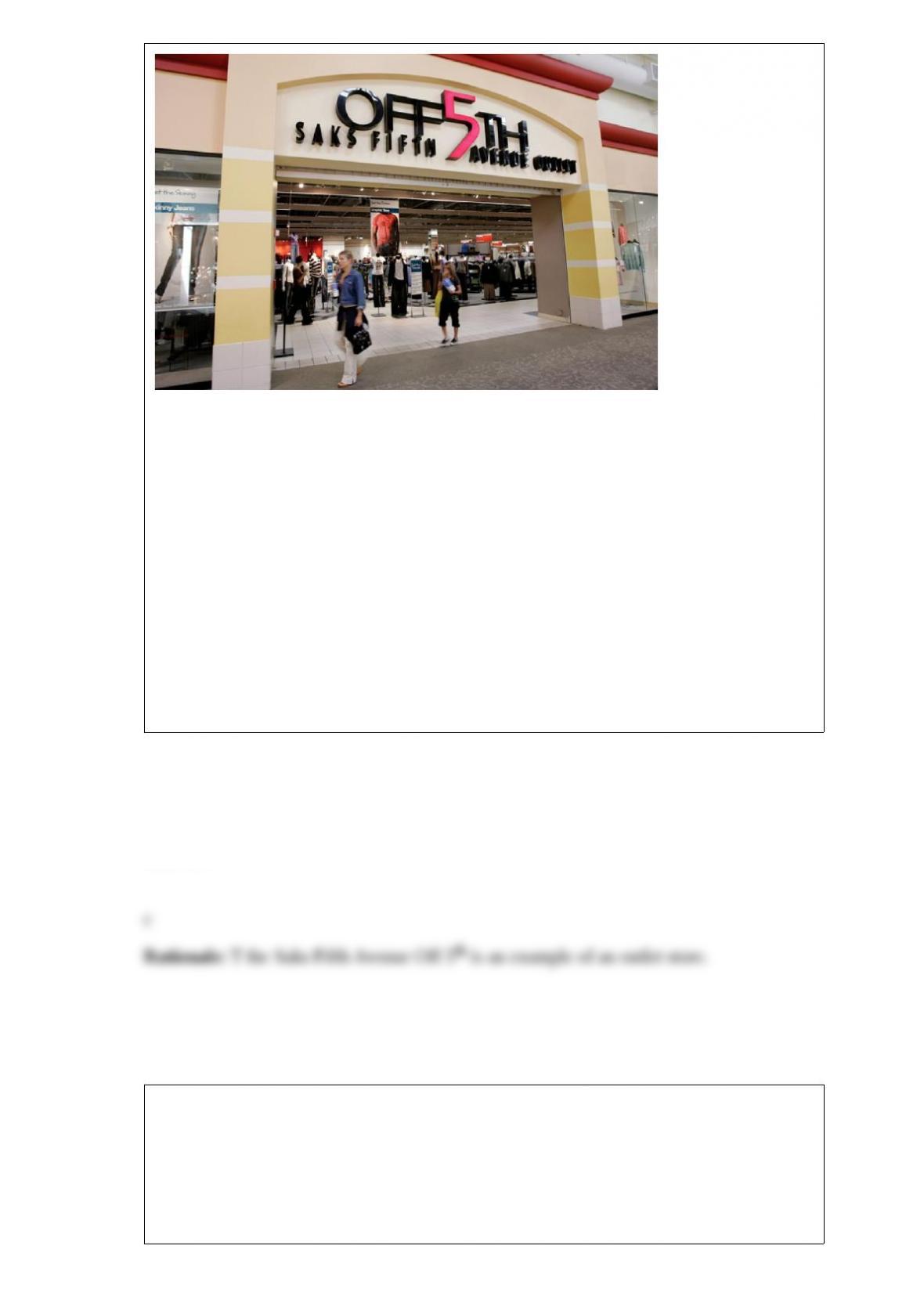
Saks Fifth Avenue Off 5thPhoto
Consider the Saks Fifth Avenue Off 5th photo above. This retailer is an example of a(n)
__________.
a. hypermarket
b. off-price store
c. outlet store
d. category killer
e. warehouse club
Answer:
Jay stops at the shopping mall to purchase a new pair of jeans from the Diesel store. He
is the ultimate consumer in a pipeline from the producer through intermediaries,
including the clothing store. This pipeline is actually a
a. marketing tunnel.
b. consumer market.
c. marketing channel.
d. transactional conduit.
e. distribution matrix.
Answer:
The greatest marketspace opportunity for Seven Cycles lies in its potential for creating
_________.
a. form utility
b. time utility
c. price utility
d. place utility
e. possession utility
Answer:
Five situational influences have an impact on a consumer’s purchase decision process.
They are: purchase task, __________, physical surroundings, temporal effects, and
antecedent states.
a. competitive offerings
b. motivation
c. core values
d. brand loyalty
e. social surroundings
Answer:
A customer was unable to go to the store on her own to buy gifts for the holidays. She
contacted a Tupperware representative who came to her home, showed her not only
catalogs but actual products, answered all her questions, and had all the customer’s gifts
sorted and delivered. This is an example of __________.
a. interface marketing
b. flex-marketing
c. direct selling
d. interactive selling
e. responsive selling
Answer:
Harris Interactive, a large U.S. research firm, has identified six distinct online consumer
lifestyle segments: (1) click-and mortar; (2) hunter-gatherers; (3) brand loyalists; (4)
__________; (5) hooked, online and single; and (6) ebivalent newbies.
a. desktop veterans
b. media movers
c. drifting surfers
d. digital collaborators
e. time-sensitive materialists
Answer:
In the VALS framework, consumers motivated by achievement look for products and
services that demonstrate success to their peers or to a peer group they aspire to. A
segment of the achievement-motivated groups, known as __________, are trendy,
fun-loving, and less self-confident than Achievers.
a. Strivers
b. Experiencers
c. Believers
d. Makers
e. Survivors
Answer:
The actions taken in a situation (SWOT) analysis or Step 1 of the planning phase
include: (1) identify industry trends, (2) __________, (3) assess own company, and (4)
research customers.
a. set market and product goals
b. select target markets
c. find points of difference
d. analyze competitors
e. position the product
Answer:
A Nabisco display in the grocery store is designed to maximize the consumer’s attention
to lunch box and after-school snacks and to provide storage for the products. It is placed
in a high-traffic area of the store. This type of sales promotion is referred to as
__________.
a. a sample
b. a freestanding insert
c. a point-of-purchase display
d. a premium
e. a deal
Answer:
The set of values, ideas, and attitudes that is learned and shared among the members of
an organization is referred to as __________.
a. a mission statement
b. core values
c. the socialization process
d. a code of ethics and conduct
e. corporate culture
Answer:
To increase the demand for complementary products, the price of a product often is
a. marked up
b. marked down
c. off-priced
d. value-subtracted
e. maintained
Answer:
Seven Cycles’ motto, “One Bike. Yours.” reflects the company’s
a. reputation for customized detailing of the finest motorcycles in competitive racing.
b. commitment to incorporating individual customer input for every single bike.
c. lifetime warranty for each and every bike it makes.
d. promise that customers can always find the bike they want from the company’s
catalog of stock designs.
e. promise to restore any bicycle, regardless of age or condition.
Answer:
A(n) __________ is any intermediary between a manufacturer and end-user markets.
a. agent
b. wholesaler
c. retailer
d. middleman
e. broker
Answer:

In marketing, the set of values, ideas, and attitudes that are learned and shared among
members of a group is referred to as __________.
a. ideals
b. morals
c. ethics
d. culture
e. diversity
Answer:
All of the following actions occur during the business analysis stage of the new-product
process EXCEPT:
a. using capacity management to find ways to match the availability of the service
offering to when it is needed.
b. assessing the marketing and product synergies related to the company’s existing
operations.
c. turning the idea on paper into a prototype.
d. determining whether the new product can be protected with a patent or copyright.
e. assessing whether the the proposed new product fits with the company’s mission and
objectives
Answer:
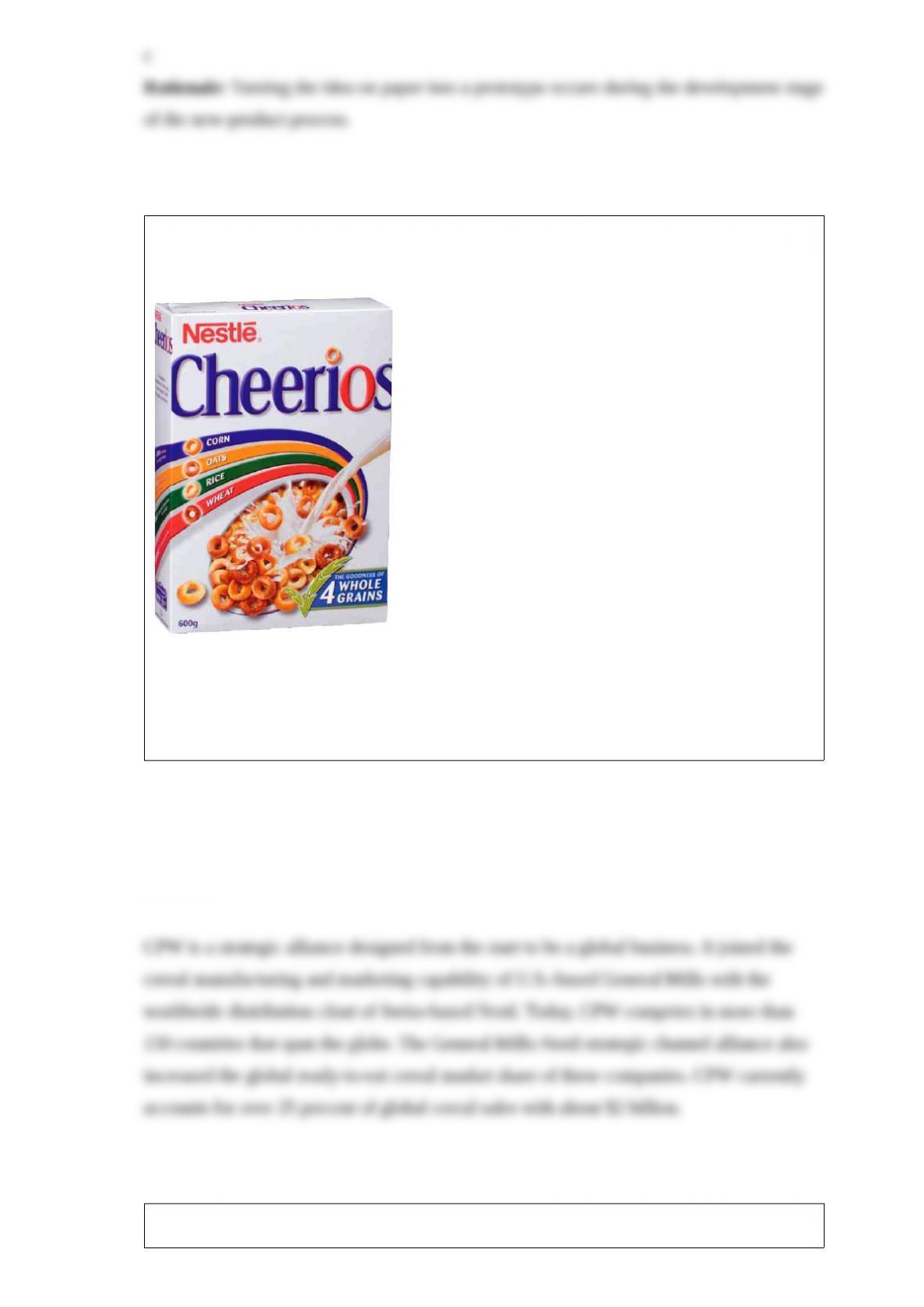
Cereal Partners Worldwide (CPW) Cheerios Photo
The photo above shows a Cheerios box that carries the Nestl name rather than the
familiar General Mills brand name. Explain the channel that is being used and the
importance of Cereal Partners Worldwide (CPW).
Answer:

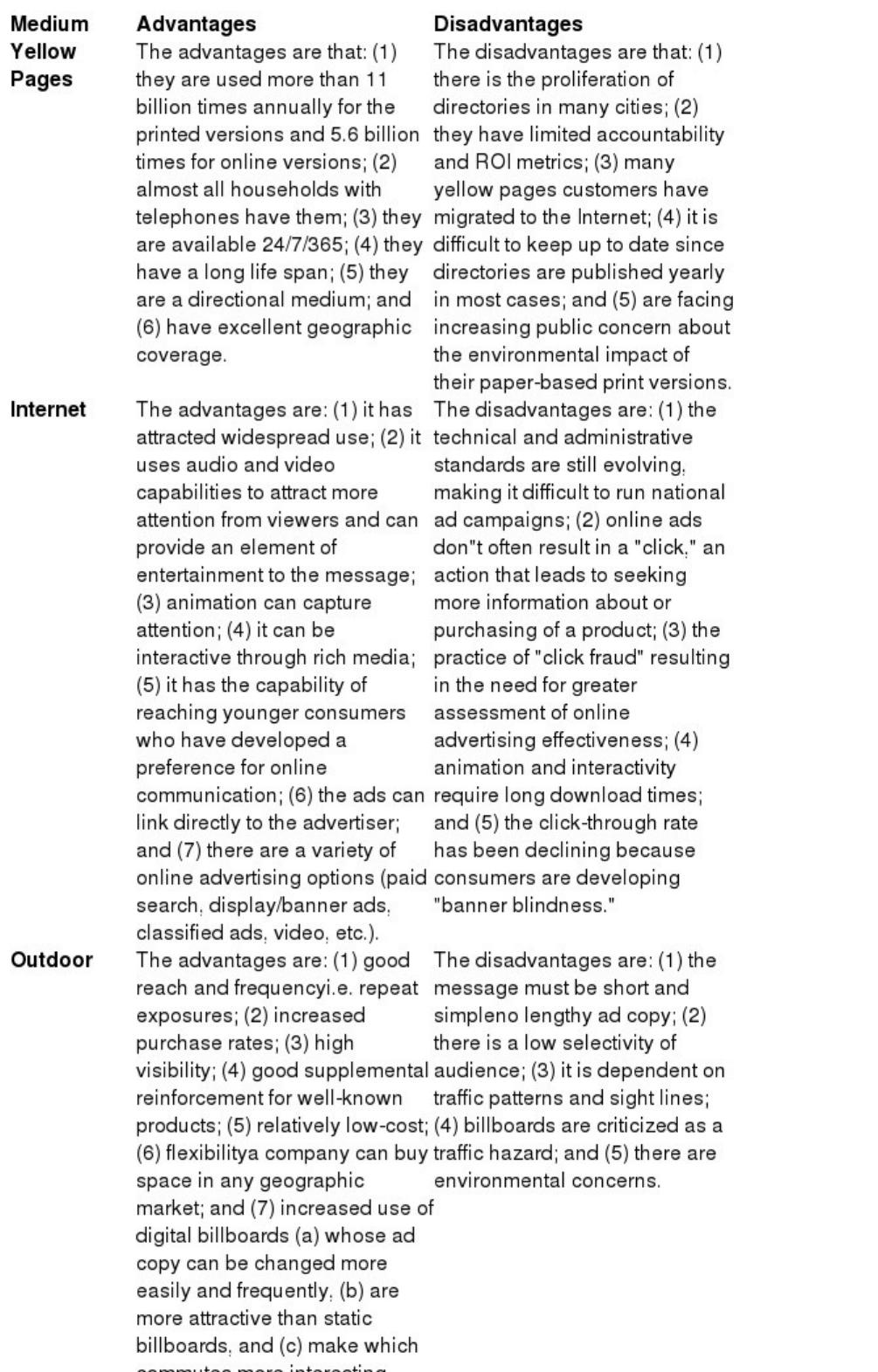
List two advantages and two disadvantages of using yellow pages, Internet, and
billboards for advertising.
Answer:
Describe the three ways services can be classified.
Answer:
List two advantages and two disadvantages of using television, radio, magazines, and
newspapers for advertising.
Answer:
The logistics industry has sales of $800 billion per year. If a third party logistics
provider had sales of $8 billion, what would its market share be? Be sure to define
market share and show your work in your answer.
Answer:
Identify and describe the five roles an individual can play in a buying center.
Answer:
Explain what the hierarchy of effects is. List and explain the five stages.
Answer:
Explain the difference between the stimulus-response presentation format and the
formula-selling presentation format.
Answer:
Briefly explain the difference between a direct forecast and a lost-horse forecast.
Answer:
How has the structure of the American household changed since 1960? In your answer,
define the blended family and give an example of a way in which marketers have
targeted that group.
Answer:
Give an example of a global channel of distribution.
Answer:
Explain the difference between primary demand and selective demand.
Answer:
In the context of a salesperson’s position, describe what a job description is. In the
answer, describe the six attributes that it purports to explain.
Answer:
What are the four types of consumer products? How do they differ?
Answer:
Define the four kinds of uniform delivered pricing methods and give an example of the
use of each.
Answer:
Define the marketing concept.
Answer:
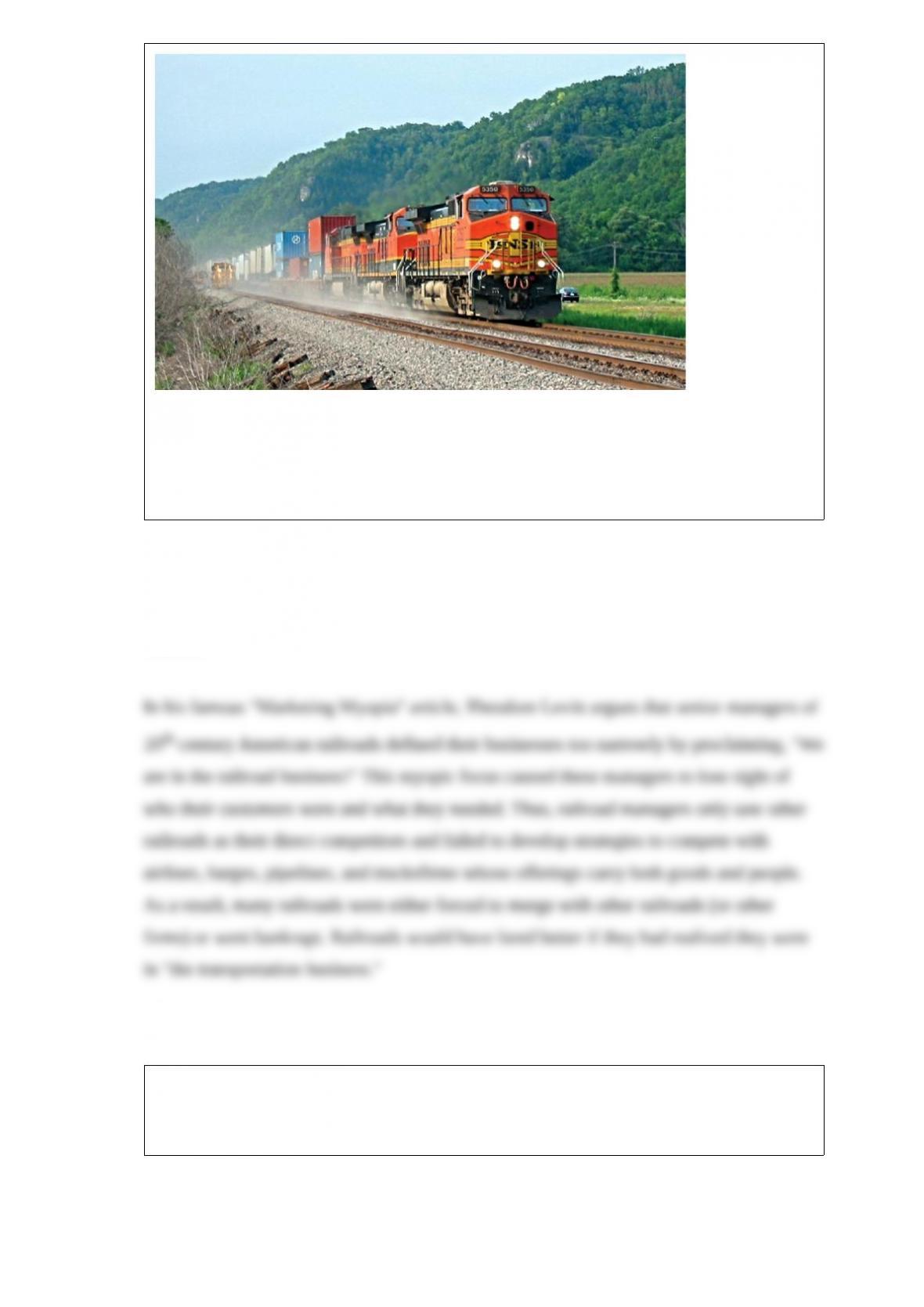
Railroad Photo
The railroad photo above shows a train hauling cargo. What “business” did rail
executives believe they were in during mid-20th century? What business is a railroad
firm really in? Why?
Answer:
Briefly describe the advantages to the retailer and to the customer of the independent
retailer.
Answer: