
A global market-entry strategy in which a foreign company and a local firm invest
together to create a local business in order to share ownership, control, and profits of
the new company is referred to as
a. licensing.
b. a joint venture.
c. direct exporting.
d. a local assembly.
e. local manufacturing.
Answer:
A differentiation strategy refers to one of Porter’s generic business strategies that
a. involves controlling expenses and, in turn, lowering product prices targeted at a
narrow range of markets segments.
b. requires products to have significant points of difference to charge a higher price
while targeting a broad array of market segments.
c. focuses on reducing expenses and, in turn, lowers product prices, while targeting a
broad array of market segments.
d. requires products to have significant points of difference to target one or only a few
market segments.
e. seeks opportunities by finding the optimum balance between marketing efficiencies
versus R&D”manufacturing efficiencies.
Answer:

Profit responsibility refers to
a. the obligation of a firm to price its products or services at a level whereby the
consumer is treated fairly and the firm is still able to make a profit.
b. the view that an organization has an obligation to those who can affect the
achievement of its objectives.
c. the concept that no expansion or additional research and development will occur until
a company is making a profit.
d. the idea that organizations are part of a larger society and are accountable to that
society for their actions.
e. the duty of a firm to maximize profits for its owners or stockholders.
Answer:
Proponents of Do-Not-Track regulations suggest that website owners who use cookies
to collect information about consumers’ shopping habits should only do so
a. with new customers.
b. with the consumers’ consent.
c. with repeat customers.
d. when new products are being offered.
e. when competitors use cookies.
Answer:
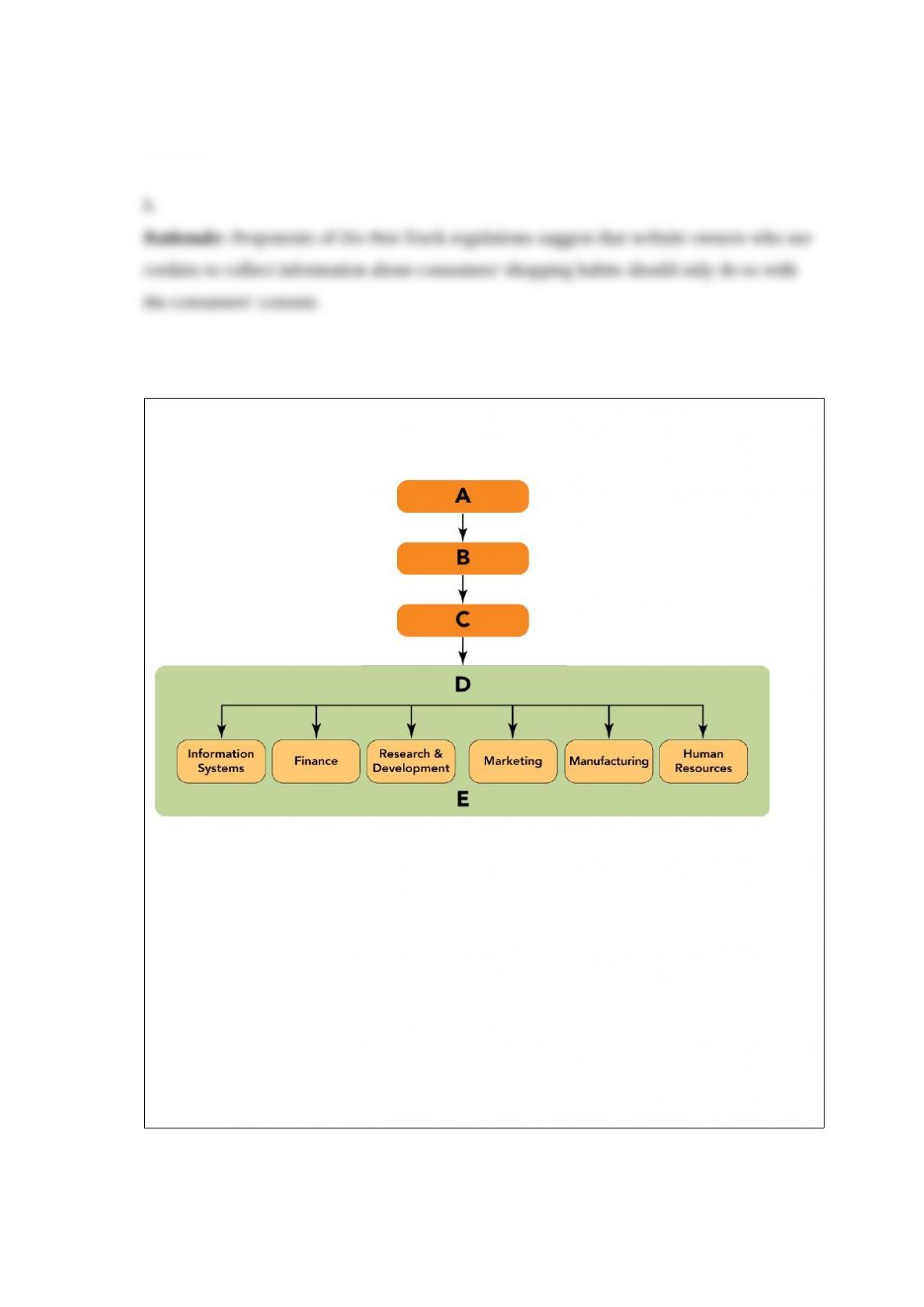
Figure 1.
In Figure 1. above, “E” represents
a. board of directors.
b. corporate level.
c. departments.
d. functional level.
e. strategic business unit level.
Answer:
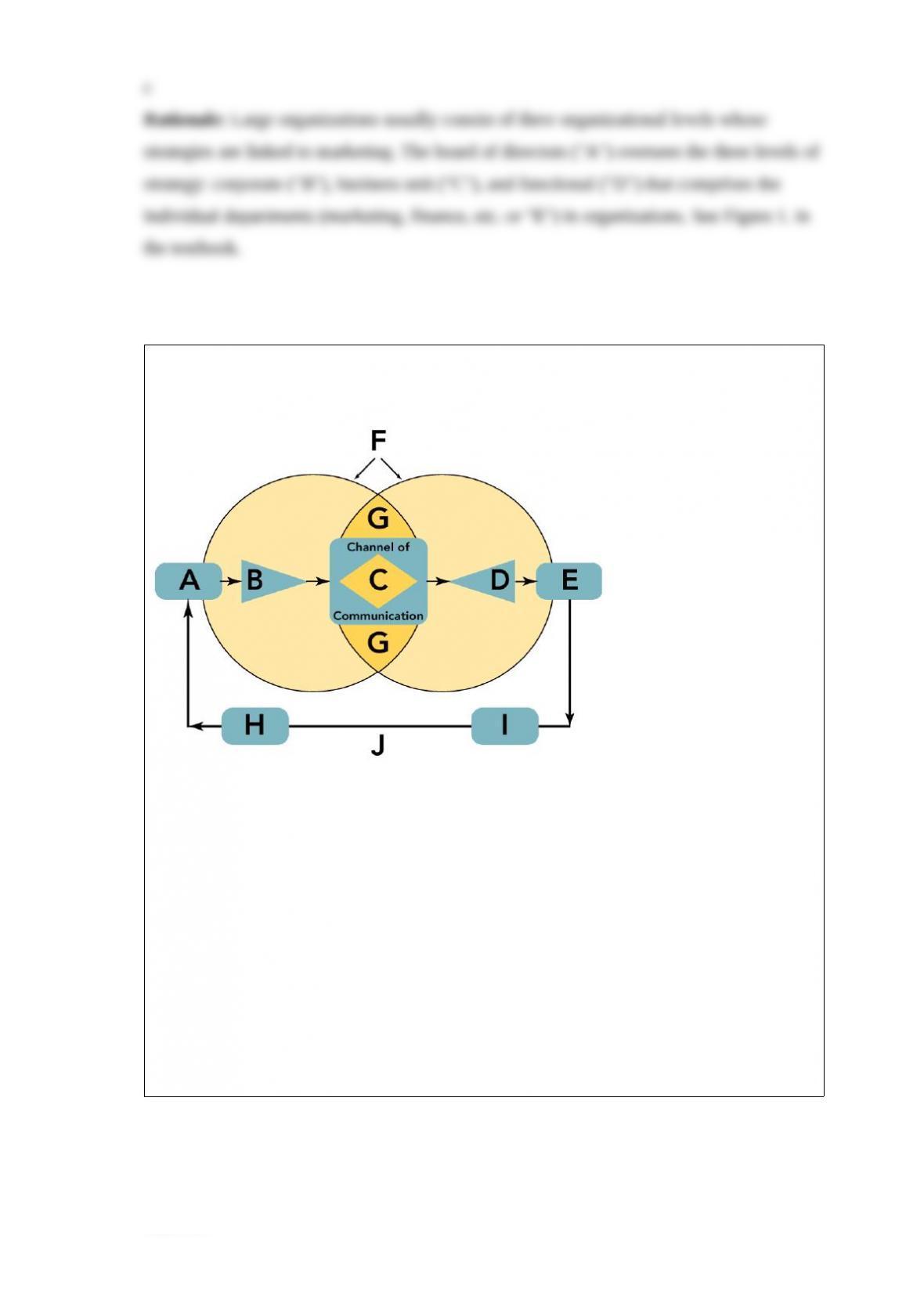
Figure 1.
Figure 1. above depicts the communication process, which consists of ten key elements
(“A” through “J”). The position labeled “I” is referred to as _________.
a. the response
b. the source
c. the message
d. the receiver
e. the field of experience
Answer:
There are several reasons why a consumer might be reluctant to adopt a new product.
For example, a consumer might be reluctant to adopt a new product because of a usage
barrier, which occurs when __________.
a. there is no incentive to change
b. there are physical, economic, or social risks
c. there are cultural differences
d. the financial commitment is too great
e. the product is not compatible with existing habits
Answer:

By taking consumer expectations into consideration, integrated marketing
communications (IMC) is a key element in a company’s __________ strategy.
a. generic business
b. retail life cycle
c. market segmentation
d. sustainable development
e. customer experience management
Answer:
The Zappos segmentation strategy is based on
a. offering the absolute best selection of shoes and the absolute best service.
b. designing shoes for every type of occasion.
c. dividing all their customers into two distinct segments: people shopping for low price
and people shopping for style.
d. offering the best selection of shoes through multiple channels of distribution.
e. maintaining the simplest method of price points to make the purchase process as
simple as possible for its customers.
Answer:
Large strip malls that often have two to five anchor stores, a supermarket, and are
designed to bring shoppers on a weekly basis are referred to as
a. suburban malls.
b. warehouse malls.
c. power centers.
d. retail malls.
e. cluster malls.
Answer:
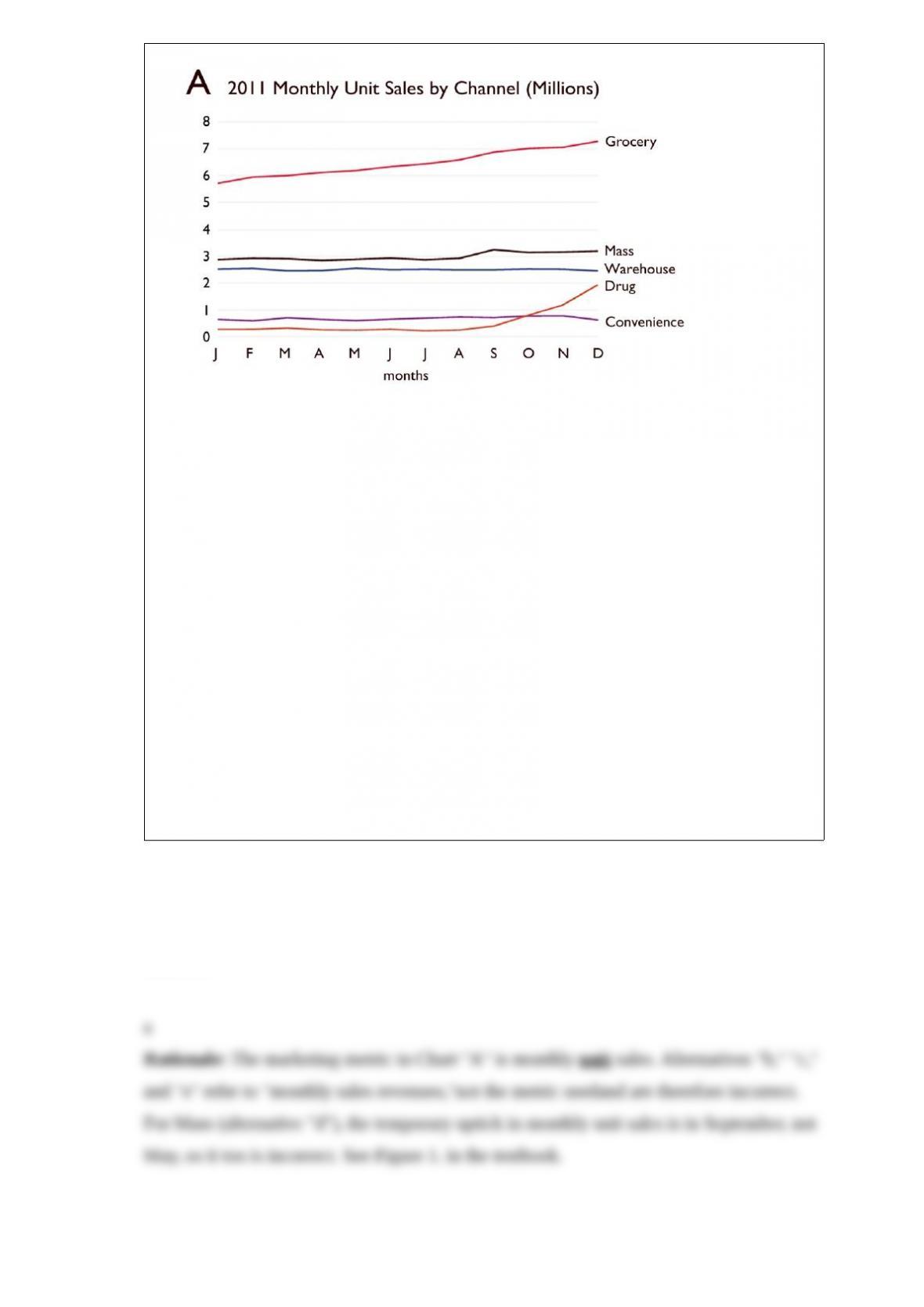
Figure 1.: General Mills Marketing Dashboard Chart “A”
Consider Figure 1.: General Mills Marketing Dashboard Chart “A” above. As part of
the Warm Delights team at General Mills, you are asked to analyze and interpret the
marketing dashboard for Warm Delights Minis. After a careful analysis of Chart “A,”
you conclude the following:
a. GroceryIn terms of monthly unit sales, this is the most important channel and it
shows a consistent upward trend.
b. MassIt has a slight upward trend in monthly unit sales, with a temporary uptick in
May.
c. WarehouseMonthly sales revenues have remained virtually constant for the year.
d. Convenience: Monthly sales revenues are trending down after October.
e. Drug:As the average number of flavors has grown, monthly sales revenues grew
significantly from September through December.
Answer:

Assembling and protecting products at a convenient location to offer better customer
service would be an example of a __________ function.
a. transactional
b. facilitating
c. grading
d. risk taking
e. logistical
Answer:
A company that uses an organizational structure based on “Dinner Products” or “Baked
Goods” uses __________.
a. product line groupings
b. functional groupings
c. reseller groupings
d. geographical groupings
e. market-based groupings
Answer:
A popular NPR radio show encourages listeners to solve a puzzle each week. If they
have the correct answer and send it in to the show and theirs is chosen, they win a prize.
This is an example of a __________.
a. premium
b. sweepstakes
c. deal
d. contest
e. trade promotion
Answer:
Factors such as differences in payment methods (credit and credit cards), the need for
improved reliability and security in regards to the mail system, and government
regulations make it especially difficult for __________ in the global market.
a. direct marketing
b. advertising
c. personal selling
d. sales promotion
e. publicity
Answer:
The sales process at Xerox typically follows the six stages of the personal selling
process. During the fifth stage, the salesperson engages in __________ (gets a signed
document or a firm confirmation of the sale).
a. a soft close
b. an interrogative close
c. an urgency close
d. an action close
e. a conditional close
Answer:
In the CDI/BDI marketing dashboard above, which segment consumes the most fruit
drinks?
a. households without children
b. households with children 13 to 18 years old
c. households with children 6 years old or under
d. households with children 7 to 12 years old
e. Because the BDI and CDI show inconsistencies in their measurements, especially in
the segment of children under the age of six, it is impossible to answer the question.
Answer:
StubHub’s pricing formula is to
a. charge an escalating commission percentage based on the value of the ticket sold.
b. deduct a flat fee of $25 for every ticket sold regardless of its value.
c. charge a commission to both buyers and sellers of the tickets sold on its website.
d. include special surcharges for enabling prospective buyers to view, in 3D 360
streaming video on its YouTube channel, the seats at stadiums, concert halls, and other
venues for the events they are interested in.
e. deduct the sales tax from the purchase of tickets based on the states where such taxes
must be collected and forwarded.
Answer:
The break-even point (BEP) = [Fixed cost (__________ − Unit variable cost)].
a. Total cost
b. Total expense
c. Fixed cost
d. Unit variable cost
e. Unit price
Answer:
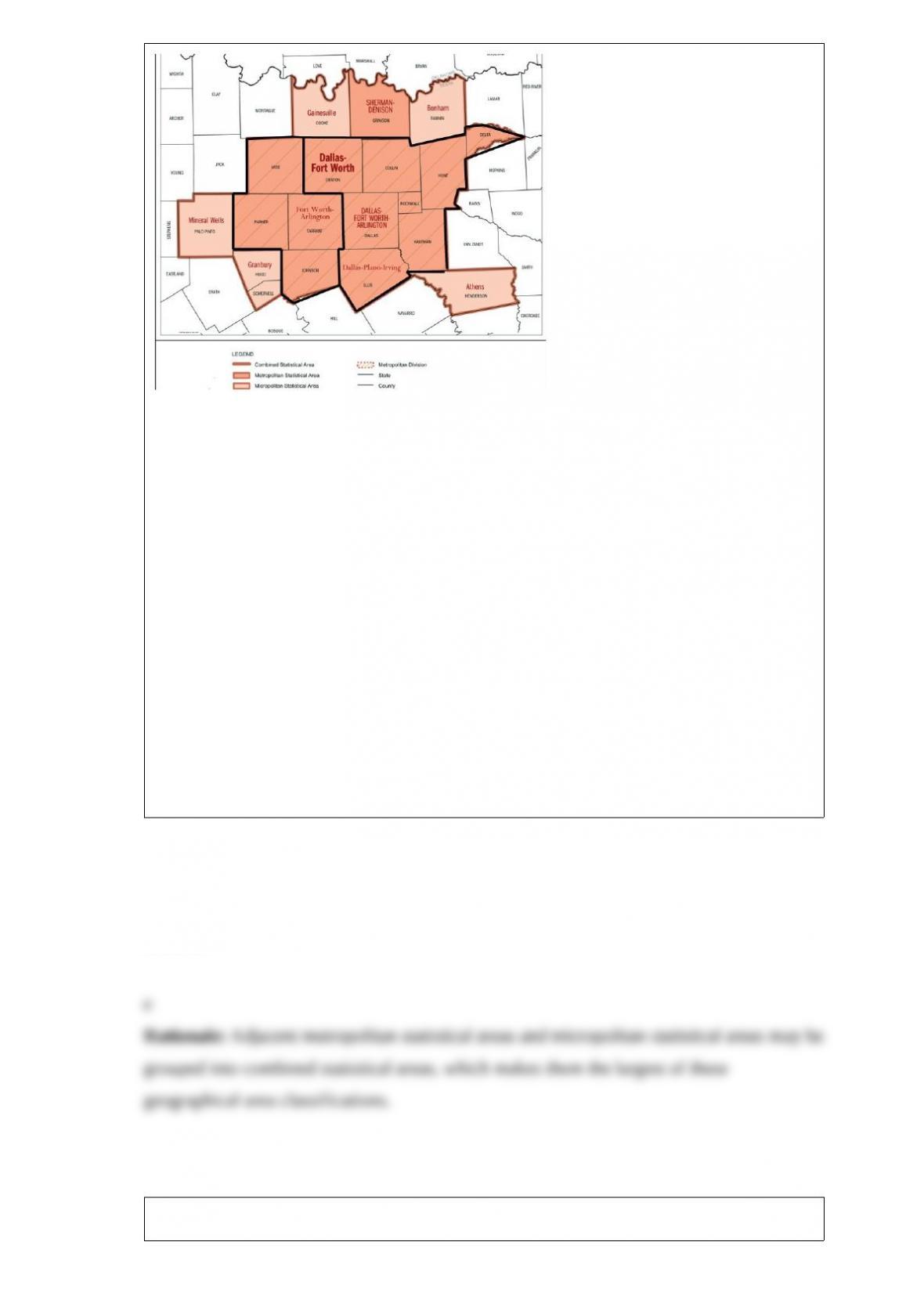
Figure 3-A
The U.S. Office of Management and Budget has developed a classification system that
defines geographic areas based on the size of the population contained within them. The
U.S. Census Bureau uses these statistical areas to collect, tabulate, and publish various
reports on demographic profiles and economic activity. Figure 3-A above shows these
statistical areas for the Dallas-Fort Worth metroplex. The largest of these geographical
areas is called a
a. megapolitan statistical area.
b. micropolitan statistical area.
c. metropolitan statistical area.
d. zip code.
e. combined statistical area.
Answer:

With respect to the history of American business, the __________ era covered the years
from the 1920s to the 1960s.
a. production
b. sales
c. marketing concept
d. customer relationship
e. market orientation
Answer:
Which of the following statements regarding managing the customer experience is most
accurate?
a. As more women enter the upper levels of industry, retailers are paying less attention
to men and their shopping behavior.
b. Men were typically viewed as infrequent “mission shoppers” but they are changing
their behaviors.
c. Men will shop for electronics but leave the majority of their clothing shopping to
their wives.
d. Making the retail environment a sparse one appeals to male shoppers who value
efficiency.
e. Men prefer to shop in a social environment so they avoid shopping alone at all costs.
Answer:
All of the following are differences between social and traditional media EXCEPT:
a. the number of and skills required to produce and train personnel to produce the
media.
b. the permanence of the media.
c. the credibility of the media.
d. the ability to reach a mass or specialized market segment.
e. the privacy and anonymity of the media.
Answer:
Organizational groupings based on specific customer segments are referred to as
__________.
a. functional groupings
b. reseller groupings
c. geographical groupings
d. product line groupings
e. market-based groupings
Answer:
With respect to distribution, convenience products are available
a. at relatively few outlets.
b. at a large number of specialty outlets.
c. by special order from the manufacturer.
d. at a very limited number of convenience stores.
e. on a widespread basis at many outlets.
Answer:
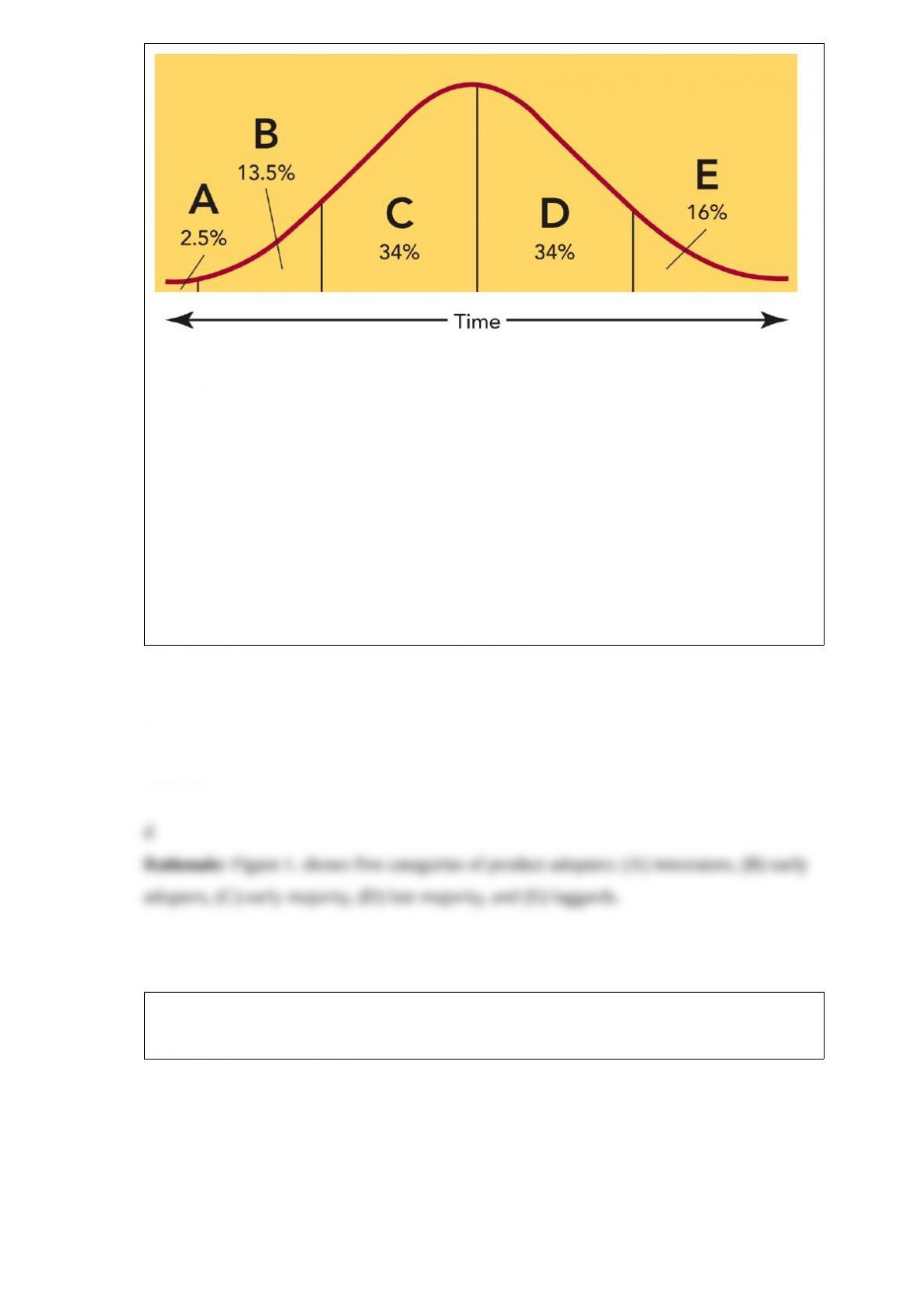
Figure 1.
The consumers represented by “B” in Figure 1. above are called __________.
a. innovators
b. late majority
c. early majority
d. early adopters
e. laggards
Answer:
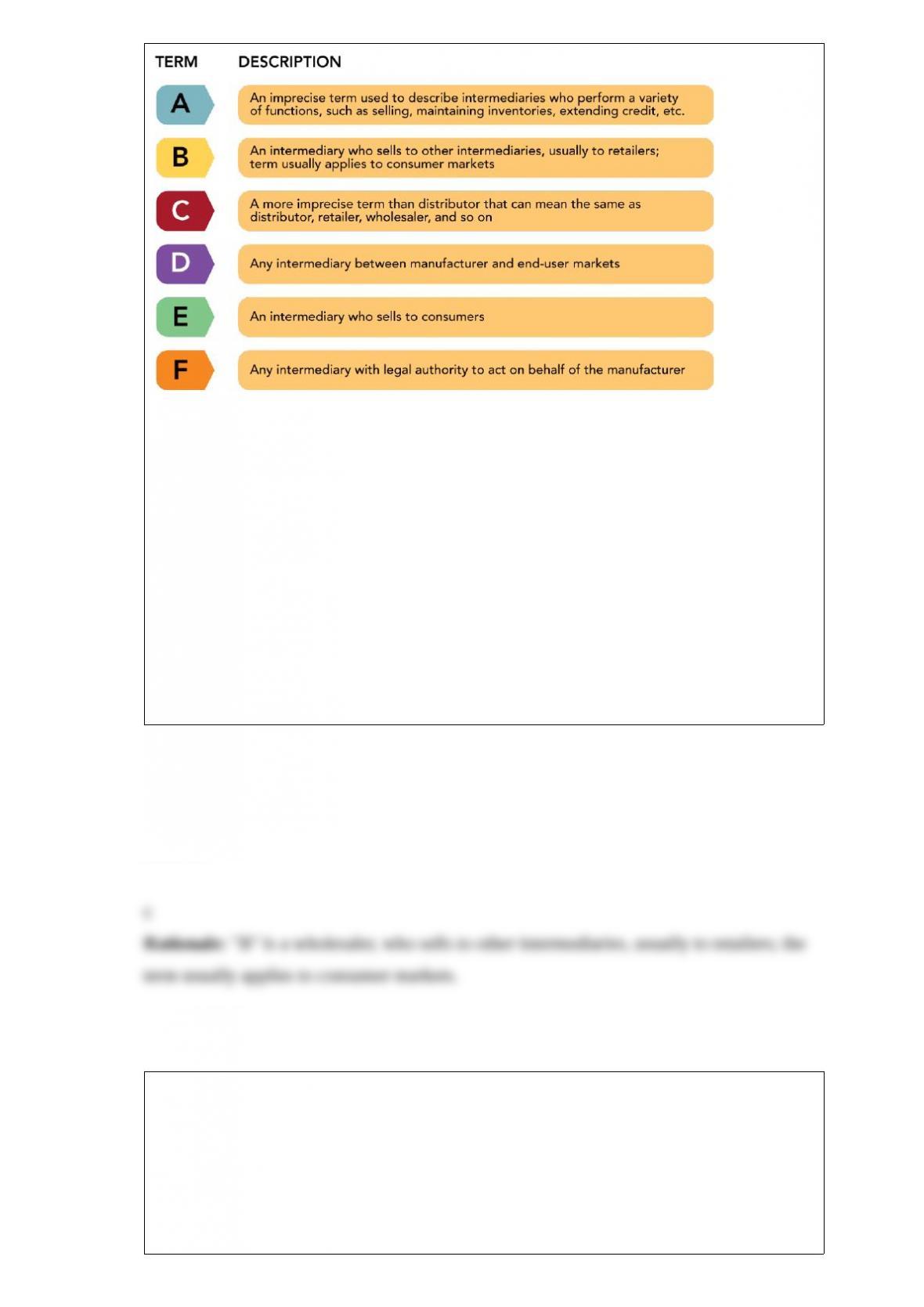
Figure 1.
A variety of terms are used for marketing intermediaries. According to Figure 1. above,
“B” represents a(n) __________.
a. retailer
b. middleman
c. wholesaler
d. distributor
e. agent or broker
Answer:
The information sent by a source to a receiver during the communication process is
referred to as ___________.
a. an advertisement
b. publicity
c. a message
d. feedback
e. a missive
Answer:
Multichannel Merchant magazine evaluates hundreds of entries to select the winners of
the Multichannel Merchant Awards in 18 categories for companies that have excelled in
a. designing the most effective direct-mail piece.
b. designing the most creative catalog cover.
c. implementing efficient direct-mail campaigns.
d. integrating their direct-mail and catalog activities with other marketing activities.
e. providing creative price promotions to channel members.
Answer:
The three guidelines on marketing and promoting a brand using YouTube include: (1)
create a channel rich in key words to improve the odds of the video showing up in user
searches; (2) target viewers by using YouTube’s insights and analytics research to reveal
the number of views, where they originate within YouTube, and what key words are
driving user visits; and (3) __________.
a. use an expert to inform the audience about product features and benefits
b. tie the product to a current political or news event
c. remember that money matterscost is a factor
d. include humorous content to attract as many viewers as possible
e. limit the video to one minute or less, the same as a TV or radio ad time limit
Answer:
The internal response that customers have to all aspects of an organization and its
offerings is referred to as __________.
a. customer experience
b. relationship marketing
c. internal customer audit
d. internal marketing
e. customer relationship management

Answer:
The BCG has given specific names and descriptions to the four resulting quadrants in
its growth-share matrix based on the amount of cash they generate for or require from
the organization. “Question marks” are located in which area of the BCG growth-share
matrix?
a. upper left quadrant
b. upper right quadrant
c. center quadrant
d. lower right quadrant
e. lower left quadrant
Answer:
The purpose of __________ is to give the author of a literary, dramatic, musical, or
artistic work the exclusive right to print, perform, or otherwise copy that work.
a. copyright law
b. patent law

c. criminal law
d. commercial law
e. antitrust law
Answer: