17
Exhibit 9-4
USE THE FOLLOWING INFORMATION FOR THE NEXT PROBLEM(S)
The Valentine Company currently has a 14% annual growth rate while the market average is 4%. The
market multiple is 15.
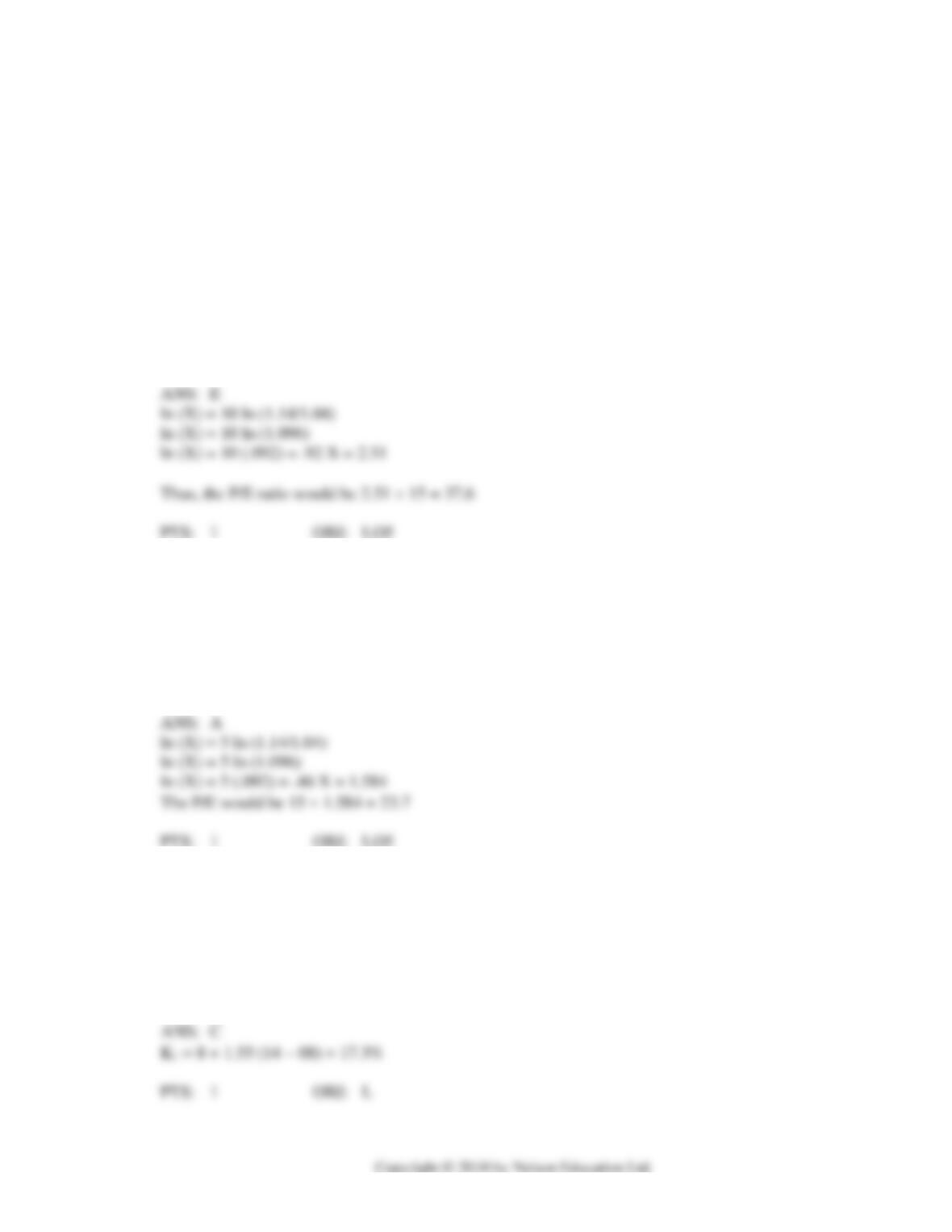
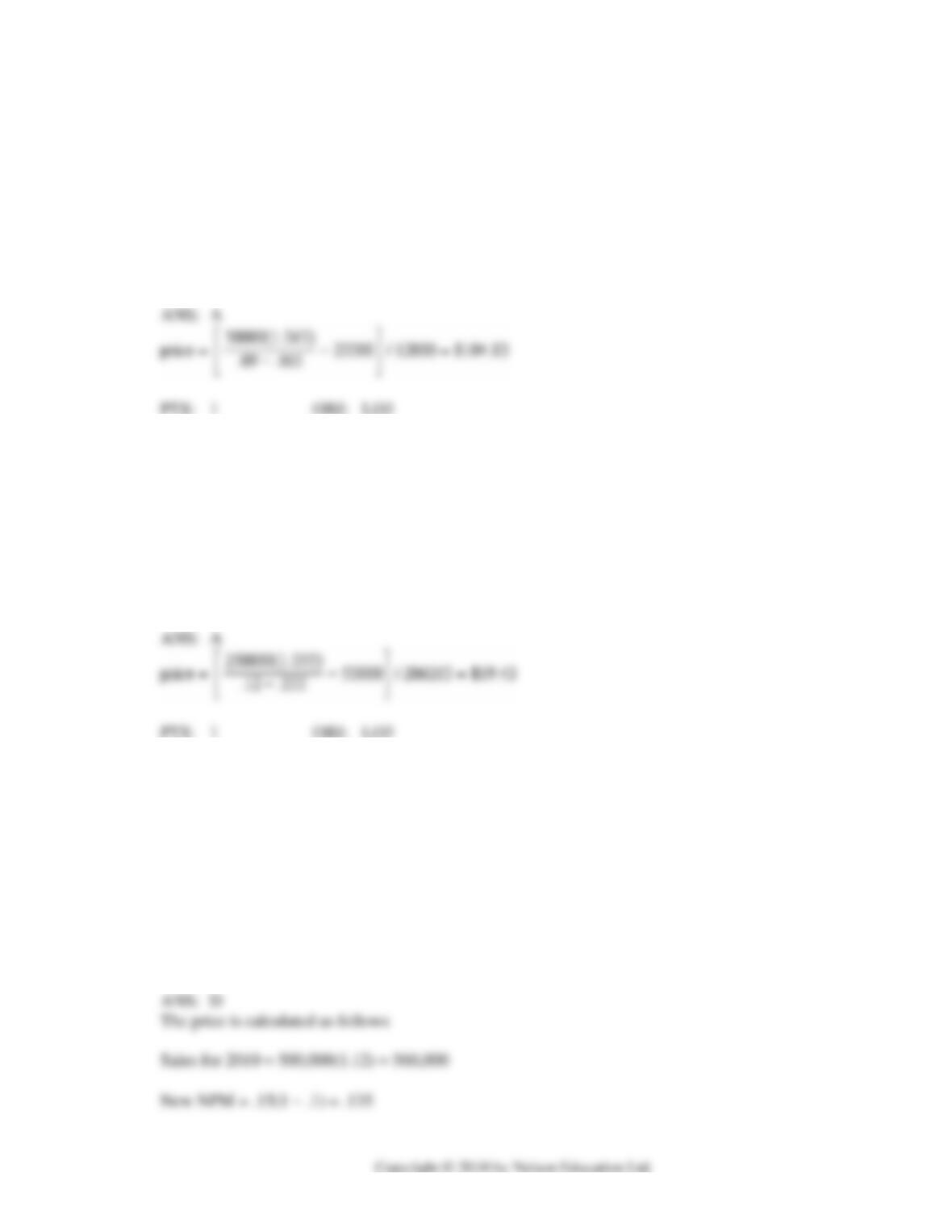
53. Refer to Exhibit 9-4. Determine the justified P/E ratio for the Valentine Company assuming Valentine
can maintain its superior growth rate for the next 10 years.
a.
3.0
b.
9.2
c.
16.6
d.
28.6
e.
37.6
54. Refer to Exhibit 9-4. Determine the P/E ratio for the Valentine Company assuming Valentine can
maintain its superior growth rate for the next 5 years.
a.
23.7
b.
16.4
c.
15.3
d.
8.3
e.
3.8
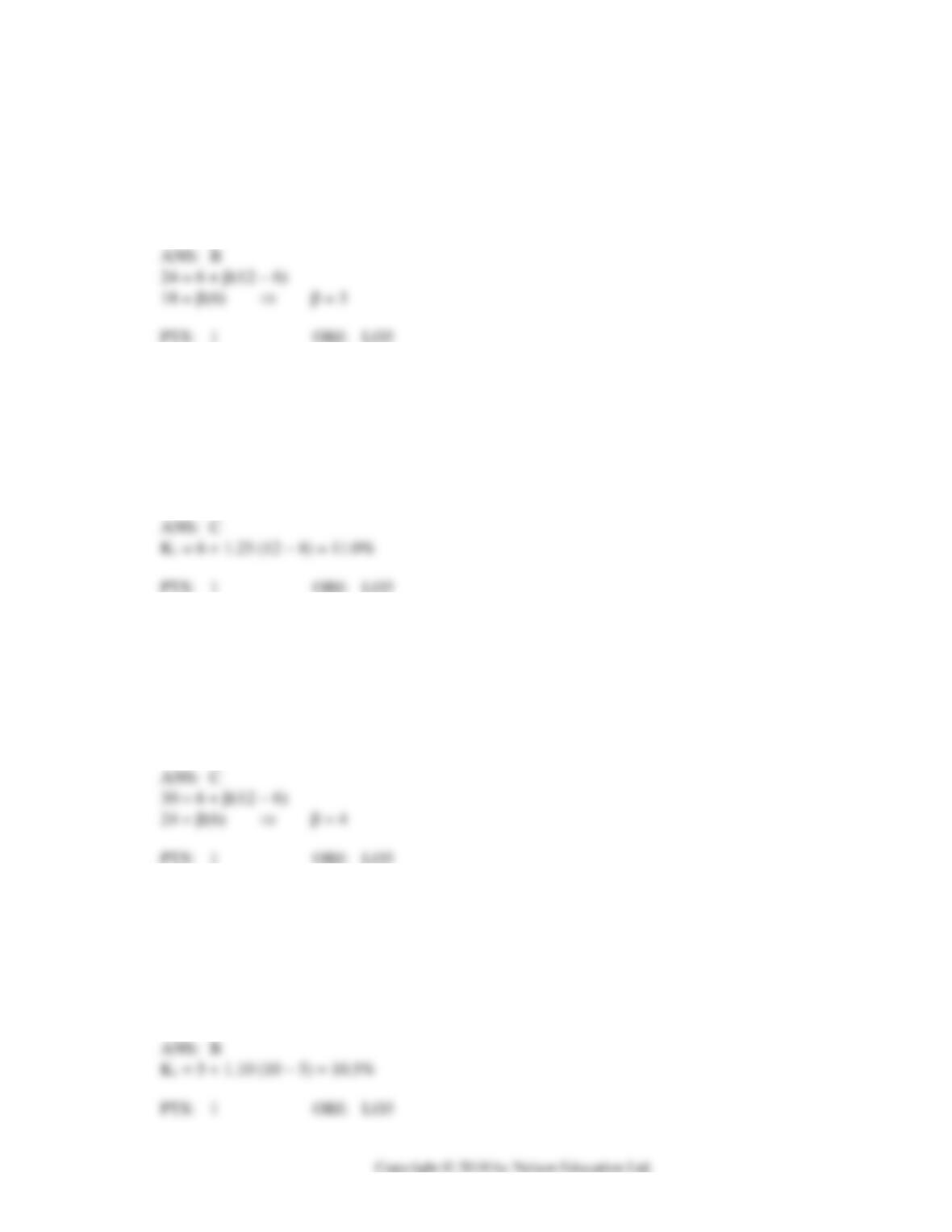
55. Given Gitech’s beta of 1.55 and a risk free rate of 8%, what is the expected rate of return assuming a
14% market return?
a.
12.4%
b.
14.3%
c.
17.3%
d.
20.4%
e.
29.7%
18
56. The expected rate of return on Research Industries is twice the 12% expected rate of return from the
market. What is Research’s beta if the risk free rate is 6%?
a.
2
b.
3
c.
4
d.
5
e.
6
57. Given Birdchip’s beta of 1.25 and a risk free rate of 6%, what is the expected rate of return assuming a
12% market return?
a.
1%
b.
10%
c.
11%
d.
12%
e.
31%
58. The expected rate of return on Rewind Industries is 2.5 times the 12% expected rate of return from the
market. What is Rewind’s beta if the risk free rate is 6%?
a.
2
b.
3
c.
4
d.
5
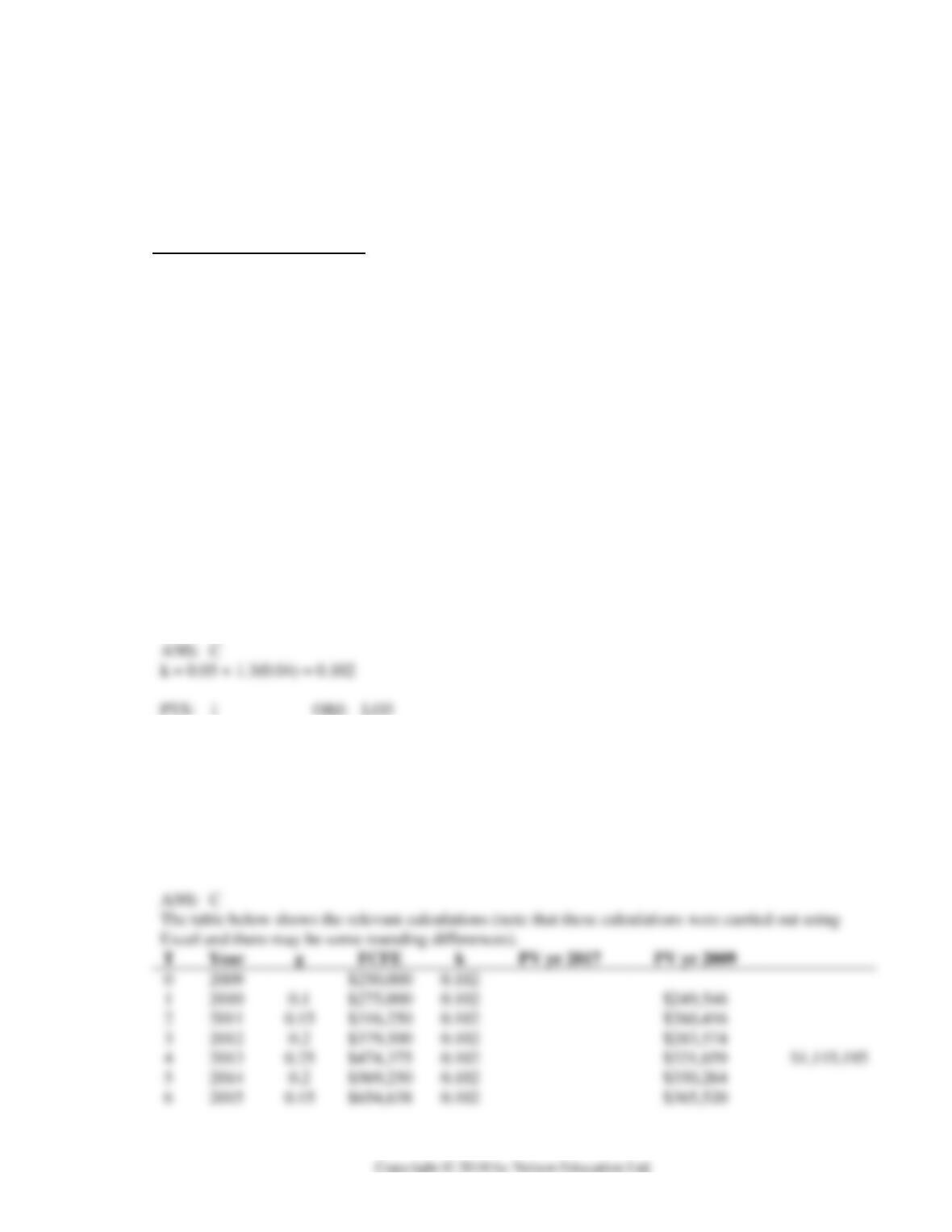
e.
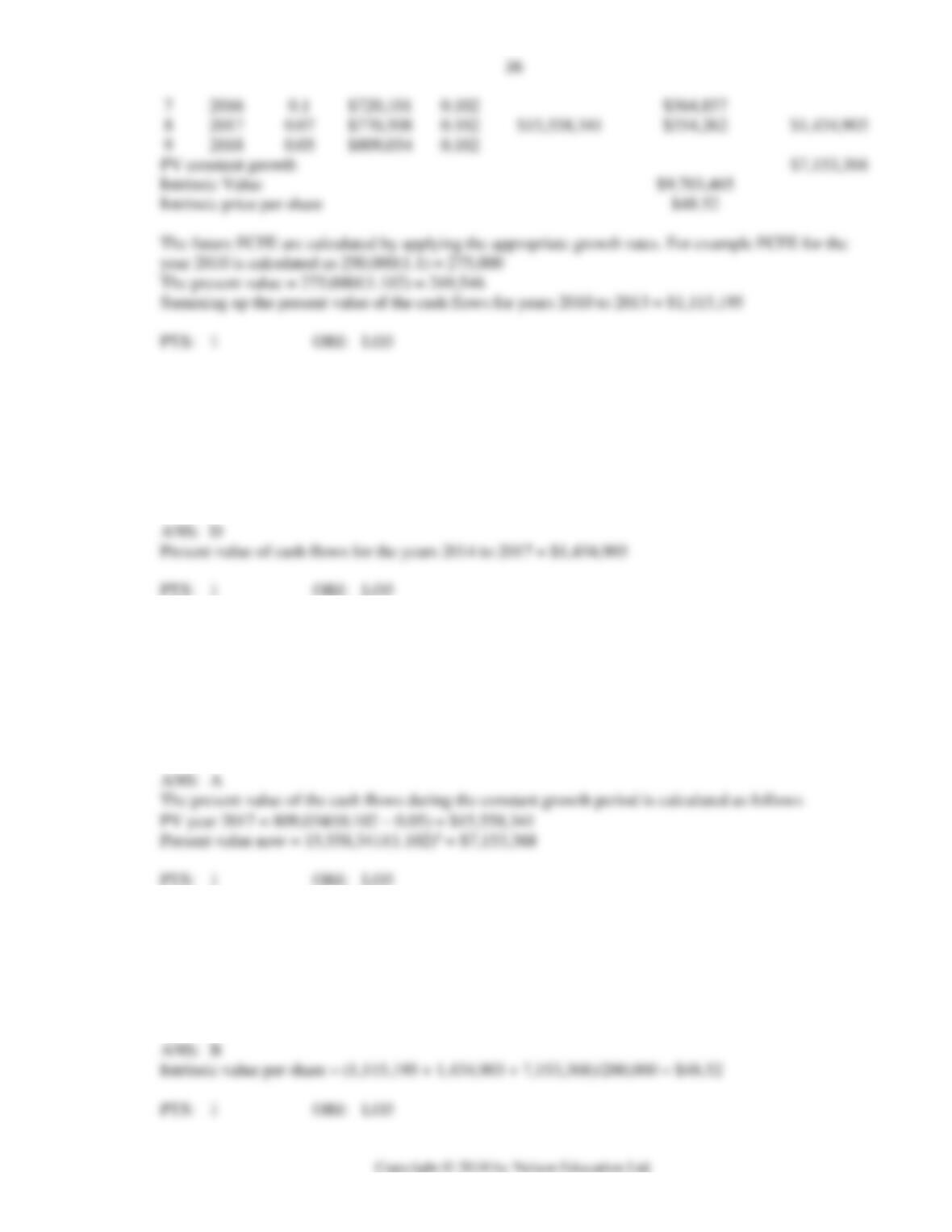
6
59. Given Gilbert’s beta of 1.10 and a risk free rate of 5%, what is the expected rate of return assuming a
10% market return?
a.
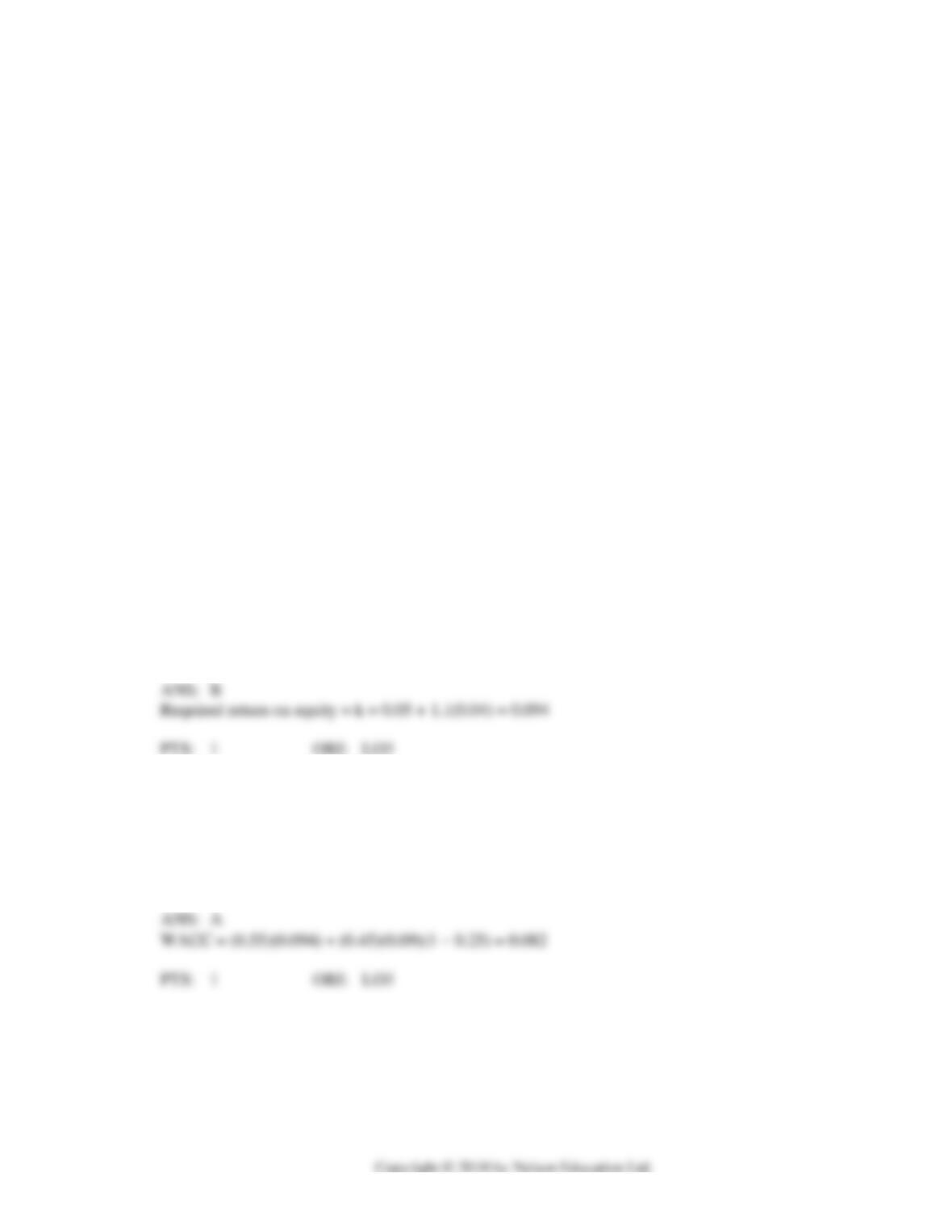
21.5%
b.
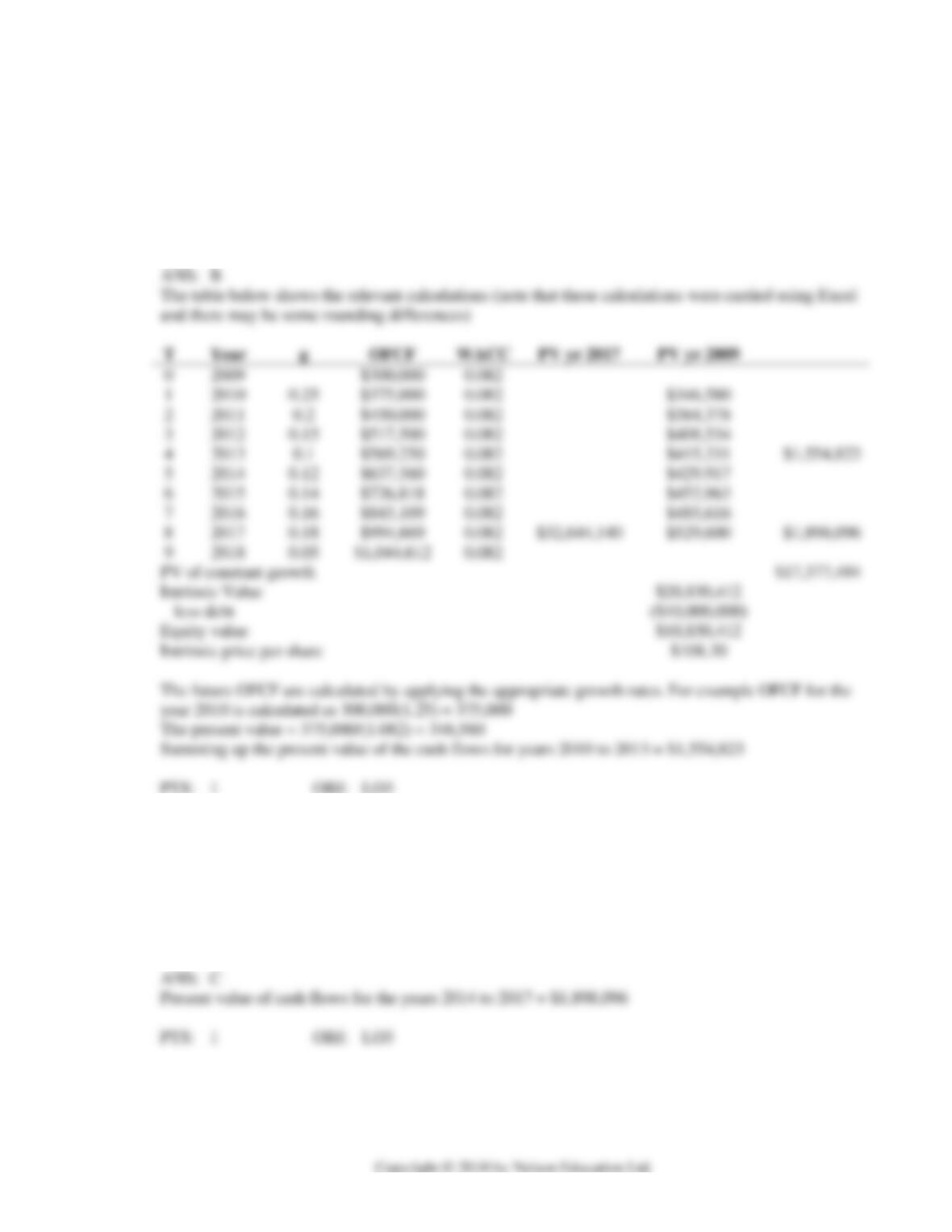
10.5%
c.
5.5%
d.
15.5%
e.
16.5%
19
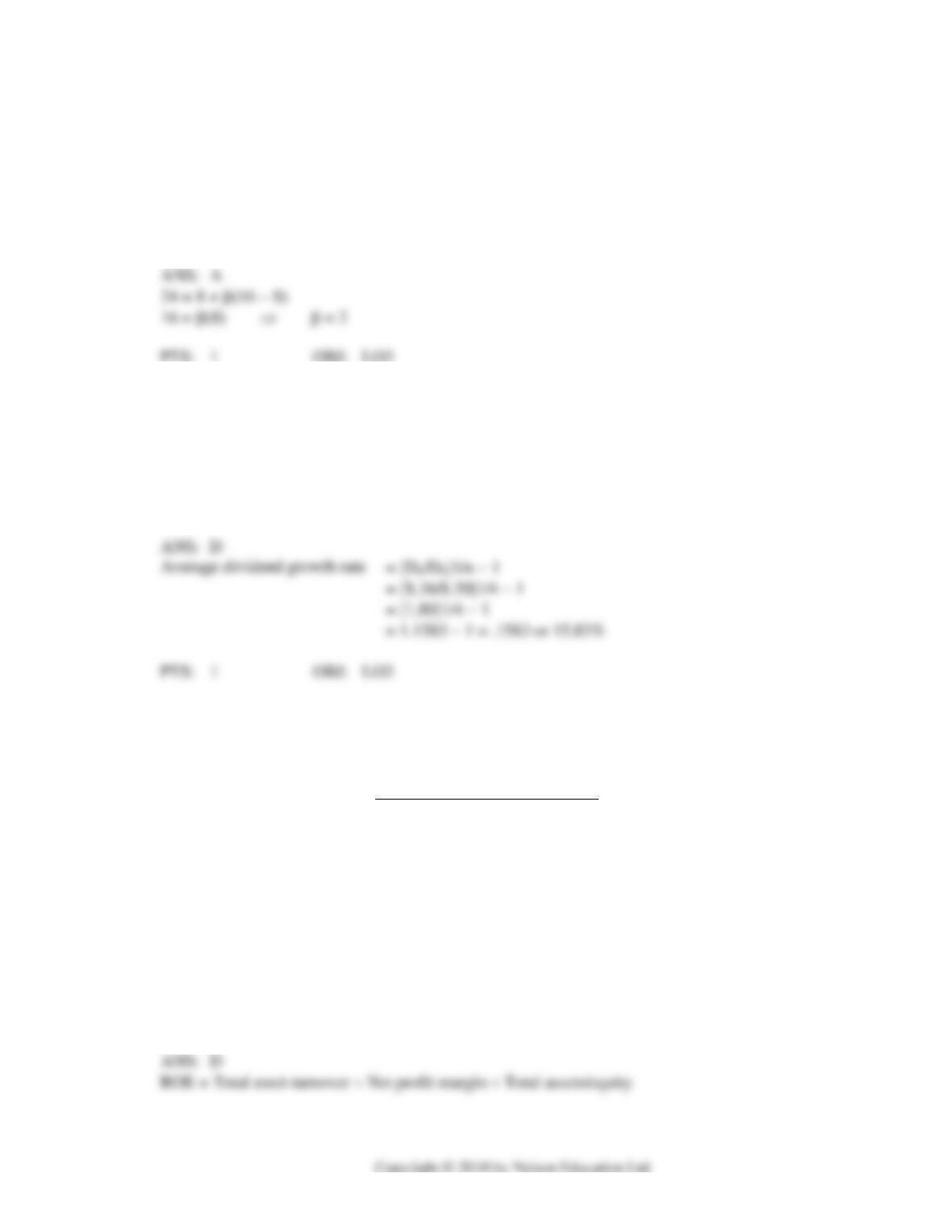
60. The expected rate of return on Rooter Industries is 1.5 times the 16% expected rate of return from the
market. What is Research’s beta if the risk free rate is 8%?
a.
2
b.
3
c.
4
d.
5
e.
6
61. ABC Co. has paid annual dividends in the past five years of $.20, $.25, $.28, $.33, and $.36. Calculate
the average growth rate of its dividends.
a.
1.16%
b.
1.80%
c.
12.47%
d.
15.83%
e.
None of the above
= [Dn/D0]1/n − 1
= [$.36/$.20]1/4 − 1
= [1.80]1/4 − 1
= 1.1583 − 1 = .1583 or 15.83%
Exhibit 9-5
USE THE FOLLOWING INFORMATION FOR THE NEXT QUESTION(S)
Wal-Blue
Industry
DPS
1.00
1.50
Total Asset Turnover
3.20
2.50
Net Profit Margin
3.50%
3.00%
EPS
4.00
3.00
Total Assets/Equity
3.00
4.00
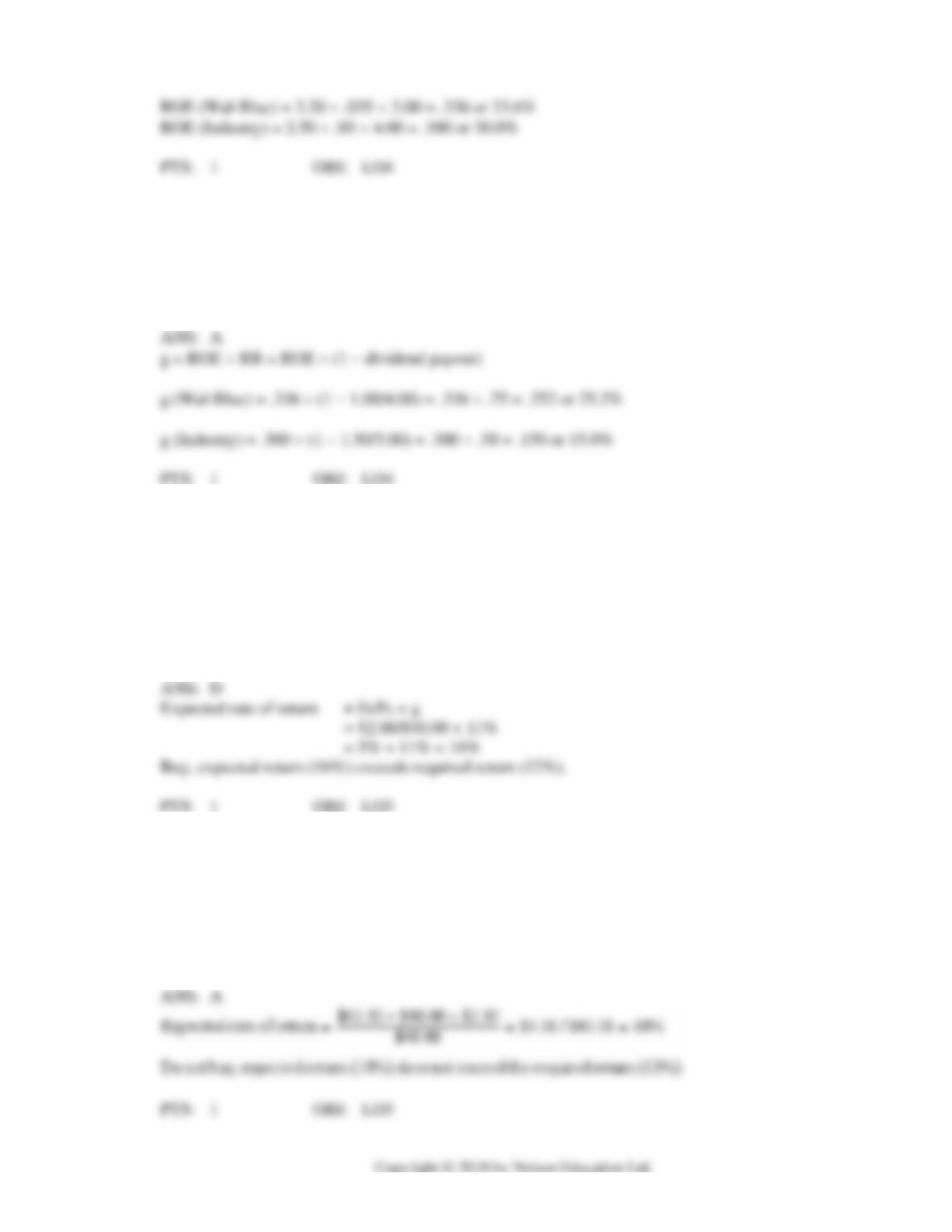
62. Refer to Exhibit 9-5. What are the ROEs for Wal-Blue and its industry?
a.
24.3% and 27.0%
b.
29.7% and 27.0%
c.
29.7% and 30.0%
d.
33.6% and 30.0%
e.
34.5% and 31.5%
20
63. Refer to Exhibit 9-5. What are the expected sustainable growth rates for Wal-Blue and its industry?
a.
25.2% and 15.0%
b.
30.0% and 17.5%
c.
25.2% and 17.5%
d.
27.5% and 12.5%
e.
30.0% and 15.0%
64. A firm has a current price of $40 per share, an expected growth rate of 11% and expected dividend per
share (D1) of $2. Given its risk you have a required rate of return for it of 12%. Your expected rate of
return and investment decision is as follows:
a.
10% – do not buy
b.
12% – do not buy
c.
14% – buy
d.
16% – buy
e.
18% – buy
65. Assuming that you expected the stock price in the prior question to increase to $42 during the
investment period, your expected rate of return and decision would be:
a.
10% – do not buy
b.
12% – do not buy
c.
14% – buy
d.
16% – buy
e.
18% – buy
21
66. Based on the information provided, calculate the intrinsic value in 2004 of a share of INV Corp. using
the FCFF (free cash flow to the firm) model. For 2009 the FCFF was $30,000, total debt was $20,000,
and there were 12000 shares outstanding. The required rate of return is 9% and the estimated growth
rate in FCFF is 6.5%.
a.
$104.83
b.
$153.25
c.
$112.50
d.
$94.92
e.
$80.45
67. Based on the information provided, calculate the intrinsic value in 2009 of a share of INV Corp. using
the Present Value of Earnings Model (infinite holding period). For 2009 Net Income was $250,000,
total debt was $50,000, and there were 206,263 shares outstanding. The required rate of return is 12%
and the estimated growth rate in earnings is 5.5%.
a.
$19.43
b.
$23.98
c.
$28.52
d.
$22.73
e.
$15.50
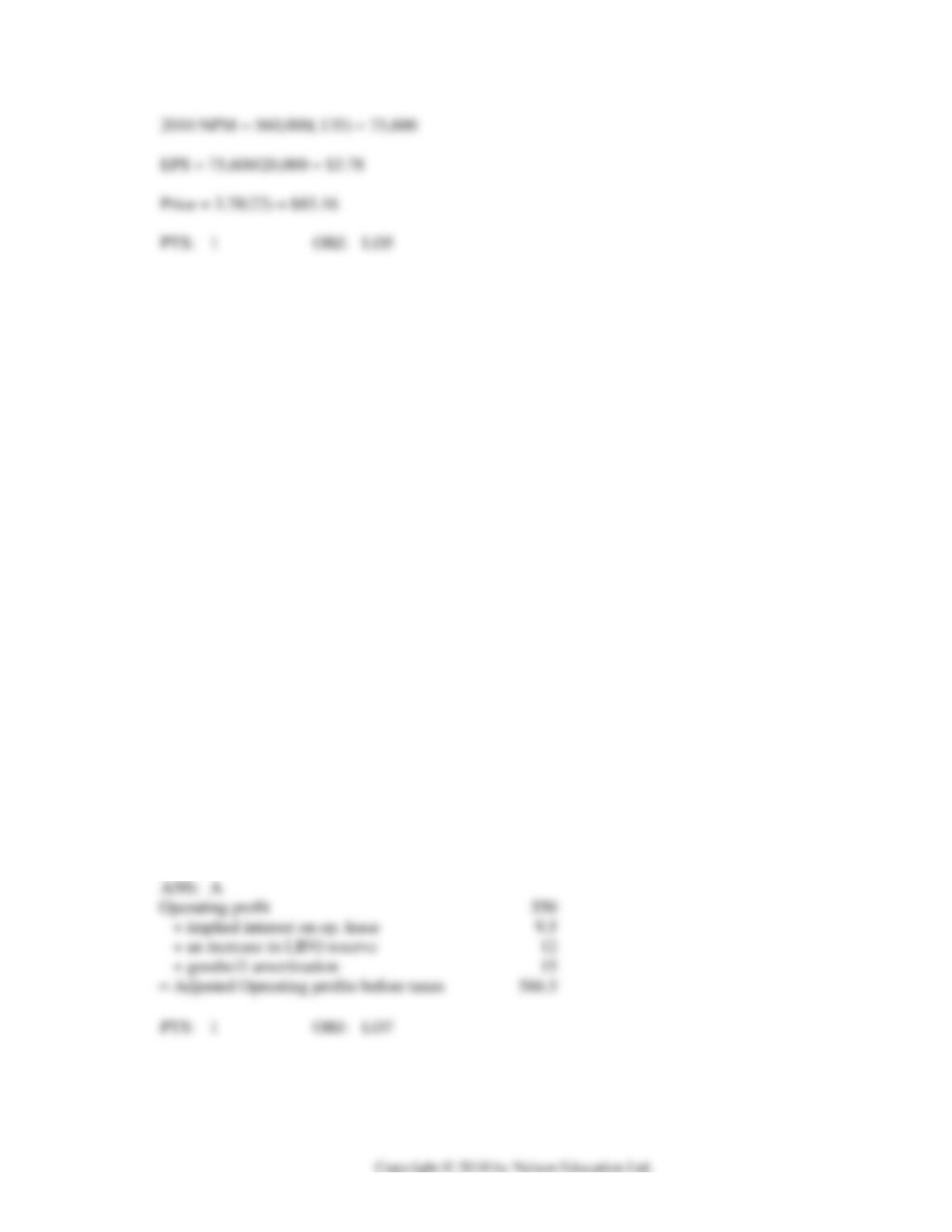
68. You are provided with the following information about Javier Corporation. Sales for the year 2009
were $500,000, the Net Profit Margin (NPM) was 15%. Analysts project sales to grow by 12% next
year (that is 2010). However, because of more competition, the NPM is expected to decline by 10%
for the year 2009. The expected P/E multiple for the year 2010 is 22. The total number of shares
outstanding is 20,000. Use the earnings multiplier model to calculate the expected price for Javier
Corporation in the year 2010.
a.
$74.25
b.
$61.6
c.
$82.5
d.
$83.16
e.
$101.64
22
Exhibit 9-6
USE THE FOLLOWING INFORMATION TO ANSWER THE NEXT QUESTION(S)
You are provided with the following information on Kayray Corporation. Your ultimate objective is to
calculate the EVA for the firm.
LIFO reserve
60
Net plant, property, and equipment
1325
Other assets
30
Goodwill
325
Accumulated Goodwill amortized
65
PV of Operating leases
140
Tax benefit from interest on expenses
10
Tax benefit from interest on leases
5
Taxes on non-operating income
2
Implied interest on op. lease
9.5
Increase in LIFO reserve
12
Goodwill amortization
15
Operating profit
550
Income tax expense
215
Net working capital
440
WACC
0.12
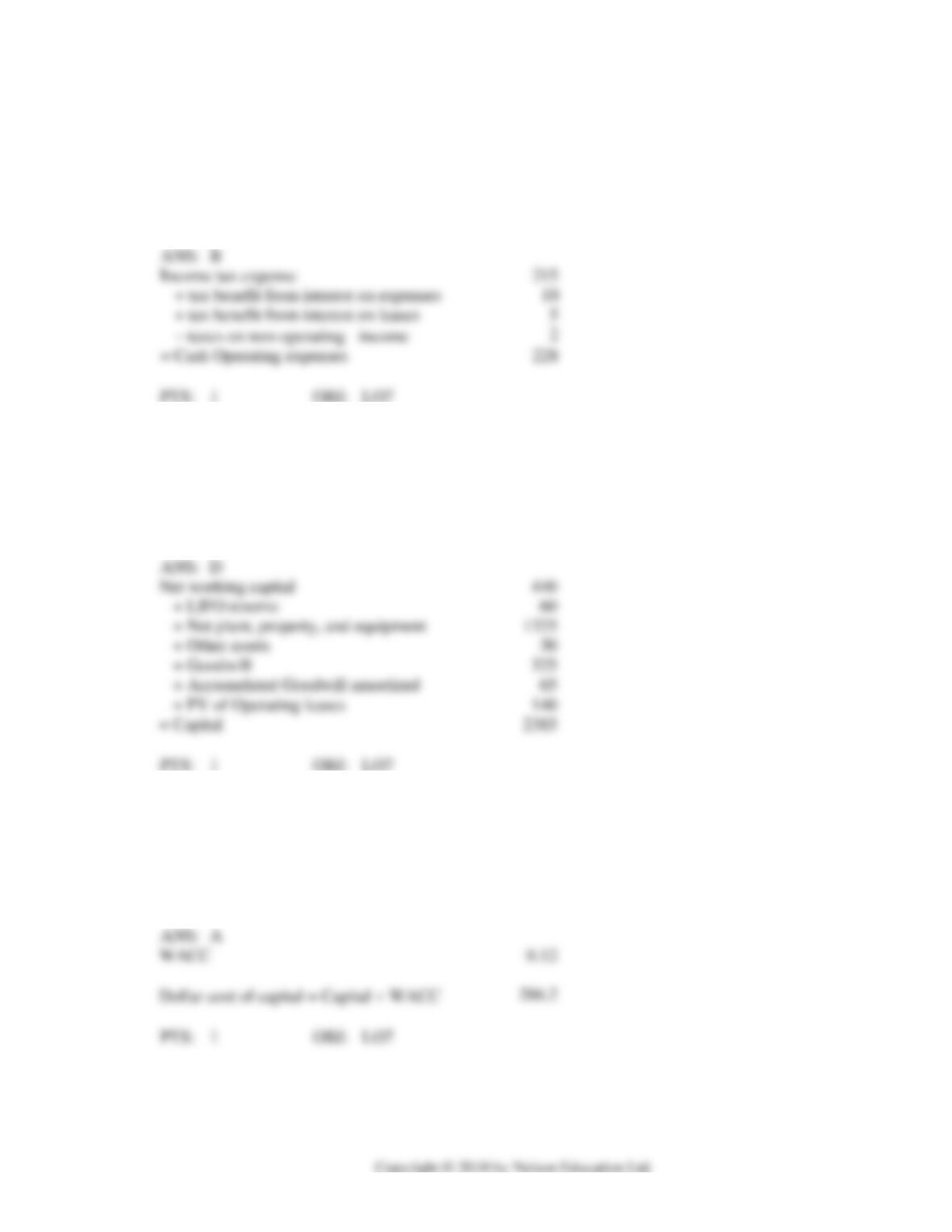
69. Refer to Exhibit 9-6. Calculate the adjusted operating profits before taxes.
a.
$586.5
b.
$225.64
c.
$825.23
d.
$831.56
e.
$692.5
Operating profit
+ implied interest on op. lease
+ an increase in LIFO reserve
+ goodwill amortization
= Adjusted Operating profits before taxes
23
70. Refer to Exhibit 9-6. Calculate the cash operating expenses for the firm.
a.
225
b.
228
c.
232
d.
242
e.
252
71. Refer to Exhibit 9-6. Calculate the capital for the firm.
a.
1725
b.
1953
c.
2524
d.
2385
e.
1987
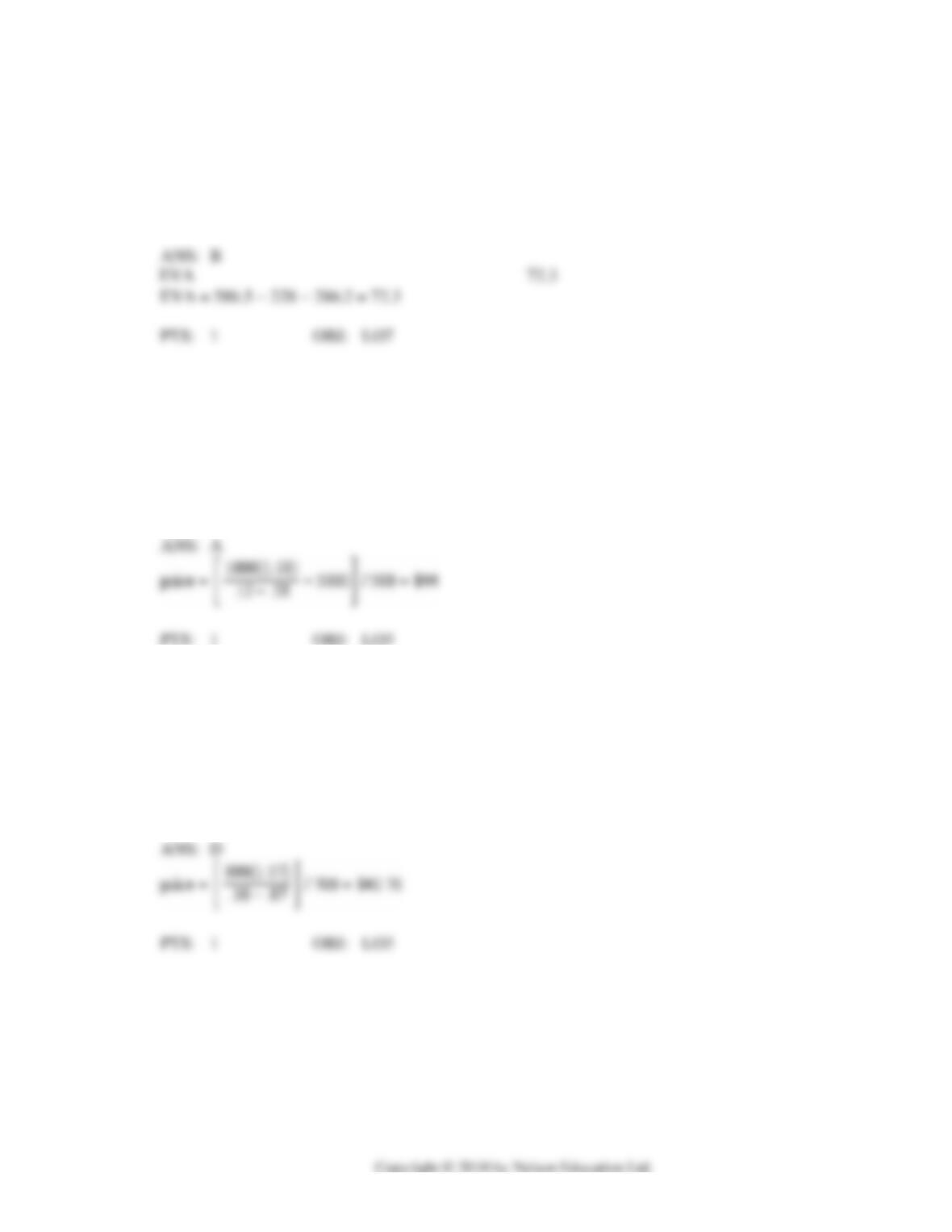
72. Refer to Exhibit 9-6. Calculate the dollar cost of capital.
a.
286.2
b.
207
c.
234.36
d.
238.44
e.
302.9
24
73. Refer to Exhibit 9-6. Calculate the firm’s EVA.
a.
85.2
b.
72.3
c.
65.8
d.
89.5
e.
78.2
74. The Peterson Company has FCFF of $1000. FCFF is expected to grow by 12% next year. The cost of
capital is 12% and the level of debt is $5000. The number of shares outstanding is 500. Calculate the
firm’s share price.
a.
$44
b.
$55
c.
$34.19
d.
$47.23
e.
$50
75. The Pekay Company has FCFE of $800. FCFE is expected to grow by 7% next year. The cost of
capital is 7% and the level of debt is $4000. The number of shares outstanding is 700. Calculate the
firm’s share price.
a.
$44.25
b.
$65.12
c.
$38.19
d.
$40.76
e.
$50.56
25
Exhibit 9-7
USE THE FOLLOWING INFORMATION IS FOR THE NEXT PROBLEM(S)
At the end of the year 2009 the BRK Corporation had free cash flow to equity (FCFE) of $250,000 and
shares outstanding of 200,000. The company projects the following annual growth rates in FCFE.
Year
Growth Rate
2010
10%
2011
15%
2012
20%
2013
25%
2014
20%
2015
15%
2016
10%
2017
7%
From year 2018 onward growth in FCFE is expected to remain constant at 5% per year. The stock has
a beta of 1.3 and the current market price is $55. Currently the yield on 10-year Treasury notes is 5%
and the equity risk premium is 4%.
76. Refer to Exhibit 9-7. Calculate the required rate of return on equity.
a.
5%
b.
9.2%
c.
10.2%
d.
10%
e.
4.3%
77. Refer to Exhibit 9-7. Calculate the present value now (Year 2009) of FCFE during the period of
increasing growth (that is for years 2010 to 2013).
a.
$1,719,119
b.
$1,715,784
c.
$1,115,195
d.
$1,434,903
e.
$1,809,171
78. Refer to Exhibit 9-7. Calculate the present value now (Year 2009) of FCFE during the period of
declining growth (that is for years 2014 to 2017).
a.
$1,719,119
b.
$1,715,784
c.
$1,115,195
d.
$1,434,903
e.
$1,809,171
79. Refer to Exhibit 9-7. Calculate the present value now (Year 2009) of FCFE during the period of
constant growth (that is for years 2018 onwards).
a.
$7,153,368
b.
$9,703,476
c.
$15,558,341
d.
$8,986,012
e.
$6,789,125
80. Refer to Exhibit 9-7. Calculate the intrinsic value of the stock now (Year 2009).
a.
$55
b.
$48.52
c.
$77.79
d.
$35.77
e.
$62.34
27
Exhibit 9-8
USE THE FOLLOWING INFORMATION IS FOR THE NEXT PROBLEM(S)
At the end of the year 2009 the CKL Corporation had operating free cash flow (OFCF) of $300,000
and shares outstanding of 100,000. Total debt is currently $10,000,000. The company projects the
following annual growth rates in OFCF
Year
Growth Rate
2010
25%
2011
20%
2012
15%
2013
10%
2014
12%
2015
14%
2016
16%
2017
18%
From year 2018 onward growth in OFCF is expected to remain constant at 5% per year. The stock has
a beta of 1.1 and the current market price is $80. Currently the yield on 10-year Treasury notes is 5%
and the equity risk premium is 4%. The firm can raise debt at a pre-tax cost of 9%. The tax rate is
25%. The proportion of equity is 55% and the proportion of debt is 45%.
81. Refer to Exhibit 9-8. Calculate the required rate of return on equity.
a.
8.2%
b.
9.4%
c.
9.0%
d.
10.3%
e.
7.3%
82. Refer to Exhibit 9-8. Calculate the weighted average cost of capital (WACC).
a.
8.2%
b.
9.4%
c.
9.0%
d.
10.3%
e.
7.3%
28
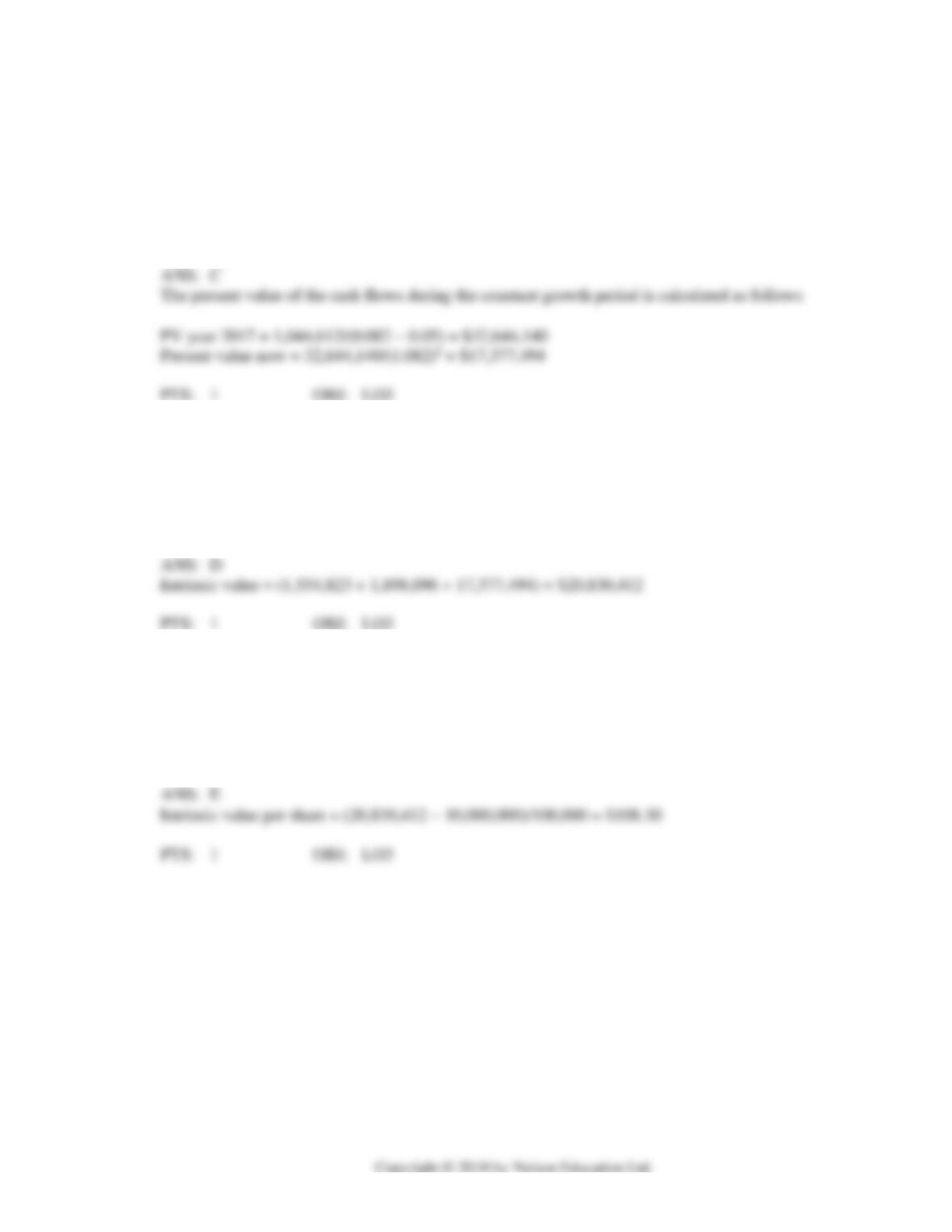
83. Refer to Exhibit 9-8. Calculate the present value now (Year 2009) of OFCF during the period of
declining growth (that is for years 2010 to 2013).
a.
$1,044,612
b.
$1,554,823
c.
$1,898,096
d.
$1,327,547
e.
$1,579,326
84. Refer to Exhibit 9-8. Calculate the present value now (Year 2009) of OFCF during the period of
declining growth (that is for years 2014 to 2017).
a.
$1,044,612
b.
$1,554,823
c.
$1,898,096
d.
$1,327,547
e.
$1,579,326
29
85. Refer to Exhibit 9-8. Calculate the present value now (Year 2009) of OFCF during the period of
constant growth (that is for years 2018 onwards).
a.
$19,644,612
b.
$15,558,546
c.
$17,377,494
d.
$20,779,025
e.
$10,779,025
86. Refer to Exhibit 9-8. Calculate the total intrinsic value of the firm.
a.
$19,644,612
b.
$15,558,546
c.
$17,327,250
d.
$20,830,412
e.
$10,779,025
87. Refer to Exhibit 9-8. Calculate the intrinsic value of the stock now (Year 2009).
a.
$155.55
b.
$173.27
c.
$196.44
d.
$207.79
e.
$108.30
30
Exhibit 9-9
USE THE FOLLOWING INFORMATION FOR THE NEXT PROBLEM(S)
The Rollerball Corporation’s industry averages are as follows:
Net Profit Margin = 7.5%; Total Asset Turnover = 2.2; Total Assets/ Equity = 2.0
Rollerball Corporation has the following financial statements for year ending 12/31/2009.
(000s omitted)
Sales
5,450
Cost of Goods Sold
3,250
Gross Profit
2,200
Depreciation
820
Operating Expenses
470
Administration Exp.
115
Operating Profit
795
Interest Expense
88
Profit Before Taxes
707
Taxes
247
Net Income
460
Dividends
250
Assets
Liabilities
Cash
100
Notes Payable
850
Accounts Receivable
1,250
Accounts Payable
1,550
Inventory
1,125
Total Current Liab.
2,400
Total Current Assets
2,475
Long Term Debt
425
Net Fixed Assets
1,450
Common Stock
400
Total Assets
3,925
Retained Earnings
700
Total Liab. & Earnings
3,925
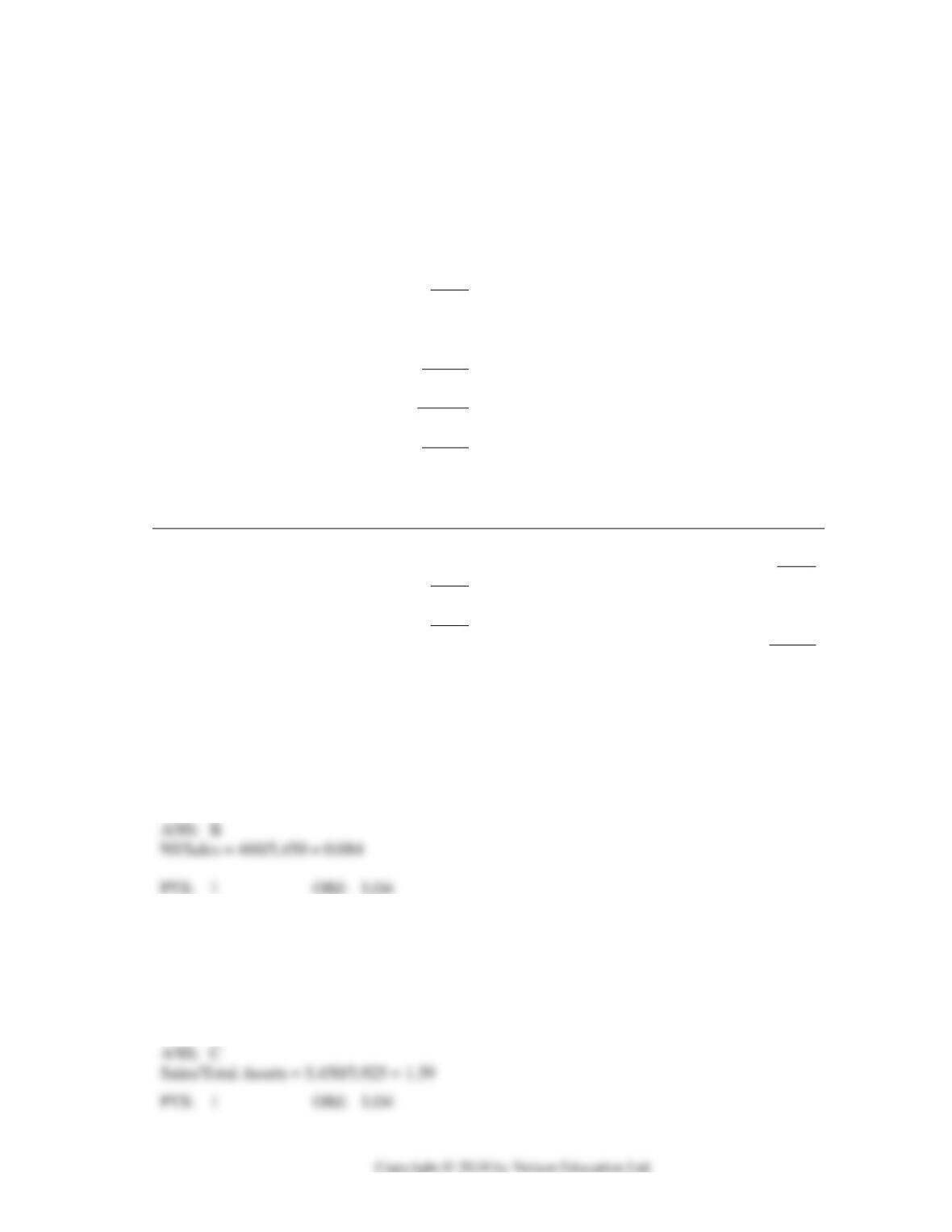
88. Refer to Exhibit 9-9. Calculate Rollerball Corporation’s Net Profit Margin.
a.
3.9%
b.
8.4%
c.
14.6%
d.
40.4%
e.
41.8%
89. Refer to Exhibit 9-9. Calculate Rollerball Corporation’s Total Asset Turnover.
a.
0.72
b.
0.85
c.
1.39
d.
1.65
e.
2.31
31
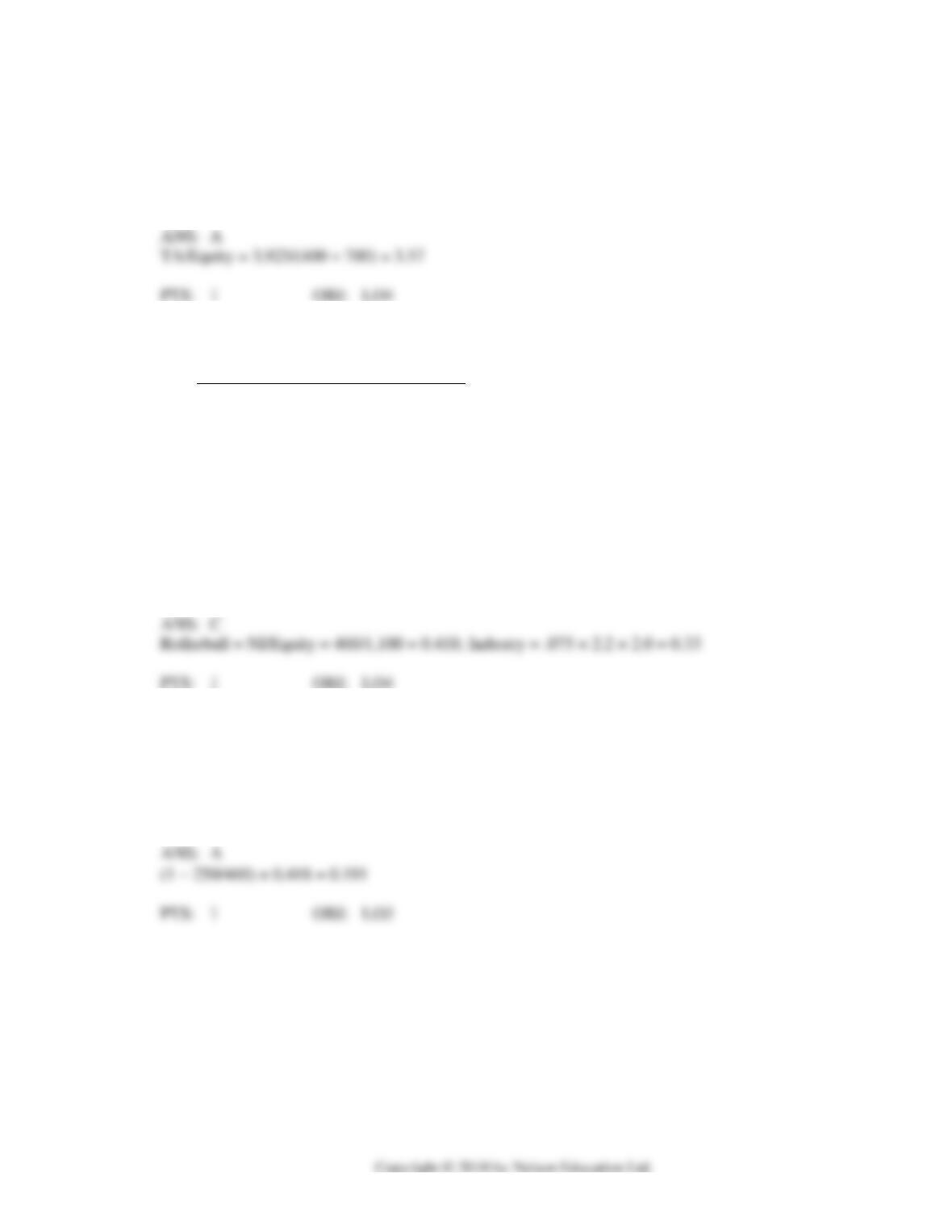
90. Refer to Exhibit 9-9. Calculate Rollerball Corporation’s Total Assets/Equity ratio.
a.
3.57
b.
4.28
c.
5.61
d.
7.35
e.
9.81
91. Refer to Exhibit 9-9. Calculate the return on equity (ROE) for Rollerball Corporation and the Industry.
Rollerball
Industry Average
I.
115.0%
67.5%
II.
65.7%
33.0%
III.
41.8%
33.0%
IV.
19.1%
15.7%
V.
8.7%
15.7%
a.
I
b.
II
c.
III
d.
IV
e.
V
92. Refer to Exhibit 9-9. Calculate the sustainable growth rate for Rollerball Corporation.
a.
19.1%
b.
22.7%
c.
27.5%
d.
52.5%
e.
62.5%
32
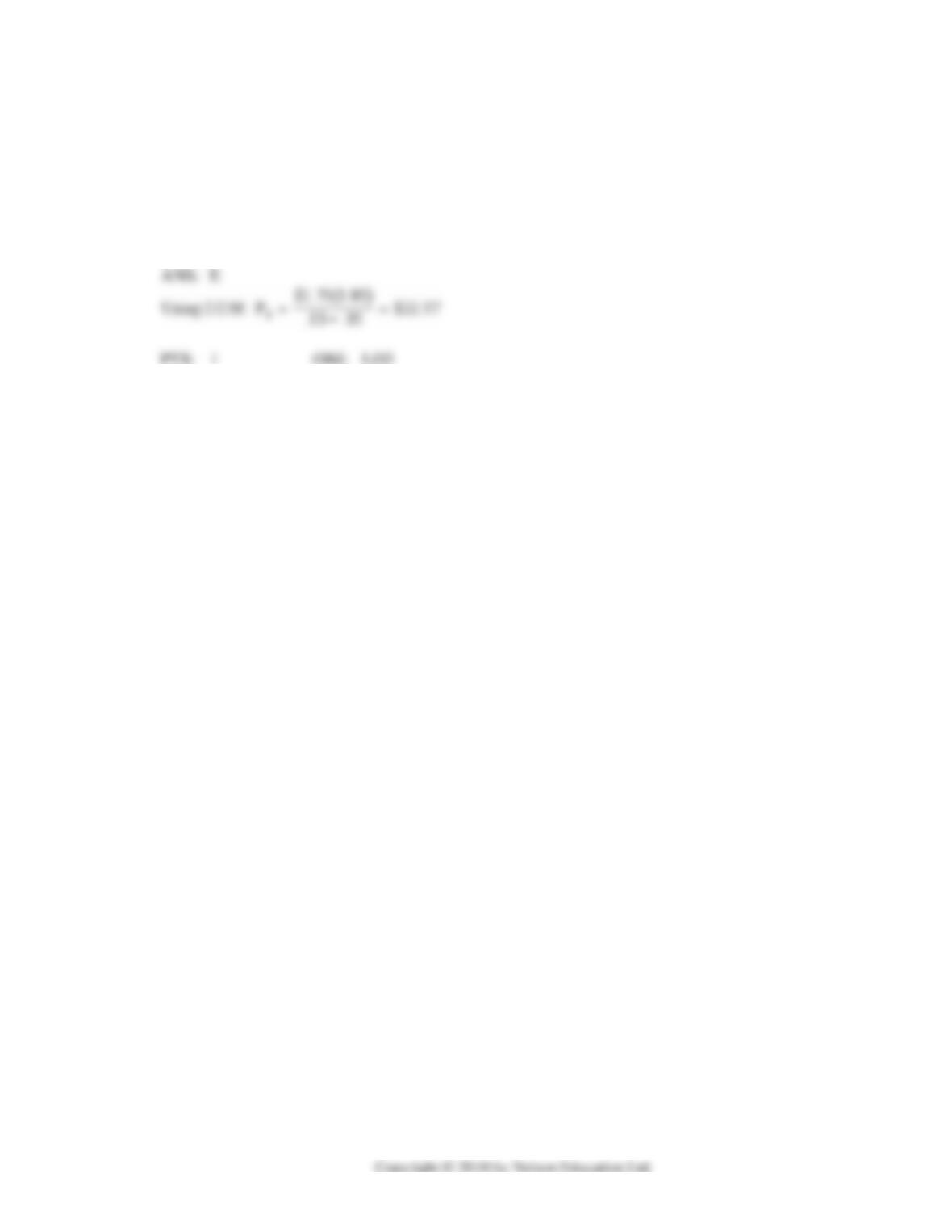
93. Johnson Company just paid an annual dividend of $1.75. The next dividend will be paid one year from
today. Johnson Company expects a constant growth of 5% in dividends forever. The required rate of
return for this company’s common stock is 13%. What is the value of one share of common stock?
a.
$1.55
b.
$13.46
c.
$14.13
d.
$21.88
e.
$22.97