33
MATERIAL REQUIREMENTS PLANNING
CHAPTER 4
ANSWERS TO PROBLEMS
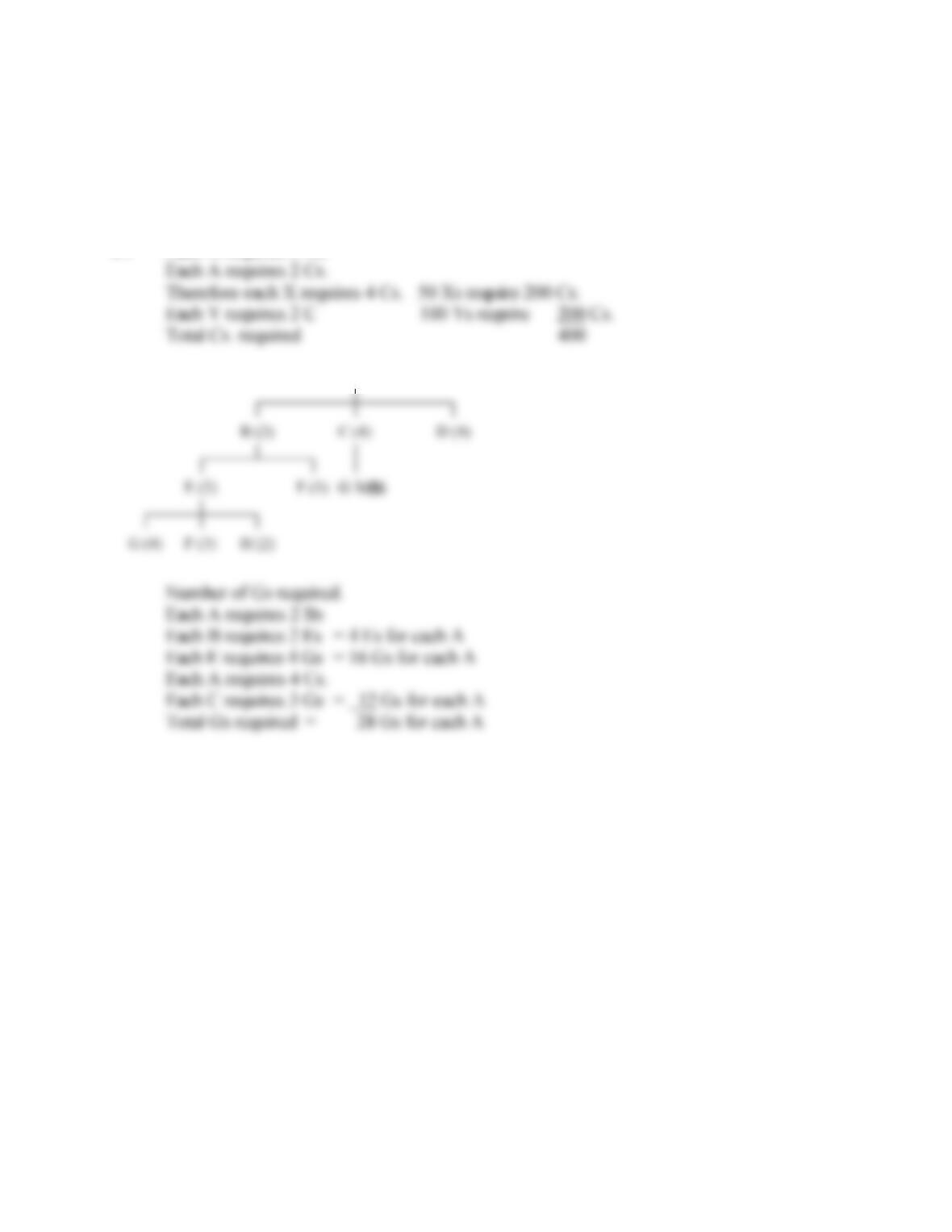
4.1 Each X requires 2 As.
4.2
C (4)
D (4)
B (2)
E (2)
F (1)
G 3(3)
F (3)
H (2)
G (4)
A
34
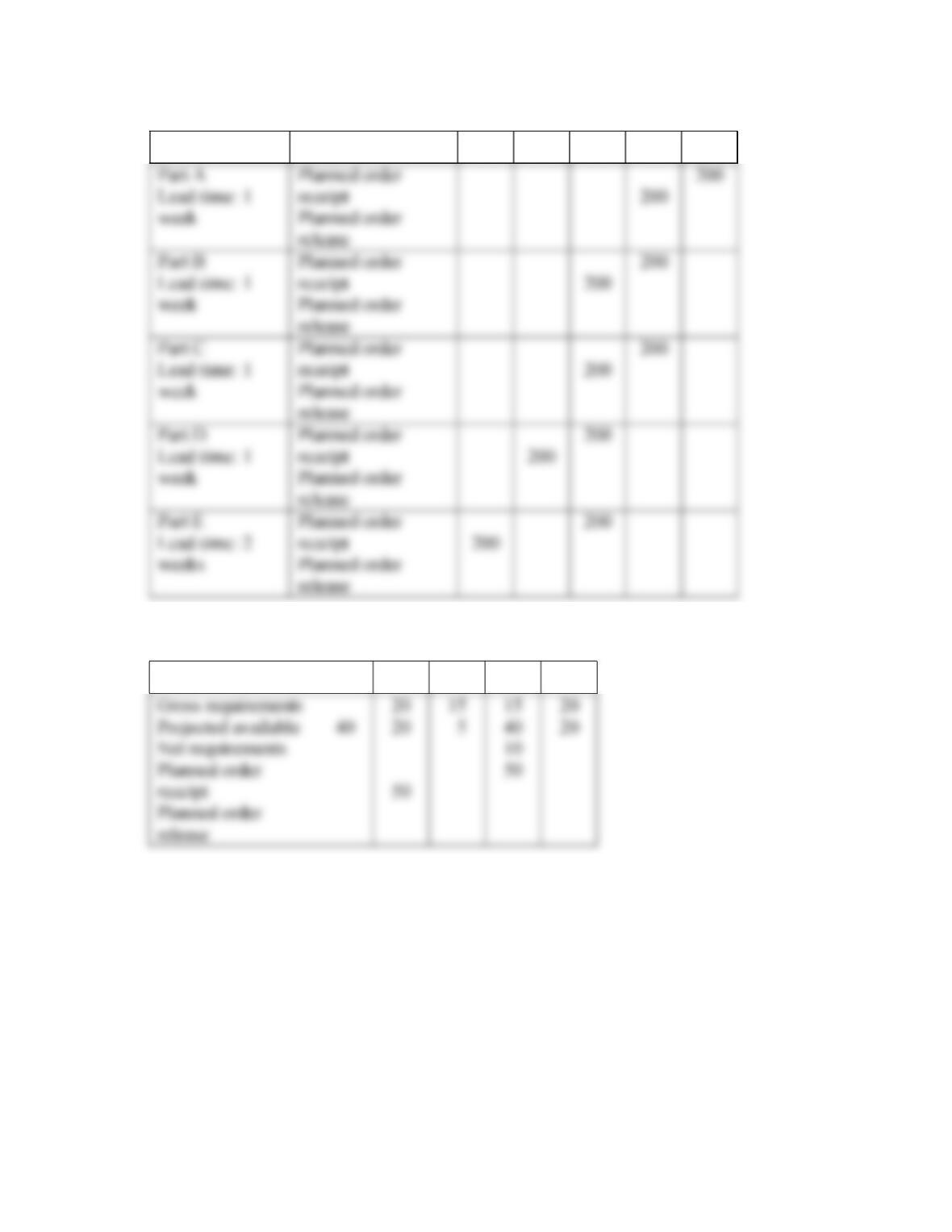
4.3
Week 1 2 3 4 5
4.4
Week 1 2 3 4
35
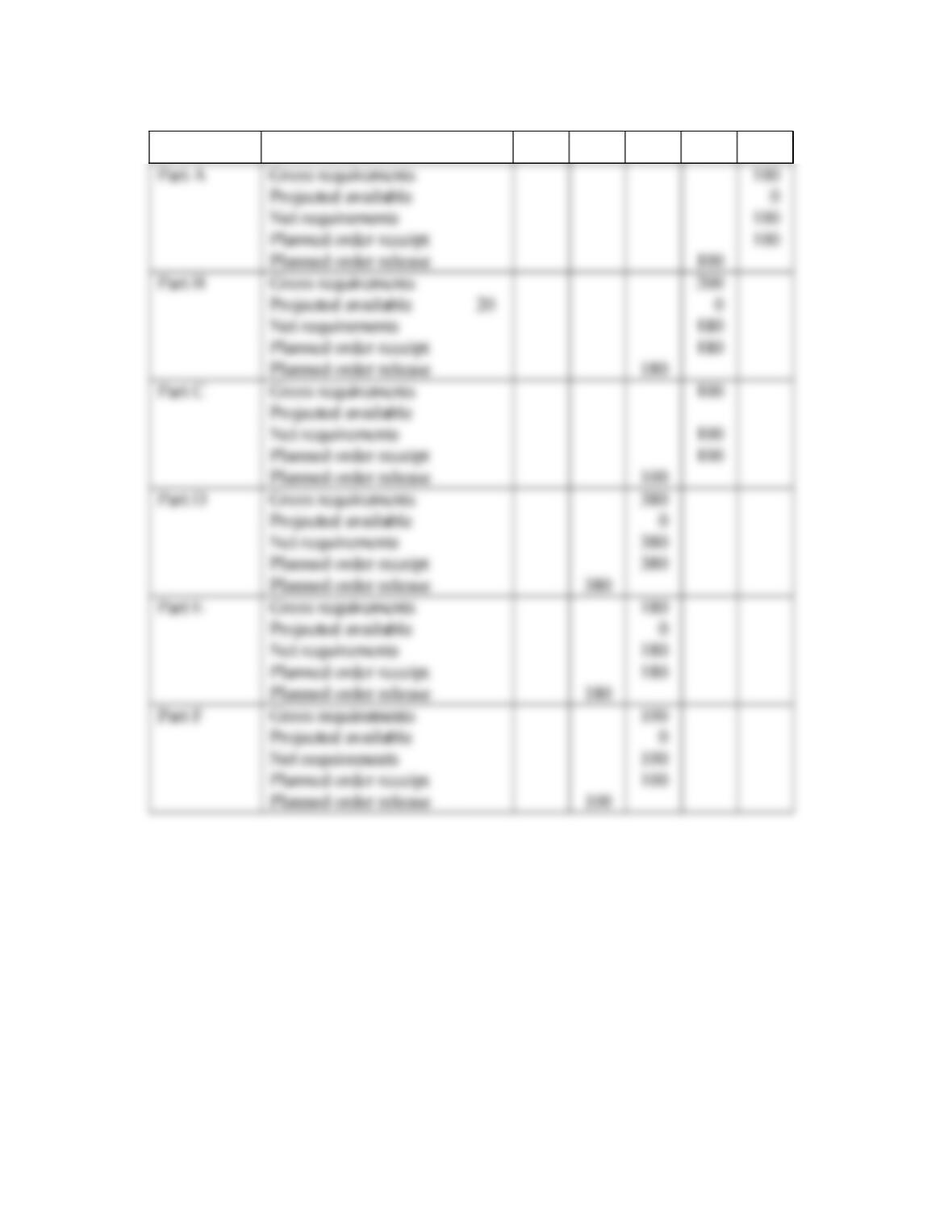
4.5
Week 1 2 3 4 5
36
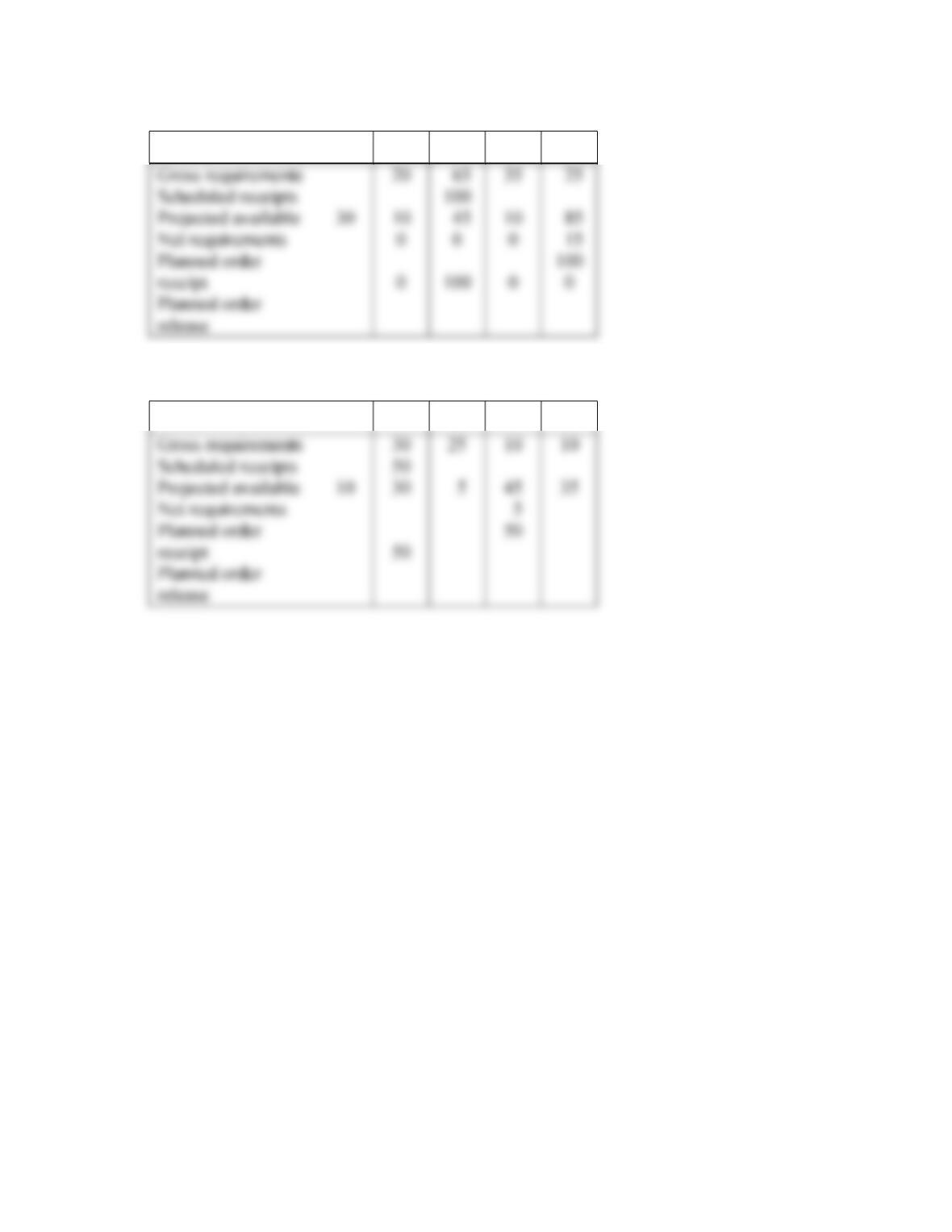
4.6
Week 1 2 3 4
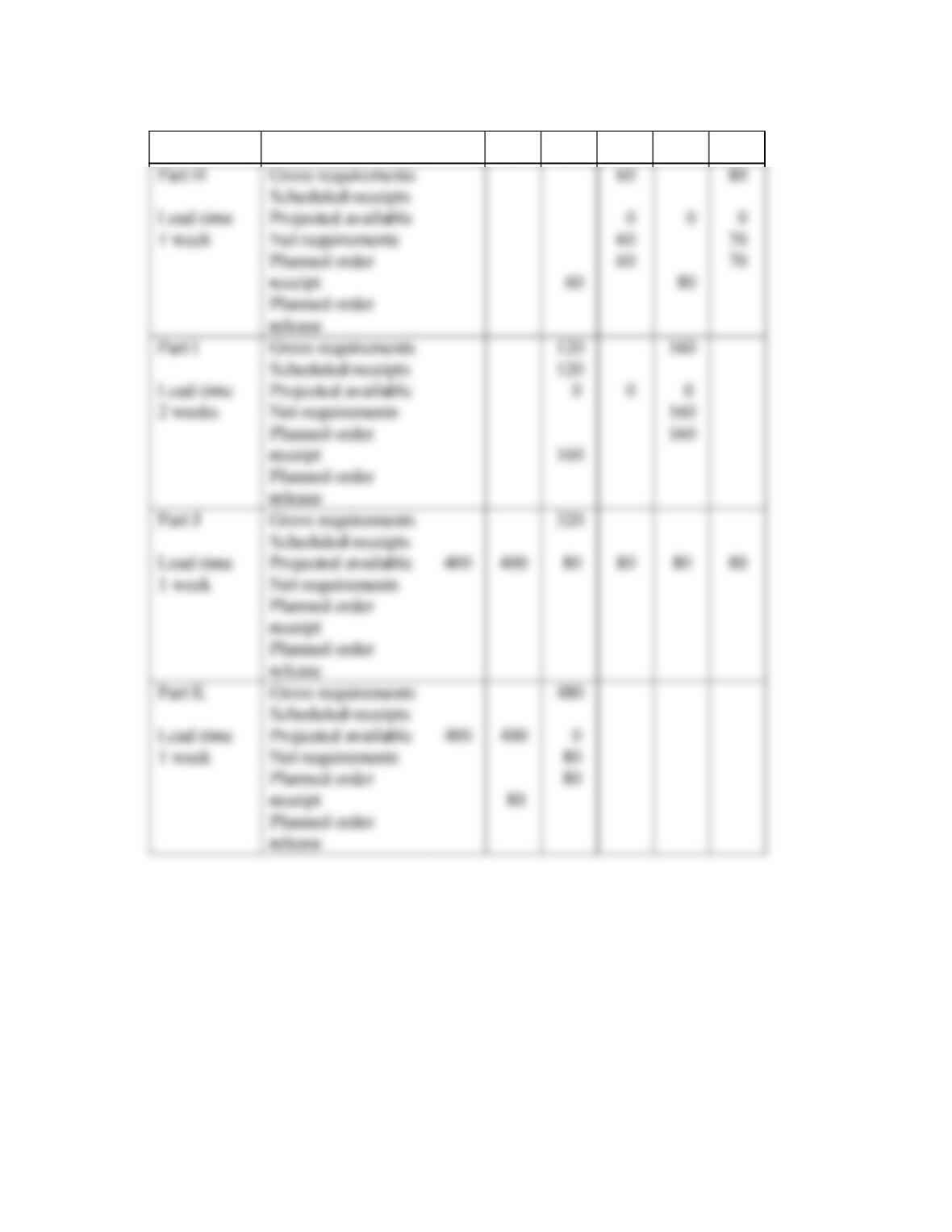
4.7
Week 1 2 3 4
37
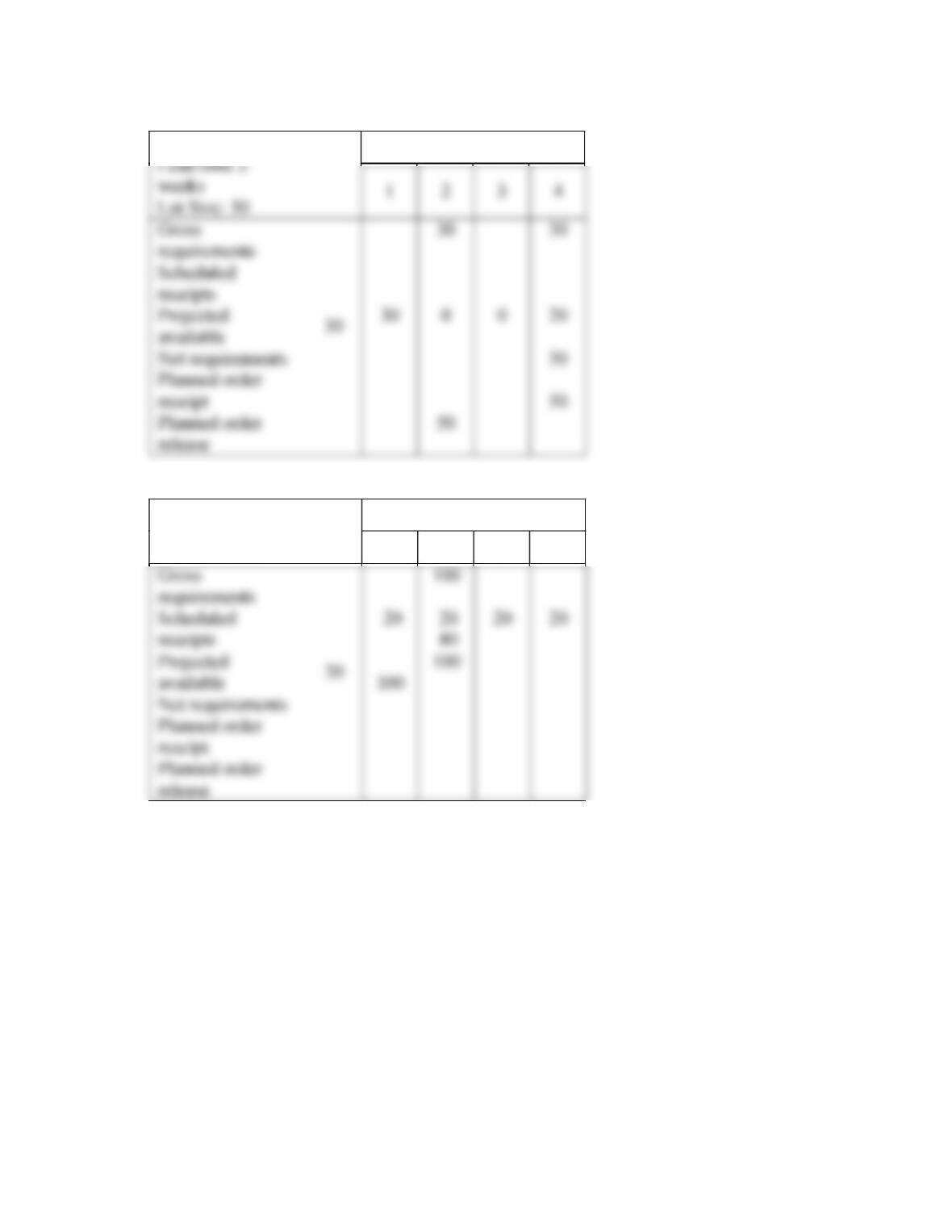
4.8
Week 1 2 3 4 5
38
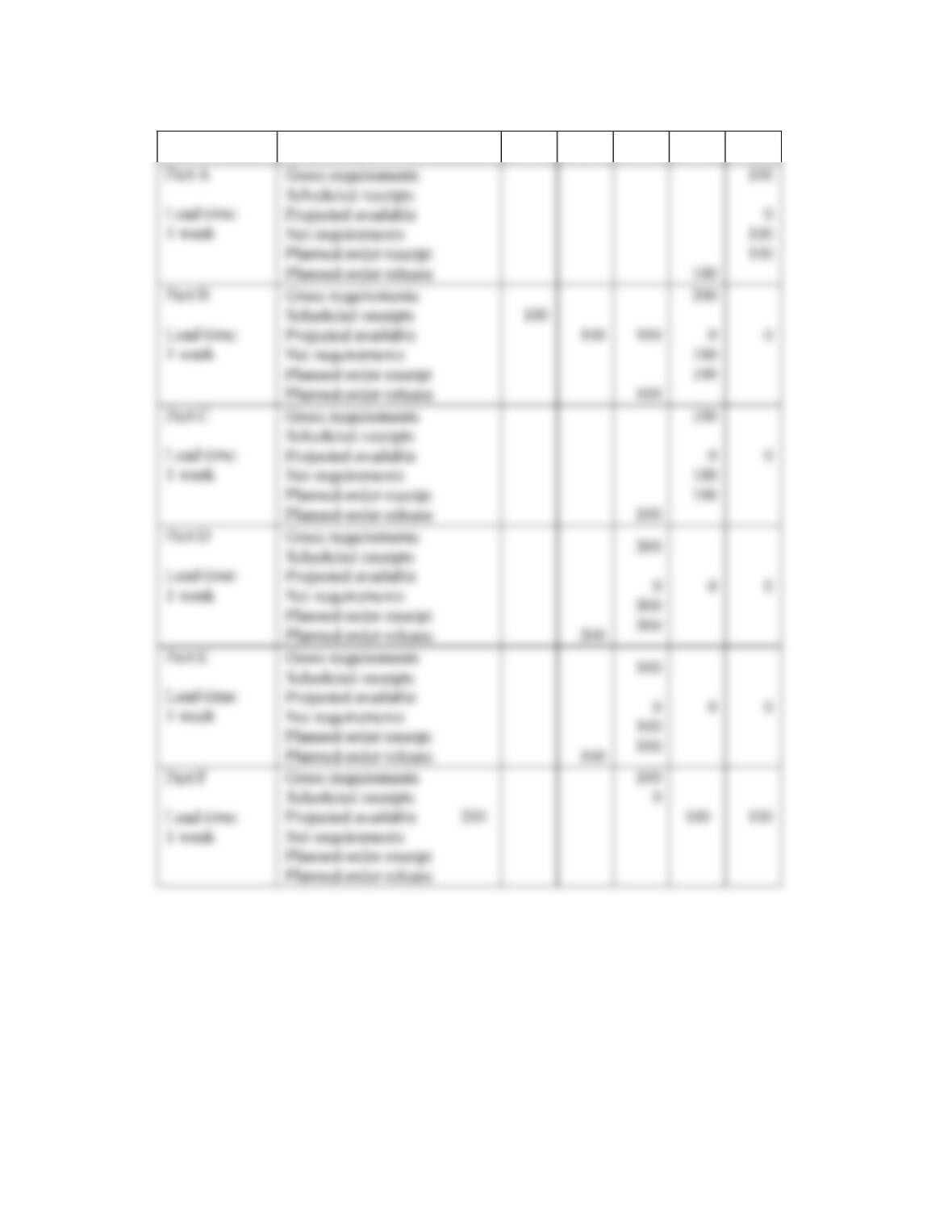
4.9
Part Y
Week
Part Z
Lead time 1 week
Lot Size: 100
Week
1 2 3 4
39
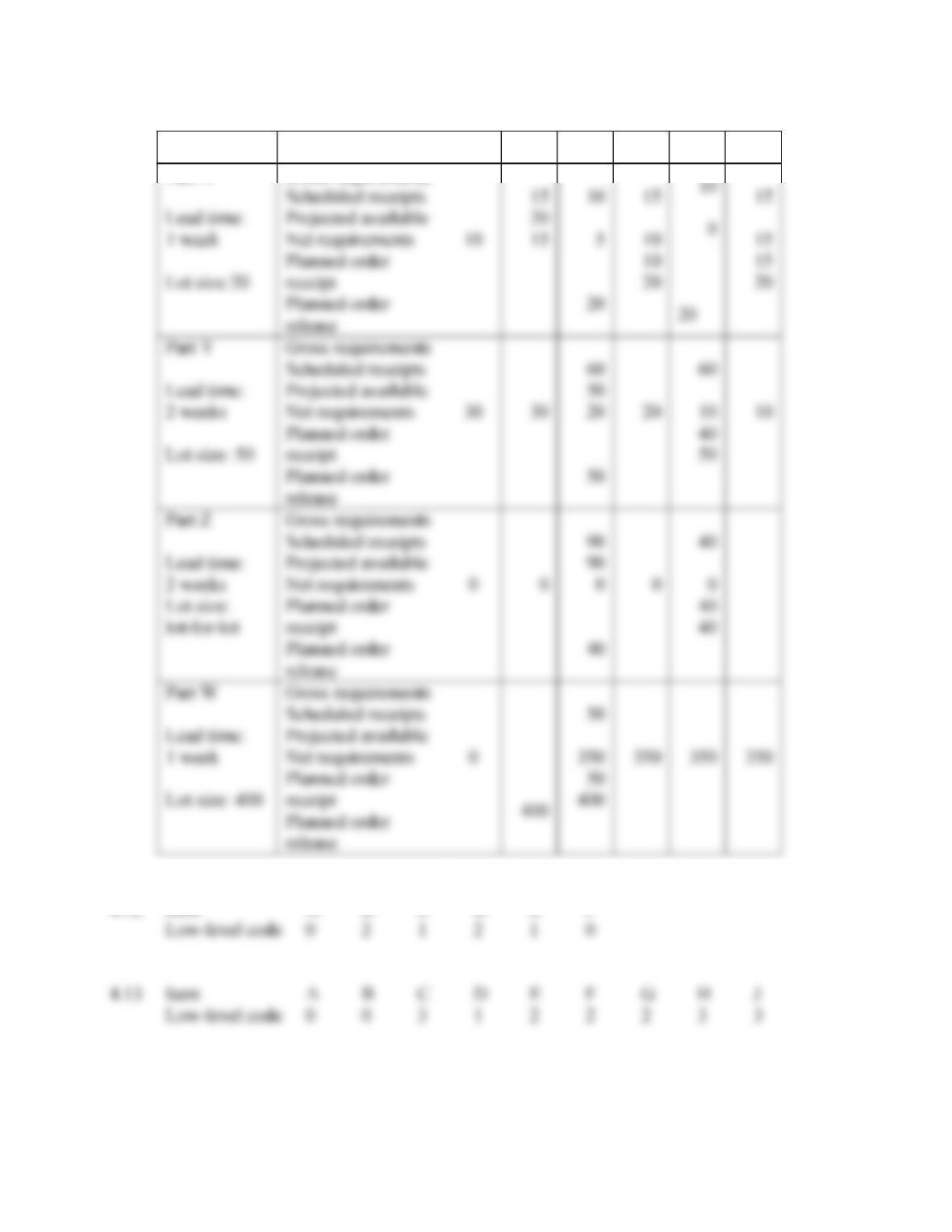
4.10
Week 1 2 3 4 5
40
4.11
Week 1 2 3 4 5
Part X
Gross requirements
4.12 Item A B C D E F
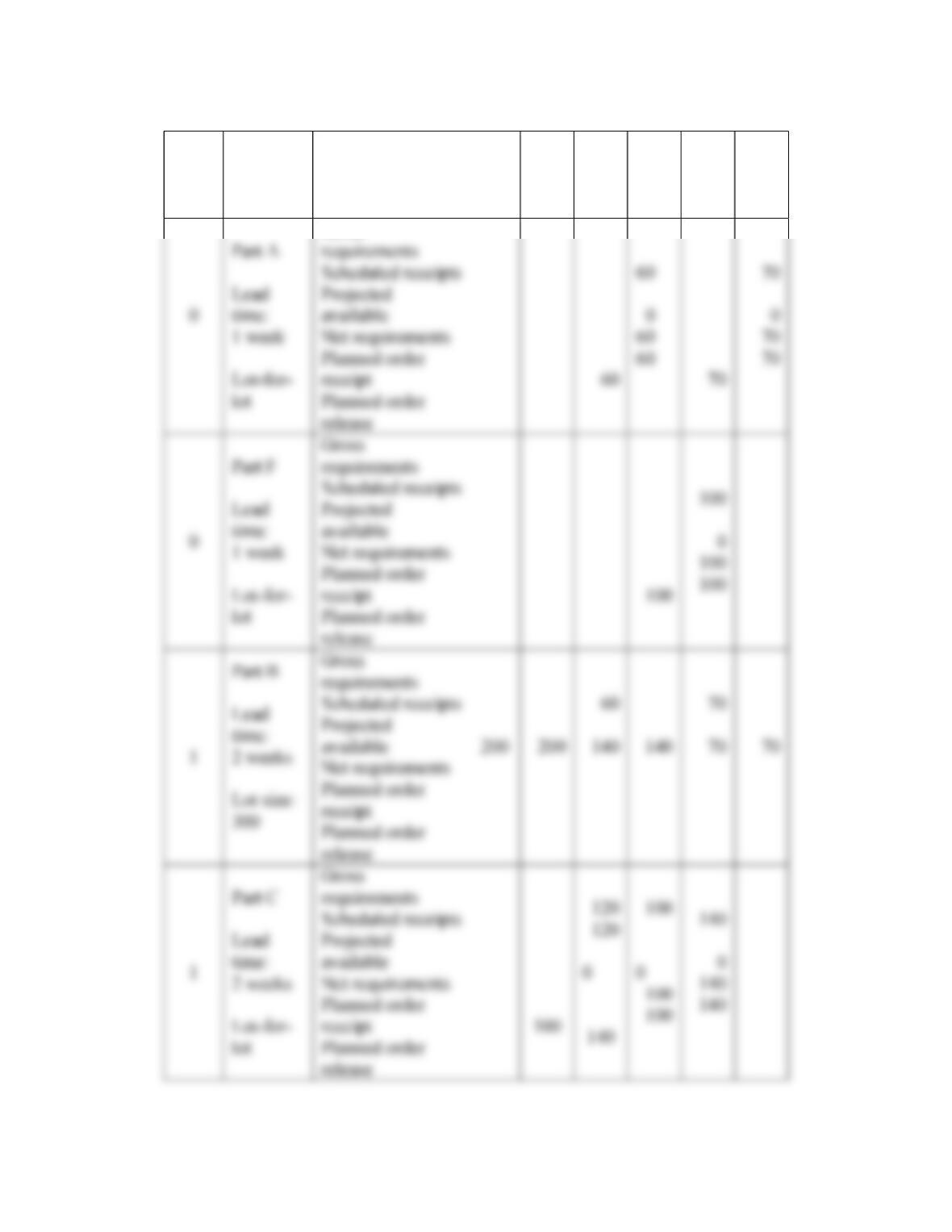
41
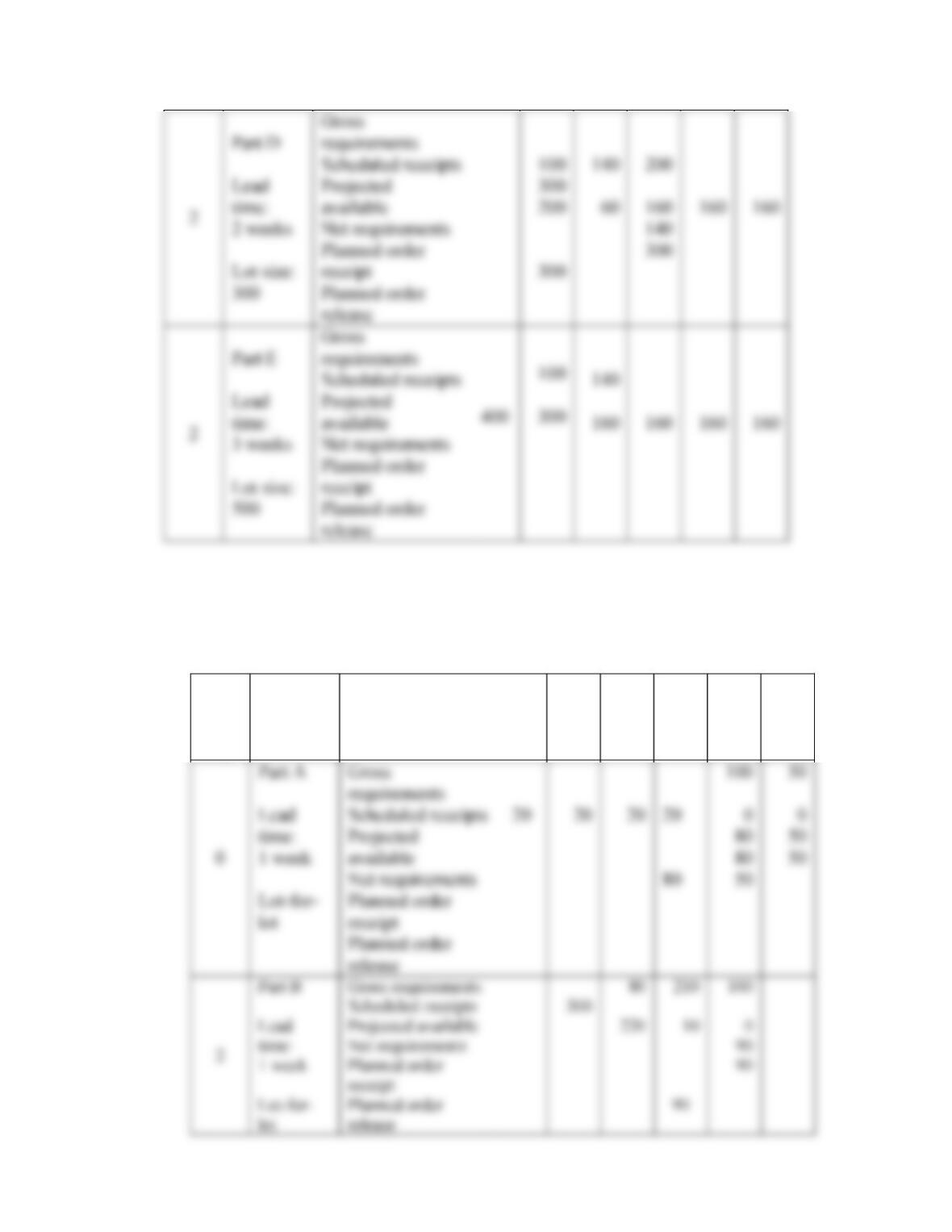
4.14
Low-
Level
code
Week 1 2 3 4 5
Gross
Scheduled receipts
42
The low-level code for part D is 2. There is a planned order release of 300 for part D in week 1. There
are no planned order releases for part E. There is a planned order release of 100 for Part C in week 1 and
140 in week 2.
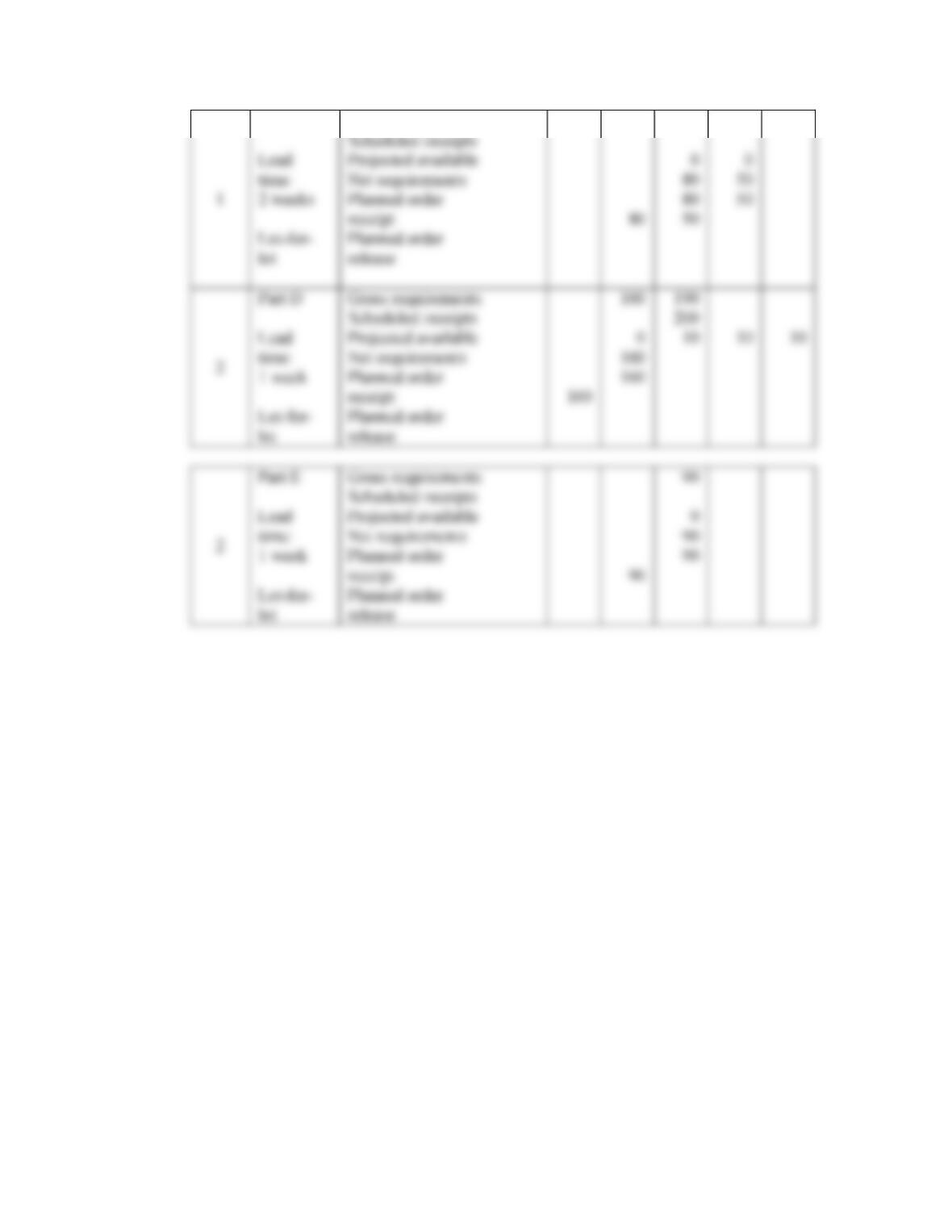
Low-
Level
code
Week 1 2 3 4 5
43
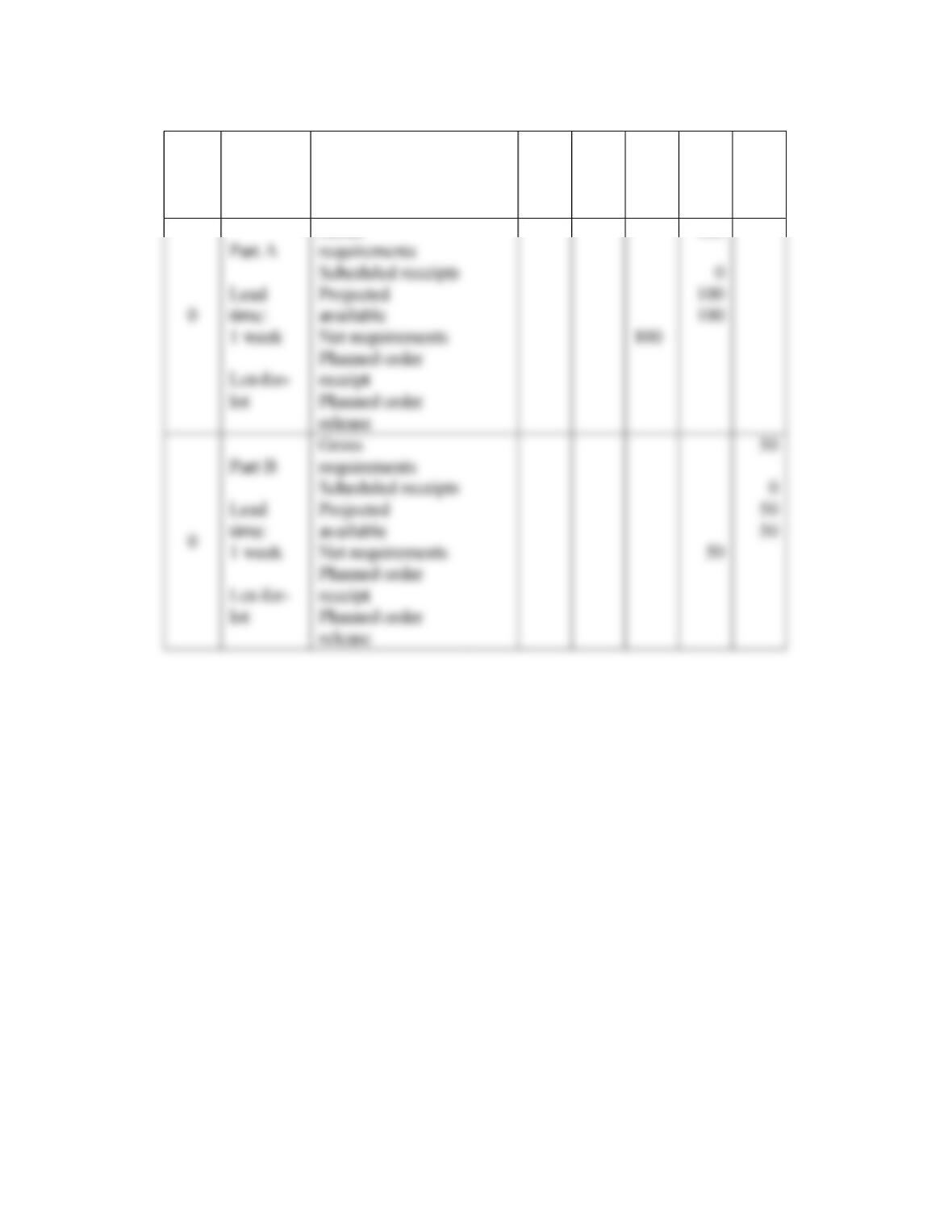
4.15
Part C
Gross requirements
80
50
44
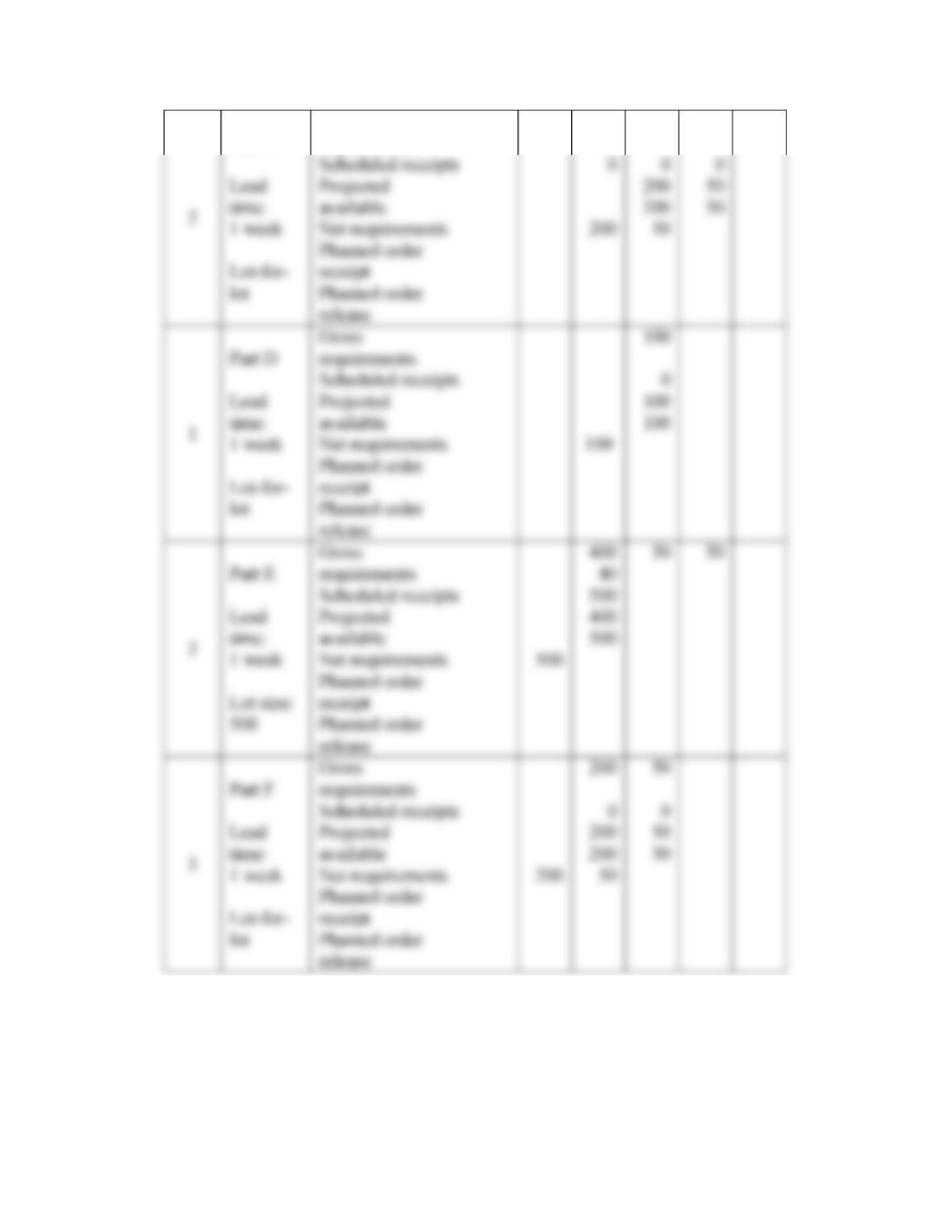
4.16
Low-
level
code
Week 1 2 3 4 5
Gross
100
45
Part C
Gross
requirements
100
100
200
50
Scheduled receipts
46
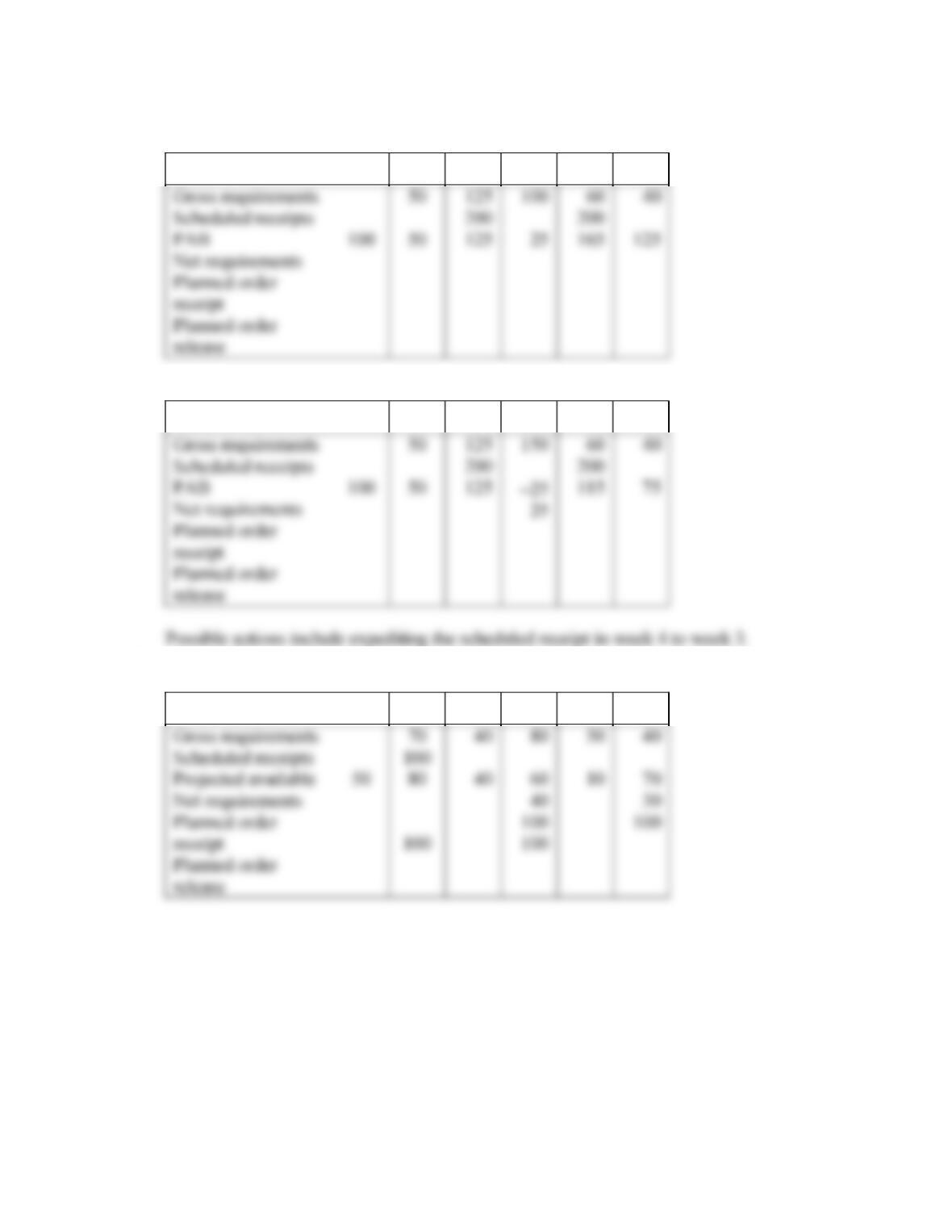
4.17
Initial MRP
Week 1 2 3 4 5
Revised MRP
Week 1 2 3 4 5
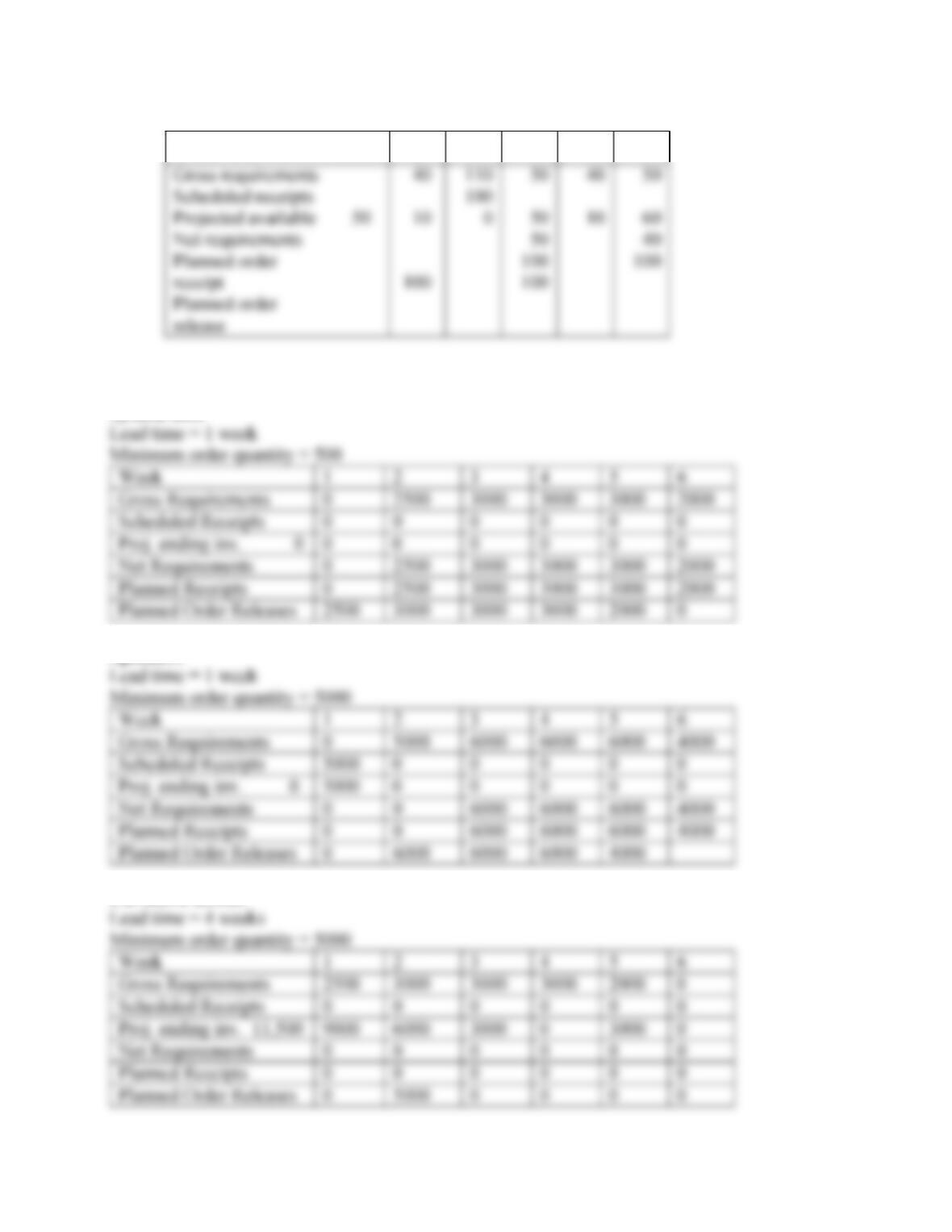
4.18
Initial MRP
Week 1 2 3 4 5
47
MRP record at the end of week one
Week 2 3 4 5 6
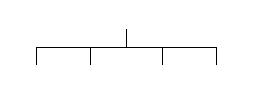
4.19
System unit
Speakers
CD-ROM Drives
48
MULTIPLE CHOICE QUESTIONS
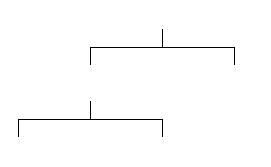
1. In the diagram below the independent demand item is:
a. X
b. 1
c. 2
d. 3
e. 4
2. _______ is a set of priority planning techniques for planning component items below the
_________:
a. Material requirements planning; end item level
b. Master production scheduling; the market plan
c. Production planning; end item level
d. all of the above
e. none of the above
3. The objectives of material requirements planning are to:
a. issue orders to purchasing and manufacturing
b. keep priorities current
c. determine requirements
d. all of the above
e. b and c above
4. Which of the following is (are) elements in an MRP system?
a. the computer
b. bills of material
c. inventory records
d. all of the above
e. none of the above
5. A set of priority planning techniques for planning component items below the end item level is
called:
a. master scheduling
b. material requirements planning
c. capacity planning
d. production control
e. none of the above
X
3
4
2
1
49
6. A major input to an MRP system is:
a. the production plan
b. the capacity plan
c. shop-floor activity planning and control
d. the master schedule
e. none of the above
7. The document that shows the component parts and the number of parts needed to make one of an
assembly or subassembly is called:
a. a route sheet
b. a material requirements plan
c. a bill of material
d. a material requisition
e. none of the above
8. A product tree shows:
a. the parts that go into making a product
b. the subassemblies used in making the product
c. the sequence in which parts go together
d. all of the above
e. none of the above
9. Which of the following statements is best?
a. a part number identifies one part only
b. a part has one and only one part number
c. the same part on different bills of material will have the same part number
d. all of the above are true
e. none of the above is true
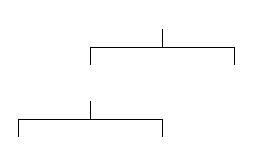
10. Which of the following statements is best?
a. item A is the parent of item B
b. item D is on level 3
c. item A is a parent of item D
d. all of the above are true
e. none of the above is true
A
B
C
E
D
50
11. A multi-level bill of material:
I. Reflects the way the product will be manufactured.
II. Is produced by the purchasing department.
III. Is a parts list only and does not contain subassemblies.
a. only I is true
b. only II is true
c. only III is true
d. I and II are true
e. I, II and III are true
12. A bill of material whose purpose is to simplify forecasting, master production scheduling and
material requirements planning is called:
a. a summarized parts list
b. where-used bill
c. planning bill
d. structured bill
e. multi-purpose bill
13. Which of the following statements is best?
a. a where-used report is the same as a pegging report
b. a where-used report shows all the components that go into assembly
c. a pegging report shows all the parents for a component
d. a where-used report shows only those parents for which there is an existing requirement
e. pegging reports show only the parents for which there are requirements
14. The ability to relate the demand for an item shown on an MRP record back to the particular parent
causing the demand is called:
a. where-used
b. relating
c. pegging
d. any one of the above
e. none of the above
15. The lead time for each item is 1 week. If an order for 50 of A is to be delivered in week 5, in what
week will there be a planned order RELEASE for item B?
a. 5
b. 4
c. 3
d. 2
e. 1
A
B
C
E
D

51
16. Which statement is correct?
a. planned order releases show when the order is needed
b. when an order is released, it becomes a planned order
c. scheduled receipts show when goods were put into inventory
d. all of the above are correct
e. none of the above is correct
17. Which statement is correct?
a. a product tree shows the parts that go into making a product
b. a part has one and only one part number
c. net requirements = gross requirements on-hand inventory scheduled receipts
d. all of the above are correct
e. none of the above is correct
18. In material requirements planning the process of placing the exploded requirements in the proper
time periods, based on the assembly lead times involved, is known as:
a. exploding
b. offsetting
c. netting
d. all of the above
e. none of the above
19. Which statement is best?
a. the planned order release of the parent generates the gross requirement of the
component
b. the planned order release of the parent becomes the net requirement of the component
c. the planned order release of the component becomes the order receipt of the parent
d. all of the above are true
e. none of the above is true
20. Which of the following statements is best about released orders?
a. a scheduled receipt is a released order
b. an open order is a released order
c. a planned order release is a not a released order
d. all of the above are true
e. none of the above are true
21. Which of the following is NOT true of an MRP record?
a. the current time is the beginning of the first period
b. the number of periods in the record is called the planning horizon
c. an item is considered to be available at the end of the time bucket in which it is required
d. the projected on-hand balance is for the end of the period
e. the immediate or most current period is called the action bucket
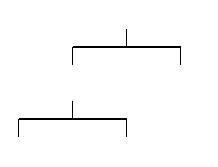
22. In the following product trees the low level code of item D is:
A
B
C
E
D
F
D
G
52
a. 0 d. 3
b. 1 e. 4
c. 2
23. Which of the following statements is best?
a. every item has more than one low-level code
b. net requirements = gross requirements + on-hand + scheduled receipts
c. each part has at least one part number, depending on where it is used
d. all of the above are true
e. none of the above is true
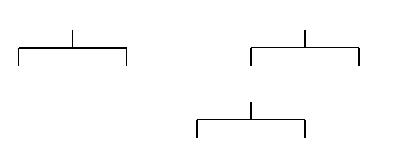
24. Given the following product tree, the parent of B is:
a. A
b. B
c. C
d. D
e. E
25. Given the following parents and components, how many Bs are required to make an X? Quantities
are shown in brackets.
Parent X A
Component A(2) B(2)
B(1) D(1)
a. 1
b. 2
c. 3
d. 4
e. 5
26. Which of the following are controlled by the materials planner?
a. firm planned orders
b. planned orders
c. released orders
d. exception messages
e. all of the above
A
B
C
E
D
53
27.
The lead time for each item is 2 weeks. If an order for 100 of A is to be delivered in week 20, in
what week will there be a planned order RELEASE for item C?
a. 12
b. 14
c. 16
d. 18
e. cannot be determined from data given
Use the following MRP record and your calculations to answer the following two questions. The
component has an order quantity of 100, a safety stock of ten, and a lead time of one period.
Complete the following MRP record.
Week 1 2 3 4
Gross requirements 25 80 20 80
Scheduled receipts 100
Projected available 30
Net requirements
Planned order receipt
Planned order release
28. Complete the above MRP record. Which of the following statements is correct?
a. a planned order for 50 should be released in period two
b. the projected available in period three is 105
c. the projected available in period three is five
d. the planned order release of 100 is in period 3
e. the planned order release of 100 is in period 5
29. The projected available in period four is:
a. 0
b. 5
c. 15
d. 25
B
E
F
G
C
A
C
B
54
30. Which of the following statements is best regarding part numbering systems?
a. significant part numbering systems are difficult to maintain
b. it is easier to remember numbers than letters
c. a random number is an identifier not a descriptor
d. all of the above are true
31. Which of the following is elapsed time from recognition of a need until the time that need is
satisfied?
a. Production time
b. Lead time
c. Cycle time
d. Schedule
32. Which of the following comes directly from external customers?
a. Dependent demand
b. Independent demand
c. Bill of materials
d. Order quantity
33. Service parts experience which of the following types of demand?
a. Independent
b. Dependent
c. Independent and Dependent
d. None of the above
34. In material requirements planning, the process of placing the exploded requirements in the proper
time periods, based on the assembly lead times involved, is known as:
a. scheduling
b. offsetting
c. netting
d. all of the above
e. none of the above
35. A bill of material for an item must change:
a. when a component changes
b. when there is a change in the use of the item
c. when the item is used in another parent
d. never
e. if the item is fully interchangeable
55
36. Three inputs to the MRP process are:
a. production activity control, purchasing, and the production plan
b. inventory status, the master production schedule, and the product structure
c. the master production schedule, inventory status, and the capacity requirements plan
d. the product structure, production activity control, and inventory status
e. the product structure, production activity control, and the master production schedule
37. Which of the following statements is true?
I. Firm planned orders are planned orders frozen by the planner.
II. Released orders are planned orders that have been released by the computer.
III. The planner should not release an order unless satisfied the order can be carried out.
a. I and II only
b. I and III only
c. II and III only
d. I, II, and III
e. none of the statements is true
38. The document that shows the component parts and the number of parts needed to make one of an
assembly or subassembly is called:
a. a route sheet
b. a material requirements plan
c. a bill of material
d. a material requisition
e. none of the above
39. In the product structure diagram below item A has _______________ demand and item D has
_______________ demand.
a. dependent, dependent
b. dependent, independent
c. independent, independent
d. independent, dependent
e. none of the above answers are correct
A
B
C
D
E
D (2)
56
The following two questions use the information in this MRP record. The lead time is 3 weeks.
Week 1 2 3 4 5
Gross requirements 60 50 60 70 20
Scheduled receipts 100
Projected available 40 90 30 40
Net requirements
Planned order receipt
Planned order release 100
40. The projected available to be shown in week four is:
a. 0
b. 60
c. 70
d. 80
e. none of the above
41. The net requirement for week four is:
a. 25
b. 30
c. 40
d. 100
e. none of the above
42. Which of the following statements is best?
a. the same part on different bills of material has different part numbers
b. a part number identifies one part only
c. a significant part numbering system should always be used
d. all of the above are true
e. none of the above are true
43. Which of the following represents a major difference between a scheduled receipt and a firm
planned order?
a. The computer can move the scheduled receipt, not the firm planned order
b. Only the scheduled receipt can occur within the planning horizon
c. Only the scheduled receipt represents a financial commitment
d. The scheduled receipt is generated from the master schedule, the firm planned order
generated from MRP

57
Answers.