Chapter 16 – Scheduling
83. After the row and column reductions, what is the minimum number of lines needed to
cover all of the zeroes?
84. What is the optimal assignment of resources to jobs?
Chapter 16 – Scheduling
16–42
85. For the optimal schedule, what is the total number of hours required to complete these
jobs?
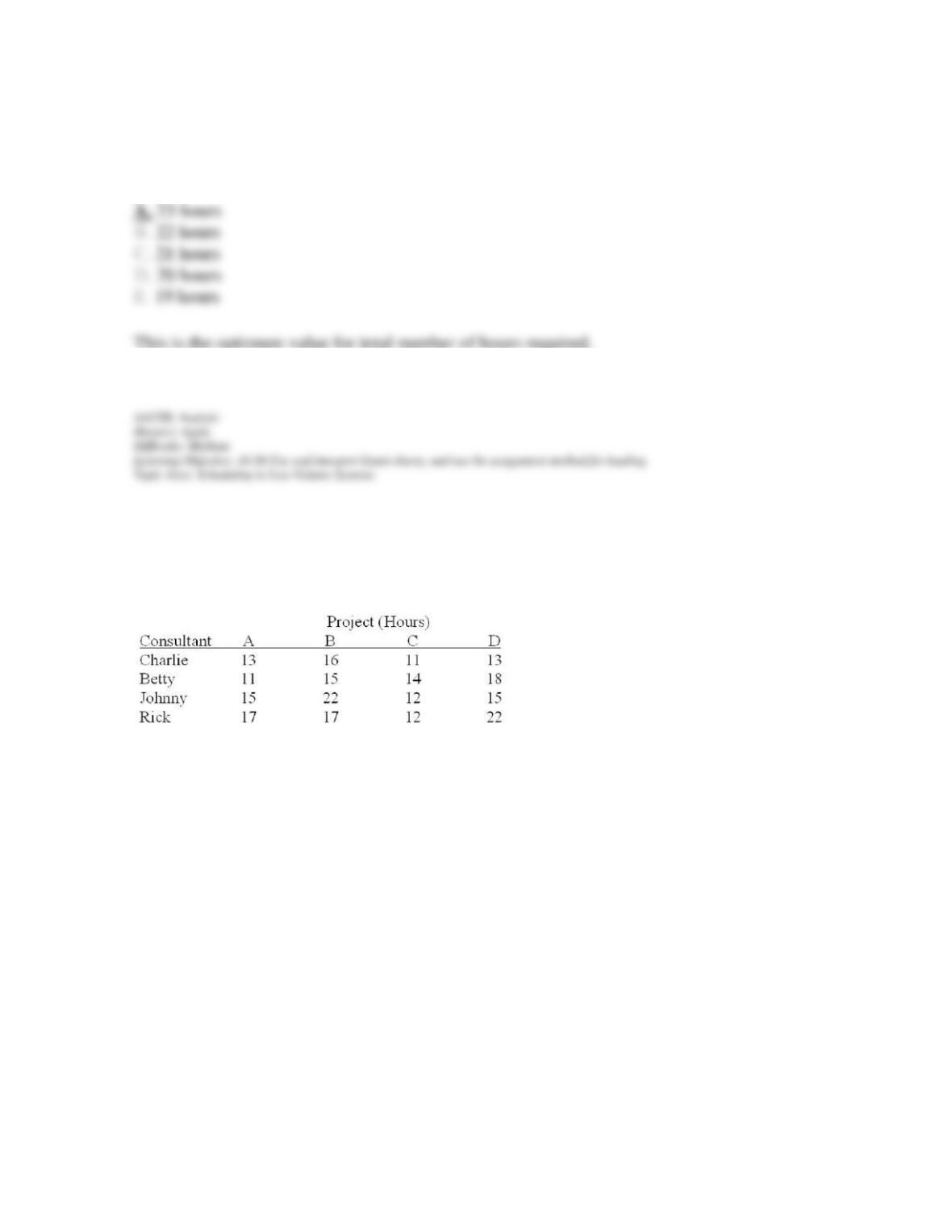
The president of a consulting firm wants to minimize the total number of hours it will take to
complete four projects for a new client. Accordingly, she has estimated the time it should take
for each of her top consultants-Charlie, Betty, Johnny, and Rick-to complete any of the four
projects, as follows:
Chapter 16 – Scheduling
86. In how many different ways can she assign these consultants to these projects?
87. After the row and column reductions, what is the reduced time for assigning Rick to
project D?
Chapter 16 – Scheduling
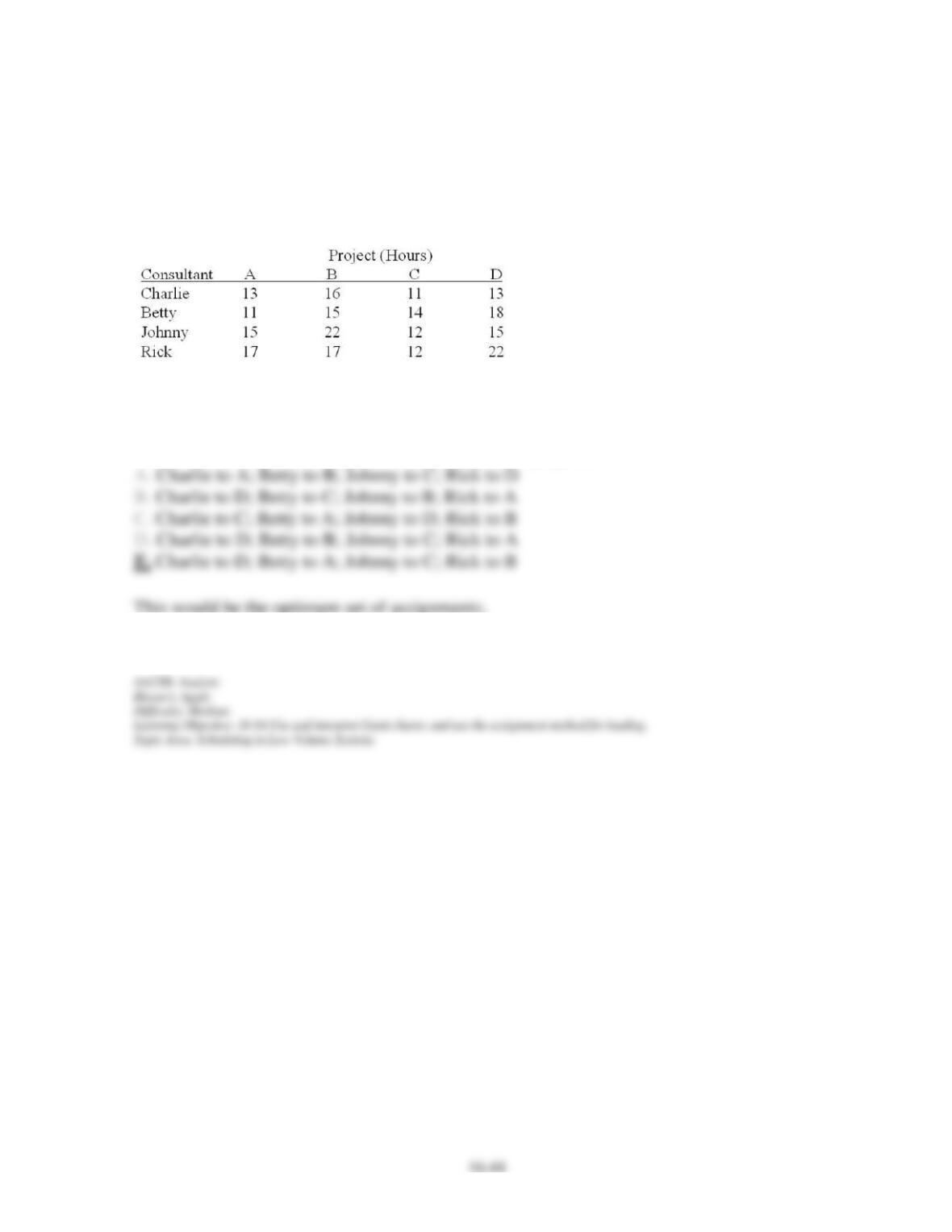
The president of a consulting firm wants to minimize the total number of hours it will take to
complete four projects for a new client. Accordingly, she has estimated the time it should take
for each of her top consultants-Charlie, Betty, Johnny, and Rick-to complete any of the four
projects, as follows:
88. What is the optimal assignment of consultants to projects?
Chapter 16 – Scheduling
89. For the optimal schedule, what is the total number of hours it will take these consultants to
complete these projects?
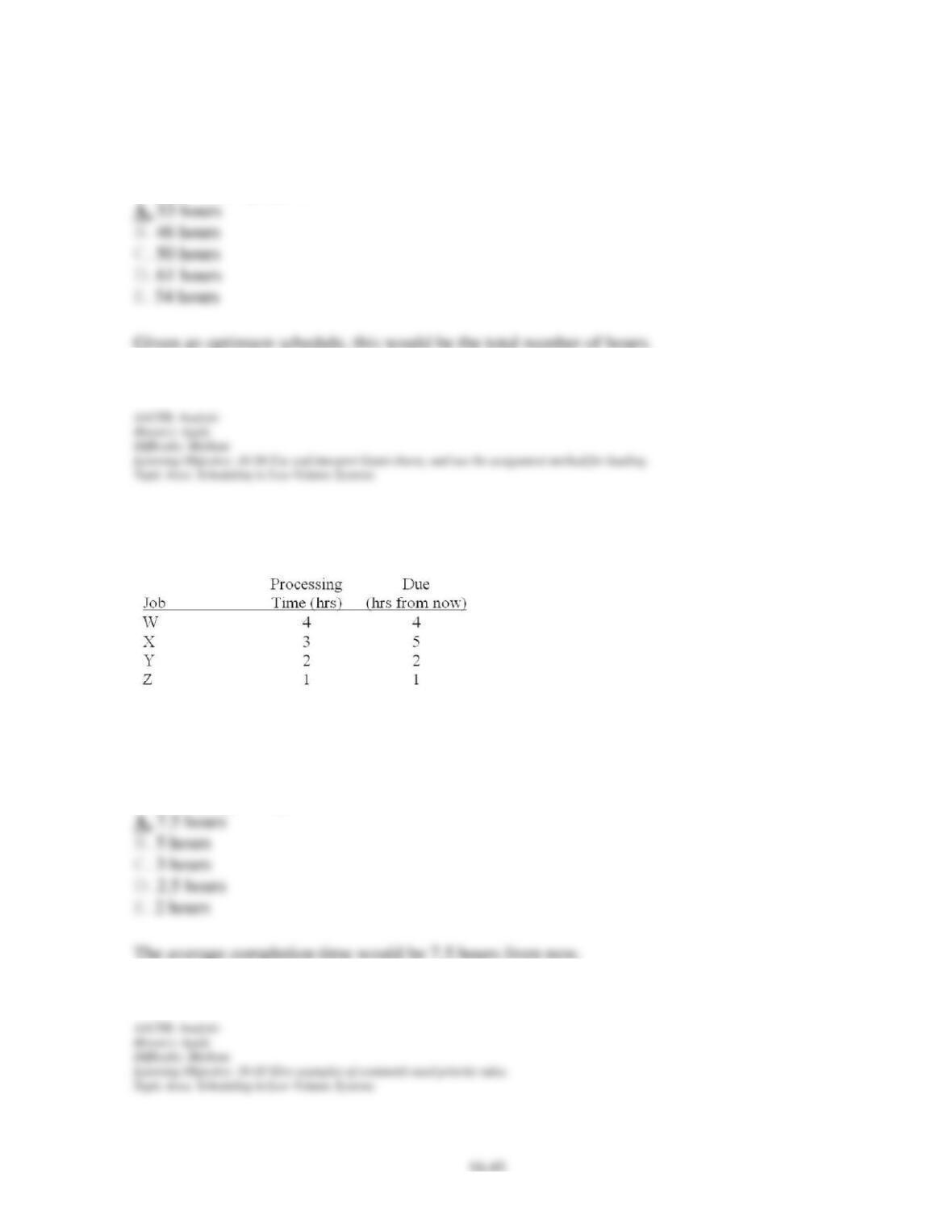
The owner/operator of the local franchise of Handyman, Inc., has four jobs to do today,
shown in the order they were received:
90. If he uses the first come, first served (FCFS) priority rule to schedule these jobs, what will
be the average completion time?
Chapter 16 – Scheduling
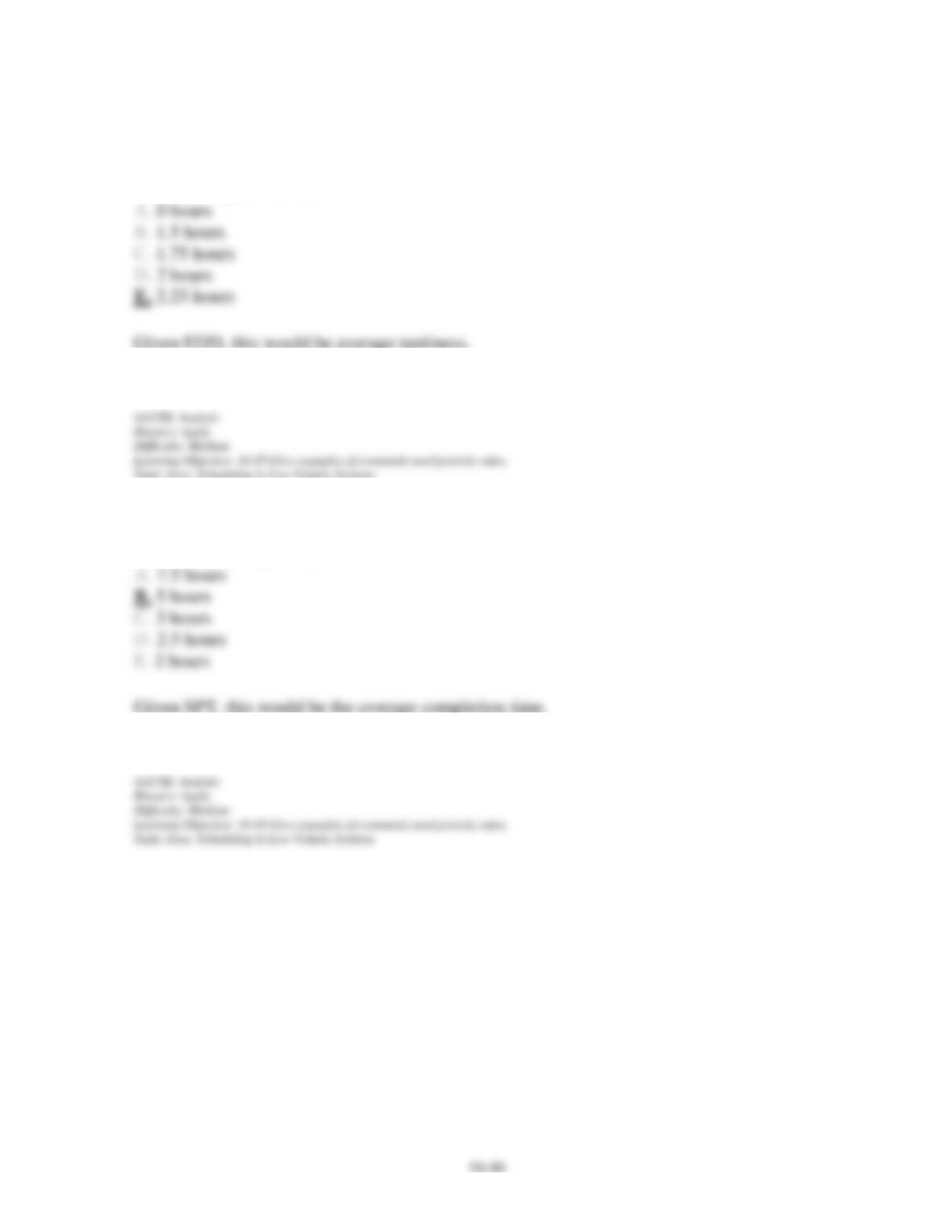
91. If he uses the earliest due date first (EDD) priority rule to schedule these jobs, what will
be the average job tardiness?
92. If he uses the shortest processing time first (SPT) priority rule to schedule these jobs, what
will be the average completion time?
Chapter 16 – Scheduling
93. If he uses the shortest processing time first (SPT) priority rule to schedule these jobs, what
will be the average job tardiness?
94. If he uses the shortest processing time first (SPT) priority rule to schedule these jobs, what
will be the average number of jobs in his shop today?
Chapter 16 – Scheduling
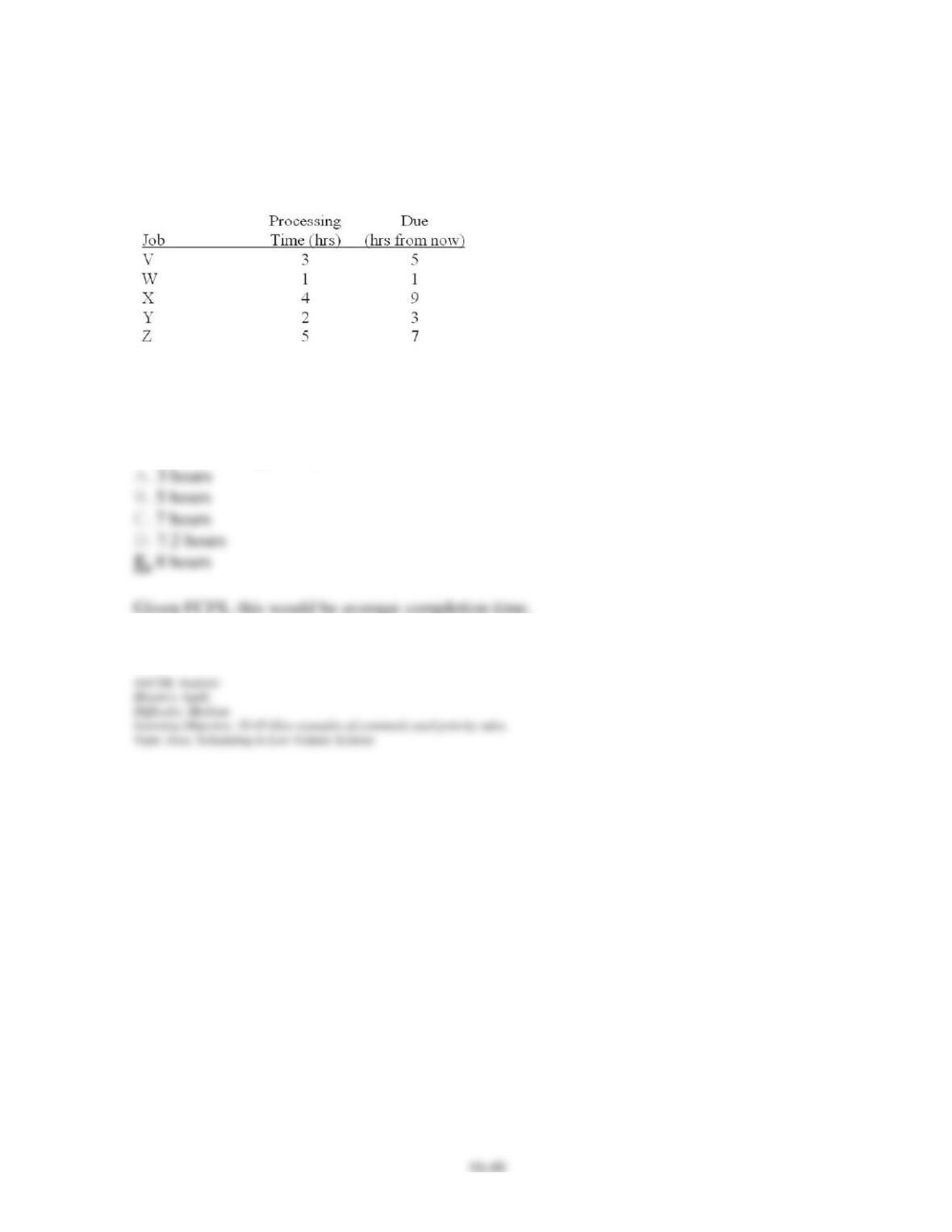
Eva, the owner of Eva’s second time around wedding dresses, currently has five dresses to be
altered, shown in order in which they arrived:
95. If Eva uses the first come, first served (FCFS) priority rule to schedule these jobs, what
will be the average completion time?
Chapter 16 – Scheduling
96. If Eva uses the earliest due date first (EDD) priority rule to schedule these jobs, what will
be the average job tardiness?
97. If Eva uses the shortest processing time first (SPT) priority rule to schedule these jobs,
what will be the average completion time?
Chapter 16 – Scheduling
98. If Eva uses the shortest processing time first (SPT) priority rule to schedule these jobs,
what will be the average job tardiness?
99. If Eva uses the shortest processing time first (SPT) priority rule to schedule these jobs,
what will be the average number of jobs in her shop today?
Chapter 16 – Scheduling
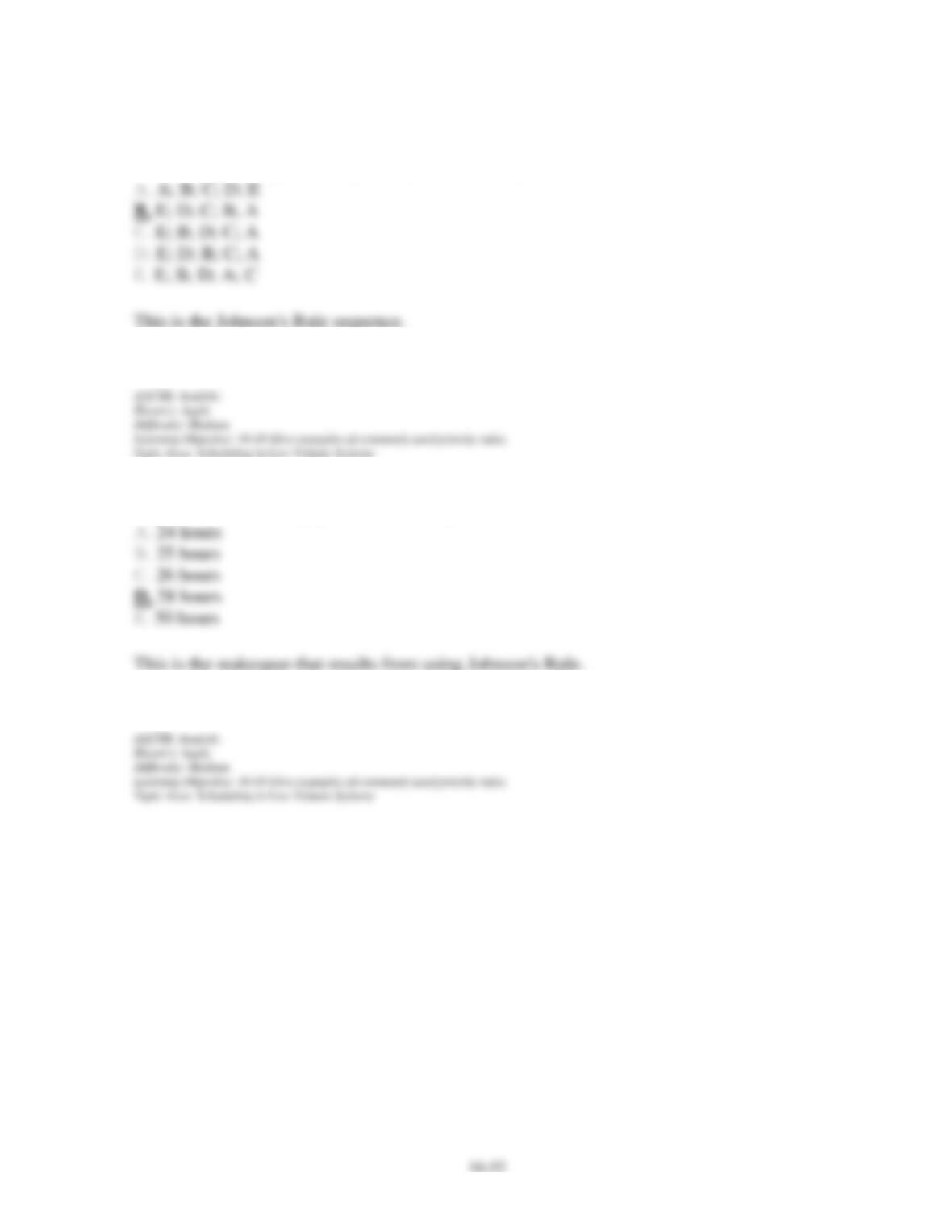
The operations manager of a body and paint shop has five cars to schedule for repair. He
would like to minimize the throughput time to complete all work on these cars. Each car
requires body work prior to painting. The estimates of the times required to do the body paint
work on each are as follows:
100. Where in the optimum sequence should car E be scheduled?
101. Where in the optimum sequence should car A be scheduled?
Chapter 16 – Scheduling
102. What is the optimum sequence (first car to last)?
103. What is the throughput time for the optimal schedule?
Chapter 16 – Scheduling
104. What is the idle time at the paint work center for the optimal schedule?
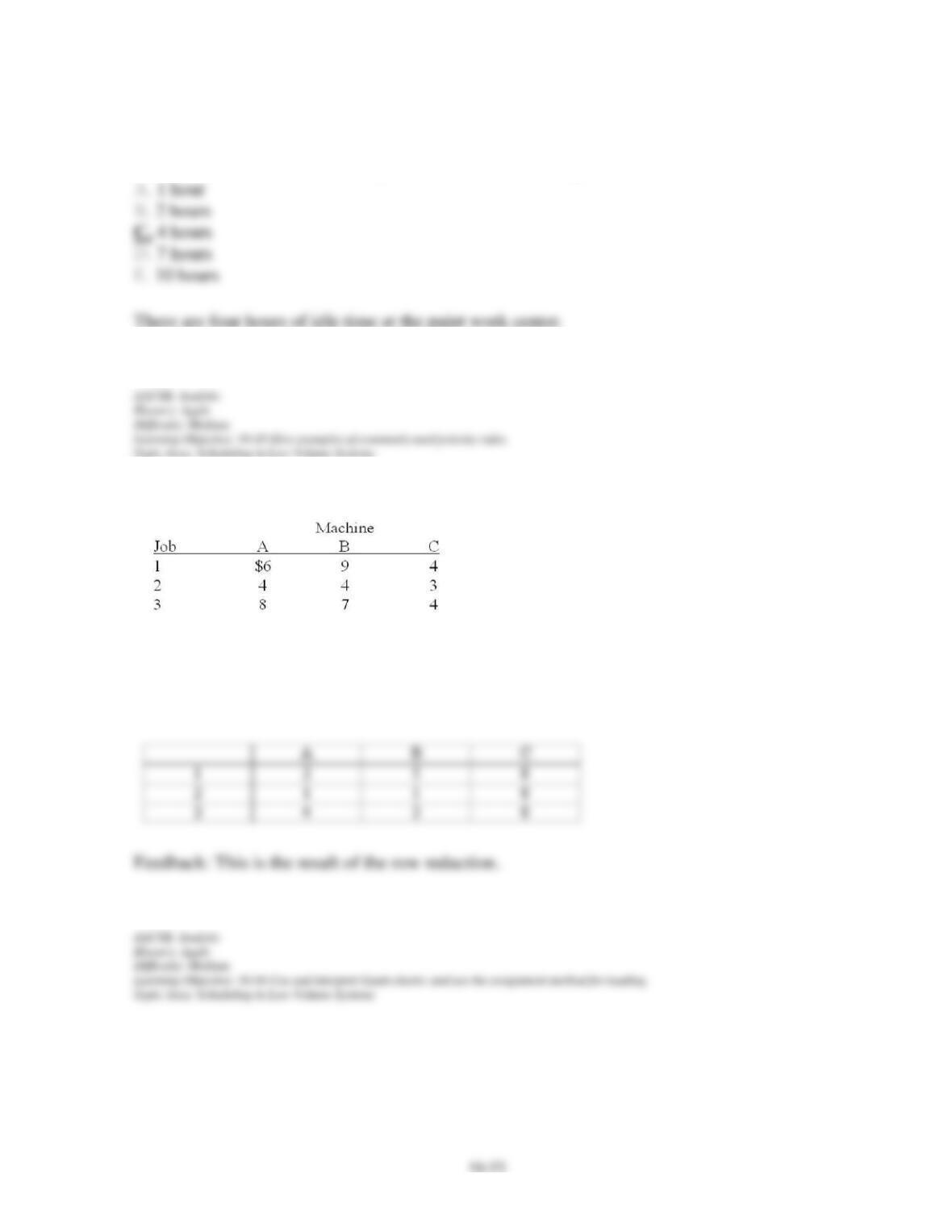
105. What is the result of the row reduction?