Chapter 16 – Scheduling
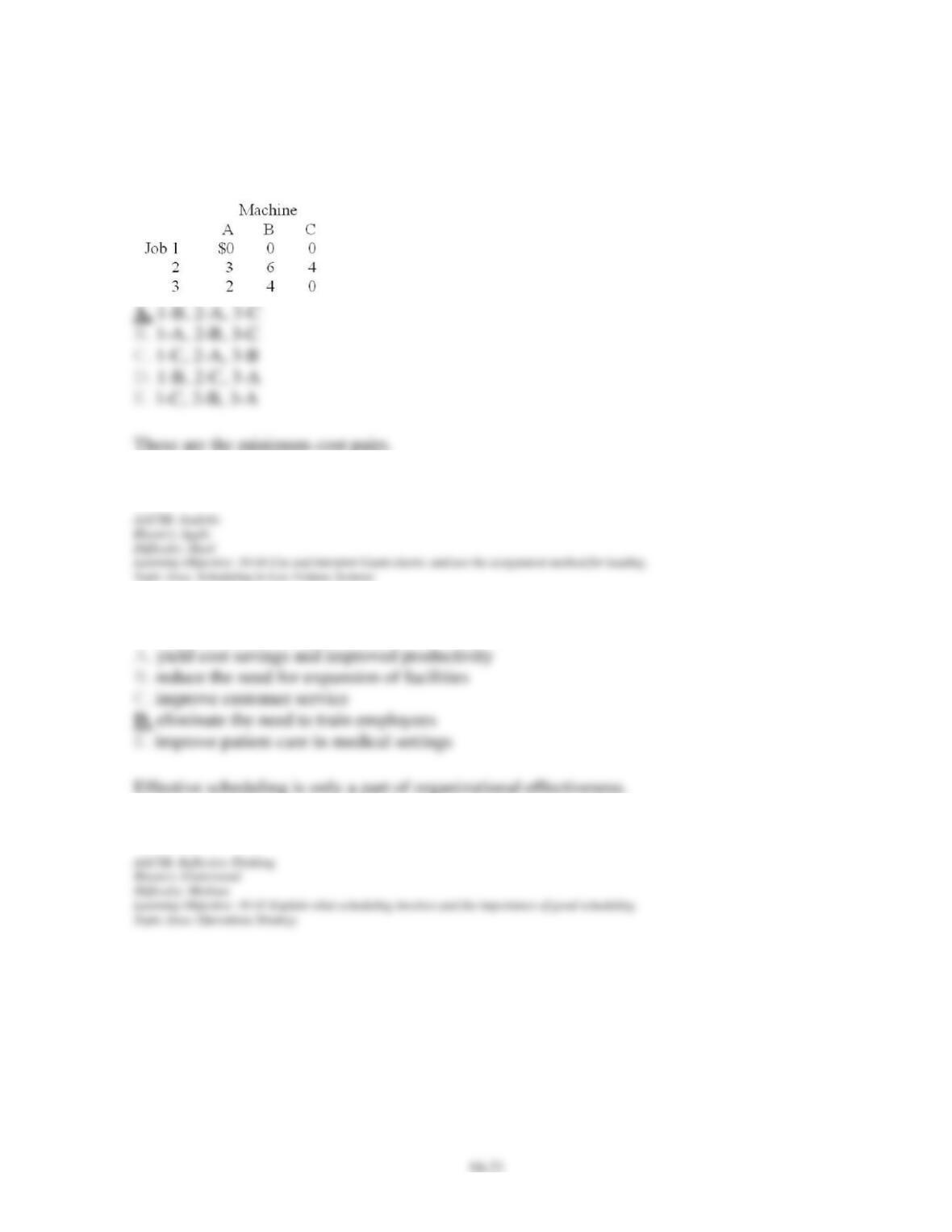
53. Based on the cost information given in the table below, which set of job-machine pairs
reflects the minimum-cost solution using the Assignment method?
54. Effective scheduling cannot:
Chapter 16 – Scheduling
55. The priority rule where jobs are processed according to the smallest ratio of due date to
processing time is:
56. Scheduled due dates are the result of:
Chapter 16 – Scheduling
57. Which of the following is not a measure for judging the effectiveness of a schedule
sequence?
58. The purpose of cyclical scheduling is to:
Chapter 16 – Scheduling
59. Average completion (flow) time for a schedule sequence at a work center is:
60. The scheduling sequencing rule which always results in the lowest average completion
(flow) time is the:
Chapter 16 – Scheduling
61. Which sequencing rule is designed specifically to minimize job tardiness?
62. A scheduling rule used for sequencing jobs through two work centers is:
Chapter 16 – Scheduling
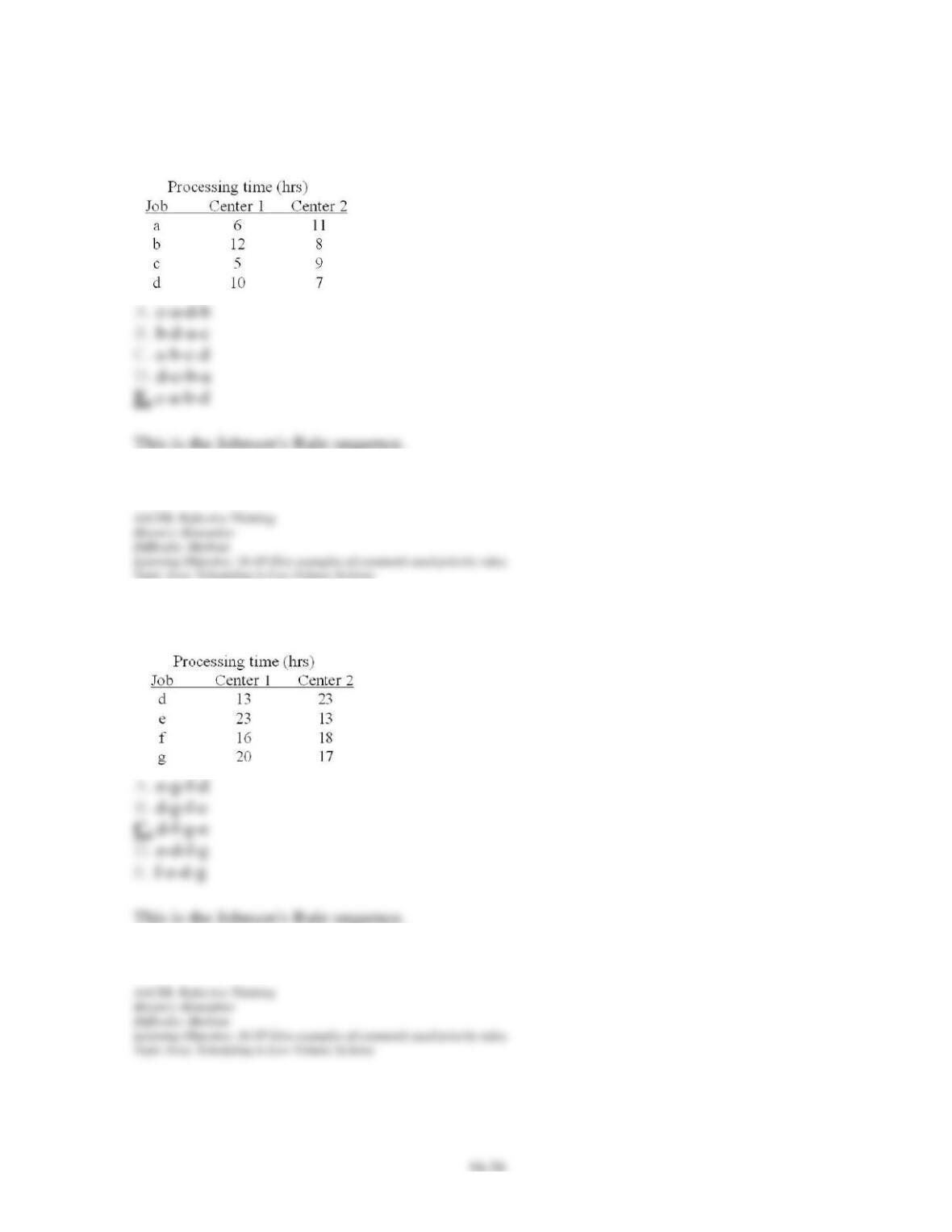
63. For the jobs listed below, which processing sequence would result using Johnson’s Rule?
64. What is the optimum job sequence for the jobs listed below using Johnson’s Rule?
Chapter 16 – Scheduling
65. A major difference between manufacturing and service systems in terms of scheduling is:
66. Scheduling in service systems often takes the form of:
Chapter 16 – Scheduling
67. Scheduling in service systems may involve scheduling:
68. One disadvantage of appointment systems is:
Chapter 16 – Scheduling
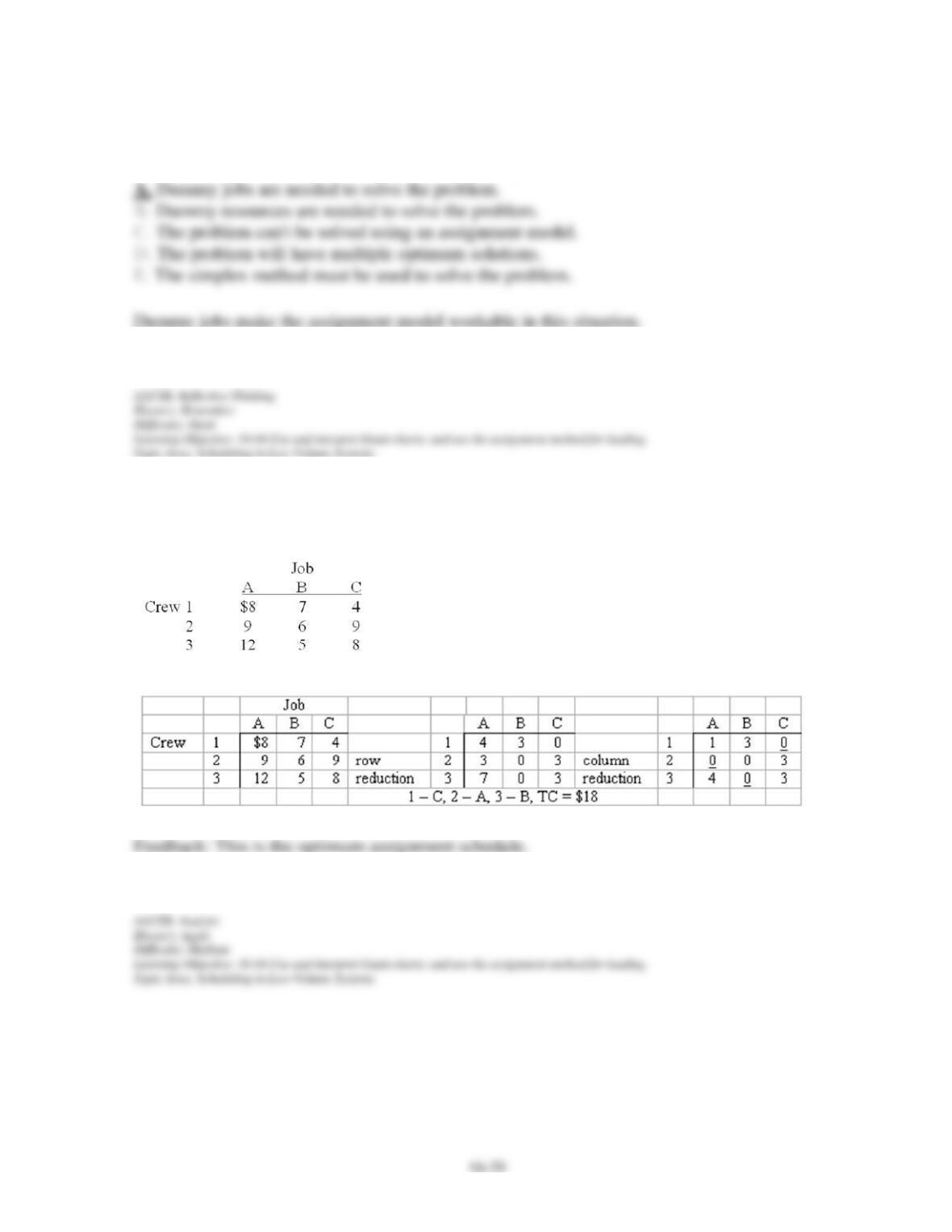
69. In an assignment model where there are fewer jobs than resources:
70. Using the cost information given in the table below, assign work crews to jobs so that total
cost is minimized.
Chapter 16 – Scheduling
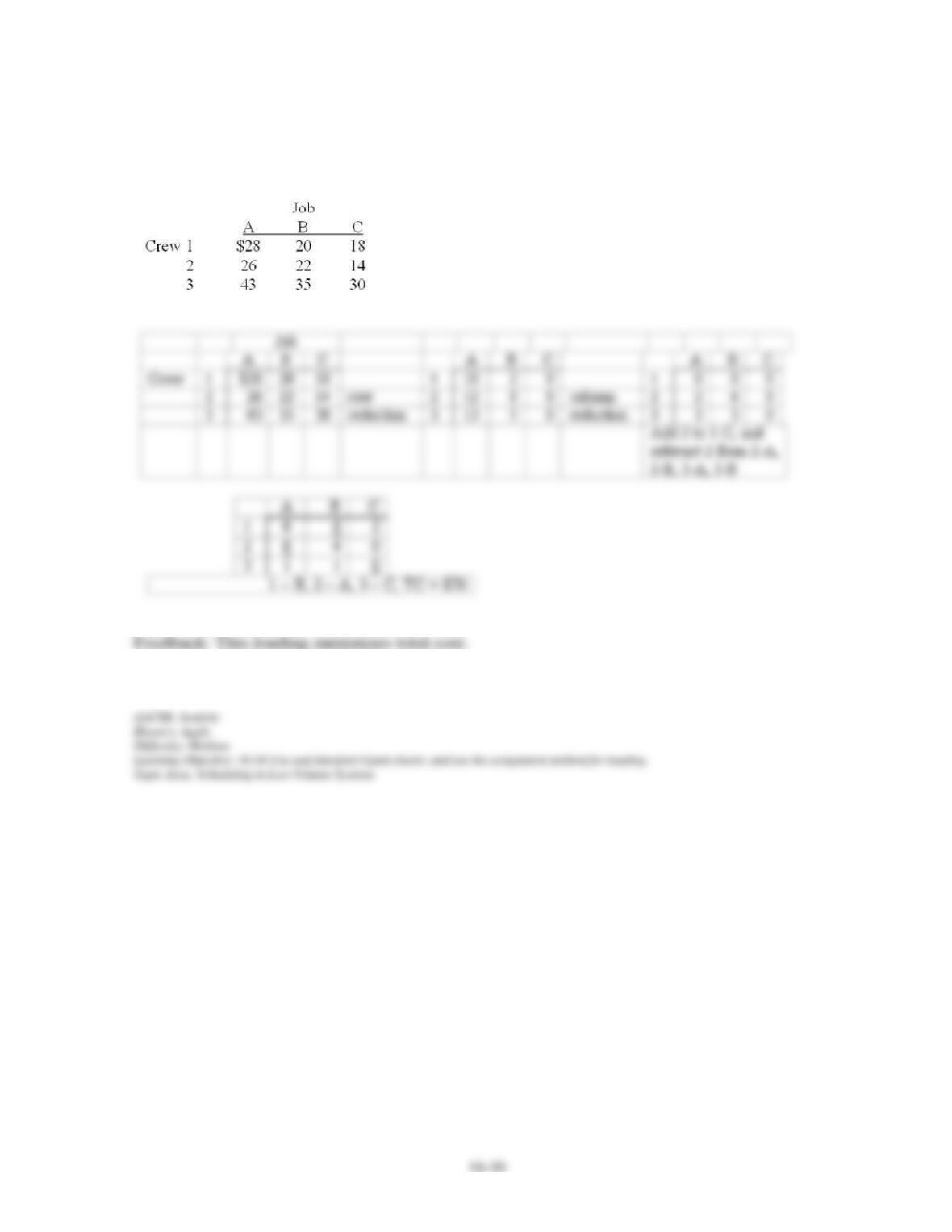
71. The costs to do each of the three jobs on three alternate pieces of equipment are given
below. Determine the job-equipment combination that will minimize total cost.
Chapter 16 – Scheduling
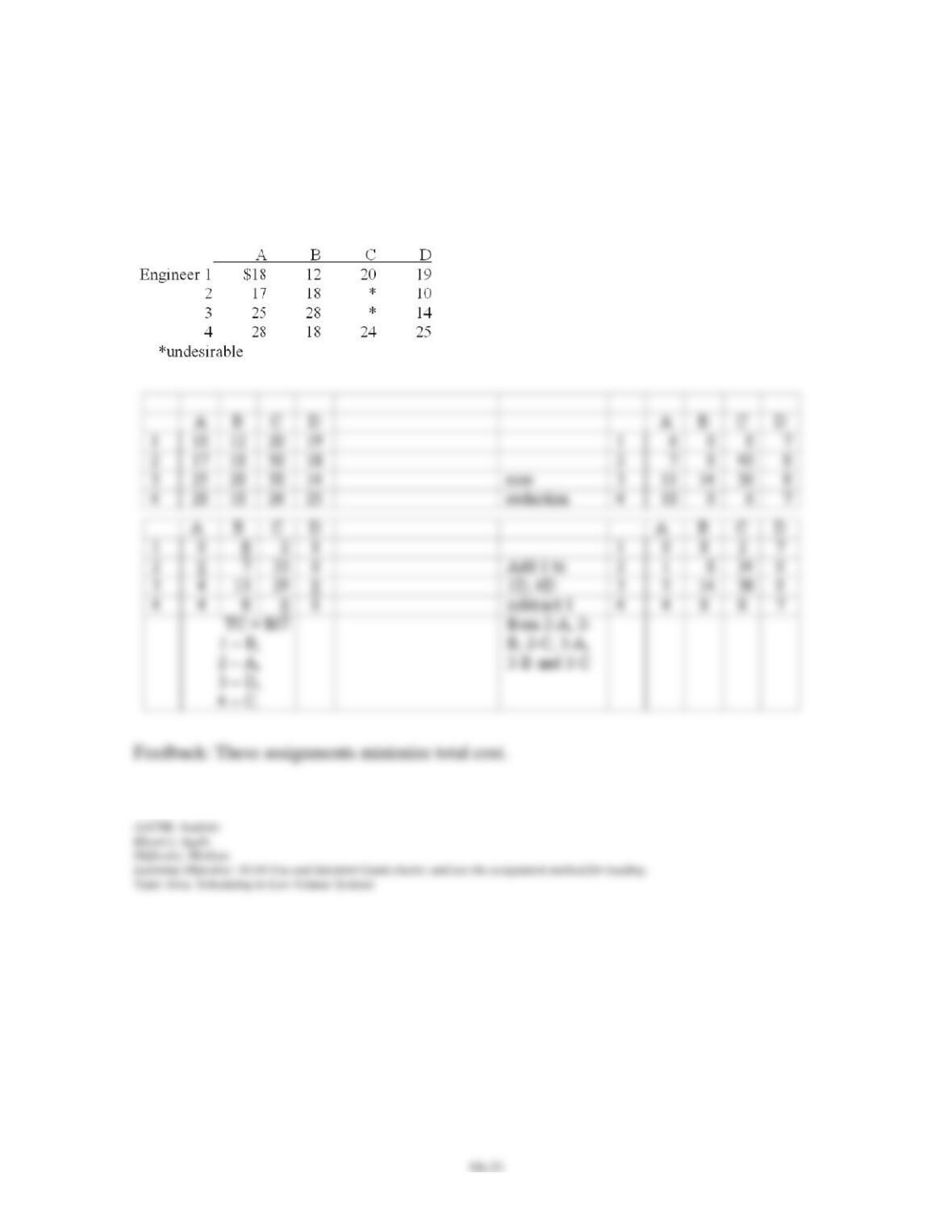
72. A manager must assign four engineers to projects, one to a project. The leader of Project
C has indicated that he does not want engineer 2 or 3 on his project. Given the cost figures
below for each project-engineer combination, and keeping in mind that two combinations are
undesirable, determine assignments such that total cost will be minimized.
Chapter 16 – Scheduling
16–32
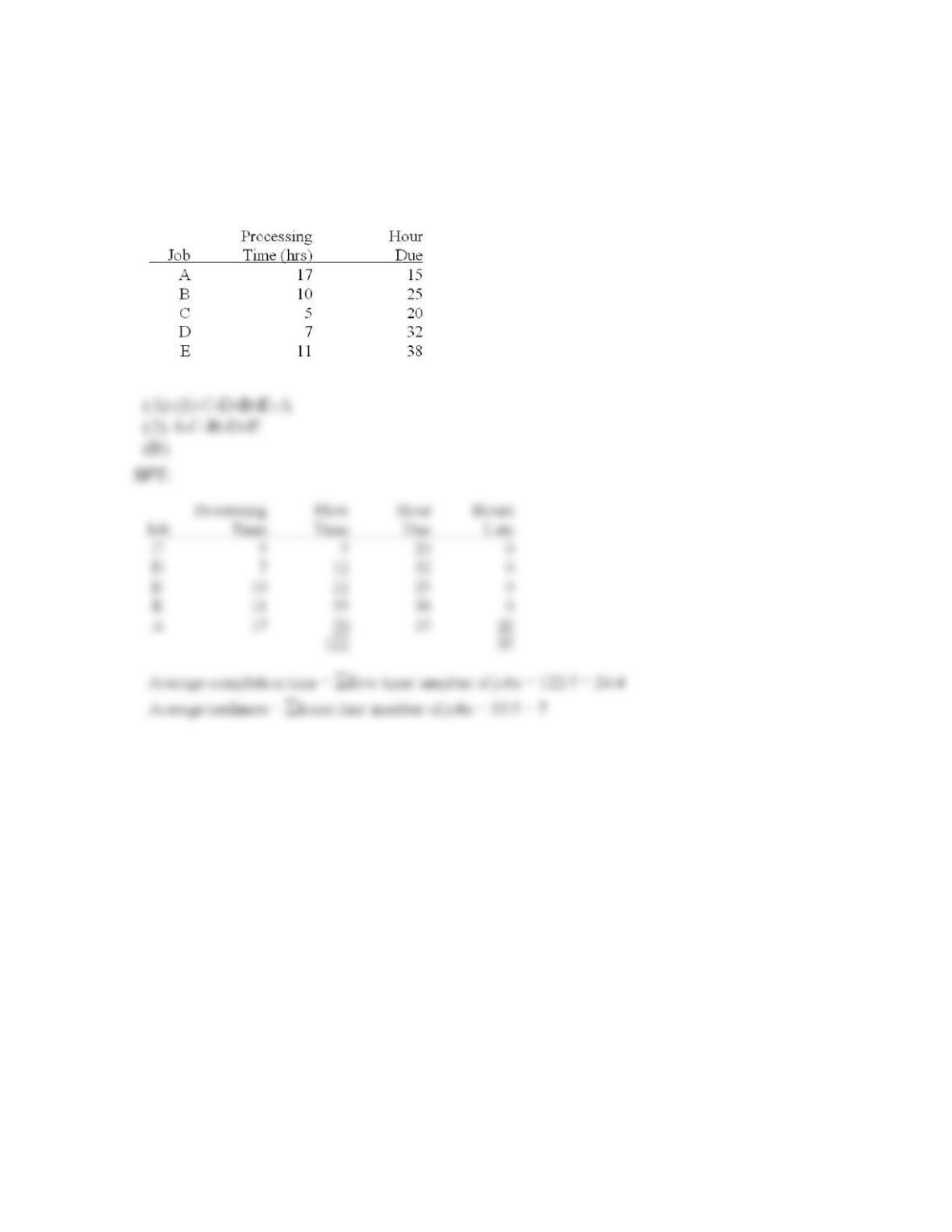
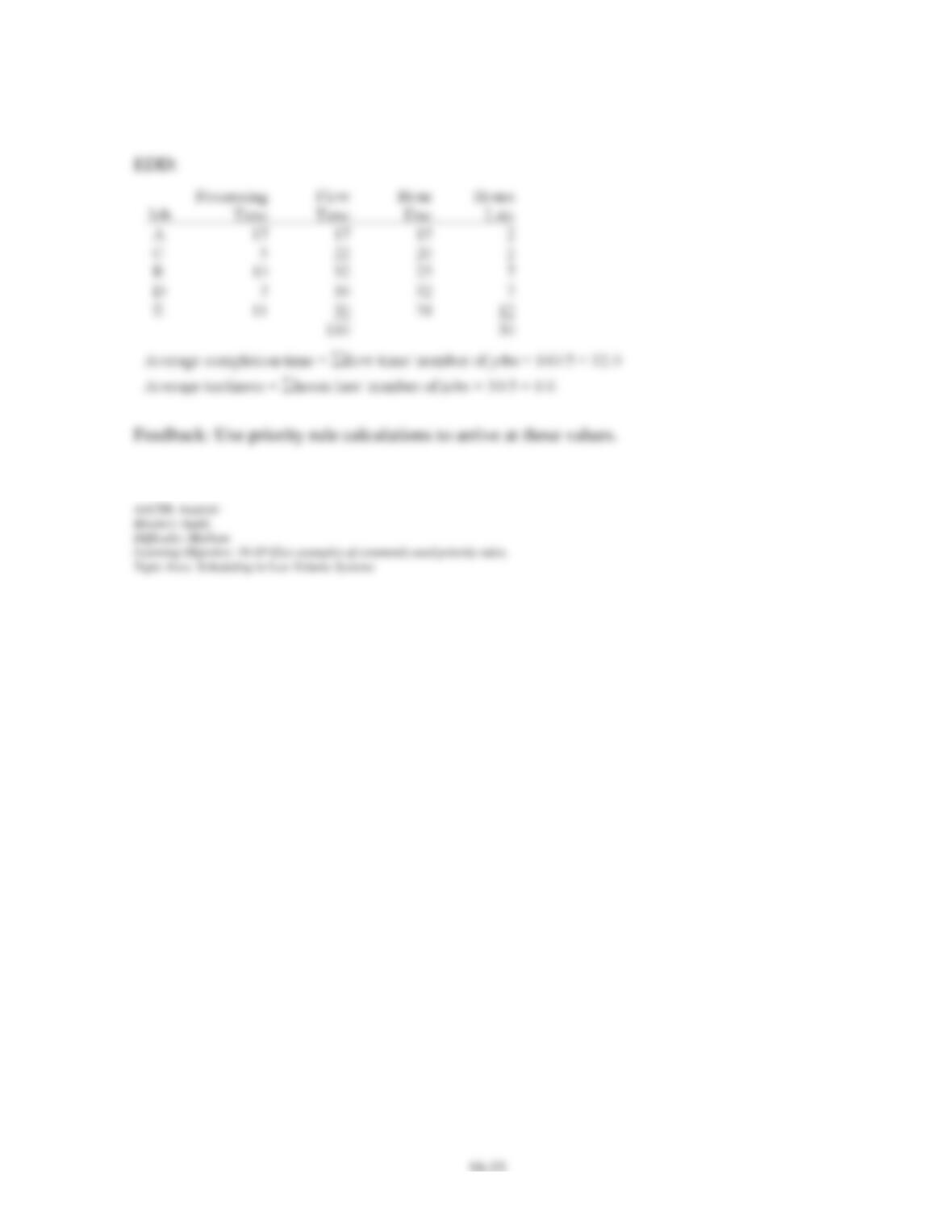
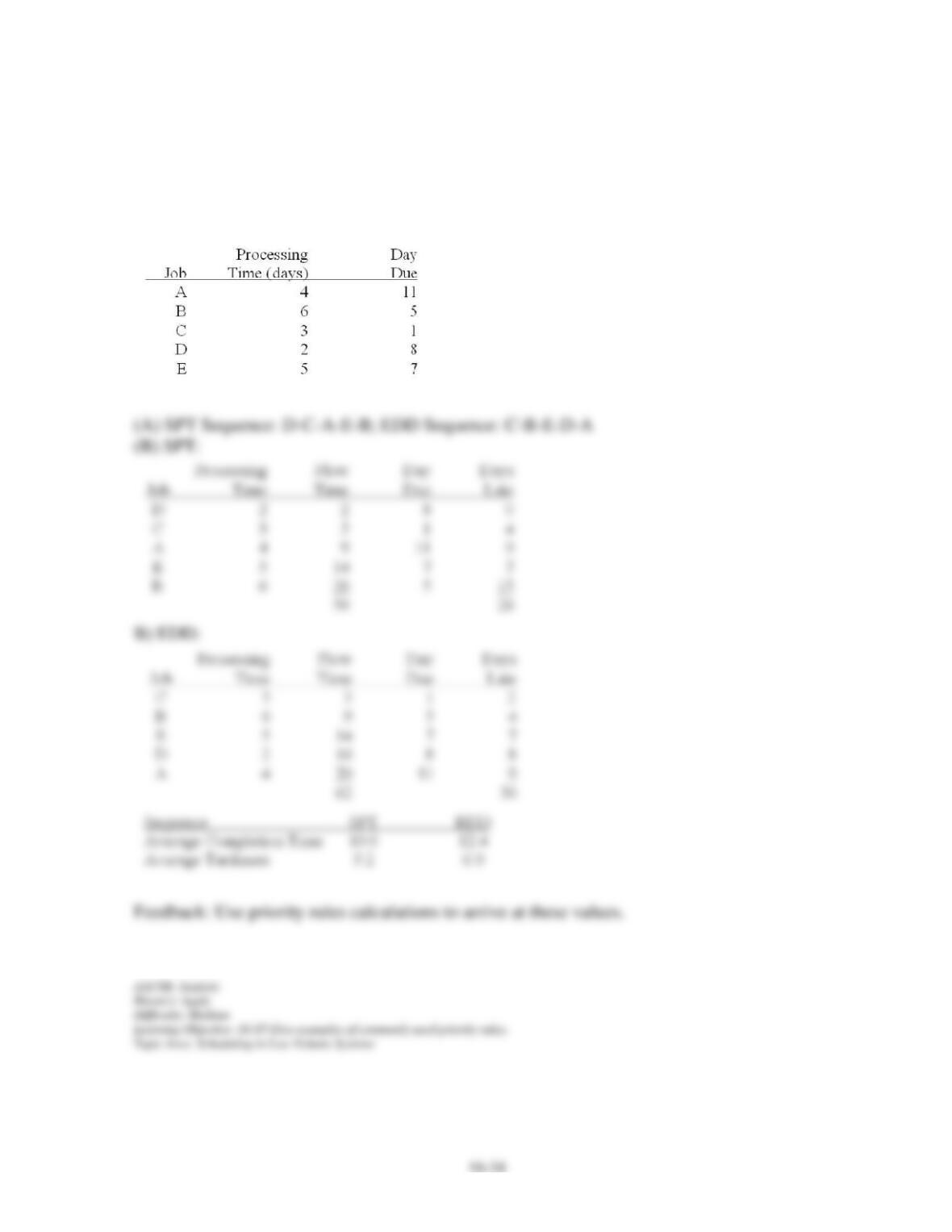
73. Given the information below, determine the following:
(A) Processing sequence using (1) SPT and (2) EDD.
(B) Average completion time and average job tardiness using (1) SPT and (2) EDD.
Chapter 16 – Scheduling
Chapter 16 – Scheduling
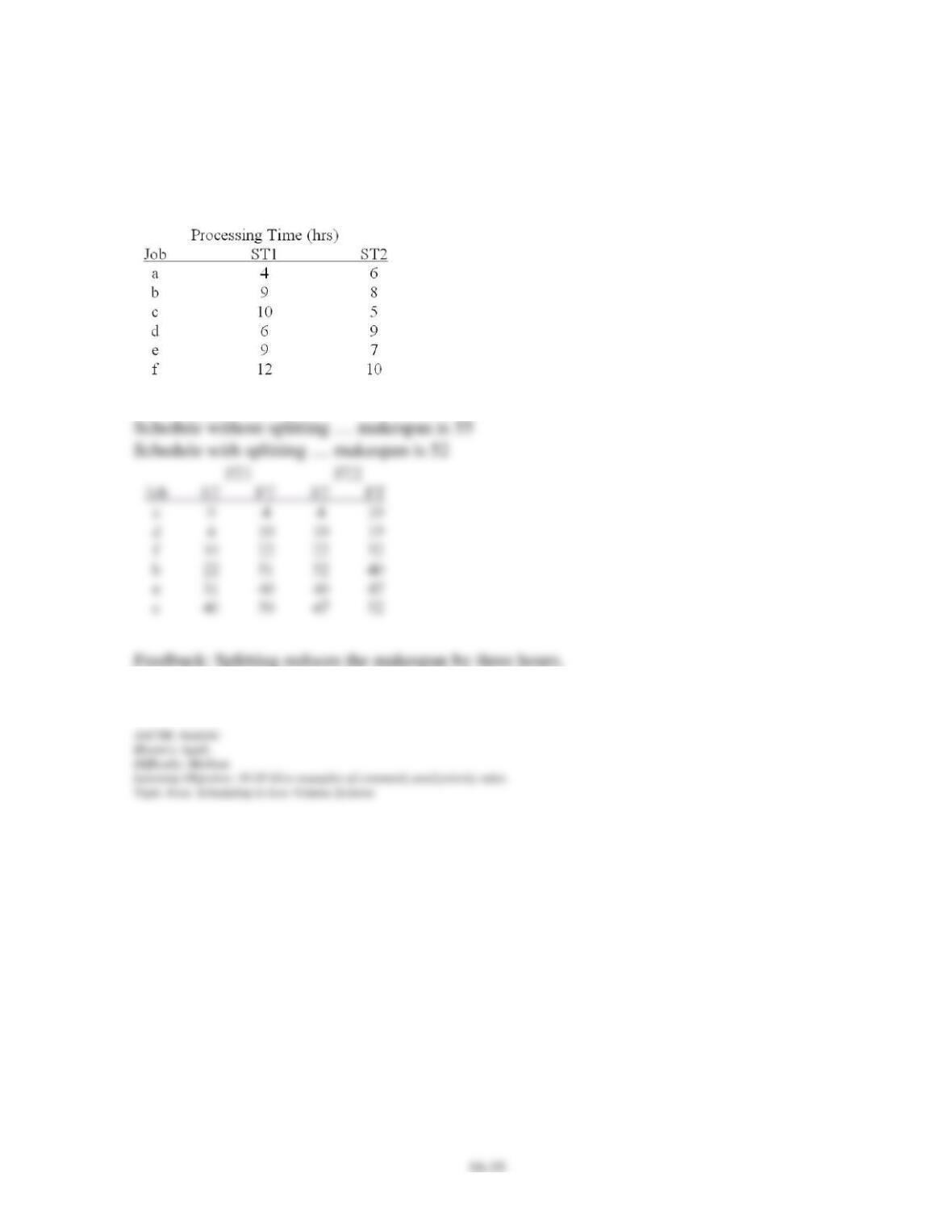
74. Using the information below, determine the following:
(A) processing sequence using (1) SPT and (2) EDD rules
(B) average completion time and average job tardiness under each rule
Chapter 16 – Scheduling
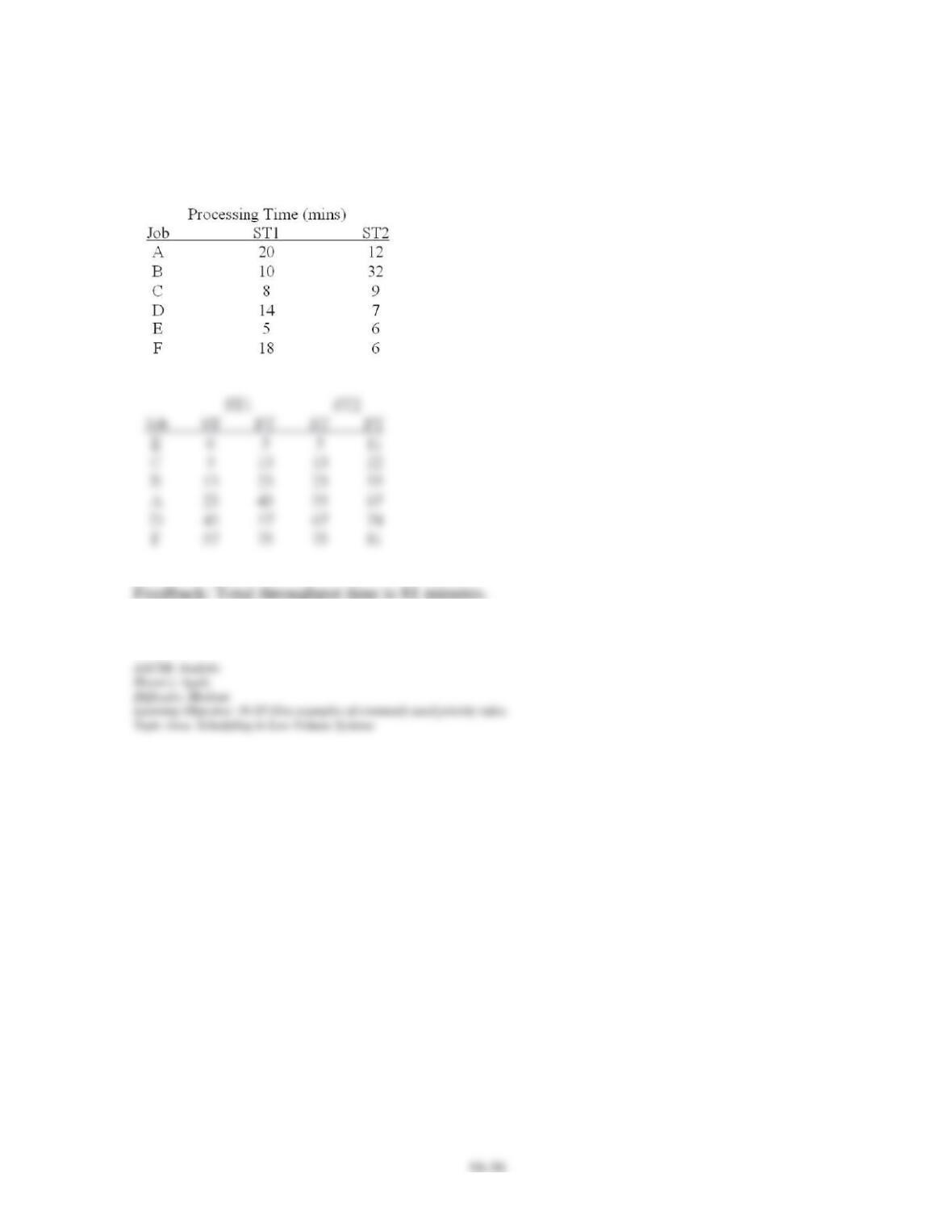
75. Determine the processing sequence for the six jobs shown below using Johnson’s Rule.
Calculate total throughput time. Can the makespan be reduced by splitting the latest job? If so,
by how much?
Chapter 16 – Scheduling
76. Use Johnson’s Rule to determine the optimum processing sequence for the jobs listed
below. Chart total throughput time.
Chapter 16 – Scheduling
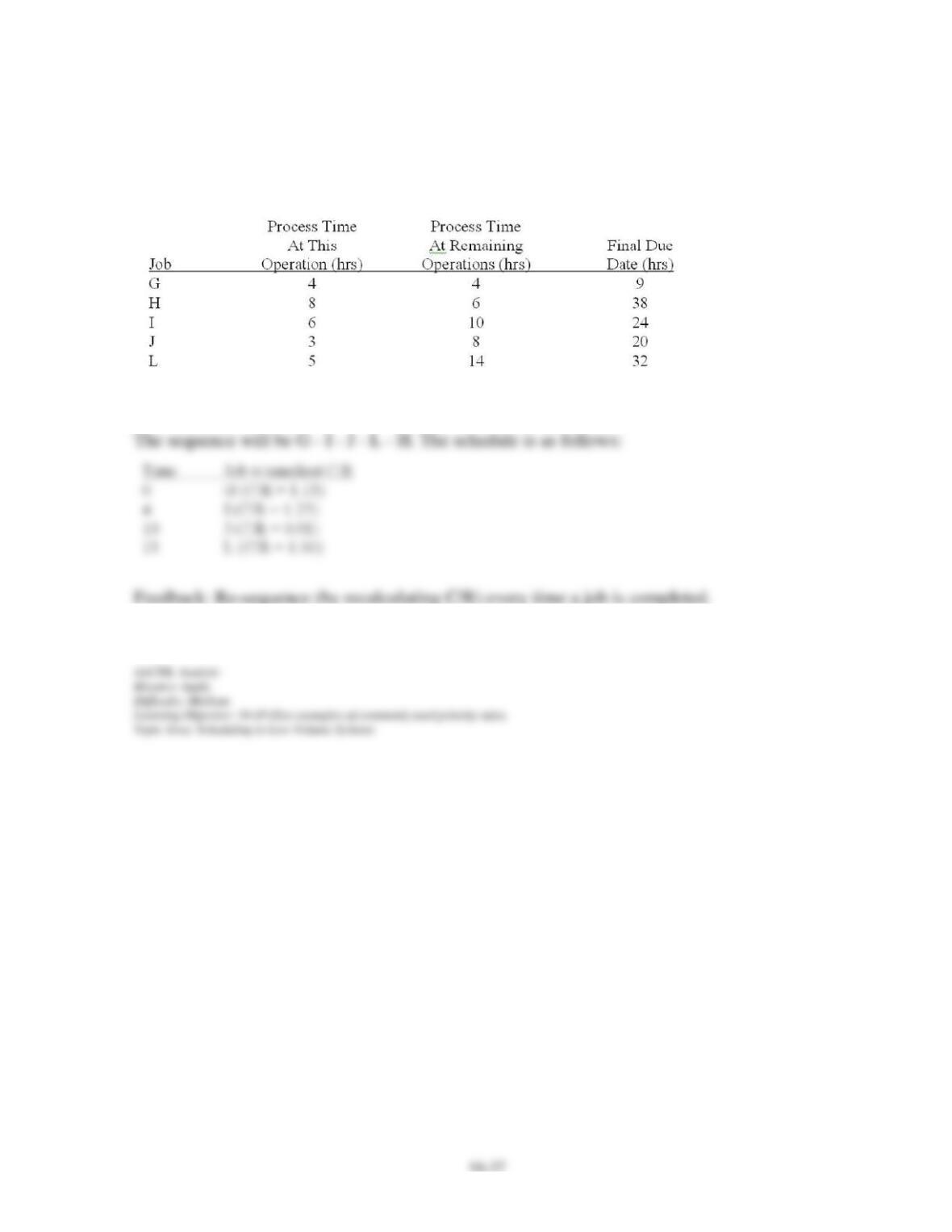
77. Given the following information concerning jobs awaiting processing at a single work
center, what processing sequence will result if the critical ratio (CR) rule is used?
Chapter 16 – Scheduling
16–38
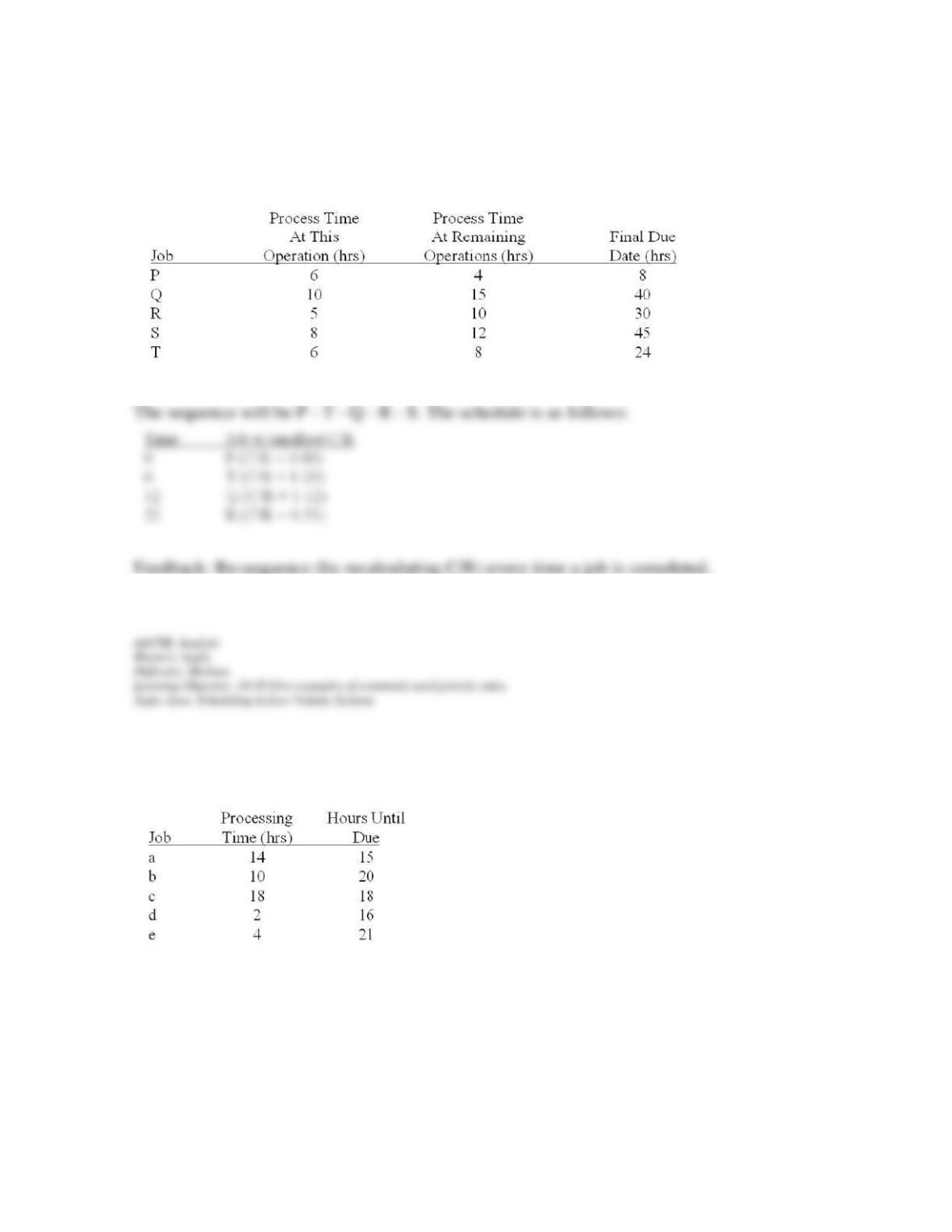
78. Given the following information concerning jobs awaiting processing at a single work
center, what processing sequence will result if the critical ratio (C/R) rule is used?
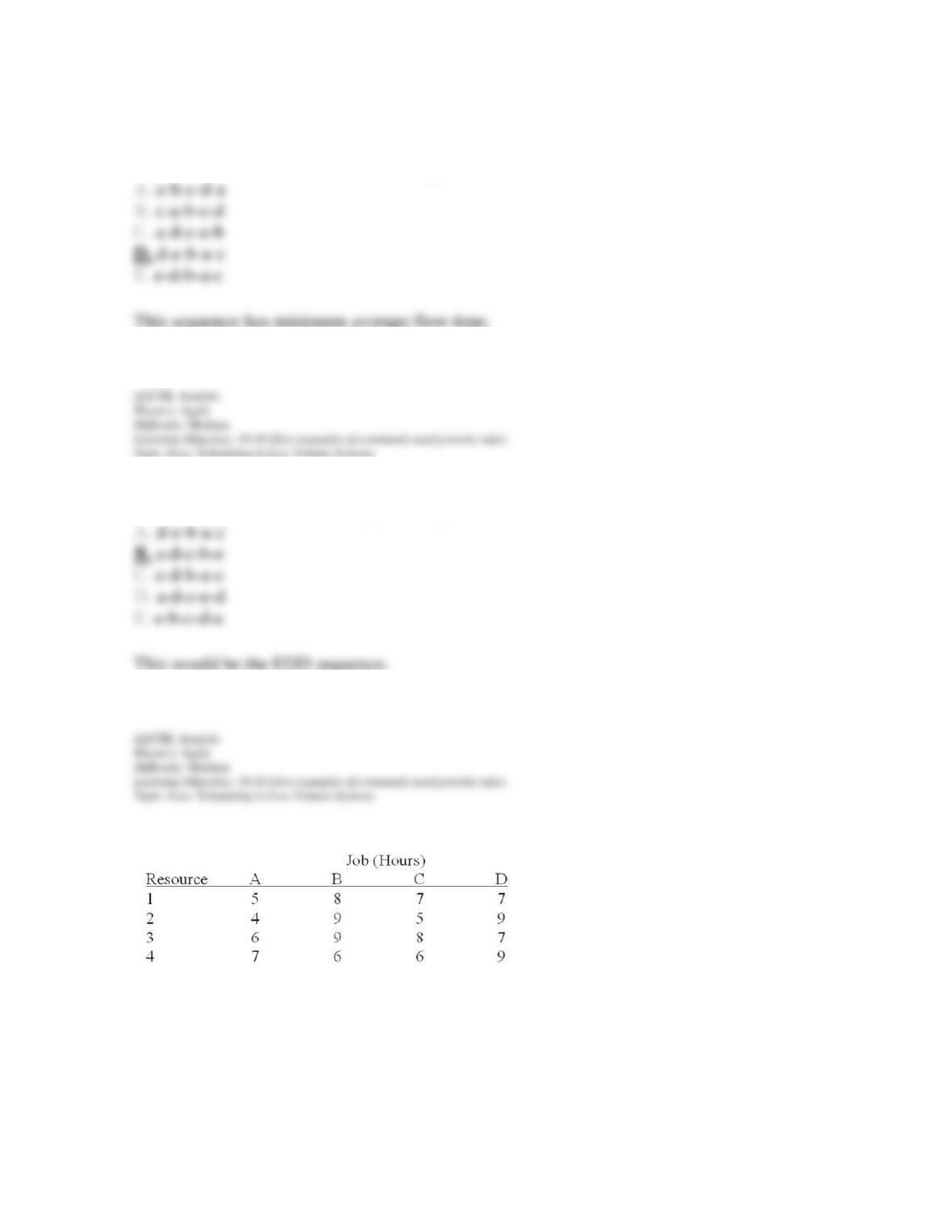
The table below contains information about five jobs waiting to be processed at work center
number three.
Chapter 16 – Scheduling
16–39
79. The sequence that would result using the SPT rule is:
80. Using the EDD rule, the sequence of jobs would be:
Chapter 16 – Scheduling
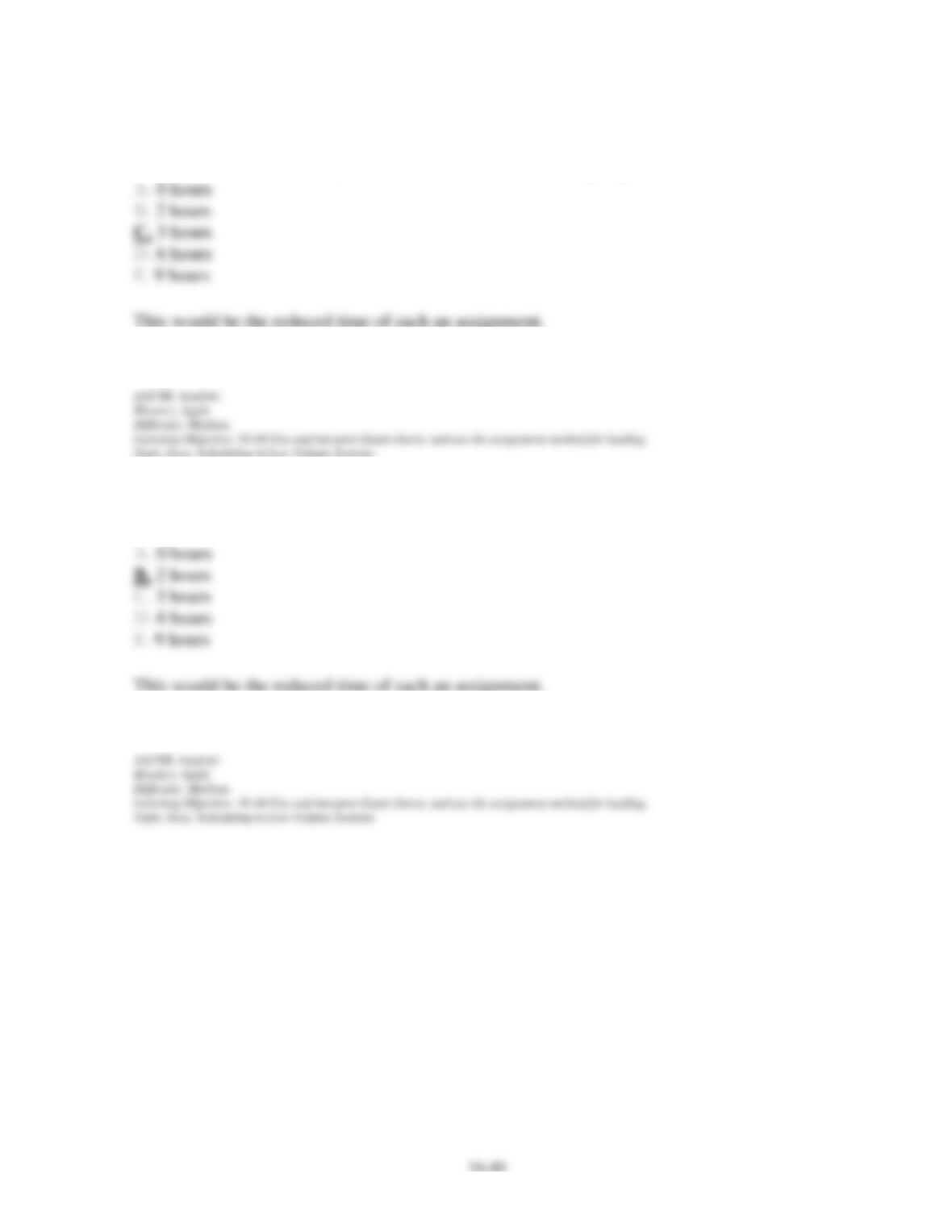
81. After the row reduction, what is the reduced time for assigning resource 4 to Job D?
82. After the row and column reductions, what is the reduced time for assigning resource 4 to
job D?