136
PHYSICAL INVENTORY AND WAREHOUSE MANAGEMENT
CHAPTER 12
ANSWERS TO PROBLEMS
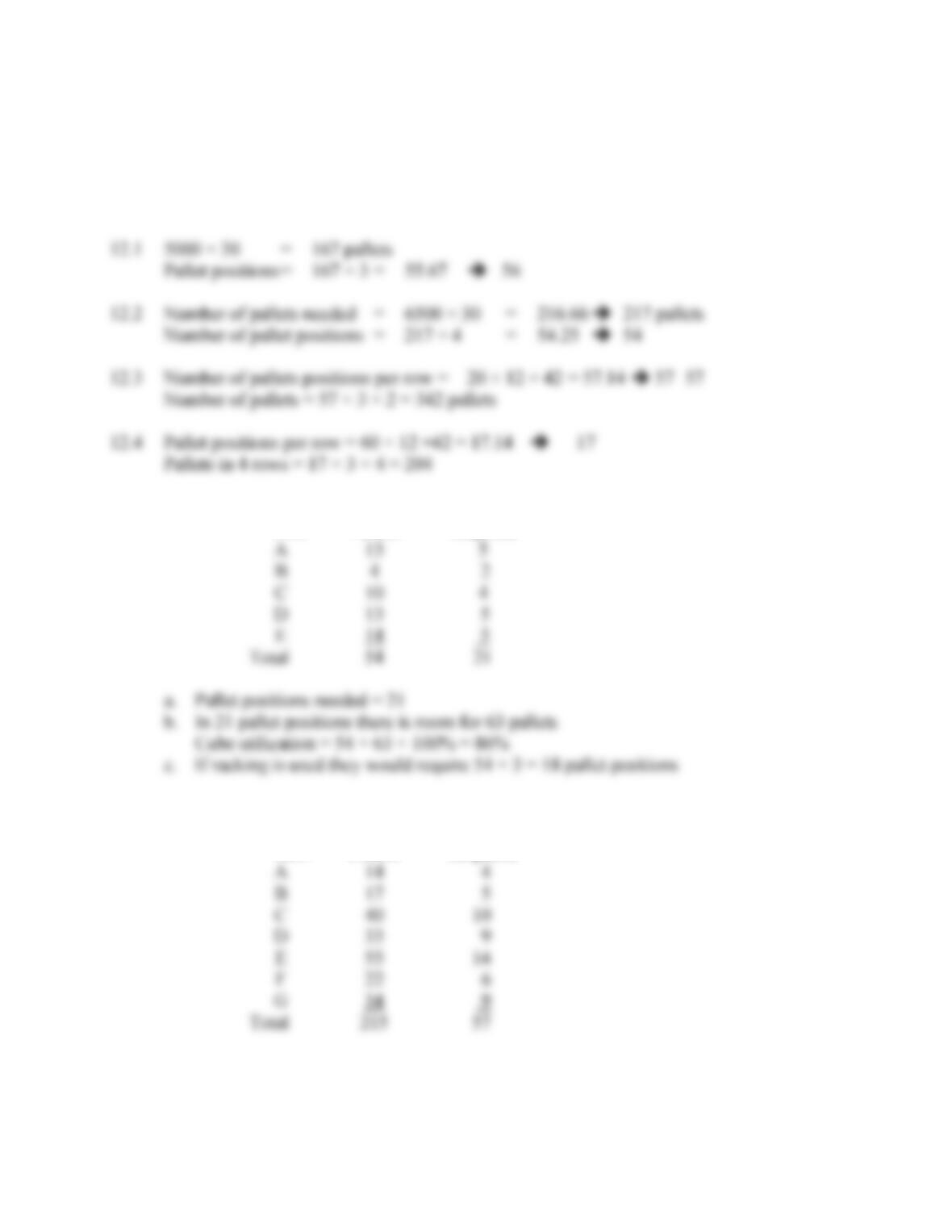
12.5 Positions
SKU Pallets Required
12.6 Positions
SKU Pallets Required
137
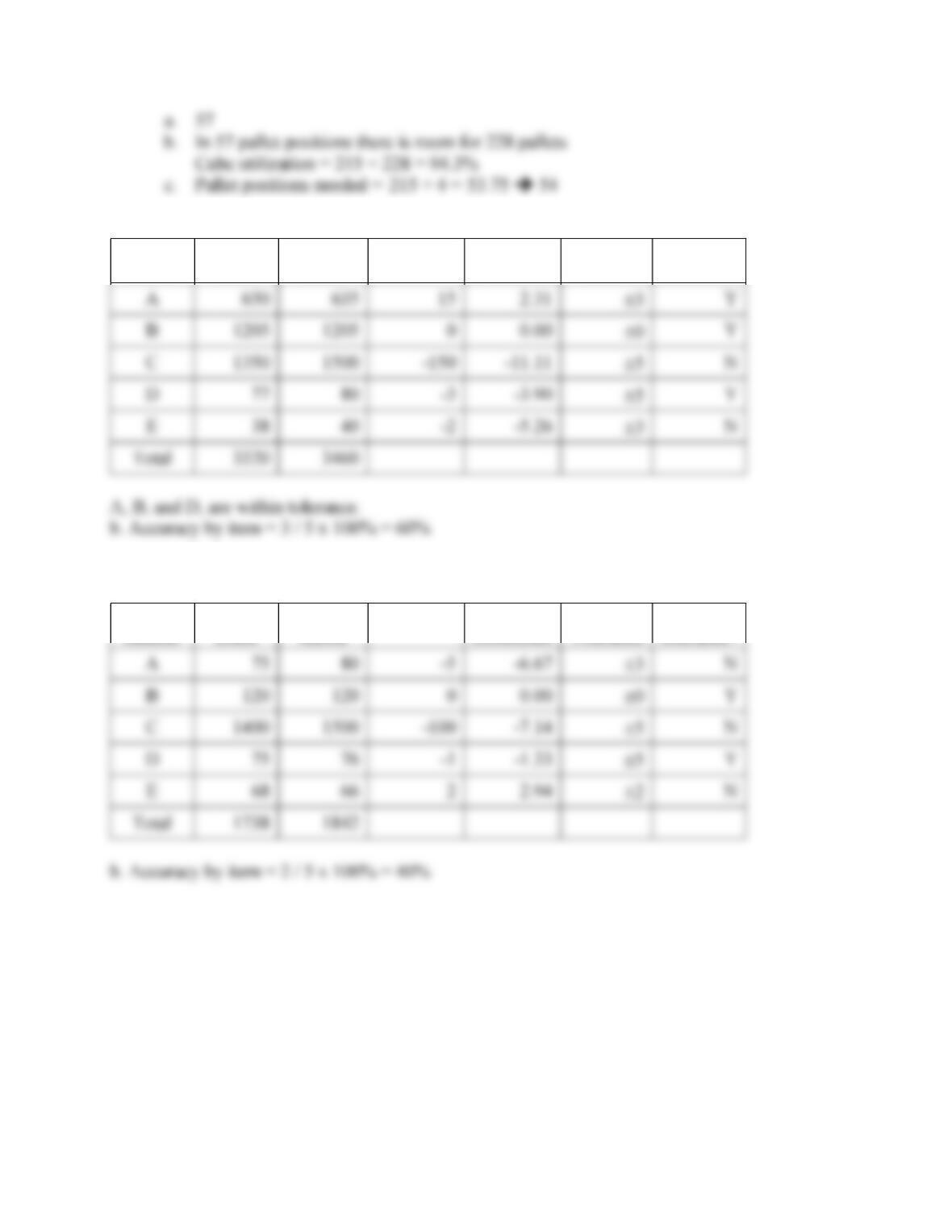
12.7 a.
Part
number
Shelf
count
Inventory
record Difference
%
Difference
%
Tolerance
Within
tolerance?
12.8 a.
Part
number
Shelf
count
Inventory
record Difference
%
Difference
%
Tolerance
Within
tolerance?
138
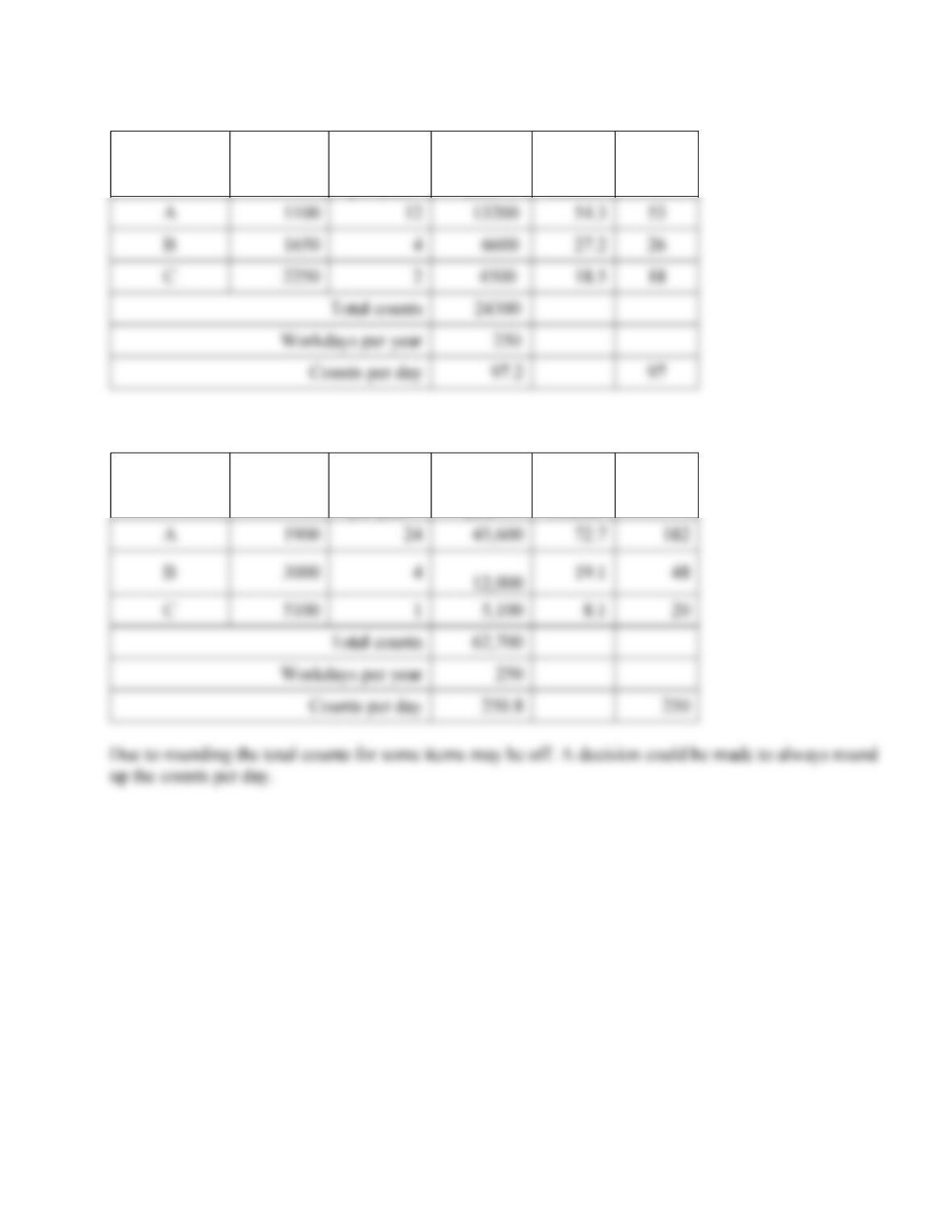
12.9
Classification
Number of
items
Count
frequency
per year
Number of
counts per
year
% of
Total
Counts
Counts
per Day
12.10
Classification
Number of
items
Count
frequency
per year
Number of
counts per
year
% of
Total
Counts
Counts
per Day
139
MULTIPLE CHOICE QUESTIONS
1. Which of the following statements are true about warehouse operation?
I. The major operating cost is labor.
II. Labor productivity depends on warehouse layout.
III. Capital costs are those of transport and space.
a. all the above
b. I and II only
c. I and III only
d. II and III only
e. I only.
2. The operating costs of a warehouse will depend on:
I. The type of material handling equipment used.
II. The stock location system used.
III. The warehouse layout.
a. all the above
b. I and II only
c. I and III only
d. II and III only
e. I only.
3. Which of the following is NOT a warehouse activity?
a. receiving
b. identifying
c. dispatching
d. order picking
e. transportation.
4. Which of the following statements is best?
a. the complexity of a warehouse operation will depend on the number of SKUs handled,
the
quantities of each SKU and the number of orders received and filled
b. most of the activity in a warehouse is material handling
c. a and b are both true
e. neither b nor c are true.
140
5. Which of the following statements is best?
a. inventory is typically stored only on the floor
b. a pallet position refers to which side of the pallet is loaded
c. accessibility means being able to get at the goods with a minimum amount of work
d. increasing cube utilization will increase accessibility
e. none of the above statements is true.
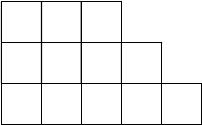
6. If items were stacked against a wall as shown, the cube utilization would be:
a. 100 percent
b. 80 percent
c. 20 percent
d. cannot be determined from the data given
e. none of the above.
7. In a floating location system:
I. Goods are stored wherever there is appropriate space for them.
II. The same SKU may be stored in several locations at the same time.
III. An accurate and up-to-date information system is required.
IV. The system is appropriate for all warehouses.
a. all the above
b. I, II and III
c. I, II and IV
d. II, III and IV
e. none of the above is true.
8. Which of the following statements is best?
a. among other things, warehousing labor productivity will depend on warehouse layout
b. all warehouses need to keep accurate records of where each item is located
c. the space required in a warehouse will depend on the amount of labor used
d. all of the above are true
e. none of the above is true.
9. Which of the following is a principle of merchandise location in the warehouse?
a. group functionally related items together
b. group physically similar items together
c. group fast-moving items together
d. all of the above
e. none of the above.
141
10. Which of the following is NOT a method of order picking?
a. area system
b. floating location system
c. zone system
d. multi-order system
e. all the above are methods of order picking.
11. Which of the following is NOT an advantage of point-of-use storage?
a. materials are readily accessible to users
b. material handling is reduced or eliminated
c. central storage costs are reduced
d. inventory record accuracy is easier to maintain
e. material is accessible at all times.
12. Among other things a good physical control and security of inventory will depend on:
I. A good part-numbering system.
II. A well-trained work force.
III. Free access to stock.
a. I and II
b. I and III
c. II and III
d. I only
e. II only.
13. Which of the following is the best statement?
a. a transaction occurs ONLY when goods are received or issued
b. the steps in a transaction system are: identify the goods, verify quantity, record the
transaction,
and physically execute the transaction
c. inventory is a tangible asset that is easy to lose track of unless properly controlled
d. a and b are true
e. b and c are true.
14. Which of the following statements are true about inventory accuracy?
I. Inventory accuracy is essential for planning.
II. It is important to find the cause of record error.
III. Periodic audits of inventory will find the cause of record error.
a. all the above
b. I and II
c. I and III
d. II and III
e. none of the above.
142
15. Which of the following are causes of inventory record errors?
I. Unauthorized withdrawals of material.
II. Unsecured stockroom.
III. Audit capability.
a. all the above
b. I and II only
c. I and III only
d. II and III only
e. I only.
16. Which of the following statements is best?
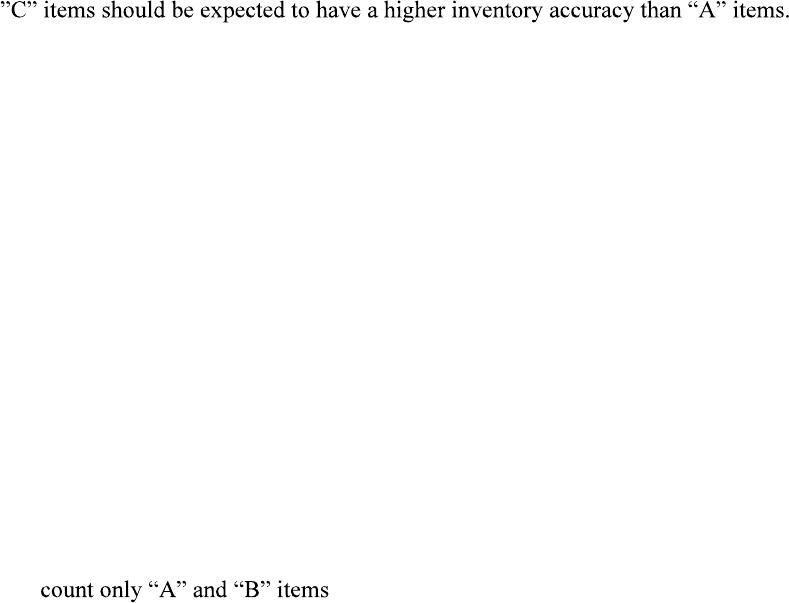
I. It is not always practical to expect 100% inventory accuracy on all items.
II.
III. Tolerance is the amount of permissible variation between an inventory record and a physical
count.
a. all the above
b. I and II only
c. I and III only
d. II and III only
e. I only.
17. The three factors in good preparation for a physical inventory are:
I. Housekeeping.
II. Identification.
III. Verification.
IV. Training.
a. I, II and III
b. I, II and IV
c. II, III and IV
d. I, III and IV
18. Which of the following techniques can be used to select items for cycle counting?
a. count all items once a year.
b.
c. base the frequency of count on annual dollar usage
d. count all items the same number of times a year
e. make a random audit of the items.

143
19. Which of the following are true when cycle counting inventory?
I. Inventory should be audited for count and location.
II. Cycle counts can be scheduled at regular intervals or special times.
II. A good time to cycle count an item is when an order is placed.
a. all the above
b. I and II only
c. I and III only
d. II and III only
e. I only.
20. Which of the following are advantages of cycle counting?
I. Timely detection and correction of problems.
II. Reduction of loss of production.
III. Making use of spare labor.
a. all the above
b. I and II only
c. I and III only
d. II and III only
e. I only.
21. Which of the following is NOT a basic stock location system?
a. group functionally related items together
b. locate all stock for fast access
c. group fast-moving items together
d. group physically similar items together
e. locate working stock and reserve stock separately.
22. In a cycle counting system:
a. all items are counted each month
b. item counts are determined by their ABC classification
c. the purpose is to correct inventory imbalances
d.
e. counts are done at the end of the business year
23. In a cycle counting system A items are usually:
I. expensive items
II. items which often experience imbalances
III. difficult to get items
a. I only
b. I and II only
c. I and III
d III only
e. all of the above

144
24. Cycle counting uses which of the following methods?
a. ABC method
b. zone method
c. location audit method
d. a and b only
e. all of the above
25. A simple method of determining when an item should be cycle counted is:
a. count when the item is ordered
b. count each time the item is picked
c. count each item once per month
d. count items which have been in storage for a given period of time
e.
26. The most important reason for cycle counting is to:
a. Correct inventory balances
b. Train warehouse staff in location methods
c. Correct inventory valuation
d. Find and correct errors
e. Keep stock in correct rotation
27. Which of the following is NOT an objective of a warehouse operation?
a. Provide timely customer service
b. Minimize cube utilization
c. Keep track of item location and quantity
d. Provide communication links with customers
e. Minimize warehouse effort
28. In a warehouse operation, which of the following is usually the largest capital cost?
a. Labor
b. Space
c. Materials handling equipment
d. Damage and loss of goods
e. Management overhead
29. What type of storage system is best suited for a Just in Time environment?
a. Zone method
b. Floating location
c. Central storage
d. Point-of-use storage
e. Bulk location storage
30. In which order picking and assembly method is the order picker NOT confined to one location?
a. Multi-order system
b. Zone system
c. Area system
d. Only in the area system and the multi-order system
e. They are confined to one location in all these systems

145
31. After picking the order and prior to shipment the goods are:
a. Sorted.
b. Put away.
c. Consolidated
d. Added to inventory
e. Dis-aggregated
Answers.