108
ORDER QUANTITIES
CHAPTER 10
ANSWERS TO PROBLEMS
10.1 and 10.2
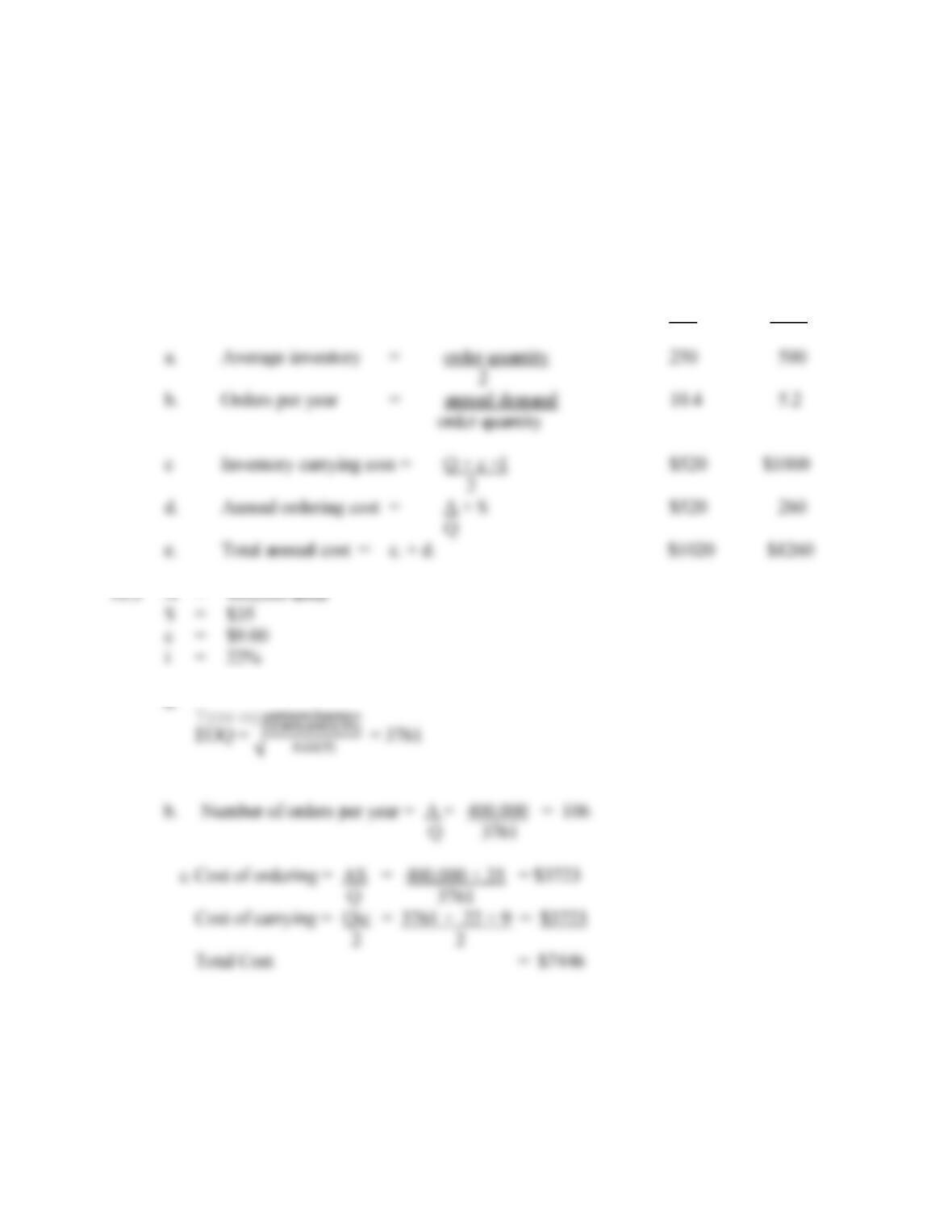
Order quantity (units)
(10.1) (10.2)
500 1000
109
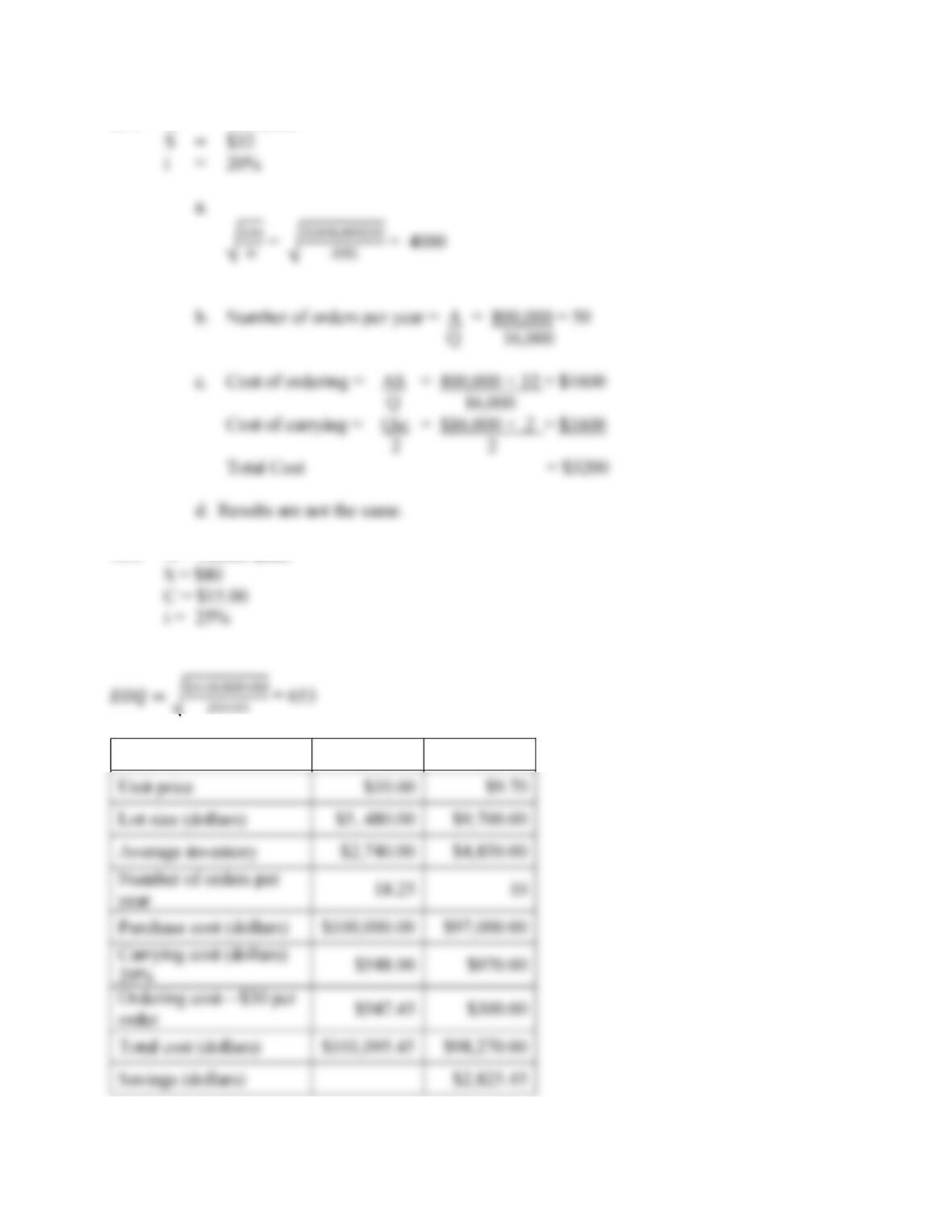
10.4 A = $800,000
10.5 A = 10,000 units
10.6
No discount Discount
110
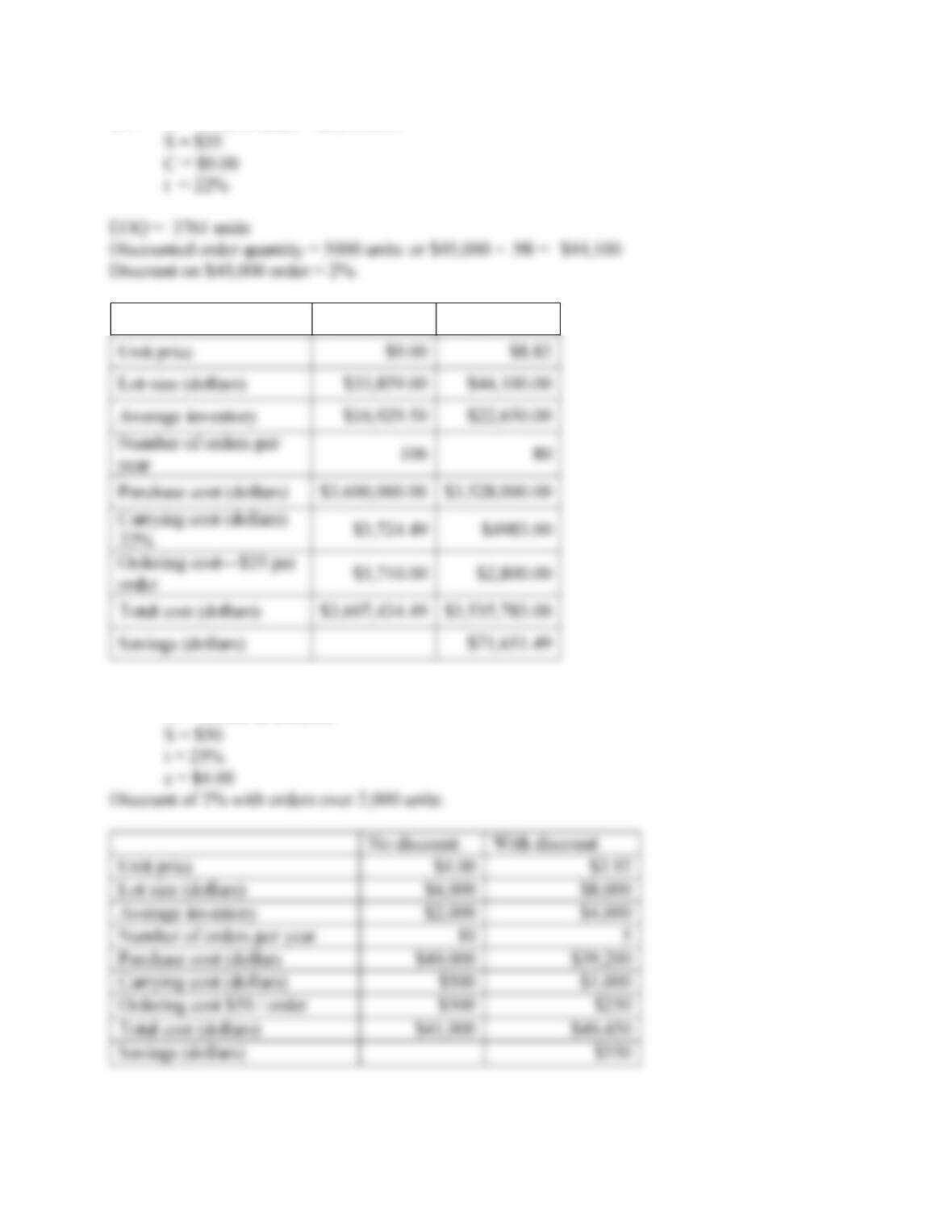
10.7 A = 400,000 units = $3,600,000
No discount Discount
10.8
A = 10,000 or $40,000
111
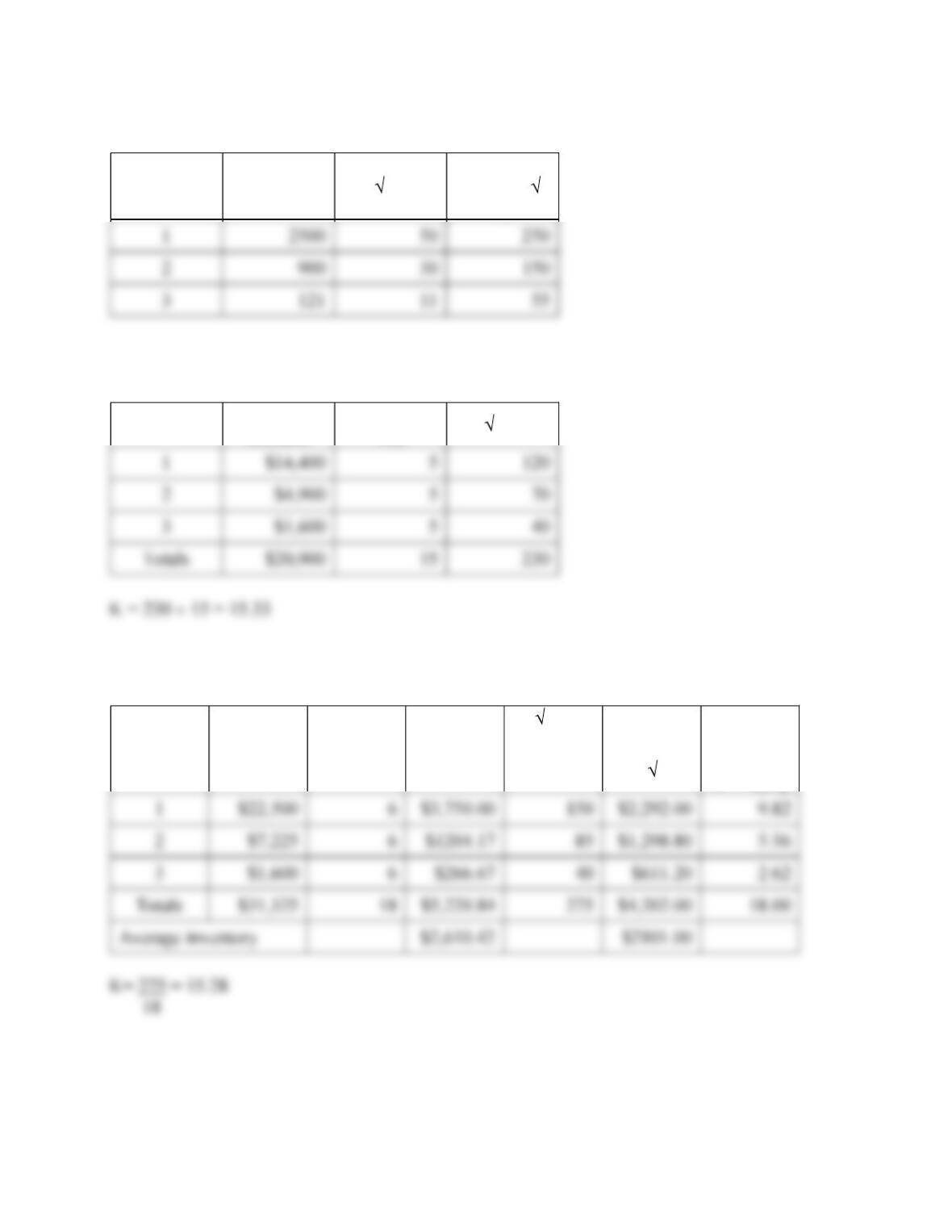
10.9
Item Annual
Demand AD
New Lot
Size = K
AD
10.10
Item Annual
Demand
Orders per
Year AD
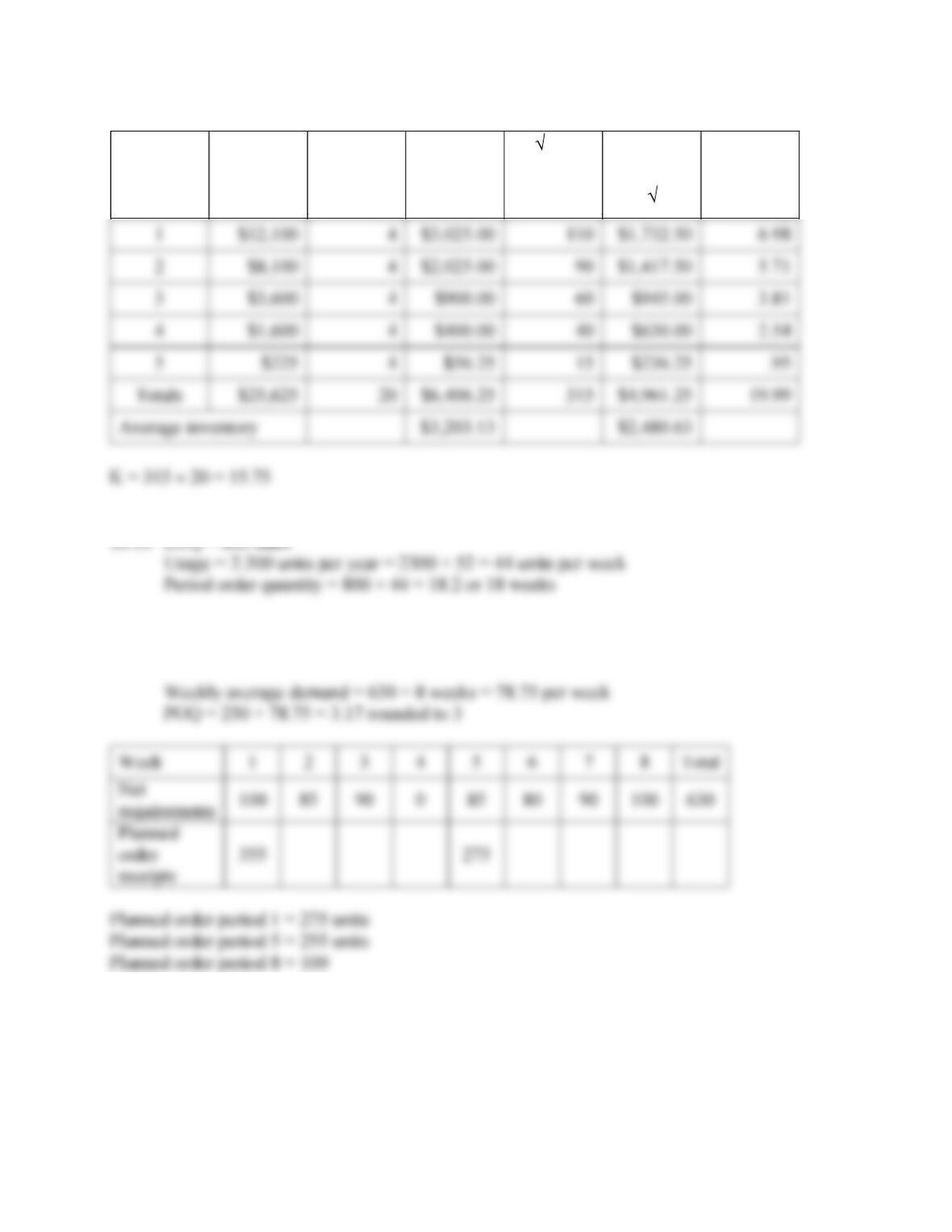
10.11
Item Annual
Usage
Present
orders per
year
Present
Lot Size
AD New Lot
Size
= K AD
New
Orders per
year
N = AD /Q
112
10.12
Item Annual
Usage
Present
orders per
year
Present
Lot Size
AD New Lot
Size
= K AD
New
Orders per
year
N = AD /Q
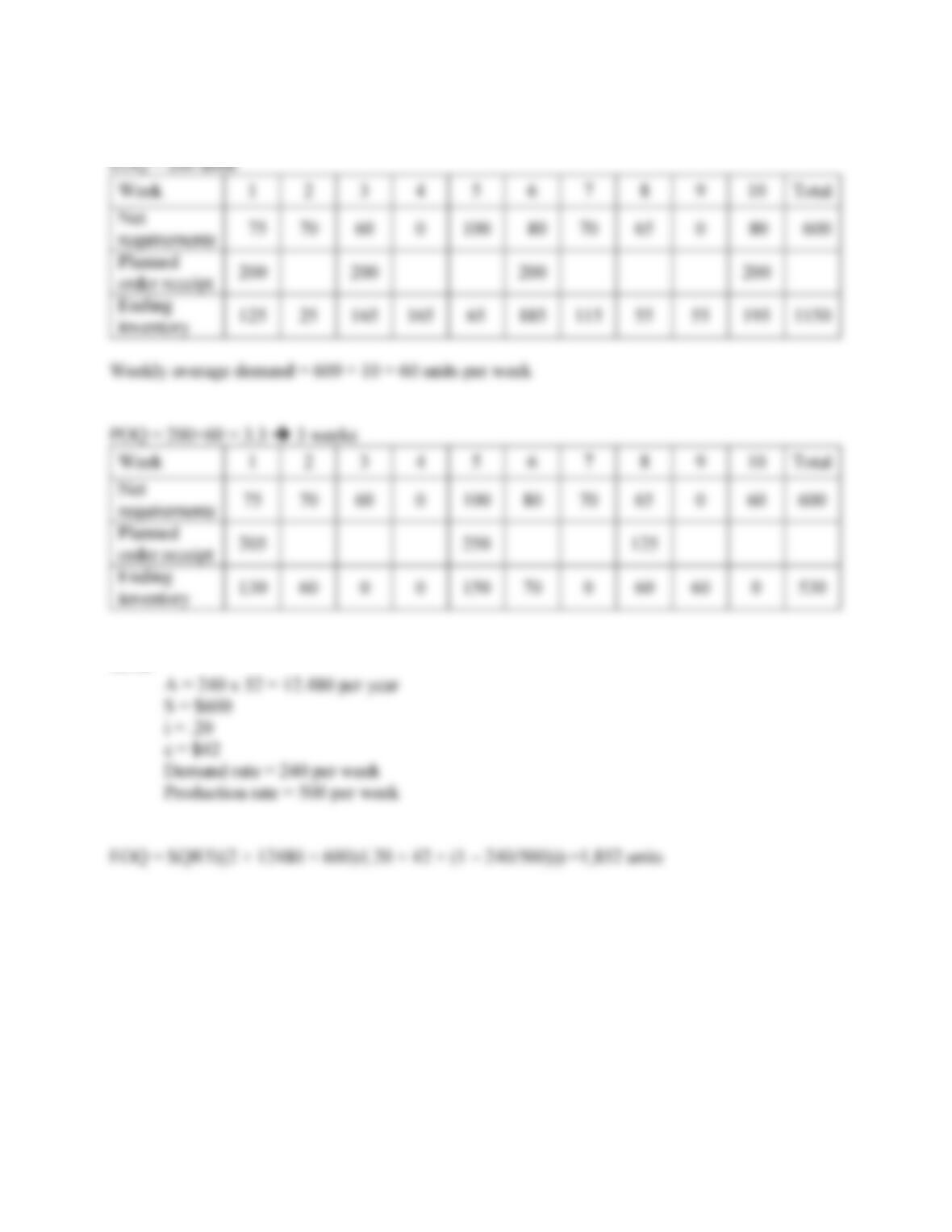
10.14
113
10.15
10.16
114
MULTIPLE CHOICE QUESTIONS
1. Which of the following are NOT assumptions on which the economic order quantity (EOQ) is
based?
a. demand is relatively constant and known
b. the item is produced continuously
c. order preparation costs, inventory carrying costs and lead times are constant and known
d. replacement occurs all at once
e. all of the above are true assumptions
2. In developing the standard economic order quantity formula the following assumption(s) is (are)
made:
a. demand for the item is relatively uniform
b. replenishment is in lots or batches that arrive at once
c. lead time is constant
d. all of the above are assumed
e. none of the above is assumed
3. In determining the economic order quantity (EOQ) the following costs are considered:
a. costs of a stockout and ordering costs
b. costs of a stockout and inventory holding costs
c. ordering costs and inventory carrying costs
d. ordering costs and costs of changing production levels
e. inventory holding costs and costs of changing production levels
4. If the order quantity is increased the annual cost of carrying inventory will:
a. increase
b. decrease
c. remain the same
d. not be affected
e. none of the above
5. Assuming the cost per order is constant, increasing the order quantity will cause annual ordering
costs to:
a. decrease
b. increase
c. remain the same
d. increase at a decreasing rate
e. cannot be determined
115
6. In the simple EOQ model annual inventory carrying costs and annual ordering costs vary:
a. according to the time of year
b. with seasonally adjusted demand
c. with the order quantity
d. do not vary in any way
e. in an unknown manner
7. While working a simple EOQ problem, you notice that, with a certain lot size, the annual ordering
cost is exactly the same value as the annual inventory carrying cost. Which of the following is
true?
a. the lot size is the economic order quantity
b. total cost is at its maximum
c. the annual carrying cost will decrease if the order quantity is increased
d. all of the above
e. none of the above; the phenomenon is merely a coincidence
8. A firm uses $20,000 of an item per year. The carrying cost is 25%, the cost of ordering is $10 and
the order quantity is $1,000. The annual total cost of carrying plus ordering would be:
a. $2,500
b. $5,000
c. $500
d. $816
e. none of the above
9. For a particular item the usage is 2000 units per year, the ordering cost is $10, the inventory
carrying cost is 20% and the unit cost is $5. The economic order quantity is:
a. 20 units
b. 200 units
c. 2000 units
d. 400 units
e. 4000 units
10. If the economic order quantity is to be calculated in DOLLARS, then:
a. the annual demand must be stated in dollars
b. ordering costs MUST be stated on a per UNIT basis
c. carrying costs are stated in dollars per unit
d. all the above are true
e. none of the above is true
116
11. A supplier offers a quantity discount. Which of the following will influence the decision to accept
the discount or not?
a. purchase cost
b. cost of carrying inventory
c. cost of placing one order
d. all of the above are relevant
e. none of the above is relevant
12. If a purchase discount is taken:
1. There is a saving in purchase cost.
2. Ordering costs are reduced.
3. Carrying costs are increased.
4. There is not necessarily a net saving.
a. all the above are true
b. 2 and 3 are true
c. 3 and 4 are true
d. 2 and 4 are true
e. 3 and 4 are true
13. For a certain group of items the cost of carrying inventory and the cost of placing orders is not
exactly known but is about the same for all the items. The company has calculated K = 20 for these
items. If one item has an annual demand (A) = $10,000 the NEW order quantity should be:
a. $2,000
b. $10,000
c. $20,000
d. $50,000
e. none of the above
14. Which of the following statements is correct?
a. you must know the ordering cost to use the EOQ concept
b. quantity discounts will not change the total inventory costs of the item
c. inventory levels can be lowered by raising the order quantity
d. if stock is not received all at once into inventory then EOQ formula can be modified and
used
e. none of the above is correct
15. The EOQ for an item is 5500 units and the annual demand is 78,000 units. What is the period order
quantity?
a. 14.18
b. 0.27
c. 3.67
d. 4
e. cannot be determined from the given data
16. Which of the following statements is best?
I. The EOQ should be used with lumpy demand.
II. Transportation cost should be included in the cost of ordering.
III. Anticipation inventory should be built based on capacity and future demand.
117
a. I and II only are true
b. I and III only are true
c. II and III only are true
d. all the above are true
e. none of the above are true
17. Using the POQ method of ordering, calculate the total cost of carrying and ordering inventory for
the 6 week period shown. Use a POQ = 3 weeks for your answer.
Week 1 2 3 4 5 6
Net requirements 60 40 10 50 20 30
Planned order receipts
Ending inventory
Cost to place an order = $100.00
Cost to carry inventory = $1.00 per unit per week
Annual demand = 1,500 units
Cost per unit = $200.00
Opening inventory = 0 units
a. $140
b. $280
c. $340
d. $400
e. none of the above
18. Quantity discounts cause companies to:
a. Order sooner.
b. Order less at a time.
c. Increase their inventory.
d. Increase ordering costs.
e. Always save money
19. The period order quantity is equal to:
a. Annual demand divided by EOQ.
b. EOQ divided by average period demand.
c. The carrying cost up to but not exceeding the ordering cost.
d. The sum of the carrying costs divided by cost per unit.
e. The part period cost times average inventory.

118
20. Which of the following is NOT true regarding period order quantity method (POQ) of lot sizing?
a. The order quantity is constant.
b. The time interval of inventory coverage is constant.
c. POQ is derived directly from the EOQ.
d. POQ is better suited to lumpy demand than EOQ.
e. POQ and EOQ will try to order the same number of times per year.
21. K the constant used for lot sizing is calculated as the:
a. Order point minus safety stock.
b. Sum of the square roots of demand divided by the number of orders per year.
c. Standard deviation of the demand divided by the square root of demand.
d. Annual demand divided by the order quantity.
e. The reciprocal of order quantity times the economic order quantity.
22. The period order quantity:
a. Can only be applied to continuous demand.
b. Orders a constant amount for a set number of periods.
c. Works like a quantity discount.
d. Is based on the same assumptions as the EOQ model.
e. Orders the same quantity each period.
23. Which of the following techniques balances the cost of ordering with the cost of carrying
inventory?
a. EOQ
b. POQ
c. The constant K
d. All of the above
24.
a. Order the big items more often and the low volume items less often.
b. Increase the average inventory.
c. Decrease the average inventory by gradually ordering more often.
d. Maintains the current inventory level while decreasing the number of orders.
e. Balances the safety stock of items with demand.
25. Quantity discounts:
a. Make buyers order more than is economical.
b. Decrease the annual carrying costs but increase the ordering cos.
c. Can be a good decision if the total annual costs are reduced.
d. Always advantage the seller at a cost to the buyer.
e. Persuade the buyer to buy more often.

119
Answers.