53.
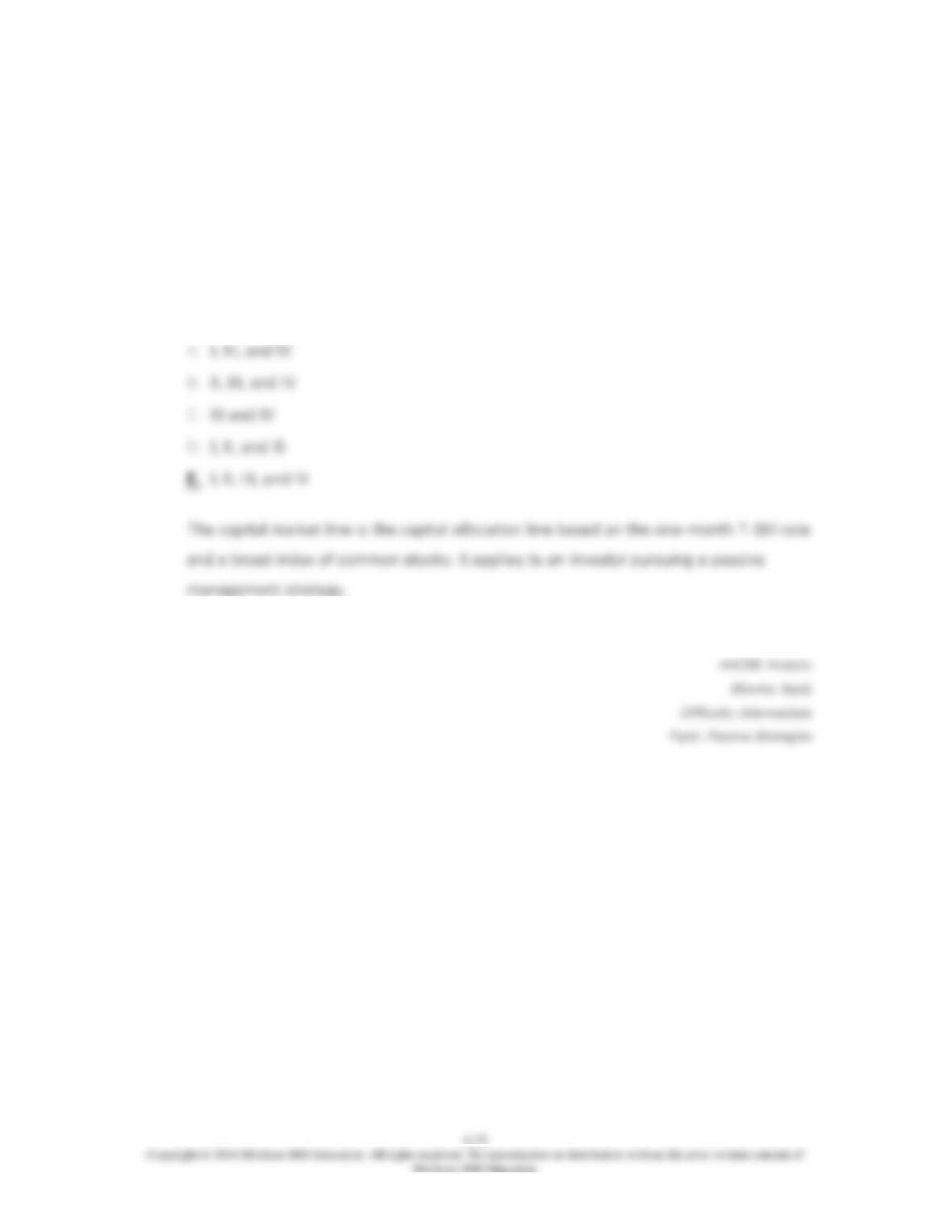
The capital market line
I) is a special case of the capital allocation line.
II) represents the opportunity set of a passive investment strategy.
III) has the one-month T-Bill rate as its intercept.
IV) uses a broad index of common stocks as its risky portfolio.
54.
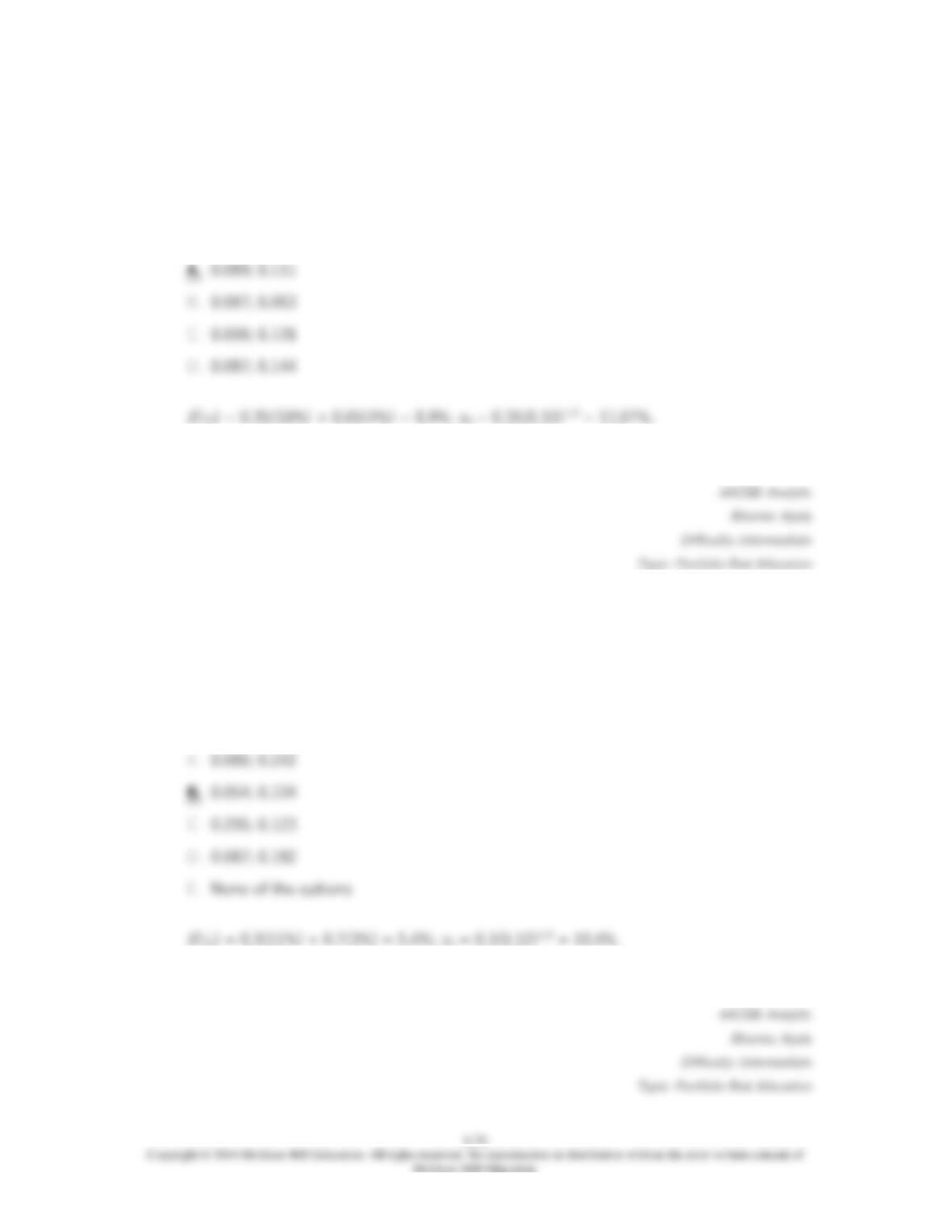
An investor invests 35% of his wealth in a risky asset with an expected rate of return of
0.18 and a variance of 0.10 and 65% in a T-bill that pays 4%. His portfolio’s expected
return and standard deviation are __________ and __________, respectively.
55.
An investor invests 30% of his wealth in a risky asset with an expected rate of return of
0.11 and a variance of 0.12 and 70% in a T-bill that pays 3%. His portfolio’s expected
return and standard deviation are __________ and __________, respectively.
56.
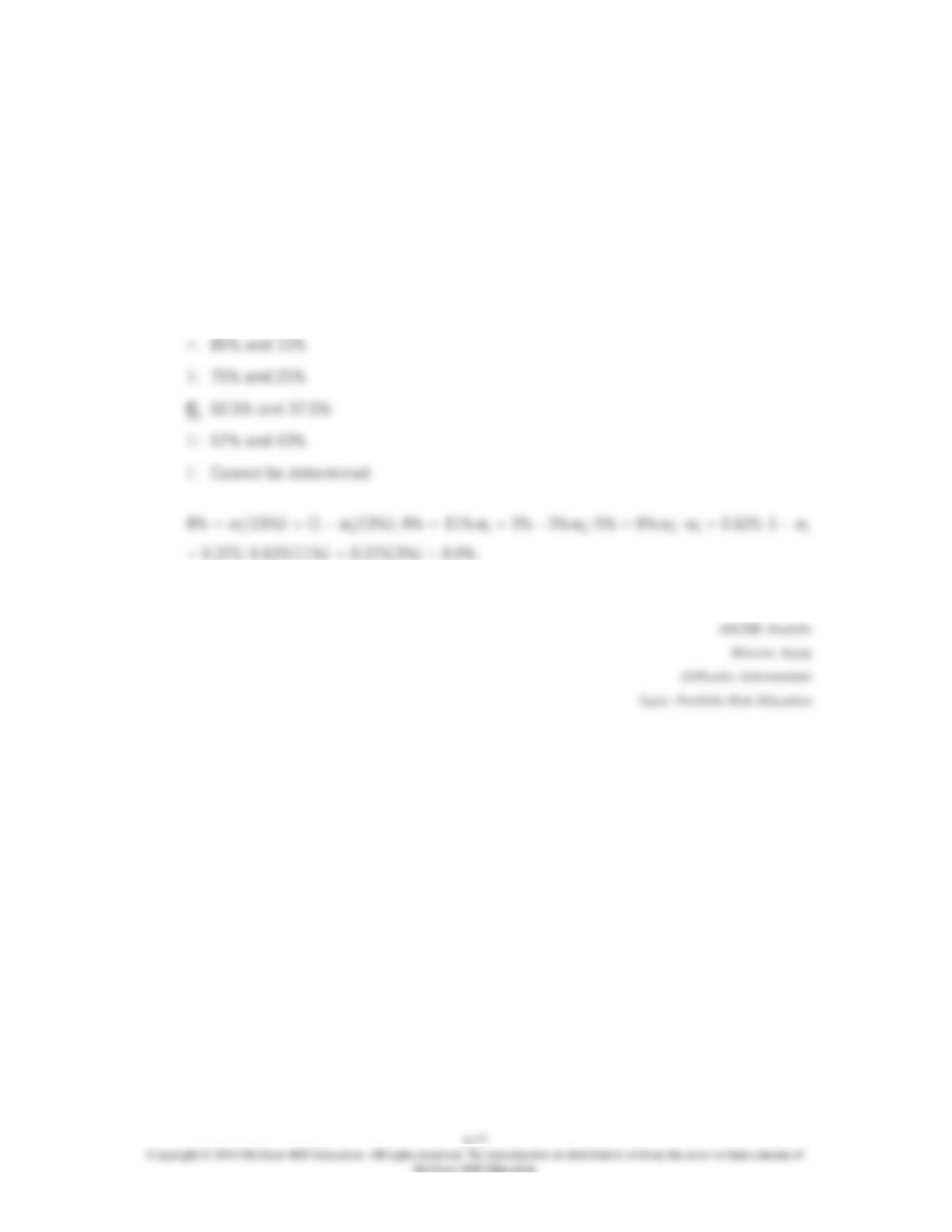
You invest $100 in a risky asset with an expected rate of return of 0.11 and a standard
deviation of 0.20 and a T-bill with a rate of return of 0.03.
What percentages of your money must be invested in the risky asset and the risk-free
asset, respectively, to form a portfolio with an expected return of 0.08?
57.
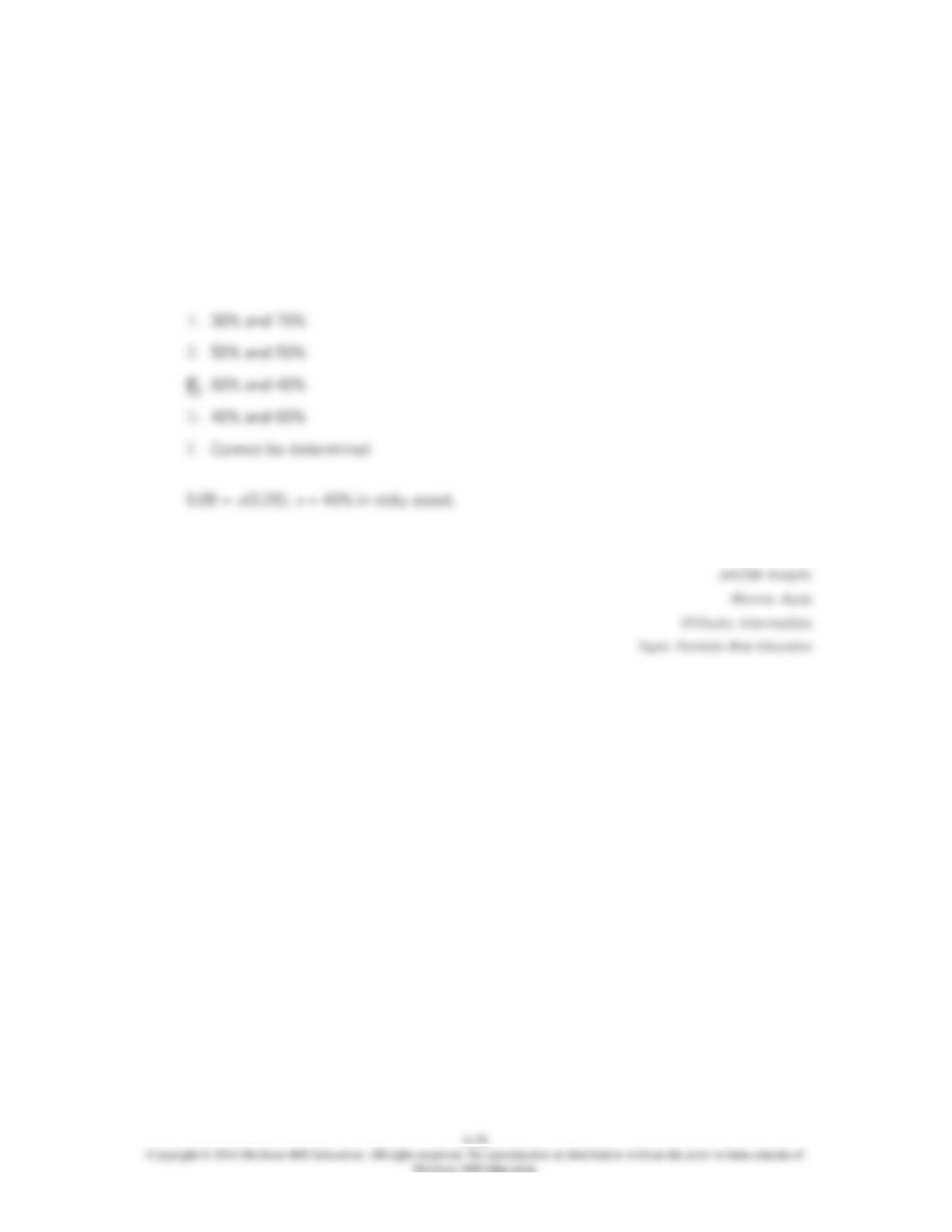
You invest $100 in a risky asset with an expected rate of return of 0.11 and a standard
deviation of 0.20 and a T-bill with a rate of return of 0.03.
What percentages of your money must be invested in the risk-free asset and the risky
asset, respectively, to form a portfolio with a standard deviation of 0.08?
58.
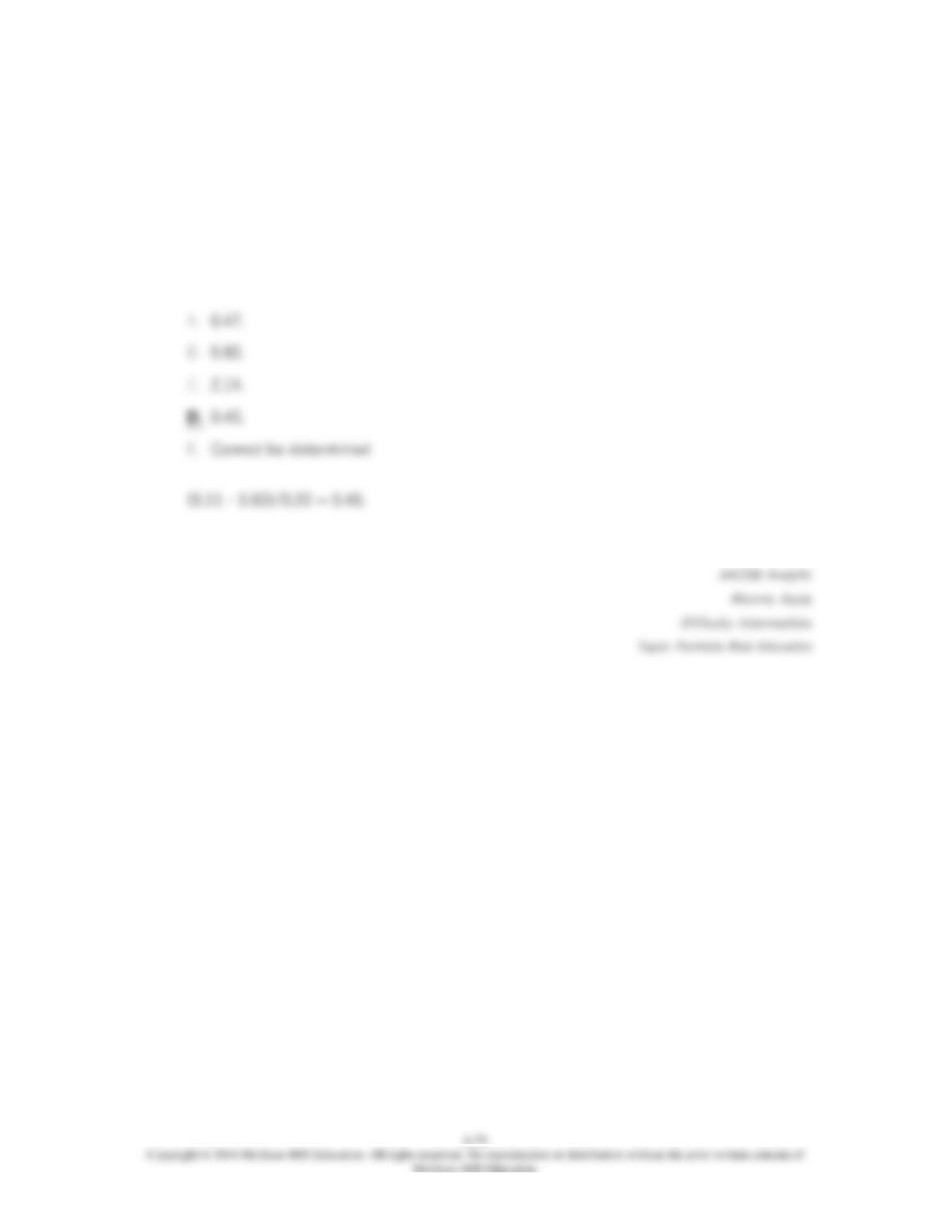
You invest $100 in a risky asset with an expected rate of return of 0.11 and a standard
deviation of 0.20 and a T-bill with a rate of return of 0.03.
The slope of the capital allocation line formed with the risky asset and the risk-free
asset is equal to
59.
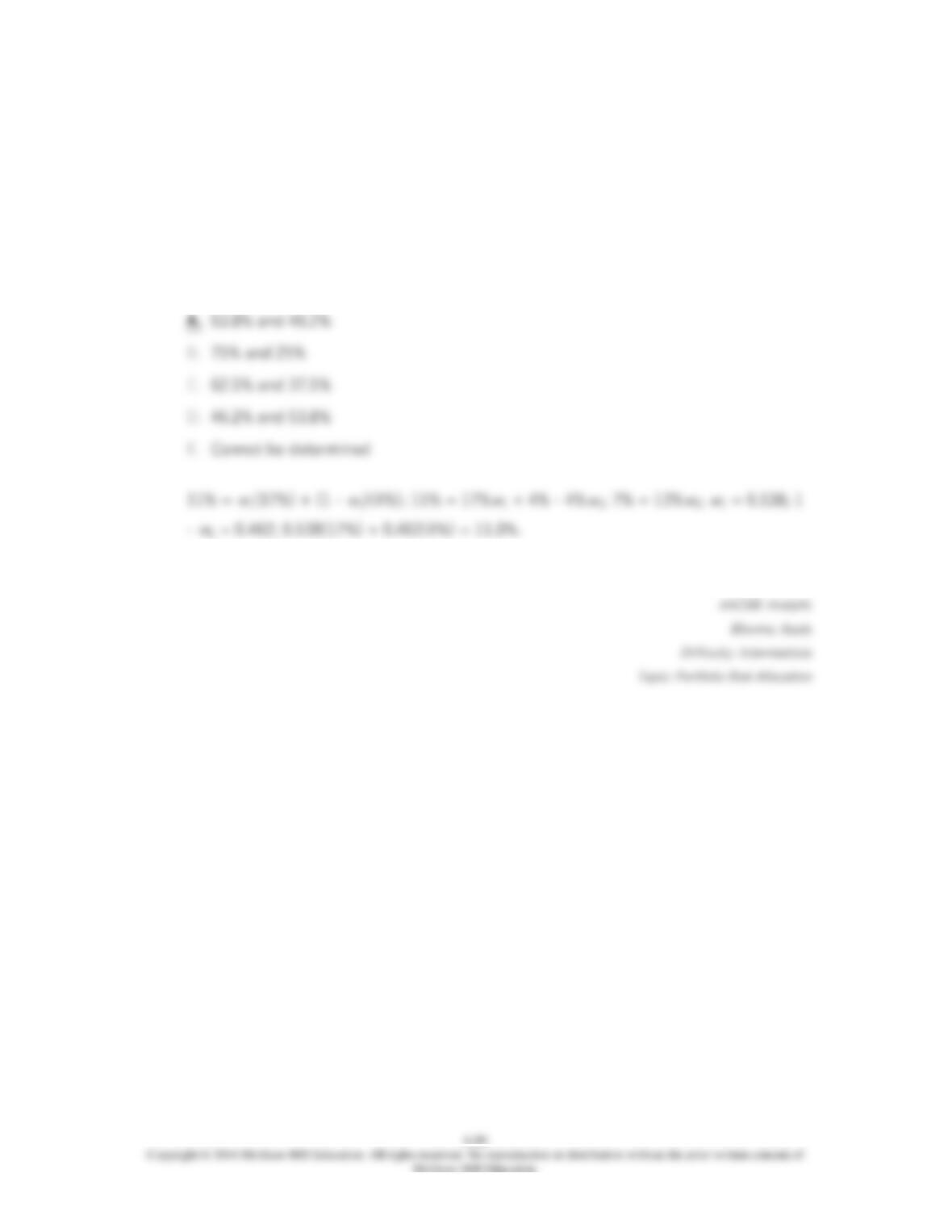
You invest $1,000 in a risky asset with an expected rate of return of 0.17 and a
standard deviation of 0.40 and a T-bill with a rate of return of 0.04.
What percentages of your money must be invested in the risky asset and the risk-free
asset, respectively, to form a portfolio with an expected return of 0.11?
60.
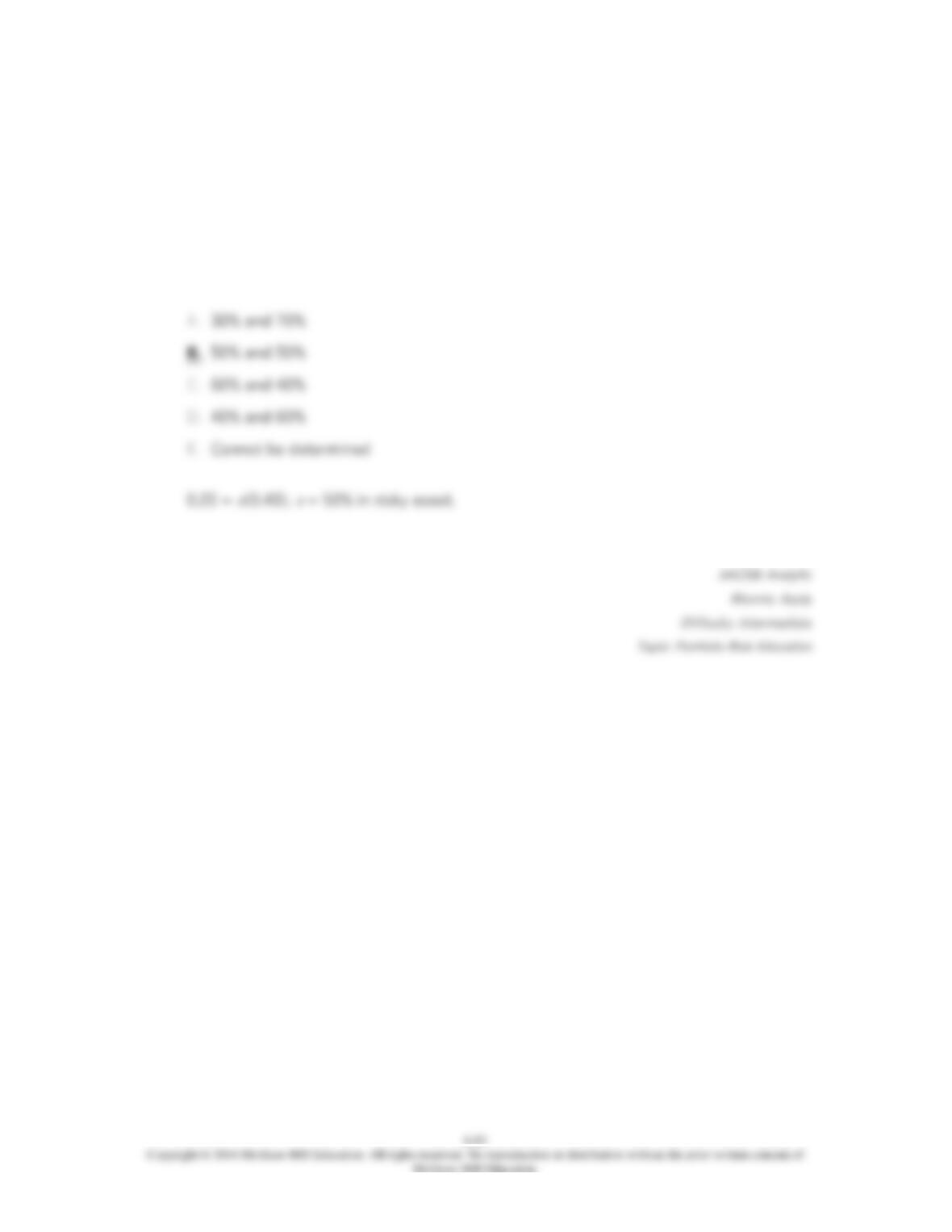
You invest $1,000 in a risky asset with an expected rate of return of 0.17 and a
standard deviation of 0.40 and a T-bill with a rate of return of 0.04.
What percentages of your money must be invested in the risk-free asset and the risky
asset, respectively, to form a portfolio with a standard deviation of 0.20?
61.
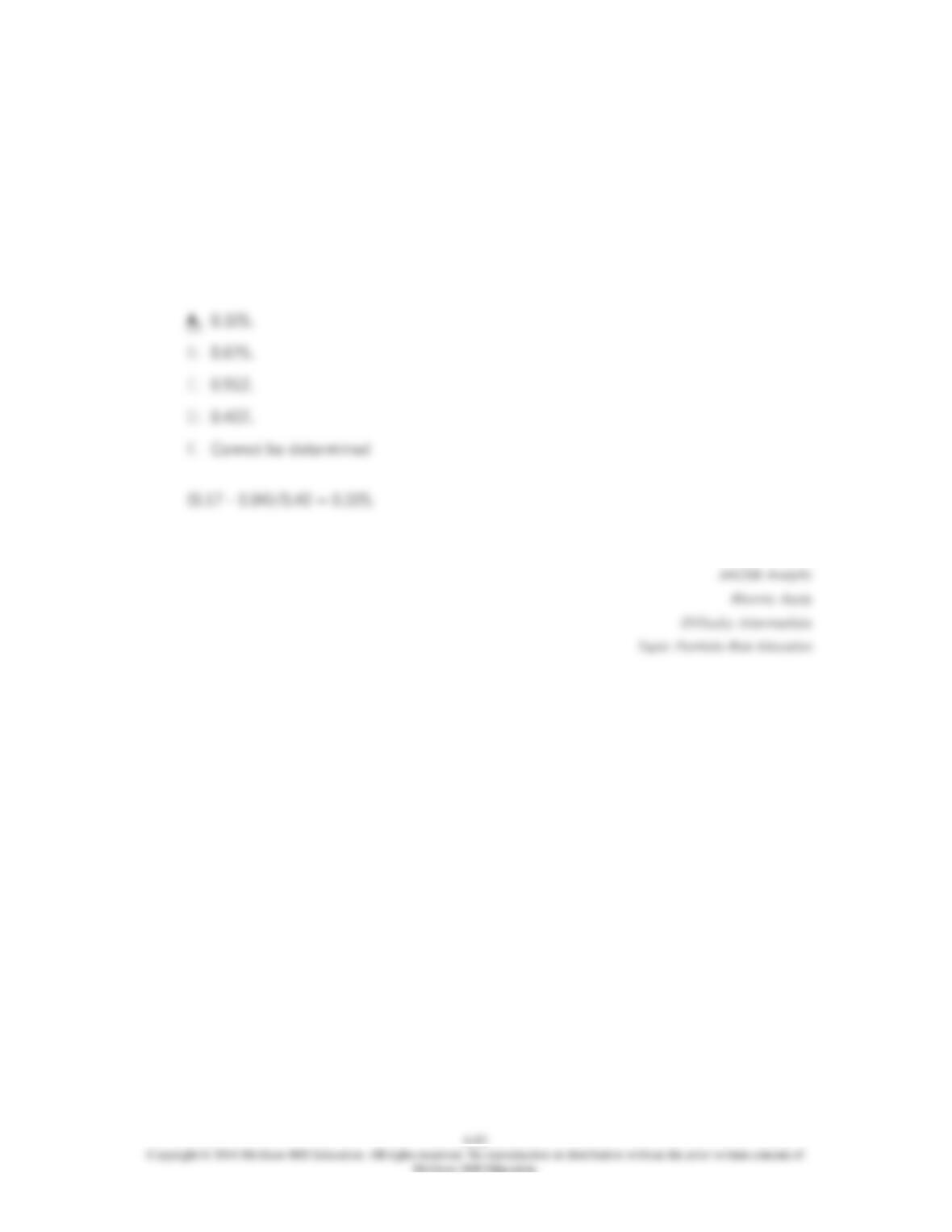
You invest $1,000 in a risky asset with an expected rate of return of 0.17 and a
standard deviation of 0.40 and a T-bill with a rate of return of 0.04.
The slope of the capital allocation line formed with the risky asset and the risk-free
asset is equal to
62.
You invest $100 in a risky asset with an expected rate of return of 0.11 and a standard
deviation of 0.21 and a T-bill with a rate of return of 0.045.
What percentages of your money must be invested in the risky asset and the risk-free
asset, respectively, to form a portfolio with an expected return of 0.13?
63.
You invest $100 in a risky asset with an expected rate of return of 0.11 and a standard
deviation of 0.21 and a T-bill with a rate of return of 0.045.
What percentages of your money must be invested in the risk-free asset and the risky
asset, respectively, to form a portfolio with a standard deviation of 0.08?
64.
You invest $100 in a risky asset with an expected rate of return of 0.11 and a standard
deviation of 0.21 and a T-bill with a rate of return of 0.045.
A portfolio that has an expected outcome of $114 is formed by